
Reviewed · TEA CEREMONY & KIMONO EXPERIENCES
Calligraphy Workshop at Traditional Folk Craft Shop in Hiroshima
The best part of this Hiroshima activity is its quiet, hands-on focus. At Takumi, a 50-year-old folk craft shop, you use handmade brushes from nearby Kumano, Japan’s leading brush-making town, and create a piece of calligraphy rather than simply watch someone else work.
I like the calm, step-by-step teaching from award-winning calligrapher Ryosei, and I like the setting, with ukiyo-e prints decorating one wall. The main drawback is the short 45-minute format. It gives you a pleasant introduction, but not enough time for advanced technique or a long, leisurely art session.
In This Review
- Key points
- Calligraphy in a Hiroshima Folk Craft Shop
- Why the Kumano Brush Matters
- A Calm Lesson with Instructor Ryosei
- The Ukiyo-e Wall and the Takumi Setting
- Creating the Final Fan or Shikishi
- What Fits into 45 Minutes
- What You Pay for at $32.81
- Getting There from Hiroshima’s Main Sights
- Who Will Enjoy This Most
- Photos and the Souvenir You Take Home
- Booking, Cancellation, and Practical Limits
- Should You Book the Takumi Calligraphy Workshop?
- FAQ
- Where is the calligraphy workshop held?
- How long does the calligraphy experience last?
- How far is Takumi from the Atomic Bomb Dome?
- How close is the workshop to public transportation?
- Are calligraphy materials provided?
- Do I need previous calligraphy experience?
- Who teaches the calligraphy session?
- What can I make during the workshop?
- Can I take photos during the activity?
- Is the activity private?
- What is included in the price?
- Is transportation included?
- Can I cancel for a full refund?
Key points
- Kumano-made brushes: Use traditional handmade brushes from Hiroshima’s famous brush-making town.
- Patient instruction from Ryosei: Beginners receive guidance on tools, strokes, hiragana, and kanji.
- A useful location: Takumi is five minutes from the Atomic Bomb Dome and three minutes from Hiroden Hondori Station.
- Your own souvenir: Create calligraphy on a Japanese hand fan or shikishi board and take it home.
- Small private setting: Only your group participates, making the session more personal than a large class.
- Free photo option: Photos can be taken during the workshop and sent to you digitally afterward.
Calligraphy in a Hiroshima Folk Craft Shop
This is a compact cultural activity with a clear purpose: learn the basics of Japanese calligraphy, then make one finished piece to carry home. You are not signing up for a long art course. You are getting a focused introduction to brush, ink, paper, and the controlled movement behind Japanese characters.
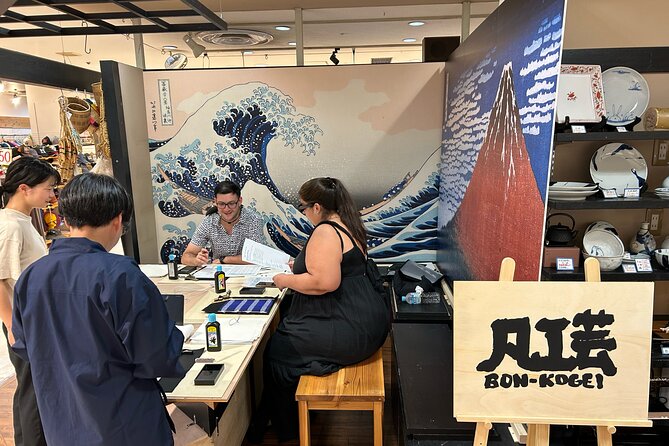
The workshop takes place at Bonkogei Takumi, usually shortened to Takumi, on the fifth floor of Sanmall Mall in central Hiroshima. The shop has been operating for 50 years and carries traditional craft items from across Japan. That gives the activity a more fitting home than a generic classroom.
The location is easy to pair with Hiroshima sightseeing. The shop is about a five-minute walk from the Atomic Bomb Dome and three minutes from Hiroden Hondori Station. If you are already exploring the Peace Memorial Park area or shopping along Hondori, this workshop can fit neatly into your day without a long ride across the city.
One practical note: Takumi is inside a shopping mall. The directions identify UNIQLO on the second floor as a landmark, while the workshop is on the fifth floor. Allow a few extra minutes to find the right elevator and floor, especially if you are arriving close to the start time.
A few more Hiroshima tours and experiences worth a look

Why the Kumano Brush Matters
The tools are not filler. Hiroshima is home to Kumano, Japan’s best-known brush-making town, and the workshop uses handmade brushes from there. For you, this means the activity connects a simple writing lesson with a real local craft tradition.
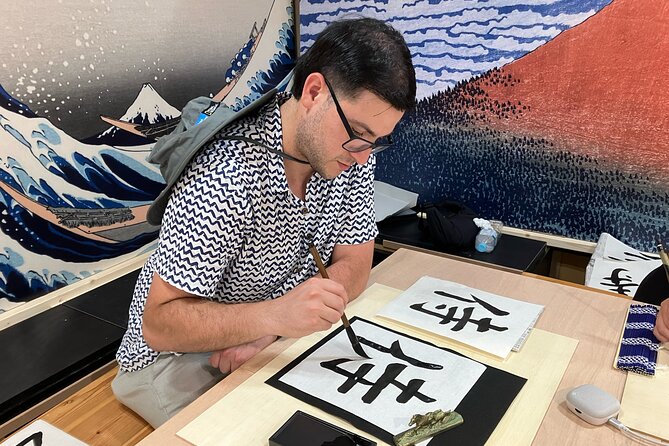
A calligraphy brush feels different from an ordinary paintbrush or marker. The tip bends and responds to pressure, so the character changes as your hand moves. The introduction covers the basic tools, including brush, ink, and paper, before you begin writing.
You will practice simple marks such as dots, lines, and sweeping strokes. This early exercise matters because Japanese calligraphy is built from those movements. You may find that the first few strokes feel less like writing and more like learning how your hand, wrist, and brush work together.
The session is designed for first-timers. You do not need to know Japanese, and no preparation is required. The instructor provides the materials and guides you through the process, so you can concentrate on the shape and rhythm of each mark.
A Calm Lesson with Instructor Ryosei
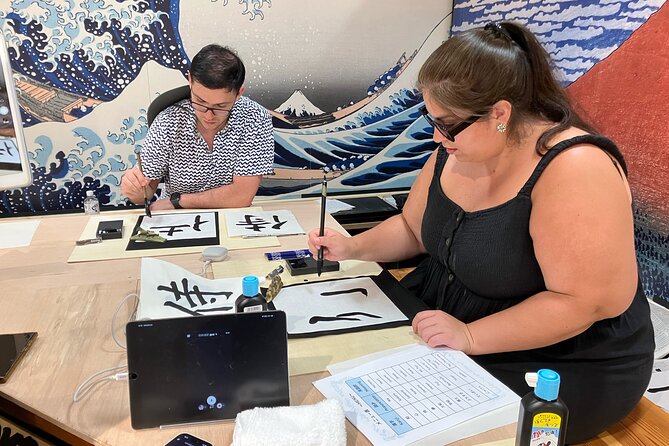
The teaching style is one of the strongest reasons to book this activity. Instructor Ryosei is described as patient and calm, with an approach that makes the workshop feel meditative rather than hurried.
That is useful because calligraphy can look intimidating at first. Japanese characters are compact, and a brush stroke cannot be erased in the same way as pencil writing. A steady instructor helps you treat early mistakes as practice instead of failure.
You begin with the basics, then move toward hiragana and kanji. Hiragana gives you a more approachable way to write Japanese sounds. Kanji lets you choose a character or word with a stronger visual presence. The stated format allows you to write a word of your choice for the final artwork.
The workshop does not promise fluency or advanced calligraphy skill, and it should not be judged by that standard. Its value is in giving you a short, guided look at the discipline behind the art. You learn enough to understand why brush angle, pressure, and spacing matter.
The quiet pace also makes this a good break from Hiroshima sightseeing. After the heavy subject matter of the Peace Memorial Park, a period of concentrated handwork can help you slow down. The activity is not presented as a formal wellness session, but the meditative quality is a real part of its appeal.
The Ukiyo-e Wall and the Takumi Setting
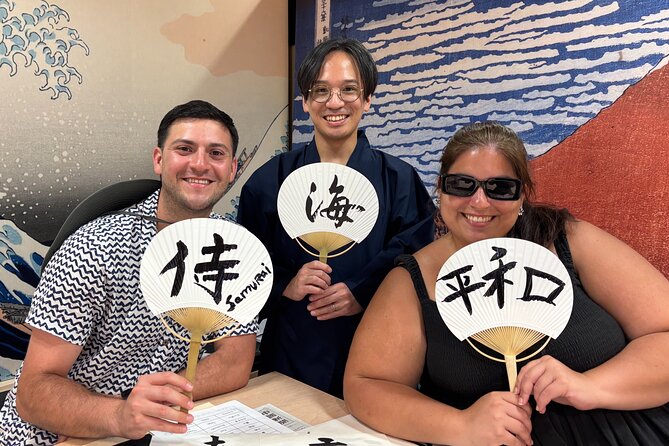
The room has an artistic feel, helped by a wall decorated with ukiyo-e prints. Ukiyo-e is traditional Japanese woodblock art, often associated with carefully composed scenes, bold outlines, and expressive figures. The prints make the setting feel connected to Japanese visual culture rather than decorated at random.
Takumi itself is also part of the experience. Because it is a long-running folk craft shop, you can browse traditional items from different parts of Japan before or after the workshop. The craft-shop setting may appeal to you if you want more than a souvenir photo and prefer an activity tied to handmade objects.
You should keep your expectations sensible. This is still a shopping-center location, not a historic temple or old rural studio. The shop’s age and craft focus add character, but the workshop is located on a modern mall floor. For many people, the central location and easy access will matter more than having a traditional building.
Creating the Final Fan or Shikishi
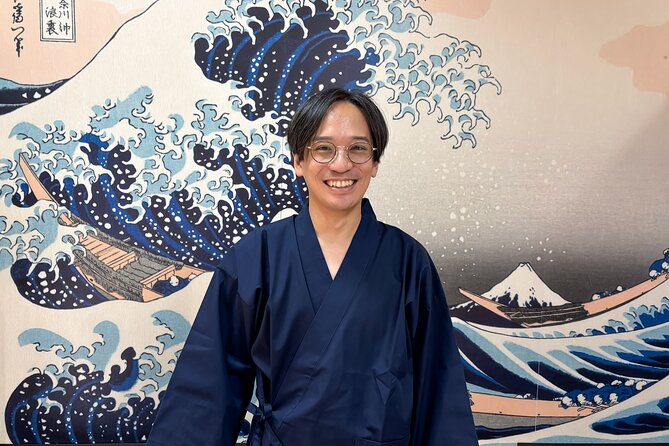
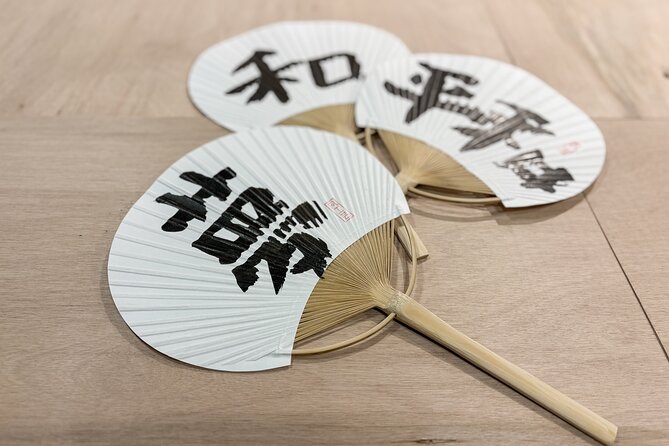
The session builds toward one finished piece. After practicing strokes and trying hiragana and kanji, you write your chosen word on either a traditional Japanese hand fan, called an uchiwa, or a calligraphy board known as a shikishi.
The fan makes a particularly useful souvenir. It is light, easy to pack, and immediately recognizable as Japanese. A shikishi gives you a more formal square surface for display. The supplied details describe the activity as including an original calligraphy fan souvenir, while the workshop format also offers the choice of a shikishi. Confirm the exact option available when you arrive if the final format matters to you.
Choosing the word is part of the creative work. You can select something meaningful to you, but the important point is that the activity lets you make a personal piece rather than receive a pre-made item. Your brushwork will be your own, including its small imperfections.
That is also why you should not expect a flawless museum-style result. The instructor’s help improves your technique, but a 45-minute class is still an introduction. The finished work is valuable because you made it under guidance, not because it will look like a professional calligrapher’s piece.
A few more Hiroshima tours and experiences worth a look

What Fits into 45 Minutes
The duration is about 45 minutes, so the pace is efficient. The exact timing of each part is not specified, but the stated program follows a sensible sequence:
- Introduction to the brush, ink, paper, and other tools
- Practice with dots, lines, and sweeping strokes
- Attempts at hiragana and kanji
- Selection of a word
- Final calligraphy on a fan or shikishi
- Photos during the session, if you request the free photo service
You should arrive ready to begin. All materials are supplied, and the activity does not require you to bring special equipment. Since the class is short, avoid treating the first practice marks as the main event. The final artwork comes after you have had a chance to understand the brush.
The compact schedule is a plus if your Hiroshima plan is full. You can fit it between nearby sights, shopping, or a meal. It is less suitable if you want a slow workshop with several finished pieces or detailed lessons in composition and brush control.
The activity is private, meaning only your group participates. That can make a big difference for shy beginners. You have room to ask questions and work at your group’s level without comparing yourself with a large class.
What You Pay for at $32.81
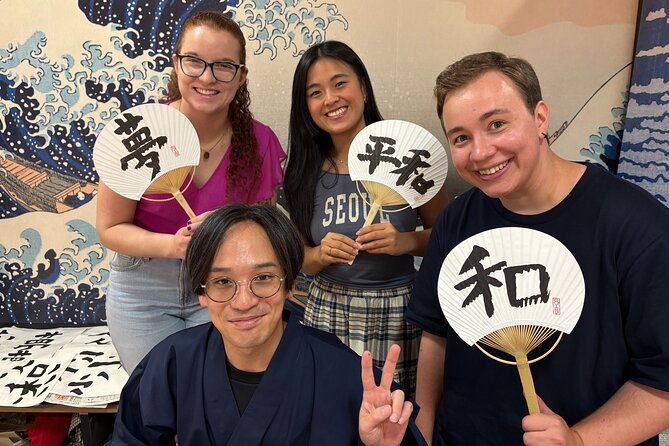
At $32.81 per person, the price covers the instructor, venue use, all calligraphy tools, and the finished souvenir. You are paying for a guided cultural activity rather than a basic materials kit.
The value is strongest if you want three things in one short stop: personal instruction, access to traditional tools, and an object you create yourself. Buying a fan or board alone would not provide the lesson or the connection to Kumano brush-making.
The price may feel less attractive if you only want to try a few brush strokes or if you are already taking a longer calligraphy class elsewhere. The 45-minute limit means the cost is tied to the setting and instruction as much as to the amount of art you produce.
For a first introduction in central Hiroshima, I consider the price reasonable, especially for a private session. The workshop also avoids extra equipment costs because the brush, ink, paper, and other materials are provided.
Getting There from Hiroshima’s Main Sights
The meeting point is Bonkogei Takumi, 2-chome-2-18 Kamiyacho, Naka Ward, Hiroshima, 730-0031. The shop is close to public transportation and easy to connect with central sightseeing.
From the Atomic Bomb Dome, the walk takes about five minutes. From Hiroden Hondori Station, it is about three minutes. Those short distances make this a practical choice for a day spent on foot around central Hiroshima.
The activity both starts and ends at the meeting point. There is no private transportation included, and parking fees are not included. If you are driving, you will need to handle parking separately.
The mobile ticket is convenient, but confirmation is subject to availability and is stated to arrive within 48 hours of booking. I would not leave the reservation until the final hour if your Hiroshima schedule is fixed.
Who Will Enjoy This Most
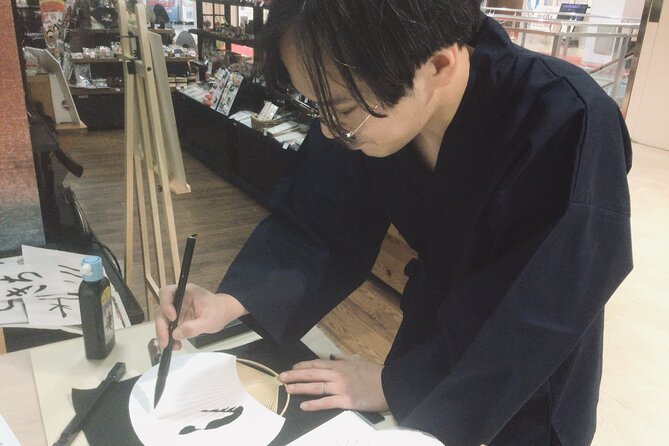
This workshop suits first-time calligraphy students best. You can take part without previous experience, and the instructor provides the tools and step-by-step help.
It is also a good match for:
- People who enjoy Japanese arts and handmade crafts
- Couples, families, or friends looking for a shared activity
- Anyone wanting a light souvenir that has a personal story
- Visitors who want a quiet break from sightseeing
- People with only a short free period in central Hiroshima
The activity is less suitable for someone seeking an advanced calligraphy course. It also may not satisfy you if you want a long lesson focused on Japanese language, character translation, or several finished works. The supplied details promise practice and one final artwork, not a full academic study of calligraphy.
The private format helps groups with mixed confidence levels. You can make mistakes without feeling watched by a room full of strangers, and Ryosei’s calm teaching style is especially helpful if you are nervous about handling ink and brush.
Photos and the Souvenir You Take Home
You are welcome to take photos during the session, and the optional photo service lets the staff send digital images afterward at no extra charge. That gives you a record of the process, not just the final fan or board.
Ask for the photo service during the workshop if you want it. The information says the photos can be sent digitally afterward, but it does not specify the delivery method or timing.
The physical souvenir is the lasting part of the activity. A shop-bought object can be attractive, but your calligraphy piece records a particular moment in Hiroshima. It may also remind you of the slow brush movements and concentration involved, which is part of the experience’s appeal.
Pack it with care for the rest of your trip. The details do not state how the finished work is protected or packaged, so you should ask the instructor if you plan to carry it in luggage.
Booking, Cancellation, and Practical Limits
Free cancellation is available if you cancel at least 24 hours before the local start time. Cancellations made less than 24 hours before the activity are not refunded, and late changes are not accepted.
Most people can participate, and the activity is near public transportation. No special preparation is required. All tools are supplied, so you only need to bring yourself and a mobile ticket.
The available information does not give a specific age limit, wheelchair arrangement, or language schedule. If any of those points affect your booking, ask the provider before reserving rather than guessing.
Should You Book the Takumi Calligraphy Workshop?
Book it if you want a short, personal activity close to Hiroshima’s main peace sites. The combination of Kumano brushes, patient instruction from Ryosei, the ukiyo-e setting, and a handmade souvenir gives the 45 minutes a clear sense of place.
I especially recommend it for first-timers who like practical cultural activities. You do not just look at Japanese art. You handle the tools, practice the movements, and leave with something you made.
Skip it if you want advanced training, a long lesson, or several completed artworks. But for $32.81, a private introduction in a central folk craft shop is a sensible addition to a Hiroshima itinerary, particularly when you want a calm hour between major sights.
FAQ
Where is the calligraphy workshop held?
It is held at Bonkogei Takumi, 2-chome-2-18 Kamiyacho, Naka Ward, Hiroshima, 730-0031, on the fifth floor of Sanmall Mall.
How long does the calligraphy experience last?
The workshop lasts approximately 45 minutes.
How far is Takumi from the Atomic Bomb Dome?
The shop is about a five-minute walk from the Atomic Bomb Dome.
How close is the workshop to public transportation?
Takumi is about a three-minute walk from Hiroden Hondori Station.
Are calligraphy materials provided?
Yes. The activity provides the brush, ink, paper, and other calligraphy tools.
Do I need previous calligraphy experience?
No. The workshop is designed for first-timers and includes step-by-step instruction.
Who teaches the calligraphy session?
The session is led by award-winning calligrapher Ryosei.
What can I make during the workshop?
You can create calligraphy featuring a word of your choice on a traditional Japanese hand fan or a shikishi calligraphy board.
Can I take photos during the activity?
Yes. An optional photo service is available, and the photos can be sent to you digitally afterward free of charge.
Is the activity private?
Yes. Only your group participates in the private activity.
What is included in the price?
The price includes all calligraphy tools, the venue usage fee, and an original calligraphy fan souvenir.
Is transportation included?
No. Private transportation and parking fees are not included.
Can I cancel for a full refund?
Yes, if you cancel at least 24 hours before the experience start time. Late cancellations and changes made less than 24 hours before the start are not accepted for a refund.
More Workshops & Classes in Hiroshima

More Tea Ceremony & Kimono Experiences in Hiroshima
More Hiroshima City Tours in Hiroshima


More tours in Hiroshima we've reviewed




Tea Ceremony & Kimono Experiences, compared.
 ★ 5.0Hiroshima Local guided Hiking Tour&Open-air Tea CeremonyFrom $109
 ★ 5.0Kimono and Tea Ceremony in MiyajimaFrom $85
 ★ 5.0An Amazing set of Cultural experience: Kimono, Tea Ceremony and CalligraphyFrom $132
 ★ 4.8Hiroshima: Morning Hiking Tour with Open-air Tea CeremonyFrom $1063 hours
 ★ 5.0Cultural Activities :Kimono, tea ceremony, Calligraphy and AmuletFrom $171
 ★ 5.0Experience the Soul of Hiroshima: A Peaceful Koto WorkshopFrom $501h 30m
