
Reviewed · TEA CEREMONY & KIMONO EXPERIENCES
Cultural Activities :Kimono, tea ceremony, Calligraphy and Amulet
At Tokuju-ji Temple on Miyajima, you can move from kimono dressing to calligraphy, tea, and amulet making in about two hours. The activities are short, hands-on, and held in a temple with gardens, so you get a useful introduction to several traditions without giving up a full day of sightseeing.
I like the personal touch of having your teachers take photographs and email them to you. I also like that amulet making is included, since it is less common than a tea ceremony or brush-writing lesson. The main consideration is the price, $171.73 per person, which is a serious outlay for two hours.
In This Review
- Key points to know before booking
- What this Miyajima cultural experience actually gives you
- Kimono first, then photographs in the temple garden
- Japanese calligraphy that begins with your own name
- Tea ceremony with a simple, hands-on approach
- Making an amulet, an uncommon third activity
- Tokuju-ji Temple adds substance to the lessons
- Value at $171.73 per person
- Timing, meeting point, and fitting it into Miyajima
- Who will enjoy this most
- Booking and cancellation details
- Should you book the kimono, tea, calligraphy, and amulet session?
- FAQ
- Where does the experience take place?
- How long does the activity last?
- What activities are included?
- Do I get to wear a kimono?
- Are photographs included?
- What will I write during the calligraphy lesson?
- How many people can join the activity?
- What is the minimum age?
- Is the activity near public transportation?
- Can I cancel for a full refund?
Key points to know before booking
- Three activities in one visit: You spend roughly half an hour on calligraphy, a tea ceremony, and amulet making.
- A temple setting: Tokuju-ji is about 300 years old and has gardens that add a calm setting for the lessons.
- Traditional clothing included: You wear a provided kimono and apron during the activities.
- Photos are part of the experience: Teachers take pictures during the lessons and send them by email.
- Small group format: The maximum group size is 10 people, with private sessions possible when bookings are light.
- Good for families: Children from age 6 can participate, but they must be accompanied by an adult.
What this Miyajima cultural experience actually gives you
Many visitors come to Miyajima for Itsukushima Shrine, the great torii gate, and the island’s famous scenery. This activity gives you a different way to spend part of your visit. Instead of only looking at Japanese customs, you handle the tools, put on traditional clothing, and follow basic steps yourself.
The schedule is compact. You are not signing up for a full-day school in Japanese arts. You get a guided introduction to three activities, each lasting roughly half an hour, with the kimono worn throughout the lessons. That makes the experience easy to fit around a day on Miyajima.
The setting matters. Tokuju-ji Temple was founded about 300 years ago and belongs to the Soto school of Buddhism. Its main Buddha is Kinseki Jizo, a figure connected with protection for children and pregnancy. The temple’s story tells of an older couple who prayed to Jizo for a child, had a healthy boy, and later built the temple in thanks.
Miyajima’s religious life can be less neatly divided than a visitor might expect. Many temples on the island have links with or visual elements associated with Itsukushima Shrine and Shinto practice. That mixture gives the setting added interest, particularly if this is your first close look at Japanese religious traditions.
A few more Hiroshima tours and experiences worth a look

Kimono first, then photographs in the temple garden
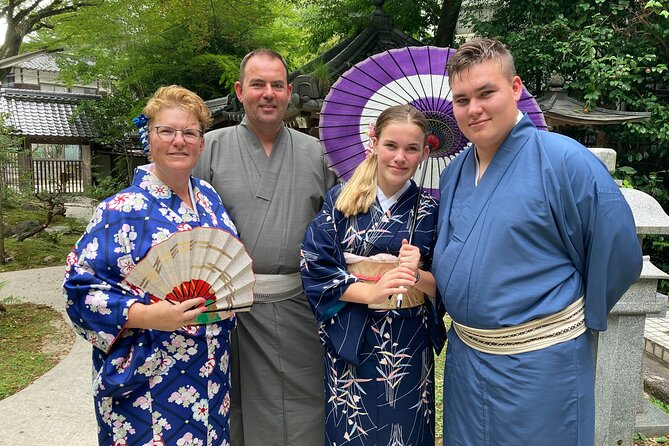
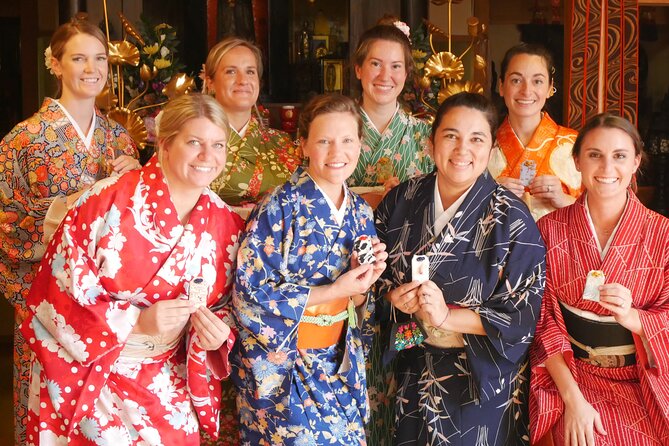
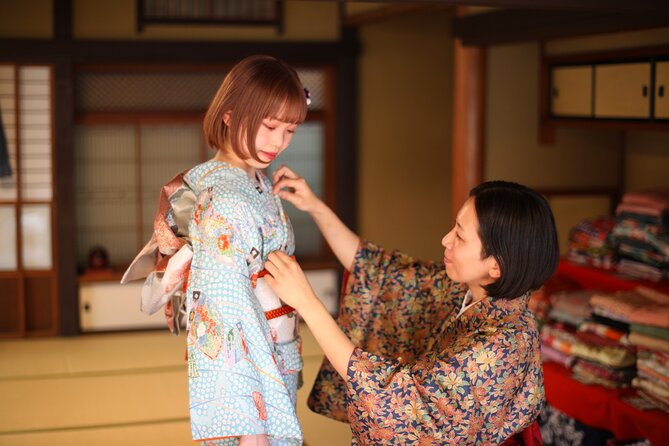
The clothing is not just a quick costume for a photograph. You wear a provided kimono and traditional apron during the lessons, which helps each activity feel connected to its setting.
Allow a little patience for getting dressed and adjusted. The supplied information does not give an exact dressing time, but one account describes arriving early to put on the kimono before photographs were taken in the garden. If you care most about pictures, arriving with time to spare may be useful, but check the meeting instructions for the exact start time.
The photographs are one of the strongest practical touches here. Teachers take pictures during the lessons and send them to you by email. You do not have to hand your phone to another participant or try to pose while also following instructions.
The kimono can make movement slower and less casual than your usual sightseeing clothes. That is part of the charm, but it is worth planning your day around it. Wear something comfortable underneath and avoid treating this as a quick stop between tightly timed commitments.
Japanese calligraphy that begins with your own name
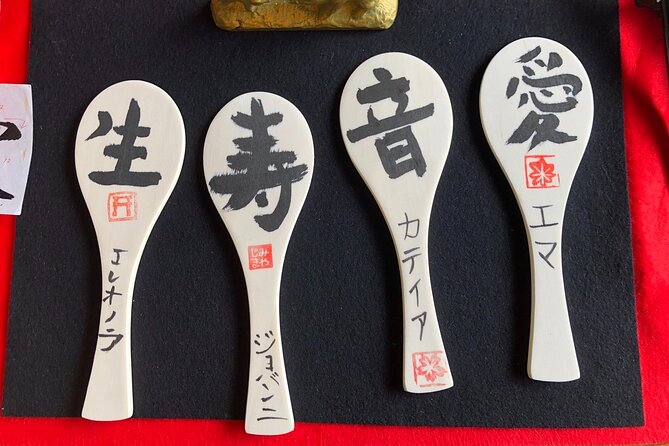
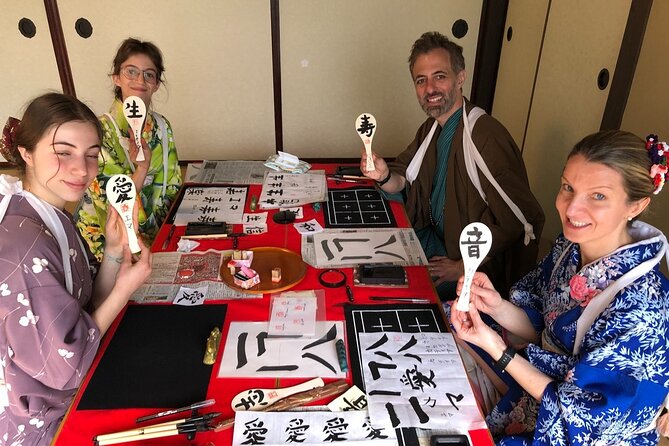
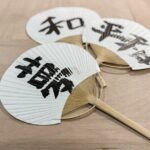
The calligraphy lesson focuses on writing your name in Japanese. That gives the activity a clear goal, rather than leaving you with a vague practice exercise.
You learn how Japanese characters are formed and then work toward a version of your own name. The appeal is partly practical: you leave with a piece of writing tied directly to your visit. It also gives you a small sense of how much control and order go into brush work.
Do not expect to become a calligrapher in thirty minutes. The value is in learning the basic process, seeing how the brush behaves, and understanding that each stroke has a planned direction and balance. The teachers guide you through it, and the short format keeps the lesson from becoming tiring.
Calligraphy is also the activity that may feel most dependent on careful listening. Instructions can involve posture, brush handling, ink, and stroke order. If you are visiting with children, an adult may need to help them stay focused. The minimum age is 6, and children must be accompanied by an adult.
Tea ceremony with a simple, hands-on approach
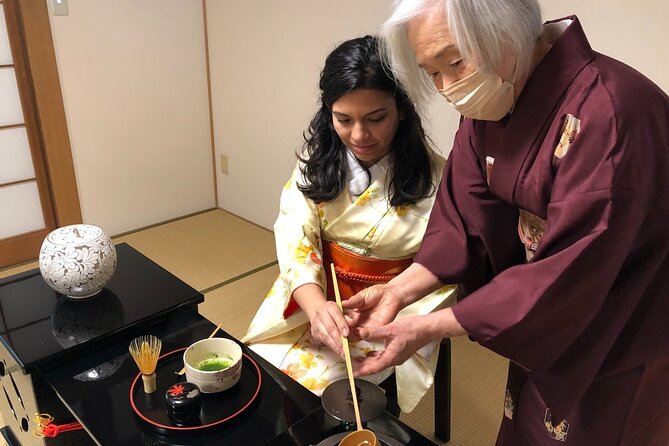
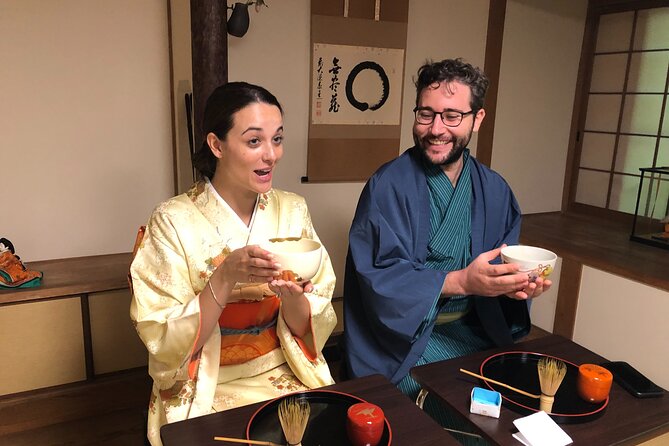
The tea portion introduces you to preparing matcha and performing a tea ceremony. You are not simply watching a formal demonstration from across the room. The aim is to show you the movements and meaning behind the process, then let you take part.
A tea ceremony can look simple until you try to remember the sequence. The way the bowl is handled, how the tea is prepared, and how guests are treated all reflect ideas of care and attention. In this short session, you get enough structure to understand the basics without needing to master every formal detail.
I see this as a good choice for someone who wants context rather than a quick cup of matcha. You learn why the preparation is deliberate and how the setting shapes the experience. The kimono and temple surroundings also make the lesson feel more connected to Japanese custom than a tea tasting in a modern café.
The short time limit is both a benefit and a trade-off. You can sample the ceremony as part of a busy Miyajima day, but you will not receive an advanced study of tea culture. If you already have experience with formal tea ceremonies, the introductory level may feel familiar.
Making an amulet, an uncommon third activity
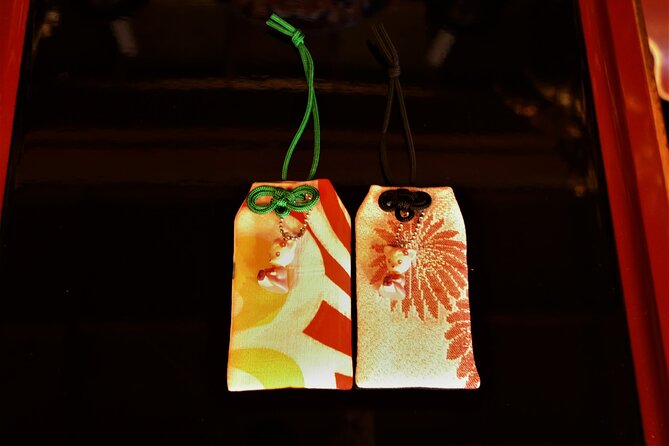
Amulet making is the most unusual part of the program. Tea ceremonies and calligraphy are common introductions to Japanese culture. Making an amulet is offered in fewer places, and here you learn something about what goes into producing one.
The activity gives you a physical object connected with the temple visit. It also helps explain the role of protective charms in Japanese religious life. The association with Kinseki Jizo, who is said to protect children and pregnancy, gives the temple setting a clear spiritual connection.
You should keep your expectations practical. The available information does not describe the exact materials, design, or final size of the amulet, so those details may be explained when you arrive. What is clear is that you take part in making it rather than simply buying a finished charm at a shop.
This is a useful distinction for visitors who want more than a souvenir. The amulet represents a process and a place, while the calligraphy connects the experience to your own name. Together, they give you two small keepsakes with different meanings.




Tokuju-ji Temple adds substance to the lessons
The temple is not just a rented room for cultural demonstrations. Tokuju-ji was founded about three centuries ago, and the Kinseki Jizo story gives the visit a human focus.
The story concerns an older couple who wished for a baby and prayed to Jizo. After they had a healthy son, they built the temple to show their thanks. Even if you do not approach the temple as a religious visitor, the story helps you understand why Jizo figures are important in Japan.
The temple belongs to the Soto school of Buddhism. On Miyajima, Buddhist and Shinto traditions can appear close together, particularly because many temples have connections with Itsukushima Shrine. That overlap gives you something worth noticing as you walk around the island after the activity.
The gardens are another reason the location works well. They provide a quiet background for the photographs and a more settled mood than a busy commercial street. The activity itself lasts about two hours, but the setting can make the visit feel less like a sequence of classroom exercises.
Value at $171.73 per person
At $171.73 per person, this is not a bargain activity. You should judge the price against what is included: three guided cultural lessons, kimono and apron use, the temple setting, an amulet-making session, and photographs sent by email.
The value improves if you want several experiences in one booking. Arranging separate calligraphy, tea, and clothing sessions could take more planning and more of your sightseeing time. Here, the three subjects are bundled into a single visit of about two hours.
The price is harder to justify if you only want one activity. Someone mainly interested in calligraphy may find a shorter lesson elsewhere at a lower cost. The same is true if you are looking only for a tea ceremony or a kimono photo session.
I would think of this as a special-occasion activity rather than a casual filler. It works especially well for couples, families, and friends who want photographs and a shared experience. The small maximum group of 10 should also make the instruction more personal than a large demonstration.
One useful detail is that a session can feel almost private when the date is quiet. A mother and daughter once found themselves with a private tour after arriving by cruise ship. That will not be guaranteed, but the group limit leaves open the possibility of a more personal visit.
Timing, meeting point, and fitting it into Miyajima
The meeting point is Okeiko Japan Miyajima at 741-1 Miyajimachō, Hatsukaichi, Hiroshima 739-0588, Japan. The activity ends back at the same meeting point.
It is near public transportation, and the provider sends directions with the booking information. One participant arrived early and had enough time to find the location, so I would not leave this until the last minute, especially if you are coming from a ferry, cruise ship, or another part of Hiroshima.
The total duration is approximately two hours. Since each cultural activity takes roughly thirty minutes, the remaining time covers transitions, clothing, photographs, and the introduction to the temple setting. You should still allow extra time around the appointment for finding the meeting point and continuing on to your next stop.
Because the experience is on Miyajima, check your wider island schedule before booking. A visit to Itsukushima Shrine, time in the temple district, and transportation connections can easily fill a day. The activity is short enough to fit into a larger plan, but only if you leave breathing room.
The activity is booked an average of 52 days ahead. That suggests you should reserve early if your Miyajima dates are fixed, particularly if you need a specific time or are visiting with a family group.
Who will enjoy this most
I would recommend this experience to you if you want an active introduction to Japanese customs and do not want to spend a full day on one art form. The three-part structure keeps the pace moving and gives you several ways to take part.
It suits first-time visitors to Japan especially well. You learn how to write your name, prepare matcha, wear a kimono, and make an amulet, all in one setting. Those are memorable entry points into Japanese culture, even though the lessons are introductory.
Families can also consider it. The minimum age is 6, and children must have an adult with them. Younger children may need help with the formal steps and careful brush work, but the kimono, photographs, and amulet give the visit several different points of interest.
It is less suitable if you dislike dressing up, have no patience for guided instructions, or want a long and detailed study of one tradition. The experience moves quickly, and its purpose is to give you a broad sample rather than specialist training.
Booking and cancellation details
You receive confirmation at the time of booking, and the ticket is mobile, so you do not need a printed voucher. The activity is near public transportation, and most people can participate according to the supplied information.
Free cancellation is available up to 24 hours before the start time for a full refund. Cancellations or changes made less than 24 hours before the start are not accepted for a refund, and cut-off times use local time.
The provider is Okeiko Japan. The experience has a maximum of 10 participants, although the actual group may be smaller.
Should you book the kimono, tea, calligraphy, and amulet session?
Book it if you want three distinct cultural activities in a single Miyajima visit, value the kimono photographs, and like the idea of making an amulet rather than only buying one. The temple setting and the story of Kinseki Jizo give the program more meaning than a simple costume photograph.
Think twice if $171.73 feels high for a two-hour introduction or if you already plan to take several similar cultural classes elsewhere in Japan. You are paying for convenience, clothing, instruction, a historic temple setting, and a small group, not for advanced training.
For most visitors, the best reason to choose this is its mix. Calligraphy gives you a personal keepsake, tea shows you a formal practice, and the amulet connects you with a less commonly offered tradition. If that combination matches your interests, reserve ahead and leave enough time around the appointment for a relaxed Miyajima day.
FAQ
Where does the experience take place?
It takes place at Tokuju-ji Temple, through Okeiko Japan Miyajima, at 741-1 Miyajimachō, Hatsukaichi, Hiroshima 739-0588, Japan.
How long does the activity last?
The experience lasts approximately two hours.
What activities are included?
You take part in Japanese calligraphy, a tea ceremony, and amulet making.
Do I get to wear a kimono?
Yes. A kimono and traditional apron are provided for you to wear during the lessons.
Are photographs included?
Yes. The teachers take photographs during the lessons and send them to you by email.
What will I write during the calligraphy lesson?
You learn how to write your name in Japanese.
How many people can join the activity?
The maximum group size is 10 travelers.
What is the minimum age?
The minimum age is 6. Children must be accompanied by an adult.
Is the activity near public transportation?
Yes. The meeting point is near public transportation.
Can I cancel for a full refund?
Yes, if you cancel at least 24 hours before the experience start time. Cancellations made less than 24 hours before the start are not refunded.
More Tea Ceremony & Kimono Experiences in Hiroshima


More tours in Hiroshima we've reviewed





Tea Ceremony & Kimono Experiences, compared.
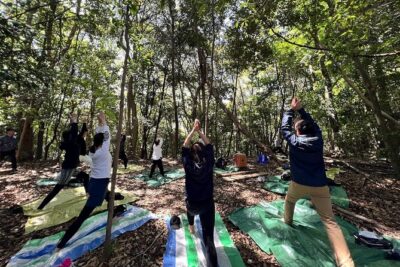 ★ 5.0Hiroshima Local guided Hiking Tour&Open-air Tea CeremonyFrom $109
 ★ 5.0Kimono and Tea Ceremony in MiyajimaFrom $85
 ★ 5.0An Amazing set of Cultural experience: Kimono, Tea Ceremony and CalligraphyFrom $132
 ★ 4.8Hiroshima: Morning Hiking Tour with Open-air Tea CeremonyFrom $1063 hours
 ★ 5.0Experience the Soul of Hiroshima: A Peaceful Koto WorkshopFrom $501h 30m
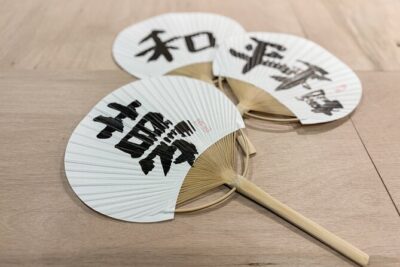 ★ 5.0Calligraphy Workshop at Traditional Folk Craft Shop in HiroshimaFrom $32
