
Reviewed · PEACE MEMORIAL TOURS
Hiroshima Peace (Heiwa) Walking Tour at World Heritage Sites
Hiroshima’s Peace Park is easy to visit on your own, but the human stories behind the monuments are harder to find. This five-hour walk brings the museum, cenotaph, Children’s Peace Monument, Atomic Bomb Dome, and Orizuru Tower into one thoughtful route, with a local guide to explain what you are seeing.
I like the way the tour connects the horror of August 6, 1945, with Hiroshima’s recovery. I also like the small group size, included lunch, entrance fees, and tour photos. Guides such as Yuji, Kaori, Hiro, Yasue, and Etsuko have been praised for clear explanations, kindness, and personal stories.
The main concern is timing. The Peace Memorial Museum can become very crowded, especially near the end of the year, and one part of the main exhibit may require more than an hour. Five hours also means plenty of walking, so this is not a good choice if you have serious mobility limits.
In This Review
- Key points to know before booking
- Why a guided Hiroshima walk helps
- Hiroshima Peace Memorial Park, the tour’s essential setting
- Inside the Peace Memorial Museum
- The Cenotaph and Children’s Peace Monument
- The A-bomb Dome and the Aogiri tree
- Orizuru Tower and the view of modern Hiroshima
- The guides make the difference
- Is $94.84 good value?
- Who should book this Hiroshima tour?
- Should you book it?
- FAQ
- How long does the Hiroshima Peace Walking Tour last?
- What is included in the tour price?
- How many people can join the tour?
- Where does the tour start and finish?
- Is the tour suitable for people with mobility issues?
- Can the tour accommodate dietary restrictions?
- What is the cancellation policy?
Key points to know before booking
- The Peace Memorial Museum gets about one hour: You will see the central displays, but a busy day may limit how much you can cover.
- The walk links Hiroshima’s most important peace sites: The cenotaph, Children’s Peace Monument, A-bomb Dome, and Aogiri tree give the museum’s history a physical setting.
- Orizuru Tower changes the mood: Lunch and a city view offer a useful look at modern Hiroshima after the serious museum visit.
- The group is capped at eight people: That makes it easier to ask questions and keep the pace personal.
- Lunch and entrance fees are included: At $94.84 per person, the package covers the main costs, though extra food and drinks are not included.
- Guide quality matters here: Yuji, Kaori, Etsuko, Hiro, Yasue, Tommy, Mariko, and others have been singled out for warmth, patience, and strong historical explanations.
Why a guided Hiroshima walk helps
Hiroshima Peace Memorial Park is not simply a collection of monuments. It is a place where every stop carries a specific meaning, and the order in which you see those places can shape your understanding.
You begin near Montbell Japan in central Hiroshima. From there, the route moves through the park and toward the museum before continuing to the memorials and Atomic Bomb Dome. The route finishes near Orizuru Tower, close to the lunch stop and public transportation.
I find a guide especially useful here because the written signs cannot answer every question. A guide can explain why the Cenotaph is shaped as it is, what the paper cranes at the Children’s Peace Monument represent, and how the city rebuilt after the bombing. The best guides also help you pause when the subject becomes heavy.
This is not a light sightseeing outing. The museum contains graphic material that may upset young children. You should expect a serious visit, but the tour also places strong emphasis on survival, rebuilding, and the continuing call for peace.
A few more Hiroshima tours and experiences worth a look

Hiroshima Peace Memorial Park, the tour’s essential setting
The first stop is Hiroshima Peace Memorial Park. You spend only about 10 minutes getting oriented here before the museum visit, but that short introduction matters.
The park gives you space to understand the scale of the memorial area. It also makes clear that this is not an isolated building visit. The memorials, river, surviving structures, and public spaces all form part of Hiroshima’s effort to remember the bombing and promote peace.
Your guide can provide the background needed before you enter the museum. That is helpful because the displays are emotionally powerful and often easier to understand when you know the basic sequence of events.
The route is generally described as an easy walk at a gentle pace, but you should still expect to be on your feet for much of the five hours. In summer, Hiroshima can be extremely hot and humid, with temperatures sometimes reaching 40 degrees Celsius. Bring water, wear a hat, and plan clothing for the weather.
Inside the Peace Memorial Museum
The museum receives about one hour of the tour. This is the emotional center of the experience, and for many people it will be the reason for booking.
The exhibits focus on the atomic bombing, its immediate effects, and the way residents coped with the aftermath. Personal belongings, photographs, and accounts bring the event down to the level of individual lives. The purpose is not only to explain military history, but to show what happened to ordinary people.
A good guide helps you read the displays with care rather than rushing from one case to the next. Guides named in the tour feedback, including Yuji, Etsuko, Hiro, Yasue, and Etsuko, were praised for adding human stories and explaining the effects that continued across generations.
One practical warning is important: crowd levels can change the museum visit. During a busy period, it may take more than an hour to see the main exhibit. If you are visiting at a peak time, you may need to accept a shorter look at some sections or return independently later.
That limitation is worth considering because the tour’s schedule gives you a structured introduction, not unlimited museum time. If the museum is your only priority, a separate visit may allow more freedom. If you want the museum placed within a wider guided walk, this arrangement works well.
The Cenotaph and Children’s Peace Monument
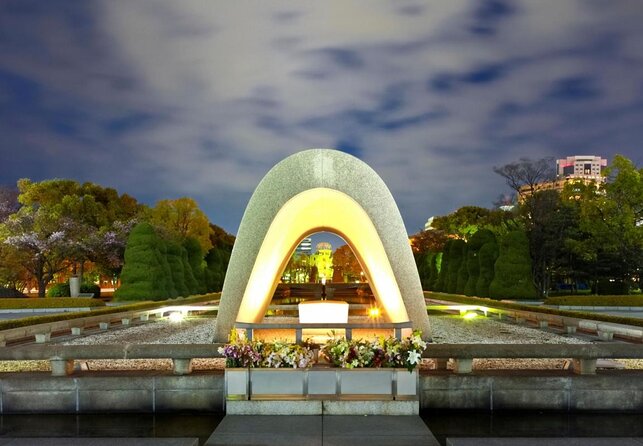
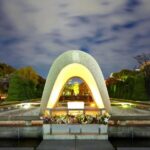
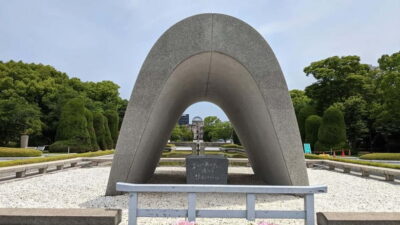
After the museum, the route slows down at the Hiroshima Peace City Monument, commonly called the Cenotaph for the Atomic Bomb Victims. The stop lasts about five minutes, but it is one of the park’s central memorial points.
Your guide explains the purpose of the monument and its place in the larger peace message. This is a good moment to step back from the museum’s objects and consider how Hiroshima remembers the people who died.
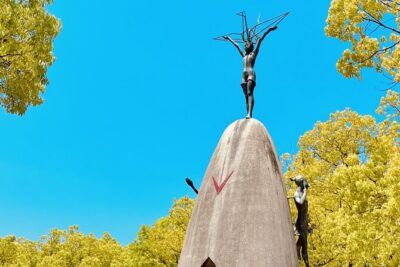
The Children’s Peace Monument receives about 10 minutes. Its meaning is tied to children affected by the bombing and to the paper crane tradition associated with peace. A guide can explain details that are easy to miss if you simply walk past the monument.
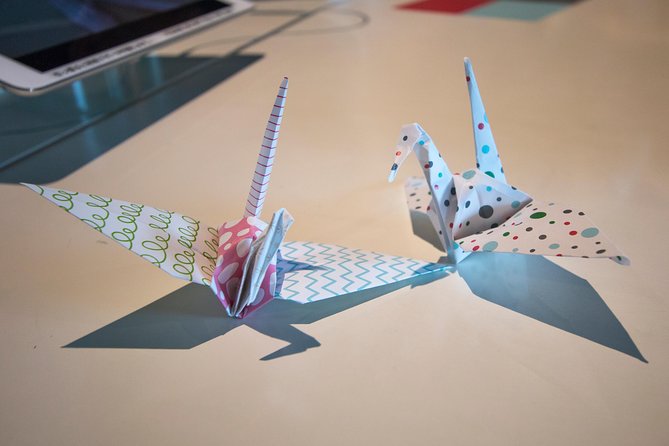
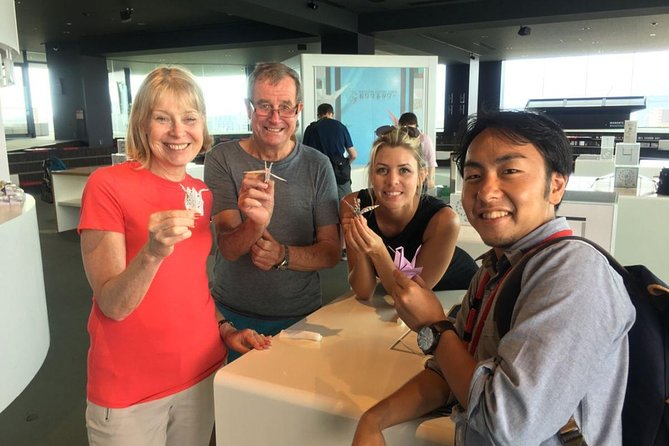
Some guides have added small personal touches, such as helping visitors make origami cranes or giving a card with a paper crane and handwritten note. Those gestures are not listed as guaranteed parts of every departure, so you should treat them as possible extras rather than promised features.
This part of the walk shows one of the tour’s strengths. It does not treat Hiroshima as a single tragic event frozen in 1945. It shows how remembrance became part of the city’s identity and how the peace message continues through symbols, children, families, and public ceremonies.
The A-bomb Dome and the Aogiri tree
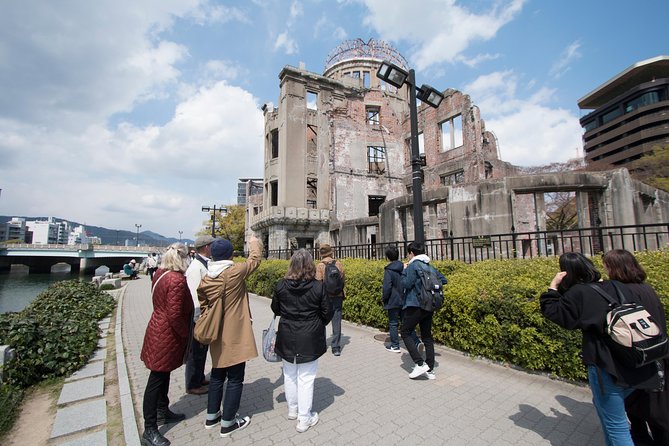
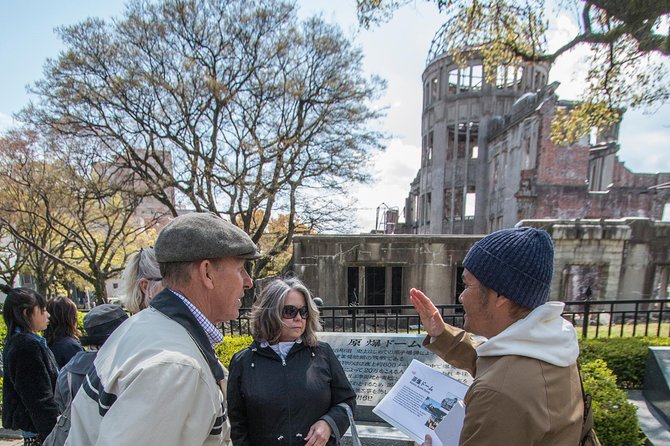
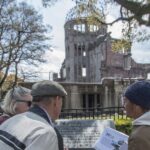
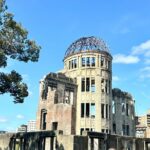
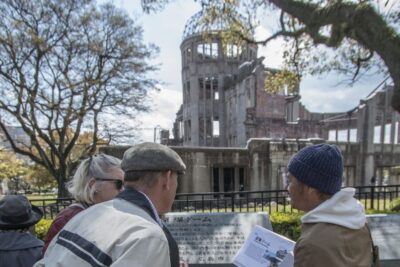
The Atomic Bomb Dome is one of Hiroshima’s most recognizable sights. The building survived the blast at 8:15 on August 6, 1945, and its damaged frame remains beside the river.
You spend about 15 minutes here. That is enough time for an explanation, photographs, and a quiet look at the structure, though not a long architectural study.
The Dome’s power comes from its directness. The museum shows objects and personal evidence. The Dome gives you a surviving building that makes the blast’s force easier to grasp. It also creates a strong contrast with the functioning city around it.
The route also includes the Aogiri tree, a symbol of survival. The original tree endured the bombing and later produced new growth. This is a small stop, but it supports the tour’s wider message: Hiroshima remembers destruction while also showing how life continued.
You should not expect every stop to receive a long formal presentation. Some locations are brief, with the guide adding context as the group walks. That keeps the five-hour schedule moving, but visitors who want extended time at every monument may find the pace a little structured.
A few more Hiroshima tours and experiences worth a look

Orizuru Tower and the view of modern Hiroshima
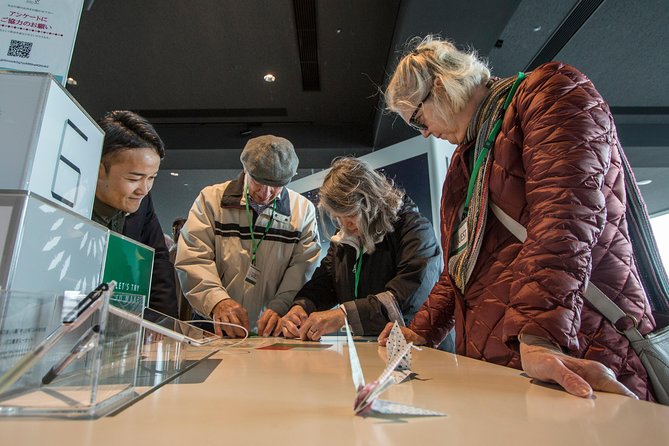
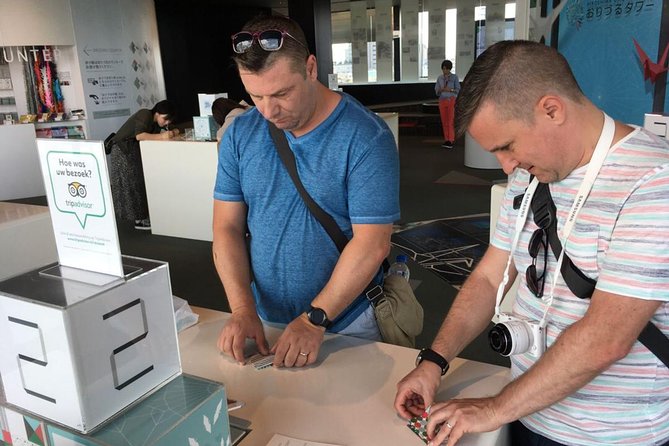
The final major stop is Hiroshima Orizuru Tower. Here, the mood shifts from memorial sites to a high view over the modern city.
The tour includes admission to the tower and lunch at or near the top. The view gives you a useful visual contrast: instead of looking only at the city’s destruction, you see the rebuilt streets and present-day Hiroshima from above.
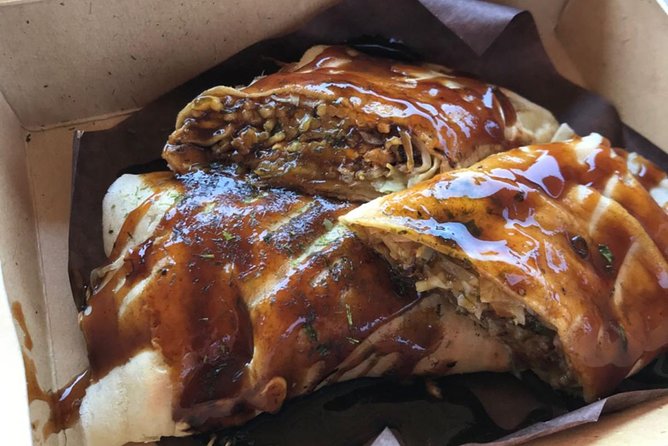
Lunch is included, which adds real value to a five-hour outing. Several people praised the meal, and one described it as delicious at a local restaurant. The exact dishes can vary, so you should not book this tour expecting a specific menu.
The food policy needs careful attention. Gluten-free requests cannot be accommodated. Vegetarian choices are limited in general, though one vegetarian participant found two vegan options. Allergies and other dietary needs must be reported at least one day ahead, and even then, an allergy-free meal or a substitute cannot be guaranteed.
Extra food and drinks cost more, and you do not need to pay for the guide’s meal. The tour ends near the lunch restaurant and Orizuru Tower, which makes it easy to continue exploring central Hiroshima afterward.
The guides make the difference
The company assigns a MagicalTrip Certified Guide, and the individual guide can shape the tone of the day. Names that appear repeatedly in the tour’s feedback include Yuji, Kaori, Etsuko, Hiro, Yasue, Tommy, Mariko, Mizu, Angela, Kaz, and Yuri.
The strongest praise focuses on clear historical explanations and personal warmth. Yuji is described as passionate and well informed. Kaori is praised for keeping a group together and anticipating questions. Yasue is noted for patience and careful answers, while Hiro has been appreciated for explaining Hiroshima’s history from a local perspective.
Etsuko received especially warm praise for sharing personal stories and creating a caring atmosphere. Yuri was also praised for taking good tour photos, a useful bonus when you are busy listening and do not want to manage your camera at every stop.
You cannot select a particular guide unless the operator offers that option at booking. Still, the range of guide experiences suggests that the company places real weight on training and presentation.
The tour’s 99 percent recommendation rate and 5.0 rating from 872 reviews point to a consistently strong experience, but the museum crowding complaint is worth keeping in mind. No guide can solve a packed exhibit hall.
Is $94.84 good value?
At $94.84 per person, this is not the cheapest way to walk through Peace Memorial Park. You can enter the park freely, and several outdoor memorials do not require an admission fee.
The price makes more sense when you add the included Peace Memorial Museum ticket, Orizuru Tower admission, lunch, certified guide, and photos. You are also paying for route planning and for someone to explain the difficult parts of Hiroshima’s past in context.
For a first visit, I consider the package fairly priced if you value guidance and want the main sites handled in one morning or afternoon. A small group of no more than eight people also gives you a better chance to ask questions than a large coach tour.
The value drops if you already plan to spend several hours at the museum, need a special meal, or prefer to move at your own pace. In that case, an independent park and museum visit may suit you better, perhaps with Orizuru Tower added separately.
Group discounts may be available, and mobile tickets make the booking side simple. Free cancellation is allowed up to 24 hours before the start time. If bad weather cancels the tour, you can receive a different date or a full refund.
Who should book this Hiroshima tour?
I would choose this experience if you are visiting Hiroshima for the first time and want help making sense of the memorials. It also suits families with older children, history-minded visitors, and anyone who wants local stories rather than a self-guided walk based only on signs.
The tour is particularly useful if you want a balanced day. You will confront the bombing directly, then move through symbols of peace and survival before seeing modern Hiroshima from Orizuru Tower.
I would hesitate if you have difficulty walking. The operator recommends a private tour instead for people with mobility issues, and the group format may not allow major changes to the route or pace.
I would also think twice if you have strict dietary needs. Vegetarian food may be limited, and gluten-free meals are not available. Contact the operator at least a day ahead for any request, but do not assume a replacement meal can be provided.
Should you book it?
Book this tour if you want context, compassion, and efficient sightseeing in one half-day. The combination of the museum, outdoor memorials, A-bomb Dome, Orizuru Tower, lunch, and a small group gives you a strong first look at Hiroshima.
Skip it if you want several hours alone inside the museum, need guaranteed dietary accommodations, or cannot manage a long walking route. For most first-time visitors who can handle the subject and the walking, this is a meaningful and practical way to meet Hiroshima.
FAQ
How long does the Hiroshima Peace Walking Tour last?
The tour lasts approximately five hours.
What is included in the tour price?
The price includes admission to the Peace Memorial Museum and Orizuru Tower, lunch, a MagicalTrip Certified Guide, and tour photos.
How many people can join the tour?
The activity has a maximum of eight travelers.
Where does the tour start and finish?
The tour starts at Montbell Japan in Hiroshima’s Naka Ward. It finishes near Orizuru Tower and the lunch restaurant, close to Chishaku-in Temple.
Is the tour suitable for people with mobility issues?
The tour is not recommended for individuals with mobility issues. A private tour is recommended if you have difficulty walking.
Can the tour accommodate dietary restrictions?
Gluten-free requests cannot be accommodated. Vegetarian choices are limited, and allergies or other dietary requests must be sent at least one day before the tour. Allergy-free meals and substitutions cannot be guaranteed.
What is the cancellation policy?
You can cancel up to 24 hours before the start time for a full refund. Cancellations or changes made less than 24 hours before the start time are not accepted, and poor-weather cancellations offer a different date or full refund.
More Walking Tours in Hiroshima
More Hiroshima City Tours in Hiroshima
More Peace Memorial Tours in Hiroshima

More tours in Hiroshima we've reviewed


Peace Memorial Tours, compared.
 ★ 4.8Hiroshima Historical Walking Tour – Why A-Bomb was DroppedFrom $352h 30m
 ★ 4.9Hiroshima: Miyajima Peace Memorial Icons of Peace and BeautyFrom $1638 hours
 ★ 5.0Hiroshima Walking Tour Why A Bomb was dropped to HiroshimaFrom $28
 ★ 5.0Hiroshima 2hr Peace Cycling Tour with Local GuideFrom $59
 ★ 4.8Hiroshima: Peace Cycling Tour with Local GuideFrom $522 - 3 hours
 ★ 4.9Hiroshima: Peace Walking Tour of World Heritage SitesFrom $924h 30m
