
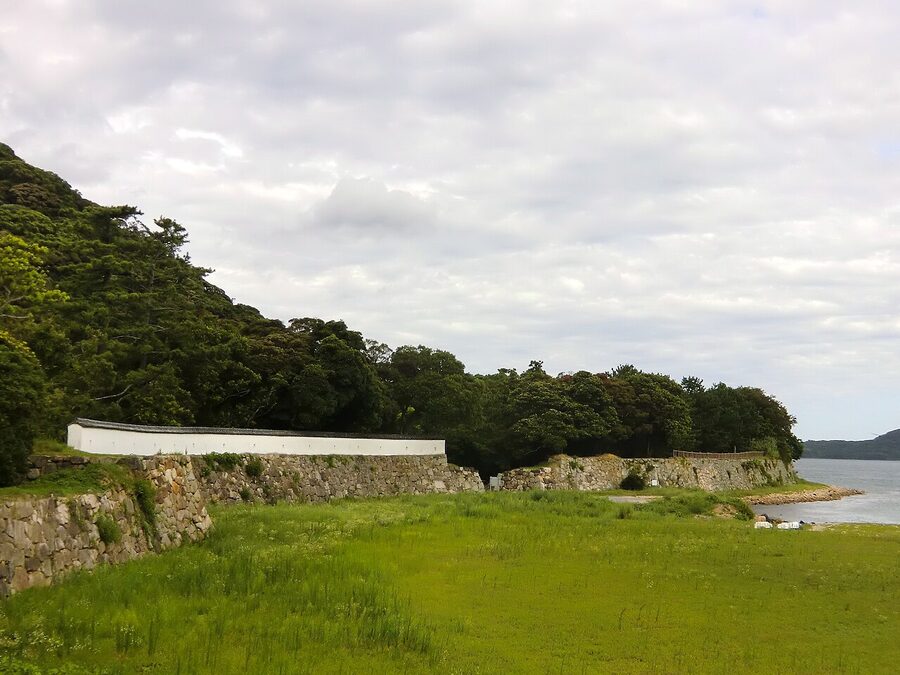
For two and a half centuries, the lords of the Mori clan slept with their feet pointed east. Every night, all the way from 1600 until the Meiji Restoration in 1868, the head of the family turned his tatami cushion so that his soles faced Edo — where the Tokugawa shogun lived. It’s the most passive-aggressive grudge in Japanese history. The Mori had been stripped of most of their empire after choosing the losing side at Sekigahara and were forcibly relocated to a fishing village on the Sea of Japan. The village was Hagi. For the next 268 years they bided their time there, ran the best samurai academy in western Japan, built one of the country’s most influential pottery traditions, and raised the generation of scholars and swordsmen who would eventually bring the shogunate down.
Today Hagi (萩) is a quiet town of about 45,000 people on the Sea of Japan coast of Yamaguchi prefecture, and it’s the most historically dense place in the Chūgoku region. Five separate UNESCO World Heritage sites. Two preserved samurai districts. Three fired kilns that are still making the tea bowls Sen no Rikyū used in the 16th century. The house where Japan’s first prime minister grew up. The schoolroom where the founding thinkers of modern Japan were taught. All inside a 10 km² town that most foreign travellers have never heard of.
The Mori clan and the logic of Hagi
To understand why Hagi is here, you have to understand what happened at Sekigahara. In 1600 the Mori clan, then the most powerful samurai family in western Japan, commanded the western armies that opposed Tokugawa Ieyasu’s bid for supreme power. They lost. The Mori didn’t lose because of cowardice or bad tactics — they lost partly because a cousin, Kobayakawa Hideaki (the same family we met at Mihara Castle), defected mid-battle. Ieyasu stripped the main Mori line of about 75% of its lands and offered them a choice: a tiny corner of Yamaguchi on the Sea of Japan coast, or nothing. The Mori took the tiny corner. The corner was Hagi.
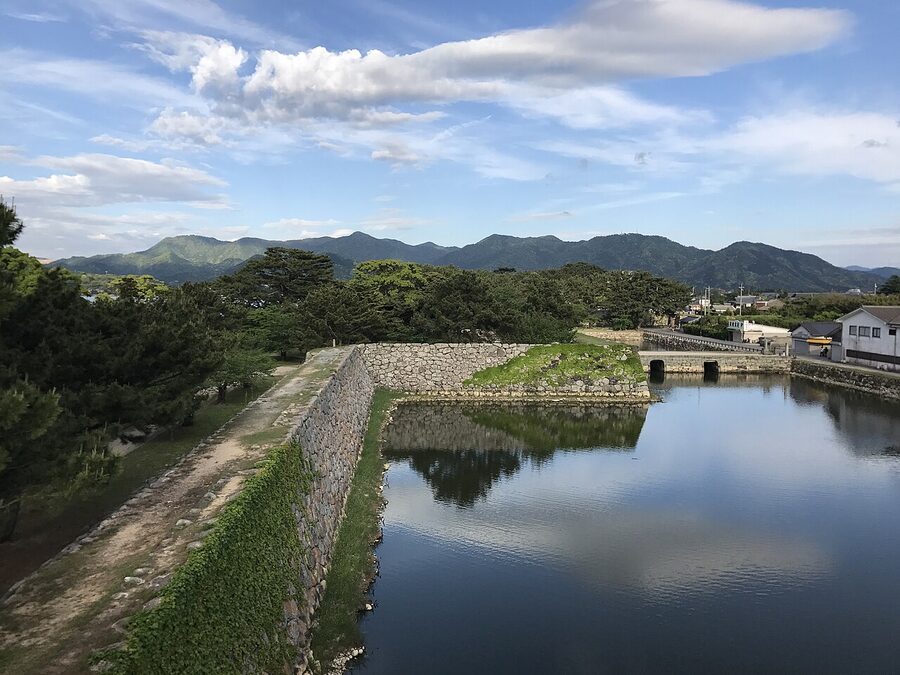
What they built in that corner is the reason to come here. The lords — the Chōshū domain, as the Mori fief became known — put their capital on a sand spit between the Hashimoto and Matsumoto rivers, with Mount Shizuki blocking the western end and the Japan Sea to the north. The geography is naturally defensive. The town was laid out on a perfect grid of canals, with the samurai district ringed around the castle and the merchant quarters to the east. Then they turned it into a school town. The Chōshū lords spent the next 250 years quietly funding the study of Western science, Dutch medicine, military tactics, naval engineering, and — most importantly — political philosophy. By the time the Tokugawa regime started to wobble in the 1860s, the young samurai from Hagi had already read every European treatise on revolution that existed. They were ready.
The castle ruins and Shizuki Park
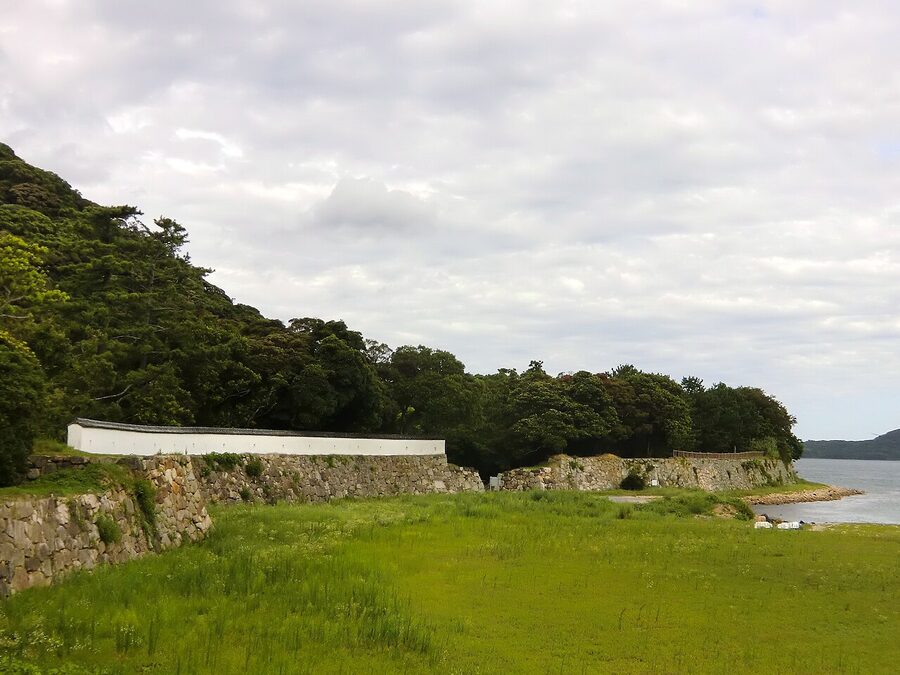
Hagi Castle sat at the extreme western end of the town, where Mt Shizuki meets the sea. Today the site is Shizuki Park, a free public park with the castle’s inner moat, stone walls, one reconstructed watchtower, a small teahouse-museum (Hananoe), a Shinto shrine for the first Mori lord (Shizuki-yama Jinja), and a walking trail up Mt Shizuki (143 m) that takes about 35 minutes and delivers a proper view of the Sea of Japan.
Entry to the park and moat area is free. The Mōri Clan Exhibition Room inside the park costs ¥210. The walk around the preserved outer walls takes about 40 minutes at a normal pace. The cherry blossoms, if you happen to be here in early April, are excellent — second only to Tsuyama in Chūgoku, arguably.
The castle town: samurai streets that never got torn down
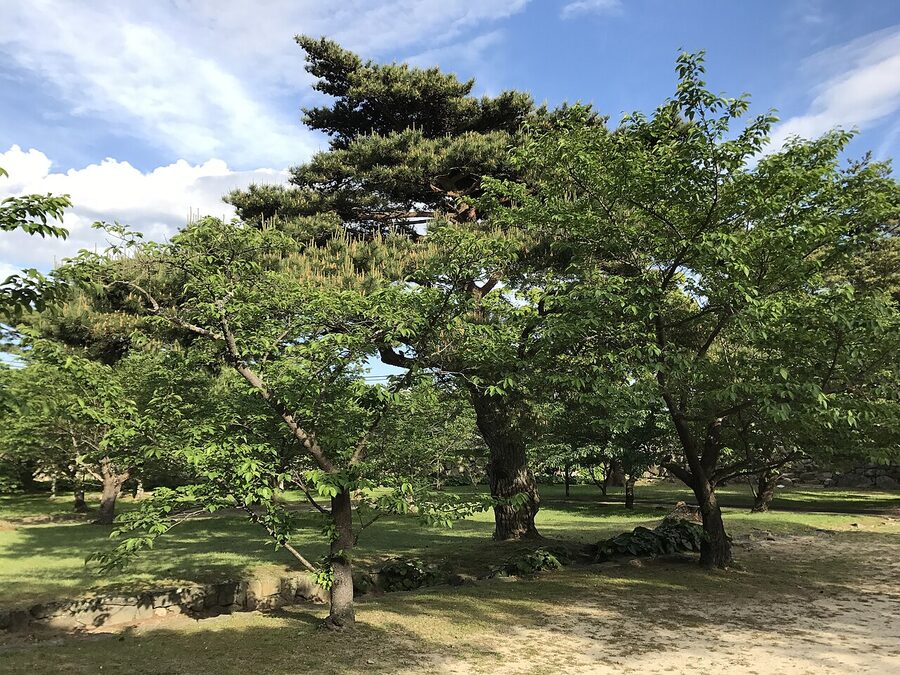
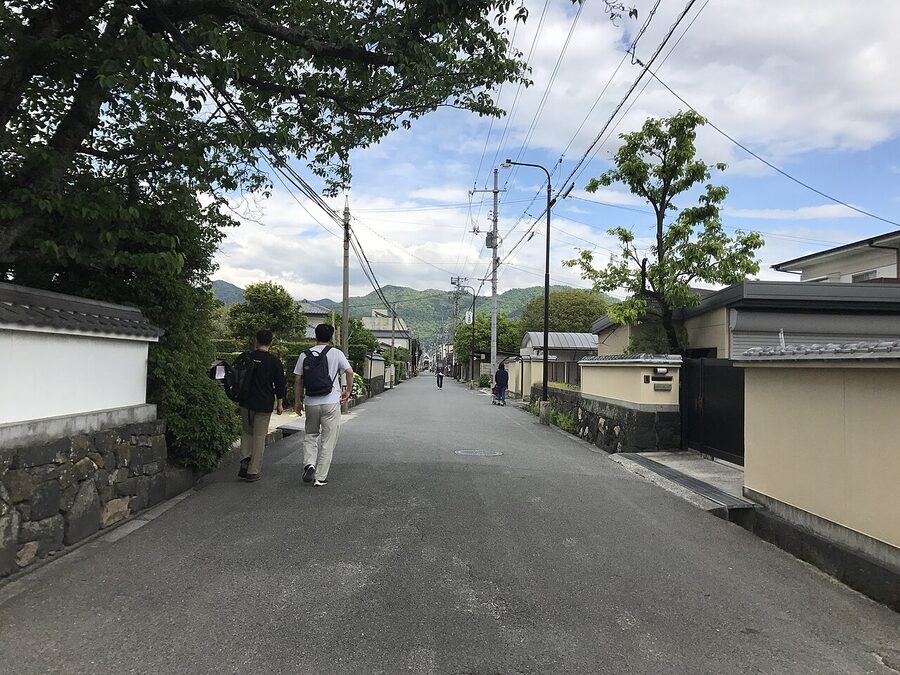
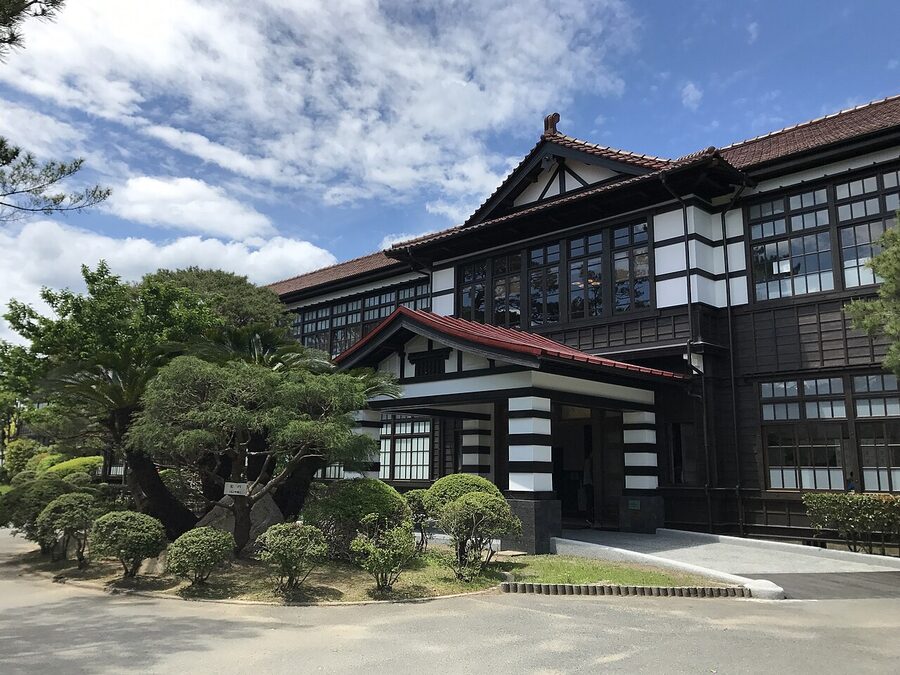
East of the castle, the former samurai district starts. This is where Hagi is unusual. Most Japanese castle towns got redeveloped heavily during the Meiji modernisation — old samurai residences pulled down, grid reshaped around railway stations, the whole pre-modern texture lost. Hagi didn’t get that treatment because Hagi didn’t matter to Meiji infrastructure planners. The railways went elsewhere. The modern city was built alongside, not through, the old one. As a result you can walk today on streets that haven’t been reshaped since about 1680.
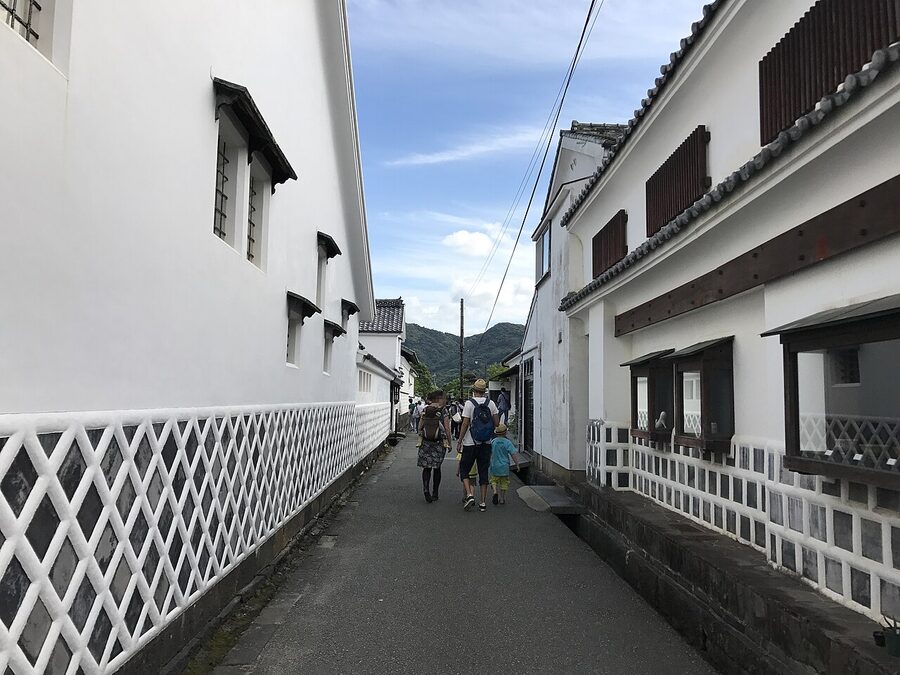
There are four preserved residences worth actually entering. All are walkable within about thirty minutes of each other, all charge modest admission, and all have English signboards.
Kikuya Residence (菊屋家住宅). Founded in 1604 alongside the castle, belonged to a samurai family that later became the Mori’s official merchant-suppliers. The house has an extraordinary set of sliding doors designed to pivot around a corner post so the whole garden view opens up at once — a 17th-century engineering party trick. ¥620 entry, well worth it.
Kubota Family Residence (久保田家住宅). A 200-year-old sake-and-kimono merchant house, much plainer than Kikuya but with a more authentic feel — nothing has been tidied. Large kitchen with old tools still in place. ¥100.
Takasugi Shinsaku Birthplace (高杉晋作誕生地). Small house where the Chōshū domain’s most famous Bakumatsu firebrand was born in 1839. Takasugi founded the Kiheitai, the first Japanese military unit to include commoners alongside samurai, and effectively invented the tactical playbook that defeated the shogunate. Modest entry fee, ¥100.
Kido Takayoshi Former Residence (木戸孝允旧宅). The childhood home of one of the “Three Heroes of the Meiji Restoration” — Kido was the Chōshū politician who co-negotiated the Satsuma-Chōshū alliance that brought down the shogunate. He’s on the old 500-yen note. ¥100 entry.
The natsumikan wall story
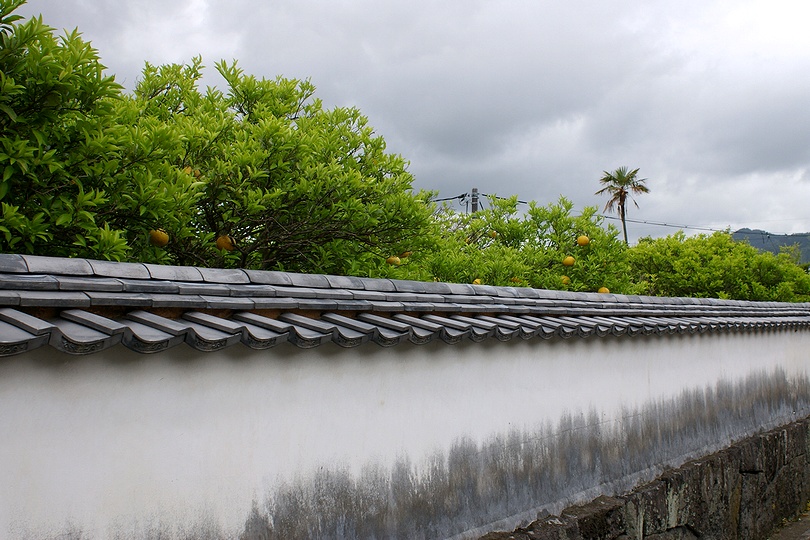
The orange trees you see everywhere in the samurai district are not decoration. They’re natsumikan — summer mandarins — and they’re here because in 1876 the newly-stipendless former samurai of Hagi were slowly starving. A local pharmacist, Kobayashi Kinpachi, convinced them to plant the citrus variety in their empty gardens as a cash crop. Natsumikan ripen in late spring (hence the name), store for weeks, and travel well. By 1900 Hagi was supplying most of Osaka with them. The orange-against-white-wall aesthetic that’s now the town’s Instagram signature is the accidental byproduct of a 150-year-old welfare scheme. Every Hagi guidebook will tell you this. It’s still worth hearing.
Hagi-yaki: the pottery everyone in the tea world cares about
Hagi-yaki (萩焼) is the pottery tradition that started because of one of the more brutal footnotes of Hideyoshi’s 1590s invasions of Korea. When the Japanese withdrew, they took hundreds of Korean potters with them by force. Two of those potters — brothers Ri Shakukō and Ri Kei — ended up in Hagi under the Mori family’s patronage in 1604 and established the first kiln here. Their descendants, the Saka and Miwa families, still run two of the major kilns today. Hagi-yaki is what they’ve been making for 420 years.
The pottery is prized for tea ceremony use above all other applications. Sen no Rikyū’s aesthetic system rated Hagi bowls second only to the sublime Raku ware of Kyoto — there’s an old tea-world ranking that goes Ichi Raku, Ni Hagi, San Karatsu: “first Raku, second Hagi, third Karatsu.” The clay is soft, the glaze is intentionally imperfect, the bowl changes colour with use as tea staining seeps through the kan-nyū cracks. It is a specific, meditative kind of object.
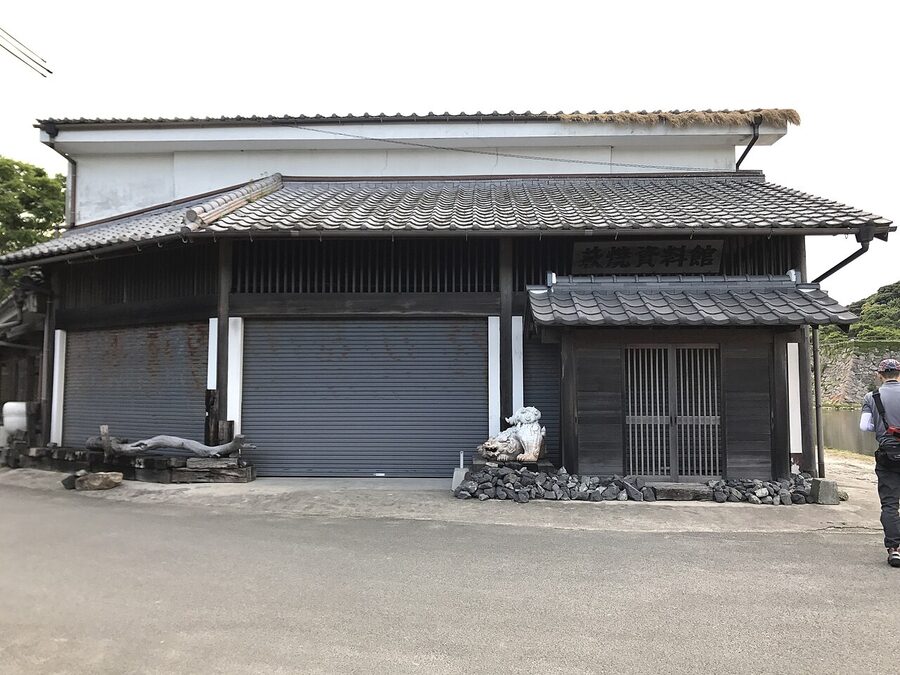
To see or experience the pottery properly, there are three places to go:
Hagi Uragami Museum — the main-street museum, as above, ¥300, a good one-hour overview of 400 years of Hagi-yaki.
Yoshika Taibi Memorial Museum — a smaller, more specialist museum with an adjacent working kiln where you can watch potters throwing bowls. Workshops available by arrangement; a simple “make your own tea cup” session is about ¥3,000 and takes 90 minutes. ¥600 museum entry.
The town’s active kilns — Shōgetsu-gama, Miwa-gama, and Hagi Meirin Yaki are the three that regularly host drop-in visitors. All are within 15 minutes’ walk of the samurai district. Call ahead if you want to see firing in progress — kiln days are usually Tuesdays and Thursdays.
A hand-thrown tea bowl from a named Hagi potter runs ¥8,000–¥35,000 depending on maker. You can find “Hagi-style” factory bowls for ¥1,500. They are very different objects. Spend the extra if you can.
Shōka Sonjuku: the schoolroom that started the Meiji Restoration
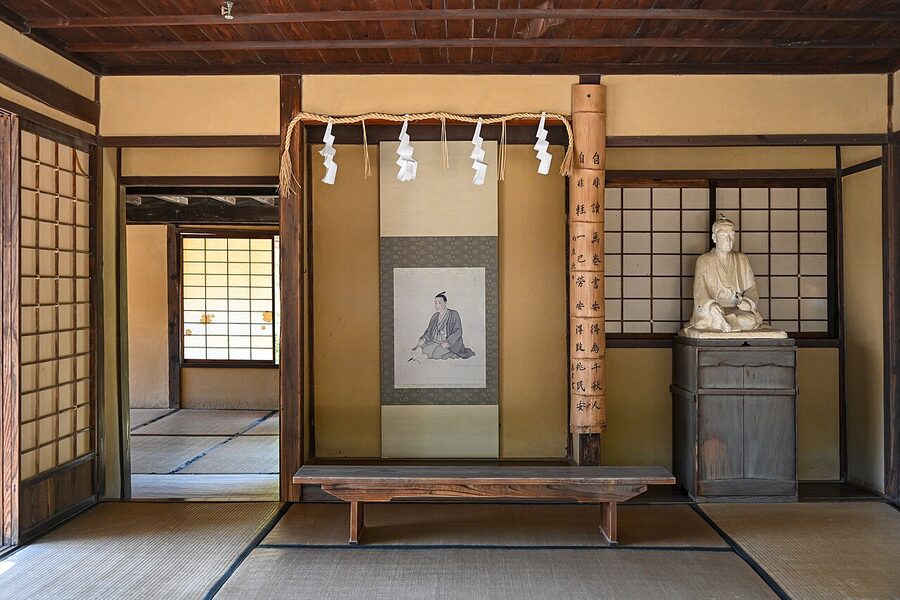
In the northeast of Hagi, a few minutes’ walk from Shōin Shrine, is a single-storey wooden building about the size of a modern living room. This is Shōka Sonjuku (松下村塾) — “the private academy under the pines” — and in the late 1850s it was effectively the most important classroom in Japan.
The teacher, Yoshida Shōin (1830–1859), was a young Chōshū samurai-scholar who had spent his teenage years studying Western military science, sneaking onto a US Navy ship to try to learn more (he was arrested and sent home), and thinking through what Japan needed to do to survive Western encroachment. His conclusion, radical for 1857, was that the Tokugawa regime had to be dismantled and the emperor restored — not because of monarchist sentiment but because the shogunate was structurally incapable of the modernisation the country needed. He opened the Sonjuku to teach this idea. Two years later he was beheaded in Edo for plotting the assassination of a Tokugawa official.
The students who passed through the Sonjuku during those two years included: Itō Hirobumi (Japan’s first prime minister, who wrote the 1889 constitution), Yamagata Aritomo (who built the modern Japanese army), Takasugi Shinsaku (founder of the Kiheitai), and Kido Takayoshi. Between them these four men essentially designed Meiji Japan. The schoolroom is still standing, still furnished with the original writing desks.
Entry is free. Open 08:00 to 17:00 year-round. Adjacent is Shōin Shrine (dedicated to Shōin after his death) and a small museum about the period. Combined, plan about 45 minutes. It’s the single most historically important 45 minutes you can spend in Yamaguchi.
The UNESCO industrial revolution sites
In 2015 UNESCO inscribed a set of 23 “Sites of Japan’s Meiji Industrial Revolution” as a serial World Heritage listing. Five of them are in Hagi. The town was one of the workshops of early modernisation — the Chōshū domain spent the 1850s furiously trying to catch up with Western military technology, and Hagi was where much of that experimentation happened.
The five sites are:
Shōka Sonjuku — the school above.
Hagi Castle Town — the preserved samurai district, essentially the organisational centre from which the modernisation drive was directed.
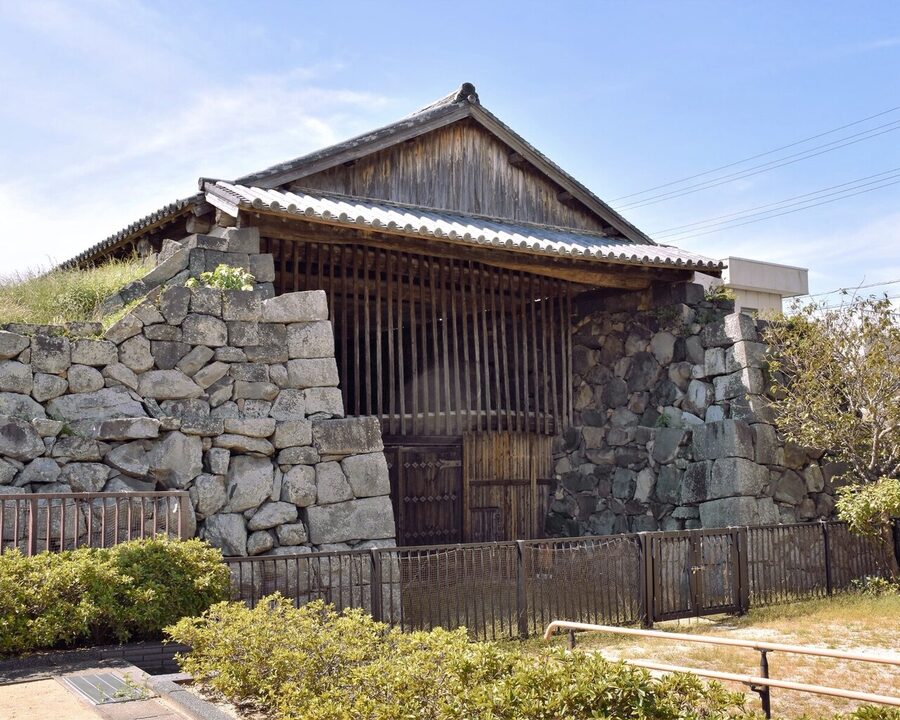
Hagi Reverberatory Furnace (萩反射炉) — a 10-metre stone furnace built in 1858 for casting cannons. It never worked as a production facility (a single test cast failed), but it survives as the only intact early-Meiji reverberatory furnace in Japan. North-east of the town, 15 minutes by bike.
Ebisugahana Shipyard (恵美須ヶ鼻造船所跡) — the site where Chōshū built its first Western-style sailing ships in the mid-1850s. Only foundations remain, but the interpretation panels are good. Same area as the furnace.
Ōitayama Tatara Iron Works — a traditional Japanese tatara iron-smelting site in the hills 10 km outside Hagi, which supplied the iron for the reverberatory furnace. Only worth visiting if you have a car.
The free Hagi Meirin Gakusha Visitor Center (see below) coordinates guided walks of the in-town sites; otherwise, pick up the UNESCO walking map from the tourist office and cycle between them.
The Aiba Waterway and the quiet east of town
Southeast of the castle town, a five-minute bike ride, is Aiba Waterway (藍場川) — an 18th-century irrigation and transport canal that runs for about 2.5 km through a quiet residential district. The canal is still alive. Koi carp swim in it. Some of the houses built alongside it have private stone steps that lead directly into the water, which the residents historically used for washing rice and vegetables.
Walk (or cycle) the full length of the waterway for a half-hour and you pass the Yukawa Residence (open to the public, ¥100 entry) which has one of the most beautifully integrated water-gardens in Japan — the canal flows under the house. The Katsura Tarō Former Residence a few hundred metres further has the same design.
This is the part of Hagi that most coach tours miss. It’s where I’d send any serious traveller for the first afternoon.
Mori clan graves: Tōkō-ji and Daishō-in
The two Mori-family temples sit on opposite sides of the town, and they’re variations on the same theme: walk through a gate, pass a main hall, enter a forest, find 500 stone lanterns in formal rows surrounding the graves of the domain’s lords.
Tōkō-ji (東光寺) — founded 1691, Ōbaku Zen school, east of the centre. The approach is through a striking crimson Chinese-style sanmon gate. Behind the main hall, in a gently sloping forest, are the graves of the odd-numbered Mori lords (3rd, 5th, 7th, 9th, 11th). About 500 granite lanterns, each donated by a samurai retainer at the time of each lord’s funeral, line the paths between the tombstones. The Kusunuki festival on 15 August is when they’re all lit at once — the single best evening in Hagi if you can time it. ¥300 entry.
Daishō-in (大照院) — 1656, Rinzai Zen, south of the centre. Similar forest-and-lanterns arrangement, but for the 1st and even-numbered lords (2nd, 4th, 6th…). Slightly smaller, similarly atmospheric. ¥200 entry.
Most visitors do just Tōkō-ji. If you’re only doing one, do that one. If you have time for both, do them back to back — they’re 25 minutes apart by bike — and you get the full set.
Food in Hagi
Sea of Japan seafood culture dominates here. Squid (ika) is the undisputed star — specifically Kennsaki-ika, caught off the Hagi coast and served live-sliced in sashimi sets where the tentacles are still moving when the plate arrives. The squid fishery is the reason Hagi’s working harbour exists. Chidori and Nakamura near the Higashi-Hagi Station are the local seafood-set places. Expect ¥2,200–¥3,800 for a full lunch.
Mishima Udon. From the outer island of Mishima (30 minutes by ferry from Hagi port) — a thick, hand-pulled udon served in a light dashi. Yakuya on the waterfront does the textbook version.
Natsumikan products. The summer-mandarin industry has expanded into every possible product — marmalade, candy, liqueur, ice cream, kaiseki sauce. The Hagi Shimaya shop at the castle town has the full range. The natsumikan sorbet is actually good.
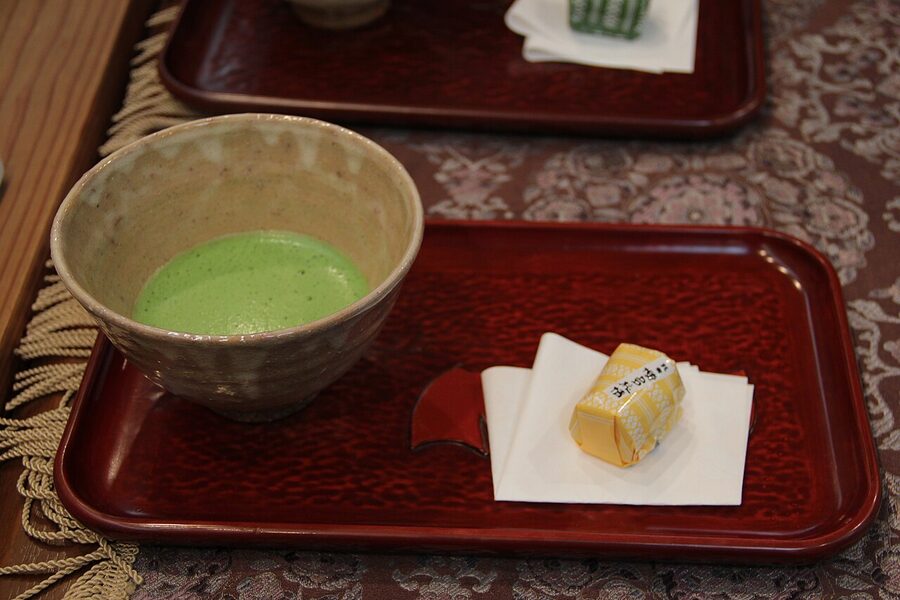
Hagi yaki pottery tea. Worth sitting down for one cup of good tea in a hand-thrown bowl at one of the kiln cafés. Chaho Yamato in the samurai district does a matcha-and-wagashi set for ¥1,200, served in a Hagi-yaki bowl that you can buy for ¥6,500 afterwards if you like it (you usually do).
Getting to Hagi
This is the awkward part. Hagi is on the Sea of Japan coast, far from any Shinkansen, and the access has always been slow.
From Shin-Yamaguchi (the nearest Shinkansen stop). The “Super Hagi” highway bus runs from Shin-Yamaguchi Station directly to Hagi Bus Center in 70–80 minutes, ¥2,000. Roughly 6 departures a day — check before you go. This is the standard access route from anywhere east of here.
From Yamaguchi city. Bus via the Ogōri–Hagi line, about 70 minutes.
From the Sea of Japan side (Shimonoseki / Nagato). Local JR train on the San’in Main Line — slow (2h from Shimonoseki), but gives you the coastal scenery that’s half the point of coming this way. You pass Motonosumi Inari and Tsunoshima Bridge en route.
By car. 90 minutes from Shin-Yamaguchi, 2 hours from Hiroshima on the Chūgoku Expressway and Route 262. A rental car is the right answer if you plan to combine Hagi with Tsuyama or other inland stops.
Getting around Hagi. Rental bikes at the station (¥1,000/day, electric ¥1,500/day). The city is flat and compact — bike is the right answer. If you’re not up for cycling, the Maru Bus loops run both directions around the town for ¥100 per ride, ¥500 day-pass.
Where to stay
Hagi Honjin — the high-end traditional option, a ryokan built inside a restored Edo-period merchant residence with private onsen in most rooms. ¥30,000+ per person with dinner. Book two months out.
Hotel Hagi — the modern mid-range option near the castle, ¥12,000–¥18,000, with an outdoor onsen bath and views of the Japan Sea.
Guesthouse Ruco — a simple guesthouse in a converted machiya in the castle town, dorm-style ¥4,500, private rooms ¥9,000. Young staff, some English.
Nagato Yumoto Onsen — if you have the budget, the most atmospheric option in the area is actually in neighbouring Nagato, about 40 minutes south-west by car. Nagato Yumoto is a 600-year-old onsen village in a river canyon; the Kai Nagato ryokan (¥45,000+) is the standout. Pair it with the Motonosumi shrine visit.
Nearby day trips that make the journey worth it
Motonosumi Inari Shrine. 40 minutes south-west by car. 123 vermilion torii gates running down a clifftop to the Sea of Japan. The most photographed shrine on this coast. Small admission donation, large crowds in cherry-blossom week.
Tsunoshima Ōhashi Bridge. 50 minutes from Hagi by car. 1,780-metre concrete bridge across turquoise water to a small island. Instagram-famous; looks exactly like the photos.
Akiyoshidai karst plateau and Akiyoshido cave. 90 minutes south. The biggest karst limestone landscape in Japan and the country’s largest limestone cavern — 10 km long, 1 km walkable. Worth a half-day.
Planning your visit
Half-day. Castle town + Shōka Sonjuku only. Possible only if you’re coming from Shin-Yamaguchi with a morning bus and heading straight back. Thin. Not recommended.
One full day. Arrive previous night, start at 08:30. Castle town in the morning (Kikuya, Kubota, Aiba waterway), lunch of squid sashimi, Shōka Sonjuku and Shōin Shrine in early afternoon, Tōkō-ji graveyard late afternoon, dinner and bed. Tight but workable.
Two days. Day one: castle town, Aiba, lunch, Sonjuku/Shōin. Day two: Shizuki Park, Mt Shizuki walk, Uragami Museum, pottery workshop, UNESCO industrial sites. Best Hagi experience.
Three days with car. Hagi plus Motonosumi and Tsunoshima on the coast, plus Akiyoshidai karst plateau on the drive back. This is the perfect Yamaguchi mini-loop.
One final thing
If you’re going to remember one moment from Hagi, it should probably be this one. Cycle out to Tōkō-ji at about 16:30 on a clear summer evening. Walk past the main hall, past the carp pond, up the forest path to the graveyard. There are 500 stone lanterns there; they are laid out in rows around the tombstones of five Mori lords who died between 1689 and 1836; the trees above filter the sun into shafts of yellow; the cicadas are loud.
Stand at the top of the lanterns and look back the way you came. What you’re looking at is the concrete, granite, cicada-humming evidence of one of the more patient political grudges in human history — 268 years of a defeated clan playing the long game, until they won. They won because they funded a school in a tiny town that taught one generation of students to read European revolutionary thought. Those students ended the shogunate. The shogunate’s capital is now the largest city in Japan. The defeated clan’s town is now a quiet place with 45,000 people, good pottery, and these lanterns.
That’s Hagi. That’s what you came for.



