
Reviewed · MIYAJIMA TOURS
Hiroshima: Hiroshima and Miyajima UNESCO Sites 1-Day Tour
Hiroshima and Miyajima make a powerful pairing: one part solemn, one part beautiful. This eight-hour tour takes you from the Atomic Bomb Dome and Peace Memorial Museum to Miyajima’s famous floating torii gate, without asking you to piece together buses, ferries, and entrance tickets yourself.
I like the thoughtful handling of Hiroshima’s difficult past, and I like the way the day changes pace after lunch. Guides including Marin, Rino, Tomo, Mo, and Momiji are often singled out for their clear English, warmth, humor, and care. The main drawback is time: you see two major destinations in one day, but Hiroshima city itself gets little attention beyond the peace sites, and Miyajima can feel crowded.
I also like the practical extras: round-trip ferry travel, museum and Miyajima entrance fees, bus Wi-Fi, and an optional Hiroshima-style okonomiyaki lunch are bundled into the $122 price. You should expect a full schedule, plenty of walking, and no hotel pickup.
In This Review
- Key points to know before booking
- Why this Hiroshima and Miyajima pairing works
- Meeting at Hiroshima Station
- Atomic Bomb Dome and Peace Memorial Park
- One hour inside the Peace Memorial Museum
- Bus and ferry to Miyajima
- Hiroshima-style okonomiyaki on Miyajima
- Itsukushima Shrine and the floating torii
- Daishoin Temple and a quieter Miyajima
- Forty minutes on Omotesando Street
- The return journey and overall pace
- Is $122 a fair price?
- Who should book this day tour?
- Should you book it?
- FAQ
- Where does the Hiroshima and Miyajima tour meet?
- How long does the tour last?
- Is lunch included?
- Can the tour provide vegan, halal, or gluten-free food?
- What languages are available?
- Is the tour suitable for wheelchair users?
Key points to know before booking
- The day has two very different halves: a quiet, sobering morning in Hiroshima followed by food, scenery, and shrine visits on Miyajima.
- Guides make the history easier to understand: Marin, Rino, Tomo, Mo, and Momiji have been especially praised for clear English and sensitive explanations.
- The Peace Memorial Museum includes about one hour of free time: you explore the exhibits yourself rather than follow the guide through every room.
- Okonomiyaki is optional: vegetarian servings can be requested at least two days ahead, but vegan, halal, and gluten-free meals are not available.
- Miyajima is more than the torii gate: Daishoin Temple, Omotesando Street, local snacks, deer, and views across the Seto Inland Sea fill out the afternoon.
- The schedule is efficient but not leisurely: it suits you best if you want both UNESCO sites in one day and prefer organized transport.
Why this Hiroshima and Miyajima pairing works
Hiroshima is not a place to rush through with a camera and a checklist. The Atomic Bomb Dome and Peace Memorial Park ask for attention, while the museum presents personal evidence of what happened on August 6, 1945. Miyajima then gives the day a gentler second rhythm, with a shrine, wooded slopes, food stalls, and sea views.
That contrast is the tour’s strongest idea. You begin with remembrance and end among traditional architecture and island scenery. Several guides use sketches, photographs, and stories to explain what you are seeing. Marin has been noted for using a sketchbook, while Rino is praised for answering questions and helping people find the right places at the right time.
The tour does not attempt to cover all of Hiroshima. Hiroshima Castle is passed by rather than visited, and there is no long stop for central shopping or modern city life. If your goal is the city’s wider cultural scene, you will need another half-day. If your goal is the Peace Memorial sites plus Miyajima, the route is well chosen.
A few more Hiroshima tours and experiences worth a look

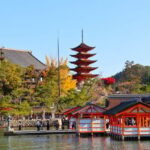
Meeting at Hiroshima Station
You meet in front of the Shinkansen Ticket Gate on the second floor of Hiroshima Station, at the North Gate. Look for a staff member holding a green and white flag. This is a sensible meeting point if you arrive by bullet train, but do not leave it until the last minute. Hiroshima Station is large enough that you should allow time to find the North Gate and the correct level.
Hotel pickup and drop-off are not included. You need to reach the station on your own, then return there at the end of the day. If you plan to take a Shinkansen after the tour, buy that ticket after the tour or choose a departure after 6:30 p.m. The day is scheduled to last about eight hours, but a little breathing room is wise.
The air-conditioned coach handles the longer road sections. The bus includes Wi-Fi and a multilingual audio guide in Spanish, French, Italian, German, Portuguese, and Ukrainian. English and Japanese are handled by the live guide. One practical caution: an English audio track was found too quiet by one person, so sit where you can hear the guide directly whenever possible.
Atomic Bomb Dome and Peace Memorial Park
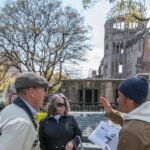
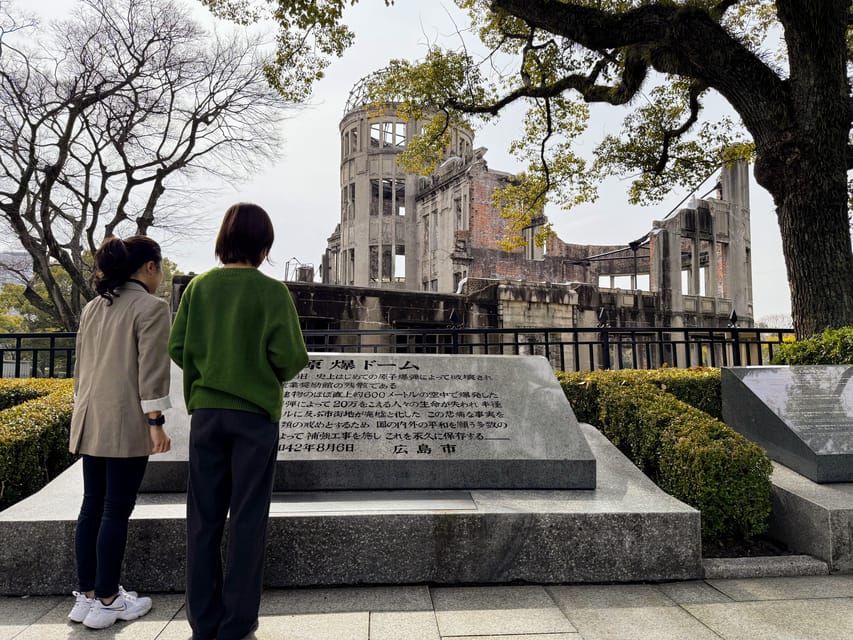
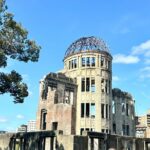
The first important stop is the Atomic Bomb Dome, the preserved remains of the former Hiroshima Prefectural Industrial Promotion Hall. The building survived close to the bomb’s center of destruction and became an international symbol of Hiroshima’s call for peace. UNESCO added it to the World Heritage list in 1996.
You receive about 20 minutes of guided time here. That is enough to view the dome, hear its basic story, and take in the setting along the Motoyasu River. It is not enough for a long architectural study, but the guide gives the structure meaning beyond its familiar photograph.
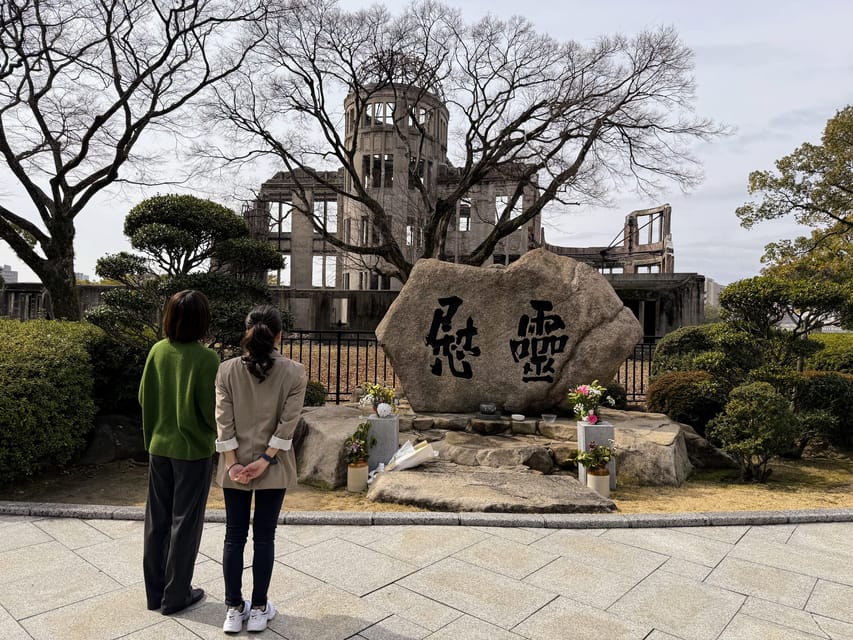
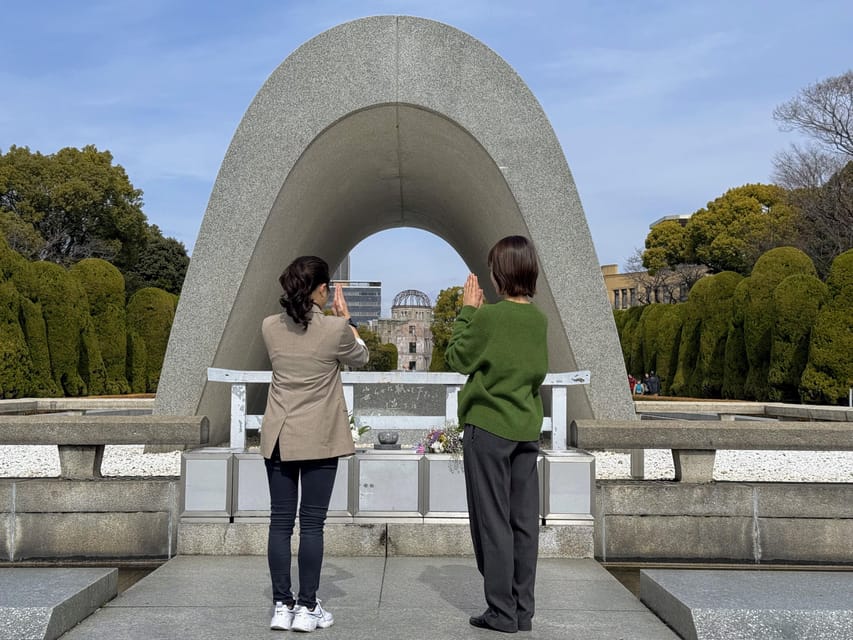
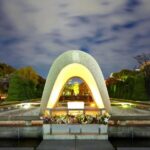
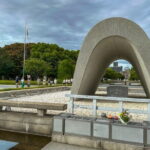
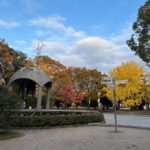
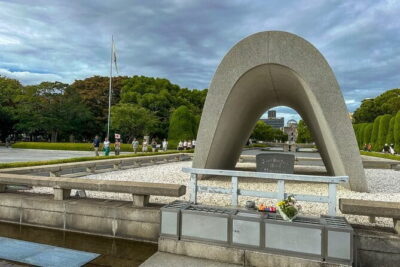
From there, you walk through Hiroshima Peace Memorial Park for about 40 minutes. The park includes the Cenotaph for the A-bomb Victims and the Children’s Peace Monument, associated with Sadako Sasaki, who died from leukemia caused by radiation exposure. Your guide helps connect the monuments to the people they commemorate.
This part of the tour is emotional. The best guides keep their tone calm and respectful, while still leaving room for questions. Tomo, Rino, Marin, Mo, and Momiji have each been praised for explaining the subject with care rather than turning it into a lecture. That matters here. You want context, but you also need time to look, think, and move at your own pace.
One hour inside the Peace Memorial Museum
The Hiroshima Peace Memorial Museum is the heart of the morning. You have about one hour of free time to explore the exhibits, which focus on the atomic bombing and its aftermath. The museum is direct and often painful. Personal belongings, photographs, testimony, and accounts of illness make the event feel human rather than abstract.
Your guide does not normally walk you through the museum room by room. Instead, the tour gives you background before allowing you to decide how to use your hour. This is a good arrangement because people respond differently to the displays. Some move slowly and read every panel. Others need to step outside after a shorter visit.
If you want extra explanation inside the museum, an audio guide costs an additional 500 yen, according to the tour information shared by one participant. I would consider it if you want more detail than the hour and the live commentary provide. The bus audio guide is included, but it is separate from the museum’s own audio service.
The museum is closed for exhibit replacement from February 16 through 21, 2026. During those dates, the tour visits the Hiroshima National Peace Memorial Hall for the Atomic Bomb Victims instead. The substitution is useful to know before you book, and no refund is issued because of the change.
Bus and ferry to Miyajima
After the museum, the mood changes as you travel toward Miyajima. The coach ride takes about 40 minutes, followed by a ferry ride of roughly 20 minutes. The ferry crosses calm waters of the Seto Inland Sea, with islands and distant hills providing a welcome pause after the morning’s heavy subject.
The ferry is included, so you do not need to arrange another ticket or work out the connection yourself. This is one of the tour’s practical strengths. Reaching Miyajima independently is possible, but coordinating the coach, ferry, shrine entry, and return trip takes time and attention. Here, the guide keeps the group moving without requiring you to navigate each transfer.
You should still watch the clock. The itinerary includes several fixed transport sections, and the ferry back to the mainland is part of the planned return. Free time on Miyajima is real, but it is limited.
A few more Hiroshima tours and experiences worth a look

Hiroshima-style okonomiyaki on Miyajima
If you select the lunch option, you eat at a local restaurant for about 50 minutes. Hiroshima-style okonomiyaki is built in layers, usually with cabbage, pork, noodles, and egg. That layered style differs from the more mixed batter often associated with Osaka-style okonomiyaki.
Lunch gives you a taste of a local food tradition without using up time searching for a restaurant. Several people found the meal delicious, and it fits the day well because it is filling before the walking portion on Miyajima. The 50-minute stop is enough for a proper meal, though not a long, relaxed restaurant sitting.
Vegetarian okonomiyaki is available if you request it at least two days before the tour. There is no vegan, halal, or gluten-free option. If you have any of those requirements, choose the no-lunch option and make your own food arrangements. Do not assume that removing meat will make the dish vegan or gluten free.
Itsukushima Shrine and the floating torii
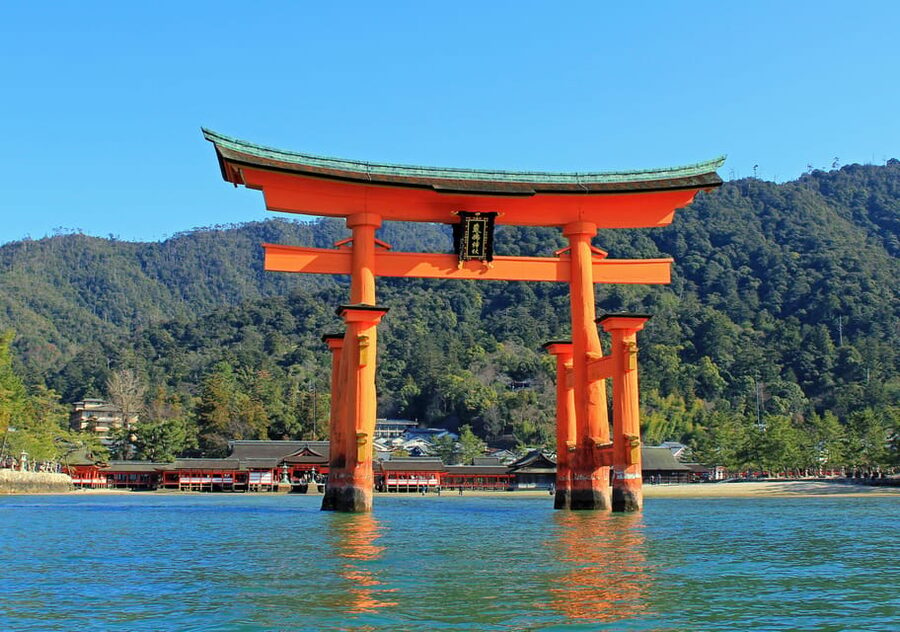
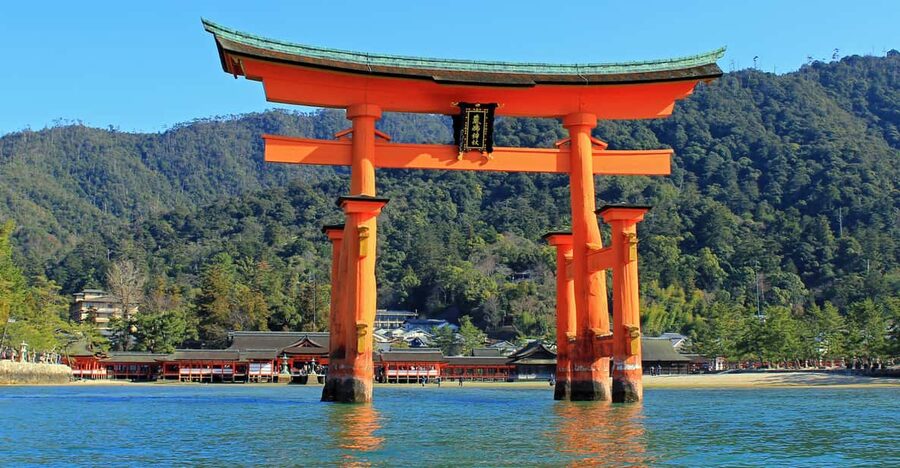
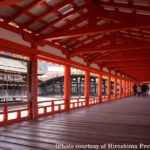
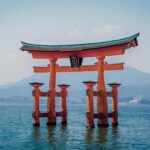
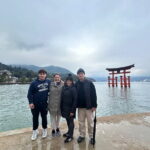
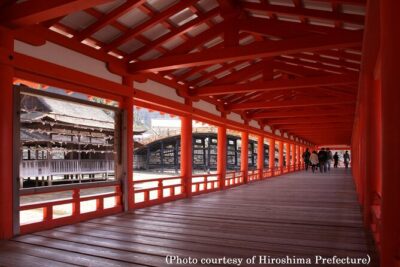
Itsukushima Shrine is Miyajima’s main sight and the reason many people make the trip. Its vermilion buildings extend over the water, and the Great Torii appears to float offshore at high tide. The effect changes with the tide, weather, and light, so the gate may look surrounded by water or sit on exposed ground during lower conditions.
You spend about an hour at the shrine, including guided explanation and free time. The guide can explain the shrine’s religious setting and the traditions connected with Miyajima. That background helps you see the site as more than a famous photo stop.
The shrine is also the busiest part of the island. One person found Miyajima too touristy, and that is a fair warning. Omotesando Street can be crowded, especially around the same time that tour groups arrive. The tour does not remove the crowds, but it does help you reach the shrine and understand what you are looking at without wasting time finding the entrance or route.
Bring patience for photographs. The torii gate is iconic, but you may need to wait for a clear view. Your guide may also help with photos. Rino has been praised for acting as a cheerful designated photographer, a small touch that can be useful when you are traveling with family or as a couple.
Daishoin Temple and a quieter Miyajima

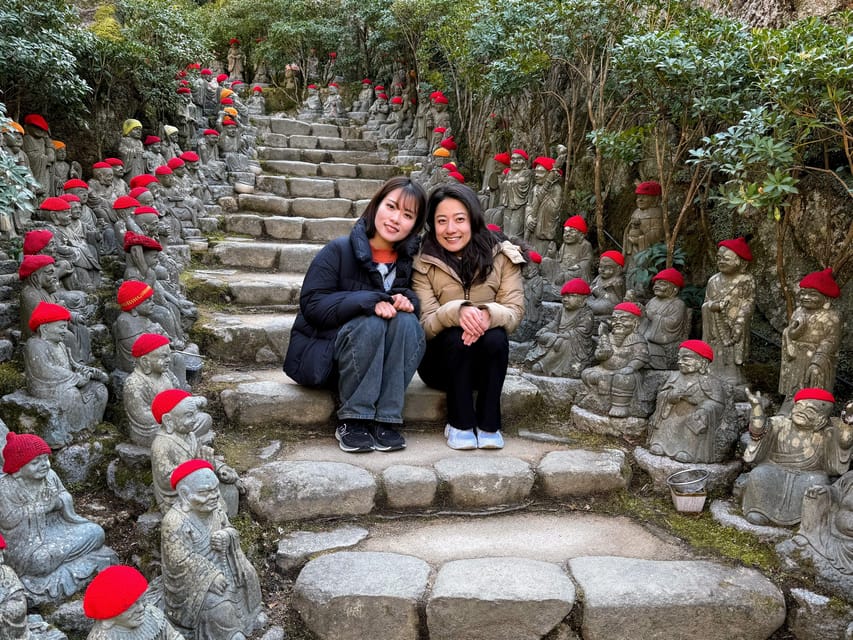
Daishoin Temple offers a different view of the island. This historic Buddhist temple sits on Mount Misen and is known for its gardens and many stone statues. The atmosphere is calmer than the main shopping street, making the 30-minute visit a welcome change after the shrine.
You have free time here rather than a long formal tour. Look around the grounds, notice the statues, and take in the views toward Miyajima and the Seto Inland Sea. The visit is not a Mount Misen hiking excursion, and the schedule does not include a cable-car ride or summit time. If you hoped to reach the mountain’s highest viewpoints, you will need a separate visit.
Daishoin is valuable because it keeps Miyajima from becoming only a torii-gate stop. The shrine shows the island’s Shinto identity, while the temple adds a Buddhist side. You get a broader sense of the place in a short amount of time.
Forty minutes on Omotesando Street
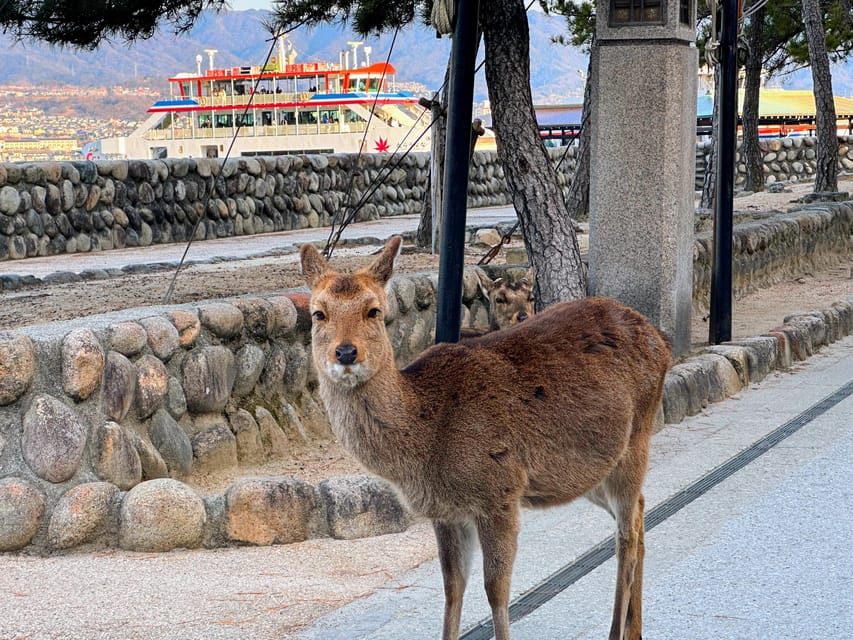
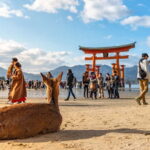
The final island stop is about 40 minutes of free time around Omotesando Street, Miyajima’s main shopping area. Shops sell local specialties, snacks, souvenirs, hand-painted fans, and maple-themed crafts. You may also see deer around the island, an element that adds to Miyajima’s appeal but does not replace the cultural sights.
Forty minutes goes quickly. Use it for a snack, a small gift, or a quick look at the street rather than planning a long shopping session. If you want a particular souvenir, ask your guide early so you do not spend the entire free period browsing.
The shopping street is the least quiet part of the afternoon. It can feel commercial after the temple, and the limited time means you will not inspect every shop. Still, it gives you a chance to choose your own pace before the ferry ride back.
The return journey and overall pace
You return by ferry, then take the coach back to Hiroshima Station. The ferry takes about 20 minutes, and the final bus ride takes roughly 50 minutes. This is a good time to rest, use the bus Wi-Fi, and sort through the day’s very different impressions.
The schedule is carefully packed. It includes about 20 minutes at the Atomic Bomb Dome, 40 minutes in the park, one hour at the museum, 50 minutes for lunch, one hour at Itsukushima Shrine, 30 minutes at Daishoin, and 40 minutes of island free time. You see a lot, but you do not linger long at any single place.
That pace suits you if you are visiting Hiroshima once or making a day trip from Osaka by Shinkansen. The journey from Osaka takes about an hour and a half, making this format possible, though you should check train times carefully and avoid booking a tight connection after the tour.
Is $122 a fair price?
At $122 per person, the price is reasonable for the amount of coordination involved. You receive an air-conditioned coach, round-trip ferry transport, entrance fees for the Atomic Bomb Museum and Miyajima, an English-speaking guide, bus Wi-Fi, and lunch if you select that option.
You are also paying for time. A self-guided visit may cost less, especially if you already understand the local train and ferry system. But you would need to organize the transfers, find the right entrances, manage the schedule, and explain the historical sites to yourself. For families and first-time visitors, that work can easily outweigh the savings.
The value is strongest when you want both Hiroshima and Miyajima in one day. It is weaker if you prefer slow museum visits, long meals, independent photography, or a full day on Miyajima. The tour gives you breadth and structure, not unlimited time.
Who should book this day tour?
I would choose this tour if you want the major Hiroshima memorial sites and Miyajima without logistical strain. It is especially useful for a first visit, a short stay, families, and anyone arriving from Osaka who wants an organized day.
The tour also works well for people who want historical context in English. Guides such as Marin, Rino, Tomo, Mo, and Momiji have been praised for excellent English, humor, warmth, and careful treatment of the bombing’s history. Their personal explanations add something that an audio guide alone cannot.
I would hesitate if you use a wheelchair, since the activity is not suitable for wheelchair users. I would also think twice if crowds bother you, if you need a vegan or gluten-free lunch, or if you want to hike Mount Misen. The schedule includes walking, ferry transfers, and several fixed meeting times.
Should you book it?
Book it if your Hiroshima wish list begins with the Atomic Bomb Dome, Peace Memorial Park, and Peace Memorial Museum, then continues to Itsukushima Shrine. The tour’s best feature is its balance: serious remembrance in the morning, island beauty and local food in the afternoon.
Skip it if you want Hiroshima at a slower pace or plan to spend several hours on Miyajima alone. For most first-time visitors with only one available day, though, the $122 fee buys useful transport, clear guidance, and a well-planned route through two places that are difficult to combine casually.
FAQ
Where does the Hiroshima and Miyajima tour meet?
Meet in front of the Shinkansen Ticket Gate on the second floor of Hiroshima Station at the North Gate, 2-1185 Matsubaracho, Minami-ku, Hiroshima. Look for a staff member holding a green and white flag.
How long does the tour last?
The tour lasts eight hours. The route includes coach travel, two ferry rides, guided visits, museum time, lunch if selected, and free time on Miyajima.
Is lunch included?
Lunch is included only if you select the lunch option when booking. The meal is Hiroshima-style okonomiyaki. Vegetarian servings are available if requested at least two days before the tour.
Can the tour provide vegan, halal, or gluten-free food?
No. Vegan, halal, and gluten-free options are not available. You should select the no-lunch option if you require one of these diets.
What languages are available?
The live tour guide speaks English or Japanese. The bus audio guide is available in Spanish, French, Italian, German, Portuguese, and Ukrainian.
Is the tour suitable for wheelchair users?
No. The activity is listed as unsuitable for wheelchair users.
More 1-Day Tours in Hiroshima
More Hiroshima City Tours in Hiroshima
More Miyajima Tours in Hiroshima
More tours in Hiroshima we've reviewed


Miyajima Tours, compared.
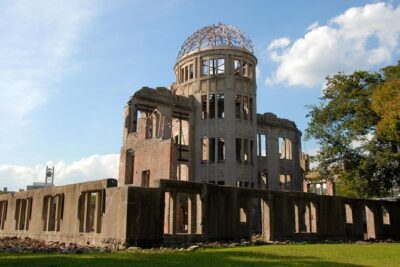 ★ 5.0Peaceful Hiroshima & Miyajima UNESCO 1 Day Bus TourFrom $129
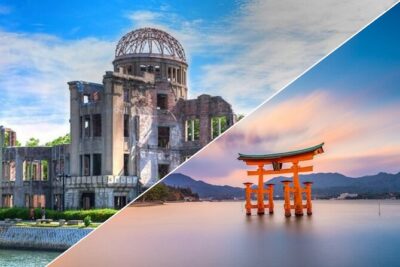 ★ 5.0Hiroshima / Miyajima Full-day Private Tour with Government Licensed GuideFrom $202
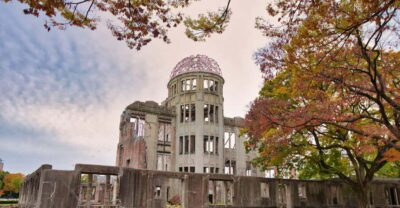 ★ 4.7Osaka/Kyoto: Hiroshima Miyajima Bus Tour & Shinkansen TicketFrom $27712 hours
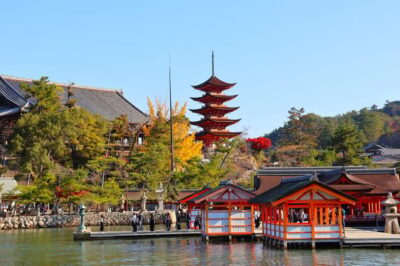 ★ 4.7From Hiroshima: Hiroshima & Miyajima 1 Day Tour with LunchFrom $1168 hours
 ★ 5.0Hiroshima and Miyajima Day Trip with Itsukushima Shrine & FerryFrom $45
 ★ 4.5Full Day Hiroshima and Miyajima Bus Tour from HiroshimaFrom $152
