
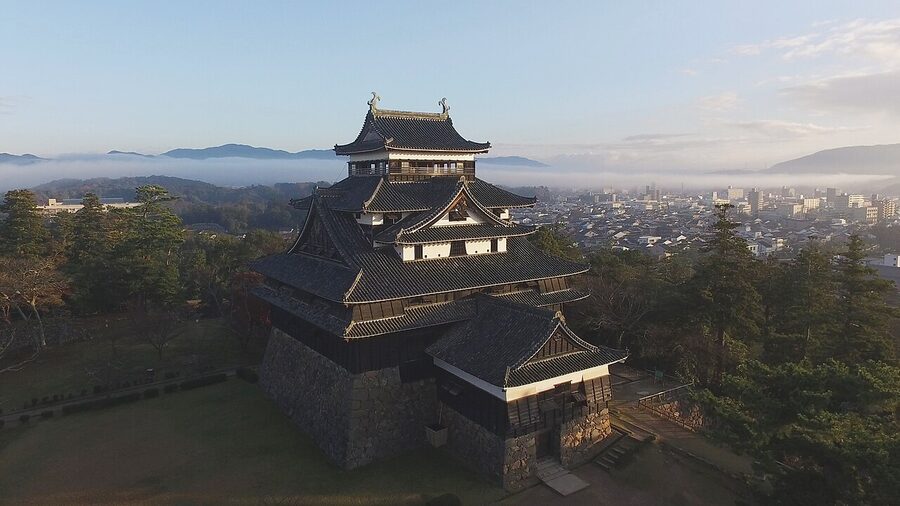
In 1890 an Irish-Greek journalist named Lafcadio Hearn arrived in a small coastal city on the Sea of Japan, took a job teaching English at the local high school, married the daughter of a samurai family, started writing down the local ghost stories, and effectively invented the Western concept of “old Japan.” The city was Matsue. The book that came out of his time there — Glimpses of Unfamiliar Japan — was published in 1894 and for the next fifty years was the single most influential English-language book about Japan. Everything from the 1930s Japanese Empire’s self-image to mid-century American travel writing traces back in some way to Hearn’s Matsue.
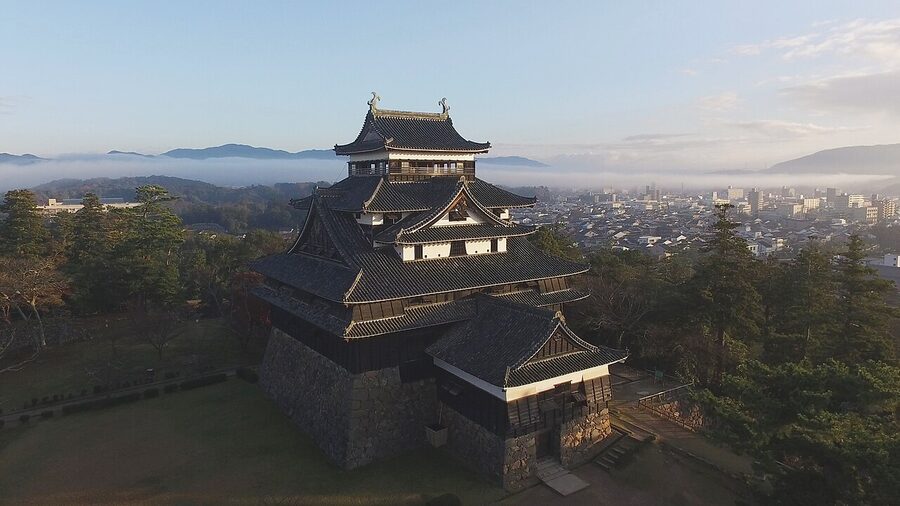
The city is still here, and it’s still the quiet, slightly mystical, slightly melancholy place Hearn described. Matsue (松江) is the capital of Shimane prefecture, sits between two freshwater lagoons on the San’in coast, and is one of only twelve Japanese cities that still has its original Edo-period castle keep standing. A black-walled four-tier fortress with its original 1611 timbers; a moat you ride a covered boat around in winter with a hot grill in the middle to keep warm; a samurai district that was preserved almost intact; one of the three gardens in Japan that genuinely rivals Kyoto’s best.
Matsue pairs naturally with Izumo Taisha — 40 minutes away by the Ichibata line, on the same trip — and between the two of them they are the single strongest argument for spending a few days on the San’in coast.
The castle that survived
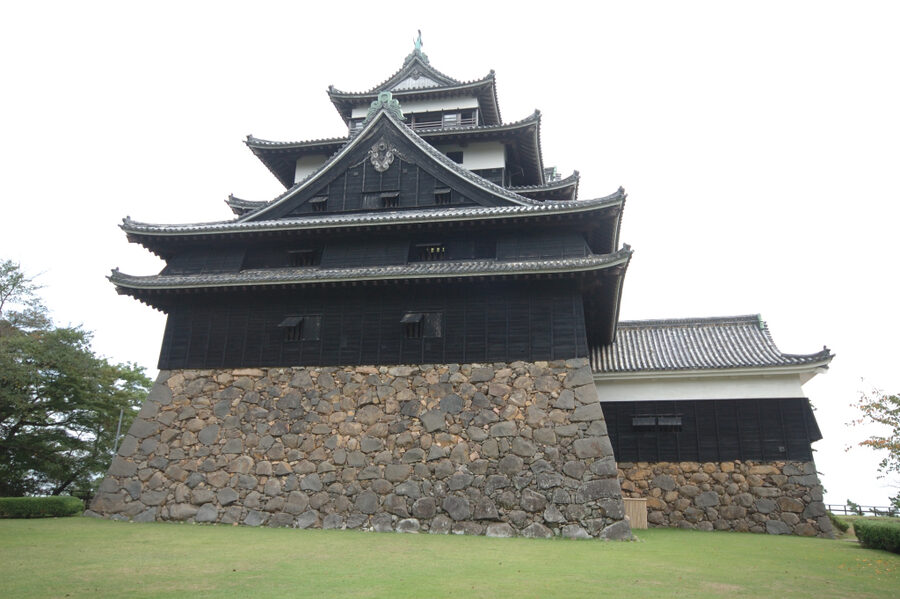
Matsue Castle (松江城) was completed in 1611 under Horio Yoshiharu, a minor daimyo who had supported Tokugawa Ieyasu at Sekigahara and was rewarded with the Izumo domain. The castle took five years to build and cost about a third of the domain’s annual rice revenue at the time. Like Okayama’s Crow Castle and Matsumoto’s Karasu-jō, it uses black-lacquered wooden panels on the exterior — a regional style for castles built in the Sengoku-era tradition.
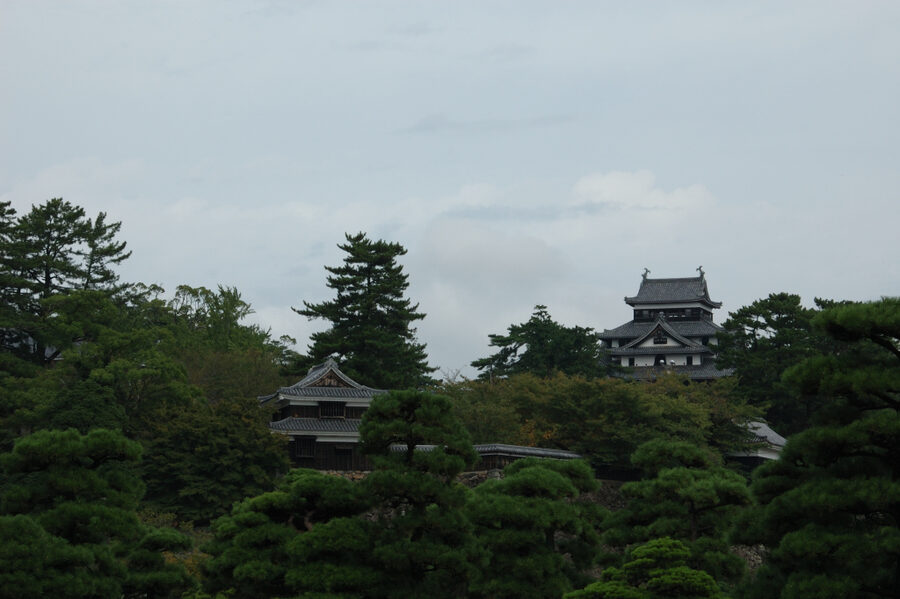
What makes Matsue Castle different from Tsuyama, Hagi, or most other castle sites in western Japan is that the original keep is still there. The five-storey tenshu was one of about 100 surviving wooden keeps in 1873 when the Meiji government ordered castle demolition; most of them went for lumber in the 1870s-80s. Matsue’s tenshu was saved by a local scholar named Takagi Chōzaemon, who bought it from the government for 180 yen in 1875 and then simply left it standing. The city later bought it back. It’s been continuously wooden and continuously structural since 1611.
You climb five floors of steep wooden stairs. Each floor is smaller than the one below — the architectural technique is called tou-zukuri, pagoda-style castle construction. The top floor has no glass, just sliding wooden shutters, and you can walk out onto an observation platform where the lake and the castle town open up in all four directions. On a clear day you can see Mt Daisen 50 km to the east.
Entry is ¥680. Open 08:30–18:30 in summer, 08:30–17:00 in winter. The keep is a National Treasure — one of only five castle keeps in Japan to hold that status (along with Himeji, Hikone, Inuyama, and Matsumoto). Plan 90 minutes for the full climb plus the castle museum in the adjacent Kōundō building.
The Horikawa moat boat
The single best thing to do in Matsue — better than the castle, better than the museum, better than the food — is the Horikawa Pleasure Boat. It’s a 50-minute circumnavigation of the castle’s outer moat in a covered wooden boat, operated year-round, run by the Matsue city tourism authority.
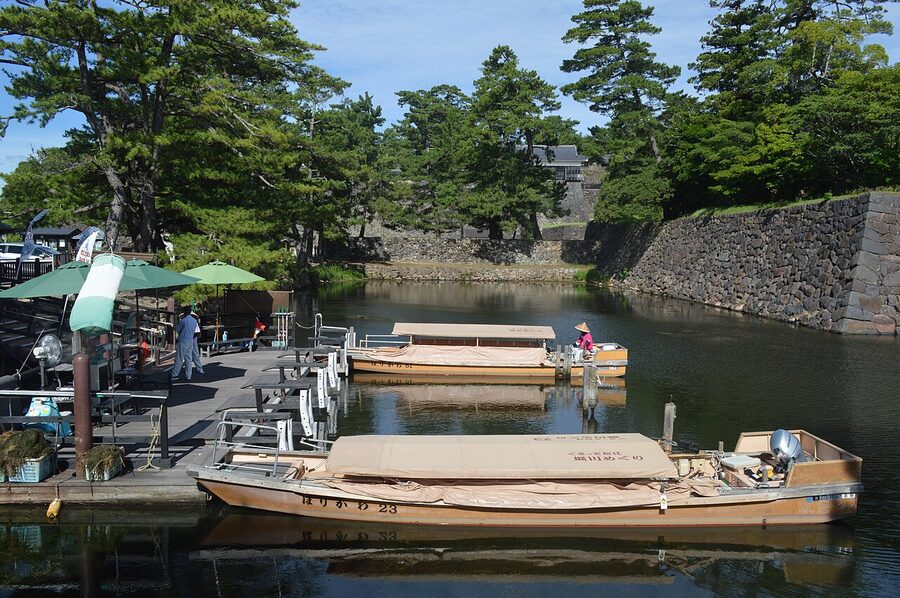
Here’s why it’s extraordinary. The moat system was built by Horio Yoshiharu in 1611 as a defensive ring around the castle and the samurai district; it has been kept dredged and navigable continuously since. There are seventeen low bridges on the circuit. The boat has a retractable roof — at each bridge, the boatman presses a button, the roof flattens, and you duck. You get a narrated city history as you go, in three languages (there’s English audio). In winter (roughly November through March), the boat has a kotatsu — a low charcoal-heated table under a blanket — in the middle. You sit around it with strangers, everyone’s hands warm, watching samurai walls drift past.
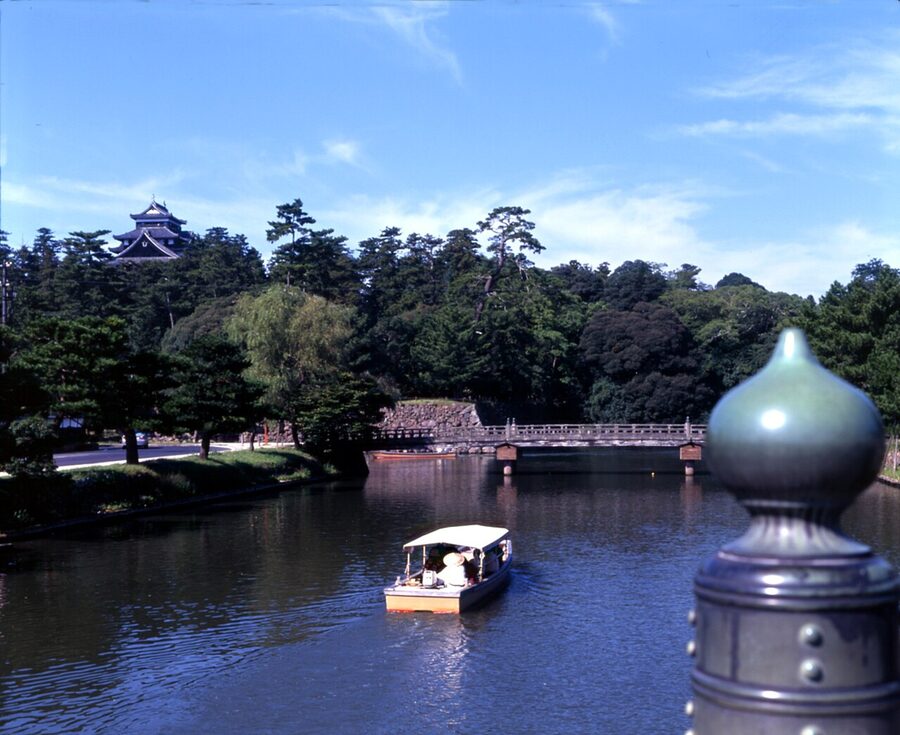
Cost is ¥1,600 for an all-day pass — you can get on and off at four stops around the moat, including the castle, the Shiomi-nawate samurai district, and the Fumon-in temple. Boats run every 15 minutes 09:00–17:00. This is the best-value city sightseeing experience in Japan.
Shiomi-nawate: the samurai street
North of the castle moat, running for about 500 metres along the old outer-bailey earth wall, is Shiomi-nawate (塩見縄手) — Matsue’s preserved samurai district. It’s shorter than Hagi’s, but it has better specific attractions: the Buke Yashiki (a restored samurai residence), the Koizumi Yakumo Memorial Hall (Lafcadio Hearn’s house), and the Tanabe Art Museum (small but excellent tea-ware collection).
The Hearn connection is the one that matters most. Hearn moved to Matsue in 1890, lived in a small house along Shiomi-nawate from June to November of that year, married Koizumi Setsu (daughter of a samurai family), took the name Koizumi Yakumo, and spent the winter listening to his wife tell him the local folk tales that would become Kwaidan, his most famous book. He only stayed in Matsue for 15 months — he moved on to Kumamoto, Kobe, and finally Tokyo — but this short period shaped everything he wrote.
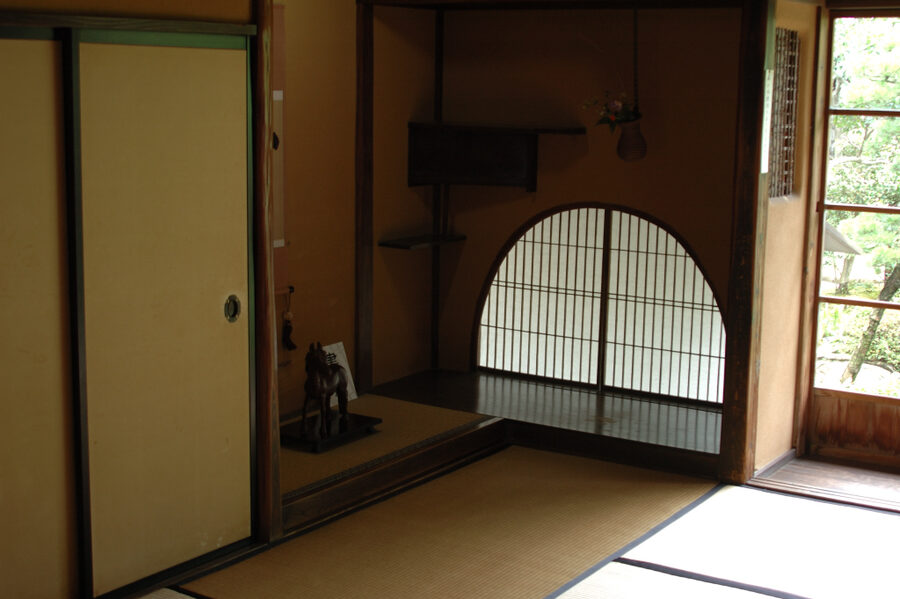
The Koizumi Yakumo Memorial Hall next door has all of Hearn’s Matsue-period manuscripts, his writing desk (kept as he left it in 1891), a collection of Western first editions of his books, and a small English-language exhibition that is — unusually for Japan — very good. ¥410 entry. An hour.
The Buke Yashiki (武家屋敷) a few doors down is a restored middle-rank samurai residence from the mid-Edo period. Tatami rooms, a kitchen with functional hearth, a garden with its original stone lanterns. ¥310. Thirty minutes.
Across the street is the Tanabe Art Museum, which holds the best collection of Unraku-style tea ceramics in western Japan and one of the country’s most comprehensive collections of tea-ceremony utensils. ¥650. Matsue’s tea-ceremony tradition — see below — is genuinely important in Japan, and this is where you see the physical objects the tradition is built around.
The garden that ranks everywhere
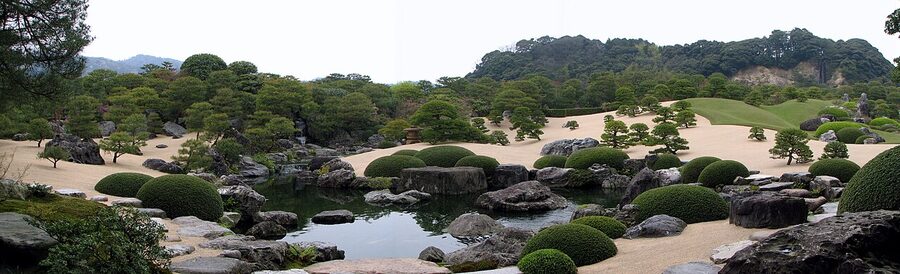
A 40-minute drive east of Matsue (or a free shuttle from Yasugi Station, 20 minutes east on the JR San’in Main Line) is the Adachi Museum of Art (足立美術館), which combines a strong collection of 20th-century Japanese painting with a 165,000 m² garden that has been ranked as the #1 Japanese garden in Japan every year since 2003.
The unusual thing about the Adachi garden is that you can’t enter it. You view it through the windows of the museum — each of the sliding doors and plate-glass panes in the museum was positioned to frame a specific composition. This is called “living picture frame” design, and it was set up by the founder, Adachi Zenkō, in 1970: he believed a garden should be viewed as a painting, not walked through. The garden is fully maintained to postcard quality at all times (47 full-time gardeners) because any visitor might be looking at it from any window.
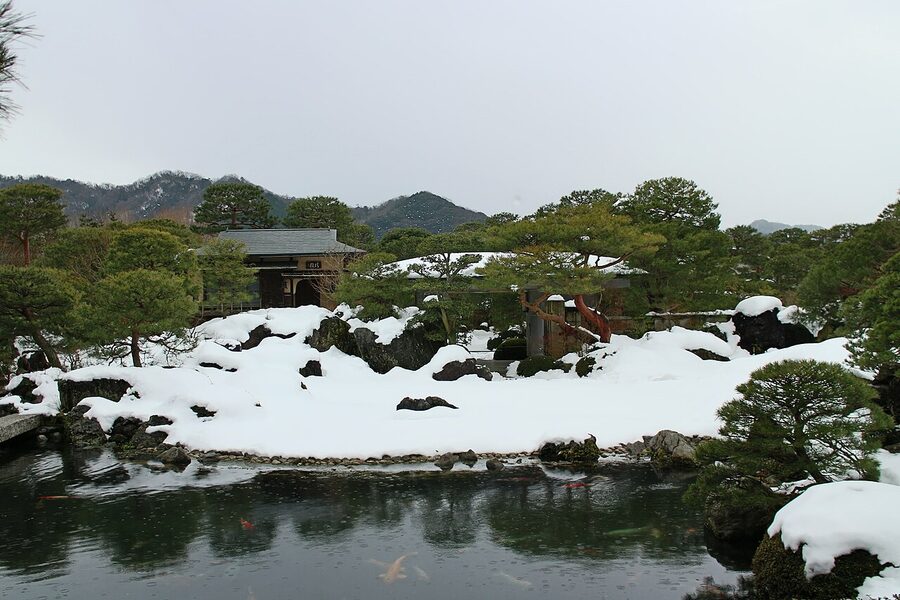
The museum holds a major collection of paintings by Yokoyama Taikan, one of the defining Japanese-style painters of the 20th century. Taikan was a close friend of Adachi’s, and there are about 120 of his works here — the largest collection anywhere.
Entry: ¥2,300 (expensive but justified). Open 09:00–17:30 April–September, 09:00–17:00 October–March. The museum runs a free shuttle bus from Yasugi Station that connects with limited-express trains from Matsue — this is essentially the intended way to get here. Half-day minimum.
Lafcadio Hearn in Matsue
Some places have their foreign writer. Matsue’s is Lafcadio Hearn — Greek-Irish-American journalist, folklorist, and (after 1890) Matsue English teacher who renamed himself Koizumi Yakumo, married a local samurai daughter, and spent the rest of his life writing about Japan for English-speaking readers. He is almost the single reason Matsue is on the anglophone travel map.
Hearn arrived in Matsue in August 1890, aged 40, on a one-year teaching contract. He had been a crime reporter in New Orleans, a correspondent in Martinique, and a researcher in the American midwest; none of those places stuck. Matsue did. He wrote obsessively about it — the lake, the castle, the ghost stories his students told him — and his 1894 book Glimpses of Unfamiliar Japan was the first major English-language travel book about Japan and remained the authoritative one for about fifty years.
You can visit three Hearn sites in Matsue. The Lafcadio Hearn Old Residence (小泉八雲旧居), the samurai-era house he rented in 1890-91, is preserved with most of his original furniture and sits in the castle’s samurai district. Free entry, well-curated English explanation panels. Next door is the Lafcadio Hearn Memorial Museum — a proper biographical museum with manuscripts, photographs, and a reconstruction of his New Orleans-era writing desk. ¥300 entry. Then, about ten minutes north along the moat, is Gesshō-ji Temple, the Matsudaira clan’s funeral temple, where you’ll find Hearn’s favourite statue — a giant stone turtle that he wrote about in a specifically ghost-story way.
If you have time for just one of the three, do the Old Residence. It’s smaller and quieter than the museum and gives you the clearest sense of what his Matsue life actually looked like.
Yūshien Garden and Daikon Island
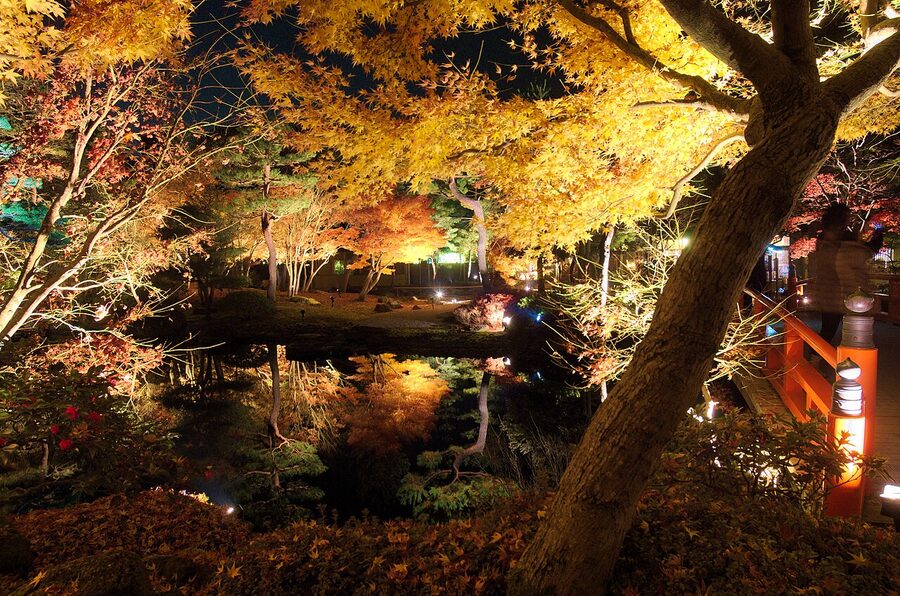
North-east of Matsue, on Daikon-jima — a small volcanic island in the middle of Lake Nakaumi — sits Yūshien (由志園), a year-round Japanese garden that’s paired with a peony cultivation centre. The island is Japan’s leading producer of tree peonies (botan). The garden times its year around the flower: peonies in late April (the one time every visitor should come), Chinese peonies in June, hydrangeas in July, maple colour in November.
Access is by the Daikon Island Bridge from the northeastern edge of Matsue city (30 minutes by car). There’s a direct bus from Matsue Station, ¥800 one-way. Entry ¥1,200 (¥2,000 during the peony festival and the autumn illumination).
If you’re timing a trip around peony season — late April through Golden Week — this is the reason to come to Matsue.
Lake Shinji sunset
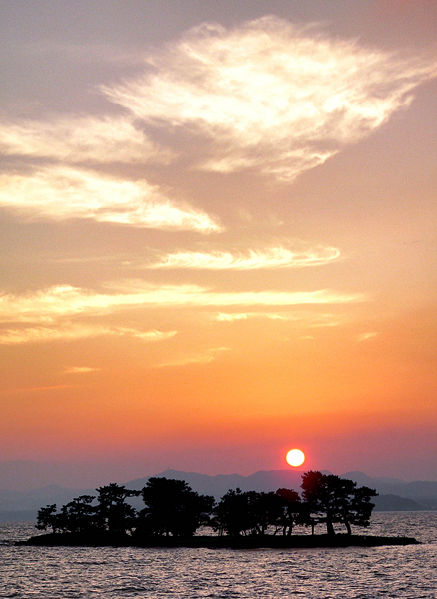
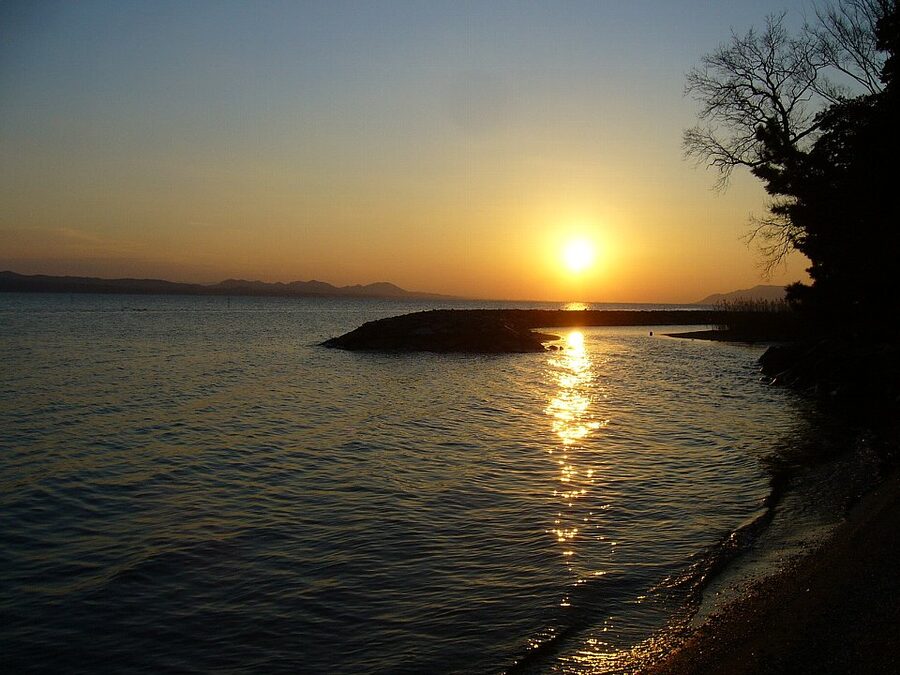
Lake Shinji (宍道湖) is the brackish lagoon that defines the western side of Matsue. It’s about 80 square kilometres, seventh-largest in Japan, shallow enough for year-round fishing. It also has, by formal classification, one of Japan’s top 100 sunsets. The Shimane Art Museum on the lake’s eastern shore is deliberately oriented toward the sunset; the museum closes one hour after sunset every day (the posted closing time changes with the season). The museum is free to enter after 17:00 if you just want the sunset lobby.
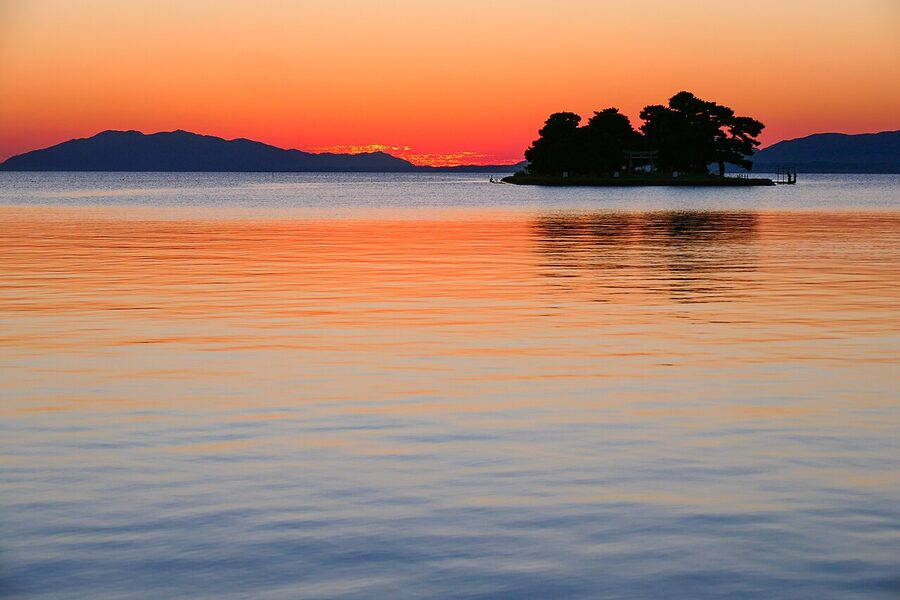
The classic Matsue sunset framing includes the small rocky islet of Yomega-shima in the middle distance. Good viewpoints run along the entire northern shore of the lake, but the best-known is the walkway in front of the Shimane Art Museum.
The tea culture most people don’t know about
Matsue is, with Kyoto and Kanazawa, one of Japan’s three cities of tea ceremony. The tradition here is the Fumai-ryū (不昧流) style, founded by Matsudaira Harusato (“Fumai”) in the late 18th century — the 7th Matsudaira lord of Matsue, who was also an extraordinary tea-ceremony master and the source of Japan’s entire modern wagashi (Japanese sweets) culture. Harusato personally designed hundreds of wagashi, many of which are still being made by Matsue confectioners two centuries later.
The three Matsue tea houses worth visiting are Meimei-an (明々庵), a 1779 thatched tea hut Harusato designed on a small hill overlooking the castle (¥410 entry, green tea and sweet ¥600 extra); Kangetsu-an in the castle park (free entry, tea ¥550); and the Fumon-in temple tea-house, which opens for casual tea service on weekend mornings.
Outside of formal tea, three specific Matsue sweets are worth seeking out: Wakakusa (ellipsoidal green rice-powder cake); Natane no Sato (yellow confection flavoured with rapeseed honey); and Yamakawa (a red-and-white layered bean paste — Harusato’s own design). Every shop on Tōdo-ura street near the castle carries them. They pair, extremely well, with the local matcha.
Matsue food beyond tea
Three specific things to eat.
Shinjiko nana-chin-mi — the seven flavours of Lake Shinji — is the most Matsue-specific food experience. The seven species are suzuki (sea bass), amasagi (pond smelt), shirauo (whitebait), shijimi (freshwater clam), koi (carp), moroge-ebi (small shrimp), and unagi (eel). A proper set lunch covers all seven on small plates, costs about ¥3,500, and is available at Shōzan Restaurant or Kawakyō, both in central Matsue.
Izumo soba — yes, the same three-tier stacked soba from the Izumo article. Matsue does it just as well. Nakamura Sohonke on the castle’s south approach is the local specialist.
Shijimi miso soup. Shinji is the largest producer of shijimi freshwater clams in Japan. They are small, dark, strong, and Matsue restaurants serve them boiled in miso as a breakfast-portion side. Nothing else in Japan tastes quite like them.
Getting there
By train. No Shinkansen. From Tokyo, the fastest route is Nozomi to Okayama (3h 15), Yakumo limited express to Matsue (2h 30), total ~6h 15, ¥18,500. From Osaka the same combo is 4h 15, ¥11,500. From Hiroshima the direct express bus is 3h, ¥4,200 — often faster than the train for this route.
By sleeper. The Sunrise Izumo from Tokyo (22:00 departure, 09:30 arrival at Izumoshi) gets you to Matsue with one local-train connection — change at Izumoshi, 30 minutes east on the Ichibata Line. See the Izumo article for sleeper-train booking notes.
By air. Izumo Enmusubi Airport (IZO) is 30 minutes south-west of Matsue; Yonago Kitaro Airport (YGJ) is 30 minutes east. Tokyo Haneda flights to both, about 80 minutes.
Getting around. The Lake Line bus (¥210 flat, ¥520 day pass) loops past all the main sights. Rental bikes at Matsue Station, ¥500 half-day. The whole central city is walkable in 20 minutes end to end — this is a small city.
Where to stay
Minamikan — the grande-dame ryokan, right on the Lake Shinji waterfront, 140 years old, most rooms have sunset views. ¥40,000+ per person. The best option in the region if you can afford it.
Hotel Ichibata — modern, lakeside, onsen baths with sunset views, about ¥14,000–¥22,000. Functional but the views are the win.
Dormy Inn Express Matsue — reliable business-chain option near the station. ¥9,500. Rooftop onsen, free ramen at 22:00.
Ryokan Terazuya — small family-run ryokan in the Tōdō-ura area near Shiomi-nawate, five rooms, ¥14,000 including breakfast. Feels authentic in a way the bigger places don’t.
Planning your visit
Half-day. Castle + moat boat + Shiomi-nawate. Doable as a stopover on an Izumo day trip but tight.
Full day. Morning: castle and the moat circuit. Lunch of Lake Shinji seven-flavours. Afternoon: Shiomi-nawate and the Hearn house. Sunset at Lake Shinji. Dinner and back on the Yakumo.
Two days. Day one as above. Day two: Adachi Museum (morning) and Yūshien / Daikon-jima (afternoon). The Adachi shuttle from Yasugi covers the morning end-to-end; the direct bus to Yūshien covers the afternoon. Return via overnight at Yasugi or back to Matsue.
Matsue + Izumo combined (3 days). The classic San’in trip. Day one Izumo, day two Matsue (city), day three Adachi + Yūshien + sleeper back. This is the recommended way to do the region.
The thing to remember about Matsue
Stand on the top of Matsue Castle’s keep on a clear late afternoon. The lake is to the west. The Chūgoku Mountains are to the south. The pine-covered moat runs in a rough square beneath you. You are looking at a cityscape that has changed very little since 1611 — the same water, the same walls, the same wooden boats drifting in the moat, the same samurai streets laid out in the same grid.
Lafcadio Hearn called this “unfamiliar Japan” in 1894 and he meant it as a compliment — the Japan of ghost stories and tea houses, sliding doors and long pauses. Matsue is still the best place in the country to find that version. It’s quieter than Kyoto. It’s less expensive. The boat is ¥1,600 for the entire day and has a kotatsu in winter.
You will, if the timing works, walk out of the castle in the late afternoon, take the 14:00 boat around the moat circuit twice, watch the sunset from the lake walk, and eat seven small plates of lake fish in an empty restaurant. It is the quietest, slowest Japan you will experience on your trip. That is exactly why it’s worth the time.



