
Reviewed · HIROSHIMA FOOD TOURS
Home Made Onigiri and Matcha Cooking Class in Hiroshima
The best part of this Hiroshima cooking class is its ordinary, welcoming setting: you sit with local mothers, handle hot freshly cooked rice, shape onigiri, and share a simple lunch near the Peace Memorial Park. Midori and Weiko speak English, and the class adds food stories, tea manners, and plenty of time for conversation.
I like the small maximum of six people, which gives the class a personal feel. I also like the timing: it begins at 10:30 am, lasts about 90 minutes, and leaves your afternoon free for the Peace Memorial Museum and central Hiroshima. The main consideration is price. At $81.65 per person, this costs more than a quick meal, though it includes lunch, a hands-on lesson, matcha, wagashi, and gratuities.
In This Review
- Key points to know before booking
- Why onigiri makes a good Hiroshima food class
- A 10:30 start near Hiroshima’s most important sights
- Meeting the local hosts
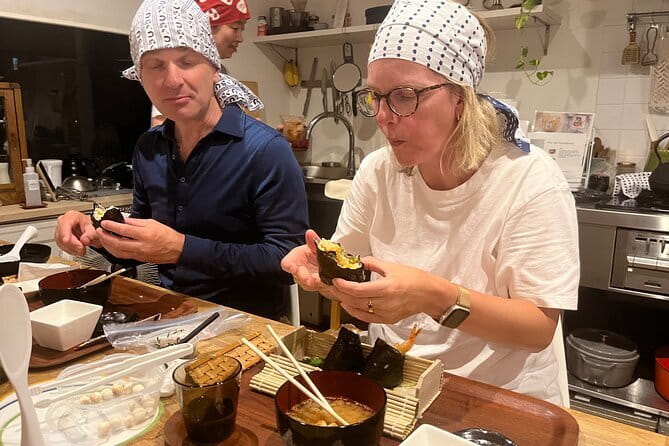
- Making two kinds of onigiri
- Miso soup and a simple Japanese lunch
- Matcha, wagashi, and tea manners
- A good choice for families with children
- How much value do you get for $81.65?
- Timing, group size, and practical details
- Who should book this Hiroshima cooking class?
- Should you book it?
- FAQ
- Where does the cooking class meet?
- How long does the experience last?
- How many people can join the class?
- What food and drinks are included?
- Can children attend?
- Are vegetarian or vegan options available?
Key points to know before booking
- Fresh rice becomes the main event: You shape warm rice by hand into two kinds of onigiri.
- Two savory fillings are included: The standard choices are tuna mayonnaise and shrimp tempura.
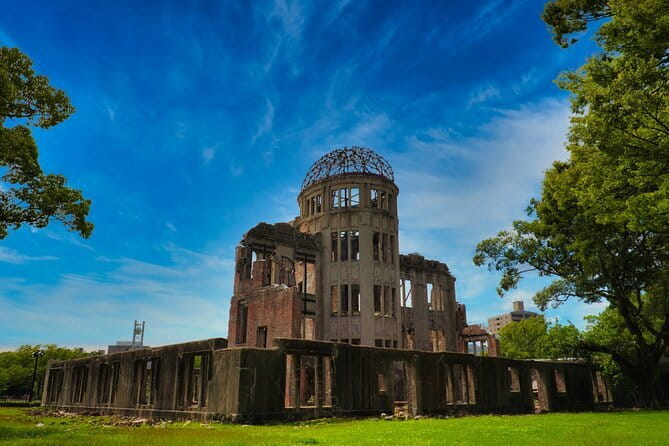
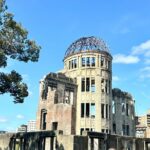
- The class sits close to Peace Park: It is about a five-minute walk from the Atomic Bomb Dome and six minutes from the Peace Museum.
- Tea is part of the meal: You prepare matcha and practice basic tea ceremony manners with Japanese sweets.
- Families are welcome: A children’s play area is available, and kids can join the food activity.
- Dietary requests need advance notice: Vegetarian, vegan, fresh egg yolk, and allergy arrangements should be discussed when you book.
Why onigiri makes a good Hiroshima food class
Onigiri is one of Japan’s most familiar foods, but it is easy to pass over when you see it wrapped in a convenience store. This class gives you a chance to understand it from the inside out. You work with rice while it is still hot, add a filling, and shape it with your own hands.
The food is simple, but that is the point. Onigiri is practical Japanese home cooking, not a restaurant showpiece. It has a longer history than sushi, and it has long served as an easy meal for schoolchildren, workers, and families. You do not need advanced cooking skills to take part.
The recipe is designed for all ages. You can expect instruction as you form the rice, with the hosts explaining the food and its place in daily life. The class is less about mastering a difficult technique and more about sharing a familiar dish in a local setting.
That makes it a good choice if you want something more personal than another restaurant meal. You also leave with a better sense of why rice remains so central to Japanese cooking.
A few more Hiroshima tours and experiences worth a look
A 10:30 start near Hiroshima’s most important sights
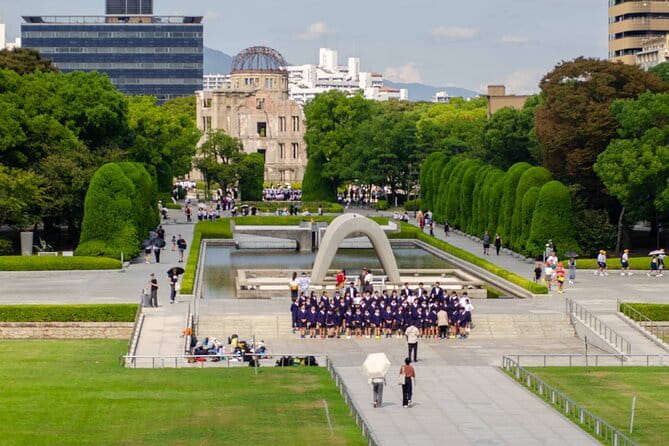
The meeting point is at Guitar Top, 1-3 Sakaimachi, in Naka Ward. The setting is especially useful for a sightseeing day because it is near the Atomic Bomb Dome and Peace Memorial Park.
From the Atomic Bomb Dome, the walk takes about five minutes. From the Peace Memorial Museum, allow about six minutes. That short distance makes this an easy morning addition to a day centered on Hiroshima’s memorial sites.
You can also reach the area from Hiroshima Station. A taxi to Sheba Cafe takes about 12 minutes. By streetcar, take Hiroshima Dentetsu Line 2 to Honkawacho Station, which is described as the nearest station, with the journey taking about 21 minutes.
The Hilton Hotel is about a 26-minute walk away. Pickup is offered, and one family booking included hotel pickup by Midori, followed by a ride to Weiko’s home and a return at the end. Since the published meeting point is still the main address, confirm pickup details when making your reservation.
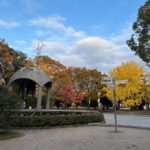
Starting at 10:30 am works well. You are not forced into a dawn appointment, but you still finish around lunchtime. Afterward, you can visit the museum, walk beside the Motoyasu River, or continue through Peace Park without giving up a full afternoon.
Meeting the local hosts
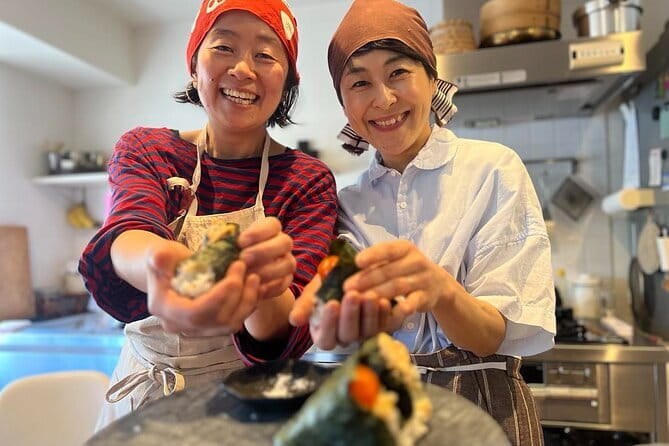
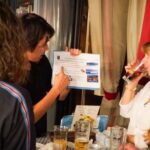
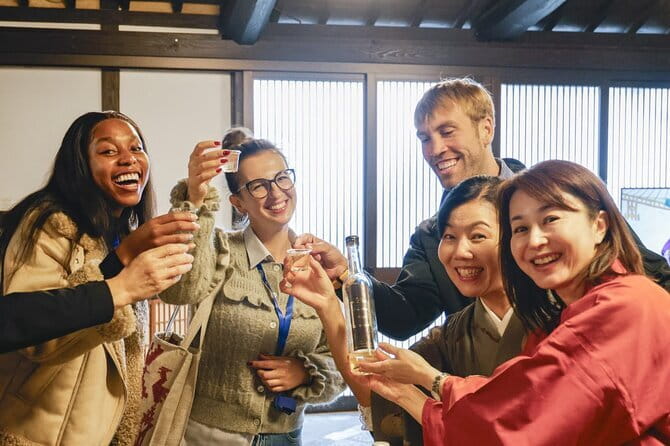
The class is led by local mothers, including Midori and Weiko, who speak English and have lived overseas. That background matters if you are worried about language. You can ask about ingredients, cooking methods, and everyday customs without relying only on gestures.
The tone is meant to be warm and social. Conversation is part of the activity, not a filler between recipes. You may learn as much from the informal talk as from the rice shaping itself.
The small group size helps here. With a maximum of six people, you should have room to ask questions and get help with the food. It is also a better setup for families or solo visitors than a large demonstration where you simply watch from the back.
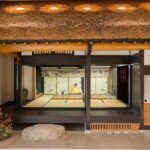
One practical point: the provider sometimes holds classes at a private home. That can add to the home-cooking feel, but it also means the exact setting may vary. Check the meeting instructions carefully so you know where to go on your date.
Making two kinds of onigiri
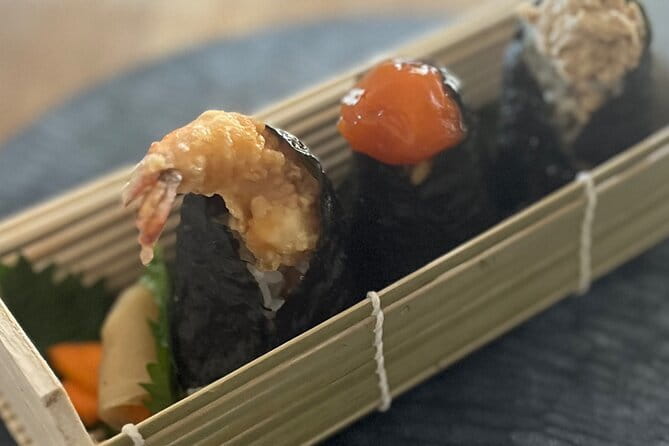
The standard class includes two fillings: tuna mayonnaise and shrimp tempura. These give you two different styles of onigiri, one creamy and familiar, the other crisp and savory.
You will work with cooked rice and shape it while it is hot. The hands-on part is the reason to book this instead of simply buying onigiri from a shop. You feel the rice, learn how much pressure to use, and see how a few basic ingredients become a complete meal.
Do not expect a long chef-training session. The class lasts about 90 minutes, and the recipes are intentionally easy. That is a strength for families and first-time cooks, though experienced cooks seeking technical instruction may find the lesson fairly gentle.
Allergies should be reported in advance. Vegetarian and vegan menus are being prepared, and the provider asks you to inquire about them before booking. A fresh egg yolk option is also available by request, using a special cooking method. Do not assume these alternatives are ready automatically on the day.
Miso soup and a simple Japanese lunch
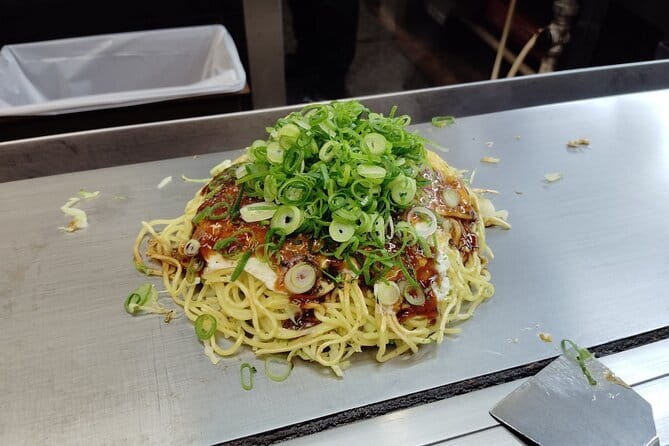
The meal also includes miso soup served in a chawan bowl. This is another useful part of the class because miso soup is easy to recreate at home once you understand the basic approach.
The hosts may share recipes that can be made with a cafe au lait bowl if you do not own a Japanese chawan. That small detail makes the lesson practical for your return home. You are not being told that Japanese cooking requires a special cupboard full of equipment.
The included lunch consists of the two onigiri, miso soup, matcha, and wagashi. Bottled water, soda, coffee, and alcohol are not included. No alcohol is served, so this is a quiet food activity rather than a sake or bar experience.
The meal has a modest, everyday character. If you want a large lunch with many dishes, this may feel light. If you appreciate learning a few useful foods and then eating what you made, the portion and format make sense.
A few more Hiroshima tours and experiences worth a look

Matcha, wagashi, and tea manners
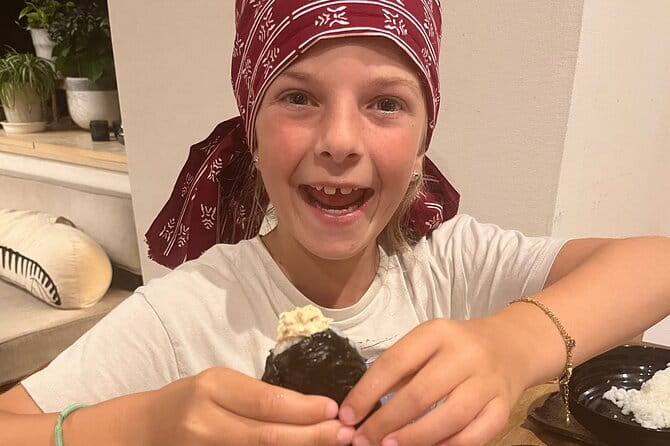
After the savory food, you make matcha and enjoy it with wagashi, a Japanese sweet. The class also introduces basic manners from sadou, the Japanese tea ceremony.
You should think of this as an introduction, not a formal tea ceremony course. The value lies in learning how tea is prepared and served, and in understanding that the small gestures around tea matter. Even a short lesson can change how you watch a tea service later in your trip.
Making your own matcha also gives the afternoon meal a clear finish. You move from rice and miso soup to tea and sweets, with each part showing a different side of Japanese home food.
The tea segment may be especially appealing if you are curious about Japanese customs but do not want to commit to a longer ceremonial experience. It is also a nice way to keep children involved after the cooking portion, though younger children may need help with the hot rice and tea.
A good choice for families with children
Children are welcome, and there is a toy area for kids. That matters because a 90-minute food lesson can be a long stretch for a young child, especially after a flight or a busy morning.
The activity itself is accessible to different ages because the recipe is simple. Children can take part in shaping rice while adults listen to the cultural explanations and manage any hot ingredients.
The class does not promise a separate children’s program, so parents should expect to supervise their own children. Still, the play area and family-friendly hosts make this a more workable choice than a formal restaurant lesson.
One family booking included two children, hotel pickup, and hosts who spoke excellent English. That suggests the format can work well for a family wanting a shared activity rather than splitting up for adult and child entertainment.
How much value do you get for $81.65?
At $81.65 per person, this is not the cheapest way to eat rice in Hiroshima. You could buy onigiri and miso soup for much less. The price makes more sense when you count the instruction, small group, English conversation, matcha preparation, wagashi, lunch, and gratuities.
You are paying for time with local hosts and for the chance to make the food yourself. The class also solves a common sightseeing problem: it gives you a planned morning activity near Peace Park without taking over your entire day.
The value is strongest for solo visitors, couples, and families who enjoy meeting people and trying food activities. It is weaker for anyone focused only on quantity or lowest cost.
Group discounts are offered, which may help families or friends booking together. Since the class is capped at six people, a discount can make a shared booking more attractive while keeping the setting fairly intimate.
Timing, group size, and practical details
The class lasts approximately one hour and 30 minutes. It ends back at the meeting point, so you do not need to arrange a separate return from the activity.
The published start time is 10:30 am. Allow enough time to find the address, especially if you are coming from Hiroshima Station by streetcar. If you arrange pickup, confirm the exact collection point and timing in advance.
Mobile tickets are offered, and confirmation is received at booking. The activity is near public transportation and has a restroom available. The maximum group size is six people, a useful detail if you prefer a quieter class with more direct help.
Free cancellation is available if you cancel at least 24 hours before the start time. Changes or cancellations made within 24 hours are not accepted for a refund. The provider also says the activity requires good weather. If poor weather causes cancellation, you will be offered another date or a full refund.
That weather rule is worth noting because the class may sometimes take place at a home. Ask about the policy if the forecast looks uncertain.
Who should book this Hiroshima cooking class?
I would recommend it most strongly to you if you fit one of these descriptions:
- You want a local food experience near the Atomic Bomb Dome.
- You enjoy hands-on activities more than guided sightseeing.
- You are traveling with children and need a flexible morning plan.
- You want to learn food you can make after returning home.
- You are interested in Japanese tea manners but do not need a full tea ceremony.
- You prefer a small group and English-speaking hosts.
Solo visitors can also benefit because the format creates easy conversation with the hosts. The experience is not built around sightseeing commentary, so it works best when you want people, food, and daily customs rather than a long lecture on Hiroshima’s past.
You may want to skip it if you need a substantial lunch, avoid tuna or shrimp, or have a strict dietary requirement that has not been confirmed. The vegetarian and vegan menus are still being prepared, so contact the provider before paying if that is important to you.
Should you book it?
Book this class if you want to slow down for a morning and make a few ordinary Japanese foods with local people. The location near Peace Park is convenient, the small group keeps the experience personal, and the combination of onigiri, miso soup, matcha, and wagashi gives you more than a single recipe lesson.
At $81.65, the class is best viewed as a cultural meal and a cooking activity, not a budget lunch. I would especially choose it for a family, a solo visitor who likes conversation, or anyone who wants a practical memory of Hiroshima beyond its major monuments.
Before booking, confirm pickup, dietary requests, and the exact class setting. If those details suit your plans, this is a thoughtful way to spend a quiet morning before returning to Hiroshima’s powerful memorial sites.
FAQ
Where does the cooking class meet?
The published meeting point is Guitar Top, 1-3 Sakaimachi, Naka Ward, Hiroshima, 730-0853, Japan. The activity ends back at the meeting point.
How long does the experience last?
The class lasts approximately one hour and 30 minutes. It starts at 10:30 am.
How many people can join the class?
The activity has a maximum of six travelers.
What food and drinks are included?
The class includes two types of onigiri, miso soup, matcha, and wagashi. Gratuities are also included.
Can children attend?
Yes. Children are welcome, and there is an area with toys for kids to play in.
Are vegetarian or vegan options available?
Vegetarian and vegan menus are currently being prepared. You should ask about them when making your reservation. Allergies must also be reported in advance.
More Cooking Classes in Hiroshima
More Hiroshima Food Tours in Hiroshima
More Hiroshima City Tours in Hiroshima

More tours in Hiroshima we've reviewed

Hiroshima Food Tours, compared.
 ★ 5.0Hiroshima Izakaya Food and Drink Night TourFrom $110
 ★ 4.9Hiroshima: Food and Culture Guided Walking Tour with DinnerFrom $943 hours
 ★ 4.5All-inclusive Hiroshima Nighttime Food and Cultural ImmersionFrom $119
 ★ 5.0Private Japanese Cooking Class in Hiroshima with Machiko’s FamilyFrom $108
 ★ 5.0Best of Hiroshima Food TourFrom $221
 ★ 5.0Dinner Cruise on HANAIKADA (Raft-Type Boat) with Scenic View of MiyajimaFrom $95
