
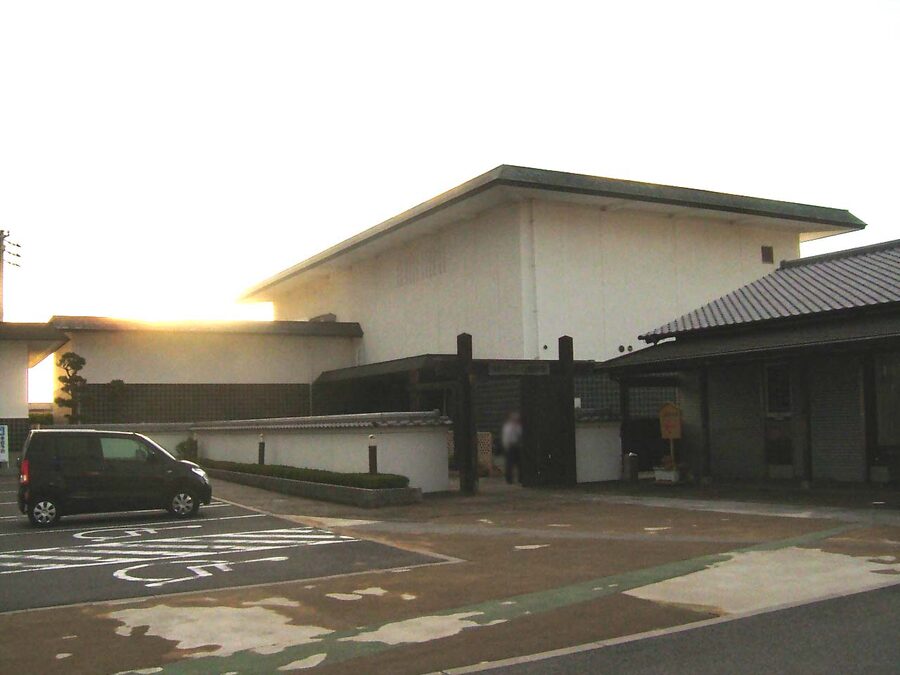
If you’ve ever watched a samurai film, or read a historical novel set in medieval Japan, or seen a katana behind glass in a museum, there’s a reasonable chance the blade was made here. The small town of Osafune (長船) in Okayama prefecture, 30 minutes east of Okayama city, has been the centre of Japanese sword-making since the 12th century. The Bizen Osafune-ryū — the Osafune school of the Bizen sword-making tradition — produced more recognised masterpieces than any other regional school in Japanese history. Nearly half of all Japanese National Treasure swords were made within 10 km of this village.
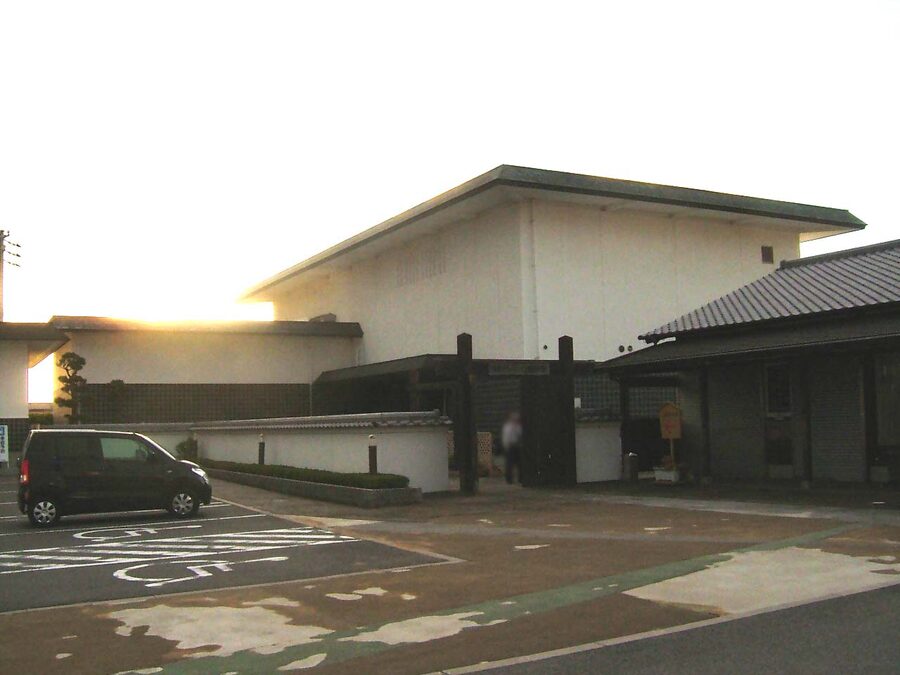
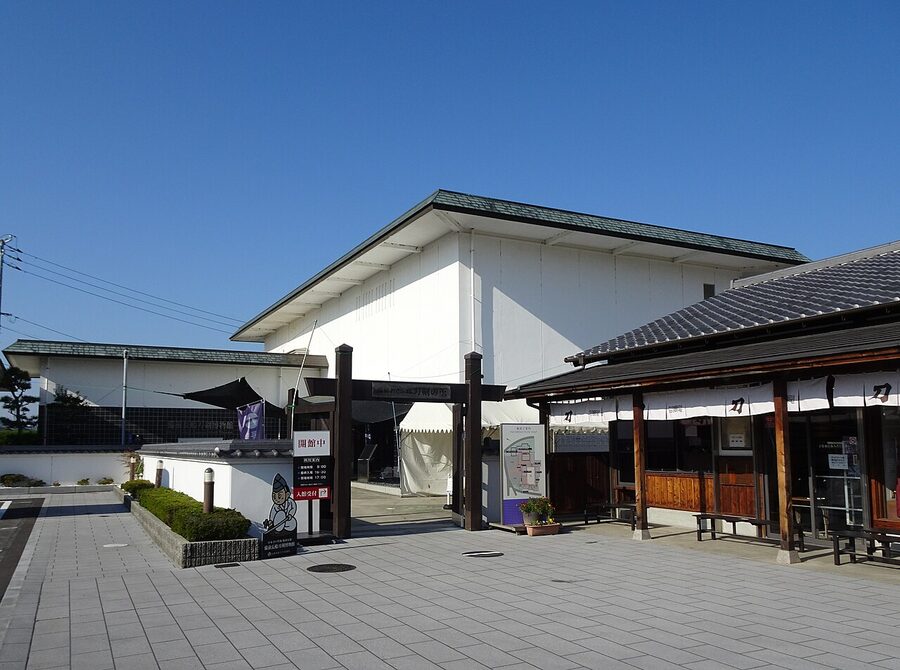
The tradition is still alive. Three working swordsmiths operate in modern Osafune, legally registered with the Japanese government (which tightly restricts sword-making to a small number of licensed smiths — you can’t just start forging katana at home). The Bizen Osafune Japanese Sword Museum in the centre of town holds a rotating exhibition of historical blades and — critically — a working forge where you can watch live sword-making demonstrations twice a month.
Why Osafune
Japanese sword-making requires three specific inputs in close proximity: high-quality iron sand (satetsu), hardwood charcoal (for sustained high-temperature forging), and clean running water (for tempering and polishing). The Yoshii River valley around Osafune has all three. The iron-sand beds of the nearby Chūgoku mountains produce a particularly clean, low-impurity sand that was recognised as premium material from the Heian period. The forested hills provide charcoal wood. The Yoshii River runs year-round at a consistent temperature.
By the early Kamakura period (1200s), Osafune was one of five major regional sword-making centres in Japan. By 1250 it was the largest. The Osafune school’s distinctive style — a curved tachi blade with a long, gently flowing chōji-midare (clove-flower pattern) hamon temper line — became the defining aesthetic of Japanese swords for the next 400 years.
The museum
The Bizen Osafune Japanese Sword Museum (備前長船刀剣博物館) is the core reason to come here. It’s a proper curated sword museum — not a tourist-attraction sword shop — with a rotating collection of blades organised by period:
- Ko-Bizen (Old Bizen, 1100-1250): the foundational period, including blades by the smith Tomonari, traditionally regarded as the founder of the school.
- Ichimonji (1200s): the school’s golden age, including blades by Norimune and Yoshifusa.
- Osafune proper (1280-1590): the industrial expansion under smiths like Nagamitsu, Kagemitsu, and Mitsutada. National Treasures from this period include the “Ōkanehira” katana and the “Daihannya Nagamitsu” blade.
- Sue-Bizen (Late Bizen, 1500-1590): the final period before the 1590 flood that destroyed most of the village.
Entry is ¥500. Allow 90 minutes minimum. The museum has English labels on every display.
The live forge
Behind the museum, connected by a covered walkway, is the working forge. Three licensed Japanese swordsmiths operate here — Kawashima Kazumasa, Ando Nariyasu, and Doi Yoshio — and they do live demonstrations of sword-forging on the second Sunday of every month.
The demonstration runs from 11:00 to about 14:00 and covers the full traditional sword-making process: folding the tamahagane steel (repeated hammering while red-hot, up to 15 folds, producing 32,768 layers), shaping the blade, differential clay-tempering, and initial polishing. Free admission with the museum ticket. Japanese-only commentary, but the process is visual enough to follow regardless.
Between live demonstrations, the forge is open as a static exhibit — you can see the equipment (the charcoal forge, the water trough for tempering, the stone anvils) and watch short videos of the process.
The blades you’ll see
A few specific blades from the museum’s rotating collection worth looking out for — check the current exhibition page on the museum website before you go, as only a fraction are on display at any given time.
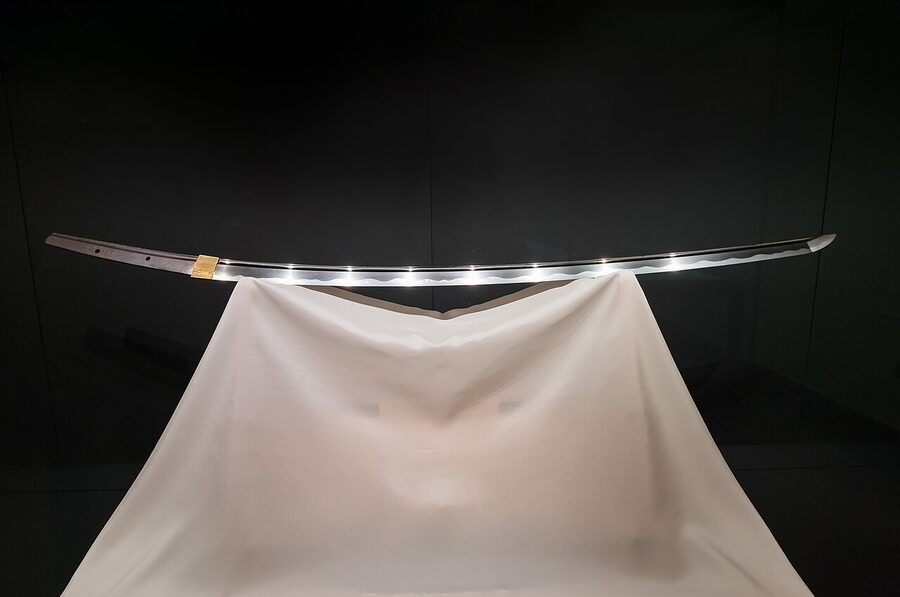
Ōkanehira (大包平) — a National Treasure tachi by the Ko-Bizen smith Kanehira, dated to the late 11th century. Sometimes called “the king of Japanese swords.” On loan permanently to the Tokyo National Museum but occasionally returns to Osafune for special exhibitions.
Daihannya Nagamitsu (大般若長光) — another National Treasure, by Nagamitsu (active 1275-1299), named after the Daihannya-kyō Buddhist sutra because its quoted value in the Muromachi period was 600 kan (a unit of currency matching the number of scrolls in the sutra). It’s one of the single most documented swords in Japanese history.
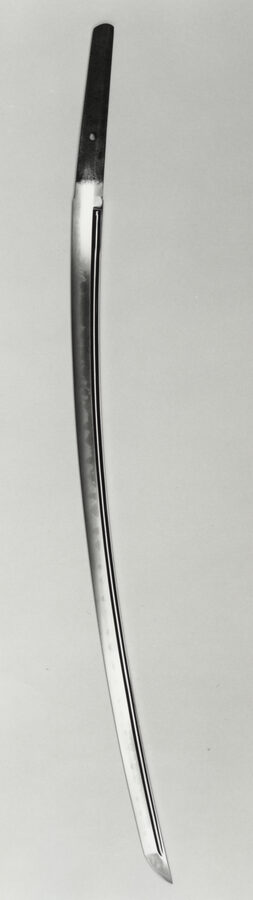
Kiku-ichimonji. Not a single sword but a whole 13th-century sub-school within Osafune, founded by smiths brought to Osafune from Kyoto by Emperor Go-Toba. The emperor’s chrysanthemum crest (kiku-mon) is stamped on the tang of every Kiku-ichimonji blade, which makes them easy to identify and extremely valuable. Examples are scattered across major world museums.
Why Bizen iron was better: the tatara
Japanese sword-making is sometimes described as the finest traditional ferrous metallurgy on Earth. A lot of that reputation comes down to the raw material — tamahagane, the steel bloom produced in a traditional tatara furnace from iron sand. The Chūgoku mountains, which rise behind Osafune, produced the best iron sand in Japan. Low phosphorus, low sulphur, high purity, consistent grain.
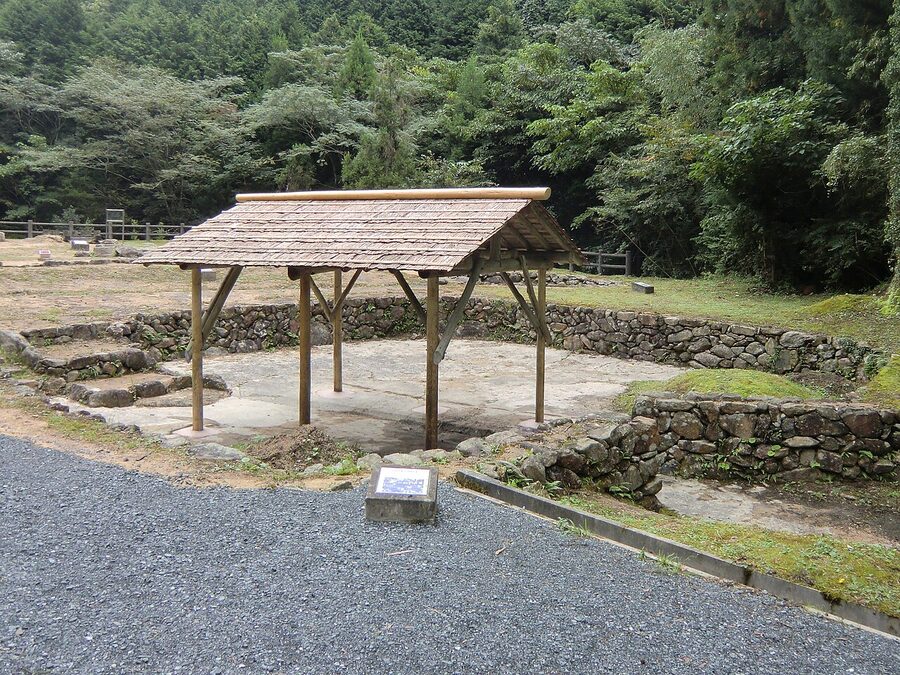
The tatara process: iron sand and charcoal are layered into a 3-metre rectangular clay furnace. Air is forced in by bellows. The fire burns for three continuous days at around 1,300°C, attended by a crew of a dozen men in eight-hour shifts. At the end, the furnace is broken open and a single 2-tonne bloom (kera) is extracted. Of that 2 tonnes, perhaps 200 kg is high-grade tamahagane suitable for sword blades; the rest is used for other iron goods.
Only one tatara in Japan still operates on the traditional schedule — the Nittoho Tatara in Shimane, north of Osafune — and it fires three times a winter, producing enough tamahagane to supply all the country’s licensed swordsmiths for a year. If your Osafune visit catches your interest, the Sword Museum in Tokyo (Sumida City) has an excellent permanent exhibit on the tatara process, and the Wakō Museum of Steel-Making in Shimane runs public tatara demonstrations twice a year.
Other Bizen-area crafts
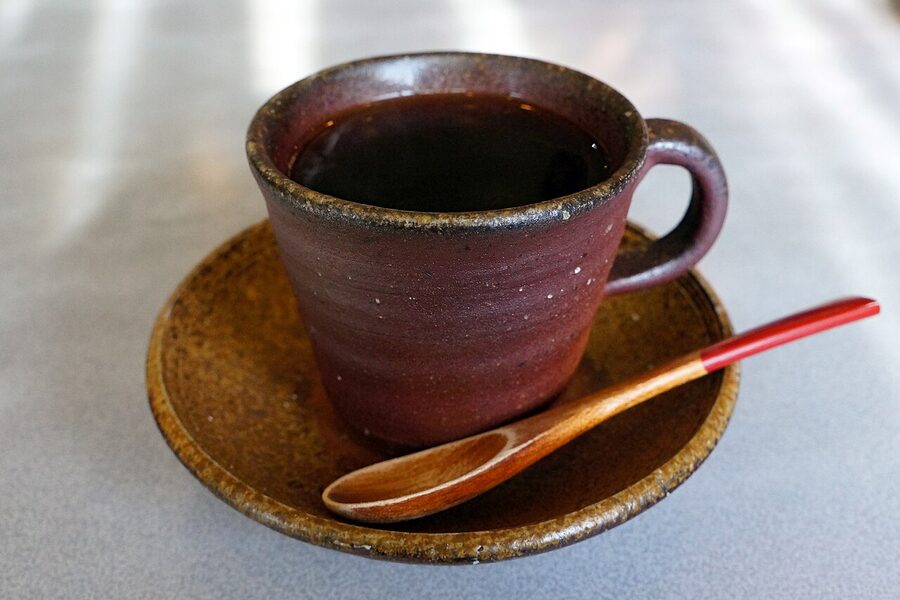
Osafune is part of the wider Bizen craft region, which also produced (and still produces) Bizen-yaki — one of Japan’s six oldest pottery traditions. Unlike most Japanese ceramics, Bizen-yaki is never glazed; it’s fired at extremely high temperature in long wood-burning kilns (a single firing takes 10-14 days), and the characteristic surface patterns come from wood ash landing on the pots during firing.
The Bizen Pottery Traditional and Contemporary Art Museum in Imbe — 15 minutes east of Osafune by train — is the companion visit for anyone doing a craft tour of the region.
Getting there
By train. From Okayama Station, take the JR Akō Line east to Osafune Station (25 minutes, ¥330). From Osafune Station, it’s a 10-minute walk to the museum.
From Kurashiki via Okayama, allow about 1 hour total. From Hiroshima, the direct route is Shinkansen to Okayama, then local line — about 1h 45.
By car. 40 minutes east of Okayama city on the Sanyō Expressway. The museum has free parking for about 30 cars.
Where to stay
Osafune is a small town — there’s no reason to overnight here. Stay in Okayama city (30 minutes west) or Kurashiki (45 minutes west) and day-trip.
Planning your visit
Half-day. Osafune only — train from Okayama, museum + forge, lunch, train back. 3.5 hours total. Works if you’re spending a second day in the Okayama region.
Full day with Bizen-yaki. Morning at Osafune Sword Museum, lunch in Osafune or Imbe, afternoon at Bizen pottery district in Imbe. 6 hours total. A genuinely great single day for craft-tradition fans.
Timing advice. Schedule your visit for the second Sunday of the month if at all possible — the live forge demonstration transforms the museum visit from “look at old swords behind glass” to “watch 800-year-old technique being practised in front of you.” If you can’t manage the second-Sunday timing, the Bizen Osafune Sword Museum runs shorter polishing and sword-fitting (koshirae) demonstrations on most weekends.
A note about swords
Japanese law regulates antique swords and modern swordsmithing tightly. If you want to buy a sword: the museum gift shop sells small blade-fitting accessories and replica tsuka (handles), but not actual blades. Buying a real antique Japanese sword requires a tōrokushō certificate, which you can only export from Japan with additional customs paperwork; most museums and dealers work only with collectors who’ve done this before. Tourists are not typically in a position to leave Osafune with a sword.
What you can do: commission a blade directly from one of the three working smiths. A full traditional katana from a licensed Osafune smith runs ¥1,500,000+ and takes 12–18 months from commission to delivery. Several international collectors have done this. Contact the museum for introductions.
What to look for when viewing a blade
The first time you stand in front of a 700-year-old katana, you’re probably not sure what you’re actually supposed to see. Here’s the short-form guide.
The curve (sori). Japanese swords curve slightly upwards — not down, like European sabres. Early tachi (pre-1400) have a pronounced curve concentrated near the hilt (koshi-zori). Later katana have a more even curve along the blade (tori-zori). Osafune tachi from 1250–1350 tend to show the sharpest, most elegant koshi-zori you’ll see.
The temper line (hamon). The wavy white line running along the cutting edge is the boundary between the hardened edge and the softer spine — the whole reason Japanese swords hold an edge so well. The Osafune school is famous for the chōji-midare pattern: a temper line shaped like a series of clove-flower heads. Hold a blade to a raking light and the hamon comes alive.
The grain (hada). The folded-steel layers produce a visible wood-grain texture on the blade’s surface. Osafune blades traditionally show a fine, tight itame (wood-plank) grain. Look for it in the flat section between the hamon and the ridge.
The signature (mei). Signatures are cut into the tang (the hidden part of the blade that sits inside the handle) and are normally not visible on a mounted sword — museum pieces have the tang exposed specifically for signature viewing. Osafune signatures typically read “Bizen no kuni Osafune-jū” (備前国長船住, “resident of Osafune in Bizen province”) followed by the smith’s name.
The museum staff will point these out on request. If you’ve been given any reason to care before you arrive — even one half-watched samurai film — an hour at the cases is time well spent.
The 1590 flood
Osafune’s production peaked in the 15th century, when the village was turning out as many as 30,000 blades a year (during the Sengoku Jidai war period, nationwide demand was extraordinary). Most of those blades were functional working swords for regional warlords, not masterpieces — but the volume alone made Osafune the largest industrial centre in Japan at the time.
In 1590, the Yoshii river flooded catastrophically. The forges were built on the riverbank for water access, and most of the village’s equipment, records, and finished inventory was destroyed. The Osafune school never recovered its scale. A handful of smiths continued working into the Edo period, and the school formally ended in the early 18th century when the last Osafune-trained smith died without a successor.
The modern revival you see today dates to 1983, when the Sword Museum was founded partly as a preservation project for traditional Japanese swordsmithing. Three smiths were re-established in the town with government support. The lineage you watch in the forge is an unbroken transmission of technique via the students of Miyairi Akihira, a National Living Treasure smith based in Tokyo, who had himself trained in the Osafune style in the 1930s.
Timing for the live forge
The second-Sunday-of-the-month live demonstration is the moment to schedule around. Here’s the annual calendar of other demonstrations and events to know about.
January. New Year’s traditional first forging ceremony, second Sunday. Reserve ahead via the museum — ¥2,000, includes watching the full first heat and a small blade-making artefact to take home.
April. Sakura-season special exhibition, typically focused on one specific smith.
June. Kids’ sword-polishing workshop for families (Japanese-only).
November. The annual National Swordsmithing Competition results exhibition, where about 100 new swords made by modern licensed smiths across Japan are displayed. The winning blades are genuinely extraordinary; this is the single best month to visit if you want to see what modern Japanese sword-making actually looks like.
Any Saturday. Shorter sword-polishing (togi) and scabbard-making (koshirae) demonstrations run most weekends when the main forge isn’t active. Less spectacular than a live forge firing but still fascinating — polishing a single blade properly takes around 40 hours of work and produces the mirror finish you see in museum examples.
Why this matters
Most Japanese traditional crafts — Kyoto ceramics, Kanazawa gold leaf, Okinawa glass — you can appreciate without context. The sword is different. A Bizen Osafune blade from the Kamakura era is a specific engineering artefact: it was forged at a precise temperature by a specific guild, using a specific technique that takes 8 to 10 years to learn, to do a specific job (cut through another samurai’s armour in a single movement), and the aesthetics of the blade — the curve, the hamon line, the ridge — are entirely functional consequences of how the blade was made.
Seeing a blade behind glass, you’re seeing a 700-year-old industrial design that’s never been improved. Seeing the forge at work a few metres away, you’re watching the same design being practised by someone whose teacher taught him the technique, whose teacher taught him. The chain goes back to 1250. That is what Osafune offers. Come for the second Sunday of the month; you’ll be back.
Pair with Okayama city or Kurashiki for a proper Okayama-prefecture culture day.



