
Reviewed · PEACE MEMORIAL TOURS
Hiroshima Historical Walking Tour – Why A-Bomb was Dropped
Hiroshima’s atomic bombing makes more sense when you first see the city as a military center. This 150-minute walking tour begins at Gokoku Shrine and Hiroshima Castle, then moves through Hiroshima Gate Park, the Atomic Bomb Dome, and Peace Memorial Park before ending at the Peace Memorial Museum.
I like the route’s clear before-and-after structure, and I like that guides such as Chihiro, Thomas, and Emi explain difficult history in careful, plain English. The biggest consideration is emotional: this is a serious experience, and the short route covers a great deal, so you may want extra time at the museum afterward.
In This Review
- Key points
- Why begin at Gokoku Shrine and Hiroshima Castle?
- Building the story before the bombing
- Hiroshima Gate Park and the changing city
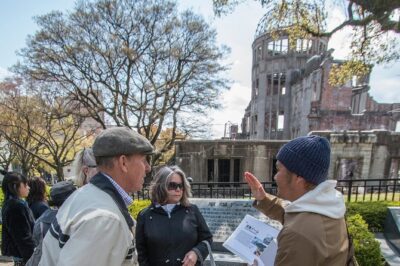
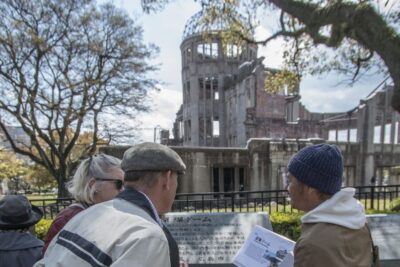
- Standing before the Atomic Bomb Dome
- Peace Memorial Park and the meaning of the cranes
- Finishing at the Peace Memorial Museum
- What the guides do especially well
- Is $35 good value for 150 minutes?
- Who should book this Hiroshima walk?
- Should you book the Hiroshima Historical Walking Tour?
- FAQ
- How long does the Hiroshima Historical Walking Tour last?
- What language is the tour conducted in?
- Where does the tour begin?
- Where does the tour finish?
- Does the tour visit Hiroshima Castle?
- Does the route include the Atomic Bomb Dome?
- Is the Hiroshima Peace Memorial Park included?
- Is the Peace Memorial Museum admission included?
- Is the tour wheelchair accessible?
- Can I cancel for a full refund?
Key points
- Starts with Hiroshima’s military past: Gokoku Shrine and Hiroshima Castle help explain why the city mattered during World War II.
- Ends at the Peace Memorial Museum: The final location makes this a useful introduction before a longer museum visit.
- Guides add personal perspective: Chihiro and other Hiroshima-based guides have shared family experiences and their commitment to peace.
- A well-paced 2.5 hours: You visit major memorial sites without spending the whole day on foot.
- English explanations are the focus: The tour connects military strategy, Japanese culture, the bombing, and the city’s recovery.
- Good value at $35: You receive a guided route through several major Hiroshima sights, with no separate transport needed between stops.
Why begin at Gokoku Shrine and Hiroshima Castle?
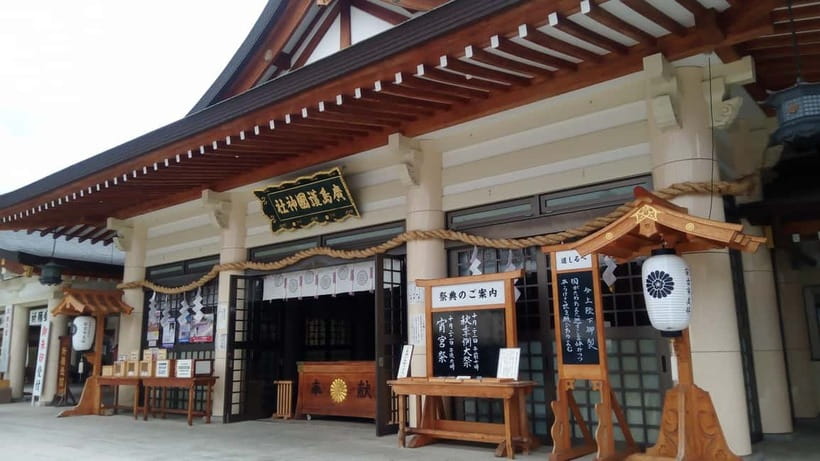
The tour opens at Hiroshima Gokoku Shrine, at the torii gate near the main hall. This is a useful meeting point, but it is also a deliberate beginning. The shrine is connected with remembrance of soldiers, so the first discussion places Hiroshima in its wartime setting rather than beginning only with the destruction of 1945.
That choice matters. If you go straight to the Peace Memorial Park, Hiroshima can seem like a city defined only by one terrible morning. Starting with the shrine helps you see the city as a political, military, and cultural center before the bomb changed it forever.
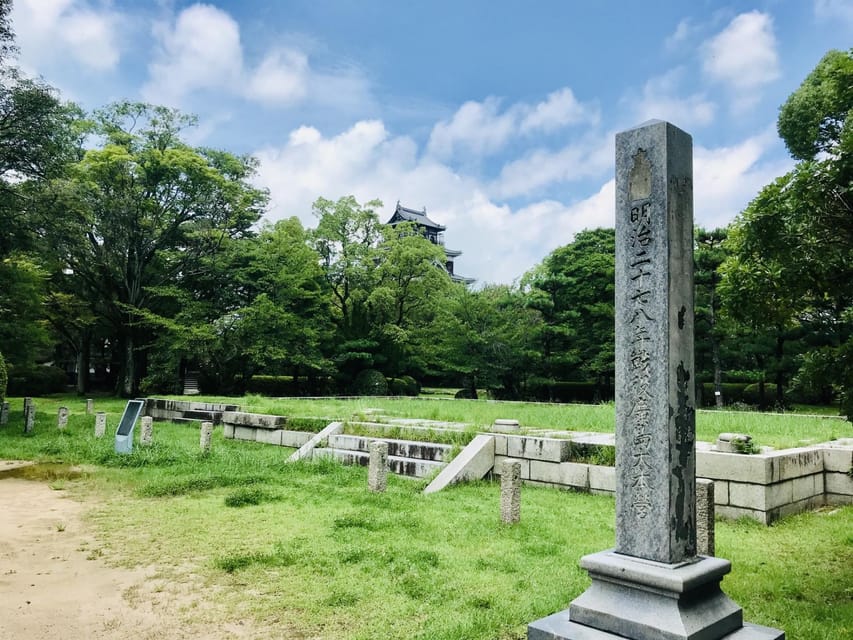
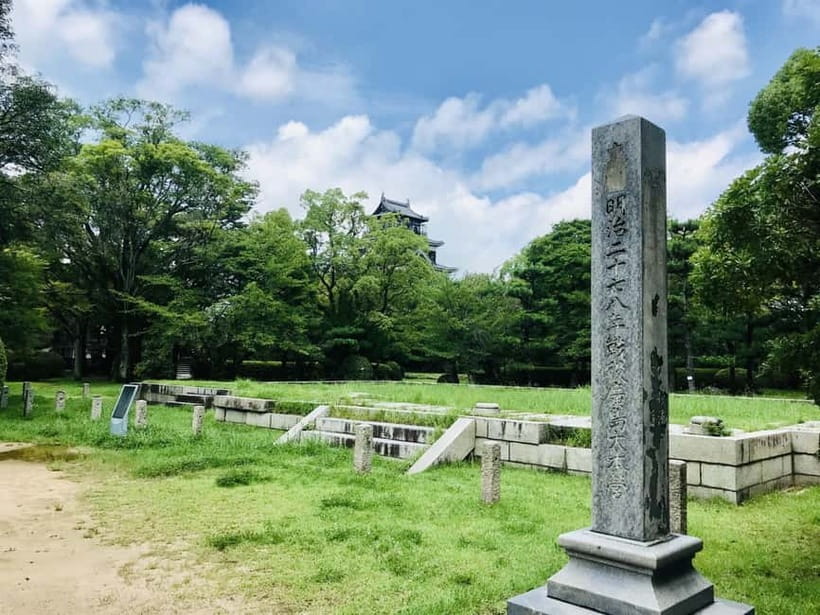
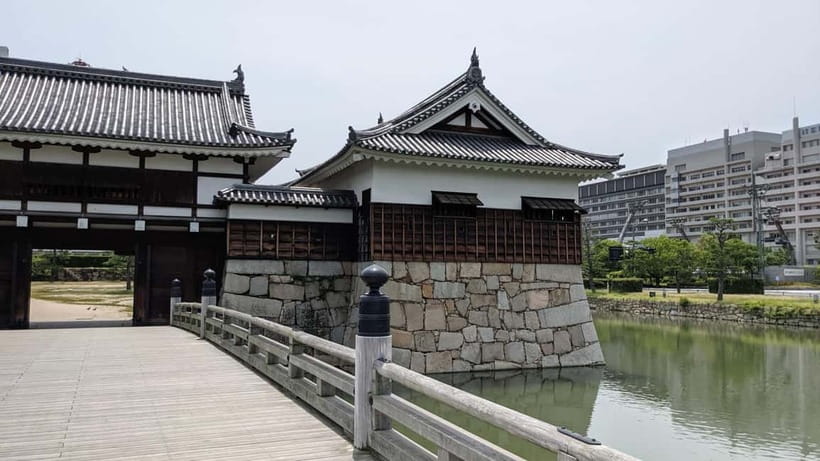
From the shrine, you move to Hiroshima Castle. The castle grounds provide the next piece of the story, linking the city’s older identity with its role as a military headquarters. A guided visit and photo stop here take about 20 minutes.
You should not expect a long castle tour or a detailed architectural study. The value is the setting and the explanation. Your guide uses the castle area to discuss Hiroshima’s military importance and the strategic reasons that made it a target during World War II.
This is where the tour’s central question begins to take shape. Why Hiroshima? The answer was not simply that it was a large Japanese city. Its military facilities, transport links, industrial role, and relative lack of previous bombing damage all formed part of the wartime calculation.
The guide’s job is not to offer a single slogan. The experience works best when you listen for the several factors that came together. It gives you a framework for the later memorials, where the discussion turns from military planning to the human cost.
A few more Hiroshima tours and experiences worth a look

Building the story before the bombing
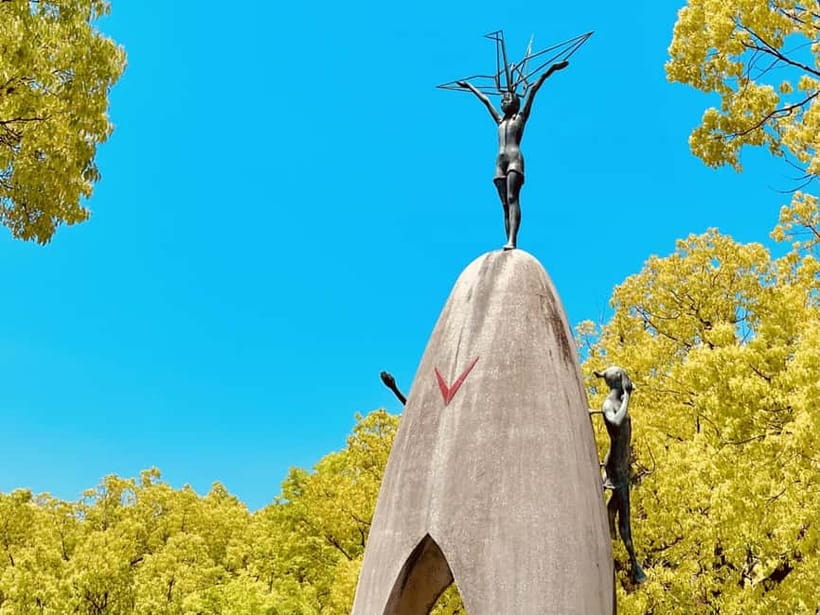
The route is thematic rather than a general city stroll. You are not stopping at every famous building or spending time shopping. Instead, each stop adds another layer to the question of how Hiroshima became the first city targeted by an atomic bomb.
One short guided stop lasts about 10 minutes, followed by around 30 minutes at Hiroshima Gate Park. Since the stop is brief, you should expect a focused explanation rather than a long visit. The route then continues toward the memorial district.
The guides are a major part of the experience. Chihiro is from Hiroshima and has offered a local perspective on the city’s past and its peace work. Emi has also been praised for clear English and for explaining complex events with care. Thomas brings an outside perspective, having lived in Japan for years, and has been described as especially good at connecting Japanese culture with the wider history.
Those differences can shape the tone of your tour. You may be guided by someone with a family connection to Hiroshima, or by a foreign-born guide who has spent years studying and living in Japan. Either approach can work well, provided the guide explains the subject with accuracy and respect.
The strongest part of this section is the context. The bombing is not treated as an isolated act. You hear about Hiroshima before 1945, the city’s military role, the events of the war, and the decisions that led to the attack. That background helps you understand why the city was selected while also keeping attention on the people who lived there.
You should also feel free to ask questions. Several guides have been praised for answering side questions patiently, including questions about Japanese culture, Hiroshima today, and the meaning of local memorials. The discussion can become more useful when you ask about something you have just seen instead of saving every question for the end.
Hiroshima Gate Park and the changing city
Hiroshima Gate Park gives the route a different feel. After the shrine and castle, the tour moves into a public urban space connected with the city’s modern life and the approach to the memorial zone.
The stop lasts about 30 minutes. Your guide may use this time to explain how Hiroshima changed after the bombing and how the city’s identity developed around remembrance and peace. This is important because the tour is not only about destruction. It also examines rebuilding, public memory, and the way Hiroshima presents its past to the world.
I like this middle section because it prevents the tour from becoming a chain of tragic images. You are walking through a living city, not a preserved ruin. Hiroshima has restaurants, parks, local customs, and ordinary daily routines alongside its memorial sites.
That balance appears in the practical help guides provide. Chihiro and Thomas have offered suggestions for food and other places to visit after the walk. Those tips are not the main reason to book, but they add a local touch and can help you make better use of the rest of your day.
The walking distance is described as manageable, and the route includes sitting breaks. Still, wear comfortable shoes. You will be outside for much of the 2.5 hours, and the experience asks you to listen closely while moving between several locations.
Standing before the Atomic Bomb Dome
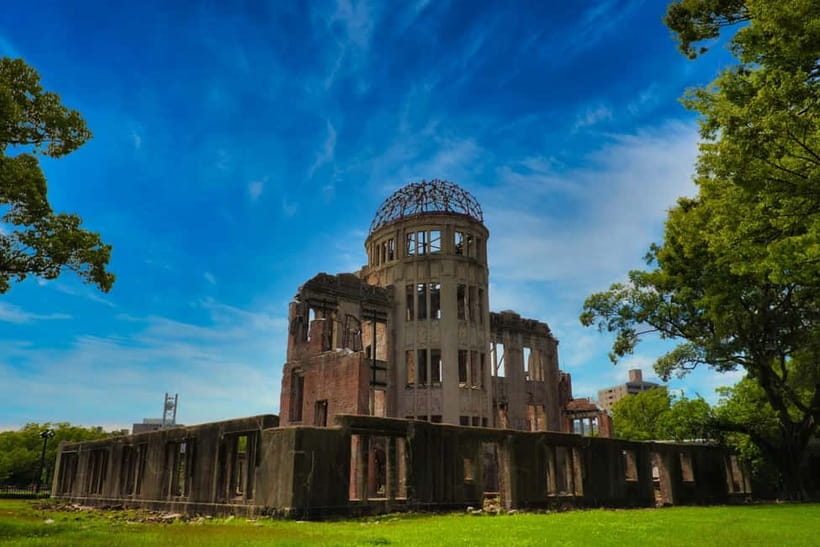
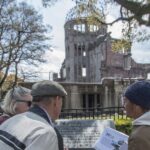
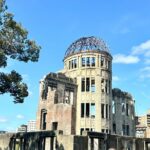
The Atomic Bomb Dome is one of Hiroshima’s most recognizable sites, but photographs cannot give you the full effect of seeing it within the city. The building survived the blast in damaged form, and its remains now serve as a direct link between the pre-bomb city and the memorial district.
The guided visit takes about 20 minutes. Your guide explains what the building represented before the bombing, what happened to it, and why it remains such an important symbol. This is a short stop, but it carries considerable weight.
You will have photo opportunities here, though this is not a casual photo stop. The building can be visually striking, yet the surrounding meaning is painful. A good guide helps you look beyond the famous outline and consider the people and city that once filled this area.
This is also a place where the route’s historical order pays off. By the time you reach the dome, you have already discussed Hiroshima’s military role and the decisions behind the attack. The ruin is no longer just an image from a guidebook. You have a clearer sense of what was lost.
The tour does not claim to settle every debate surrounding the bombing. Instead, it presents the historical and military context, then leads you toward the human consequences. That is a sensible approach for a short public walking tour, especially on a subject that carries different memories in Japan and abroad.
Peace Memorial Park and the meaning of the cranes
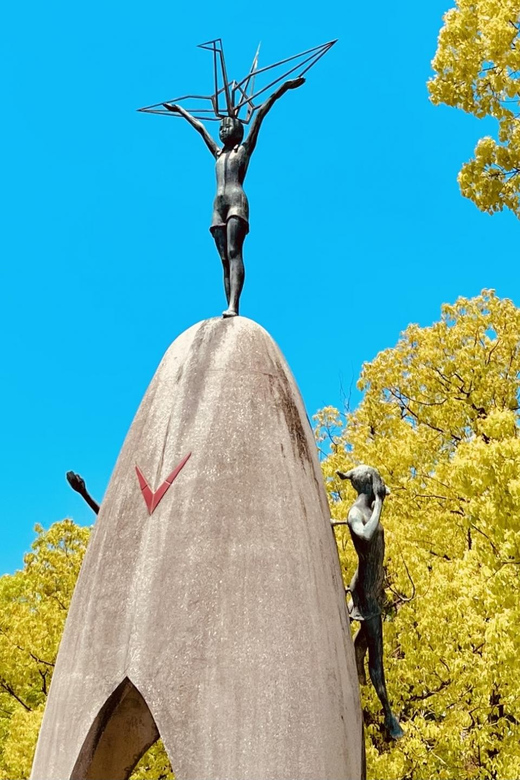
The tour spends about 30 minutes in Hiroshima Peace Memorial Park. This is the emotional center of the walk, and you should expect the pace to become quieter.
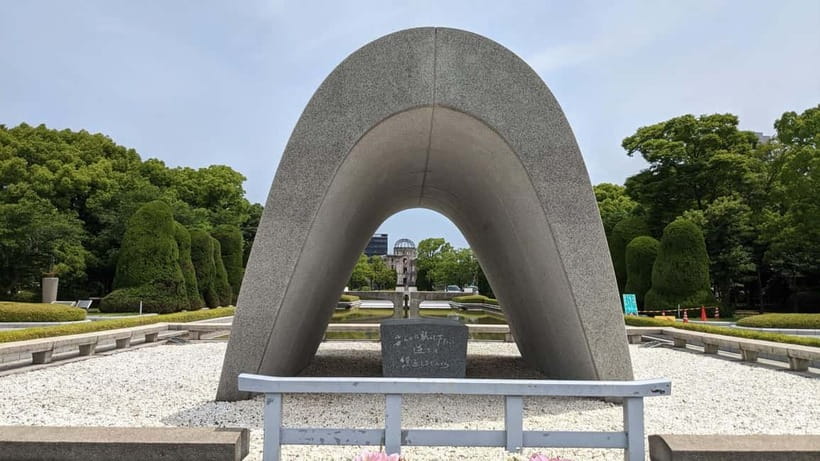
The park contains memorials connected with the victims, the bombing, children, and the ongoing call for peace. Your guide explains what these places represent rather than leaving you to guess from signs and statues.
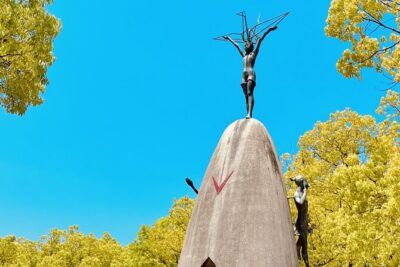
The Children’s Peace Monument and the paper cranes are especially meaningful. The cranes connect with the story of Sadako Sasaki and have become a worldwide symbol of hope and peace. One reported route also included Hiroshima Orizuru Tower, where visitors watched folded cranes float down, though you should confirm the exact stops available on your departure.
The personal accounts shared by some guides add another layer. Chihiro has spoken about family experiences and her own commitment to advocating for peace. That does not turn the tour into a family story, but it can make the city’s message feel less abstract.
You may find this part confronting. Some people prefer to hear the full background before visiting the museum, while others want to process the park slowly and quietly. The guide generally keeps the group moving at a measured pace, but the schedule cannot provide unlimited time at each memorial.
Take a moment to look around between explanations. Hiroshima Peace Memorial Park is not just a collection of monuments. It is also a place where people come to leave cranes, remember relatives, reflect, and call for a world without nuclear weapons.
A few more Hiroshima tours and experiences worth a look

Finishing at the Peace Memorial Museum
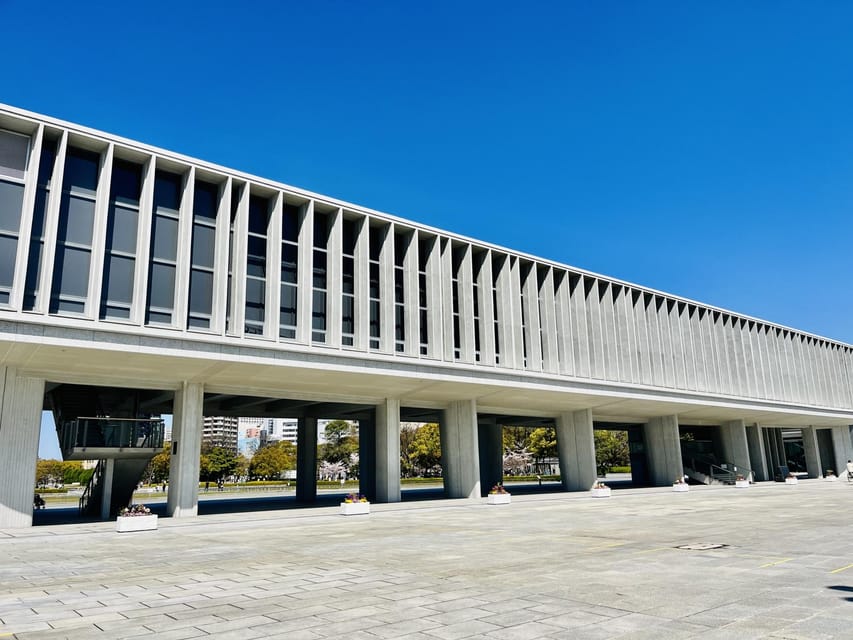
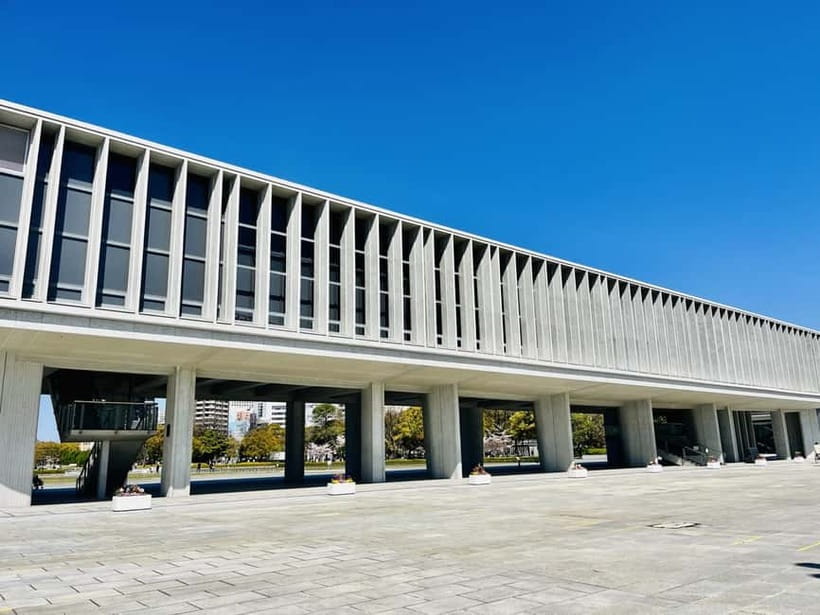
The tour ends at the Hiroshima Peace Memorial Museum, which is one of its most useful features. You do not have to find your way there afterward, and the guide’s earlier explanations give you a stronger base for understanding the exhibits.
The museum visit itself is not included as a guided portion of the walk. The tour finishes there, so you should plan separate time if you want to go inside. The exact amount of time you need depends on your pace and tolerance for difficult material.
I recommend treating the tour as preparation, not a replacement. The walk explains the city, the target selection, the memorials, and the broader context. The museum then gives you a closer look at personal belongings, photographs, testimony, and the physical effects of the bombing.
That combination is more useful than visiting either place alone. The tour helps you know what you are looking at, while the museum gives the history a more personal and detailed force.
If you are visiting Hiroshima on a tight schedule, finishing at the museum also makes the route efficient. You can continue directly into the exhibits if opening hours and availability work for your plans. The activity information does not specify how long you may remain inside, so do not assume the $35 price includes museum admission or a museum guide.
What the guides do especially well
The most consistently praised feature is the quality of the guiding. Chihiro, Thomas, Emi, Chisa, Katja, and other guides have been described as friendly, clear, patient, and passionate about Hiroshima’s history.
That praise is specific. Guides explain difficult subjects in understandable English, welcome side questions, maintain a good pace, and connect the bombing with Japanese culture. Some have also shared personal or family links to Hiroshima, while others offer a useful perspective as long-term residents of Japan.
The best guide for you may depend on what you want from the tour. If a local voice matters most, a Hiroshima-born guide such as Chihiro or Emi may be especially appealing. If you prefer an outside perspective shaped by years in Japan, Thomas may suit you well.
Guide assignments can change, so you should not book on the assumption that one named guide is guaranteed. The important point is that the activity is led live in English, not delivered as a recorded commentary or a self-guided route.
The overall rating is 4.8 out of 5 from 893 reviews, and the praise centers on education, emotional care, pacing, and clear explanations. That lines up with what the route promises: a serious history lesson delivered while walking through the actual places connected with the story.
Is $35 good value for 150 minutes?
At $35 per person, this is a reasonably priced way to connect several major Hiroshima sites. You receive a live English-speaking guide for 2.5 hours, and the route covers the shrine, castle, park areas, Atomic Bomb Dome, Peace Memorial Park, and the museum entrance area.
The value is in the explanation. You can walk through these places for free, but it is harder to understand how they fit together without someone organizing the story. The guide saves you from treating the dome, castle, shrine, and memorials as unrelated sights.
The price does not include a tip, and the supplied details do not list museum admission, food, or other entry fees as included. Keep those possible extra costs in mind when planning the day.
You can cancel up to 24 hours before the start for a full refund, and the reserve-now, pay-later option gives you some flexibility. The tour is wheelchair accessible, though the information provided does not describe every surface or access detail along the route, so you may want to confirm specifics if that matters for your equipment.
Who should book this Hiroshima walk?
I would choose this tour if you want a clear introduction before visiting the museum, or if you want help understanding the strategic reasons behind the bombing rather than only seeing memorials.
It suits adults, older children, and teenagers who can engage with a serious subject. One family with a 12-year-old found the guide able to inform and engage the child, but the material remains emotionally heavy.
It is also a good choice for anyone curious about Hiroshima beyond the memorial district. The shrine, castle, local culture, food suggestions, and discussion of the city’s rebuilding give you a wider picture.
You may prefer a different plan if you want a quiet, self-guided visit with unlimited time at each monument. You may also want to skip the walk if you already have a detailed historical understanding and would rather spend the full morning inside the museum.
Should you book the Hiroshima Historical Walking Tour?
I would book it for a first visit, especially if you plan to see the Peace Memorial Museum. The route gives you the city’s military context first, then guides you through the bombing’s aftermath and Hiroshima’s continuing peace message.
The strongest reasons are the sensible route, the manageable pace, and the guides’ ability to handle a painful subject with clarity. The main limitation is time. Two and a half hours is enough for a strong foundation, not every detail.
Book this tour if you want the sites to connect into one story. Skip it only if you prefer complete independence, have very limited emotional energy for the subject, or already know Hiroshima’s history well.
FAQ
How long does the Hiroshima Historical Walking Tour last?
The tour lasts 150 minutes, or 2.5 hours.
What language is the tour conducted in?
The tour is conducted in English with a live English-speaking guide.
Where does the tour begin?
It begins in front of the Hiroshima Gokoku Shrine torii gate near the main hall.
Where does the tour finish?
The tour finishes at the Hiroshima Peace Memorial Museum.
Does the tour visit Hiroshima Castle?
Yes. Hiroshima Castle is included as a guided visit and photo stop lasting about 20 minutes.
Does the route include the Atomic Bomb Dome?
Yes. The group visits the Atomic Bomb Dome for about 20 minutes with the guide.
Is the Hiroshima Peace Memorial Park included?
Yes. The tour includes a guided visit to Hiroshima Peace Memorial Park lasting about 30 minutes.
Is the Peace Memorial Museum admission included?
The supplied activity details state that the tour finishes at the museum, but they do not list museum admission as included. Check the current booking information before planning your visit.
Is the tour wheelchair accessible?
Yes. The activity is listed as wheelchair accessible.
Can I cancel for a full refund?
Yes. You can cancel up to 24 hours in advance for a full refund.
More Walking Tours in Hiroshima

More Hiroshima City Tours in Hiroshima
More Peace Memorial Tours in Hiroshima

More tours in Hiroshima we've reviewed




Peace Memorial Tours, compared.
 ★ 5.0Hiroshima Peace (Heiwa) Walking Tour at World Heritage SitesFrom $94
 ★ 4.9Hiroshima: Miyajima Peace Memorial Icons of Peace and BeautyFrom $1638 hours
 ★ 5.0Hiroshima Walking Tour Why A Bomb was dropped to HiroshimaFrom $28
 ★ 5.0Hiroshima 2hr Peace Cycling Tour with Local GuideFrom $59
 ★ 4.8Hiroshima: Peace Cycling Tour with Local GuideFrom $522 - 3 hours
 ★ 4.9Hiroshima: Peace Walking Tour of World Heritage SitesFrom $924h 30m
