
Reviewed · MIYAJIMA TOURS
Miyajima Music Voyage:Solo Opera/Japanese Music & Dance/Walk Tour
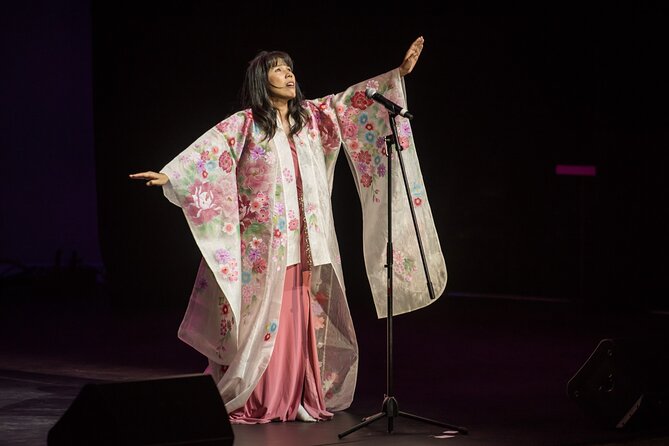
Miyajima Music Voyage pairs the island’s best-known sights with something you will not get from a standard sightseeing walk: Madam Sen’s live Japanese music, dance, and opera performance. You spend the morning on foot, take a two-hour break for lunch and independent exploring, then return for an intimate cultural show.
I like the small maximum of six people, which gives the walk a personal feel, and I like the smart timing. You see the major shrine area before the midday crowds and have free time before the afternoon performance. The main drawback is the price: at $250 per person, this is costly for a three-hour guided program, especially since lunch and transportation are not included.
In This Review
- Key points at a glance
- A morning walk through Miyajima’s main sights
- Machiya Street and Omotesando, two views of island life
- Senjokaku Pavilion and the story of the giant rice scoop
- Inside Itsukushima Shrine and near the O Torii
- Daiganji Temple and Benzaiten
- Two hours to eat, shop, or slow down
- Madam Sen’s live music, opera, and Nihon Buyo
- Is $250 a fair price?
- Who will get the most from this private format?
- Timing, booking, and the non-refundable condition
- Final call: book it for the performance, not just the walk
- FAQ
- Where does the tour start?
- What time does the experience begin?
- How long does the experience last?
- What is included in the price?
- Is lunch included?
- How large is the group?
- Where does the live performance take place?
- Can the booking be canceled or changed?
Key points at a glance
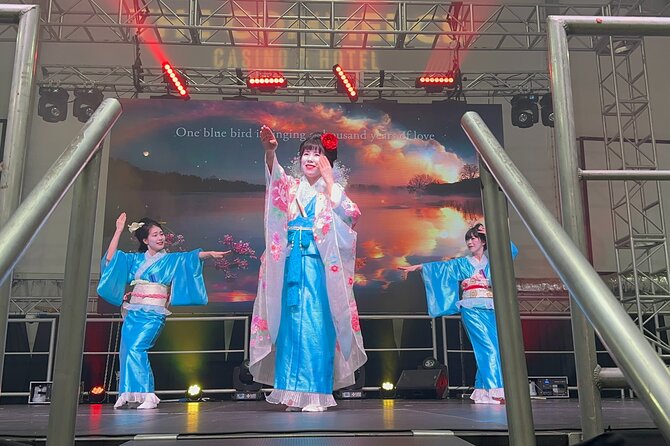
- Madam Sen performs opera arias and original songs alongside elegant Nihon Buyo traditional dance.
- The walking route covers Itsukushima Shrine, the O Torii area, Senjokaku Pavilion, Daiganji Temple, old streets, and Miyajima’s deer and monuments.
- The group is limited to six people, a useful advantage on narrow streets and inside busy sightseeing areas.
- A two-hour free period separates the walk from the performance, giving you time for lunch, shopping, or a slower look at Miyajima.
- Tea and Miyajima sweets are served during the live entertainment.
- The performance venue is announced later, so you should be comfortable with a small amount of uncertainty in the afternoon plan.
A morning walk through Miyajima’s main sights
The day begins at 10:00 AM at Miyajima Pier. That meeting point is practical if you are arriving on the island, but you will need to arrange your own transport to Miyajima because the tour price does not include it.
The opening portion introduces you to Miyajima’s monument area, its deer, and three notable monuments. The description is brief, but this is a useful start. You get your bearings before moving into the older streets and religious sites.
Miyajima is treated here as more than a photo stop for the famous torii gate. The route gives you several different ways to understand the island: local streets, shrine architecture, Buddhist worship, traditional food culture, and performing arts.
The first listed island stop includes about 30 minutes at no extra admission cost. That is enough time for an introduction and some photographs, but not enough for a slow, independent look at every corner. If you want a long visit with the deer or extensive photography, use the free period later in the day.
A few more Hiroshima tours and experiences worth a look

Machiya Street and Omotesando, two views of island life
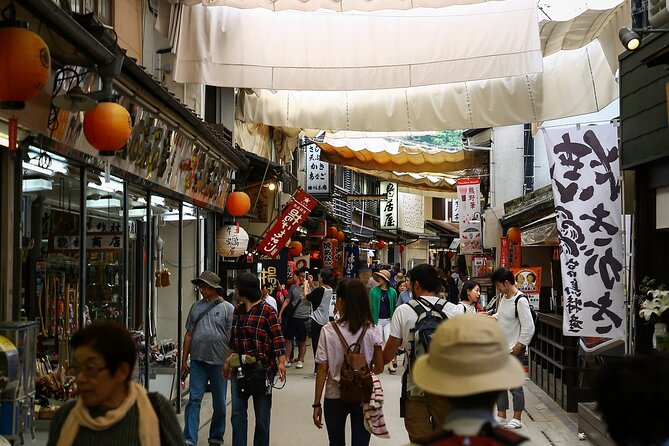
The group then walks toward Omotesando Shopping Street and Machiya Street. The tour includes a short explanation of food, people, and local history, with roughly 10 minutes assigned to this portion.
That timing tells you what this stop is and what it is not. It is an orientation walk, not a dedicated food tour or shopping session. You will learn how the older Machiya Street differs from the present main shopping street, then return later if something catches your eye.
Machiya Street is especially useful for visitors who want to see an older side of Miyajima. Its buildings date from the seventeenth to nineteenth centuries, and the street offers a sense of how the island developed before the current shopping area became the main route.
I like the way this stop is folded into the walking tour. You are not rushed into a shop or pushed toward a particular purchase. Instead, you get a short explanation and the freedom to come back during your break.
Senjokaku Pavilion and the story of the giant rice scoop
At Hokoku-jinja, also known as Senjokaku Pavilion, the group spends about 20 minutes. Admission is included.
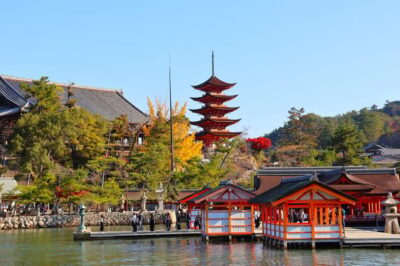
The visit covers O-Shakushi, the large rice scoop associated with Miyajima, as well as Ryuzen no Matsu and the nearby Five-storied Pagoda. The tour uses these details to explain a piece of island culture that you might otherwise miss while hurrying toward Itsukushima Shrine.
You also enter Senjokaku Pavilion. That matters because the building itself is part of the lesson. Rather than viewing it only from outside, you have a chance to feel its scale and age from within.
The stop is short, so you should expect a focused explanation rather than a long architectural study. Still, it adds welcome variety. The morning is not just one famous gate followed by another famous gate. You see religious buildings, local symbols, and the visual character of Miyajima’s older public spaces.
Inside Itsukushima Shrine and near the O Torii
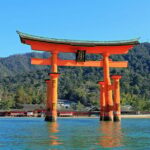
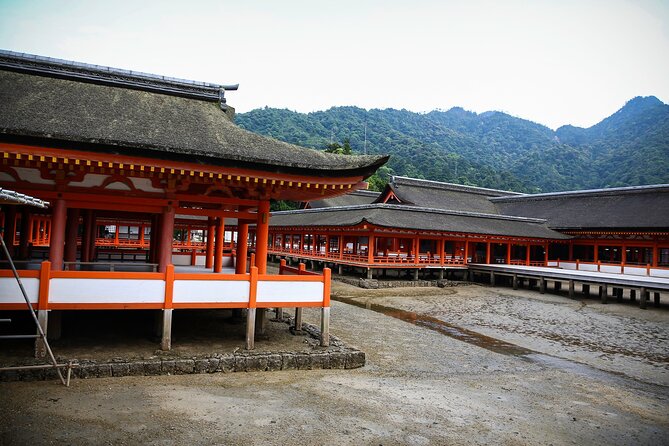
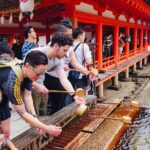
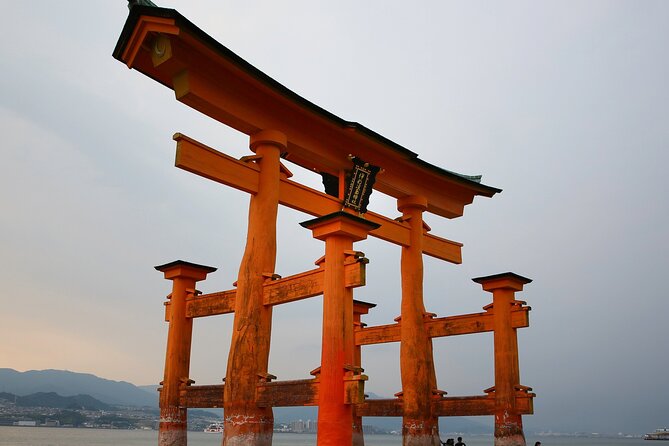
Itsukushima Shrine receives about 30 minutes, and admission is included. This is the centerpiece of the morning route.
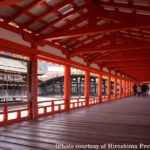
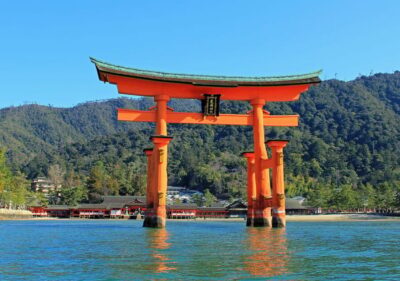
The shrine is associated with Miyajima’s long reputation as one of Japan’s three most scenic places and with Seto Inland Sea National Park. You will walk inside the shrine complex and see the O Torii gate from the island side.
The tour’s timing is useful for first-time visitors who want context without spending the whole morning at the shrine. A guide can point out what you are seeing and explain why the shrine matters before you continue to the next stop.
The trade-off is simple: 30 minutes can feel tight if you want extensive photographs, a quiet pause, and a close look at every part of the complex. Your free time later gives you another chance to revisit the area, depending on the day’s practical timing and your energy.
Because the day includes several religious sites, comfortable walking shoes are a sensible choice. The tour is described as suitable for most people and near public transportation, but it remains a walking program with several stops in succession.
Daiganji Temple and Benzaiten
The morning ends at Daiganji Temple, where you spend about 15 minutes. Admission is free.
Daiganji is dedicated to Benzaiten, the goddess associated with eloquence, music, wisdom, and wealth. That connection is a particularly neat fit for a day centered on music and performance. The guide invites you to worship at the temple, giving the stop a personal and spiritual purpose rather than treating it as another quick photograph.
Fifteen minutes is enough for a brief visit and explanation. It is not enough for an extended temple study, so keep your expectations realistic. The value comes from the way Daiganji connects the morning’s religious sightseeing to the afternoon’s musical theme.
Other walking tours we've reviewed in Hiroshima
Two hours to eat, shop, or slow down
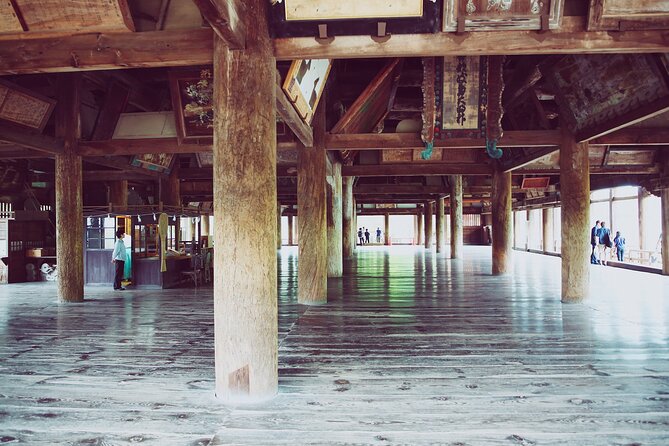
From noon to 2:00 PM, you are on your own. Lunch is not included, so this is when you arrange your meal.
This break is one of the tour’s strongest practical features. A morning of walking through shrine grounds and old streets can feel packed, especially if you prefer to take photographs or browse at an easy pace. Two free hours let you eat, return to Omotesando or Machiya Street, revisit the shrine area, or simply rest before the performance.
The schedule also gives you flexibility that many tightly scripted tours lack. You are not required to spend the whole day following a guide. The morning provides structure, while the middle of the day gives you room to choose.
You should pay attention to the afternoon meeting instructions. The performance location is listed as to be announced, and the service ends there at 3:00 PM. That means you should keep your phone available and confirm where to meet before separating from the group.
Madam Sen’s live music, opera, and Nihon Buyo
The final portion begins at 2:00 PM and ends around 3:00 PM. Madam Sen sings operatic arias and original compositions, with elegant choreography by Nihon Buyo, the Japanese traditional dance style.
The performance listing describes about 40 minutes of live music within a one-hour entertainment period. The remaining time includes the surrounding cultural presentation and tea with Miyajima sweets. Since the schedule presents the full block as 2:00 to 3:00 PM, plan on keeping the entire hour free.
This is the part that makes the tour unusual. You are not simply watching a dance demonstration after a sightseeing walk. Madam Sen combines Japanese performance traditions with opera, creating a program aimed at English-speaking visitors who want both a cultural introduction and a polished live show.
The available description does not promise a large stage production. In fact, the small private format suggests something much more personal. With a maximum of six people, you can expect a close setting rather than a crowded theater atmosphere.
Tea and Miyajima sweets are included. That small serving gives the performance a hospitable finish and makes the hour feel like a cultural visit rather than a detached concert.
The published meeting location is not fixed in advance. This is the main logistical weakness of the afternoon. You should not assume the show takes place at the same spot as the morning walk. The service ends at the entertainment venue, and the organizer suggests places you can visit afterward.
Is $250 a fair price?
At $250 per person, the cost is high for a three-hour scheduled program, even though the day’s timetable stretches from 10:00 AM to 3:00 PM because of the free break.
The price includes:
- All listed fees and taxes
- Entry to Senjokaku Pavilion
- Entry to Itsukushima Shrine
- Tea and Miyajima sweets
- The private guided walk
- The live music and dance program
Lunch, transportation to Miyajima, and anything you buy during the free period cost extra.
The best value comes from the combination, not from the sightseeing alone. A basic walk around Miyajima would cost much less. You are paying for the private format, the English-language cultural explanation, and Madam Sen’s live performance.
That makes the tour a better fit for someone who specifically wants traditional music and dance, not simply the lowest-cost way to see the shrine. If your main aim is the O Torii and a quick look at Itsukushima, the price will probably feel steep. If you want an intimate cultural program that is difficult to arrange independently, the calculation is more favorable.
Only one published rating is available, but the praise is specific. The strongest points are the English-speaking presentation, the chance to understand Japanese culture, the dance, and Madam Sen’s powerful opera singing. Those are the reasons to book, rather than the number of sightseeing stops alone.
Who will get the most from this private format?
I would recommend this experience to an English-speaking visitor who wants a guided introduction to Miyajima and has a serious interest in Japanese performance.
The group limit of six suits couples, families, and small groups who dislike large coach tours. It also helps during the cultural presentation, where a small room and direct contact with the performer can make a major difference.
The tour is described as suitable for most people, with service animals allowed and public transportation nearby. Still, you should be ready for several walking stops and a full morning on your feet. The information does not specify step-free access, so anyone with mobility concerns should confirm that point before booking.
This is less suitable if you want a completely flexible day. The morning has a fixed route, and the performance begins at 2:00 PM. It is also a poor choice if you are looking mainly for a food-focused outing, since lunch is not included and the shopping street visit is brief.
Timing, booking, and the non-refundable condition
The experience is generally booked about 30 days ahead. Confirmation is sent within 48 hours, subject to availability.
The tour is private, so only your own group participates. The mobile ticket is convenient, but keep the booking details easy to access on your phone, especially because the entertainment location is announced separately.
The cancellation rule is strict. The experience is non-refundable and cannot be changed for any reason, so make sure your Miyajima plans are firm before paying.
The starting point is Miyajima Pier in Miyajimacho, Hatsukaichi, Hiroshima. The service ends at the performance location on the island, not necessarily back at the pier.
Final call: book it for the performance, not just the walk
You should book Miyajima Music Voyage if Madam Sen’s opera, Japanese music, and Nihon Buyo dance are central to what you want from Miyajima. The walk gives you the major sights, but the live cultural program is the real reason this costs more than an ordinary island tour.
You should skip it if your priority is a low-cost shrine visit, a long lunch, or complete control over your schedule. At $250, this needs to match your interests closely.
For the right audience, the design is appealing: a compact morning walk, two hours of personal time, then a small-scale performance with tea and local sweets. Confirm the afternoon meeting point, bring comfortable shoes, arrange your own lunch, and book only when you are certain you can attend.
FAQ
Where does the tour start?
It starts at Miyajima Pier, Miyajimacho, Hatsukaichi, Hiroshima 739-0588, Japan.
What time does the experience begin?
The tour starts at 10:00 AM.
How long does the experience last?
The scheduled experience runs for about three hours, with the full day timetable extending from 10:00 AM to 3:00 PM because of the two-hour free period.
What is included in the price?
The price includes all fees and taxes, Senjokaku Pavilion admission, Itsukushima Shrine admission, tea, Miyajima sweets, the guided walk, and the live performance.
Is lunch included?
No. Lunch is not included, and you have free time from noon to 2:00 PM to dine or explore independently.
How large is the group?
This is a private activity with a maximum of six people. Only your own group participates.
Where does the live performance take place?
The entertainment location is to be announced. The service ends at that location at 3:00 PM.
Can the booking be canceled or changed?
No. The experience is non-refundable and cannot be changed for any reason.
More Walking Tours in Hiroshima
More Miyajima Tours in Hiroshima
More tours in Hiroshima we've reviewed

Miyajima Tours, compared.
 ★ 5.0Peaceful Hiroshima & Miyajima UNESCO 1 Day Bus TourFrom $129
 ★ 4.9Hiroshima: Hiroshima and Miyajima UNESCO Sites 1-Day TourFrom $1228 hours
 ★ 5.0Hiroshima / Miyajima Full-day Private Tour with Government Licensed GuideFrom $202
 ★ 4.7Osaka/Kyoto: Hiroshima Miyajima Bus Tour & Shinkansen TicketFrom $27712 hours
 ★ 4.7From Hiroshima: Hiroshima & Miyajima 1 Day Tour with LunchFrom $1168 hours
 ★ 5.0Hiroshima and Miyajima Day Trip with Itsukushima Shrine & FerryFrom $45
