
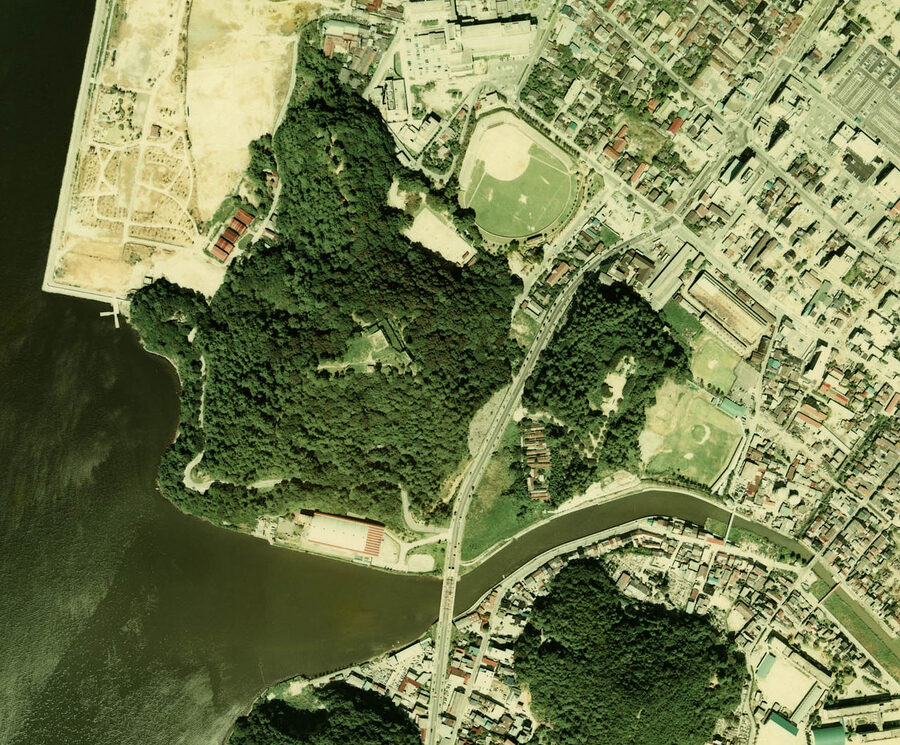
Yonago (米子) is the busiest rail junction on the western San’in coast — the place where the Yakumo limited express from Okayama meets the San’in Main Line running east to Tottori and west to Matsue and Izumo. If you’re doing a San’in coast rail trip, you will pass through Yonago. Most people don’t stop.
They should. The city itself is unremarkable — 147,000 people, a functional downtown, an old castle reduced to stone walls — but within 30 minutes of Yonago Station are three things that justify a proper half-day: the Kaike Onsen coastal hot-spring district, the Mizuki Shigeru Road in Sakaiminato with its 177 bronze yōkai statues, and — on the horizon — the conical bulk of Mt Daisen. Yonago is also the gateway to the Oki Islands: Sakaiminato Port is one of the two ferry departure points for Oki.
Yonago Castle ruins
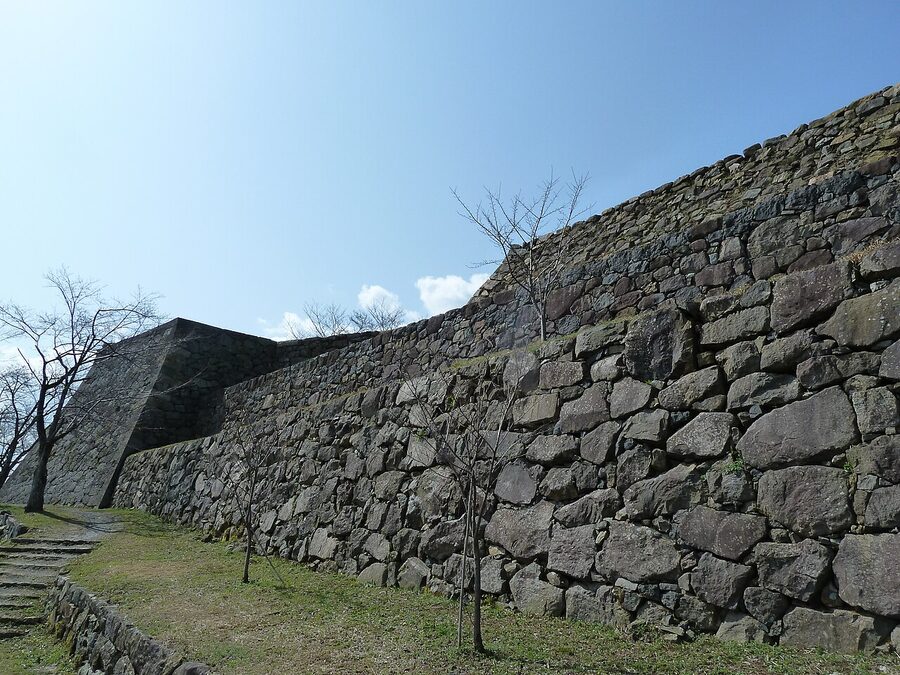
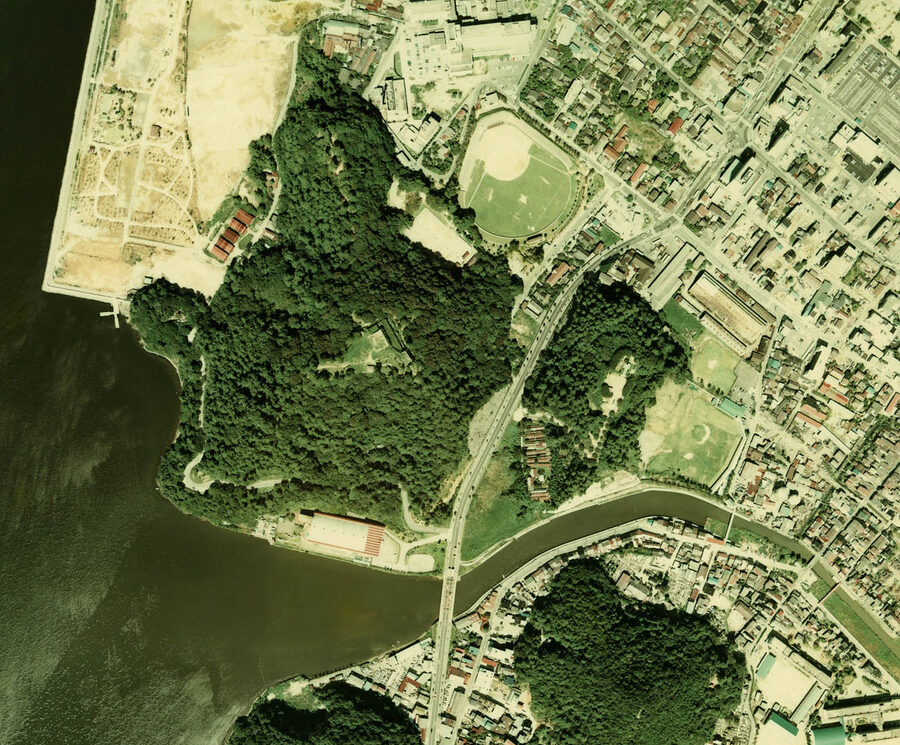
Yonago Castle was built 1591-1602 by Nakamura Kazuuji, a minor daimyo who joined the losing side at Sekigahara and lost everything. The castle passed to the Ikeda family, who ran it until the Meiji demolition. What remains is an extensive set of stone walls — four stepped terraces that rise from the river to the flat summit of Mt Kazan (90 m), making this one of the largest castle-ruin parks in the San’in region.
The walk up takes 15 minutes. At the top, where the keep once stood, is a flat grass platform with a clear view across Yonago city to Mt Daisen in the east and the Shimane peninsula in the west. No entry fee. Open 24 hours. A good morning-jog option if you’re staying in town.
Kaike Onsen
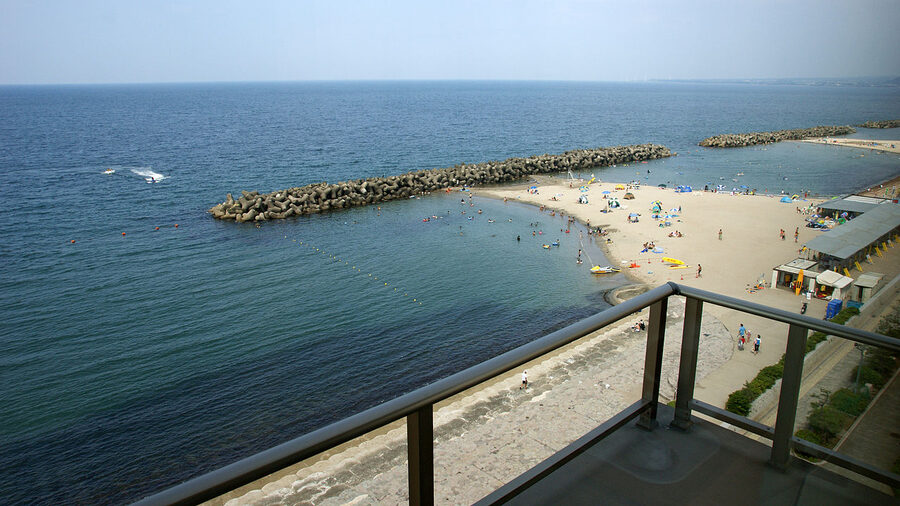
Kaike Onsen (皆生温泉) is a 15-minute bus ride north of Yonago Station. It’s a specific kind of onsen — the water is drawn from undersea hot springs about 50 metres offshore and pumped to the surface, giving it a high salt content (higher than most Japanese onsen) and a slightly milky appearance. The water temperature at the source is 63°C; ryokan pools are typically run at 42°C.
The town runs along a 2 km stretch of white-sand beach — unusual in itself, since most of the San’in coast is rocky — with about 18 ryokan and 10 hotels strung along the waterfront. The beach is a public-access strip with free foot baths (ashi-yu) scattered along the promenade. Sunset on a clear evening, with Mt Daisen backlit in the east, is the thing to plan for.
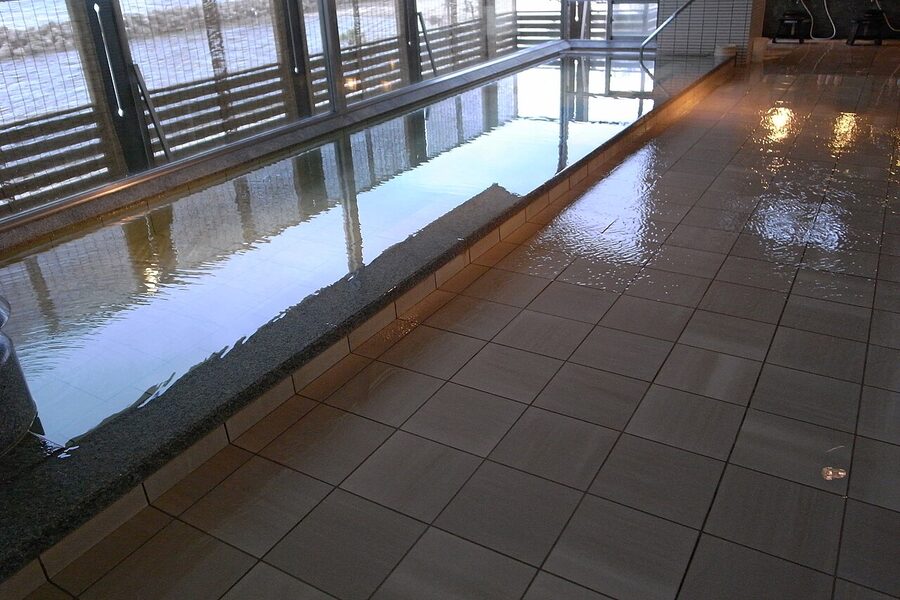
Day-use onsen bathing (nyūyoku) at one of the ryokan is about ¥1,200–¥1,800 per person. The Kaike Grand Hotel Ten-Kū and Kaike Seaside Hotel Kaihin-tei Bekkan Kaikyū both have rooftop open-air baths that are worth the day rate.
Sakaiminato: Mizuki Shigeru Road
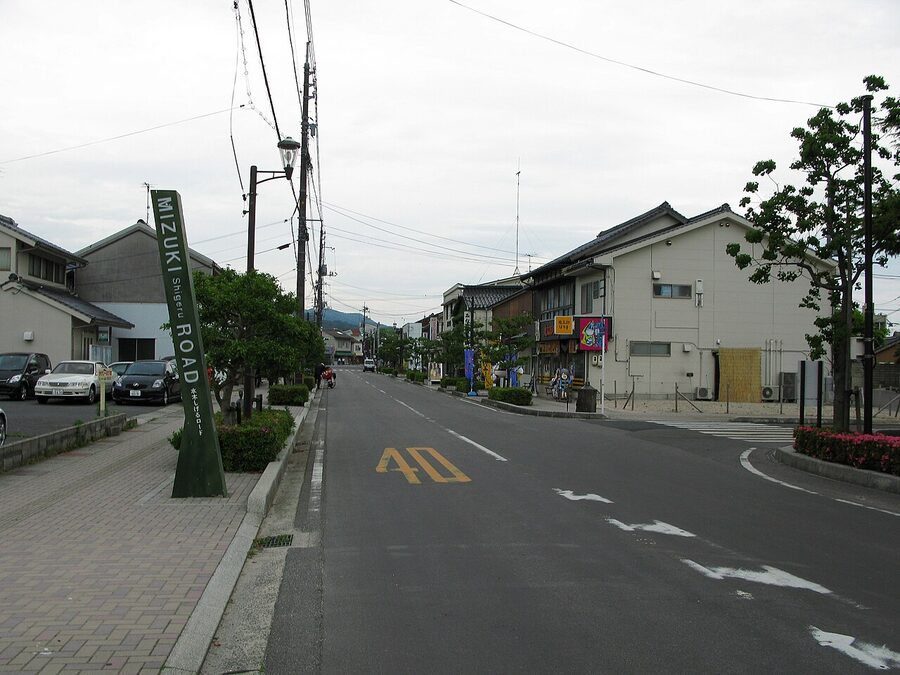
Twenty minutes by local train north of Yonago Station is Sakaiminato, a fishing port that happens to be the hometown of Shigeru Mizuki — the manga artist who created GeGeGe no Kitarō, the defining 20th-century Japanese manga about yōkai (traditional folk monsters). Mizuki grew up in Sakaiminato in the 1930s, served in the Pacific War, came home to find the hand-drawn yōkai characters that his childhood neighbour had taught him more compelling than postwar reality, and spent the next sixty years cataloguing them in manga form.
The Mizuki Shigeru Road (水木しげるロード) is a 1-km main street — the road from Sakaiminato Station to the Mizuki Shigeru Memorial Museum — lined with 177 bronze statues of Mizuki yōkai characters, each with a short caption explaining the folk tradition. The characters range from common (the cute rice-cake-shaped obakemakura pillow monster) to extremely obscure (Kappa-fish of Miyagi, Umi-bōzu of Shimane).
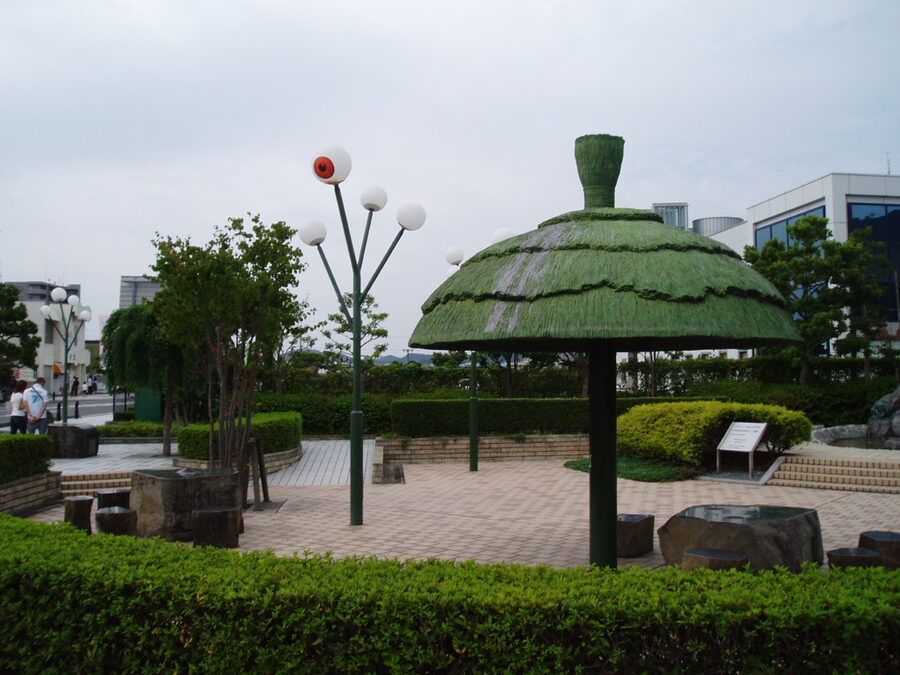
At the end of the road is the Mizuki Shigeru Memorial Museum (¥1,000 entry) — a proper manga-art museum with original hand-drawn panels, wartime sketches, and a reconstruction of Mizuki’s studio. Even if you’ve never read Kitarō, the museum is a good hour.
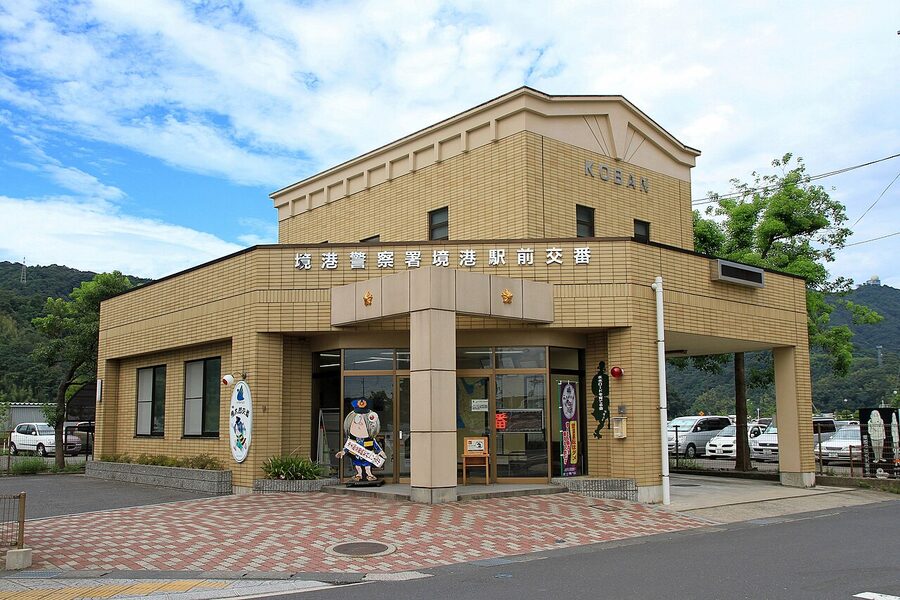
Getting there: the Sakai Line from Yonago Station to Sakaiminato Station takes 45 minutes, ¥330. Some of the trains are painted in Kitarō-character designs. Sakaiminato Station itself is done up as “Yōkai Station” — the platform names are yōkai-themed.
Sakaiminato port and the Oki ferry
Sakaiminato is also the second major departure point for ferries to the Oki Islands (the other being Shichirui port, 15 minutes south). The Oki Kisen ferry from Sakaiminato runs 2h 30 to Saigō on Dōgo, ¥3,510 one-way. One round-trip service per day.
The port also handles sightseeing cruises — a 90-minute evening cruise round the Nakaumi lagoon operates May through September for ¥3,500.
The Adachi Museum of Art (20 minutes east)
The single highest-value day-trip target from Yonago is not actually in Yonago — it’s in Yasugi, the next town east, and it’s the Adachi Museum of Art (足立美術館). For 22 consecutive years (2003-2024) the Adachi’s garden has been ranked the #1 Japanese garden in the world by Sukiya Living magazine, beating out Katsura Rikyu in Kyoto and the Imperial Palace grounds in Tokyo. It is, by a wide margin, the best garden you will see in Japan that isn’t a UNESCO site.
The museum runs to 165,000 square metres of landscape garden divided into six specific sub-gardens (Dry Landscape Garden, Moss Garden, Pond Garden, Juryū-an Garden, Kikaku-an Garden, White Gravel and Pine Garden), each designed to be viewed through specific windows of the museum building like framed landscape paintings. You cannot walk in the gardens — you view them from the corridors. This is deliberate; the garden is, in effect, the largest living work of art in the collection.
The collection itself is a serious 20th-century Japanese painting holding — around 130 works by Yokoyama Taikan (the museum’s founder Zenko Adachi’s obsession), plus substantial collections of Hashimoto Kansetsu, Takeuchi Seihō, and Uemura Shōen. The ¥2,300 entry is high by Japanese museum standards and completely worth it.
Getting there from Yonago: JR San’in Main Line east to Yasugi Station (20 minutes, ¥330), then the free museum shuttle bus (20 minutes). Plan 3 hours minimum. Open 09:00-17:30 (17:00 in winter); no closed days.
Nakaumi lagoon and the birds
Between Yonago and Matsue is the vast brackish-water Nakaumi lagoon (中海), Japan’s fifth-largest lake and one of East Asia’s most important winter waterbird habitats. From late October to March, somewhere between 30,000 and 60,000 ducks, geese, swans, and cormorants winter here on the migration route between Siberia and south-east Asia.
The Yonago Waterbird Sanctuary (米子水鳥公園) on the northern edge of the lagoon has heated indoor observation hides with Swarovski spotting scopes, a small education centre, and 200+ acres of protected wetland. It’s a proper birding site — over 200 species recorded, including regular rarities like the white-tailed eagle and the Asian dowitcher. ¥310 entry. Take the Sakai Line three stops north to Hakshaku Station and walk 15 minutes. A good winter morning.
Mt Kyōgamine and the marathon
Kaike Onsen hosts the annual Kaike Triathlon every late July — one of Japan’s oldest and most prestigious triathlon events, running since 1981. The swim leg is done in the calm waters directly off the Kaike beach; the cycling course runs inland toward Mt Daisen and back; the marathon finishes on the beachside promenade. If you’re in town that weekend (usually the third Sunday of July), every ryokan is booked out six months ahead, but the event is free to watch and remarkably atmospheric — the pro triathletes emerging from the Japan Sea onto white-sand beach with Daisen in the background is a photograph worth being there for.
Behind Kaike, a smaller mountain called Mt Kyōgamine (大山寺脈 — technically part of the broader Daisen mountain range) hosts a loop hiking trail — 4 hours round-trip, easy. This is the hike to do if you’ve only got an afternoon and don’t want the full Daisen commitment.
Food in Yonago
Gegege no Kitarō meal. The restaurants along Mizuki Road serve yōkai-themed foods — “eyeball dumplings” (actually white tofu), “hair ball rice” (nori rice), and similar. It’s a tourist bit but it’s well-done. Yōkai Shokudō on the main road does a ¥1,200 meal set.
Snow crab. Like Tottori city, Yonago is a winter snow-crab (zuwai-gani) port. Season November through March. A full crab course at Kaisenan Bocchi in central Yonago is ¥8,500 — cheaper than Tokyo prices, same fish.
Tofu chikuwa. A specifically Yonago product — a tofu-based version of the classic Japanese chikuwa fish paste. Vegetarian, mild, sold as souvenir-boxed in Yonago Station shops.
Snow crab in Yonago: a season calendar
The San’in coast is Japan’s snow-crab heartland. The crabs (zuwai-gani or more formally matsuba-gani when from Tottori/Shimane waters) are fished in the deep Sea of Japan trenches from November to March, and Yonago is one of the three main landing ports (alongside Sakaiminato next door and Kasumi in Hyogo). If you’re in the region in season, crab is what to eat.
Early November. Season opens on 6 November, nationally. Prices are highest in the first week because the whole country wants opening-day crab. Supply is still light; expect ¥12,000+ for a full-course dinner.
Late November – December. Peak supply and best quality. This is the window locals recommend. Prices stabilise at ¥7,000–¥10,000 for a full kaiseki crab course at Kaike ryokan. Many ryokan run “crab plans” — 1-night-2-meals with a full crab set — from about ¥20,000 per person, which is a shockingly good rate for what you get.
January. Still excellent but shoulder-season weather on the Sea of Japan — boats can be forced back by winter storms, so supply dips occasionally. Book your accommodation with a crab plan that guarantees substitution (most Kaike ryokan do this automatically).
February – mid March. Female crabs (seiko-gani) become the feature — smaller, cheaper, but with the particular roe (uchiko) that many locals consider the best part of the whole season. Seiko-gani meals are in the ¥5,000 range.
20 March. Season closes nationally. After this, all zuwai-gani offered are frozen-stock or imported (mostly Russian). Save the crab plans for the actual season.
Yonago isn’t the only San’in port where you can do crab — but the ryokan-and-onsen combination at Kaike is probably the best accommodation value for a crab-centred overnight in Japan. Worth planning around.
Mizuki Shigeru’s wartime sketches
A quick aside about the man behind Sakaiminato’s bronze statues. Shigeru Mizuki (1922–2015) grew up in Sakaiminato in the 1920s and 30s, was conscripted into the Imperial Japanese Army at 20, and was deployed to Rabaul in Papua New Guinea in 1943. During an Allied air raid he lost his left arm; he spent the rest of the war in military hospital, first in Rabaul and then in Japan. He started sketching yōkai in the hospital beds, and drew them compulsively for the next seventy years.
The Memorial Museum in Sakaiminato has a section devoted to his wartime sketches, most of which are not about yōkai at all — they’re hand-drawn documentary art of the Rabaul field hospital, fellow conscripts, and the Melanesian local people who saved his life after his arm was amputated. They’re surprisingly moving. It’s one of the quieter rooms in the museum and easy to miss if you come for the monsters.
His manga career started in 1957 with Rocket Man. GeGeGe no Kitarō debuted 1960 and has been in more or less continuous publication since. When Mizuki died in 2015 at age 93, the funeral in Tokyo was attended by 10,000 people. The Sakaiminato museum ran a year-long memorial exhibition in 2016 that drew 200,000 visitors — which is to say, roughly six times Sakaiminato’s entire population.
Getting there and around
By air. Yonago Kitarō Airport (YGJ) has 4 daily flights from Tokyo Haneda (75 min, ¥18,000). The airport is named Kitarō because of the Mizuki connection.
By train. Yakumo limited express from Okayama (2h 20, ¥5,500). San’in Main Line local trains to Matsue (20 min, ¥330) and Tottori (2h 20, ¥1,800).
Local bus. Yonago to Kaike Onsen, 15 minutes, ¥240. Yonago to Daisen-ji Temple (for Mt Daisen), 50 minutes, ¥760.
Where to stay
Most travellers base at Kaike Onsen rather than Yonago city. The ryokan selection is far better and you get the sunset view. Mid-range: Kaike Grand Hotel Ten-Kū (¥15,000+). High end: Hotel Taiyo (¥28,000+, private rotenburo rooms).
For a business-hotel stop in central Yonago, Toyoko Inn Yonago Station-Mae is the reliable call at ¥8,500.
Planning your visit
Half-day. Mizuki Shigeru Road + Mizuki Museum + lunch. Doable as a side trip from Matsue.
Full day. Morning at Sakaiminato (Mizuki Road + museum + Sakaiminato fish market), afternoon onsen soak at Kaike, evening sunset at Kaike beach.
Two days. Add a Mt Daisen hike on day two. If hiking isn’t your thing, add a Oki Islands ferry day (Yonago → Sakaiminato port → Dōgo island return).
Yonago pairs best as the middle stop on a 3-day San’in trip: Izumo → Matsue → Yonago → Tottori. Three nights, four cities, one of the best quiet-Japan itineraries.
The quiet moment to find
Walk the Kaike beach at 18:30 in early June. The sun is dropping behind the Shimane peninsula to the west. The white sand is empty — three retired Japanese couples, one fisherman, some gulls. Mt Daisen is silhouetted on the eastern horizon, backlit by the sunset. You pass a free foot-bath, take your shoes off, sit for 15 minutes with your feet in the hot sea water, and watch the colour of the Sea of Japan cycle through every shade of blue and pink before it settles into dark. Then walk back to your ryokan.
That’s Yonago. Not spectacular. Not famous. Just quiet, and practical, and surprisingly nice.



