
Reviewed · HIROSHIMA CITY TOURS
History of Hiroshima Private Walking Tour
Hiroshima’s Peace Park can look calm and beautifully ordered, which makes the city’s past easy to underestimate. This private walking tour gives that quiet setting a human focus, moving from the Gates of Peace through the museum, memorials, and Atomic Bomb Dome while your guide explains why the bombing happened and how it changed world history.
I like the private format, since your group can share the experience without strangers trailing along. I also like the strong mix of major sights and less familiar memorials, including the Korean Victims Monument and Mother and Baby in the Storm. The main drawback is comfort: the museum may be warm and crowded, and the listed stop times add up to longer than the advertised three hours.
In This Review
- Key points before you book
- Starting at the Gates of Peace
- Mother and Baby in the Storm
- An hour inside the Hiroshima Peace Memorial Museum
- The Cenotaph and the names of the victims
- The Rest House and a building that survived nearby
- National Peace Memorial Hall for the Atomic Bomb Victims
- The Korean Victims Monument
- Sadako, paper cranes, and the Children’s Peace Monument
- The Atomic Bomb Dome and Peace Bell
- What $85.13 per person buys you
- Timing, weather, and comfort
- Who should book this Hiroshima walking tour?
- Should you book it?
- FAQ
- How long is the Hiroshima private walking tour?
- Where does the tour start?
- Where does the tour finish?
- Is the Hiroshima Peace Memorial Museum included?
- Is this a private tour?
- Can children join the tour for free?
- Is food included?
- Is the tour available by mobile ticket?
- What is the cancellation policy?
Key points before you book
- Ten Gates of Peace begin the story: The opening stop gives the tour a clear historical frame instead of sending you straight to monuments without context.
- The museum gets a full hour: That is enough time for a focused visit, though the building may feel warm and busy.
- Private groups keep the pace personal: Only your party joins, making this a good choice for families or small groups.
- Two children ages 0 to 10 join free: This can improve the value for a family booking.
- The tour includes lesser-known memorials: Korean victims, mothers, children, and survivors are part of the route, not just the headline sights.
- The route finishes at the Atomic Bomb Hypocenter Monument: You begin at Ristorante Mario and finish near Hiroshima’s Ground Zero marker.
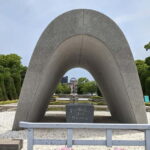
Starting at the Gates of Peace
The tour begins at Ristorante Mario, at 4-11 Nakajimacho, near Hiroshima Peace Memorial Park. The area is close to public transportation, which helps if you are arriving from another part of the city. The guide then takes you to the Gates of Peace, where the opening explanation sets the tone for the next few hours.
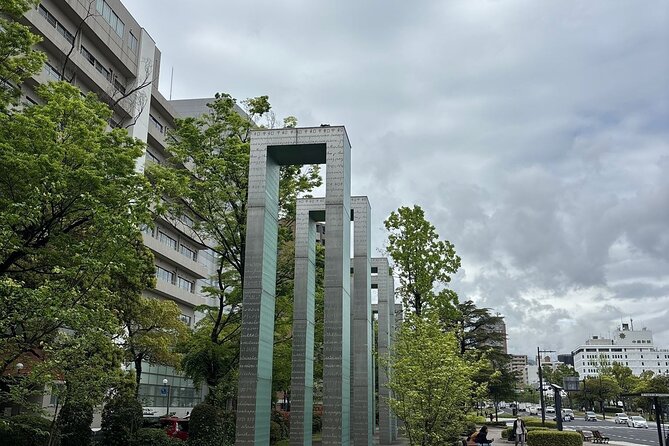
The gates are designed around the idea of peace, with nine gates representing the word peace in different languages and a tenth gate symbolizing the future. The exact symbolism gives your guide a natural way to explain Hiroshima’s place in world history before you see the more difficult exhibits.
That opening matters. Without it, a walk through the park can become a string of solemn buildings and statues. With it, you have a basic map of the story and can better understand why the city has chosen peace as its central message.
The first stop is free, as are nearly all the outdoor memorials. Plan to listen closely here. The tour is not simply a photo walk, and the explanation about why the atomic bomb was dropped is one of its most important parts.
A few more Hiroshima tours and experiences worth a look

Mother and Baby in the Storm
The Mother and Baby in the Storm monument receives only about five minutes, but its subject is powerful. It honors mothers who sacrificed their lives while trying to save their children.
This is a brief stop, yet it adds a personal scale to the history. The museum deals with large events, photographs, objects, and destruction. This monument brings the story back to one of the most basic human instincts, a parent trying to protect a child.
You will not spend long here, so consider it a moment for quiet attention rather than a full lecture. Families may find this stop especially meaningful, though the subject can be hard for young children. The private setting gives you more freedom to pause if needed, but the tour still has several sites to cover.
An hour inside the Hiroshima Peace Memorial Museum
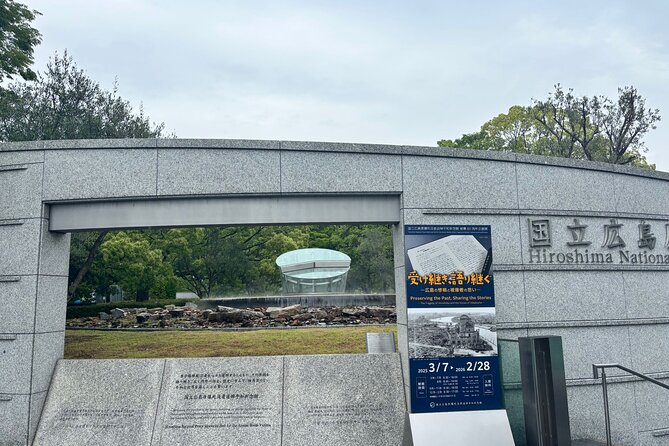
The Hiroshima Peace Memorial Museum is the center of the experience. The scheduled visit lasts one hour, and admission is included in the tour price.
The museum uses visual displays to explain the bombing, its effects on the city, and Hiroshima’s later work for peace. Expect difficult material. This is not a light sightseeing stop, and you should allow yourself some emotional space before and after it.
An hour is useful but not generous if you want to read every display. I would treat the guide’s explanations as a framework, then focus on the objects and exhibits that speak most clearly to you. Trying to absorb every line can turn the visit into a rush.
One practical point matters here: the museum can be busy and warm. That affects the experience, especially during a crowded period or if you are visiting with children. Wear comfortable clothing, keep water available for the walking portions, and do not assume the museum will feel cool and quiet.
Because the tour is private, you can ask Ali’s guide to clarify points that are difficult to follow. The provided information identifies Ali as the experience provider, but it does not give the individual guide’s name. If personal guide matching matters to you, ask who will lead the tour when booking.
The Cenotaph and the names of the victims
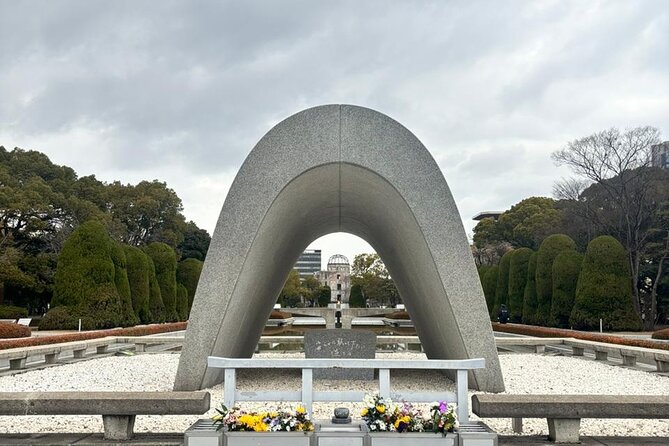
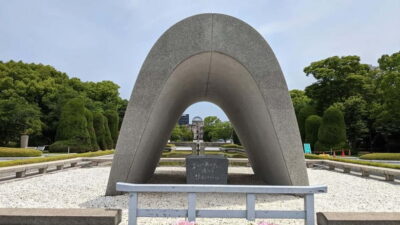
After the museum, the route continues to the Hiroshima Peace City Monument, also called the Cenotaph for the Atomic Bomb Victims. The monument holds the names of people who died in the bombing.
This stop gives the museum’s large-scale account a direct memorial form. Instead of only seeing statistics or displays, you are facing a place dedicated to individual names. The planned time is about 20 minutes, enough for an explanation and a quiet look around.
The park itself is intentionally peaceful. That calm can feel strange beside the subject matter. One published comment describes the area as lovely in a way that does not reflect the horror that occurred there. That contrast is worth keeping in mind: the beauty is part of Hiroshima’s present message, but it can also make the past feel distant.
The Rest House and a building that survived nearby
The Rest House of Hiroshima Peace Park is scheduled for about 15 minutes. The building is described as a solo survivor located 170 meters from ground zero.
This stop helps you picture the physical reach of the bombing. It is one thing to see a memorial or read an account. It is another to consider a real building that remained after such destruction, so close to the center of the blast.
The visit is short, so the guide’s explanation will carry much of the value. If you are interested in architecture or survival stories, this may be one of the tour’s most memorable smaller stops. It also breaks up the museum and memorial sequence with something tangible.
Other walking tours we've reviewed in Hiroshima


National Peace Memorial Hall for the Atomic Bomb Victims
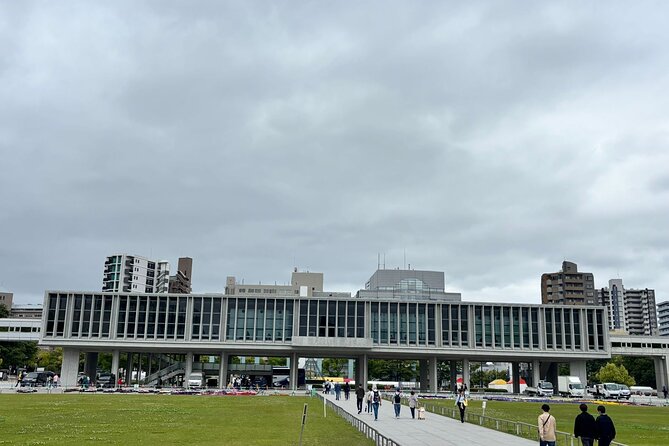
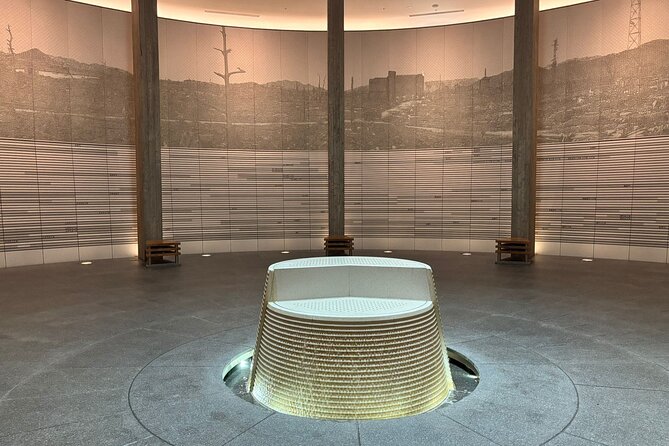
The Hiroshima National Peace Memorial Hall for the Atomic Bomb Victims gets about 20 minutes. Its displays show the destruction of the city and add another layer to the museum visit.
Because the museum already takes an hour, some visitors may wonder if another indoor memorial hall feels repetitive. I think the combination can work well when the guide explains how each place presents the past differently. Still, the schedule is full, and you may not have time to linger over every display.
This is a good point to notice your own pace. Hiroshima’s memorial sites ask for attention, and moving quickly from one difficult subject to another can be tiring. A private group has an advantage here: you can tell the guide if your party needs a short pause.
The Korean Victims Monument
The Monument to Korean Victims and Survivors receives about five minutes. It is dedicated to Korean victims, making their experience part of the tour’s historical frame.
This stop is important because Hiroshima’s story is not limited to one national identity. The monument reminds you that people from different backgrounds were caught in the bombing and its aftermath.
Five minutes is enough to identify the monument and hear its purpose, but not enough for an extended discussion. If this aspect of the city’s past matters to you, prepare a question for the guide. A private tour is particularly useful for that kind of focused conversation.
Sadako, paper cranes, and the Children’s Peace Monument
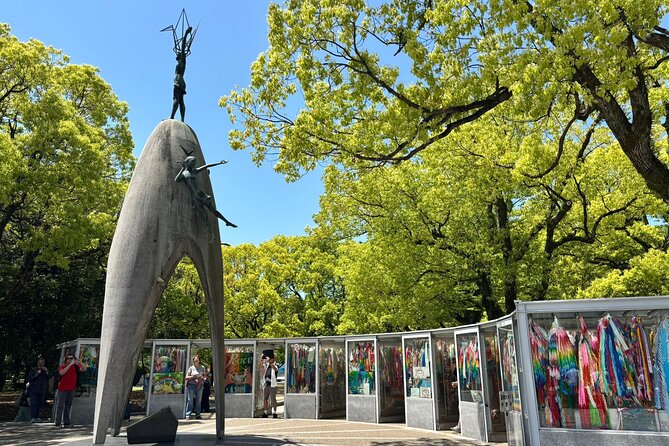
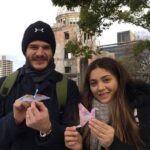
The Children’s Peace Monument is dedicated to Sadako and other children who died in the bombing. The site also tells the story behind the paper crane as a symbol of peace.
This is often the most accessible stop for families. The idea of children, paper cranes, and a call for peace gives younger visitors a way into a subject that can otherwise feel too large or painful to grasp.
The scheduled visit lasts about 10 minutes. That is short, but the monument works as a clear pause between heavier memorials. If you are visiting with children, you can use this moment to explain that the cranes represent hope and remembrance without forcing a long discussion.
The tour’s family policy helps here. Up to two children ages 0 to 10 can join free of charge. Since the activity is private, parents can also manage the pace and conversation more easily than they could in a large shared group.
The Atomic Bomb Dome and Peace Bell
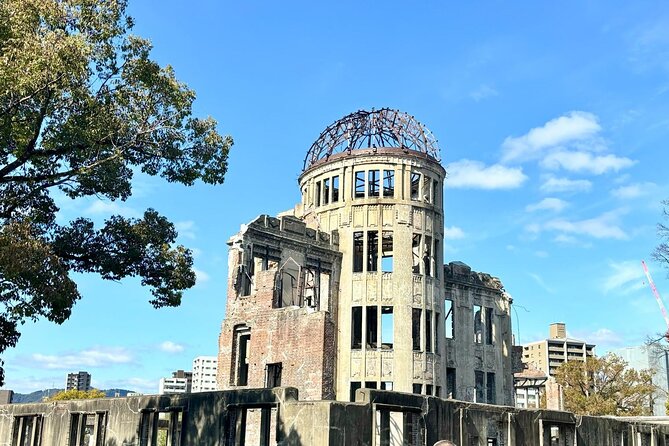
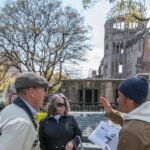
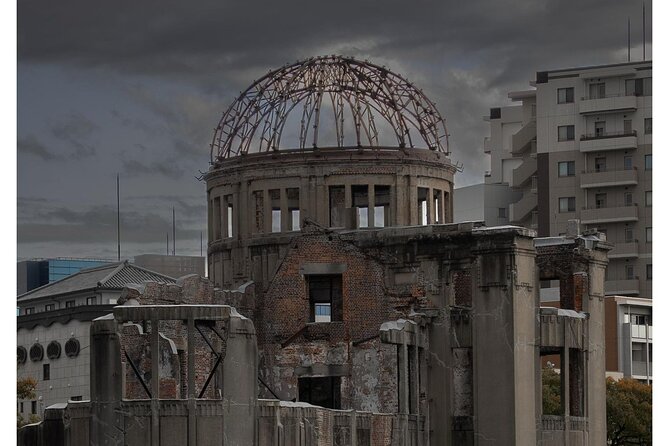
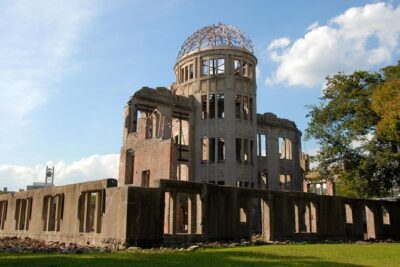
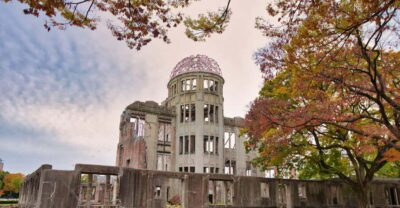
The Atomic Bomb Dome receives about 15 minutes. This building survived the atomic bombing and has become one of Hiroshima’s most recognizable reminders of the event.
Its power comes from the visible remains. The museum explains the bombing through displays, while the Dome gives you a fixed structure connected to the city’s physical past. You do not need a long stop to understand why it matters, though the guide’s context will help you look beyond the familiar photograph.
The route also includes the Peace Bell for about five minutes. This is a small stop, but it fits the tour’s wider message. The bell is not another account of destruction. It is a simple symbol of the peace the park asks you to consider.
The tour finishes at the Hiroshima Atomic Bomb Hypocenter Monument, listed at 1-5-25 Otemachi. This is the stated Ground Zero endpoint. Since the route includes several stops after the museum, wear shoes suited to walking and keep your schedule flexible after the tour.
What $85.13 per person buys you
At $85.13 per person, this is not the cheapest way to stroll through Peace Park. You can see the outdoor monuments without paying admission, so the value depends on how much you want from the explanations and the included museum entrance.
The price makes more sense for a small private group. You are paying for a guide dedicated to your party, an organized route, and admission to the Hiroshima Peace Memorial Museum. Families can also lower the average cost because two children from ages 0 to 10 are free.
Group discounts are offered, though the exact discount is not provided. Check the final price for your party before booking. For a couple, the cost may feel high compared with walking independently. For a family or group that wants one shared experience, the private arrangement can be more reasonable.
The tour is booked an average of 93 days ahead, which suggests you should not leave it until the last minute if your Hiroshima dates are fixed. Confirmation arrives at booking, and the ticket is mobile, so you do not need to manage a printed voucher.
Timing, weather, and comfort
The official duration is about three hours. The individual stop allocations total roughly three hours and 35 minutes, so treat the schedule as approximate. The guide may adjust the pace, or the listed times may not reflect exact movement between locations. If you have a train, meal, or ferry soon after the tour, leave a buffer.
Lunch and all other food are not included. This is easy to manage, since the tour lasts only part of a day, but do not expect a planned meal stop.
The activity requires good weather. If poor weather cancels it, you are offered another date or a full refund. Most people can participate, and the tour is near public transportation, but the information does not promise a fully step-free route or specific accessibility equipment. Ask before booking if your group has mobility needs.
You can cancel for a full refund up to 24 hours before the start time. Changes or cancellations inside that 24-hour window are not accepted for a refund.
Who should book this Hiroshima walking tour?
I would choose this tour if you want the main Peace Park sites explained in one continuous visit, rather than piecing together the story from plaques. It suits couples, families, and small groups who value privacy and want to ask questions along the way.
It is also a good fit if you want more than the Atomic Bomb Dome and the museum. The Korean Victims Monument, Mother and Baby in the Storm, Rest House, and Children’s Peace Monument give the walk wider human context.
I would think twice if you dislike emotionally difficult museums, need a slow pace, or have only a narrow window before another reservation. The museum may be warm and crowded, the tour covers many stops, and the timing is not perfectly clear from the scheduled durations.
Should you book it?
Book this private Hiroshima tour if you want a serious, guided introduction to Peace Park with the museum admission included. Its best qualities are the private group format, the family-friendly child policy, and the attention given to memorials beyond the most famous landmarks.
If you prefer to move alone, read at your own speed, and spend as long as you like at each exhibit, explore independently instead. But if you want the difficult history explained with care and a clear route through Hiroshima’s major memorials, $85.13 can be fair value, especially for a family or group sharing the booking.
FAQ
How long is the Hiroshima private walking tour?
The advertised duration is approximately three hours. The listed stop times add up to more than three hours, so you should allow extra time and avoid scheduling an immediate departure afterward.
Where does the tour start?
The meeting point is Ristorante Mario, 4-11 Nakajimacho, Naka Ward, Hiroshima, 730-0811, Japan.
Where does the tour finish?
The stated endpoint is the Hiroshima Atomic Bomb Hypocenter Monument at 1-5-25 Otemachi, Naka Ward, Hiroshima, 730-0051, Japan.
Is the Hiroshima Peace Memorial Museum included?
Yes. The tour includes admission to the Hiroshima Peace Memorial Museum, with about one hour scheduled inside.
Is this a private tour?
Yes. Only your group participates in the activity.
Can children join the tour for free?
Up to two children ages 0 to 10 can join without charge.
Is food included?
No. Lunch and all other food are excluded from the price.
Is the tour available by mobile ticket?
Yes. A mobile ticket is offered, and confirmation is received at the time of booking.
What is the cancellation policy?
You can receive a full refund if you cancel at least 24 hours before the start time. Cancellations or changes made less than 24 hours before the tour are not refunded or accepted. If poor weather or an insufficient number of participants cancels the activity, you are offered another date or a full refund.
More Private Tours in Hiroshima

More Walking Tours in Hiroshima
More Hiroshima City Tours in Hiroshima
More tours in Hiroshima we've reviewed



Hiroshima City Tours, compared.
 ★ 5.0Peaceful Hiroshima & Miyajima UNESCO 1 Day Bus TourFrom $129
 ★ 4.9Hiroshima: Hiroshima and Miyajima UNESCO Sites 1-Day TourFrom $1228 hours
 ★ 5.0Hiroshima / Miyajima Full-day Private Tour with Government Licensed GuideFrom $202
 ★ 4.7Osaka/Kyoto: Hiroshima Miyajima Bus Tour & Shinkansen TicketFrom $27712 hours
 ★ 4.8Hiroshima Historical Walking Tour – Why A-Bomb was DroppedFrom $352h 30m
 ★ 5.0Hiroshima Peace (Heiwa) Walking Tour at World Heritage SitesFrom $94
