
Reviewed · MIYAJIMA TOURS
Kimono and Tea Ceremony in Miyajima
Miyajima is famous for its torii gate and deer, but this kimono and tea ceremony at Tokuju-ji Temple offers a quieter way to meet Japan’s traditional culture. You choose your kimono, get dressed with careful help, watch a tea master, and then prepare your own matcha.
I like two things here: the peaceful temple setting away from the main shopping streets, and the small-group format, which lets you see the ceremony clearly and ask questions. The staff also take photos during the lesson, giving you a useful souvenir if you complete the questionnaire.
The main consideration is time. At about one hour, this is a focused introduction rather than a long formal tea gathering. You also sit at tables instead of on tatami flooring, a practical choice that some people may find less traditional.
In This Review
- Key points to know before you book
- A quiet side of Miyajima at Tokuju-ji Temple
- Picking your kimono from more than 100 choices
- Watching the tea master before making matcha
- Making and tasting your own matcha
- Why the small group makes a difference
- Sitting at tables, not on the floor
- Photos, garden time, and the best time to go
- Is $85.89 a fair price?
- Who will enjoy this Miyajima experience most?
- Booking and cancellation details
- Should you book the kimono and tea ceremony?
- FAQ
- Where does the kimono and tea ceremony take place?
- Is the meeting point near the Miyajima ferry port?
- How long does the experience last?
- How many people can join?
- What age is required to participate?
- Do I need to bring my own kimono?
- Do I learn to make matcha?
- Is food included?
- Are photographs taken during the activity?
- Can I cancel for a refund?
Key points to know before you book
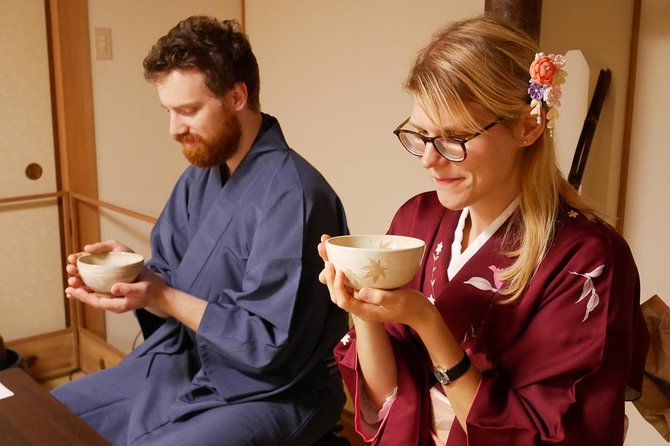
- Choose from more than 100 kimonos: Staff help you select and fit a traditional outfit, with options for men and women.
- Meet near the ferry port: The activity begins at Tokuju-ji Temple, making it easy to add to a day on Miyajima.
- Learn by watching and doing: A tea master demonstrates the ceremony, then you make and taste your own matcha.
- Enjoy a quiet temple setting: The site is off the main business streets, with garden space for photographs.
- Expect a short, personal lesson: The activity lasts about one hour and has a maximum of 10 people.
- Photos are part of the experience: Staff take pictures during the dressing and tea lesson, with access provided after answering a questionnaire.
A quiet side of Miyajima at Tokuju-ji Temple
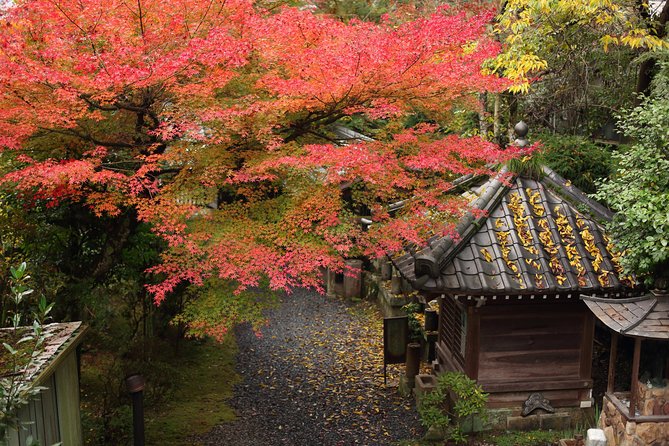
The meeting point is Tokuju-ji Temple, also written as 徳寿寺, at 741-1 Miyajimachō in Hatsukaichi, Hiroshima. It is near the ferry port and public transportation, but the activity itself takes place away from the island’s busiest commercial streets.
That location matters. Miyajima can feel crowded around the ferry arrival area, souvenir shops, and the approach to Itsukushima Shrine. Tokuju-ji gives you a pause from that movement. The temple grounds provide a calm setting for the ceremony and a natural backdrop for photographs.
You return to the same meeting point when the hour is over. That makes planning simple. You can schedule the activity between ferry arrival and a visit to the shrine, or use it as a peaceful break after walking around the island.
The temple setting is more than decoration. Tea ceremony depends on quiet attention, and the setting helps you notice small details: the way the tea is whisked, how the bowl is handled, and how the ceremony moves at a measured pace.
A few more Hiroshima tours and experiences worth a look

Picking your kimono from more than 100 choices
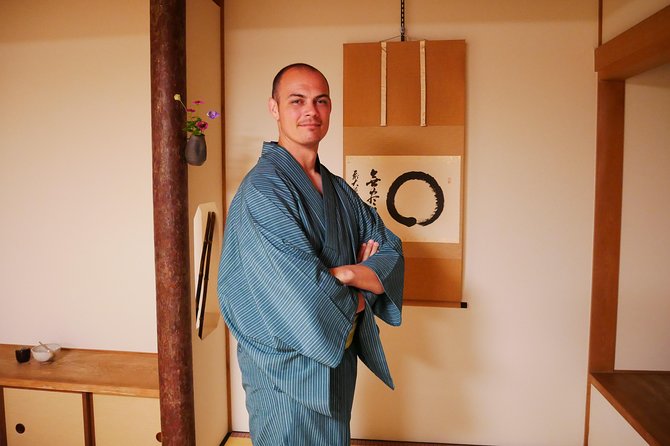
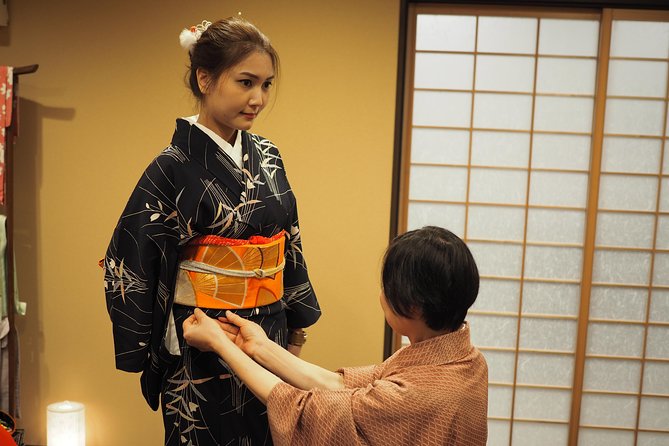
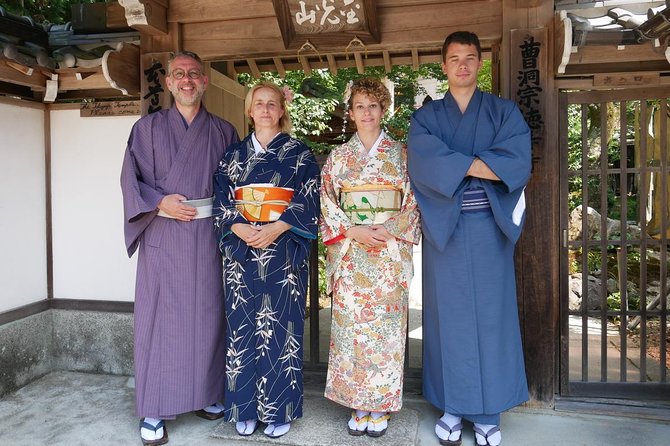
The activity begins with dressing. You can choose a favorite kimono from a collection of more than 100, and staff provide what you need for the outfit. This is not simply a quick costume change. Several people may help arrange the layers and fit the clothing properly.
That assistance is important, especially if you have never worn a kimono. The clothing is wrapped and secured in a particular way, and the staff guide you through each step. They also help with both men’s and women’s garments, so couples and mixed groups can take part together.
The selection is one of the strongest parts of the experience. You are not assigned a single standard outfit, and you do not need to buy or rent a kimono elsewhere. The fabrics are described as high quality, with enough variety to make the choice feel personal.
Sizing should not be a major worry, based on the way staff have handled a wide range of body types. Still, the tour details do not provide exact size limits, so if you have a specific concern, contact the operator before booking.
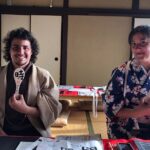
Once dressed, you have time for pictures. The staff take photos during the lesson, and you can receive them by answering a questionnaire. You may also be allowed to take your own pictures around the grounds, making the temple garden an important part of the visit.
Watching the tea master before making matcha
After you dress, you watch a tea ceremony conducted by a tea master. The demonstration shows the order of the movements and the proper manner for drinking matcha.
The lesson also introduces the four principles of tea making in Buddhism. The information is presented in a way that connects the physical actions with the calm and respectful mood of the ceremony. You are not expected to know the rules in advance. Staff explain the process step by step and welcome questions.
The tea is served with a sweet. The activity includes local Miyajima chocolate before or with the tea, and this small detail adds a pleasant local touch. It also makes the strong, slightly bitter taste of matcha easier for first-time drinkers.
This is a good setting for children old enough to follow a short lesson. The minimum age is six, and families have taken part with children. Matcha has a distinct taste, so younger children may or may not enjoy drinking it, but they can still take part in the dressing, watching, and photo portions.
Making and tasting your own matcha
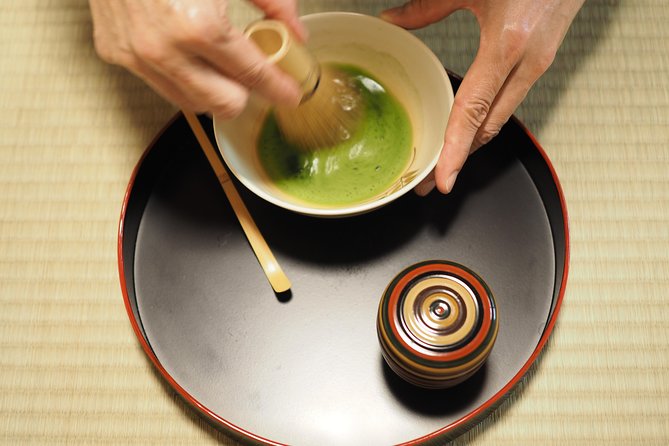
The most useful part of the lesson comes after the demonstration. You prepare your own matcha and taste it. That hands-on step turns the ceremony from something you simply watch into a skill you can repeat at home.
You learn how to make the tea with the traditional tools and how to drink it with the right manners. The experience will not make you a tea master in an hour, but it gives you enough understanding to recreate matcha for friends and explain what you learned.
I like this practical element because it gives the tour a life beyond Miyajima. You leave with a simple activity to try again, rather than only a set of photographs. If you enjoy the tea set used during the lesson, one participant purchased an elegant tea set afterward, though the supplied information does not say that buying one is part of the tour.
The ceremony is formal, but the atmosphere is not intimidating. Staff help you through the movements and allow time for questions. English-speaking assistance is available, and the experience has been described as easy to follow for international visitors.
Why the small group makes a difference
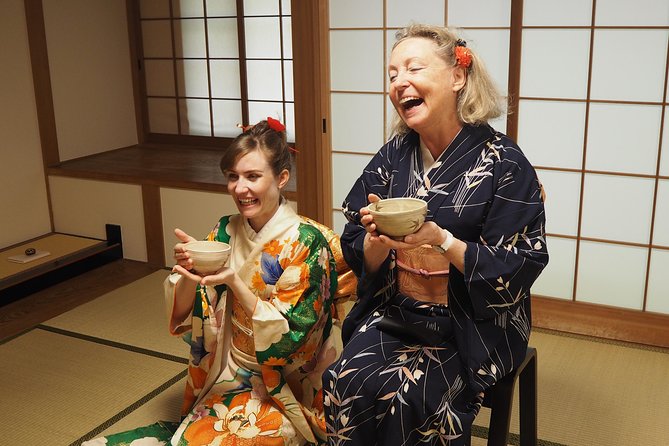
The activity has a maximum of 10 people. The small format lets you sit close enough to observe the tea master’s movements, which is useful when the details matter more than the size of the room.
A larger demonstration can make a cultural activity feel like a stage show. Here, you have more room to ask about the kimono, the tea, and the meaning behind the ceremony. Staff can also spend time helping with dressing and taking individual photographs.
The exact group size can vary, but the activity is designed to feel personal. Some groups have included couples, families, friends, and children. If you are booking for a larger party, check the available date and group arrangement carefully, since the published maximum is 10 people.
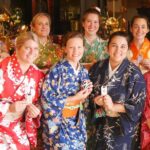
The staff receive especially strong praise for their patience and politeness. They help with the outfits, explain the sequence clearly, and take care with photographs. That human element matters. A kimono can feel awkward if it is rushed or poorly fitted, while careful dressing makes the whole hour more comfortable.
A few more Hiroshima tours and experiences worth a look


Sitting at tables, not on the floor
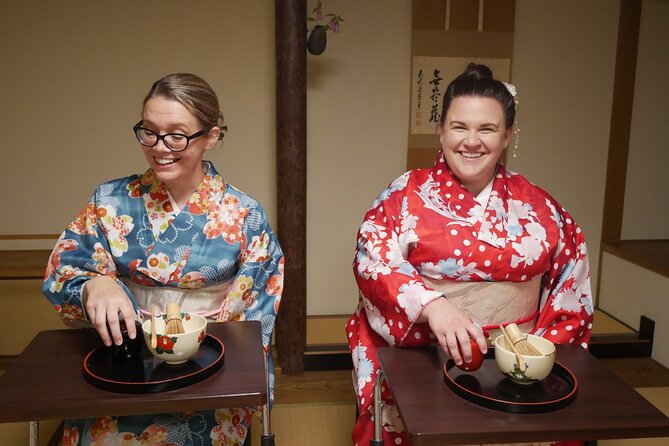
One detail deserves a clear explanation: the tea ceremony uses tables rather than traditional floor seating. If your picture of a tea ceremony includes kneeling on tatami, this setup may feel less formal.
It is also practical. Sitting on the floor can be difficult, even for many Japanese people, and table-style seating has been used in Japan for more than 100 years. For an international audience with different ages and mobility levels, the arrangement makes the lesson easier to enjoy.
The table setting does not remove the ceremony’s main elements. You still watch the tea preparation, learn the manners, prepare matcha, and taste it with a sweet. If floor seating is essential to your idea of the experience, you may want to adjust your expectations before booking.
Photos, garden time, and the best time to go
The garden and temple grounds are a major reason to bring a camera. Once you are dressed, you can take photos in a setting that feels calmer than the crowded streets near the ferry.
Staff also take pictures while you are being dressed and during the ceremony. The photos are available after you answer the operator’s questionnaire. If you are traveling alone, this is particularly useful because you do not have to rely only on self-timer pictures.
Morning and afternoon sessions are available according to the booking schedule. A morning visit can work well if you want to walk around Miyajima afterward in your kimono, but the supplied details do not state how long you may remain dressed beyond the activity. Plan on the formal session lasting about one hour.
The activity requires good weather. If poor weather forces cancellation, you are offered another date or a full refund. Since the ceremony takes place at a temple and includes garden photographs, this policy is worth keeping in mind when planning an outdoor-heavy Miyajima day.
Is $85.89 a fair price?
At $85.89 per person, this is not the cheapest way to put on a kimono or taste matcha. You are paying for more than tea: the kimono selection, professional dressing, a tea master’s demonstration, your own preparation lesson, sweets, staff assistance, and the temple setting are all included.
The value is strongest if you want a guided cultural activity rather than a self-directed rental. A basic kimono rental may cost less, but it may not include a formal tea lesson, careful instruction, or staff photographs. This experience also saves you the trouble of arranging several separate activities.
The one-hour length keeps the price from feeling like a full-day commitment. You can fit it into a larger Miyajima visit without giving up the island’s main sights. For a couple, family, or small group that wants one polished cultural activity, the price is reasonable if the photographs and instruction matter to you.
The value is weaker if you mainly want to wear a kimono for a quick picture. In that case, a longer rental period might suit you better. This tour is about the ceremony as much as the clothing.
Who will enjoy this Miyajima experience most?
I would recommend it to first-time visitors who want a clear introduction to Japanese tea ceremony without committing to a long formal session. You receive enough explanation to understand what you are doing, and the staff guide you through the unfamiliar parts.
It also suits couples and families. The dressing process creates memorable photographs, and the one-hour format is manageable for children six and older. Groups of friends can choose different kimonos and take pictures together in the garden.
This is a particularly good choice if you are staying in Hiroshima and making a day trip to Miyajima. The meeting point is near the ferry port, and the return to the same location makes it easy to continue sightseeing.
You may want to skip it if you dislike formal instructions, do not want to wear layered traditional clothing, or expect a full temple ceremony conducted entirely on tatami. You should also leave room in your schedule for the ferry and other sightseeing, since the activity itself does not include a broader island tour.
Booking and cancellation details
Confirmation is provided when you book, and the ticket is mobile, so you do not need to print a voucher. Free cancellation is available until 24 hours before the local start time.
If you cancel less than 24 hours ahead, you do not receive a refund, and changes inside that period are not accepted. The activity can be canceled in poor weather, with a choice of another date or a full refund.
The published rating is 4.9 from 73 ratings, with 100 percent recommended. The repeated strengths are consistent: kind staff, careful kimono fitting, clear English help, a quiet temple location, and plenty of chances to take photographs.
Should you book the kimono and tea ceremony?
Book it if you want a compact, well-guided cultural experience that feels calmer and more personal than a large city attraction. The combination of more than 100 kimonos, careful dressing, matcha preparation, local chocolate, and a temple garden gives you several memorable pieces in one hour.
I would especially choose it for a first visit to Miyajima, a family celebration, or a couple looking for photographs with more meaning than a standard souvenir snapshot. Just remember that the seating is at tables, the experience is short, and the main focus is learning the ceremony rather than spending a whole day in kimono.
FAQ
Where does the kimono and tea ceremony take place?
It takes place at Tokuju-ji Temple, also listed as 徳寿寺, at 741-1 Miyajimachō, Hatsukaichi, Hiroshima 739-0513, Japan.
Is the meeting point near the Miyajima ferry port?
Yes. The activity is designed to be easy to reach near the ferry port and is also near public transportation.
How long does the experience last?
The activity lasts approximately one hour.
How many people can join?
The maximum group size is 10 people. The experience is presented as a small-group activity.
What age is required to participate?
The minimum age is six.
Do I need to bring my own kimono?
No. More than 100 kimonos are available for you to choose from, and staff provide the clothing and dressing assistance.
Do I learn to make matcha?
Yes. You first watch a tea master conduct the ceremony, then learn how to make matcha and taste the tea you prepare.
Is food included?
Tea is served with a sweet. Miyajima chocolate is also provided as part of the experience.
Are photographs taken during the activity?
Yes. Staff take photographs during the dressing and lessons. You can receive the photos by answering the operator’s questionnaire.
Can I cancel for a refund?
You can cancel for a full refund up to 24 hours before the experience’s start time. Cancellations or changes made less than 24 hours ahead are not refunded or accepted. If poor weather causes the operator to cancel, you are offered another date or a full refund.
More Tea Ceremony & Kimono Experiences in Hiroshima
More Miyajima Tours in Hiroshima
More tours in Hiroshima we've reviewed



Miyajima Tours, compared.
 ★ 5.0Peaceful Hiroshima & Miyajima UNESCO 1 Day Bus TourFrom $129
 ★ 4.9Hiroshima: Hiroshima and Miyajima UNESCO Sites 1-Day TourFrom $1228 hours
 ★ 5.0Hiroshima / Miyajima Full-day Private Tour with Government Licensed GuideFrom $202
 ★ 4.7Osaka/Kyoto: Hiroshima Miyajima Bus Tour & Shinkansen TicketFrom $27712 hours
 ★ 4.7From Hiroshima: Hiroshima & Miyajima 1 Day Tour with LunchFrom $1168 hours
 ★ 5.0Hiroshima and Miyajima Day Trip with Itsukushima Shrine & FerryFrom $45
