
Reviewed · HIROSHIMA CITY TOURS
Hiroshima in a Nutshell: Morning Bike Adventure
Hiroshima is spread across a flat city, and a bicycle lets you connect its major sights without waiting for buses or retracing your steps on foot. I like the way this tour pairs the solemn Peace Memorial Park with Hiroshima Castle and Shukkei-en Garden, giving you both the city’s painful past and its everyday beauty in one morning. I also like the small group size, capped at eight, which makes it easier to ask questions and keep a steady pace.
The main consideration is emotional rather than physical. The Peace Park and Atomic Bomb Dome call for quiet attention, and the historical discussion can feel heavy. You will also stop and get off the bikes often, so this is not a nonstop cycling workout. On hot days, or if you have not ridden for a while, ask in advance about the e-bike option.
In This Review
- The essential points at a glance
- Why a bicycle makes sense in Hiroshima
- Starting at 10 a.m. in Otemachi
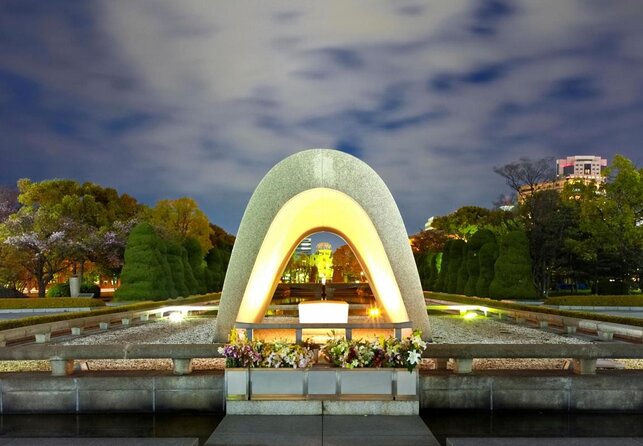
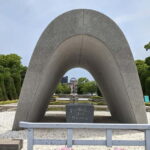
- Peace Memorial Park: begin with quiet reflection
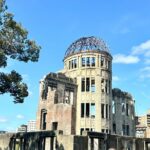
- The Atomic Bomb Dome: Hiroshima’s most recognizable ruin
- Hiroshima Castle: a different side of the city
- Shukkei-en: gardens and careful design
- What the guide adds to the ride
- How demanding is the cycling?
- Is $72.96 a fair price?
- Who should book this morning ride?
- My verdict: a strong first look at Hiroshima
- FAQ
- How long does the Hiroshima bike tour last?
- What sights are included?
- Are bicycle rental and a helmet included?
- Is admission to Shukkei-en included?
- Is the tour suitable for children?
- Can I use an e-bike?
- What happens if it rains or the tour is canceled?
The essential points at a glance
- Covers four major Hiroshima sights: Visit Peace Memorial Park, the Atomic Bomb Dome, Hiroshima Castle, and Shukkei-en Garden in roughly three to four hours.
- Small groups make the history personal: The group limit is eight, with guides such as Awais, Melissa, James, Yuki, and others leading recent departures.
- Mostly flat city riding: The route suits a range of abilities, though an e-bike upgrade may cost about ¥2,000 and availability is limited.
- A thoughtful mix of past and present: You move from the atomic bombing memorials to gardens, canals, castle grounds, and ordinary city streets.
- Useful for a short Hiroshima stay: The tour begins at 10 a.m. and returns to the same meeting point, making it a practical first look at the city.
- Bring your attention, not your equipment: A bicycle, helmet, and bottled water are provided, and admission to Shukkei-en is included.
Why a bicycle makes sense in Hiroshima
Hiroshima’s key sights are not all clustered around one corner. Peace Memorial Park and the Atomic Bomb Dome sit near the city center, while Hiroshima Castle and Shukkei-en lie farther away. You can walk between them, but a bicycle saves time and gives you a better sense of how the city fits together.
I like that the ride also reaches small streets and canal-side routes that a bus tour may skip. The bicycle is not just a faster way to move from one ticket stop to the next. It lets you see the space between the monuments, including the parts of Hiroshima that feel like a living Japanese city rather than a memorial site.
The tour lasts about three to four hours. That is enough time for a useful orientation without taking your entire day. One group covered about 6.81 miles over four hours, though your exact distance and timing can vary with the group and guide.
The city is mostly flat, and the pace is described as steady rather than rushed. You do not need to be a serious cyclist, but you should be comfortable riding a standard bicycle in an urban setting. If your cycling legs are rusty, ask about the e-bike before arrival. The upgrade has been quoted at ¥2,000, with only a limited number available.
A few more Hiroshima tours and experiences worth a look

Starting at 10 a.m. in Otemachi
The meeting point is Cycle Hiroshima at 4-chōme-5-4 Ōtemachi, Naka Ward. The tour starts at 10 a.m. and finishes back there, which keeps the morning simple. There is no hotel pickup or drop-off, so you need to make your own way to the shop.
Before setting off, expect time to select a bicycle, adjust the seat, put on a helmet, and go over basic riding signals. A good guide will check that the bicycle fits and explain hand signals so the group can ride safely together. Bottled water is supplied, a small but welcome detail in Hiroshima’s warmer months.
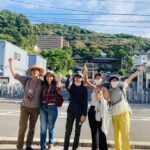
The maximum group size is eight. That is large enough to have company but small enough for the guide to monitor the group and answer questions. The guides named in the feedback include Awais, Melissa, James, Yuki, Amy, Levi, Ihsan, and Issan. The strongest pattern is clear: the guide matters a great deal here, since the tour depends as much on explanation and pacing as it does on the bicycle.
Peace Memorial Park: begin with quiet reflection
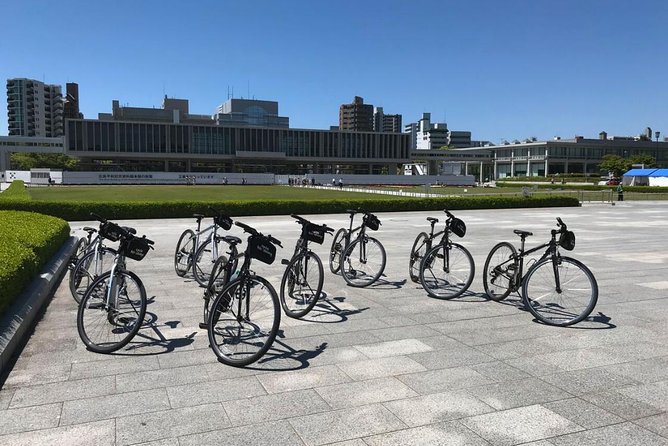
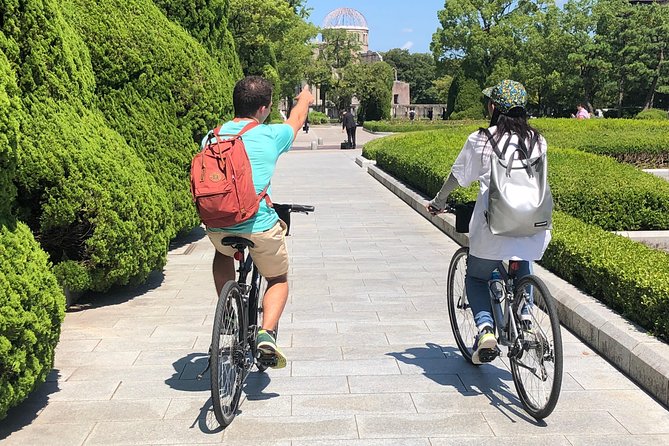
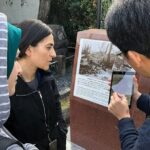
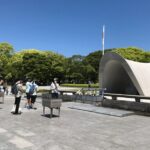
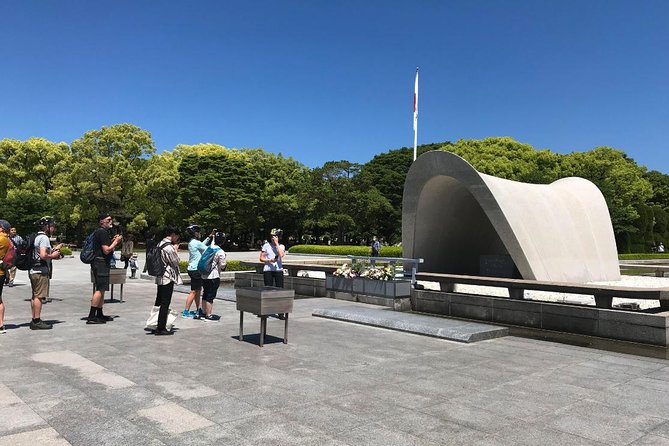
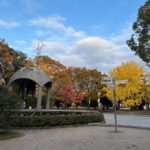
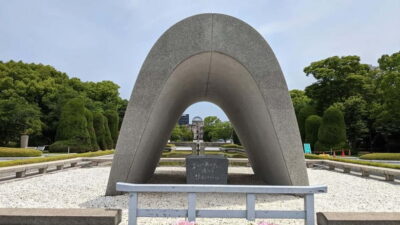
The first major stop is Hiroshima Peace Memorial Park. You ride slowly through the park and pause for a short explanation of what the area was like before World War II, supported by old photographs.
This is a good opening because it gives the city a human setting before you focus on the destruction of 1945. The park is not only a collection of monuments. It is also a place for quiet thought, and the slower riding pace fits the mood.
Do not expect a long museum visit here. The tour provides an introduction and historical context, not a full replacement for the Hiroshima Peace Memorial Museum. If the subject interests you, plan a separate visit to the museum after the bike ride. The morning tour can help you understand the memorial area before you return on your own.
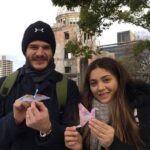
You may also make origami cranes for the Children’s Peace Monument, depending on the guide and the day’s schedule. That small activity gives the visit a personal touch without turning the memorial into a rushed photo stop.
The Atomic Bomb Dome: Hiroshima’s most recognizable ruin
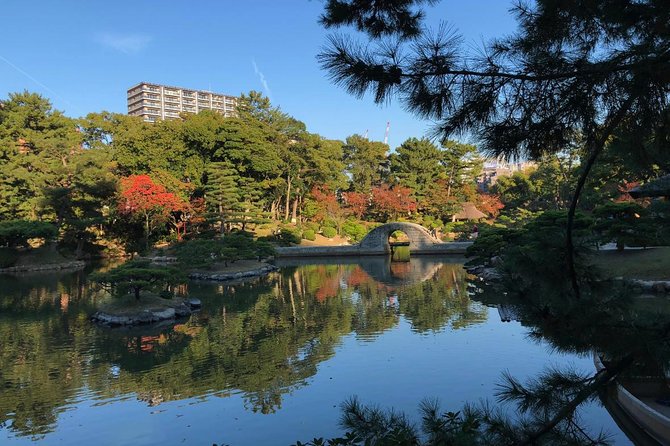
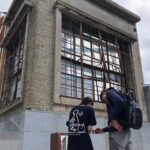
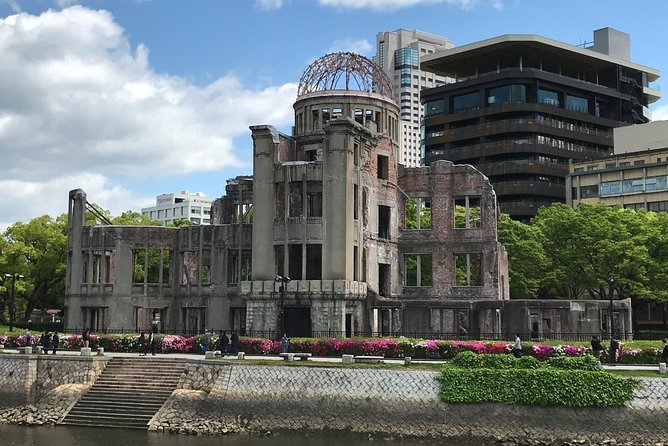
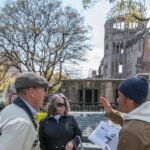
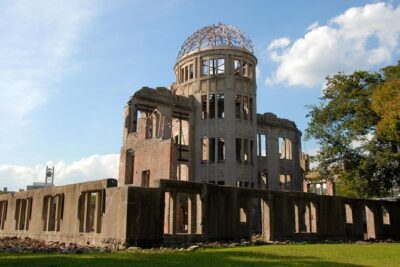
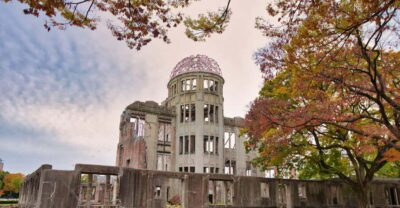
The Atomic Bomb Dome is a short ride from the park. You stop for about ten minutes to take photographs and reflect on the events connected with the building.
The time here is brief, but that can be appropriate. The Dome does not need a long presentation to make an impression. Its damaged structure remains visible beside the river, surrounded by a city that has been rebuilt and continues its daily life.
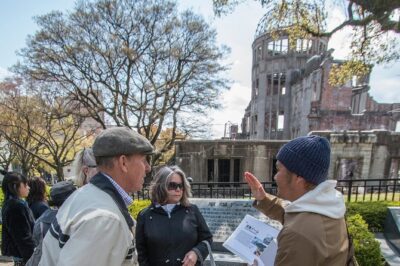
Your guide may explain the building’s role and what happened in the area, then leave you space to look. The best approach is to treat this as a moment of attention rather than simply another landmark for the camera.
The historical material can be difficult, and the tour aims for a balanced account of the bombing and its aftermath. One piece of feedback found parts of the discussion somewhat political, so if you prefer a strictly neutral presentation, keep that in mind. The guide’s personal style can shape this part of the morning.
Hiroshima Castle: a different side of the city
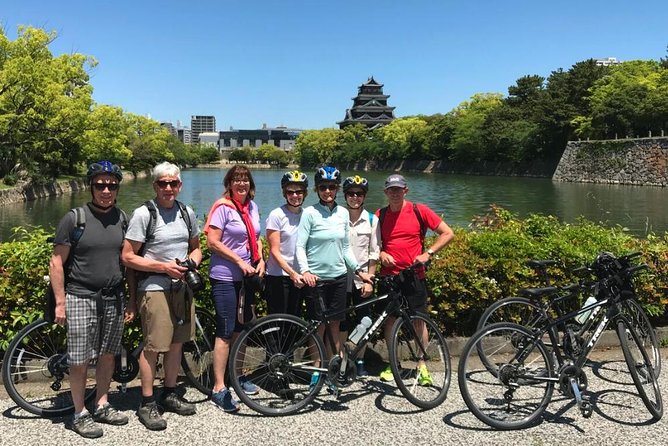
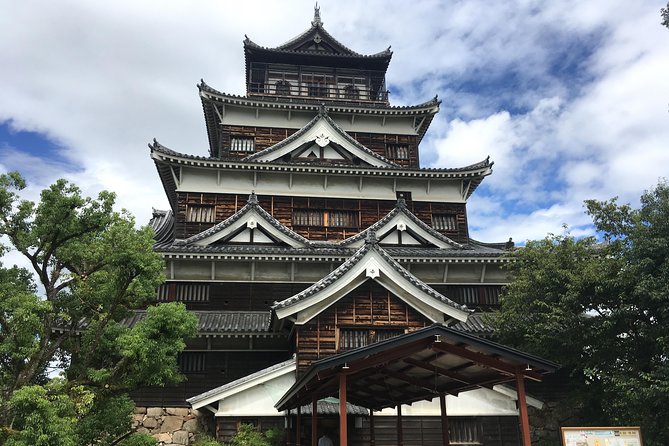
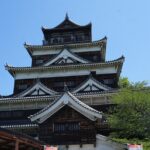
From the memorial district, the route continues to Hiroshima Castle. You ride through the grounds and landscaped gardens, learn about the castle’s past, and have time for photographs.
The castle offers an important change in tone. Peace Memorial Park asks you to confront modern warfare and loss. Hiroshima Castle points farther back, toward the city’s feudal period and the older structure of Japanese power. The contrast helps you see Hiroshima as more than the site of one terrible event.
The present castle is a reconstruction, so you should not expect the original building in full. Even so, the grounds provide a pleasant cycling break, and the stop gives the guide room to discuss local history beyond the atomic bombing.
The listed stop lasts about 25 minutes. That is enough for a look around and some pictures, but probably not a detailed castle museum visit. If you want to explore the interior at length, you may need to return independently.
Other cycling tours in Hiroshima

Shukkei-en: gardens and careful design
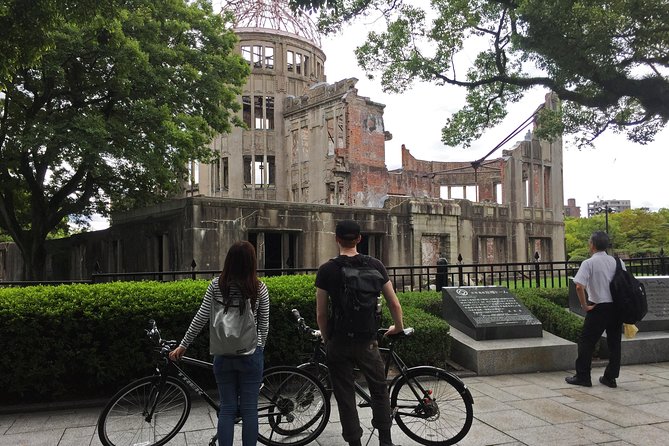
The final scheduled stop is Shukkei-en, one of Hiroshima’s most attractive garden spaces. Admission is included, so you do not need to buy a separate ticket during the tour.
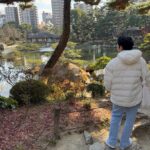
Here the guide explains how Japanese gardens use balance, greenery, water, and carefully arranged views. The point is not simply that the garden is pretty. You learn to notice how the space has been planned, with changes in perspective and a sense of scale that make a compact garden feel varied.
The stop lasts about 25 minutes. That gives you a calm pause near the end of the ride, though garden lovers may wish for more time. If Shukkei-en becomes your favorite stop, note its details and return after the tour at your own pace.
This final stop also rounds out the morning well. You have seen a memorial park, a ruined building, a reconstructed castle, and a traditional garden. Each place shows a different layer of Hiroshima.
What the guide adds to the ride
This is fundamentally a guide-led history tour, not a self-guided bike rental. You are paying for the route, the explanations, the safety support, and the ability to ask questions as the morning unfolds.
Awais is repeatedly singled out for clear English, warmth, and detailed explanations. He has also been praised for taking photographs and extending the tour when the group needed more time. James is described as careful with safety and unusually thorough, while Melissa is noted for her energy and ability to keep families engaged. Yuki, Amy, Levi, Ihsan, and Issan are also named as guides who brought strong local or historical context.
Guiding styles differ. Some guides offer a near-continuous stream of information, while others leave more quiet space at memorials. If you want detailed historical commentary, this tour should suit you. If you prefer a silent ride with only occasional facts, it may feel talk-heavy.
The best guides also explain practical matters clearly. You should receive a bicycle check, helmet, water, riding signals, and help adjusting the seat. That preparation matters more than it sounds, especially in a mixed-ability group.
How demanding is the cycling?
The ride is generally described as comfortable and not demanding, thanks to Hiroshima’s flat terrain and the moderate pace. The route includes frequent stops, so you are not pedaling continuously for four hours.
Still, the tour requires basic cycling ability. It is not suitable for children aged 12 and under, and riders under 140 centimeters cannot participate. Most other people can join, but you should be honest about your comfort on a bicycle.
An e-bike may be worth the extra cost if you have not cycled recently, are concerned about stamina, or are visiting during a hot spell. Arrange it ahead of time because the supply is limited. A regular bicycle worked well for one 12-year-old on a hot day, but the official age guidance is more restrictive, so follow the stated rule when booking.
Rain changes the plan. A rainy departure may become a walking tour instead of a cycling tour, as happened for one group, and the experience can still cover the historical sights. Poor weather can also lead to cancellation, with a choice of another date or a full refund.
Is $72.96 a fair price?
At $72.96 per person, this is not the cheapest way to see Hiroshima’s center. You can reach many sights by public transport or on foot for less money. The value comes from combining bicycle rental, helmet, bottled water, an English-speaking guide, and admission to Shukkei-en in one organized morning.
For a first visit, I think the price is reasonable if you have only one or two days in the city. The bicycle covers more ground than walking, while the guide supplies context that you would otherwise need to research yourself. It is also useful for a cruise-ship stop or any visit with a tight schedule.
The value is weaker if you already know Hiroshima well, plan to spend several hours in the Peace Memorial Museum, or prefer to explore every site slowly. The four stops are introductions. You will not have unlimited time inside the castle or garden, and the Atomic Bomb Dome stop is short.
A full refund is available if you cancel at least 24 hours before the 10 a.m. start time. Changes or cancellations inside that window are not refunded. The activity also requires a minimum number of participants, so a departure can be changed or canceled if that minimum is not reached.
Who should book this morning ride?
I would choose this tour for a first-time visitor who wants a clear introduction to Hiroshima without spending the whole morning walking. It also suits anyone staying only a day or two, families with older teenagers, and people who like history explained by a person rather than read from a guidebook.
It is especially useful if you want to see how the memorial district connects with the castle and garden areas. The route gives you a map in your head, making it easier to return later to the places that deserve more time.
I would think twice if you dislike bicycles, struggle with urban riding, or want a slow, private visit at each monument. The repeated stops and short time windows may feel too structured for independent explorers. Also consider the emotional weight of the subject. This is an informative outing, but it is not light sightseeing from start to finish.
My verdict: a strong first look at Hiroshima
This bike adventure earns its high 4.9 rating from 524 reviews and 98 percent recommendation figure for good reason. Its best qualities are practical: it covers a lot of ground, uses a small group, supplies the bicycle and safety gear, and places a capable English-speaking guide beside you throughout the morning.
The historical side is the real reason to book. The route does not reduce Hiroshima to a single tragedy. It begins with the city’s wartime destruction, then moves through its rebuilt center, castle traditions, and garden culture. That balance makes the morning more useful than a simple checklist of monuments.
Book it if you want an efficient, thoughtful introduction and are comfortable on a bicycle. If you have extra time, use the tour as your orientation, then return to the Peace Memorial Museum, Atomic Bomb Dome, castle, or Shukkei-en for a slower visit.
FAQ
How long does the Hiroshima bike tour last?
The experience lasts approximately three to four hours. It begins at 10 a.m. and ends back at the Cycle Hiroshima meeting point.
What sights are included?
The route visits Hiroshima Peace Memorial Park, the Atomic Bomb Dome, Hiroshima Castle, and Shukkei-en Garden.
Are bicycle rental and a helmet included?
Yes. The bicycle and helmet are included, along with bottled water and an English-speaking guide.
Is admission to Shukkei-en included?
Yes. Admission to Shukkei-en Garden is included in the tour price.
Is the tour suitable for children?
The tour is not recommended for children aged 12 and under. Riders under 140 centimeters cannot participate.
Can I use an e-bike?
An e-bike upgrade may be available for an additional fee. The fee has been quoted at ¥2,000, and availability is limited, so arrange it ahead of time if needed.
What happens if it rains or the tour is canceled?
The activity is subject to weather conditions. If poor weather causes a cancellation, you can choose another date or receive a full refund. Free cancellation is also available when you cancel at least 24 hours before the start time.
More Morning in Hiroshima
More Cycling Tours in Hiroshima
More Hiroshima City Tours in Hiroshima
More tours in Hiroshima we've reviewed



Hiroshima City Tours, compared.
 ★ 5.0Peaceful Hiroshima & Miyajima UNESCO 1 Day Bus TourFrom $129
 ★ 4.9Hiroshima: Hiroshima and Miyajima UNESCO Sites 1-Day TourFrom $1228 hours
 ★ 5.0Hiroshima / Miyajima Full-day Private Tour with Government Licensed GuideFrom $202
 ★ 4.7Osaka/Kyoto: Hiroshima Miyajima Bus Tour & Shinkansen TicketFrom $27712 hours
 ★ 4.8Hiroshima Historical Walking Tour – Why A-Bomb was DroppedFrom $352h 30m
 ★ 5.0Hiroshima Peace (Heiwa) Walking Tour at World Heritage SitesFrom $94
