
There’s a photograph from 1873 — you can still find it in a display case in the Tsuyama tourist office — that shows what this town used to look like. A five-storey wooden keep on a fifty-metre stone platform, seventy-seven turrets strung along the ridges around it, the whole thing dominating a small castle town laid out underneath in a careful grid of samurai and merchant streets. It would have been one of the three or four most intimidating fortresses in western Japan. By 1875, on orders of the Meiji government, almost all of it had been torn down. The stones stayed.
Those stones are still here, and they’re the reason to come to Tsuyama (津山). The town sits in a quiet mountain basin in the north of Okayama prefecture, about an hour from Okayama city by a single-carriage local train, and it’s the kind of place that doesn’t show up on most foreign itineraries even though it has one of Japan’s Top 100 Castles, a 1,000-tree cherry blossom park, two preserved Edo merchant quarters, a famous beef-offal noodle dish, and — unexpectedly — a claim to being the town that invented the Japanese word for coffee.
What Tsuyama actually is
Geography first. Tsuyama sits in the middle of the Tsuyama Basin, the flat agricultural valley that runs east-west across the old Mimasaka Province — a region of farming, cattle, and mountain timber that existed under its own name until the 19th century. The town was the capital. Its location was strategic because the main road north from the Setouchi coast to the Sea of Japan ran through here, as did the pilgrimage route from central Honshu up to Izumo Taisha. If you wanted to cross western Japan in the Edo period, Tsuyama was on the way.
After Sekigahara (1600), the Tokugawa shogunate handed Mimasaka to Mori Tadamasa — a former retainer of Oda Nobunaga who’d switched sides cleanly and was trusted. Tadamasa spent 13 years and most of his domain’s wealth building a castle (1604-1616) with a specific purpose: to contain any western clans that might still be unhappy about the Tokugawa victory. The castle never fought a war. The domain stayed peaceful. By the 19th century Tsuyama was a prosperous quiet backwater of 30,000 people, famous for its scholars, its weavers, its sake, and — unusually for Japan — its beef.
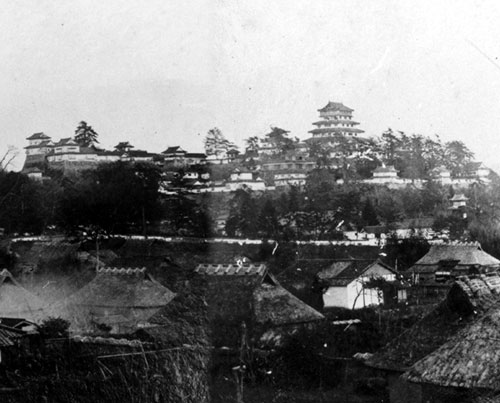
Then the Meiji Restoration happened, the castle abolition order came in 1873, and by 1875 everything wooden had been dismantled for lumber. The samurai district and merchant quarters, though, were protected by simple inertia — the town had no money to tear them down and no reason to — and they mostly survived. Walk them today and you’re walking streets that have barely been rebuilt since 1680.
Tsuyama Castle (Kakuzan Park)
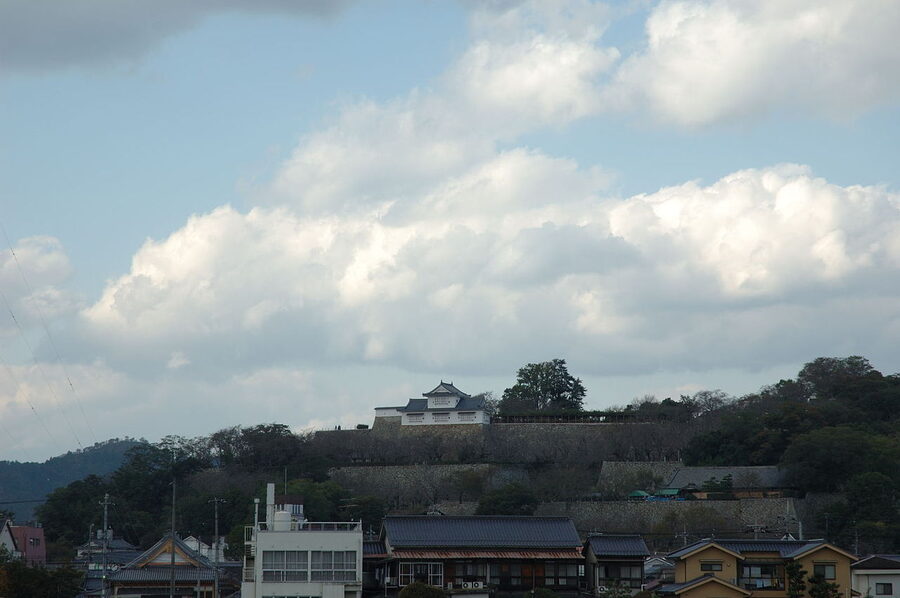
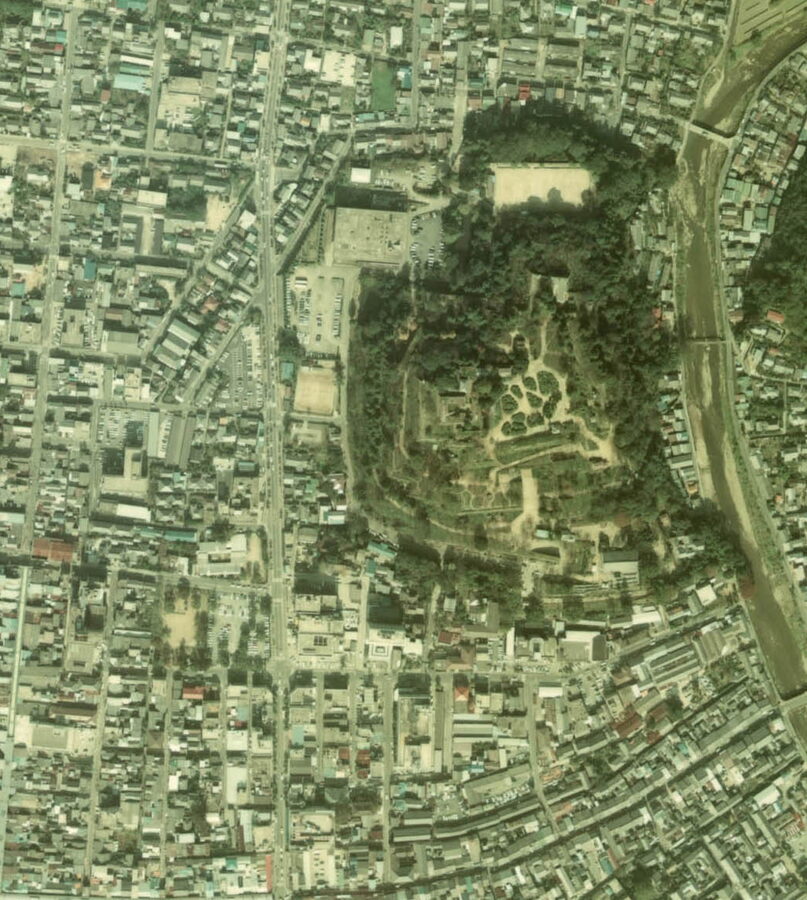
The castle ruins — officially Kakuzan Park — sit on a small 50-metre hill right in the centre of town, about a 15-minute walk from Tsuyama Station. Entry is ¥310 for adults, free for anyone under 16, and you climb a stone path that winds up past the preserved walls of five successive enclosures before reaching the flat summit where the keep once stood. The walk takes about fifteen minutes at a reasonable pace. There are benches.
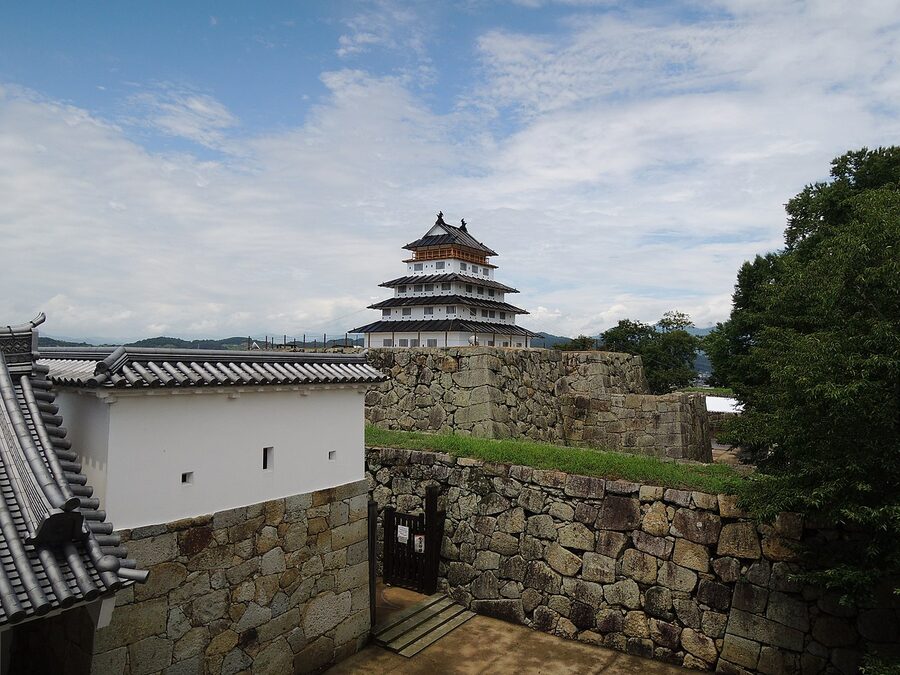
What you actually see at the top: the square base where the five-storey keep stood (now empty, grass), the reconstructed Bitchū Yagura (the only one of the 77 turrets that’s been rebuilt), a small castle museum inside it, and — if the weather is working — a 360-degree view across the Tsuyama Basin. On a clear late-autumn day you can see all the way to the peaks along the Tottori border.
Sakura season: one of western Japan’s best hanami spots
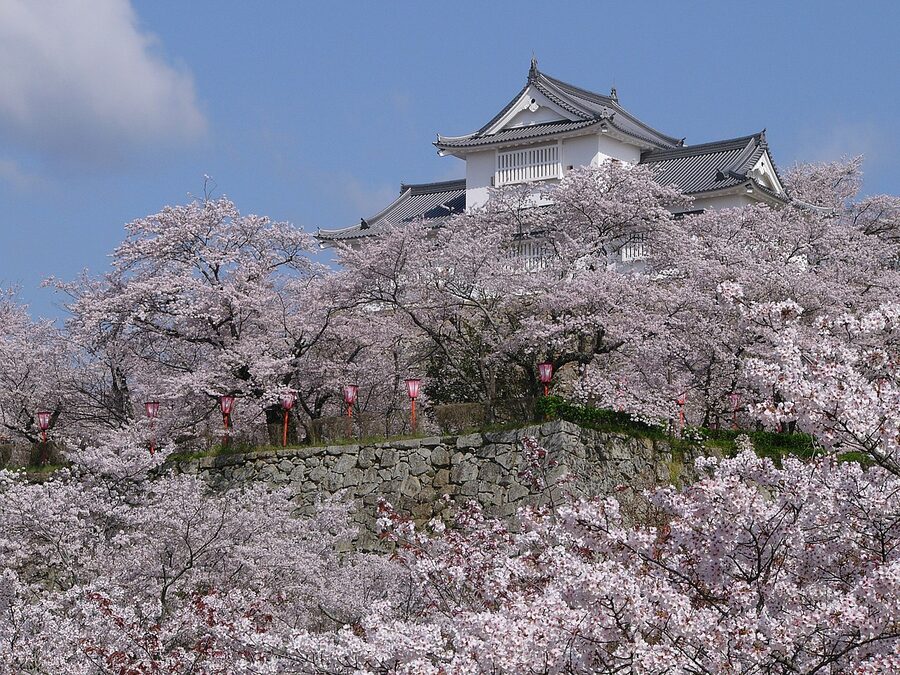
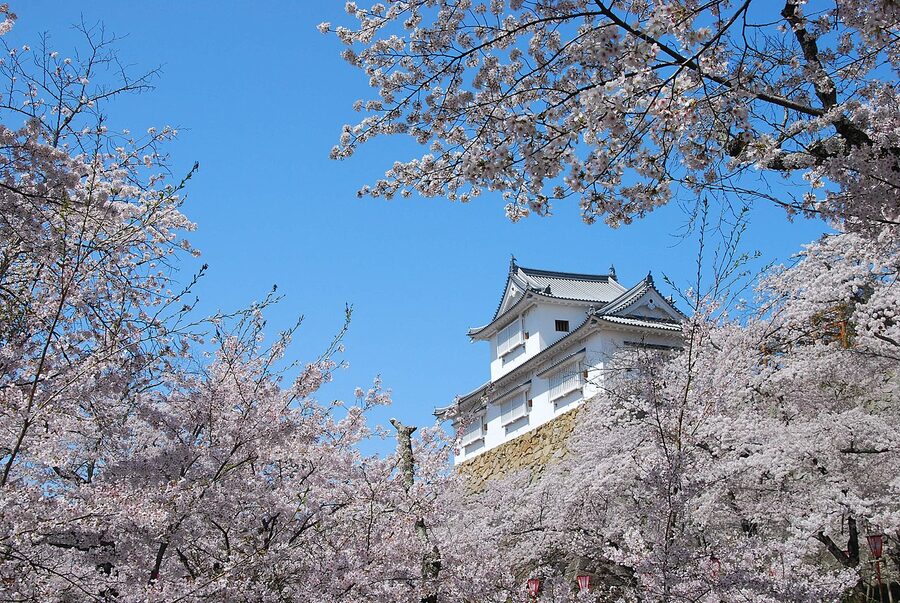
The castle is a registered Japan Heritage cherry blossom site, one of only about 100 across the country. Bloom peak is usually the first week of April — a week later than Kyoto, a week earlier than Aizu. For the ten-day window around the peak the park hosts the Tsuyama Sakura Matsuri, which means food stalls, evening illuminations until around 21:00, and a kagura stage in front of the Bitchū Yagura. Admission still ¥310. Busy but not Kyoto-busy; you’ll actually have space to sit on a blue sheet under a tree if you get in before 10 am.
If you’re coming specifically for sakura, check the Japan Meteorological Corporation forecast around late March for Okayama prefecture — Tsuyama’s peak typically lands within a day or two of the Okayama city forecast.
Joto: the preserved merchant quarter
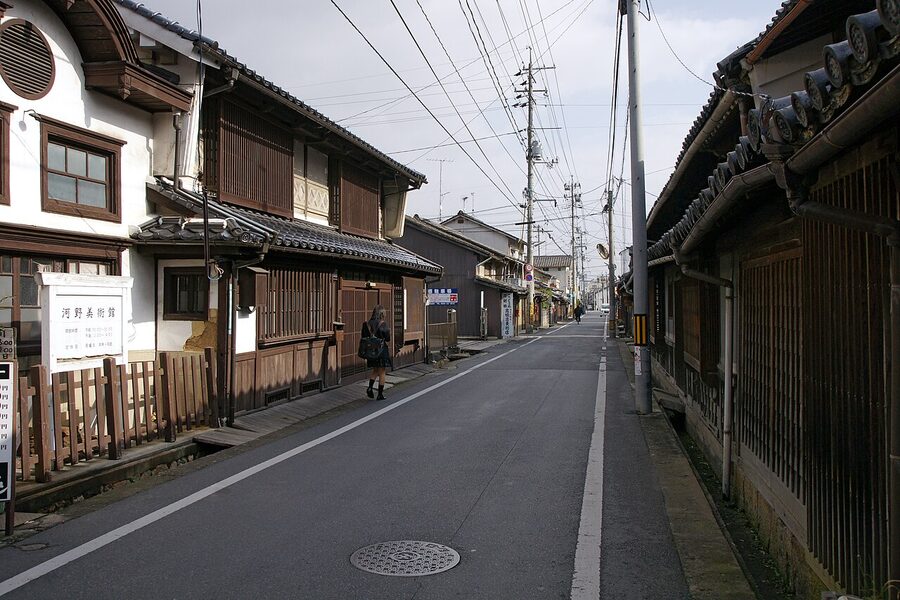
East of the castle, running along the old pilgrim road, is Joto (城東, “east of the castle”) — the town’s surviving merchant quarter. This is where you’ll spend most of a Tsuyama afternoon. A compact two-kilometre strip of Edo-period machiya, Taisho-era Western-influenced buildings, small shops, cafes, and two or three museums. No cars. Bikes allowed. Nothing is signposted in English.
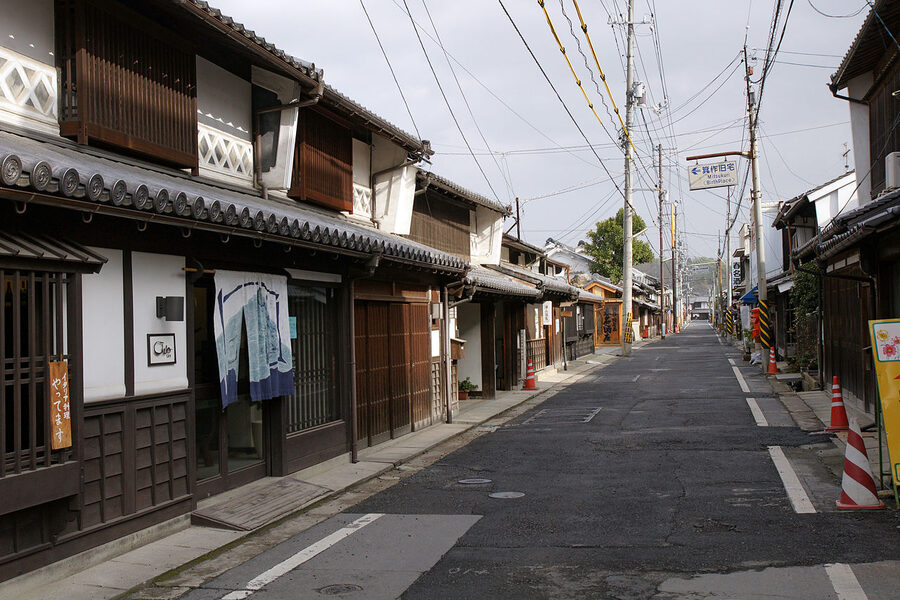
A few specific stops inside Joto:
Sakushu Folkcraft Museum (作州民芸館). Housed in a beautifully preserved 1909 brick bank building on the main Joto street. The exhibits cover regional crafts — indigo weaving, folk toys, farm tools, paper goods — and the building itself is worth the entry fee (¥300) for the deco banking-hall interior alone.
Josai Romance Hall (城西浪漫館). A few streets west of Joto, technically in the Josai district. An early Taisho-era Western-influenced building that now runs as a cafe and cultural space. The cafe serves Yoan Coffee — brewed using a reconstruction of the 19th-century copper pot devised by Tsuyama’s own Udagawa Yōan, the Rangaku scholar who coined the modern Japanese kanji 珈琲 for coffee. If “the town that invented the word for coffee in Japanese” is a reason to go out of your way, this is the cafe.
Fukujuyu Cafe (旧福寿湯). A former public bathhouse from 1897 that was converted into a specialty-coffee shop in 2020. The owner has kept the original wooden bath lockers, the tiled plunge floor, and the bandai (raised cashier’s station) — coffee is now served from behind it. They also do a very good taiyaki with house-made red bean. Easy to miss from the street; look for the small painted sign near the Fukujuyu crossing.
Shurakuen Garden
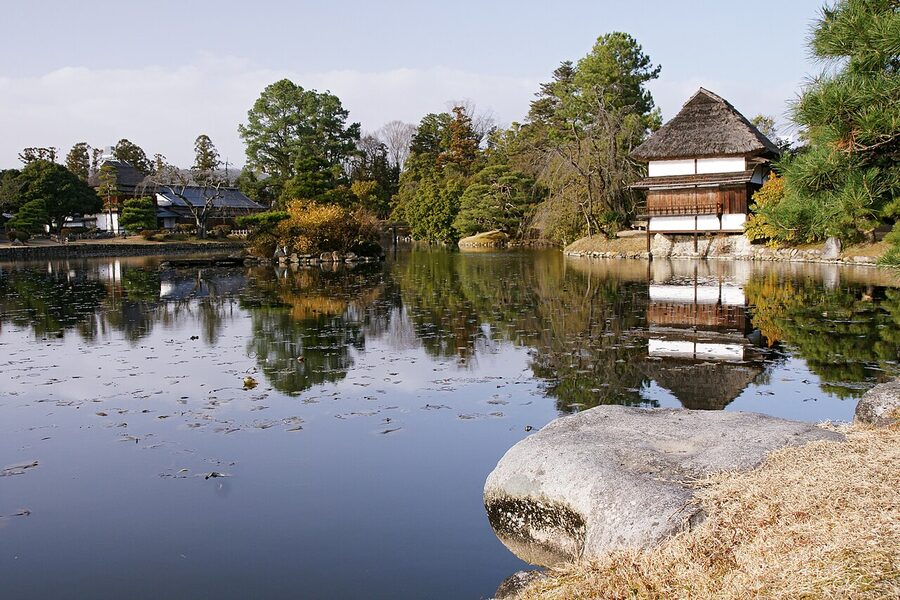
A five-minute walk north of the castle is Shūraku-en (衆楽園) — a traditional stroll garden built by the Mori clan in the mid-1600s as the domain’s diplomatic reception garden. It’s small (about one hectare) and quiet, with a central pond, a tea pavilion on the north bank, and one of the better autumn-foliage displays in Okayama. Entry is free, which for a garden of this quality is unusual.
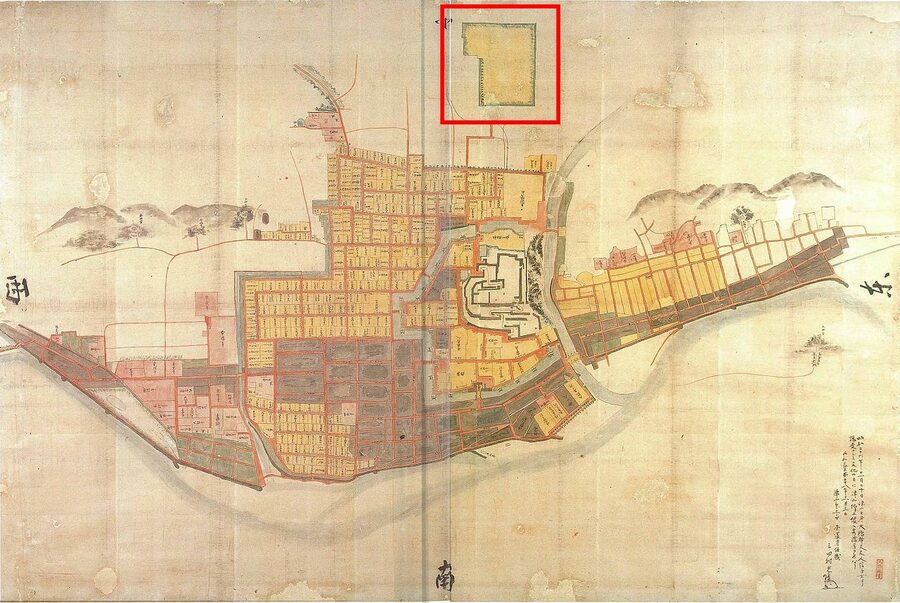
Most visitors skip Shūraku-en because it’s not on the castle-to-Joto walking axis. It’s a ten-minute detour and it’s the single most peaceful thirty minutes you’ll have in Tsuyama. Go.
What to eat: Tsuyama’s beef culture
Tsuyama has one of Japan’s most unusual food histories: a centuries-long, unbroken tradition of beef eating in a country where it was officially taboo until the Meiji era. The domain’s mountain geography meant cattle were a core part of the agricultural economy — draft animals, milk, manure — and the local interpretation of Buddhist food taboos was loose. Beef was eaten as medicine, specifically to treat convalescence, and the shogunate mostly looked the other way. By the time meat-eating was officially re-legalised in 1872, Tsuyama had been doing it for 300 years.
That background produced the town’s two signature dishes.
Horumon Udon (ホルモンうどん) is the famous one. Thick udon noodles and beef offal (horumon — literally “thrown away”) stir-fried on a teppan in a miso-and-garlic sauce, served with pickled ginger and a scattering of spring onion. It is rich, slightly chewy, strongly flavoured, and not for everyone — but if you like yakiniku you’ll like it. The classic venue is Tamaki Horumon Yakiniku (たまき) near the station; ¥1,100 for a set meal, ready in under ten minutes.
Sozuri Nabe (そずり鍋) is the winter local-diet version — a beef hotpot where the meat is specifically the sozuri (“scraped”) trimmings taken from around the bones, simmered with vegetables and udon noodles in a light soy broth. Bone-and-marrow sweet. Look for it on set menus October through February at Okinoya Izakaya and at the restaurant inside Koujiya Inn.
Other Tsuyama specialities to keep an eye out for: Hatsuyuki, a delicate white confection of sweet red bean paste wrapped in a thin candy-glass shell — presented to the visiting Emperor Go-Daigo in 1332, now made by a single remaining shop (Takeda Machikidō on the main arcade); Sakushu wine, a small but proud local grape-wine industry centred on the Sakushu Winery; and Tsuyama-zushi, a local take on chirashi made with sea bream and a lightly sweetened rice.
Getting to Tsuyama
This is the honest part. Tsuyama is not on the Shinkansen, and there is no airport closer than Okayama.
From Okayama city. The JR Tsuyama Line runs from Okayama Station in 90 minutes on the standard local service, or 65 minutes on the limited-express “Kotobuki” that runs 2–3 times a day. ¥1,500 one-way on the local, ¥2,700 with the express surcharge. Trains are infrequent in the middle of the day — screenshot the timetable before you leave Okayama.
From Hiroshima. Shinkansen to Okayama (35 min) then Tsuyama Line north. Total about 2h 30min with the Kodama, or 2h 10min with a well-timed Sakura transfer.
From Tottori (Sea of Japan side). The Inbi Line and local buses connect, but this is a slow route — budget 2h 30min. Worth doing if you’re on a Chūgoku loop.
By car. The Chūgoku Expressway passes directly through Tsuyama, which makes road access from Osaka (~2h 45min) or Hiroshima (~2h 15min) faster than the train. If you already have a rental car for a Chūgoku landscape loop, Tsuyama is the obvious inland stop.
Getting around Tsuyama itself. The town is compact, walkable in a long day. Rental bikes are available from the tourist information office at the station for ¥500 half-day, ¥1,000 full day — electric-assist versions are ¥1,500 and worth it if you’re staying past the castle climb.
Where to stay
Shiroyama Terrace Tsuyama Villa (城山テラス). A modern low-rise with hot springs, sauna, and mizuburo cold bath on a terrace looking directly at the castle’s stone walls. ¥17,000–¥25,000 per person per night including breakfast. The onsen alone is worth the price.
Koujiya Inn (麹屋). Three restored merchant houses inside the Karita sake-brewery compound in Joto, rented as whole units. Sleeps up to 6 per house. About ¥15,000 per person per night. Feels more like a private residence than a hotel; the kitchen is stocked and the tatami room smells of old wood and new matting.
Hotel Alpha-One Tsuyama. The reliable business-hotel option near the station: ¥8,000 single, en-suite bath, convenience-store dinner sort of place. Fine for one night.
If you’re doing a wider Chūgoku itinerary, a Tsuyama overnight pairs well with Kurashiki’s Bikan quarter (via Okayama) or with Izumo Taisha over the mountains.
Planning your visit
Half-day (3h). Castle and Joto only. Works as a side trip from Okayama if you’re already in Okayama city.
Full day. Arrive on the 09:00 train. Castle climb, Joto lunch, Shūraku-en garden, Josai coffee crawl, back on the 17:30 express. Doable, tight.
Two days. Day one as above but slower. Evening at Shiroyama Terrace or Koujiya Inn. Day two: Tsuyama Western Studies Museum, Tsuyama Manabi Railway Museum (D51 steam engine collection, near the station — a genuinely excellent small museum), Sakushu Kasuri Craft Center workshop, back to Okayama by mid-afternoon.
Three days. Use Tsuyama as a base for northern Okayama — Shoo town (Kintaro shrines and the 500-year-old square sumo ring at Kaku Dōhyō, both 20 minutes by car), Kagamino onsen (30 minutes north), and the extraordinary karst limestone plateau of Hiruzen (90 minutes — shared with Tottori prefecture).
The detail almost everybody misses
In a narrow side street three minutes south of the castle, behind the Kakuzan Park ticket office, there’s a small stone plaque set into a wall. It marks the former residence of Mitsukuri Genpo, a Tsuyama-born scholar who in 1855 produced the first Japanese-language geography of the world — a book that introduced Japan to the concepts of Europe, the Americas, and Africa as discrete continents. Tsuyama, for a small town, has an outsized contribution to the modernisation of Japanese science: Udagawa Yōan on coffee and chemistry, Mitsukuri Genpo on world geography, and the Western Studies School that trained most of them. The Tsuyama Western Studies Museum (a five-minute walk from the castle) tells that story with more care than most small-town museums bother with.
None of that is why you come here — you come for the castle, the cherry blossoms, and the horumon udon. But it’s the layer underneath, and it’s the layer that changes how the town reads after about the fourth hour. This was, quietly, one of the towns that built the Japan that exists now.
Walk the Joto road at dusk before you catch your train back. The streetlights are still gas-flame replicas; the shopkeepers are packing up the crates of indigo cotton and sake bottles; an old man on a bicycle is ringing his bell at no one in particular. Nothing about this looks like 2026 and that is, in fact, the point.



