
Reviewed · MIYAJIMA TOURS
Miyajima UNESCO World Heritage Site Private Tour
Miyajima’s famous floating torii gate is only the opening scene. This private tour takes you from Hiroshima Station to a sacred island where Shinto shrines, Buddhist temples, maple woods, deer, old wooden buildings, and Seto Inland Sea views fit into one well-planned day.
I like the private format because your group can explore at its own pace, and I like the mix of major sights and quieter religious sites. Guide Arshad is named as the guide for this experience, and the day is organized to cover a lot without making you plan every turn yourself.
The main consideration is time. Five to six hours is enough for the island’s central sights, but not for a slow visit to every corner of Miyajima or a full Mount Misen outing. You should also expect a moderate amount of walking.
In This Review
- Key points at a glance
- Why Miyajima works so well as a half-day outing
- Entering Itsukushima Shrine and watching the water
- Finding quiet corners at Daishoin Temple
- Walking through Momijidani Park
- Seeing Senjokaku’s unfinished wooden interior
- Browsing Omotesando Street for local flavor
- A short look at historic Daiganji Temple
- What $90 per person gets you
- Timing, walking, and who should book
- The guide and the private-tour advantage
- Should you book this Miyajima tour?
- FAQ
- Where does the tour start?
- What time does the tour begin?
- Where does the tour finish?
- How long does the tour last?
- Is this a private tour?
- Who is the guide?
- Are admission tickets included?
- What level of fitness is needed?
- Can I cancel for a full refund?
Key points at a glance
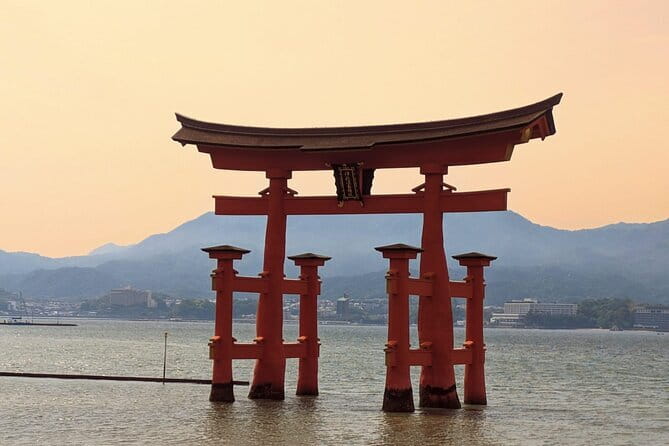
- See Itsukushima Shrine and its celebrated torii gate, a Shinto site built over the water.
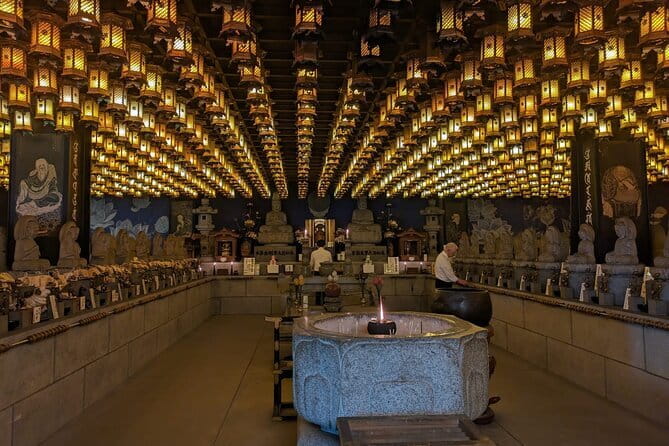
- Visit Daishoin Temple, with halls, prayer spaces, statues, and a hall containing 500 Buddhist figures.
- Walk through Momijidani Park, especially appealing during autumn maple season.
- Enjoy a private group with guide Arshad, rather than joining a large shared excursion.
- Browse Omotesando Street for momiji manju, seafood, oysters, crafts, and souvenirs.
- Pay $90 per person for a private half-day experience with several admission tickets included.
Why Miyajima works so well as a half-day outing
Miyajima is valuable because it gives you several sides of Japan in a compact area. The island is tied to Shinto belief, Buddhist practice, traditional architecture, local food, and coastal scenery. You do not need to choose between a cultural visit and an easy walk through nature here.
Itsukushima Shrine is the headline attraction, but the later stops give the day more depth. Daishoin offers a quieter temple setting, Momijidani Park adds trees and streams, and Senjokaku shows a huge unfinished wooden pavilion with a very different mood from the shrine.
The private setup also matters. You are not sharing the day with a busload of strangers, and only your own group takes part. That can make it easier to ask questions, pause for photographs, or spend a little longer at a place that interests you.
The schedule begins at 9:30 am at Hiroshima Station, at 1-2-37 Matsubaracho in Minami Ward. The tour ends back at the same meeting point. Since the day lasts about five to six hours, it fits neatly into a Hiroshima visit that also includes other plans.
A few more Hiroshima tours and experiences worth a look

Entering Itsukushima Shrine and watching the water
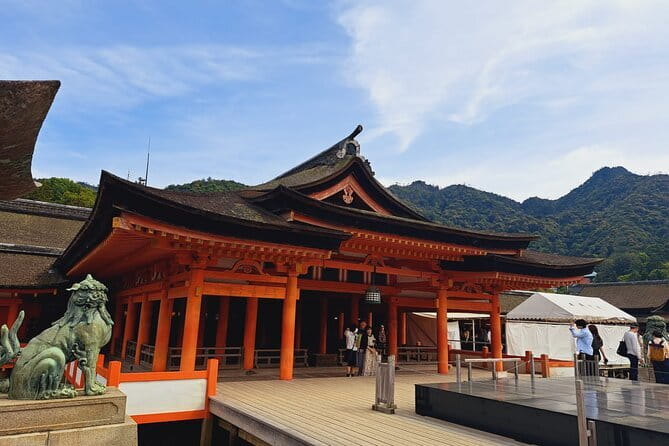
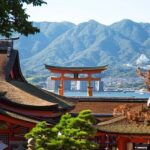
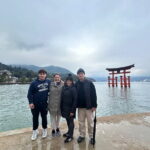
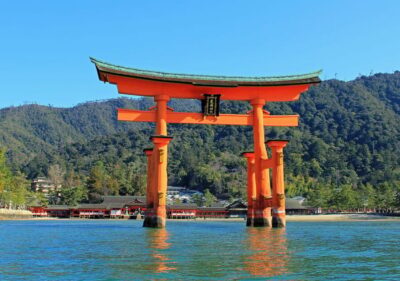
The first stop is Itsukushima Shrine, with about 30 minutes set aside and admission included. The shrine is famous for its large red torii gate, which appears to float in the sea at high tide. That changing relationship with the water is central to Miyajima’s appeal.
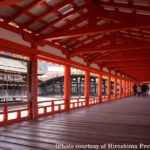
The shrine is dedicated to the three daughters of Susanoo-no-Mikoto, a Shinto deity associated with the sea and storms. Its buildings extend over the water, creating a carefully balanced view of red structures, wooden walkways, and the surrounding shore.
Thirty minutes is enough for a focused introduction, especially if your guide explains what you are seeing. It is not a long, leisurely visit, so you may want to stay close to Arshad and listen for the key details rather than trying to inspect every part of the complex.
The torii’s appearance depends on the tide, and the tour description specifically highlights its high-tide setting. If the water level is different during your visit, the gate may look less like it is floating. That is not a flaw in the tour, but it is worth keeping your expectations flexible.
Itsukushima also shows why a guide can add value. The buildings are attractive at first glance, yet the shrine’s location and purpose are what make it special. A private explanation helps connect the architecture with the island’s religious role instead of turning the stop into a quick photograph.
Finding quiet corners at Daishoin Temple
The tour then spends about an hour at Daishoin, a major Shingon Buddhist temple on the slopes of Mount Misen. This is the longest stop, and with good reason. The temple has halls, pagodas, prayer areas, statues, gardens, and views toward the Seto Inland Sea.
The Kannon-do Hall is a highlight, with 500 Buddhist statues. That number gives you a sense of the visual effect: this is not a single polished monument that you admire and leave. It is a place filled with repeated figures and small details, where a guide can help explain what deserves your attention.
Daishoin is also described as a place for meditation and contemplation. The mood is different from the shrine. Itsukushima is closely tied to the sea and ceremonial architecture, while Daishoin brings you into a more enclosed Buddhist setting on the mountain slope.
You should be comfortable with some uphill walking here. The experience calls for moderate physical fitness, and the temple’s position means this is not a completely flat sightseeing route. The effort is reasonable for most people who can manage a half-day of walking, but it may be tiring for anyone with mobility concerns.
I would give Daishoin your full attention. It may not have the instant recognition of the torii gate, but it is likely to be one of the more rewarding stops for understanding Miyajima’s spiritual side.
Walking through Momijidani Park
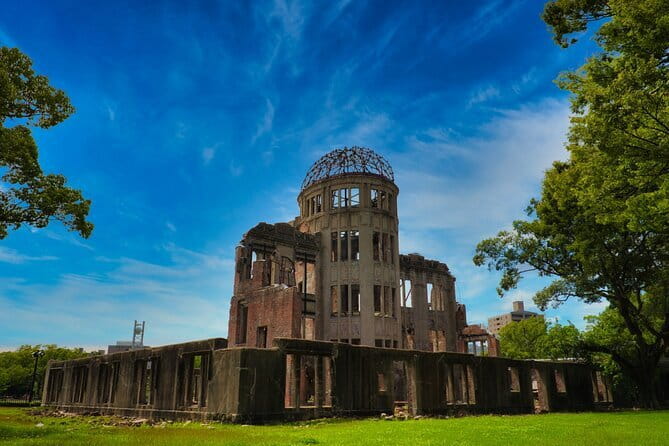
Momijidani Park receives about 40 minutes, with no admission charge. Its name means Maple Valley, and the park is known for maple trees that turn red, orange, and yellow in autumn.
The route includes trails, bridges, streams, and wooded surroundings at the base of Mount Misen. This is a useful change of pace after the shrine and temple. You get room to walk, look around, and enjoy the island’s natural setting without needing to follow a formal religious route.
Autumn is the obvious season for the park, but the visit can still provide a pleasant break at other times of year. The tour does not promise peak foliage, so you should treat the maple colors as a seasonal bonus rather than a guarantee.
Forty minutes is a practical amount of time for a walk through the park. It will not turn this tour into a serious hike, and it does not include a full climb of Mount Misen. If a mountain walk is your main reason for visiting Miyajima, this half-day plan may feel limited.
Seeing Senjokaku’s unfinished wooden interior
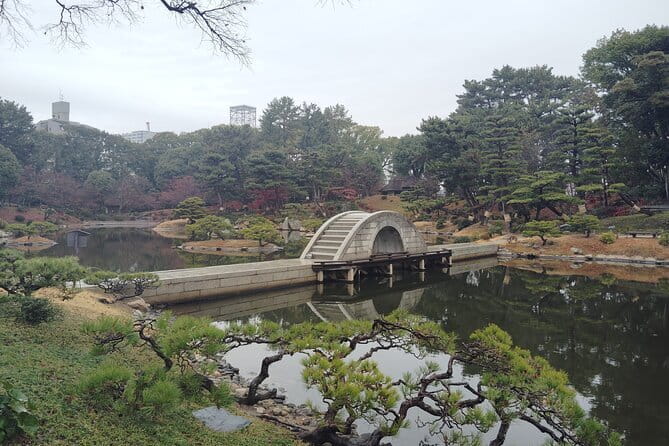
Senjokaku, also called Toyokuni Shrine, takes about 20 minutes, with admission included. The building was commissioned by warlord Toyotomi Hideyoshi in the late sixteenth century as a Buddhist hall, but construction stopped before it was finished.
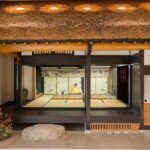
Its name means Pavilion of 1,000 Tatami Mats, a clue to its scale. Inside, massive beams and pillars create a broad, open space. The unfinished quality is part of its character. Instead of entering a perfectly completed structure, you see the size and strength of traditional Japanese timber construction in a more bare form.
The pavilion also offers wide views from its veranda. This makes the stop worthwhile even though it is brief. You can look back toward Miyajima, the shrine area, and the sea while getting a sense of how religious buildings once shaped the island.
Twenty minutes is enough for a quick explanation, photographs, and a look around. If you are especially interested in architecture, you may wish for more time, but the short visit helps keep the overall schedule moving.
Other private tours in Hiroshima


Browsing Omotesando Street for local flavor
Omotesando Street is the island’s main shopping and eating road and receives about 30 minutes. It leads toward Itsukushima Shrine and is lined with wooden buildings, tiled roofs, souvenir shops, craft stores, snack counters, and restaurants.
This is where the tour shifts from sacred sites to daily island culture. You can look for momiji manju, maple leaf-shaped cakes commonly filled with red bean paste. Miyajima is also known for seafood, particularly oysters, so this is the natural place to consider a local snack or meal.
Fresh oysters are one of the most useful food tips attached to this experience. The tour includes time on the street, but the $90 price does not indicate that food is included, so budget separately for anything you want to eat or buy.
Thirty minutes goes quickly. You can browse a few shops and sample something, but you will not have time for a long meal and extensive shopping. If food is your main interest, tell your guide early so you can use the stop well.
The street can also feel more commercial than the temple grounds. That is not necessarily a problem. A good Miyajima visit needs both the quiet religious sites and the chance to see what the island sells, cooks, and sends home with its visitors.
A short look at historic Daiganji Temple
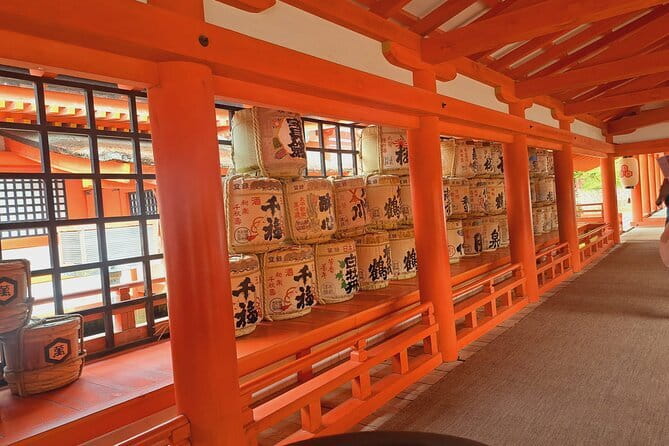
Daiganji Temple receives about 20 minutes and has no admission charge. It dates to the late Heian Period, from 794 to 1185, and is believed to have been founded in 806.
The stop gives you another piece of Miyajima’s Buddhist past without requiring a long detour. Its history is closely linked with the development of Buddhism in Japan and the cultural life of the island.
Twenty minutes makes this an introduction rather than a deep study. Pay attention to the age of the site and its connection to the island’s religious traditions. The stop works best as part of the larger pattern: shrine, Buddhist temple, park, pavilion, shopping street, and another old temple.
What $90 per person gets you

At $90 per person, this is not the cheapest way to see Miyajima. You are paying for a private experience, a guide, planning, and a route that covers six different stops in about half a day. Several admission tickets are included, specifically for Itsukushima Shrine, Daishoin, and Senjokaku.
The value improves if you are traveling with family or friends and prefer not to join a shared group. A private guide can make a busy sightseeing day simpler, especially when you are visiting Hiroshima for a limited time and want the main Miyajima sights arranged in a sensible order.
The value is less clear for solo visitors focused mainly on saving money. You are paying for convenience and personal attention rather than transportation alone or a single monument ticket. The tour also ends back at Hiroshima Station, which helps if your plans begin and finish there.
The experience is booked an average of 31 days ahead, so advance planning is sensible. Confirmation is provided when you book, and the mobile ticket is convenient for keeping the booking on your phone.
Timing, walking, and who should book
This tour suits you best if you want a structured introduction to Miyajima and prefer a guide to handle the day’s flow. It is also a good match for families, couples, and small groups who want the privacy of staying together.
You should have moderate physical fitness. The day includes walking around shrine grounds, temple areas, a park, a shopping street, and a temple on the slopes of Mount Misen. The route is not presented as a demanding hike, but it is more active than a vehicle-based sightseeing tour.
The start time is fixed at 9:30 am. Since the tour returns to Hiroshima Station, it is convenient for people staying in or passing through Hiroshima, provided the meeting point fits your plans.
The cancellation terms are friendly but strict near departure. You receive a full refund if you cancel at least 24 hours before the start time. Changes or cancellations inside that 24-hour window are not accepted for a refund.
The guide and the private-tour advantage
Guide Arshad is named for this experience. His role matters most in the transitions between sites, where the day could otherwise become a string of attractive but disconnected stops.
The private format lets your group ask questions and keep its own rhythm. You can focus on architecture at Senjokaku, religious art at Daishoin, seasonal scenery in Momijidani Park, or food on Omotesando Street without having to suit a large group.
The available praise for the tour centers on Arshad’s convenience and helpful planning. The day was described as productive and well organized. That fits the structure: the route gives you the major landmark, two substantial religious sites, a park, an architectural stop, and shopping time in one compact outing.
Still, private does not mean unlimited time. The planned stops are fairly tight, and you should not expect an open-ended day where every site can be explored at length.
Should you book this Miyajima tour?
Book it if you want an organized, private introduction to Miyajima from Hiroshima, especially if this is your first visit. The combination of Itsukushima Shrine, Daishoin, Momijidani Park, Senjokaku, Omotesando Street, and Daiganji gives you a well-rounded view of the island.
It is particularly appealing if you value a guide, want to avoid planning the route yourself, and are traveling with enough people to make the per-person price reasonable. Arshad’s helpful, organized approach is a positive reason to consider it.
Skip it if your top priority is a long Mount Misen hike, extended shopping, or a slow photographic study of the shrine. The five to six hour schedule is designed for coverage, not deep exploration. For most visitors who want the essential Miyajima experience in one private half-day, though, this is a practical and culturally focused choice.
FAQ
Where does the tour start?
The tour starts at Hiroshima Station, at 1-2-37 Matsubaracho in Hiroshima’s Minami Ward.
What time does the tour begin?
The scheduled start time is 9:30 am.
Where does the tour finish?
The activity ends back at the meeting point at Hiroshima Station.
How long does the tour last?
The tour lasts approximately five to six hours.
Is this a private tour?
Yes. Only your own group participates in the activity.
Who is the guide?
The guide named for this experience is Arshad.
Are admission tickets included?
Admission is included for Itsukushima Shrine, Daishoin, and Senjokaku. Momijidani Park and Daiganji Temple are listed without an admission charge.
What level of fitness is needed?
A moderate level of physical fitness is recommended. The route includes walking around temples, shrine grounds, a park, and the slopes of Mount Misen.
Can I cancel for a full refund?
Yes, if you cancel at least 24 hours before the experience start time. Cancellations or changes made less than 24 hours before the start are not refunded.
More Historical Tours in Hiroshima
More Private Tours in Hiroshima
More Miyajima Tours in Hiroshima
More tours in Hiroshima we've reviewed



Miyajima Tours, compared.
 ★ 5.0Peaceful Hiroshima & Miyajima UNESCO 1 Day Bus TourFrom $129
 ★ 4.9Hiroshima: Hiroshima and Miyajima UNESCO Sites 1-Day TourFrom $1228 hours
 ★ 5.0Hiroshima / Miyajima Full-day Private Tour with Government Licensed GuideFrom $202
 ★ 4.7Osaka/Kyoto: Hiroshima Miyajima Bus Tour & Shinkansen TicketFrom $27712 hours
 ★ 4.7From Hiroshima: Hiroshima & Miyajima 1 Day Tour with LunchFrom $1168 hours
 ★ 5.0Hiroshima and Miyajima Day Trip with Itsukushima Shrine & FerryFrom $45
