
Reviewed · PEACE MEMORIAL TOURS
Half Day Peace Park & Bomb dome Private Tour
Hiroshima’s most important lesson begins at a small hospital, not the famous dome. This private tour takes you to Shima Hospital, the atomic bomb’s ground zero, then connects the site to the Atomic Bomb Dome, Peace Park, and the Peace Memorial Museum. Guide Yuta is also known for adding Miyajima, cherry blossom scenery, and okonomiyaki when the schedule allows.
I like the private format, since you can ask direct questions and adjust the pace around difficult museum exhibits. I also like the use of trains, ferries, and other public transport instead of a private car. You see how Hiroshima works today, not just a string of isolated sights.
The main caution is the timing. The tour is described both as a two to three hour half-day activity and as a full day from about 9:00 AM to 4:30 PM, with Miyajima and Itsukushima Shrine included in some descriptions. Confirm the exact route and duration before booking.
In This Review
- Key points to know before you book
- Starting where the bomb fell
- Reading the Atomic Bomb Dome from the riverbank
- The Rest House and one survivor
- Walking the monuments of Peace Memorial Park
- One focused hour in the Peace Memorial Museum
- Where Miyajima fits into the day
- A private guide, public transport, and a flexible pace
- Is $138 a fair price?
- Who will get the most from this experience?
- Should you book it?
- FAQ
- Where does the tour start?
- Where does the tour end?
- How long does the tour last?
- Is the Peace Memorial Museum admission included?
- Is Itsukushima Shrine included?
- Is lunch included?
- Does the tour use a private car?
- Can I cancel for a full refund?
Key points to know before you book
- Ground zero begins at Shima Hospital: You visit the actual point beneath the atomic bomb’s detonation, then hear about the hospital and the people who worked there.
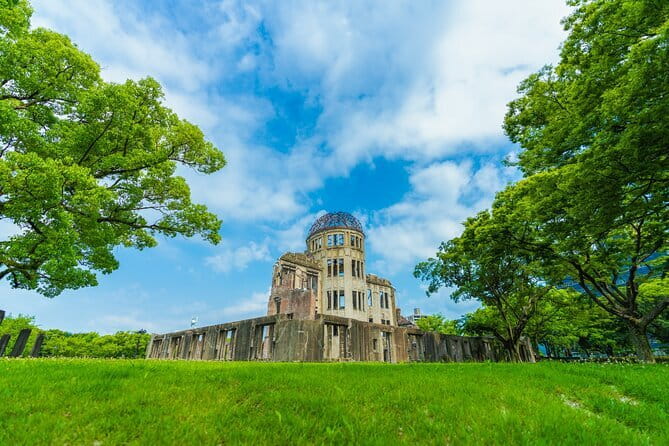
- The Atomic Bomb Dome gets proper context: Your guide explains its original purpose, Czech-influenced design, and why parts of the building survived.
- A private guide keeps the subject personal: Your group travels alone, so you can ask questions and spend more time on the monuments that matter most to you.
- Public transport is part of the experience: Trains and ferries replace a private vehicle, helping you see Hiroshima as a lived-in city.
- The Peace Memorial Museum admission is included: You see wartime belongings, photographs, clothing, lunch boxes, and personal accounts without paying a separate entry fee.
- Miyajima may be part of a longer day: Itsukushima Shrine is listed among the included sites, but the stated duration and stop-by-stop schedule do not clearly match that addition.
Starting where the bomb fell
Meet at the Rest House in Hiroshima Peace Memorial Park. The published meeting window is around 9:30 to 10:30 AM, though the broader tour description also mentions a start near 9:00 AM. That difference matters, especially if you have a train reservation or plan to add Miyajima.
The first stop is Shima Hospital, identified as the atomic bomb’s ground zero. The visit lasts about 15 minutes and costs nothing. It is a brief stop, but it gives the rest of the tour a clear starting point: this was not an abstract event somewhere across the city. The explosion occurred at a precise location, amid a working neighborhood and ordinary daily routines.
Your guide explains the hospital and the people who worked there. I like this approach because it places individual lives before broad statistics. You begin with a building and a community, then move toward the larger memorial sites.
Do not expect a large attraction here. Shima Hospital is valuable for its meaning, not for a long list of things to see. The short visit also helps keep the tour moving, which becomes important if the day includes the museum, public transport, and Miyajima.
A few more Hiroshima tours and experiences worth a look
Reading the Atomic Bomb Dome from the riverbank
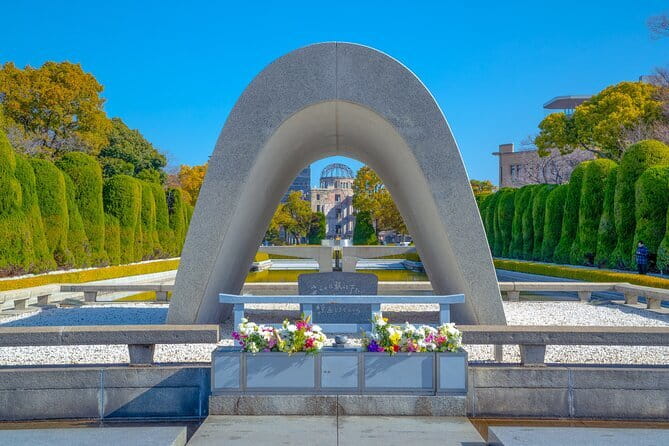
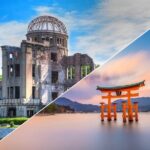
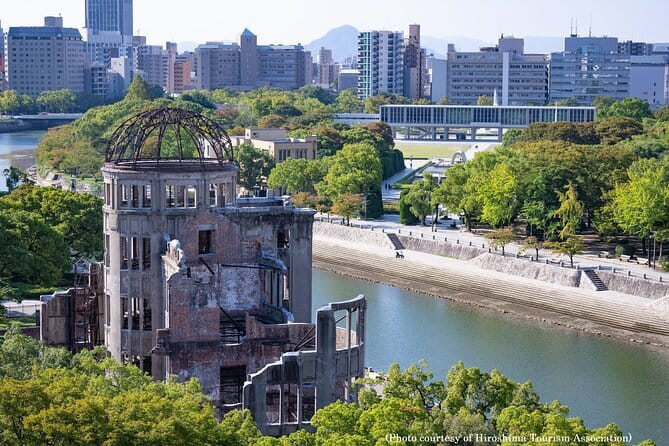
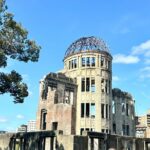
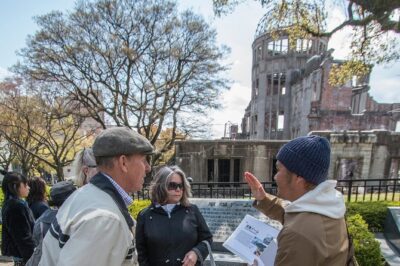
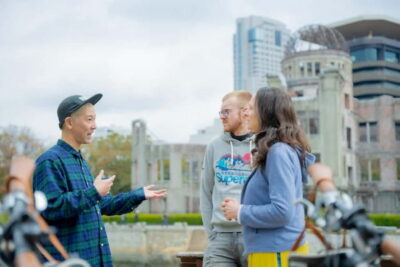
The Atomic Bomb Dome receives roughly 30 minutes. You learn that the building was completed in 1915 and designed by a Czech architect, which explains why its form differs from many traditional Japanese buildings.
The guide’s main job here is to explain why the structure survived when so much around it was destroyed. The answer is tied to the bomb’s position and the building’s construction, but the site is best understood through the human story around it. The remaining walls and exposed framework are powerful precisely because the building was once a normal civic structure.
I appreciate that the tour does not treat the dome as a quick photo stop. You hear what the building was originally used for, what happened on August 6, 1945, and how Hiroshima rebuilt afterward. The conversation connects the ruined structure to the modern city around it.
The site is free to view, but the ground is part of an open public area. You should expect other people nearby and a solemn atmosphere rather than a quiet, private monument. Since the group is private, you can ask your guide to explain architectural details or wartime events that are easy to miss on your own.
The Rest House and one survivor
The Rest House of Hiroshima Peace Park is another especially affecting stop. The building once housed Taisho ya, a kimono shop selling traditional Japanese clothing. The tour explains that only one person survived inside when the atomic bomb exploded, even though the building was less than 200 meters from ground zero.
You spend about 20 minutes here. That is enough time to hear the story and understand the building’s unusual place in the park. It also gives you a different angle on survival. The dome shows a ruined structure. The Rest House shows how one building and one survivor can carry a very personal account of the same event.
I would pay close attention to the guide here. A short stop can feel rushed if you want every detail, but the private setting lets you ask for clarification. If this story affects you strongly, tell the guide. The schedule is described as flexible, though any extra time may reduce time elsewhere.
Walking the monuments of Peace Memorial Park
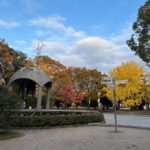
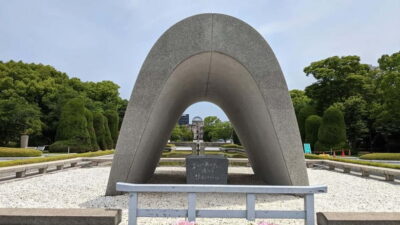
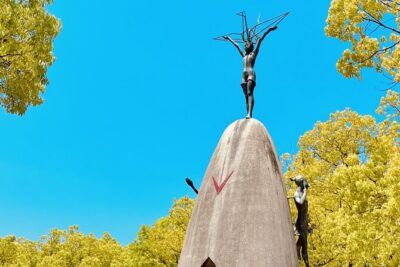
The Peace Memorial Park visit takes about 30 minutes and has no separate admission charge. This is where the tour broadens from individual buildings to a group of memorials, statues, and symbols connected to the bombing.
The guide explains selected monuments and their stories rather than simply pointing out names. That makes a real difference. Peace parks can be difficult to read without context because each memorial has its own purpose, audience, and emotional weight.
The Peace Memorial Museum was designed by Kenzo Tange, who also designed the wider park. The tour points out the relationship between the architecture and the memorial setting. You also hear about the G7 summit held in Hiroshima in May 2023, when national leaders visited the park and prayed for peace.
I like having the park explained before entering the museum. You arrive with a sense of place and a better idea of what the monuments mean. The drawback is that 30 minutes is not a long time for a large public park. If you want to linger at every statue, photograph each monument, or sit quietly, you may need to choose which parts matter most.
One focused hour in the Peace Memorial Museum
The Peace Memorial Museum is the emotional center of the tour. About one hour is scheduled inside, and admission is included.
The exhibits include clothing, photographs, lunch boxes, personal belongings, and written accounts from the wartime period and the bombing. These objects make the event immediate. A damaged piece of clothing or a child’s lunch box communicates the cost of war in a way that dates and military explanations cannot.
Your guide can help you understand the exhibits and answer questions, but you should also allow yourself quiet time. The museum deals with painful material, and one hour may feel short if you read every panel. It is a useful first visit if you want a guided introduction, though museum-focused visitors may prefer returning later for a longer, slower look.
The museum asks you to think about what you can do for peace. That question gives the visit a purpose beyond learning what happened. I value this because the tour treats Hiroshima as a place of remembrance and responsibility, not only as a sightseeing stop.
The museum is indoors, while the earlier stops involve walking between outdoor memorials. You should plan for both kinds of attention: listening while moving through the park, then taking in serious exhibits at a steady pace. Food and drinks are not included, so plan accordingly if your version of the tour runs longer than the listed museum visit.
Other private tours in Hiroshima

Where Miyajima fits into the day
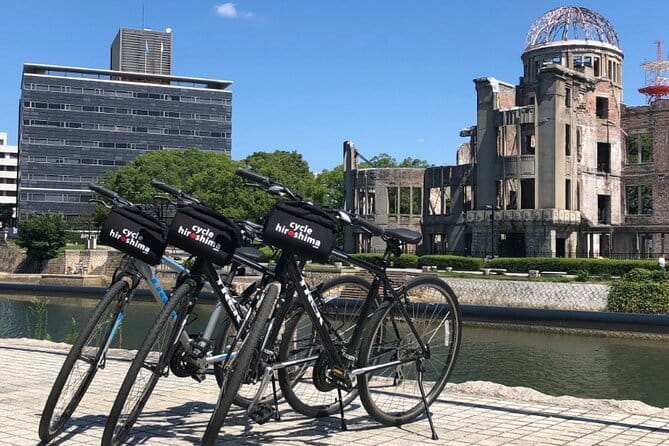
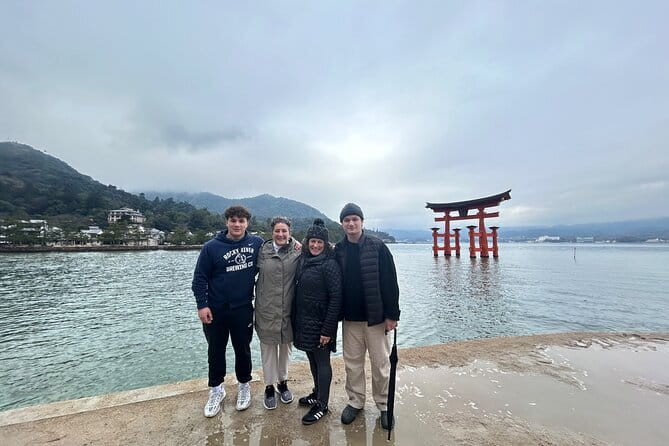
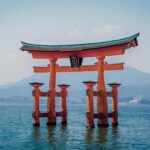
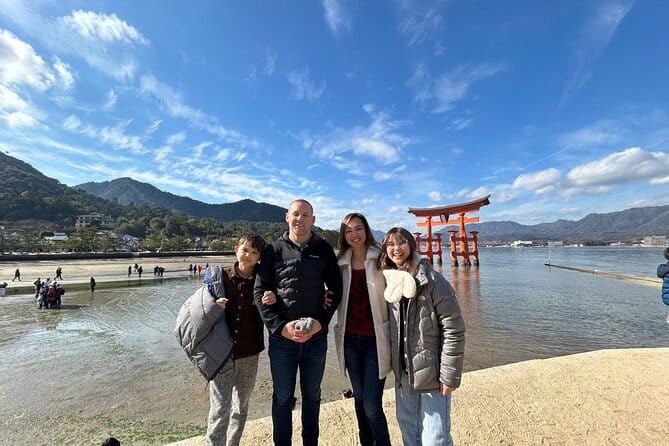
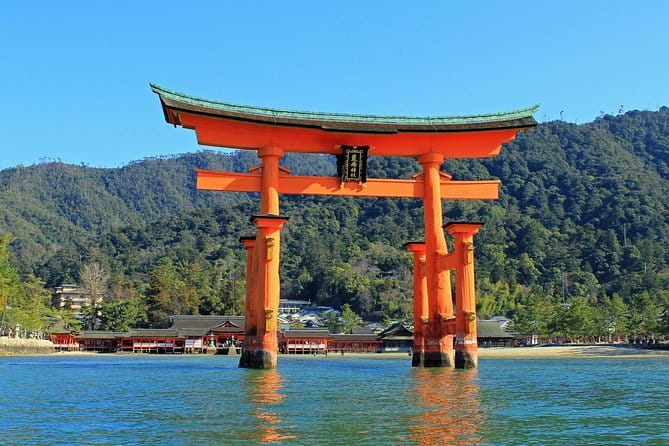
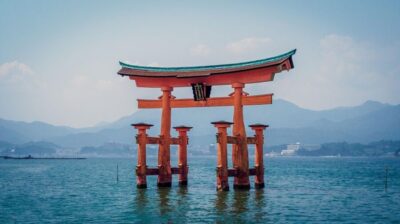
Itsukushima Shrine and its famous torii gate are listed among the tour’s included attractions. The gate is known for appearing to float at high tide, and the shrine is one of Japan’s best-known Shinto sites. The experience provider also describes Miyajima as part of a day covering Hiroshima’s major sights.
However, the detailed stop list supplied for this experience ends with the Peace Memorial Museum. It does not provide a separate time allowance for Miyajima, the ferry, or Itsukushima Shrine. The tour is also described as lasting two to three hours in one place and running from about 9:00 AM to 4:30 PM in another.
That is the most important practical question to settle before you pay. Ask whether your booking is the short Peace Park and Bomb Dome tour or the longer Hiroshima and Miyajima day. Ask how much time is allocated to the ferry, shrine, and island, and whether the itinerary changes with tide conditions.
The public transport plan is a plus if Miyajima is included. You use trains and ferries rather than a private car, which reflects ordinary local travel and avoids the feeling of being sealed inside a vehicle. It also means the day depends on transport connections and walking, so a longer version will feel much fuller than a simple park visit.
A private guide, public transport, and a flexible pace
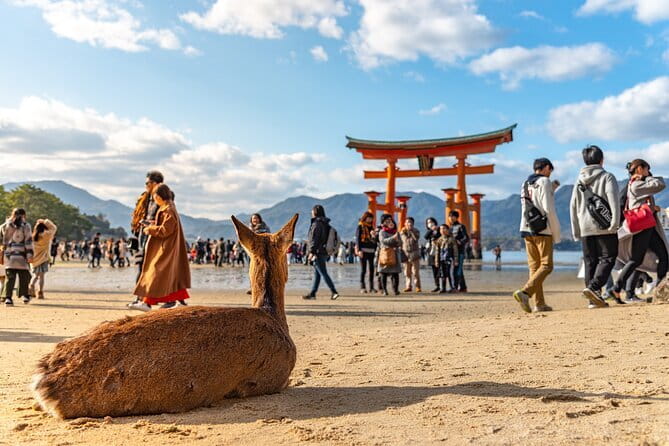
This is a private activity, so only your group participates. That is useful in Hiroshima, where the subject often prompts personal questions. You do not need to wait for a large group to take photographs, and you can ask the guide to explain a monument again if its meaning is not clear.
Yuta is the named guide associated with the experience. He is described as kind, thoughtful, and well informed about Hiroshima’s wartime story. A previous itinerary with him included Miyajima, the Peace Memorial Museum and Park, cherry blossom scenery, and okonomiyaki. Treat those additions as possibilities rather than guaranteed parts of every booking, since the core timing is not consistent.
The flexibility can work well for families, couples, and small groups with different interests. You can ask to add another place or adjust the focus, but every addition has a time cost. If you want a slow museum visit, a long lunch, and Miyajima in one short booking, the schedule will not support all three.
Using public transport is another deliberate choice. You get trains and ferries, not a private vehicle. That can mean more walking and less control over the exact pace, but it also gives you a better feel for daily life in Hiroshima. The tour is near public transport, and most people can participate. Service animals are allowed.
Is $138 a fair price?
At $138, the value depends on the final duration and the number of people in your private group. The price includes a certified guide, admission to the Peace Memorial Museum, admission to Itsukushima Shrine, and photographs taken by the guide. Group discounts may also be available.
For a short two to three hour visit focused on the park, dome, and museum, the price mainly pays for private guiding and interpretation. That can be worthwhile if you want the difficult stories explained clearly and prefer not to manage the route alone.
For a full day that adds Miyajima, ferry travel, Itsukushima Shrine, and local food suggestions, the value is stronger. You are getting more time with a local guide and a route that links two major Hiroshima experiences. But transportation, lunch, and drinks are not included, so your total spending will be higher.
The photo service is a pleasant extra, particularly if you want pictures of your group without handing your phone to strangers. It should not be the main reason to book. The guide’s explanations and the private format are the real value.
Who will get the most from this experience?
I would choose this tour if you have limited time in Hiroshima and want the major peace sites placed in context. It suits first-time visitors who would rather hear the story from a local guide than read every sign alone.
It also works well for couples, families, and small groups who want a private pace. The museum includes difficult material, so parents should decide in advance how much detail is suitable for younger children.
You may prefer an independent visit if you want several hours inside the museum, extensive time at every monument, or a slow day with no fixed route. You may also find the public transport approach less convenient if you have mobility concerns, although the available information says most people can participate and service animals are allowed.
The biggest issue is not the subject matter or the guide. It is the unclear duration. Get the exact schedule in writing, especially if you expect Miyajima and Itsukushima Shrine to be included.
Should you book it?
Book this tour if you want Hiroshima’s central memorial sites explained by a private local guide, with museum admission included and the option of a longer Miyajima route. The visit to Shima Hospital, the Rest House survivor story, and the Atomic Bomb Dome gives the day more shape than a simple walk through Peace Park.
I would be cautious if your main goal is a slow museum study or if you need a fixed finish time. Confirm whether your booking lasts two to three hours or runs to about 4:30 PM, and confirm whether Itsukushima Shrine is part of your specific schedule. Once that is clear, $138 can be a fair price for focused, personal guidance through Hiroshima’s most important sites.
Cancellation is free up to 24 hours before the start time. Changes or cancellations inside that window are not accepted or refunded.
FAQ
Where does the tour start?
The meeting point is the Hiroshima Peace Memorial Park Rest House in Nakajimacho, Naka Ward, Hiroshima.
Where does the tour end?
The activity ends back at the meeting point.
How long does the tour last?
The information gives two different durations. It is described as a two to three hour half-day tour and also as a day running from about 9:00 AM to 4:30 PM. Confirm the exact schedule when booking.
Is the Peace Memorial Museum admission included?
Yes. The entrance fee for the Hiroshima Peace Memorial Museum is included.
Is Itsukushima Shrine included?
Itsukushima Shrine is listed as an included admission, but the detailed stop schedule does not give a separate visit time for it. Confirm whether Miyajima and the shrine are part of your selected tour.
Is lunch included?
No. Lunch, food, and drinks are not included.
Does the tour use a private car?
No. The tour uses public transportation, including trains and ferries. Private transportation is not included.
Can I cancel for a full refund?
Yes, if you cancel at least 24 hours before the experience start time. Cancellations or changes made less than 24 hours before the start time are not refunded or accepted.
More Private Tours in Hiroshima
More Peace Memorial Tours in Hiroshima

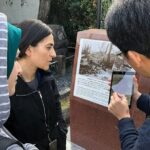

More tours in Hiroshima we've reviewed


Peace Memorial Tours, compared.
 ★ 4.8Hiroshima Historical Walking Tour – Why A-Bomb was DroppedFrom $352h 30m
 ★ 5.0Hiroshima Peace (Heiwa) Walking Tour at World Heritage SitesFrom $94
 ★ 4.9Hiroshima: Miyajima Peace Memorial Icons of Peace and BeautyFrom $1638 hours
 ★ 5.0Hiroshima Walking Tour Why A Bomb was dropped to HiroshimaFrom $28
 ★ 5.0Hiroshima 2hr Peace Cycling Tour with Local GuideFrom $59
 ★ 4.8Hiroshima: Peace Cycling Tour with Local GuideFrom $522 - 3 hours
