
Reviewed · MIYAJIMA TOURS
Hiroshima to Miyajima: Private Custom Tour with Ferry Ride
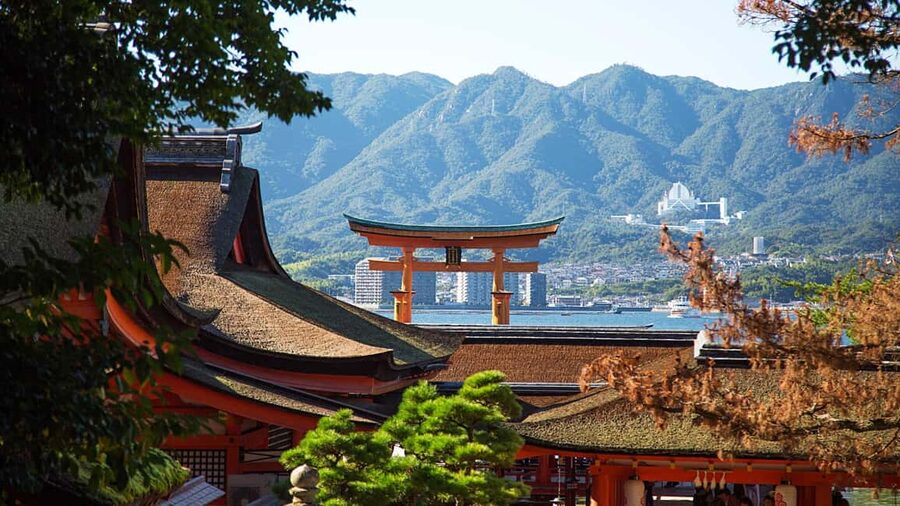
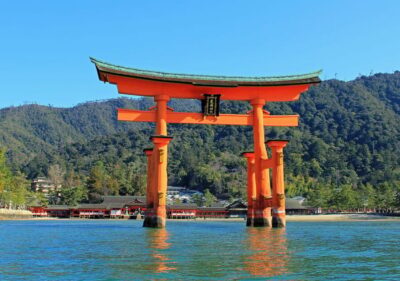
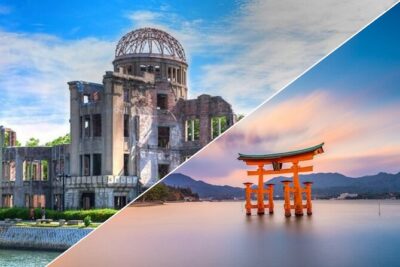
Miyajima is at its most striking when the tide is high and Itsukushima Shrine’s famous torii seems to float offshore. This six-hour private trip pairs that postcard view with a local host who can take you beyond the main approach, toward quieter temples, food stalls, craft shops, and viewpoints.
I like two things here: the pre-tour planning lets you ask for history, food, photography, or spiritual sites, and the ferry ride gives the outing a scenic start rather than treating the island as a quick photo stop. I also like the practical help. Guides such as Yuka, Ken, Kaori, Aya, and Masayo have helped with restaurant choices, queues, train changes, cruise delays, and route planning.
The main catch is cost. At $293 per person, this is not a cheap way to see Miyajima, and food, attraction tickets, taxis, and some public transport are extra. It is best value for couples, families, or small groups that want personal attention and help making a short visit run well.
In This Review
- Key points at a glance
- Why a private Miyajima day can be worth it
- Meeting your host in central Hiroshima
- The ferry ride across the Seto Inland Sea
- Itsukushima Shrine and the floating torii
- Quiet lanes, temples, and local stories
- Eating oysters, momiji manju, and choosing lunch
- Mt Misen, cable cars, and the limits of six hours
- What the guide adds beyond Miyajima
- Price, extra costs, and overall value
- Who should book this private tour?
- FAQ
- How long is the Hiroshima to Miyajima private tour?
- Is the ferry from Hiroshima to Miyajima included?
- Are food and attraction tickets included?
- Is this a group tour?
- What languages does the guide speak?
- Can the itinerary be customized?
- Is the tour wheelchair accessible?
Key points at a glance
- High-tide views of the torii: Ask your host about timing if the floating-gate effect is a priority.
- A private six-hour outing: The route can reflect your interests and walking pace instead of following a fixed group schedule.
- Local food guidance: You can ask for oysters, momiji manju, tea, or a less obvious lunch stop.
- Help beyond sightseeing: Hosts have assisted with queues, restaurant reservations, cruise delays, and bullet train changes.
- Mt Misen is possible, but demanding: The cable car or mountain route may require extra time, tickets, and physical effort.
- Extra costs need planning: Ferry tickets are listed as included, but food, attractions, taxis, and other transport are not.
Why a private Miyajima day can be worth it
Miyajima is easy to reach from Hiroshima, but easy does not always mean easy to handle. You need to find the ferry, judge the tide, choose what to see first, and deal with crowds around Itsukushima Shrine and the island’s shopping streets.
A private host removes much of that guesswork. You still see the major sights, but you can ask questions as you go and change direction when something catches your eye. If your family wants food stops and short walks, your host can work around that. If you want temples, local customs, and a fuller explanation of the island, you can give those subjects more time.
I see this as a strong choice for a first visit to Miyajima, especially if you have only one day in Hiroshima. It can also work well on a return visit, when the obvious sights are already familiar and you want a different angle.
The experience is offered in English or Japanese, and your group remains private. That matters on an island where a large group can spend too much time waiting for everyone to gather.
A few more Hiroshima tours and experiences worth a look
Meeting your host in central Hiroshima
The stated meeting point is Souvenir Select HitotoKi on the ground floor of Hiroshima Orizuru Tower, at 1 Chome-2-1 Otemachi in Naka Ward. Your host waits in front of the souvenir shop.
This is a sensible starting place in central Hiroshima, but give yourself enough time to find the exact shop inside the tower’s ground-level area. Your host contacts you before the outing, and the short questionnaire asks about your interests and travel style.
Use that questionnaire properly. Do not simply write sightseeing. Tell the host if you care most about photography, religious sites, seafood, Japanese sweets, architecture, family-friendly pacing, or avoiding steep walks. The more useful your answers, the more useful the day is likely to be.
The pre-tour contact is one of the strongest features. Yuka, for example, stayed in touch before meeting her group and planned around queues. Kaori adjusted a route after a cruise ship delay of two and a half hours. That kind of communication is worth more than a standard script when your schedule is tight.
The ferry ride across the Seto Inland Sea
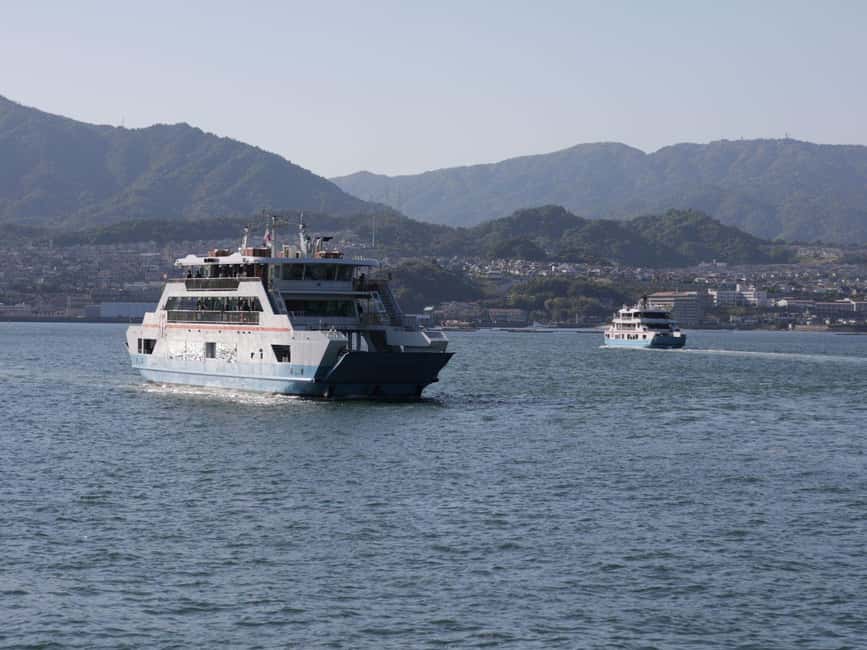
The trip to Miyajima begins by ferry, with tickets listed as included. The crossing gives you open views across the Seto Inland Sea and makes the island feel like a separate place rather than another Hiroshima neighborhood.
Your host handles the practical side of reaching the ferry and can advise on public transport or taxis if those are needed between parts of the day. No private vehicle is provided, so expect a public-transport and walking experience.
That distinction matters. You are paying for a personal guide, not a car and driver. If someone in your group has limited stamina, tell the host before the tour. The activity is described as wheelchair accessible, but the island’s shrines, gardens, mountain routes, and uneven paths may not all be equally easy.
The ferry is also a useful time to ask about the island’s religious importance, the tide, and the order of your stops. A good host can help you see the famous gate at the right stage of the tide, though exact conditions and timing vary.
Itsukushima Shrine and the floating torii
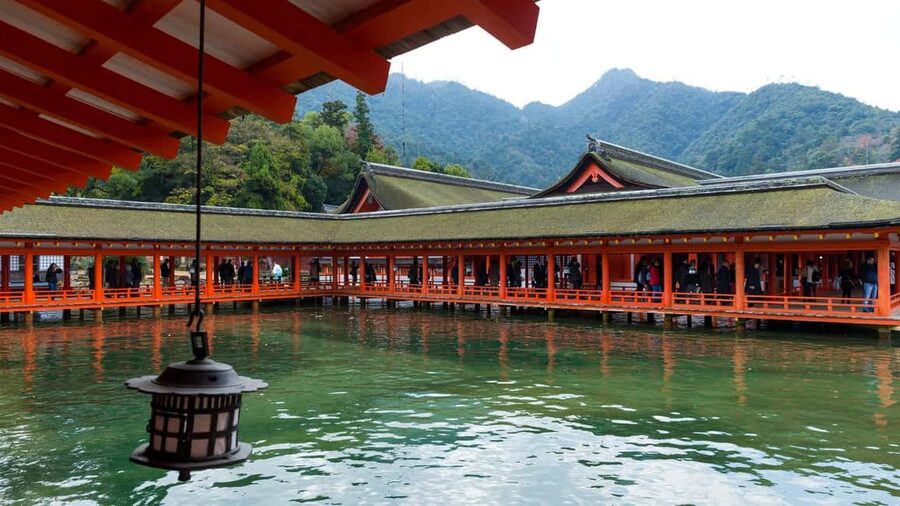
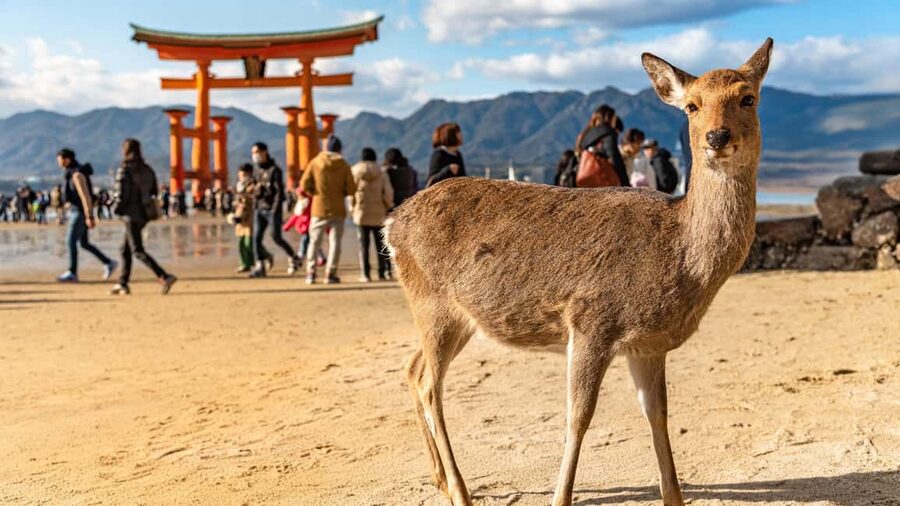
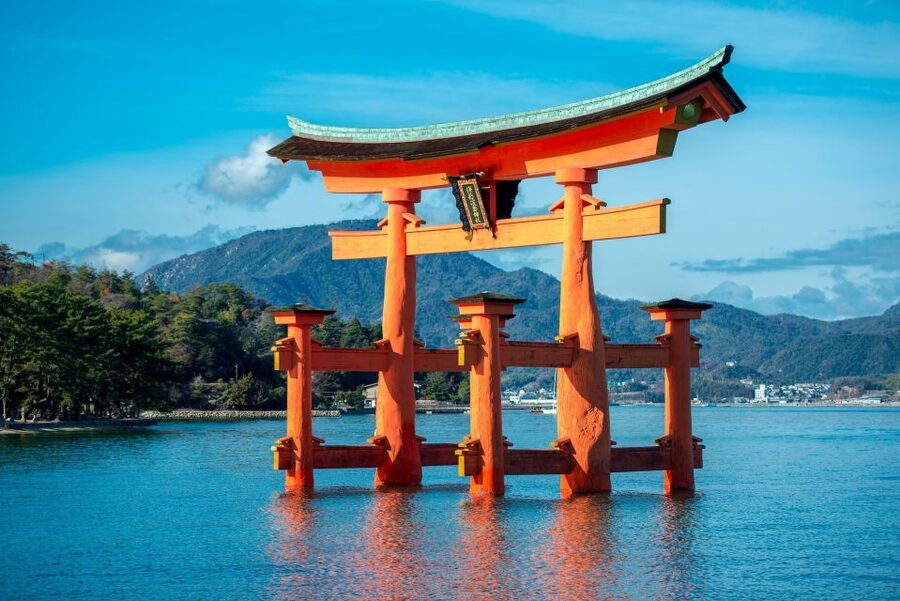
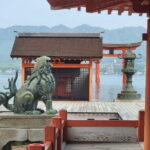
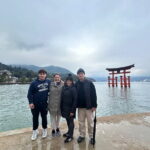
Itsukushima Shrine is the island’s headline sight. At high tide, the shrine buildings and torii appear to sit on the water, creating the view many people come to Miyajima to see.
Your host can add context to what might otherwise be a quick photograph. The point of a private visit is not just to identify the gate, but to understand how the shrine, island, sea, and religious traditions connect.
Plan your expectations around the tide. The torii does not look the same all day. At lower water, you may see the structure from a different angle and, depending on access conditions, get closer to its base. At high tide, the floating effect is stronger. Ask your host which view suits your priorities.
Crowds are another issue. Several people praised early starts and smart routing, especially around the shrine. Yuka was specifically credited with helping a group spend its time sightseeing instead of waiting in long lines. A private guide cannot remove every queue, but local timing can make a clear difference.
Quiet lanes, temples, and local stories
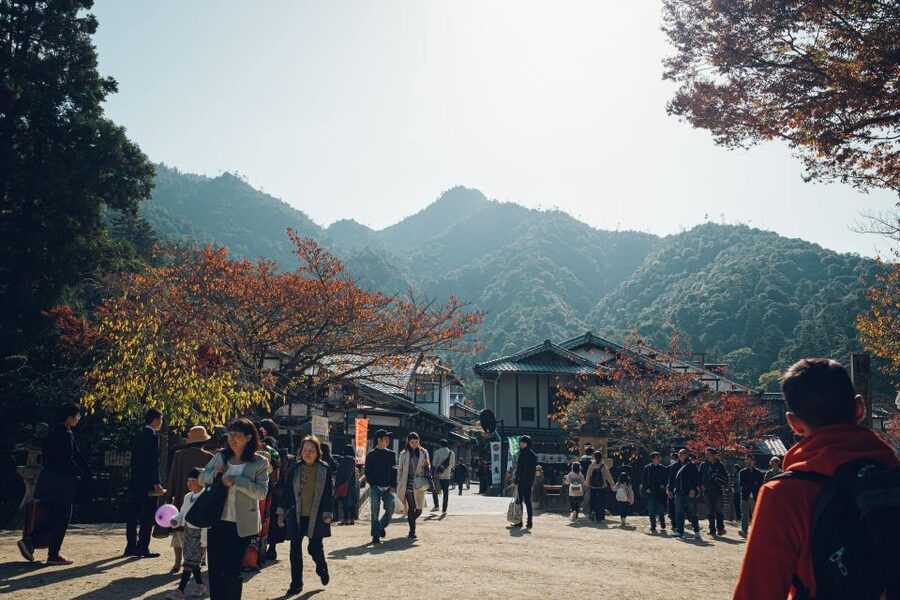
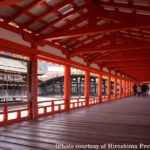
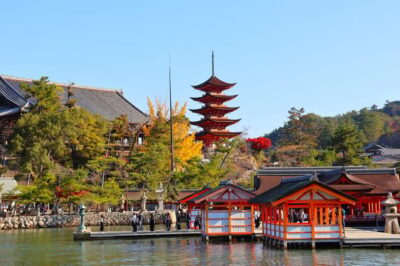
After the shrine, the outing can move away from the busiest streets. The experience is designed to include peaceful temples, back lanes, artisan workshops, and viewpoints known to local hosts.
The exact route is not fixed, which is both the appeal and the limitation. You are not guaranteed a named workshop or a particular secret viewpoint. Instead, your host chooses from the island’s options based on your interests, weather, opening conditions, and available time.
This flexibility worked well for groups who wanted more than the main shrine. Kaori led one group through less touristy areas and pointed out a less obvious view. Other hosts adjusted routes for families, rain, delayed arrivals, and different walking speeds.
Ask questions as you walk. A local host can explain how Miyajima fits into Japanese culture, not just give dates and labels. Masayo, who is from the area, was praised for giving the visit a local feel and for explaining Hiroshima’s history in a way that worked for children as well as adults.
You may also encounter the island’s deer around town. They are part of the familiar Miyajima experience, but do not let them distract you from the temples and shrine grounds. The private format gives you room to pause for photos without holding up a bus group.
A few more Hiroshima tours and experiences worth a look

Eating oysters, momiji manju, and choosing lunch
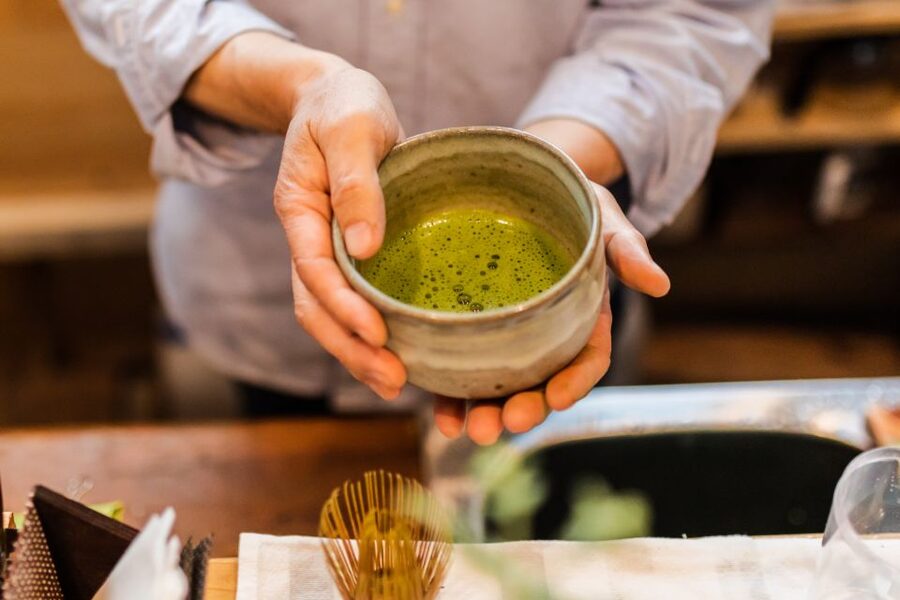
Food is not included, but food advice is one of the best reasons to use a local host. Miyajima is known for oysters and momiji manju, a maple-leaf-shaped sweet commonly sold around the island.
You can ask to sample freshly grilled oysters, stop for momiji manju, or take a tea break at a smaller café. Your host can point you toward a lunch that fits your budget and appetite, but you pay for the meal yourself.
This help can save time and prevent a poor choice in the busiest part of the island. Yuka recommended a lunch spot that her group would not have found alone. Nozz found a tempura restaurant with a table despite the crowds and helped order. Masayo also gave strong food suggestions.
Do not assume your preferred restaurant can always take a booking. The host may be able to help call ahead, as Kaori once tried to do for a visitor, but availability depends on the day. If lunch matters to you, state that before the tour and mention allergies or dietary needs.
Budget for snacks and lunch separately. Prices vary, and the tour price does not cover food or drinks.
Mt Misen, cable cars, and the limits of six hours
Mt Misen can add a dramatic high point to a Miyajima visit. From above, you may get broad views across the Seto Inland Sea and the surrounding islands. One group found the cable car ride memorable even with rain and cloud blocking the best views.
The mountain is not a casual add-on for everyone. A cable car ticket is an attraction cost, and the mountain route takes time away from shrines, food, and town streets. Conditions can also change. One group in its seventies faced a hard climb and a long walk down after the cable car closed.
Talk frankly with your host about fitness and priorities. If you want the summit, ask how much time the plan allows and what happens if the cable car is unavailable. If your group includes children, older adults, or anyone who dislikes steep paths, a shorter visit around the shrine and town may be more enjoyable.
The guide can help with pacing, but cannot make a demanding mountain walk easy. Comfortable shoes are essential. Keep some flexibility in the schedule rather than treating every stop as mandatory.
What the guide adds beyond Miyajima
The most praised part of this experience is not a single sight. It is the host’s ability to connect transport, timing, history, food, and the rest of your Japan trip.
Ken was praised for clear English, patience, and route planning, including helping a family cope with rain and children who stopped often for photos. He also helped one group after a cable car closure and another with transport arrangements. Aya was described as caring and well informed about Hiroshima and Miyajima.
Several hosts have also offered suggestions for the rest of a Hiroshima stay. That may include places to eat or sights to visit after the tour. In one case, the guide helped change bullet train tickets to an earlier departure. This is not a standard promised service, so think of it as useful local assistance rather than something guaranteed.
The host matching system is designed to pair you with someone who fits your interests. Guides named in past outings include Yuka, Aya, Ken, Kaori, Nozz, Mia, Masa, Masayo, and Tomoyuki. You should not assume a particular person will be available, but the range of guide styles suggests that communication before the tour matters.
Price, extra costs, and overall value
The price is $293 per person for six hours. That is a serious expense compared with visiting Miyajima independently, where you can arrange the ferry and see the main sights on your own.
The value improves if you are sharing the private experience with family or friends and want one guide for your group. It also improves if you have limited time, a complicated schedule, mobility concerns, children with different interests, or a strong desire for conversation in English.
The price includes the private host, the tailored planning process, direct communication, insider recommendations, and ferry tickets from Hiroshima to Miyajima. It does not include food, drinks, attraction admissions, taxis, or public transport costs used during the day.
One important point needs clarification before you go. The ferry is listed as included, but some participants have also been asked to cover transport-related costs during the outing. Ask your host exactly what is included, and carry a little extra for local transport, meals, snacks, and admission fees. One past estimate put additional expenses at roughly 25 percent of the tour price, though your total depends on the route.
Free cancellation is available up to 24 hours before the start, and you can reserve now and pay later. Those terms help if your Hiroshima schedule is still shifting.
Who should book this private tour?
I would choose this tour if you want personal guidance rather than a checklist. It suits first-time visitors, families, couples, older travelers who want help with logistics, and anyone who wants to discuss Japanese culture while walking.
It is also a good fit if you are arriving from a cruise ship or working around a train timetable. The hosts have shown they can adapt when arrival times change, though you should contact them as soon as you know about a delay.
I would skip it if you are happy navigating trains, ferries, shrine grounds, food stalls, and mountain routes alone. Independent visitors can enjoy Miyajima perfectly well, especially with a full day and a flexible schedule.
If you book, use the questionnaire to request the kind of day you want. Say how much walking is comfortable, name your food interests, ask about the tide, and decide if Mt Misen matters. That preparation is what turns a generic island visit into a useful private outing.
FAQ
How long is the Hiroshima to Miyajima private tour?
The experience lasts six hours. Starting times depend on availability.
Is the ferry from Hiroshima to Miyajima included?
Yes. Ferry tickets from Hiroshima to Miyajima are included in the stated tour details.
Are food and attraction tickets included?
No. Food, drinks, and tickets to attractions are not included. You should also plan for any public transport or taxi costs used during the experience.
Is this a group tour?
No. It is a private group experience, so the itinerary can be shaped around your party’s interests and pace.
What languages does the guide speak?
The experience is available with a live guide in English or Japanese.
Can the itinerary be customized?
Yes. After booking, you receive a questionnaire about your interests and travel style. Your host then contacts you to help plan the route.
Is the tour wheelchair accessible?
The activity is listed as wheelchair accessible. It is also a walking experience, and some optional routes, including mountain areas, may involve demanding paths, so discuss your needs with the host before the tour.
More Island Hopping & Ferries in Hiroshima

More Hiroshima City Tours in Hiroshima
More Miyajima Tours in Hiroshima
More tours in Hiroshima we've reviewed


Miyajima Tours, compared.
 ★ 5.0Peaceful Hiroshima & Miyajima UNESCO 1 Day Bus TourFrom $129
 ★ 4.9Hiroshima: Hiroshima and Miyajima UNESCO Sites 1-Day TourFrom $1228 hours
 ★ 5.0Hiroshima / Miyajima Full-day Private Tour with Government Licensed GuideFrom $202
 ★ 4.7Osaka/Kyoto: Hiroshima Miyajima Bus Tour & Shinkansen TicketFrom $27712 hours
 ★ 4.7From Hiroshima: Hiroshima & Miyajima 1 Day Tour with LunchFrom $1168 hours
 ★ 5.0Hiroshima and Miyajima Day Trip with Itsukushima Shrine & FerryFrom $45
