
Reviewed · HIROSHIMA CITY TOURS
Hiroshima City 4hr Private Walking Tour with Licensed Guide
Hiroshima is not a city you should rush through. Its Peace Memorial Museum and A Bomb Dome ask for quiet attention, while Hiroshima Castle and Shukkeien Garden show the city before the bombing and during its long recovery. This private tour gives you a local guide to connect those pieces. I especially like the one to one format, since you can ask direct questions about the war, daily life, and modern Japan without waiting for a group to catch up.
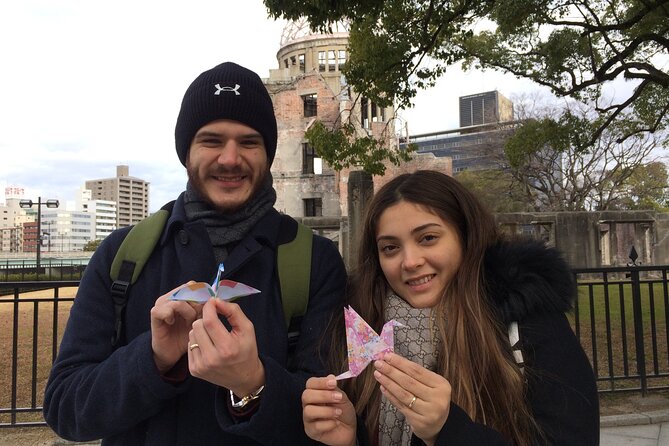
I also like the practical meeting plan. Your guide can meet you on foot at a hotel or train station within the designated Hiroshima area, and several guides have met cruise passengers at the port and helped them use public transportation. The route can include small personal touches, too, such as origami cranes, lesser known A Bombed buildings, or advice on where to eat Hiroshima style okonomiyaki.
The main drawback is time. Four hours is enough for about two major sites, and the advertised three stops can be difficult to fit in at a relaxed pace. Entrance fees, transport, lunch, and personal costs are extra, and this is a real walking tour, so hot weather, rain, or slow family pacing may require a shorter route.
In This Review
- Key points at a glance
- Why a private Hiroshima tour works so well
- Starting from your hotel, station, or cruise port
- Peace Memorial Park and the museum
- Hiroshima Castle and the city before 1945
- Shukkeien Garden and a quieter side of Hiroshima
- What the guides add to the day
- Price, timing, and practical value
- Who should book this walking tour
- Should you book the Hiroshima City 4hr Private Walking Tour?
- FAQ
- How long is the Hiroshima private walking tour?
- Is the tour private?
- Where can the guide meet me?
- Can cruise passengers join the tour?
- Which places are included in the route?
- Are entrance tickets included?
- Is lunch included?
- Are morning and afternoon departures available?
- Is the tour suitable for most people?
- What is the cancellation policy?
Key points at a glance
- Peace Memorial Museum with a local guide: Prepare for a serious, emotional visit that gains meaning from context and conversation.
- A private route for your group only: Ask as many questions as you like and adjust the pace within the available time.
- Three very different sides of Hiroshima: Combine wartime memory, castle history, and a traditional Japanese garden.
- Helpful port and station meeting options: Guides have met people at cruise terminals and train stations, then assisted with trams or other public transport.
- Personal stories and local customs: Guides including Yuko, Mari, Sei, Tomoyo, Kahori, and others may add family memories, origami, food advice, and stories about life in Hiroshima.
- A practical four-hour format: Best for a first look at central Hiroshima, not a slow, full-day exploration of every major sight.
Why a private Hiroshima tour works so well
Hiroshima can be easy to misunderstand if you see only one famous monument. The Peace Memorial Park tells you about August 6, 1945, but Hiroshima Castle explains the city’s earlier political and military role. Shukkeien adds another layer, showing the Japanese garden tradition and a place connected to both the city’s past and the bombing.
A private guide helps you move between those subjects without treating them as isolated stops. You can ask why a monument matters, how the city was rebuilt, or how Hiroshima is viewed by people who live there now. Guides on this experience have also discussed samurai history, postwar recovery, Japanese customs, and everyday life.
The tone matters here. This is not a light sightseeing walk with a few historical facts added on. The museum visit can be painful, and the subject deserves care. The strongest guides know when to explain, when to pause, and how to help you finish the tour with a sense of hope rather than despair. Yuko, for example, has used paper cranes and a positive closing discussion to give the day a gentler ending.
Since only your group participates, you do not need to fit into a large coach schedule. A family with teenagers can ask detailed questions, a couple can move quietly through the memorial sites, and a first time visitor can ask basic questions about trains, meals, and local manners. That flexibility is the central reason to choose this experience over a standard group tour.
A few more Hiroshima tours and experiences worth a look

Starting from your hotel, station, or cruise port
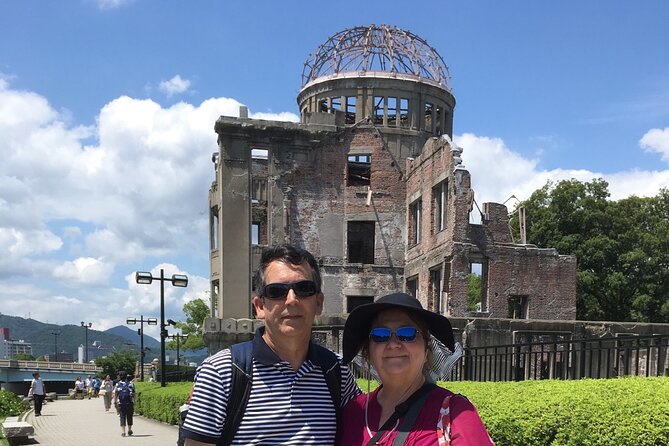
The normal meeting arrangement is on foot within the designated Hiroshima area. You may meet your guide at your hotel or a Hiroshima train station, with morning and afternoon start times available. Confirm the exact place carefully, since Hiroshima has several stations and large public areas where an imprecise meeting point could cause needless confusion.
Cruise passengers should pay close attention to the transport wording. The tour does not include a private vehicle, and the standard service is a walking tour. Still, guides have met cruise passengers at the port, taken them by tram or taxi when needed, helped buy transport tickets, and returned them to the ship. Any vehicle or public transport cost is extra, so clarify the plan before setting out.
This support can be especially useful if you are unfamiliar with Hiroshima’s transport system. One guide helped a family buy tram tickets and escorted them back to the ship. Another arranged a vehicle for a family arriving at the cruise terminal. Those examples show the value of communicating your arrival details in advance, but they do not mean a private vehicle is included in the basic price.
Your guide may contact you before the tour to confirm the meeting point and ask what you want to see. Use that chance well. Tell the guide if the museum is your priority, if you have already visited Shukkeien, or if you need to finish at a certain time. The tour can be adapted, but four hours cannot be stretched.
Peace Memorial Park and the museum
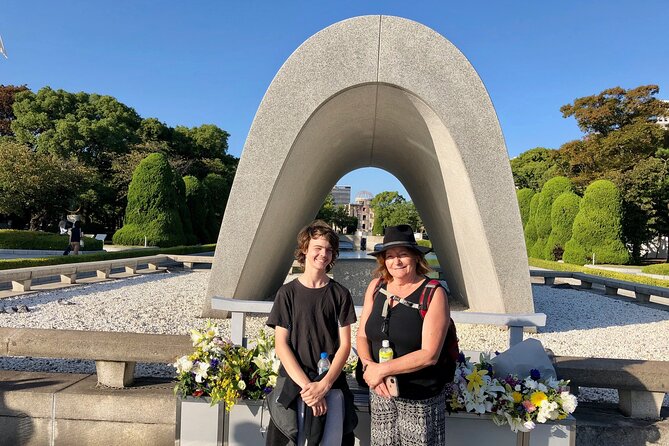
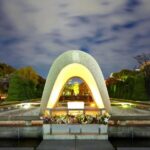
The Peace Memorial Park is usually the emotional center of the walk. It occupies a large area in central Hiroshima, with memorials and monuments spread through open paths rather than packed into a single building. Your guide can explain what you are seeing and give the sites a human setting before you enter the museum.
Allow about one hour for the museum and surrounding park in the stated schedule, although the exact balance depends on your pace. The museum admission fee is not included, so plan to pay separately. The guide’s entry fee is covered only for sights listed under the tour’s included sites, and you should confirm the current arrangement when booking.
The museum is difficult material. It presents the bombing, its victims, and the effects on Hiroshima in a direct way. Some people will want to read every display. Others will need breaks. A private guide is useful because you can step outside, ask for clarification, or spend more time on a subject that matters to you without holding up strangers.
Several guides bring a local point of view to this part of the tour. Mari has discussed her own family connection to Hiroshima’s wartime story. Other guides have shown former school buildings that survived the blast and became relief centers, as well as A Bombed structures that are less familiar than the main memorials.
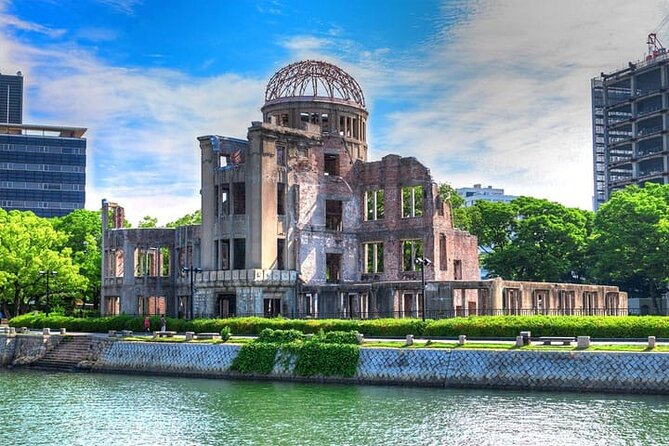
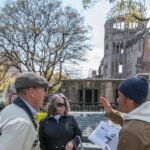
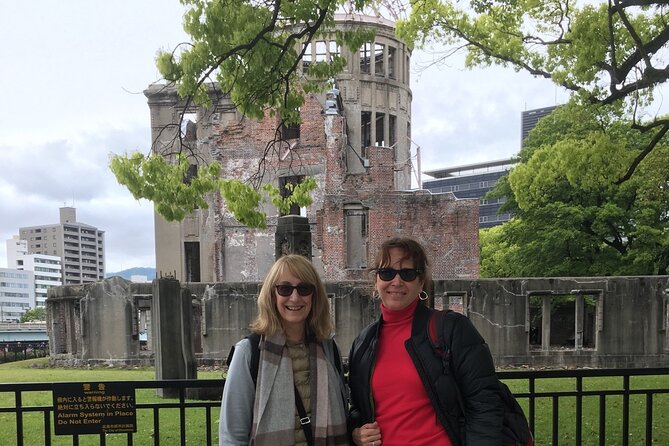
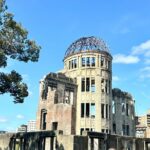
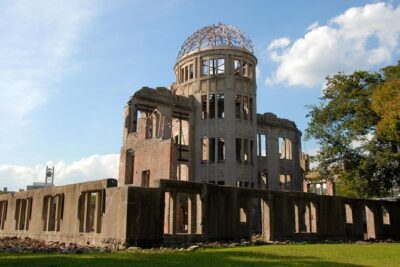
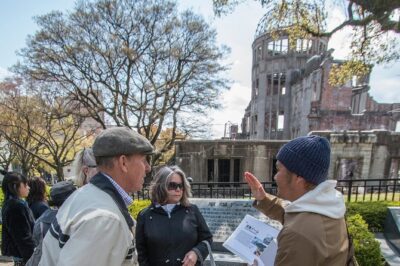
The A Bomb Dome is another important stop in the Peace Memorial Park area. Its damaged frame is a stark physical reminder of the blast, and seeing it after the museum can help you connect the museum’s accounts with the surviving city. The park, dome, memorials, and museum are often described as a peace walk, though the experience is anything but casual sightseeing.
Give yourself emotional room afterward. You may want lunch, a quiet coffee, or a slower walk before moving on. A guide can help you find a local restaurant, and Hiroshima style okonomiyaki appears often in the guides’ recommendations and tour add ons. Lunch is not included, but it can be a useful way to discuss the city’s present day food culture after the morning’s serious history.
Hiroshima Castle and the city before 1945
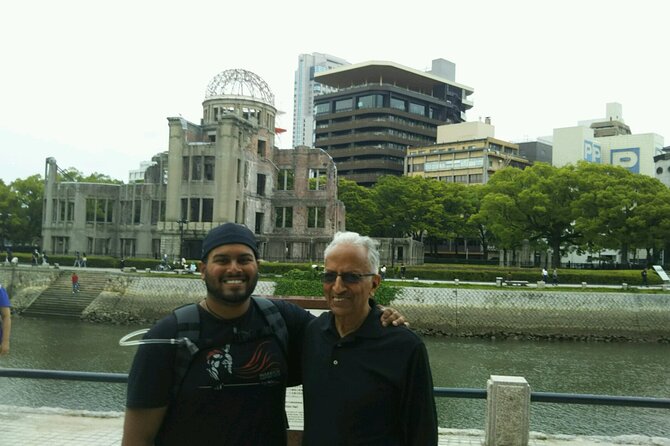
Hiroshima Castle offers a sharp change of mood. Also called Carp Castle, it is a flatland castle in the middle of the city, unlike the hilltop and mountaintop fortresses seen elsewhere in Japan. Its main keep rises five stories and gives the stop a clear sense of traditional Japanese castle design.
The castle is also important because it helps you see Hiroshima as more than the site of the atomic bombing. A guide can explain the city’s earlier role, samurai culture, and the way castle towns developed. That background makes the Peace Memorial Park feel like part of a much longer story, not the city’s only chapter.
Admission is not included. The stated schedule allows about an hour here, but that includes walking and explanation, not necessarily an unhurried examination of every display. If the museum is your main goal, you may prefer a shorter castle visit. If you have already spent time at the memorial sites, the castle can provide a welcome change of pace.
The grounds and approach are part of the appeal, but remember that this remains a walking experience. You will be outside for much of the day, and summer heat can be intense. One guide waited in the sun for museum tickets while a family rested in the shade, which gives you a useful idea of the kind of practical help a good private guide may provide.
Shukkeien Garden and a quieter side of Hiroshima
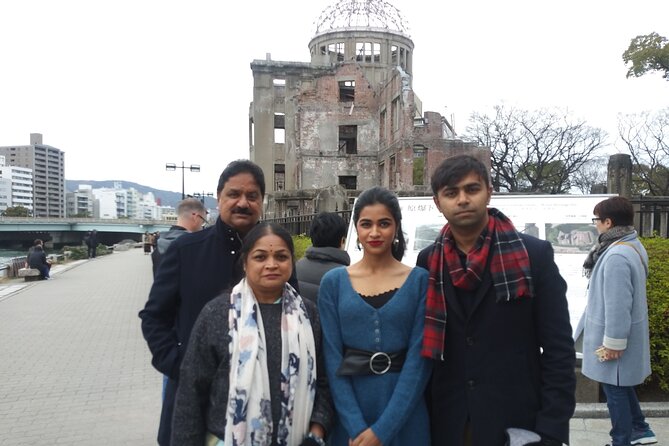
Shukkeien is the calmest stop on the route. It is a traditional Japanese garden with ponds, bridges, trees, and carefully arranged views. It has been designated one of Japan’s Top 100 Historical Parks and a National Scenic Spot, so this is not simply a spare green space added to fill time.
The garden matters for another reason: it connects beauty with survival. Shukkeien witnessed the bombing and the city’s recovery, giving your guide a chance to discuss Hiroshima through a place that feels peaceful today but carries a painful past.
The stated schedule gives roughly one hour to the garden. That is enough for a meaningful walk, but not necessarily for a slow photographic visit. Turtles, garden details, and seasonal scenery may tempt you to linger. If gardens are a major interest, tell your guide before the tour so the route can reflect that priority.
Shukkeien is also a good place for a family. One guide made origami cranes with a family during a rainy visit, when the garden took on a quiet, elegant mood. That kind of activity is not guaranteed, but it shows how the private format can make space for a simple cultural exchange instead of a rushed checklist.
Be realistic about the three main stops. One four-star assessment specifically noted that fitting the garden alongside Hiroshima Castle and the Peace Memorial Museum was difficult. The guide explained that the full route would be challenging, and the group chose to visit the garden another day. That is sensible planning, not a failure. A focused tour of two sites may be better than racing through three.
Other walking tours we've reviewed in Hiroshima

What the guides add to the day
The agency uses licensed local English speaking guides, and the names appearing in the guide responses include Yuko, Yuji, Sei, Tomoyo, Mari, Kahori, Yoshi, Hiroshi, Minori, Momoko, Erika, Kazuko, Kyoko, and Eiji. You may not be able to choose a specific guide, but the individual guide can shape the experience more than the formal route does.
Yuko has been especially strong at advance communication, asking about meeting arrangements and personal interests before arrival. Sei has helped with public transport, museum queues, shade breaks, and return trips to the port. Tomoyo has combined historical explanation with samurai stories and lesser known A Bombed buildings.
Mari has offered family context and local food stops, while Kahori has included a former school used as a relief center and a lunch of okonomiyaki after the historical visits. Hiroshi has used photographs to explain August 6, 1945, then added a memorable coffee stop and small gifts at the end of a port day.
These details are not guaranteed inclusions. They show the range of the local guides and why it pays to share your interests before the tour. Ask for more wartime history, more castle history, a garden focused walk, family friendly pacing, or help with lunch. A guide cannot promise every request, but the private format gives you a better chance of shaping the conversation.
English ability is generally strong, though complex follow up questions may sometimes take a little back and forth. That is a normal consideration for a historical subject with difficult names and dates. Ask for clarification when needed rather than letting a point pass.
Price, timing, and practical value
The listed price is $122.70 per person. That is not a budget walk, especially because transport, admissions, lunch, and personal spending are extra. The value depends heavily on group size. For one or two people, the price reflects four hours of private guiding and may feel high beside a group excursion. For a family or small group, the per person cost becomes easier to justify because everyone receives direct attention.
You are paying mainly for interpretation and flexibility, not for a vehicle or a long list of included tickets. A good guide can save you time at stations, explain how to reach the park, answer sensitive questions, and adjust the pace when the heat or the museum becomes tiring. Those services matter more in Hiroshima than they would on a simple sightseeing loop.
The tour has been booked more than 10 times in the last week, with a 99 percent recommendation rate and a five star rating based on 437 reviews. Those figures suggest strong demand, but I would still judge the purchase by your needs. The route is most useful if you want context and conversation, not if you prefer to explore every sight alone with an audio guide.
Free cancellation is available up to 24 hours before the start time for a full refund. Changes made less than 24 hours before the start are not accepted, and date changes made earlier can still lead to a different guide or no availability. Most people can participate, service animals are allowed, and the tour is near public transportation.
Who should book this walking tour
I would choose this tour for a first visit to Hiroshima, particularly if you have only half a day. It suits couples, families, history-focused visitors, cruise passengers, and anyone who wants to ask questions rather than follow a fixed script.
Families should explain the ages and needs of children ahead of time. A guide has adjusted a route for a toddler who needed food, water, and shade, and another slowed the pace for a family in intense heat. That flexibility is helpful, but you still need comfortable shoes, water, weather protection, and realistic expectations about walking.
History enthusiasts will appreciate the option to go beyond the basic museum visit. Ask about family memories, postwar rebuilding, former relief centers, and the city before the bombing. If you are sensitive to difficult material, tell your guide so the visit can include pauses and a gentler rhythm.
I would not book it if you want a fully transported tour with every admission included. I would also avoid scheduling all three main stops if you are arriving late, traveling with very young children, or visiting in extreme heat. In those cases, choose two priorities and let the guide build a manageable route.
Should you book the Hiroshima City 4hr Private Walking Tour?
Book it if you want Hiroshima explained by a local person who can connect the Peace Memorial Museum with the castle, garden, food, and modern city. The best part is not simply checking off the A Bomb Dome. It is having someone help you understand what happened, how Hiroshima recovered, and how the city is remembered today.
For the best value, use the private format actively. Contact the guide about your meeting point, tell them your main interests, and decide in advance if the museum, castle, or garden matters most. At $122.70 per person before admissions and transport, it is a considered purchase, but for a small group seeking a thoughtful introduction to Hiroshima, it can be money well spent.
FAQ
How long is the Hiroshima private walking tour?
The tour lasts approximately four hours.
Is the tour private?
Yes. Only your group participates, and you cannot combine multiple tour groups.
Where can the guide meet me?
Pickup is offered on foot from your hotel or train station within the designated Hiroshima area. Meeting arrangements should be confirmed in advance.
Can cruise passengers join the tour?
Yes. Guides have met cruise passengers at the port and helped them reach Hiroshima by public transportation or other arrangements. A private vehicle is not included, and transport fees are extra.
Which places are included in the route?
The main listed stops are the Hiroshima Peace Memorial Museum, Hiroshima Castle, and Shukkeien Garden. You can see an average of two sites during the four hour tour.
Are entrance tickets included?
No. Entrance fees are not included. Guide entry fees are covered only for sights listed under the stated inclusions.
Is lunch included?
No. Lunch and other personal expenses are extra. Guides may help you find local food, including Hiroshima style okonomiyaki.
Are morning and afternoon departures available?
Yes. You can choose between morning and afternoon start time options.
Is the tour suitable for most people?
Most travelers can participate, and service animals are allowed. Because this is a walking tour with substantial outdoor time, consider the weather, your walking pace, and your need for rest breaks.
What is the cancellation policy?
You can cancel at least 24 hours before the local start time for a full refund. Cancellations or changes made less than 24 hours before the start are not accepted for a refund.
More Guided Tours in Hiroshima


More Walking Tours in Hiroshima
More Hiroshima City Tours in Hiroshima
More tours in Hiroshima we've reviewed


Hiroshima City Tours, compared.
 ★ 5.0Peaceful Hiroshima & Miyajima UNESCO 1 Day Bus TourFrom $129
 ★ 4.9Hiroshima: Hiroshima and Miyajima UNESCO Sites 1-Day TourFrom $1228 hours
 ★ 5.0Hiroshima / Miyajima Full-day Private Tour with Government Licensed GuideFrom $202
 ★ 4.7Osaka/Kyoto: Hiroshima Miyajima Bus Tour & Shinkansen TicketFrom $27712 hours
 ★ 4.8Hiroshima Historical Walking Tour – Why A-Bomb was DroppedFrom $352h 30m
 ★ 5.0Hiroshima Peace (Heiwa) Walking Tour at World Heritage SitesFrom $94
