
Reviewed · MIYAJIMA TOURS
Hiroshima: City and Miyajima Bike and Boat Tour
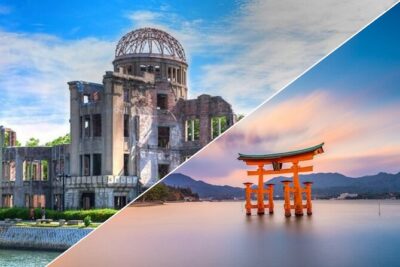
Hiroshima and Miyajima tell two very different stories, and this tour links them in one long, well-planned day. You cycle through the city’s most serious sites, then trade pavement for the wooded slopes and orange Shinto buildings of Miyajima Island.
I like the flat cycling route, which keeps the ride easy even if you are not a regular cyclist. I also like the small group, limited to eight people, since guides such as Ishan, Aimee-Linh, Melissa, and Sage can answer questions and support slower riders. The main drawback is the length: at 450 minutes, this is a full day with little spare time.
In This Review
- Key points to know before booking
- Why this tour works as a one-day introduction
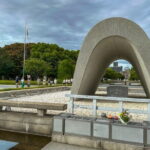
- Starting in Peace Park and at the A-bomb Dome
- Hiroshima Castle and the city before the bomb
- Taking the train and ferry to Miyajima
- Miyajima’s wooded setting and orange shrine buildings
- What the guides add to the day
- The cycling: easy, practical, and not for everyone
- Lunch, water, and the value of $138
- Who should book this experience
- Practical advice for making the day comfortable
- Should you book the Hiroshima and Miyajima bike tour?
- FAQ
- How long does the Hiroshima and Miyajima tour last?
- Is the cycling route difficult?
- Are bikes and helmets included?
- Does the tour include the ferry to Miyajima?
- Is lunch included?
- What happens if it rains?
Key points to know before booking
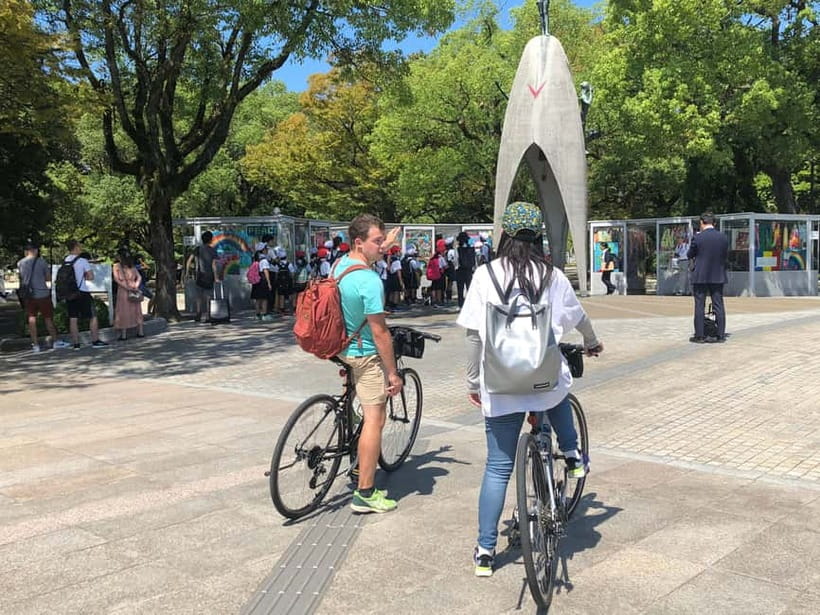
- Two major Hiroshima sights by bike: Cycle around Peace Park and the A-bomb Dome with an English-speaking guide.
- A useful city-to-island combination: The tour includes the train and ferry to Miyajima, so you do not have to arrange those connections yourself.
- Easy, flat riding: The route is suitable for anyone who can ride a bike, with Trek bikes, step-through models, and child-sized bikes available.
- A serious and beautiful change of scene: Hiroshima’s wartime history gives way to Miyajima’s wooded setting and religious landmarks.
- Small-group attention: With no more than eight participants, you can ask questions and get help on the road.
- Lunch and water are included: You pay $138 per person, which covers the guide, bike, helmet, lunch, water, train and ferry transfers, and the walking tour.
Why this tour works as a one-day introduction
Hiroshima can feel spread out when you are trying to fit the Peace Park, Hiroshima Castle, and Miyajima into one day. This tour solves that problem with a simple rhythm: cycle through central Hiroshima, use public transport to reach the island, then explore Miyajima on foot.
You get more than a quick checklist of sights. The bike gives you a practical way to move around the city, while the ferry provides a clear change of pace. The first half asks you to think about Hiroshima’s past. The second takes you into a quieter setting shaped by Shinto belief, wooded hills, and sea views.
At $138, the price is not low, but it covers a lot. You receive about seven and a half hours with a live English-speaking guide, a bike and helmet, lunch, water, train travel, the ferry ticket, and a walking tour on Miyajima. If you were arranging the same day on your own, the main thing you would lose is the guide’s explanation and the ease of moving from one major stop to the next.
The tour is best for someone who wants context rather than only photographs. It is less suitable if you prefer a slow morning, a long meal, or a completely independent day.
A few more Hiroshima tours and experiences worth a look
Starting in Peace Park and at the A-bomb Dome
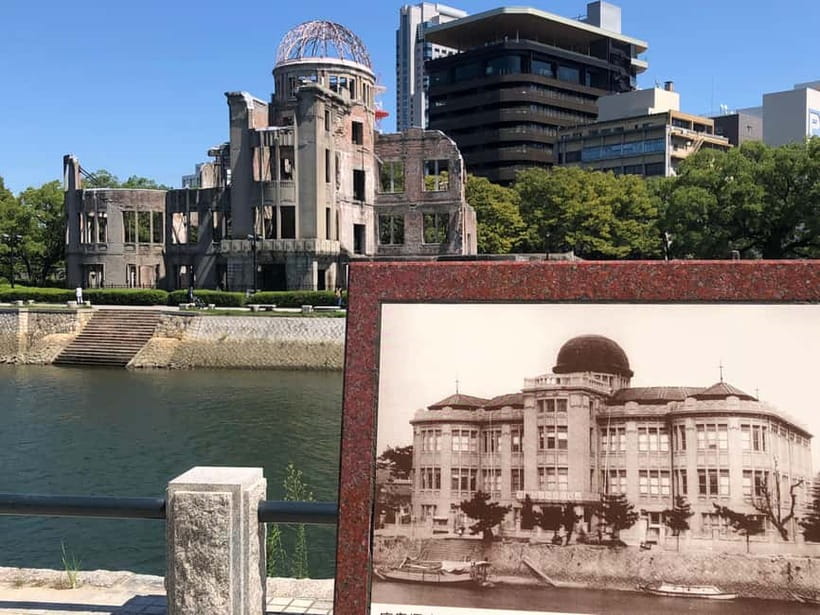
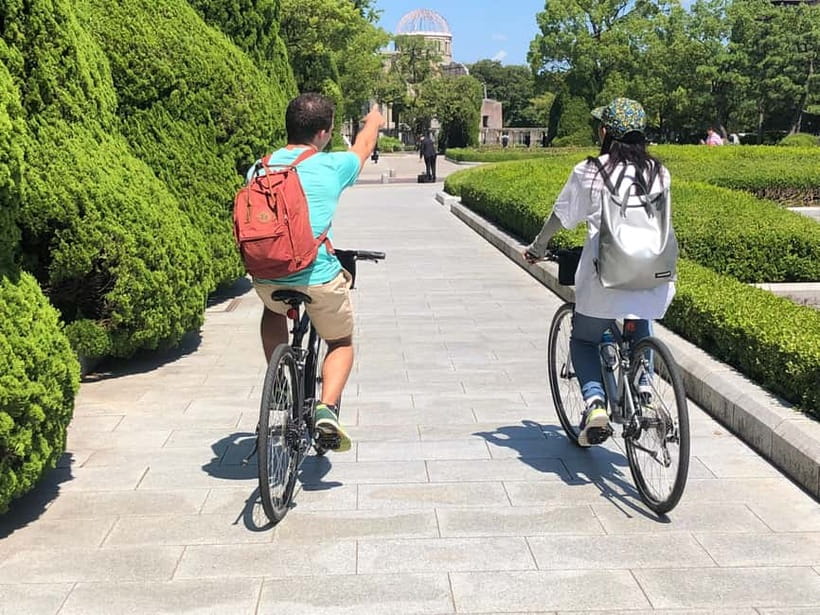
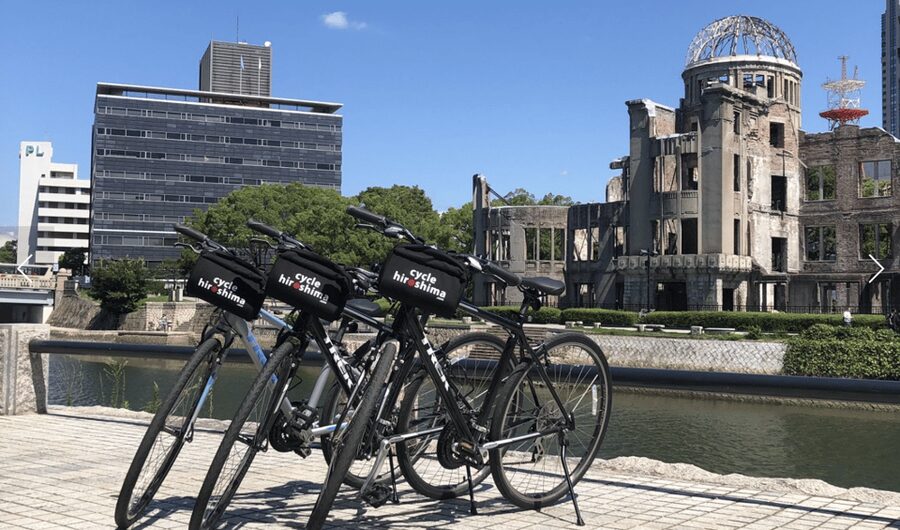
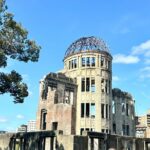
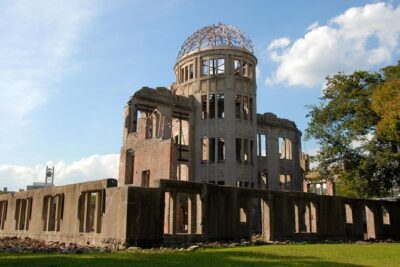
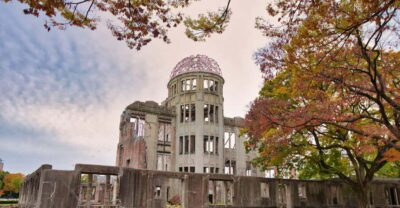
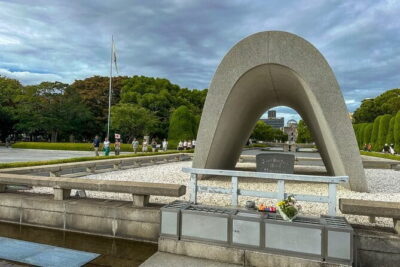
The cycling begins around Hiroshima’s Peace Park and the A-bomb Dome. This is not a light sightseeing stop. The park asks you to face the human cost of the atomic bombing and the city’s work of remembrance.
A guide’s commentary matters here. The A-bomb Dome is visually striking, but its meaning can be hard to understand from a photograph alone. A guide can place the building and the surrounding memorials in the wider story of Hiroshima, helping you connect the physical remains with the city’s message of peace.
The bike is useful in Peace Park because you can cover the area without turning the morning into a long march. The pace is described as easy and slow riders are supported, so you should not expect a race or a demanding athletic outing.
You will want comfortable clothes and shoes. Bring a camera if you wish, though this is a place where taking a moment to look and listen matters more than collecting images. Smoking is not allowed on the activity.
The tone of this section can be emotionally heavy. That is part of its value, but it is worth knowing before you book. If you want only cheerful sightseeing, this tour will not fit the bill. If you want to understand Hiroshima beyond its food and scenery, the Peace Park is essential.
Hiroshima Castle and the city before the bomb
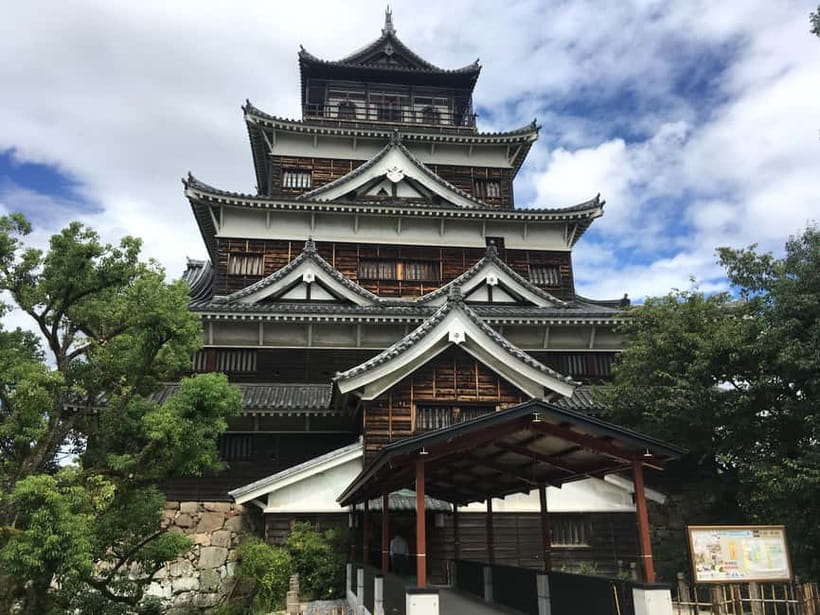
After Peace Park, the tour turns to Hiroshima Castle. This gives you a different view of the city, one tied to its feudal past rather than its modern wartime identity.
The shift is useful. Hiroshima is not defined only by 1945, and the castle helps place the city in a longer story. You can consider how power, military rule, and urban life shaped Hiroshima before the modern era.
The information provided does not promise an extended interior visit or a long castle lecture, so think of this as a meaningful stop within a wider route, not a dedicated castle tour. The guide explains Hiroshima’s pre-Meiji past, and Sage received particular praise for covering this side of the city along with the bombing and Peace Park.
This part also shows why a guided route can be better than a simple list of attractions. On your own, it is easy to see a castle, take a picture, and move on. With context, you can connect it to the city’s earlier role and understand why the tour places it after the memorial district.
Taking the train and ferry to Miyajima
The group then travels by train to the ferry. Both transfers are included, along with the boat ticket, so you do not have to work out each fare during a busy sightseeing day.
The change from bicycle to train and ferry makes the tour feel like two connected outings. In Hiroshima, you move through the city at street level. On the way to Miyajima, the pace slows and the setting changes. The ferry ride provides a natural break before the walking section.
You should remember that this is not a private vehicle tour. Public transport is part of the experience, and you will need to move with the group through the train and ferry connections. That is a fair trade for a day that covers both Hiroshima and Miyajima without requiring you to plan the route yourself.
The ferry ticket is included, which adds real value to the price. You are also spared the small but annoying task of finding the correct boat connection after a serious morning in Peace Park.
Miyajima’s wooded setting and orange shrine buildings
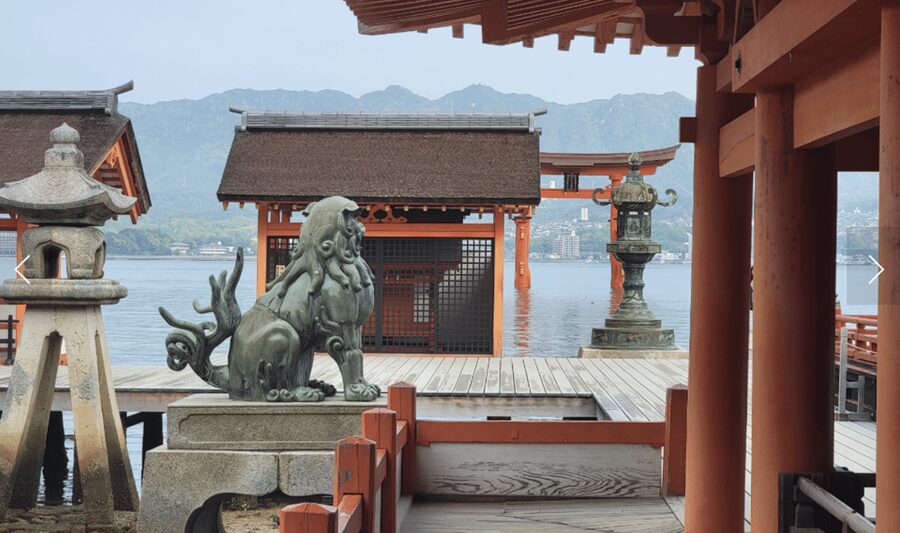
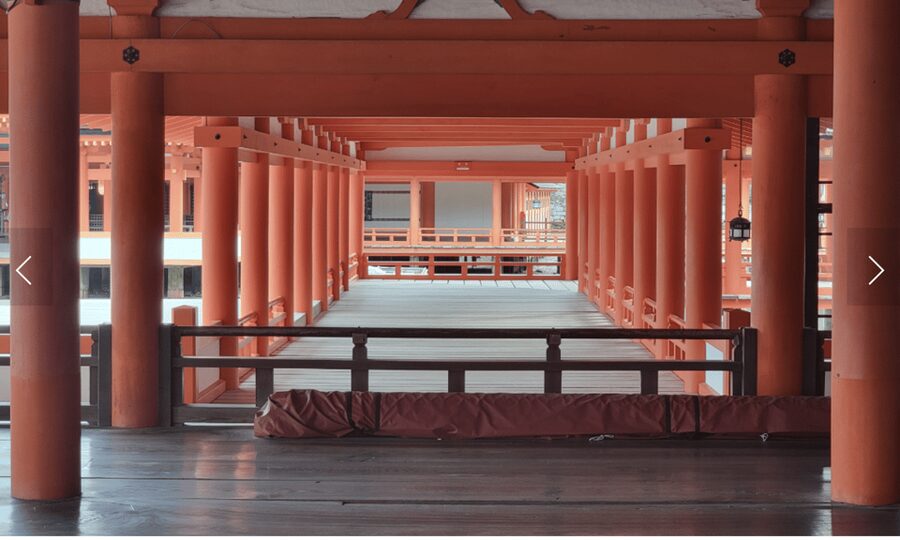
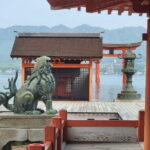
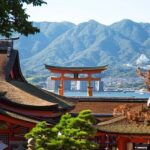
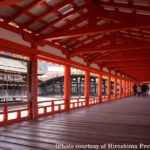
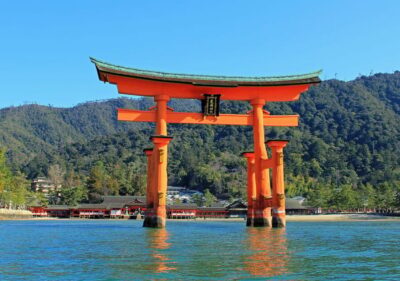
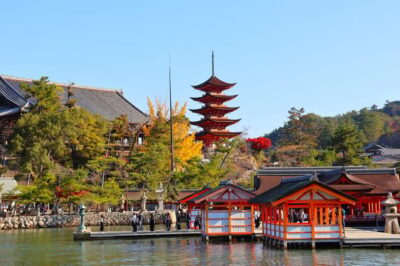
Miyajima feels markedly different from Hiroshima city. The island’s greenery forms the backdrop for its orange Shinto buildings, creating the visual contrast that makes this combination so memorable.
The tour focuses on Miyajima as a religious center, not only as a photogenic island. That explanation helps you read the lanes and buildings with more care. You are not simply walking toward a famous shrine. You are learning why the island developed as a place of worship and how that religious identity shaped its appearance.
Itsukushima Shrine is included. The shrine is one of the day’s major highlights, and the guide gives you a better frame for understanding its importance. The information provided does not promise a specific amount of free time or every paid section of the shrine complex, so you should expect the visit to fit within a wider walking tour rather than assume a long independent exploration.
Miyajima also offers many picture-worthy lanes and viewpoints. You will have chances to photograph the orange structures against the island’s green setting, but the exact views can vary with weather and timing. Bring your camera, but do not let it turn the walking tour into a race from one photo stop to the next.
A few more Hiroshima tours and experiences worth a look
What the guides add to the day
The strongest part of this experience is the human guidance. The tour uses a small group of no more than eight people, which creates room for questions and makes it easier for the guide to watch the cyclists.
Ishan is praised for his enthusiasm and for answering a large number of questions. Aimee-Linh brings a strong grasp of Hiroshima’s history along with humor, an appealing combination on a long day with serious subject matter. Melissa is described as well prepared and particularly effective in explaining both the painful side of the atomic bombing and the city’s positive work of remembrance.
Sage also received high marks for offering detailed context at Peace Park, Hiroshima Castle, and Miyajima while helping the group stay mostly dry on a rainy day. These details matter because the guide is not just leading the route. The guide shapes how you understand it.
Guide assignments can change, so you should not book expecting one particular person. Still, the repeated praise for enthusiasm, preparation, patience, and historical explanation gives you a useful picture of the service to expect.
The cycling: easy, practical, and not for everyone
The cycling section is completely flat. You do not need advanced cycling skills, and the route is suitable for all skill levels as long as you can ride a bike.
The equipment is another plus. The operator provides Trek bikes in several sizes, plus step-through bikes and child-sized bikes. Helmets are included. You are asked to provide the heights of everyone in your group before the tour, which helps the operator prepare suitable bikes.
This is a sightseeing ride, not a fitness challenge. Slow riders are supported, and the pace is described as easy. I would choose this tour if you want to cover more ground than you could comfortably walk, but I would not choose it if you cannot ride a bike or feel unsafe on city streets.
The activity is not suitable for wheelchair users or pregnant women. Those restrictions are important because the day combines cycling, train travel, a ferry, and walking. If anyone in your group has mobility concerns, check the suitability carefully before paying.
Rain can change the first part of the day. If the weather is poor, the operator may offer a walking tour around Peace Park instead of cycling, or provide a full refund. You need to remain reachable in case the plan changes.
Lunch, water, and the value of $138
The $138 price covers more than the bike ride. Included are the guided cycle tour, historical commentary, Hiroshima Castle, train and ferry transfers, the Miyajima walking tour, Itsukushima Shrine, a bike, helmet, lunch, and water.
That package makes the price easier to justify, especially if you value a guide. A do-it-yourself day could cost less, but you would need to arrange the transportation, choose a practical order for the sights, find the right ferry, and supply your own explanations.
The small group also improves the value. Eight people is small enough for direct questions and basic support without the cost of a private tour. You can ask about the bombing, the castle, Shinto traditions, or the transport connections as the day develops.
The tradeoff is flexibility. Your lunch timing, pace, and time at each stop follow the group. The description does not specify the restaurant, menu, or exact lunch hour, so anyone with dietary restrictions should provide that information in advance.
Who should book this experience
I would recommend this tour to first-time visitors who want to see both Hiroshima and Miyajima in one day. It suits curious people who like a guide’s explanation, enjoy easy cycling, and do not mind a full schedule.
It is also a good match for small groups with mixed cycling ability. Step-through bikes and child-sized bikes make the equipment more adaptable, and the flat route removes hills as a major concern.
You should think twice if you want a quiet, unstructured day on Miyajima. The island portion is a guided walking tour after the ferry, not a long block of free time. You should also avoid it if you cannot ride a bike, are pregnant, use a wheelchair, or dislike moving between several forms of transport.
The emotional side matters too. Peace Park and the A-bomb Dome are powerful places. The guide’s role is to explain the history with care, but you should be ready for a serious morning before the lighter, scenic island portion.
Practical advice for making the day comfortable
Wear comfortable clothes and shoes from the start. You will cycle, board a train and ferry, and walk around Miyajima, so this is not the day for stiff footwear or clothing that limits movement.
Give the operator everyone’s height and any dietary restrictions before the tour. That information affects bike sizing and lunch arrangements.
Keep your phone available in case rain changes the plan. You may be offered a walking tour around Peace Park or a full refund if cycling cannot go ahead.
Plan your expectations around the full 450-minute duration. The tour offers a lot, but it is not a brief orientation. The long day is the reason you can combine the memorial district, castle, and island in one booking.
Should you book the Hiroshima and Miyajima bike tour?
Book it if you want an efficient, well-explained day that joins Hiroshima’s central sights with Miyajima’s shrine and wooded setting. The flat route, included transport, lunch, water, and small group make the $138 price reasonable for visitors who value convenience and historical context.
Skip it if you cannot ride a bike, need wheelchair access, want extensive free time, or prefer to explore each site at your own pace. For everyone else, this is a strong way to understand Hiroshima as both a modern city shaped by tragedy and an older place with castles, religious traditions, and an island setting just beyond the center.
FAQ
How long does the Hiroshima and Miyajima tour last?
The tour lasts 450 minutes, or about seven and a half hours. Starting times depend on availability.
Is the cycling route difficult?
No. The cycling route is completely flat and suitable for all skill levels, provided you can ride a bike. Slow riders are supported.
Are bikes and helmets included?
Yes. A bike and helmet are included. Trek bikes are available in several sizes, along with step-through bikes and child-sized bikes.
Does the tour include the ferry to Miyajima?
Yes. The train and ferry transfers to Miyajima are included, including the boat ticket.
Is lunch included?
Yes. Lunch and water are included. You should provide information about any dietary restrictions before the tour.
What happens if it rains?
The operator may offer a walking tour around Peace Park instead of the cycling portion, or provide a full refund. You should remain reachable in case the weather changes the plan.
More Island Hopping & Ferries in Hiroshima

More Hiroshima City Tours in Hiroshima
More Miyajima Tours in Hiroshima
More tours in Hiroshima we've reviewed



Miyajima Tours, compared.
 ★ 5.0Peaceful Hiroshima & Miyajima UNESCO 1 Day Bus TourFrom $129
 ★ 4.9Hiroshima: Hiroshima and Miyajima UNESCO Sites 1-Day TourFrom $1228 hours
 ★ 5.0Hiroshima / Miyajima Full-day Private Tour with Government Licensed GuideFrom $202
 ★ 4.7Osaka/Kyoto: Hiroshima Miyajima Bus Tour & Shinkansen TicketFrom $27712 hours
 ★ 4.7From Hiroshima: Hiroshima & Miyajima 1 Day Tour with LunchFrom $1168 hours
 ★ 5.0Hiroshima and Miyajima Day Trip with Itsukushima Shrine & FerryFrom $45
