
Reviewed · MIYAJIMA TOURS
Full Day Hiroshima and Miyajima Bus Tour from Hiroshima
Hiroshima’s most important sights are split between the city and Miyajima Island, and this full-day bus tour links them without making you sort out buses, trains, ferries, and entrance tickets. You’ll see the floating torii gate area at Itsukushima Shrine, then spend quiet, serious time at the Peace Memorial Park and Museum.
I like the included ferry and museum admission, and I like that guides such as Masako, Tomoko, Hikari, and Akko Watanabe have been praised for clear explanations and thoughtful help. The main drawback is the group size, up to 40 people. A soft-spoken guide can be hard to hear, especially outdoors or when the group spreads out.
In This Review
- Key points at a glance
- Why this one-day route works
- Arriving at Itsukushima Shrine
- One hour for Miyajima food and free time
- Crossing back to Hiroshima
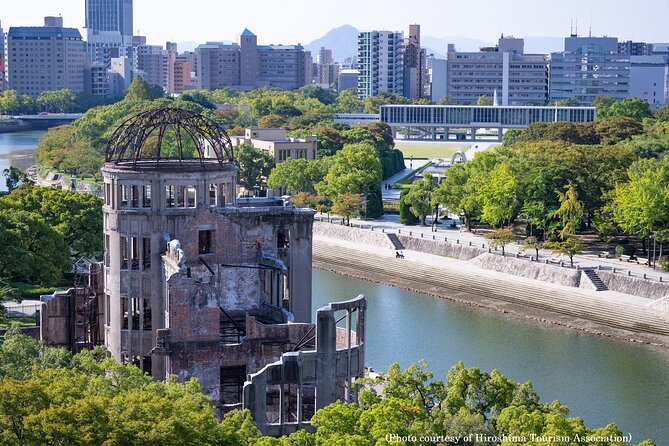
- Meeting the Atomic Bomb Dome
- The Peace Memorial Park and its monuments
- One hour inside the Peace Memorial Museum
- Guide quality and group size
- Is the $152.54 price fair?
- Practical details before you book
- Who should book this Hiroshima day tour?
- Should you book it?
- FAQ
- How long does the Hiroshima and Miyajima tour last?
- Where does the tour begin?
- Where does the tour finish?
- Is lunch included?
- Are ferry and admission fees included?
- Does the tour visit the Atomic Bomb Dome?
- How much time is spent at the Peace Memorial Museum?
- Can children join the tour?
- Can I cancel for a refund?
Key points at a glance
- Two World Heritage sites in one day: Combine Miyajima’s Itsukushima Shrine with Hiroshima’s Peace Memorial Park.
- The ferry crossing is included: You do not need to arrange the island transport yourself.
- Lunch is independent: You get about an hour on Miyajima to choose oysters, okonomiyaki, eel rice, or another local dish.
- A serious afternoon in Hiroshima: See the Atomic Bomb Dome, Memorial Cenotaph, Korean Victims Cenotaph, and Peace Memorial Museum.
- Central start and finish: Meet at Hotel Granvia Hiroshima and finish at Hiroshima Station around 6:00 to 6:30 p.m.
- Guide quality matters: Strong guides have made this day personal and easy to follow, but several guests found quiet delivery difficult in a large group.
Why this one-day route works
Miyajima and Hiroshima are close enough to visit together, but the day still involves several moving parts. You need transport to the ferry, a boat crossing, time on the island, a return to the city, and enough hours for the Peace Park and museum. This tour takes care of that framework.
The bus leaves from the Hotel Granvia Hiroshima lobby at 10:10 a.m. That location is convenient if you are staying near the station, but it is not a meeting point you can casually wander into at the last second. Arrive early, especially if you are coming from Kyoto or Shin-Osaka by Shinkansen. Missing the departure means missing the tour.
The tour runs about 8 hours and 20 minutes. In practice, you should expect to finish at Hiroshima Station between 6:00 and 6:30 p.m. The itinerary may change order or timing because of traffic, ferry conditions, and crowds. That flexibility is normal for a day covering both an island and a major city attraction.
I like the way the route gives you both beauty and difficult history. Miyajima offers shrines, deer, sea views, and time for lunch. Hiroshima then asks you to slow down and think about what happened in 1945. The contrast gives the day its shape.
A few more Hiroshima tours and experiences worth a look
Arriving at Itsukushima Shrine
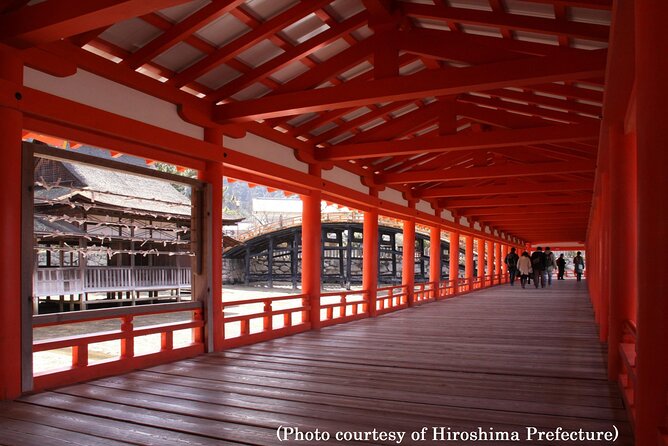
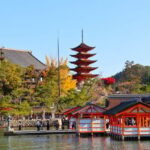
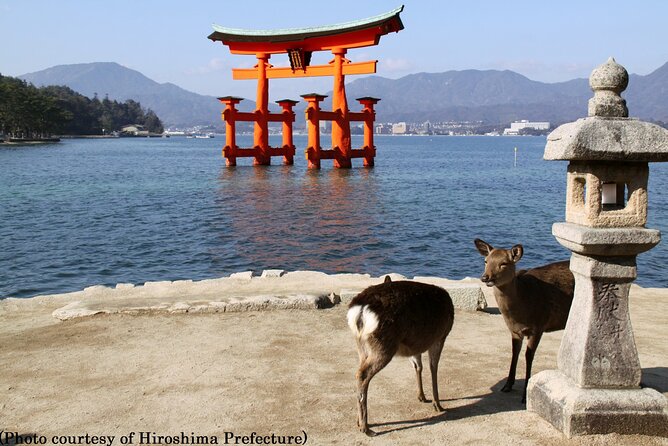
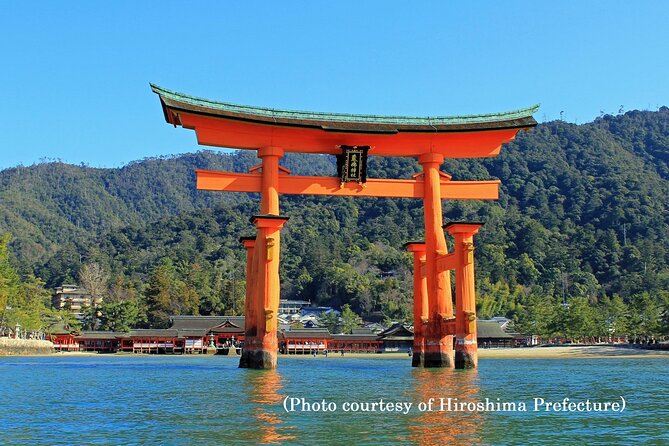
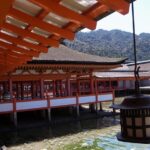
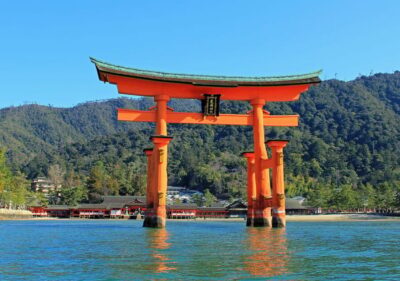
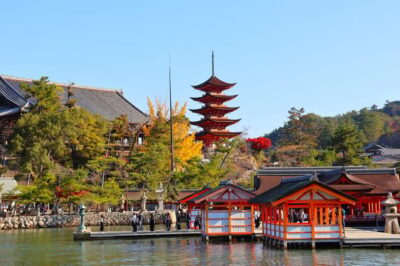
The first major stop is Itsukushima Shrine, the sacred complex that gives Miyajima its name. Miyajima literally means shrine island, and the shrine was established in the sixth century. Its buildings are known for a formal Shinden-zukuri style associated with noble residences.
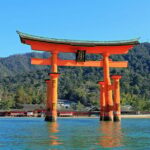
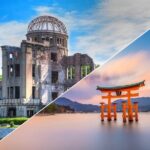
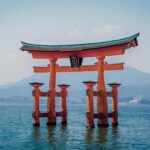
The shrine’s most famous feature is the large red torii gate that appears to rise from the sea at high tide. The view changes with the water level, so the gate may look surrounded by water or connected to exposed shore. That changing scene is part of the appeal, not a flaw.
You receive about an hour at the shrine, with admission included. Your guide explains the architecture, religious setting, and customs before you have time to look around. Guides who have worked especially well here, including Azusa and Mitsui, have also helped with photos and pointed out important details that are easy to pass without context.
Miyajima can become crowded, particularly on public holidays and weekends. Stay aware of the guide’s meeting instructions and keep track of the time. The tour has to coordinate a full group with the ferry, so this is not the place to wander off for an open-ended exploration.
You may also see wild deer around the island. They are a familiar part of Miyajima, but you should treat them as animals, not props for photographs. The tour description also mentions playful monkeys, though sightings are not guaranteed.
One hour for Miyajima food and free time
After the shrine, the schedule allows about an hour for lunch and independent time. Lunch is not included, so budget separately for it. This is a useful arrangement because you can choose what appeals to you rather than being locked into a set meal.
Miyajima is known for several local foods:
- Oysters
- Hiroshima-style okonomiyaki
- Conger eel rice bowls
Food shops and restaurants are available on the island, but the time is limited. If you want a sit-down meal, do not spend the whole hour browsing souvenirs first. A quick meal may give you more room to look around.
This free period is also where the tour can feel too short for some people. Miyajima offers more than the shrine. You might want to ride the ropeway, hike toward the mountain, shop, photograph the deer, or simply walk the streets. The schedule generally does not leave enough time for the ropeway unless you skip part of the guided program or separate from the group.
That is an important tradeoff. This tour is designed to show you the main sights, not to give you a full day on Miyajima. If the island is your top priority, an independent visit with several hours there may suit you better.
Crossing back to Hiroshima
The ferry ride is included, along with the other listed transport costs and the Miyajima visitor tax. For a first visit, having the ferry built into the plan removes one more detail to manage.
The crossing also provides a natural pause between the two halves of the day. Miyajima is associated with religious architecture and coastal scenery. Hiroshima’s Peace Park is quieter and more reflective. Your guide may use the journey to prepare you for the change in subject, although the exact amount of commentary can vary.
The vehicle is air-conditioned, which matters in Hiroshima’s humid summer weather. One guide and driver were praised for providing water bottles on a muggy day. Still, bring your own water, a sun hat, and an umbrella if the forecast calls for heat or rain. The walking portions are outdoors, and the day can feel long.
Meeting the Atomic Bomb Dome
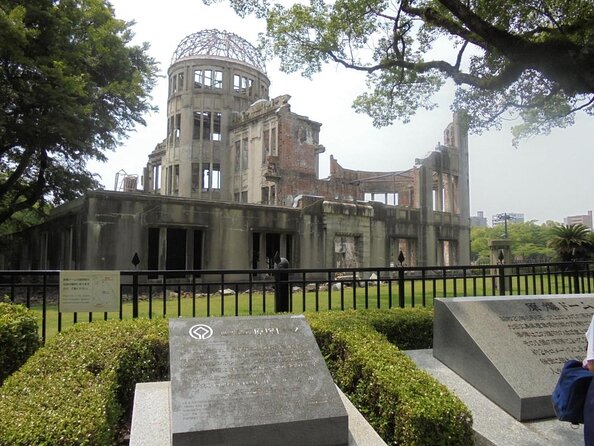
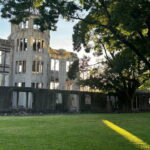
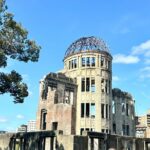
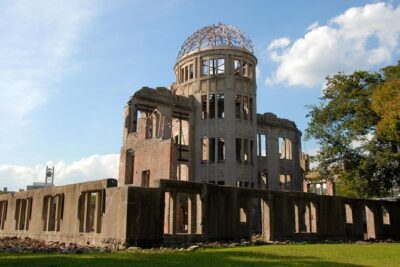
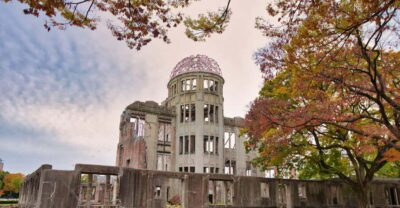
Back in Hiroshima, the tour visits the Atomic Bomb Dome, with about 40 minutes allotted. The building is the only remaining structure in the area that visibly survived the atomic bombing, although it was badly damaged. Its exposed frame has been preserved as a warning about the destruction of war and the need for peace.
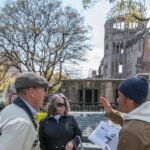
This is not a stop for a quick photograph alone. The skeletal remains make the event feel physically present. You can look at the building from outside while your guide explains its place in the city’s history.
Group management matters here. Some guides have been excellent at waiting until everyone arrived before speaking. Others have begun explanations before the full group gathered, making it hard for people at the back to hear. Keep close during transitions and move toward the guide when a talk begins.
The subject is painful. The tour presents Hiroshima as a place of remembrance and peace, not as a spectacle. You should expect an emotional afternoon, especially if you visit the museum with care rather than rushing through it.
A few more Hiroshima tours and experiences worth a look
The Peace Memorial Park and its monuments
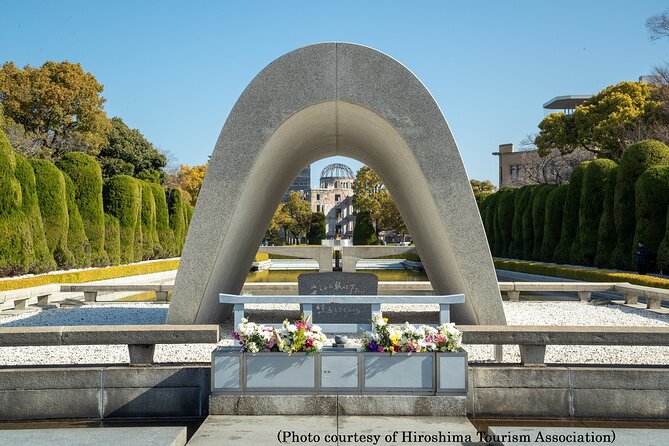
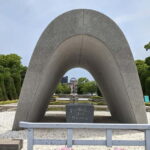
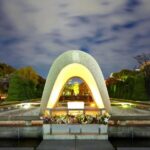
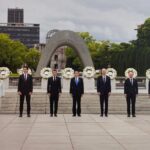
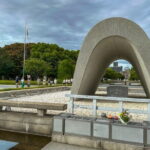
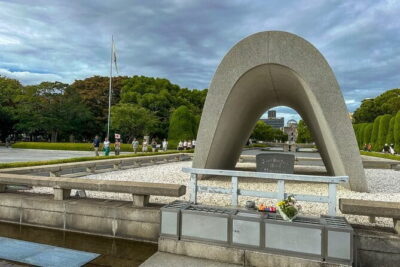
The Peace Memorial Park was created after the Pacific War and is home to monuments honoring those who died in the bombing. The park includes the Memorial Cenotaph for Atomic Bomb Victims, which holds the names of those lost, as well as a Cenotaph for Korean Victims.
The Memorial Cenotaph is a place to pause. Its long record of names makes the scale of the tragedy difficult to grasp, yet deeply personal. The Korean Victims Cenotaph adds another part of the story that can be missed if you only visit the Dome and museum.
Your guide may share local family connections or personal accounts. One guide from Hiroshima explained the event through family experience, which gave the historical material a human voice. Taeko San was also praised for handling a large walking group while sharing personal stories.
The park is spacious, but the tour pace remains fixed. If you want extended private reflection at every monument, a self-guided visit may give you more freedom. If you appreciate having the key memorials placed in order and explained, the guided structure is helpful.
One hour inside the Peace Memorial Museum
The museum admission is included, and you have about one hour inside. The exhibits document the bombing, its effects on ordinary people, and the human cost that followed. Expect a difficult visit. Some displays are disturbing, and you may need time afterward before continuing.
The museum is generally explored independently rather than as a long guide-led walk. That works well because you can move at your own pace, but one hour is not enough for every exhibit if you read everything carefully. Decide in advance whether you prefer a broad overview or a slower look at fewer displays.
I consider the museum essential to the day, but it is also the reason this tour is not light sightseeing. Miyajima may begin with scenic photographs and lunch, while the museum asks for attention and respect. Wear comfortable shoes, yet also plan for emotional fatigue.
The best guides set up the museum visit with clear historical context, then allow you space to take it in. Hikari, Nikki, and Kyoko were praised for strong explanations at the Peace Park and Dome. Guide volume remains a practical issue, so move close enough to hear and do not hesitate to ask for a repeat.
Guide quality and group size
The tour includes a National Government Licensed English Guide Interpreter. That credential tells you the tour is structured around a licensed English-speaking guide, but the experience still depends on the individual assigned that day.
Several guides have received especially warm praise. Masako was described as patient and helpful with photographs, and she even accompanied one person to the station afterward to help with the train. Tomoko used visual check-ins to make meeting times clear. Akko Watanabe was praised for explaining Japanese customs and mannerisms, while Nob handled a rainy day with care.
Other experiences were less successful. Multiple people found a guide’s voice too low, and one person said the bus commentary put the group to sleep because it was read from notes without facing the passengers. This pattern is worth taking seriously. In a group of up to 40, a quiet voice is not a small inconvenience.
The operator has responded to complaints about guide delivery and group management, but you cannot choose a specific guide when booking. If you are hard of hearing, position yourself near the front and tell the guide early. Headsets are not clearly promised, and one account noted problems with a radio set.
Is the $152.54 price fair?
At $152.54 per person, this is not the cheapest way to visit Miyajima and Hiroshima. You could arrange the main sights independently for less, particularly if you are comfortable using public transport and buying admissions yourself.
The price pays for convenience and structure. It includes the licensed English guide, Miyajima visitor tax, ferry, other transport, Itsukushima Shrine admission, and Peace Memorial Museum admission. You also avoid working out the timing between the island and Peace Park.
The value is strongest if you have one day in Hiroshima and want both places without transport stress. It is also useful if you prefer historical explanation rather than reading every sign alone. The value is weaker if you want long, flexible time on Miyajima or already feel comfortable planning Japanese rail and ferry connections.
Lunch is extra. Keep that in mind when comparing the total cost. The tour does not include meal charges, and the hour on Miyajima is your chance to choose and pay for food directly.
Practical details before you book
The tour starts at Hotel Granvia Hiroshima at 10:10 a.m. and ends at Hiroshima Station around 6:00 to 6:30 p.m. From there, you continue to your next destination independently.
The tour is near public transportation, and most people can take part. Seats may not be assigned. Children up to five can join free without a bus seat, but you must book the child rate if a seat is needed.
Participants under 18 require written parental permission. Anyone under 15, or not yet enrolled in middle school, must travel with a parent or guardian.
The tour allows free cancellation up to 24 hours before the start time. Changes or cancellations inside that period are not accepted for a refund. Confirmation is sent within 48 hours, subject to availability.
If you are using a Japan Rail Pass from Kyoto or Shin-Osaka, choose an early enough Shinkansen to reach the Hotel Granvia lobby before 10:10. Do not assume the train journey ends at the meeting point. You still need time to find the lobby and check in.
Who should book this Hiroshima day tour?
I would choose this tour if you have limited time, want Miyajima and Hiroshima in one day, and prefer a guide to explain the cultural and historical setting. It is also a sensible choice for first-time visitors who do not want to coordinate buses, ferries, and admissions.
It suits people who can manage a full day of walking, outdoor heat, changing weather, and a serious museum visit. Families with older children and adults interested in history should find the structure useful.
I would skip it if Miyajima deserves a relaxed day of its own. You will not have much room for the ropeway, a mountain walk, or long browsing. I would also choose independent sightseeing if you need complete control over museum timing or want to avoid the limits of a large group.
Should you book it?
Book this tour when your goal is efficient coverage, clear historical background, and a central return to Hiroshima Station. Its strongest points are the sensible route, included transport and admissions, and the chance to hear personal context from a strong guide such as Masako, Tomoko, Hikari, or Taeko San.
Think twice if $152.54 feels high for a guided day, or if you want to linger on Miyajima. The tour cannot guarantee a particular guide, and clear hearing may be difficult in a full coach. For many first-time visitors, though, the convenience and emotional weight of the Hiroshima portion make the cost reasonable.
FAQ
How long does the Hiroshima and Miyajima tour last?
The tour lasts about 8 hours and 20 minutes. It starts at 10:10 a.m. and usually ends at Hiroshima Station between 6:00 and 6:30 p.m.
Where does the tour begin?
The meeting point is the lobby of Hotel Granvia Hiroshima at 1-5 Matsubaracho, Minami Ward, Hiroshima.
Where does the tour finish?
The tour ends at Hiroshima Station. You must make your own arrangements for the next part of your journey.
Is lunch included?
No. Lunch is not included. You have about one hour on Miyajima to buy food such as oysters, Hiroshima-style okonomiyaki, or conger eel rice.
Are ferry and admission fees included?
Yes. The tour includes the Miyajima visitor tax, Itsukushima Shrine admission, Peace Memorial Museum admission, ferry transportation, and other listed transport costs.
Does the tour visit the Atomic Bomb Dome?
Yes. The itinerary includes about 40 minutes at the Atomic Bomb Dome, the preserved bomb-damaged building in Hiroshima.
How much time is spent at the Peace Memorial Museum?
About one hour is allotted to the Hiroshima Peace Memorial Museum. The museum portion is generally explored independently.
Can children join the tour?
Children up to five years old may join free, but they are not given a bus seat unless you book the child rate. Participants under 18 need written parental permission, and anyone under 15 or not yet in middle school must be accompanied by a parent or guardian.
Can I cancel for a refund?
You can cancel up to 24 hours before the start time for a full refund. Cancellations or changes made less than 24 hours before the start time are not refunded.
More Full-Day in Hiroshima
More Hiroshima City Tours in Hiroshima
More Miyajima Tours in Hiroshima
More tours in Hiroshima we've reviewed


Miyajima Tours, compared.
 ★ 5.0Peaceful Hiroshima & Miyajima UNESCO 1 Day Bus TourFrom $129
 ★ 4.9Hiroshima: Hiroshima and Miyajima UNESCO Sites 1-Day TourFrom $1228 hours
 ★ 5.0Hiroshima / Miyajima Full-day Private Tour with Government Licensed GuideFrom $202
 ★ 4.7Osaka/Kyoto: Hiroshima Miyajima Bus Tour & Shinkansen TicketFrom $27712 hours
 ★ 4.7From Hiroshima: Hiroshima & Miyajima 1 Day Tour with LunchFrom $1168 hours
 ★ 5.0Hiroshima and Miyajima Day Trip with Itsukushima Shrine & FerryFrom $45
