Reviewed · ARCHERY & SAMURAI EXPERIENCES
Japanesel Archery Experience HIROSHIMA CASTLE SHARAKU
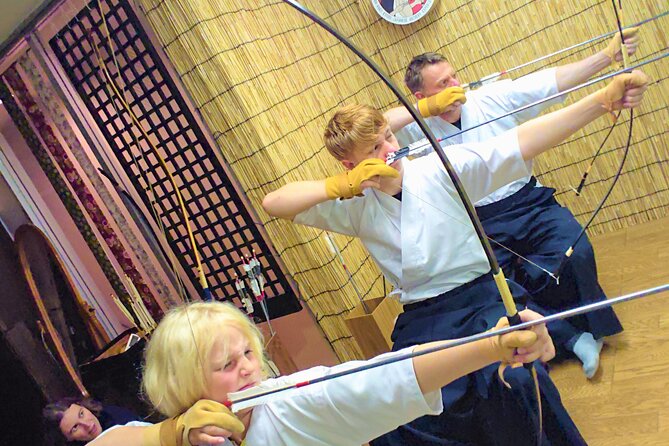
Kyudo is not simply Japanese archery with a different bow. It is a careful sequence of movements, from handling the equipment to releasing the arrow, designed to bring your mind and body into focus. At Hiroshima Castle Sharaku, you dress in dogi and hakama, learn the basic form, and get to shoot even if you have never held a bow.
I especially like the small maximum group of four, which gives the instructors time to correct your stance and hand position. I also like the mix of cultural detail, practical coaching, and a light competition at the end. The main drawback is that the meeting instructions and nearby parking may require extra care, and English support can vary, though a translation app is available.
In This Review
- Key points at a glance
- What makes kyudo different from ordinary archery
- Arriving at Hiroshima Castle Sannomaru Ruins
- Changing into dogi and hakama
- The opening lesson and demonstration
- Practice arrows and the first real challenge
- The friendly competition and scoring
- A cultural activity with real instruction
- Language, patience, and the teaching style
- Is $43.11 good value for one hour?
- Who should book this Hiroshima activity?
- Practical tips before you go
- Should you book Japanese Archery Experience HIROSHIMA CASTLE SHARAKU?
- FAQ
- Where does the Japanese archery experience start?
- Where does the activity end?
- How long does the experience last?
- How many people can join?
- Can complete beginners take part?
- What should I expect to wear?
- Is cancellation free?
Key points at a glance
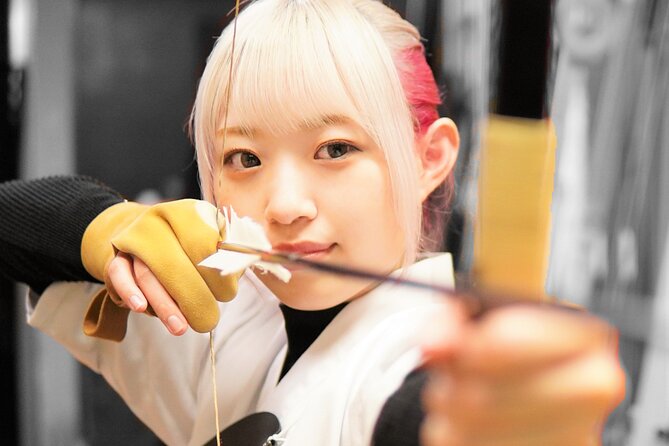
- Traditional clothing included: You wear dogi and hakama before learning the basic kyudo movements.
- Beginners can shoot: Unlike formal kyudo training, this lesson lets first-timers pull the bow and fire arrows.
- Small group setting: The maximum group size is four, with two instructors involved in some sessions.
- Practice plus competition: You learn the form, shoot practice arrows, then may take part in scoring rounds.
- Hiroshima Castle location: The meeting point is at the Sannomaru Ruins, near major sights and public transportation.
- Useful language support: Instructions may be given in English, gestures, or a translation app.
What makes kyudo different from ordinary archery
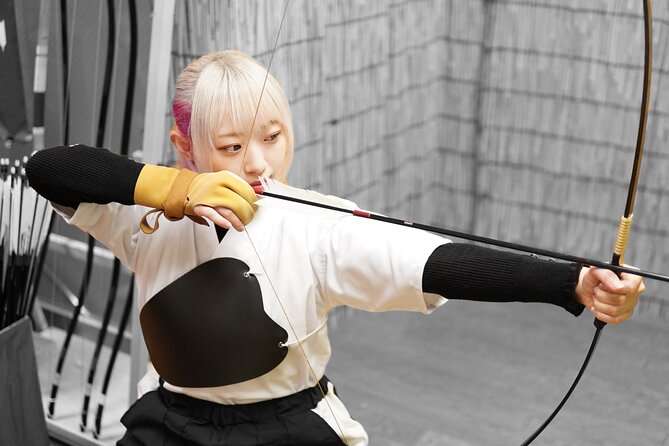
The first thing to understand is that kyudo is about the entire act of shooting, not only about hitting the target. You will learn a traditional sequence in which each movement has a proper place. Handling the bow, nocking the arrow, drawing, aiming, and releasing all form part of the discipline.
That difference matters. If you have tried Western archery, you may arrive expecting to point, pull, and fire. Kyudo asks you to slow down and follow a set routine. A guest with previous archery experience found that familiar habits did not always apply, so you should be ready to start again from the basics.
The Japanese bow also behaves differently. Its shape and the way it is held can make the arrow travel in a surprising curve. Aiming slightly to one side may help the arrow fly straight, which can feel strange at first. The instructor explains the mechanics as you go, but pay close attention here because this is one of the biggest adjustments for beginners.
The activity presents kyudo as a martial art based on focus of mind and body. That does not mean the lesson is stiff or solemn from beginning to end. You still get plenty of chances to shoot, laugh at your early attempts, and compare scores with your companions.
A few more Hiroshima tours and experiences worth a look


Arriving at Hiroshima Castle Sannomaru Ruins
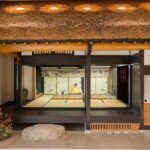
The meeting point is Japanese Archery Experience HIROSHIMA CASTLE SHARAKU at Hiroshima Castle Sannomaru Ruins, 21-7-2 Motomachi, Naka Ward, Hiroshima, 730-0011. The activity returns to this same location when the hour is over.
The setting works well for a short cultural activity. You are close to Hiroshima Castle and several major sights, so kyudo can fit neatly between sightseeing stops. Public transportation is nearby, which is helpful if you are moving around Hiroshima without a car.
Give yourself extra time to find the exact meeting point. The directions may feel less clear than you would like, and parking nearby can be difficult. I would not try to arrive at the last minute, especially if you are driving or visiting Hiroshima Castle for the first time.
The experience uses a mobile ticket, and booking confirmation is issued at the time of booking. The group limit is four people, so the atmosphere should feel more like a lesson than a large demonstration. Some sessions have two instructors working with the group, which helps when several people are learning the sequence at once.
Changing into dogi and hakama
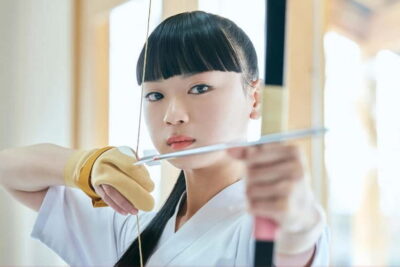
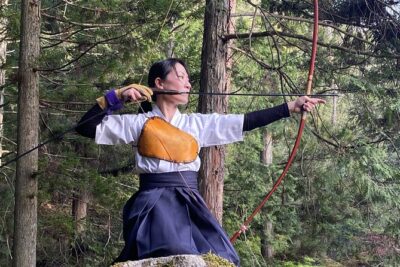
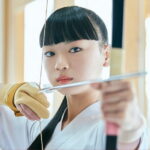
After arrival, you dress in a kyudo uniform. The dogi is the upper garment, while the hakama is the traditional lower wear. This is more than a photo opportunity because the clothing changes how you move and gives the lesson a stronger connection to the art.
The uniform is one of the most popular parts of the experience for good reason. It makes the activity feel distinct from a standard tourist archery session, and you can take photographs or videos toward the end. The instructor may use your phone to record you, so make sure it is available if you want pictures of your shots.
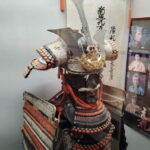
You may also wear traditional armor during part of the experience, according to the activity description. Treat the equipment with care. It is authentic and expensive, and the instructor may be firm about how you handle it. That firmness is understandable, though it can feel a little sharp if you are managing young children at the same time.
If you are booking for a family, explain the rules to children before the lesson starts. The small group format can work well for families, and instructors have been praised for helping younger participants, but everyone must listen carefully around bows, arrows, and other equipment.
The opening lesson and demonstration
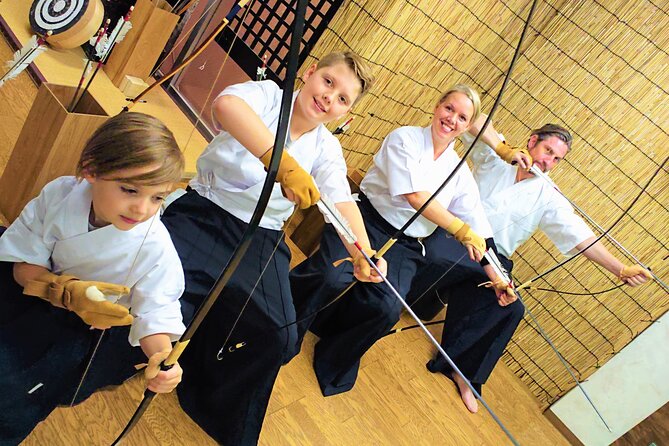
The lesson begins with an explanation of kyudo and a demonstration of the basic movements. The instructor shows how to hold the Japanese bow, prepare the arrow, and follow the formal sequence before releasing.
Do not worry if the steps seem complicated at first. The nocking process and the order of movements can feel like a lot to remember, especially when you are also wearing unfamiliar clothing. The activity is designed for complete beginners, so you are guided through it rather than expected to know the form already.
Communication can vary. Some instructors speak conversational English, while others use only limited English and rely on gestures or a translation app. In practice, the physical demonstration carries much of the lesson. You can watch the movement, copy it, and receive corrections as you go.
The best approach is to ask for clarification early. If you do not understand why the bow is angled in a certain way or why the arrow is not aimed directly at the center, stop and ask. The more clearly you understand the purpose of each movement, the less frustrating the first shots become.
Practice arrows and the first real challenge
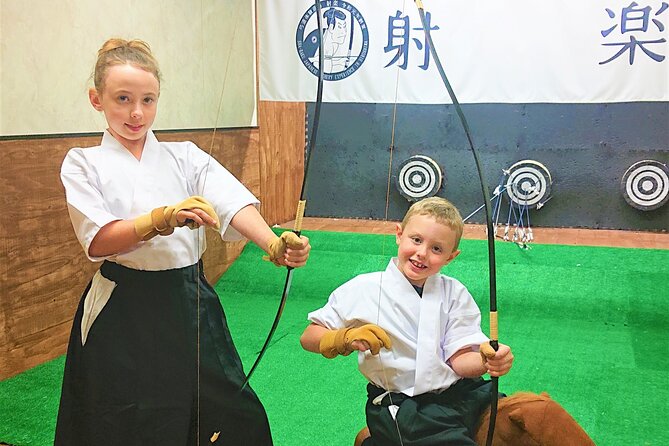
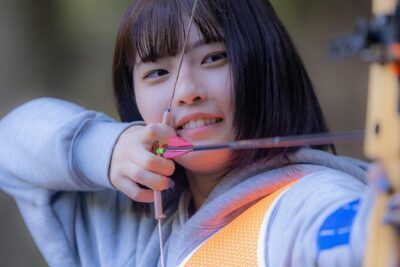
Once the basic routine is clear, you are allowed to shoot. This is unusual compared with formal kyudo practice, where beginners generally do not pull the arrow until they have mastered the fundamentals. Here, the lesson is adapted so you can enjoy the real action during a single one-hour visit.
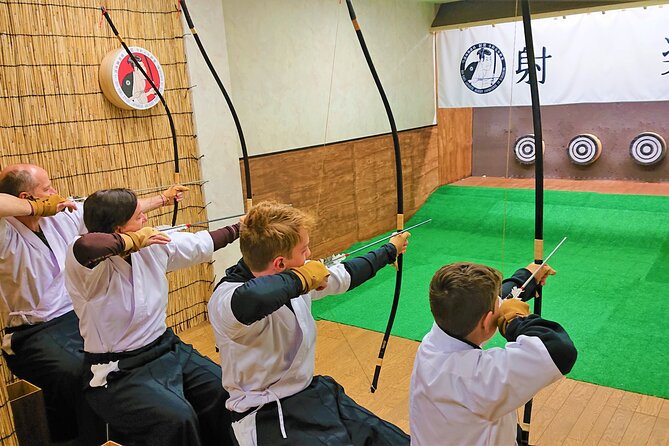
You usually begin with a practice round of eight shots. The instructors continue to offer tips on form, release, and aiming while you work. Some people need more time with practice, while faster learners move on to scored rounds.
Expect a learning curve. Your hand or arm may feel sore if you have never tried archery before, and the first arrows may not go where you expect. The bow, the formal stance, and the unfamiliar release all take adjustment.
That is also where the activity becomes satisfying. You can see improvement within the hour. One shot may miss badly, then the next may land much closer to the target after a small correction. The instructors’ patience matters here, and several accounts describe them as encouraging and willing to keep helping until the technique begins to make sense.
A few more Hiroshima tours and experiences worth a look

The friendly competition and scoring
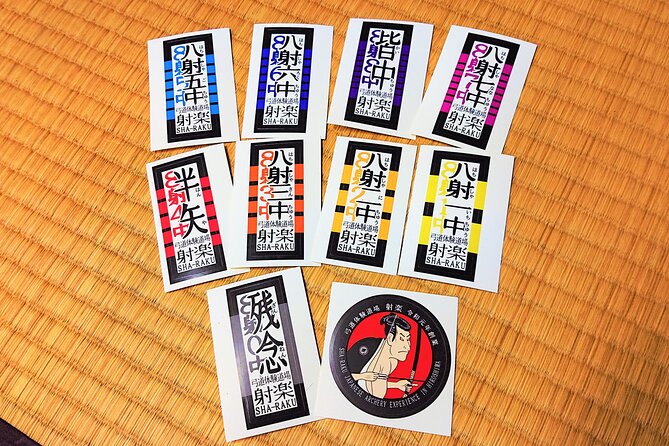
If your group learns the basics quickly, the session can include a small competition. One common format uses eight arrows per round, split into two sets of four. The exact number of rounds depends on how quickly your group picks up the technique.
This gives the lesson a useful second half. At first, you are focused on remembering the steps. Later, you begin thinking about consistency and scoring. That change keeps the activity lively without turning it into a serious contest.
Some groups have managed several competition rounds and more than 45 arrows each during the hour, including practice shots. Others spend more of the session learning the movements. You should not compare your experience too closely with someone else’s, because the number of arrows depends on the group’s pace.
There may also be a high-score card or a special place on the wall for an excellent result. The activity description does not promise a prize, so treat this as a fun extra rather than a reason to book. The real reward is learning why a shot worked, then trying to repeat it.
A cultural activity with real instruction
I like this experience because it does not reduce kyudo to dressing up and firing a few arrows. You learn why the movements matter and how the art differs from Western archery. The historical explanations are brief, but they add useful context to the physical lesson.
The formal routine also introduces a Japanese idea of respect for the equipment and the opponent. Even in a short tourist activity, that changes the tone. You are not simply grabbing a bow from a rack and taking turns at a target. You are asked to handle the tools properly and pay attention to the process.
At the same time, this is not a full kyudo course. One hour is enough for an introduction, a practice round, and perhaps a competition, but not for mastery. You should book it for a memorable first encounter, not for formal rank training or a detailed study of every part of the discipline.
That distinction helps set the right expectations. If you want a relaxed cultural activity with an active element, this works well. If you are seeking a quiet, highly formal martial arts lesson with extensive history and technical depth, the short format may feel limited.
Language, patience, and the teaching style
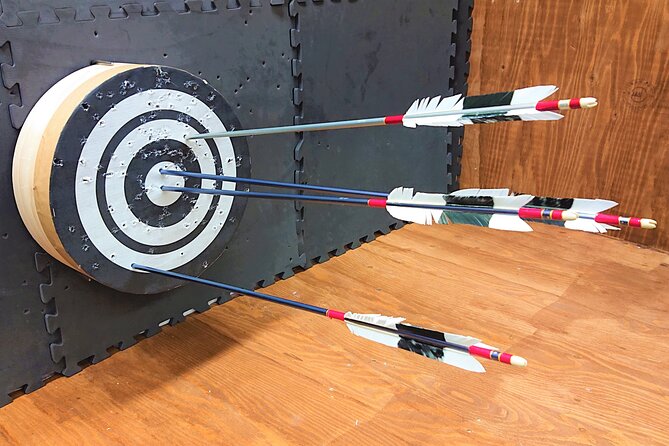
The instructors are often described as polite, helpful, and patient. They work hard to communicate the details, and the small group makes personal correction possible. Families have found the staff good at keeping children involved while adults learn.
Still, do not assume every instruction will be delivered in fluent English. Translation apps may be used, and some sessions rely heavily on demonstration. That is usually enough to follow the activity, but the experience may feel less smooth if you need long verbal explanations.
One concern is the difference in teaching style. An instructor may speak firmly when you touch equipment incorrectly or fail to follow the routine. Some people will read that as proper discipline, while others may find it impatient, especially with children.
I would prepare your group for this before arriving: listen closely, handle nothing until invited, and treat corrections as part of the lesson. That simple approach should reduce tension and let you focus on the fun.
Is $43.11 good value for one hour?
At $43.11 per person, this is not the cheapest one-hour activity in Hiroshima. The price makes more sense when you count what is included: traditional clothing, instruction, demonstrations, equipment, practice arrows, and the chance to participate in a cultural activity that is not available at every castle or museum.
The small group is important to the value. With no more than four participants, you are not waiting behind a large crowd for one quick turn. You receive repeated instruction and can shoot enough arrows to feel genuine progress.
The clothing and photographs also add value for visitors who want a lasting memory. You are not only watching a martial art. You are learning its basic form and leaving with images of yourself in dogi and hakama.
For a solo visitor, the price buys a focused activity with personal coaching. For a family or couple, it gives you a shared challenge that breaks up ordinary sightseeing. I would consider it good value if you care about hands-on cultural experiences. It is less compelling if your main goal is simply to hit a target as quickly as possible.
Who should book this Hiroshima activity?
This lesson suits first-time archers particularly well. You do not need previous experience, and the teaching is built around the basic sequence. It also works for people who have tried Western archery and want a different technical challenge.
Families can enjoy it, including groups with older children and teenagers. The activity has been used successfully with children aged 11, 13, and 14, although the adults in your group remain responsible for helping children follow equipment rules.
It is also a good choice for a short break from temples, museums, and Hiroshima’s major memorial sites. The one-hour length makes it easy to place in a day without sacrificing a large block of sightseeing time.
You should think twice if you have an arm, hand, or shoulder injury, or a disability that makes drawing a bow difficult. The activity is not recommended in those cases. Even healthy beginners should expect some strain in the drawing hand and arm.
Practical tips before you go
Wear something that allows comfortable movement underneath the traditional clothing. The supplied uniform is part of the experience, so do not skip it simply because you are unsure about photographs.
Arrive early, especially if you need to locate the Sannomaru Ruins or are driving. Public transportation is nearby, but parking can be troublesome. Keep your mobile ticket ready and make sure your phone has enough battery if you want the instructor to take photographs or videos.
Listen carefully during the first demonstration. The most useful details concern the order of movements, how to nock the arrow, and how the unusual bow affects aiming. You will improve faster if you follow the form instead of trying to force the arrow toward the target using familiar Western archery habits.
Finally, keep your expectations realistic. Hitting the target feels great, but missing is part of learning. The instructors can help you improve, though your score will still depend on how quickly your body adapts to the bow and the formal technique.
Should you book Japanese Archery Experience HIROSHIMA CASTLE SHARAKU?
I would book it if you want an active, genuinely Japanese cultural experience near Hiroshima Castle. The combination of traditional clothing, careful form, and real shooting time gives you much more than a quick dress-up photograph.
The strongest reasons to go are the small group, beginner-friendly instruction, and the chance to finish with a friendly competition. The main cautions are the short one-hour format, possible language limits, difficult nearby parking, and the fact that the teaching style can feel firm.
Book at least 24 hours ahead if you need the option of a full refund. Cancellations made less than 24 hours before the start time are not refunded, and late changes are not accepted. For most visitors who want a memorable break from standard sightseeing, this is a worthwhile Hiroshima hour.
FAQ
Where does the Japanese archery experience start?
It starts at Japanese Archery Experience HIROSHIMA CASTLE SHARAKU, Hiroshima Castle Sannomaru Ruins, 21-7-2 Motomachi, Naka Ward, Hiroshima, 730-0011, Japan.
Where does the activity end?
The activity ends back at the meeting point.
How long does the experience last?
The experience lasts approximately one hour.
How many people can join?
The activity has a maximum of four participants.
Can complete beginners take part?
Yes. The lesson allows complete beginners to learn the basics and shoot arrows during the experience.
What should I expect to wear?
You will dress in an authentic kyudo uniform that includes dogi, the upper garment, and hakama, the lower garment. Traditional armor is also referenced as part of the experience.
Is cancellation free?
Yes, you can cancel for a full refund if you cancel at least 24 hours before the local start time. Cancellations or changes made less than 24 hours in advance are not accepted for a refund.