
Reviewed · PEACE MEMORIAL TOURS
Hiroshima 2hr Peace Cycling Tour with Local Guide
Hiroshima’s tragedy can feel hard to grasp from a museum display alone. This two-hour e-bike tour adds streets, surviving landmarks, and personal family stories from guides raised in the city. Guides such as Shin and Kana connect the bombing to Hiroshima’s recovery today.
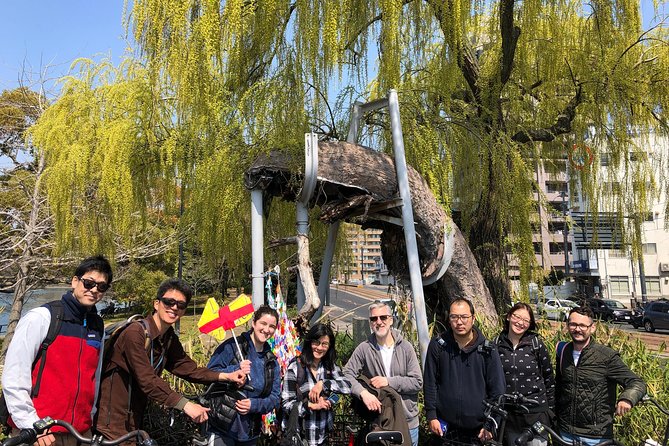
I like the way cycling lets you cover more ground than a walking tour, and I like the small group limit of 10 people. The main drawback is the short time: two hours gives you a strong introduction, but not a slow, detailed study of every memorial.
In This Review
- Key points at a glance
- Why a bicycle helps you understand Hiroshima
- Meeting at the Rest House at 11:00 or 15:00
- The first hour: Peace Memorial Park and its memorials
- Beyond the park: rebuilt streets and A-bombed streetcars
- Guides who make the history personal
- What the two hours can and cannot cover
- Weather, clothing, and family details
- Is $59.69 a fair price?
- Who should book this Hiroshima ride?
- Should you book it?
- FAQ
- Where does the Hiroshima Peace Cycling Tour begin?
- Where does the tour end?
- How long does the cycling tour last?
- What sights are included?
- Are electric bicycles provided?
- What happens if it rains?
- Can children join the tour?
Key points at a glance
- Personal Hiroshima stories: Guides including Shin and Kana share family connections, local memories, and the city’s message of peace.
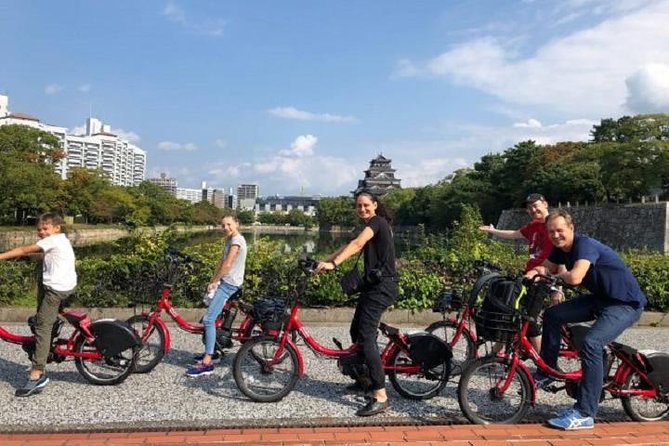
- Easy e-bike route: Hiroshima is flat, and the electric bicycles make the ride manageable even if you are not a regular cyclist.
- Major memorials included: Visit the A-Bomb Dome, Cenotaph, Children’s Peace Monument, and Peace Bell.
- Beyond the Peace Park: Ride through the present-day city and look for details such as the A-bombed streetcars.
- Small mixed group: The tour holds up to 10 people, though the pace may slow for children or less confident riders.
- Rain backup: Poor weather can bring a walking Peace Route or a full refund, depending on your choice.
Why a bicycle helps you understand Hiroshima
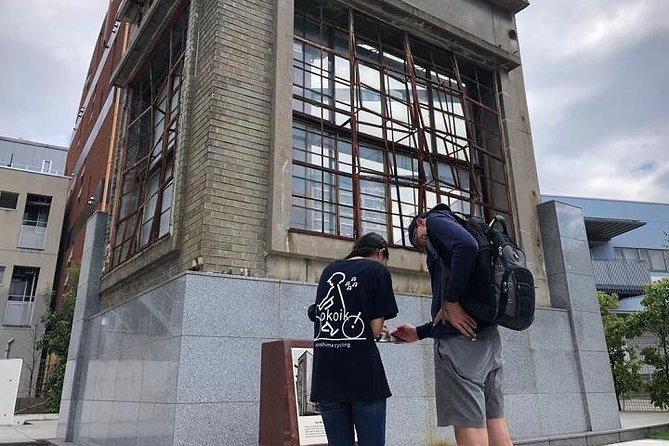
Hiroshima’s Peace Memorial Park is compact enough to walk, but the story of the city reaches beyond its lawns and monuments. A bicycle helps connect the memorial area with ordinary streets, rebuilt neighborhoods, and traces of the city’s postwar life.
That matters here. You are not only looking at one damaged building and a set of memorials. You are also seeing a functioning city that was rebuilt after destruction. The movement between these places gives the history a clearer shape.
The supplied electric bicycles are a major part of the tour’s appeal. The route is described as easy, and Hiroshima’s flat setting helps. You still need to pedal and pay attention to people, traffic, and your group, but you do not need strong cycling fitness.
Several people found the bikes simple to operate, including one rider in their sixties who did not consider themselves a cyclist. Another rider appreciated that Hiroshima felt less congested than Tokyo or Osaka. That does not remove the need for care, but it suggests the ride is less intimidating than the word cycling tour might sound.
A few more Hiroshima tours and experiences worth a look
Meeting at the Rest House at 11:00 or 15:00
The tour begins at the Hiroshima Peace Park Rest House, at 1 Nakajimacho, Naka Ward. Choose either the 11:00 start or the 15:00 start, and arrive early. If you are late without notice, the tour can be canceled with no refund, so this is not an activity to squeeze between tight train connections.
The Rest House is a practical starting point inside the park, but it does not provide luggage storage. If you are carrying bags, use the coin lockers at the International Conference Center Hiroshima or Hiroshima Peace Memorial Museum, both about a six-minute walk away.
The meeting point is also the ending point. That makes the tour easy to fit into a day that includes the Peace Memorial Museum, lunch, or another Hiroshima sight. Just remember that the museum is not part of this cycling route, so allow separate time if you want to visit it.
The tour includes bicycle accident insurance. You also receive data from photographs taken during the day, a pleasant extra for an experience where you may not want to keep stopping to take your own pictures.
The first hour: Peace Memorial Park and its memorials
After a short meeting and bicycle setup, the group enters Peace Memorial Park. About 55 minutes are set aside for the park, giving your guide time to explain what the monuments mean and how they connect to the atomic bombing.
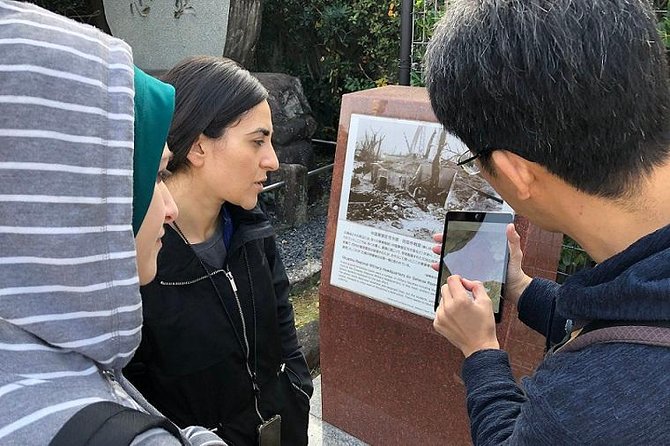
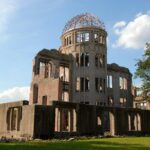
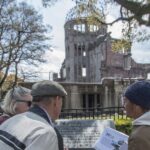
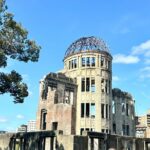
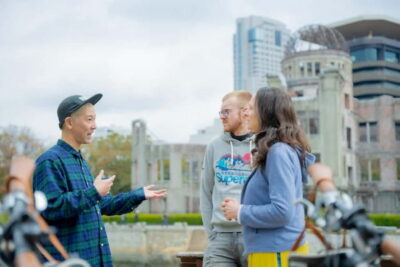
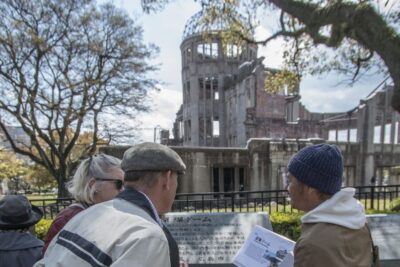
The A-Bomb Dome is the central sight. Its exposed structure is instantly recognizable, but a guide can help you place it in the city before and after August 1945. The tour also seeks viewpoints of the dome from around the city, including angles you might miss if you only follow the main paths.
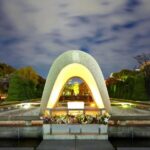
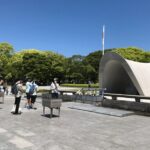
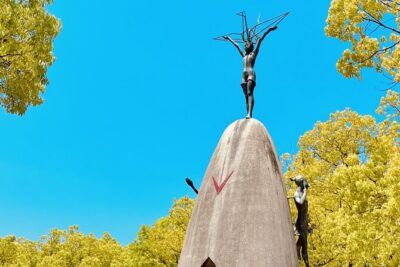
The Cenotaph for the A-Bomb Victims, the Children’s Peace Monument, and the Peace Bell are also included. These are not quick photo stops. Their purpose and symbolism form a large part of the tour’s teaching.
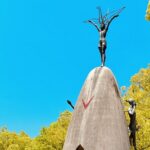
The Children’s Peace Monument carries the story of the children affected by the bombing and its aftermath. The Peace Bell points toward the city’s continuing call for peace. Your guide may spend more or less time at each place depending on the group, questions, and conditions, but this section is designed to give you a connected understanding rather than a list of names.
The park can feel quiet and open, yet the subject is painful. The best guides handle that balance carefully. Shin has been praised for sharing family stories connected to survivors, including a family connection involving his mother being in utero when the bomb fell. Other guides, including Kana and Moet, have been described as combining facts with stories of suffering, survival, and resilience.
That personal element is the tour’s strongest feature, but it is worth keeping your expectations precise. Not every guide will have the same family connection. One account specifically noted that a guide did not have direct family experience in Hiroshima. The tour still offers local guidance, but the depth and type of personal testimony can vary by guide.
Beyond the park: rebuilt streets and A-bombed streetcars
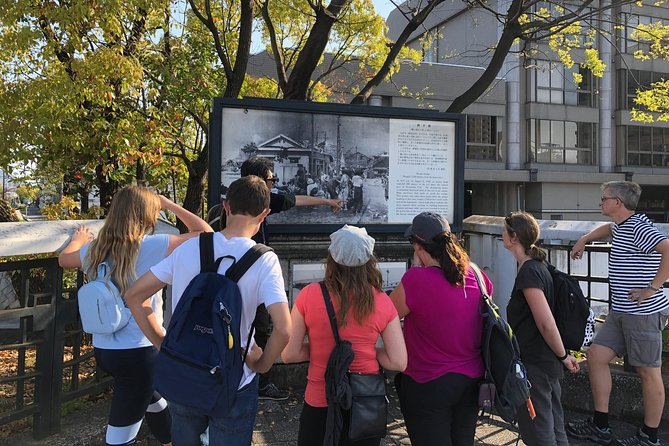
At about noon on the morning departure, or 4:00 in the afternoon, the group leaves the main memorial area for roughly an hour of cycling through Hiroshima. This is where the tour becomes different from a standard Peace Park visit.
You see the modern city around the memorial zone and learn about wartime destruction and postwar rebuilding. The route includes information about the A-bombed streetcars, trains that survived the atomic bombing and still operate today. Seeing a living part of Hiroshima’s transport system gives the story a direct connection to daily life.
The tour description also points to the city’s suburbs and actual townscape. That phrase is important: you are not spending the entire two hours beside monuments. You ride through the city as it exists now, with the memorial sites set within a larger urban community.
This section also explains why the bicycle is useful. A walking tour can cover the Peace Park well, but reaching additional locations in the same time would be harder on foot. The e-bike allows a broader view without turning the outing into a strenuous ride.
The group pace is not fully in your control. This is a shared tour, and the guide may slow down for children or riders who are not comfortable on a bicycle. That is fair and safer, but strong cyclists should not expect a fast ride. Think of it as a gentle moving tour with stops for explanation, not a cycling workout.
Guides who make the history personal
The guide can shape this experience more than the bicycle or route. The most praised guides are Shin and Kana, though other names in the guide team include Bella, Tomas, and Moet.
Shin’s approach has been especially personal. He has shared family accounts tied to survivors and speaks with clear feeling about Hiroshima’s peace message. His style suits you if you want history told through people and memory, not only dates and official explanations.
Kana has been praised for clear English, warmth, and steady pacing. She has also helped make rainy-day walking tours work well and has offered local dining suggestions. Bella has been described as passionate about Hiroshima and good at pointing out places outside the main park that are easy to miss.
Tomas has been remembered for an emotional presentation and useful recommendations for later stops in Japan. Moet, whose name may be spelled differently, has been noted for explaining both suffering and recovery.
These accounts point to a useful strength: the guides do not all deliver the same script in exactly the same way. You may receive a family story, a local explanation of a memorial, or a practical recommendation for the rest of your day. The tradeoff is that the experience depends somewhat on who leads your departure.
English ability is an important consideration. The tour is advertised with English-speaking local guides, and the guide names above have been praised for explaining the subject clearly. Still, history this serious includes names, dates, and ideas that can take time to absorb. Ask questions, and do not feel rushed if you need something repeated.
A few more Hiroshima tours and experiences worth a look
What the two hours can and cannot cover
Two hours is a good length for a first look. You get nearly an hour in Peace Memorial Park and another hour on the city route, with the meeting and return built into the schedule.
You should not expect a full study of Hiroshima’s prewar past, the entire museum, or every part of the postwar recovery. The separate three-hour version adds Hiroshima Castle and more detail about the prewar and postwar city. Choose that longer option if you want a fuller historical route and more time to talk with your guide.
The two-hour tour works best as one part of your Hiroshima day. You might take the cycling tour first, then visit the Peace Memorial Museum afterward while the locations are fresh. Or visit the museum before the ride, then use the guide to put what you saw into the context of the present-day city.
The tour does not replace the museum. Instead, it supplies things a museum cannot easily provide: movement through the city, views from different points, a sense of distance, and a local voice.
Weather, clothing, and family details
This is a weather-dependent activity. If rain makes cycling unsafe, the operator may offer the Rainy Day Limited Peace Route or a refund. The walking alternative visits the Peace Memorial Park, A-Bomb Dome, hypocenter, former Bank of Japan, Fukuromachi Elementary School, and the main street, ending at the usual time.
That walking route is not a weak substitute. It focuses on the hypocenter, the spot reduced to scorched earth in an instant, and covers an area of roughly 0.5 to 1 kilometer around it. If you do not want to switch from cycling to walking, a refund is offered when the bike plan cannot run because of rain.
Bring clothing suited to the season. Cycling in January has felt cold for some riders, while another group continued in snow. The tour can run in difficult conditions if it is safe, so check the forecast and dress for time outdoors.
The bicycle requirements are specific. Adults and electric bicycles require a height of at least 145 centimeters. Children between 110 and 145 centimeters can use one of two children’s cross bikes available for a booking, and children under 15 can use children’s or adult bicycles at the child rate. Electric bicycles with child seats are intended for children under 22 kilograms and under 115 centimeters.
Most people can participate, but you should be comfortable mounting, steering, and braking a bicycle. The group may include young riders, and the pace can adjust accordingly.
Is $59.69 a fair price?
At $59.69 per person, this is not the cheapest way to see the Peace Park. You are paying for the guide, the e-bike, a small shared group, bicycle accident insurance, and access to a wider route than a basic walking visit.
The value is strongest if you want context and personal interpretation. A bicycle rental alone would let you cover ground, but it would not explain the Cenotaph, Children’s Peace Monument, Peace Bell, A-bombed streetcars, or the city’s recovery. A museum ticket alone would provide documents and exhibits, but not a moving tour through the streets or a local guide’s family perspective.
The value is less clear if you have already spent several days studying Hiroshima independently and only want free time on a bicycle. You may also find the two-hour limit frustrating if you prefer long stops and detailed discussion.
For a first visit, I think the price is reasonable, particularly because the e-bikes make the route accessible and the group is capped at 10. Book at least 24 hours before the start if you want the option of a full refund. Cancellations inside that window are nonrefundable, and changes made inside 24 hours are not accepted.
Who should book this Hiroshima ride?
I would choose this tour if you want to see the major memorials but also understand how Hiroshima functions beyond the Peace Park. It suits families, couples, solo visitors, and older riders who like the idea of cycling but do not want a demanding route.
It is also a good match for you if personal storytelling matters. Shin’s family connection may make the subject especially intimate, while Kana, Bella, Tomas, and Moet have each been associated with clear, warm, engaging guiding styles.
I would hesitate if you dislike shared tours, need a fixed fast pace, or want a full museum-style explanation of every historical period. The group can include children and less experienced cyclists, so the ride is deliberately gentle.
Should you book it?
Book it if you want a moving introduction to Hiroshima, not just a checklist of memorials. The electric bicycles, flat route, and small group make it easy to cover the park and parts of the city in two hours, while the local guides add the human stories that give the monuments weight.
Plan a separate museum visit, arrive early at the Rest House, and allow for weather changes. If you can accept the short schedule and shared pace, this is one of the better ways to connect Hiroshima’s wartime past with the peaceful, rebuilt city you see today.
FAQ
Where does the Hiroshima Peace Cycling Tour begin?
The tour begins at the Rest House of Hiroshima Peace Memorial Park in Nakajimacho, Naka Ward, Hiroshima.
Where does the tour end?
The tour finishes back at the same meeting point, the Hiroshima Peace Memorial Park Rest House.
How long does the cycling tour last?
The tour lasts approximately two hours. Departures are scheduled for 11:00 and 15:00.
What sights are included?
The route includes the A-Bomb Dome, Cenotaph, Children’s Peace Monument, and Peace Bell in Hiroshima Peace Memorial Park. It also explores parts of Hiroshima beyond the park and includes information about the A-bombed streetcars.
Are electric bicycles provided?
Yes. Electric bicycles are provided for the cycling tour, and bicycle accident insurance is included in the price.
What happens if it rains?
If poor weather prevents the cycling tour, you may be offered the Rainy Day Limited Peace Route, which is a walking tour, or a refund. The walking route includes the Peace Park, A-Bomb Dome, hypocenter, former Bank of Japan, Fukuromachi Elementary School, and main street.
Can children join the tour?
Yes. Children between 110 and 145 centimeters can use one of two available children’s cross bikes for a booking. Children under 15 can use children’s or adult bicycles at the child rate. Electric bicycles with child seats are available for children under 22 kilograms and under 115 centimeters.
More Cycling Tours in Hiroshima

More Hiroshima City Tours in Hiroshima
More Peace Memorial Tours in Hiroshima
More tours in Hiroshima we've reviewed


Peace Memorial Tours, compared.
 ★ 4.8Hiroshima Historical Walking Tour – Why A-Bomb was DroppedFrom $352h 30m
 ★ 5.0Hiroshima Peace (Heiwa) Walking Tour at World Heritage SitesFrom $94
 ★ 4.9Hiroshima: Miyajima Peace Memorial Icons of Peace and BeautyFrom $1638 hours
 ★ 5.0Hiroshima Walking Tour Why A Bomb was dropped to HiroshimaFrom $28
 ★ 4.8Hiroshima: Peace Cycling Tour with Local GuideFrom $522 - 3 hours
 ★ 4.9Hiroshima: Peace Walking Tour of World Heritage SitesFrom $924h 30m
