
Reviewed · PEACE MEMORIAL TOURS
Hiroshima 3hr Peace Cycling Tour with Local Guide
Hiroshima’s story becomes easier to grasp when you move through the city rather than see it all from one museum room. This three-hour electric-bike ride links famous landmarks with quieter places, including the Aioi Bridge, a surviving willow, the Red Cross Hospital remains, and railway cars that still run today.
I like the small group limit of 10, which gives you room to ask questions and hear personal stories from guides such as Shin and Moe. I also like the flat route and electric bikes, especially in Hiroshima’s summer heat. The main drawback is that this is a shared ride, so the pace may slow if someone in the group is new to cycling, and the subject matter is often solemn.
In This Review
- Key points to know before you book
- Why cycling works so well in Hiroshima
- Starting at the Peace Park Rest House
- Hiroshima Castle and Gokoku Shrine
- Central Park and the Aioi Bridge
- The Atomic Bomb Dome and Motoyasu River
- Higashisenda Park and the Red Cross Hospital remains
- Trains, bridges, and the reach of the blast
- The surviving weeping willow
- Returning along Peace Boulevard
- How the guide shapes the experience
- Three hours, two hours, and the right pace
- Price, group size, and practical value
- Weather, cancellation, and the rainy-day plan
- Who should book this ride?
- Should you book the Hiroshima Peace Cycling Tour?
- FAQ
- Where does the Hiroshima Peace Cycling Tour begin?
- Where does the tour end?
- How long does the tour last?
- How many people can join the tour?
- Are electric bicycles provided?
- What height is required for an adult bicycle?
- What happens if it rains?
- Can I cancel for a full refund?
Key points to know before you book
- Personal family stories: Guides including Shin and Moe have family connections to the bombing, adding a human voice to the facts.
- A gentle 3-hour route: The ride covers many sites without taking your whole day.
- Electric bikes included: The bikes make the mostly flat route manageable, though one rider found the bicycles undersized.
- Small mixed group: Up to 10 people join, so the experience feels more personal than a large bus tour.
- More than the Peace Park: The route reaches Hiroshima Castle, Gokoku Shrine, surviving trees, bridges, railway history, and the former Red Cross Hospital.
- Rain plan available: Poor weather can mean a refund or a walking route focused on the Peace Park, hypocenter, former Bank of Japan, and Fukuromachi Elementary School.
Why cycling works so well in Hiroshima
The great strength of this experience is the way it connects Hiroshima’s past with its present. The Peace Memorial Museum and Atomic Bomb Dome are essential, but they are only part of the city’s story. On a bicycle, you can follow the rivers, cross historic bridges, and see how far the blast’s effects reached.
The route is not a race. You stop often, listen to the guide, and ride only short stretches between points. That makes the three hours feel purposeful rather than tiring. I like this format for a first visit because it gives you a citywide frame of reference before you decide where to spend more time on your own.
The electric bikes are especially useful during hot weather. Several guides are praised for keeping the ride safe and comfortable, and the flat route is described as easy even for people who are not regular cyclists. You still need to be able to handle an adult bicycle, but you do not need strong cycling fitness.
This is also a more personal way to approach Hiroshima’s painful past. Shin, in particular, has shared family experiences connected to the bombing, while Moe has spoken about all four of her grandparents living through it. Personal stories do not replace historical evidence, but they can help you understand how August 6, 1945 affected ordinary families across generations.
A few more Hiroshima tours and experiences worth a look
Starting at the Peace Park Rest House
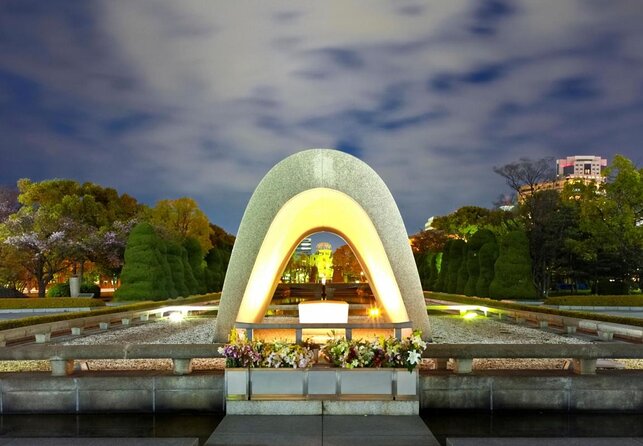
The meeting point is the Hiroshima Peace Memorial Park Rest House. The morning departure is at 10:00, and the afternoon departure is at 14:00. The tour returns to the same place about three hours later.
The opening is brief. You meet the guide and the other members of the group, receive an explanation of the route, and go over the bikes and safety procedures. Temperature checks and other health steps may be used, depending on the conditions at the time.
Arrive early. If you miss the meeting time without prior notice, the tour can be canceled with a full same-day charge. Luggage cannot be left at the Rest House, so use coin lockers at the International Conference Center Hiroshima or the Hiroshima Peace Memorial Museum, both about a six-minute walk away.
Hiroshima Castle and Gokoku Shrine
The first ride takes you toward Hiroshima Castle, where the guide explains the military role of the site and its connection to the first reports about the atomic bombing. The castle area gives you a useful prewar setting before the tour moves into the destruction of 1945 and the rebuilding that followed.
You then stop at Hiroshima Gokoku Shrine and its gate. The Guardian Dog statue and the shrine gate are among the less obvious sites on the route. Their survival offers a different way to think about the blast, since not every important story is marked by a major monument.
The stop at the shrine is short, around 15 minutes, so do not expect a long visit inside the complex. Its value is the guide’s explanation and the contrast between familiar religious surroundings and the events that changed the city.
Central Park and the Aioi Bridge
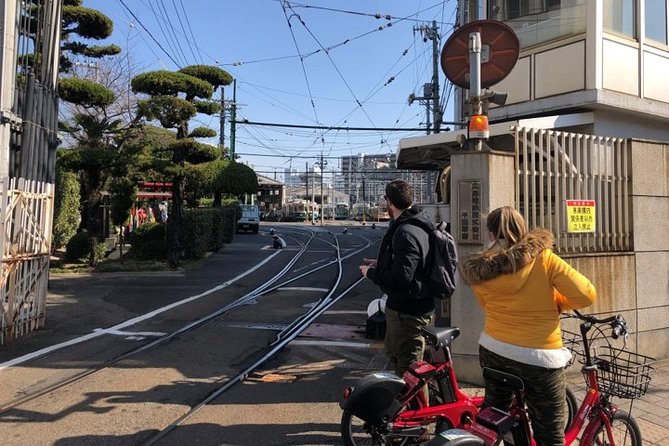
Hiroshima Central Park provides a short green pause. You walk through a broad park area and see a quieter side of the city before continuing toward the river.
At Aioi Bridge, the guide explains why this bridge was used as the target for the bombing. The bridge and river remain part of the city’s daily life, which makes the site feel less like a frozen memorial and more like a place where history and ordinary routines meet.
This section is a good example of why cycling helps. You move between places quickly, but not so quickly that the city disappears behind a coach window. The ride remains gentle, with frequent stops for explanation.
The Atomic Bomb Dome and Motoyasu River
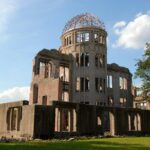
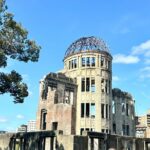
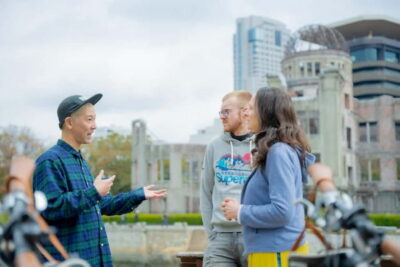
The Atomic Bomb Dome is the most recognizable stop. You will have time to see the building from outside and hear accounts connected to local people and their memories. The guide’s role matters here because a short visit can otherwise become a quick photograph rather than a moment of understanding.
The tour then follows the Motoyasu River and crosses or views the Peace Bridge area. The riverside section brings a little air and open space after the heavier stories around the Dome. It also helps you understand Hiroshima’s layout, with waterways shaping the routes through the center.
The schedule allows about 15 minutes at each of these stops. That is enough for a focused explanation, but not enough for a long, independent examination of every monument. If you want a slower visit, return to the Peace Park later in the day.
A few more Hiroshima tours and experiences worth a look
Higashisenda Park and the Red Cross Hospital remains
Higashisenda Park is about one kilometer from the center of the blast. Trees sent from countries around the world grow here, carrying a message about international remembrance and the city’s connections beyond Japan.
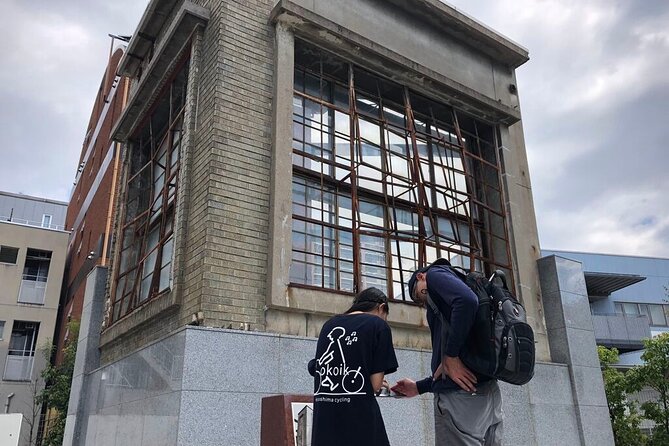
The next stop is the Atomic Bomb Window Frame Monument at Hiroshima Red Cross Hospital. The remains of the hospital building show the force of the explosion in a stark, physical way. This can be one of the more difficult stops because the damage is not abstract. You are looking at part of a working medical facility affected by the blast.
The tour gives you about 20 minutes here. Listen closely to the guide, but also allow yourself a quiet moment. Hiroshima is not a place where every stop needs a dramatic explanation. Some surviving fragments speak clearly enough on their own.
Trains, bridges, and the reach of the blast
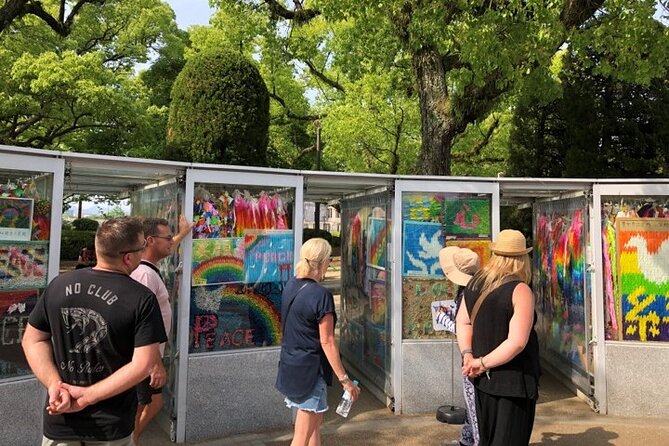
The route continues to Hiroshima Railway, where you learn about two trains that survived the bombing and are still in use. This detail adds an everyday human scale to the tour. Hiroshima’s recovery was not only about monuments and official plans. It was also about transport, work, school, and the gradual return of normal life.
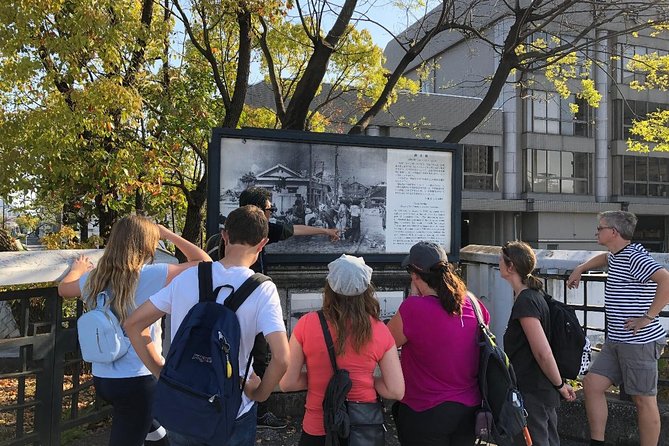
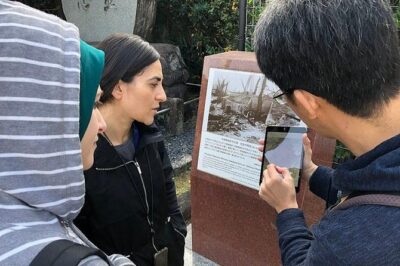
At Miyuki Bridge and the Kobayashi River, the guide discusses the point where the bomb’s reach ended. A photograph displayed here shows the sharp difference between the city before and after the attack. The stop is short, but its location helps you picture how unevenly destruction spread.
These are the kinds of places you could easily pass without noticing on your own. They do not have the instant visual pull of the Atomic Bomb Dome, yet they add detail to the larger story. I consider this one of the best reasons to choose the three-hour version instead of a shorter ride.
The surviving weeping willow
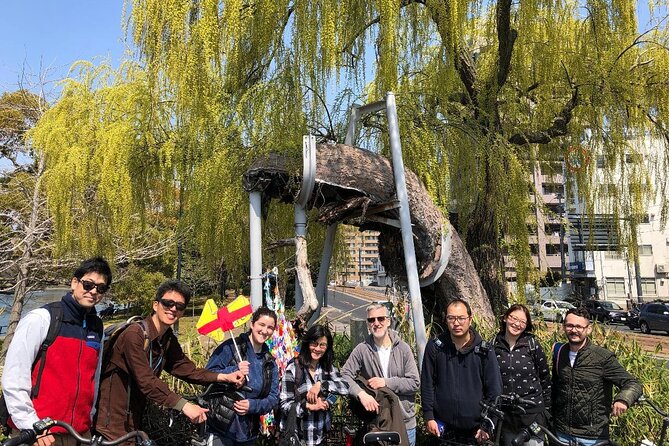
Near Hiroshima City Children’s Museum, you stop to see a surviving weeping willow tree. It continued to grow despite the belief that natural growth would not return for many decades after the bombing.
The tree represents endurance, but the guide also places it within the wider story of Hiroshima’s recovery. After the heavy material at the hospital and bridges, this is a quieter ending to the historical portion of the ride.
You get about 10 minutes here. That may sound brief, but the stop works because it does not require a large building or long presentation. You see the tree, hear why it matters, and continue toward the Peace Boulevard.
Returning along Peace Boulevard
The final ride follows Peace Boulevard toward the park. Along the way, the guide points out other monuments and surviving trees connected to Hiroshima’s past.
You also see the thriving modern city around you. That contrast is central to the tour’s message. Hiroshima is not presented only as a site of wartime suffering. You see a living city that rebuilt itself while preserving reminders of what happened.
The tour ends back at the Peace Memorial Park at about 13:00 for the morning departure or 17:00 for the afternoon departure. That timing leaves the rest of your day open for the Peace Memorial Museum, lunch, Miyajima, or more time along the rivers.
How the guide shapes the experience
The guide can make or break a history tour, and the strongest part of this one is the human delivery. Shin is repeatedly praised for combining clear historical explanation with stories from his family. His English is described as fluent, and his lively manner helps keep the ride approachable even when the subject turns painful.
Moe has also made a strong impression by explaining her family’s connection to the bombing with care. Kana is described as clear-speaking and willing to answer questions, while Toma brings a strong sense of commitment to Hiroshima’s past, present, and future.
Guides do not all tell the exact same tour in the exact same way. That is part of the appeal of a locally led experience, but it also means the tone may vary. You should expect thoughtful interpretation rather than a fixed audio script.
The personal stories are a major reason to book, but they should be treated with respect. This is not a light sightseeing ride with a few war facts added on. The guide may bring warmth and humor to the group, yet the route asks you to confront loss, destruction, and the long effects of the bombing.
Three hours, two hours, and the right pace
The three-hour route includes the shorter tour’s core Peace Park and atomic bombing sites, then adds Hiroshima Castle and more detailed stops connected to the city’s prewar setting and postwar recovery.
Choose three hours if you want a fuller picture and enjoy asking questions. It is also the better pick if this is your main Hiroshima history activity, since the added stops reach places you might not find alone.
The two-hour option suits you if your schedule is tight or if you want a shorter introduction before visiting the museum independently. The longer ride is still gentle, but the extra hour gives the guide more space to explain how the city changed over time.
Because this is a shared group, the pace can change if a child or inexperienced cyclist needs more time. That is a fair trade for keeping the activity open to mixed ages and abilities.
Price, group size, and practical value
At $85.89 per person, this is not the cheapest way to see Hiroshima. You are paying for the bike, electric assistance, guide, included entrance fees, bicycle accident insurance, and a small group that can cover a large area in three hours.
I think the price is reasonable if you value context and personal explanation. Walking between all these sites would take longer, and a self-guided ride would not give you the family accounts or the stories behind the less obvious monuments.
The group limit of 10 is important. A full group will feel social rather than private, while a smaller departure can feel almost like a conversation with a local guide. The route has been described as comfortable for groups of four, but group size can vary.
Adult electric bicycles require a height of at least 145 centimeters. Children from 110 to 145 centimeters can use one of two available children’s bicycles per booking, and children under 15 can use child or adult bicycles at the child rate. Electric bicycles with child seats are available for children under 22 kilograms and under 115 centimeters.
The bikes may feel small for some adults. One rider found the sizing less than ideal, so ask about fit before setting off if you are tall or particular about bicycle position.
Weather, cancellation, and the rainy-day plan
The cycling route depends on safe weather. If rain prevents the ride, you can choose a full refund or switch to a limited walking route.
The rainy-day route focuses on the Peace Memorial Park, Atomic Bomb Dome, hypocenter, former Bank of Japan, Fukuromachi Elementary School, and the main street. It is scheduled to run from 10:00 to 13:00 or 14:00 to 17:00.
For a full refund under the normal policy, cancel at least 24 hours before the start time. Cancellations or changes made later are not refunded. The operator can also adjust the timetable or cancel for safety reasons.
Who should book this ride?
I recommend it for first-time visitors who want a clear introduction to Hiroshima without spending the entire day indoors. It suits families with older children, couples, solo visitors, and anyone who prefers moving through a city while learning.
It is especially useful if you have already planned a museum visit. The bike route gives you physical context first, then the museum can fill in dates, testimony, and wider historical detail.
You may want a different plan if cycling makes you nervous, you need a fully private pace, or you want to spend hours at just one memorial. The group ride includes many stops, but each visit is short.
Should you book the Hiroshima Peace Cycling Tour?
Book it if you want personal stories, easy cycling, and a wider view of Hiroshima’s recovery in one morning or afternoon. Shin, Moe, Kana, and Toma have each brought warmth and substance to the route, and the family connections shared by some guides can make the history feel close without turning it into a spectacle.
The best plan is to take the ride early in your Hiroshima visit, then return to the Peace Memorial Park and museum with the guide’s explanations in mind. At $85.89, it costs more than simply walking, but it covers far more ground and gives you the local context that maps and plaques cannot provide.
FAQ
Where does the Hiroshima Peace Cycling Tour begin?
The tour begins at the Hiroshima Peace Memorial Park Rest House in Naka Ward, Hiroshima.
Where does the tour end?
The activity returns to the Hiroshima Peace Memorial Park Rest House.
How long does the tour last?
The tour lasts about three hours. The morning schedule runs from 10:00 to 13:00, and the afternoon schedule runs from 14:00 to 17:00.
How many people can join the tour?
The mixed group can include a maximum of 10 people.
Are electric bicycles provided?
Yes. Adult electric bicycles are provided, and children’s bicycles and electric bicycles with child seats are available under the stated height and weight limits.
What height is required for an adult bicycle?
The adult bicycle requirement is a height of 145 centimeters or more.
What happens if it rains?
If poor weather makes cycling unsafe, you can choose a refund or change to the Rainy Day Limited Peace Route, which is a walking tour of key Peace Park and bombing-related sites.
Can I cancel for a full refund?
Yes. You can receive a full refund if you cancel at least 24 hours before the experience start time. Late cancellations and late changes are not refunded.
More Cycling Tours in Hiroshima
More Hiroshima City Tours in Hiroshima
More Peace Memorial Tours in Hiroshima
More tours in Hiroshima we've reviewed


Peace Memorial Tours, compared.
 ★ 4.8Hiroshima Historical Walking Tour – Why A-Bomb was DroppedFrom $352h 30m
 ★ 5.0Hiroshima Peace (Heiwa) Walking Tour at World Heritage SitesFrom $94
 ★ 4.9Hiroshima: Miyajima Peace Memorial Icons of Peace and BeautyFrom $1638 hours
 ★ 5.0Hiroshima Walking Tour Why A Bomb was dropped to HiroshimaFrom $28
 ★ 5.0Hiroshima 2hr Peace Cycling Tour with Local GuideFrom $59
 ★ 4.8Hiroshima: Peace Cycling Tour with Local GuideFrom $522 - 3 hours
