
Reviewed · HIROSHIMA CITY TOURS
Hiroshima: History of Hiroshima Group Walking Tour
The most powerful part of this Hiroshima walking tour is its close look at places that can seem quiet and abstract on your own. You move from memorial to memorial with a guide who explains what each one means, then finish at the Atomic Bomb Dome and the exact hypocenter of the blast.
I like two things especially: the tour connects the bombing to Hiroshima’s life before and after 1945, and guides such as Cva, Moe, Tomas, and Sada bring personal family stories and local insight into the conversation. The main consideration is emotional weight. Two hours is a useful introduction, but the subject is painful, and a large group could make it harder to hear or ask questions.
In This Review
- Key points at a glance
- Why this two-hour walk matters
- Starting at the Gates of Peace
- Mother and Baby in the Storm
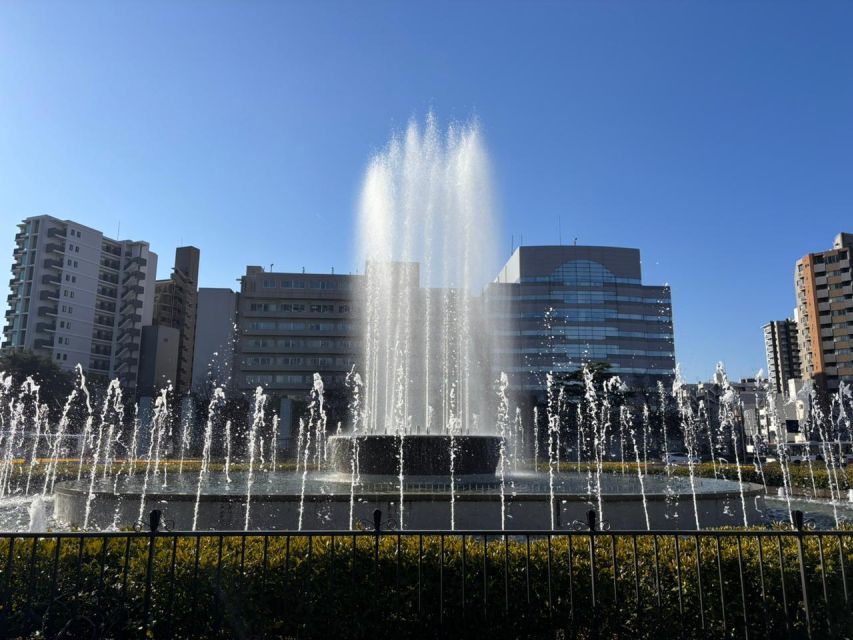
- The Prayer Fountain and the need for water
- The Cenotaph and the Peace Flame
- Hiroshima National Peace Memorial Hall for Atomic Bomb Victims
- The Children’s Peace Monument and the power of small memorials
- Burial mound and Korean victims cenotaph
- The Peace Bell and time for reflection
- The Atomic Bomb Dome: Hiroshima’s best-known ruin
- The hypocenter and the final lesson
- What the guides add
- Is $35 fair for the experience?
- Who should book this walk?
- Final verdict: a worthwhile first look at Hiroshima
- FAQ
- How long is the Hiroshima history walking tour?
- What language is the tour conducted in?
- Where does the tour meet?
- Where does the tour finish?
- Is the Atomic Bomb Dome included?
- Is entry to Hiroshima National Peace Memorial Hall included?
- What should I bring?
- Is the tour wheelchair accessible?
- Can I cancel the booking?
Key points at a glance
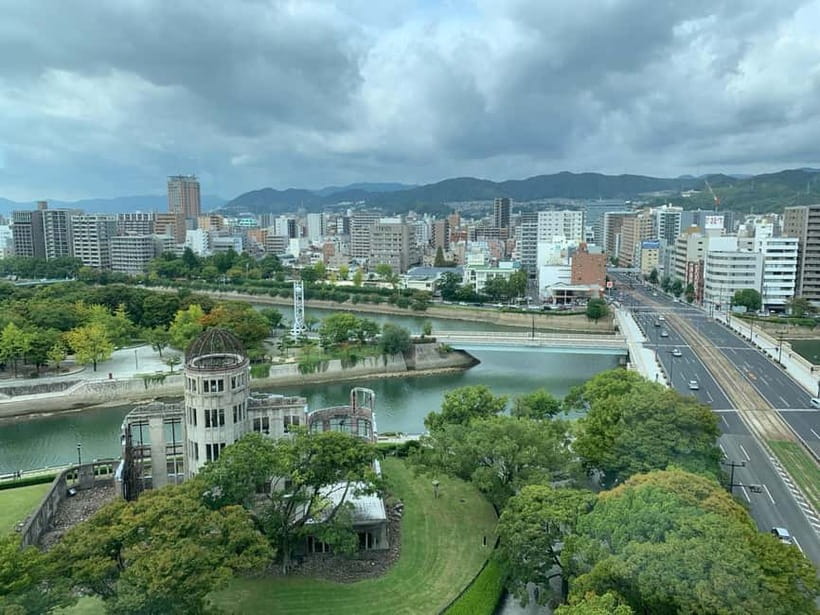
- Atomic Bomb Dome and hypocenter: Finish beside the most recognizable ruin in Hiroshima and the spot directly below the explosion.
- Personal and local stories: Guides may add family connections, survivor accounts, and details beyond a standard textbook summary.
- A full Peace Memorial Park route: See the Cenotaph, Peace Flame, Children’s Peace Monument, burial mound, Peace Bell, and other memorials.
- Peace Memorial Hall included: Entrance to the Hiroshima National Peace Memorial Hall for Atomic Bomb Victims is part of the price.
- Good value at $35: For two hours of guiding and a museum-style memorial visit, the cost is modest.
- Practical walking format: Meet at the Gates of Peace, wear comfortable shoes, and expect an English-language outdoor tour in changing weather.
Why this two-hour walk matters
Hiroshima Peace Memorial Park is not difficult to reach or navigate, but its many monuments can blur together without context. A guide gives each place a purpose. You learn who is remembered, what happened there, and how Hiroshima chose to tell its story.
That makes this more than a photo walk. The route asks you to consider Hiroshima before the bombing, why the city became a target, what happened on August 6, 1945, and how survivors and residents rebuilt afterward.
I also like the tone described by the strongest guides on this experience. Cva is often praised for answering questions, involving the whole group, and balancing humor with respect. Moe and Aya have shared family and local connections to the bombing, while Sada brings knowledge of Hiroshima’s culture, food, recovery, and modern life. Your guide will vary, but the company’s guide team has a broad academic background in tourism, anthropology, history, and peace studies.
That variety can make the walk feel less scripted. Still, this is a group tour, not a private seminar. If the group is large, stay near the guide and speak up when you have a question.
A few more Hiroshima tours and experiences worth a look
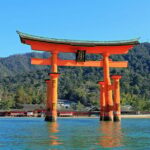

Starting at the Gates of Peace
The meeting point is in front of the Gates of Peace, beside the Italian restaurant Mario. Arrive with enough time to locate the gates, since this is an open public area rather than a traditional ticket office.
The gates give the tour a fitting start. They are not simply a marker for the group. They introduce the park’s central message and frame the walk as an examination of memory, peace, and the human cost of nuclear war.
From here, the route moves through the park on foot. The walking is generally manageable, but the experience includes many stops, standing, and outdoor explanation. Comfortable shoes are a must. Weather-appropriate clothing matters too, since even a serious historical tour becomes less comfortable in rain, heat, cold, or snow.
Mother and Baby in the Storm
The first memorial stop, Mother and Baby in the Storm, brings the discussion to the suffering of ordinary families. The short visit helps set the human scale of the day’s events before the tour moves to larger national and political questions.
This is a good early stop because it makes clear that the tour is not only about military decisions or dates. It is also about children, parents, homes, and the sudden collapse of daily life.
Your guide may spend only a few minutes here, so listen closely. The route has many stops, and each one adds another piece rather than giving a long lecture in a single location.
The Prayer Fountain and the need for water
At the Prayer Fountain, the guide explains another basic fact of the bombing: water became a desperate need for people suffering from burns and injuries. The fountain is both a memorial and a place of compassion.
This stop offers a quiet pause before the tour reaches some of the park’s most recognized monuments. The setting also gives you scenic views along the way, although the meaning of the place is more important than the view itself.
I find stops like this useful because they show how memorial design can communicate an experience without a long written account. The fountain speaks through a simple human need, one that anyone can understand.
The Cenotaph and the Peace Flame
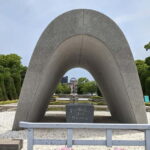
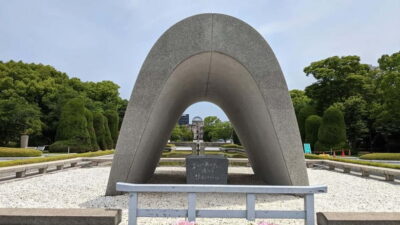
The Hiroshima Victims Memorial Cenotaph is one of the park’s central memorials. Here you learn how Hiroshima remembers the people killed by the bombing and how the memorial fits into the wider design of Peace Memorial Park.
The guide then brings you to the Flame of Peace. Its symbolism is tied to the hope that nuclear weapons will no longer threaten human life. The route does not treat the flame as a decorative feature. It connects it to Hiroshima’s public message and to the stories of people affected by the attack.
These stops can be busy, especially when other groups are nearby. You will get more from them if you focus on the guide’s explanation instead of trying to take photographs at every pause.
Other walking tours we've reviewed in Hiroshima

Hiroshima National Peace Memorial Hall for Atomic Bomb Victims
Entrance to the Hiroshima National Peace Memorial Hall for Atomic Bomb Victims is included in the $35 price. That inclusion adds real value, since the hall provides a more focused setting for remembrance than the open park.
The tour allows about 15 minutes here, followed by free time. That is enough to enter, receive an introduction, and take in the space, but it is not enough for a long independent museum visit.
If you want to read every display carefully, you should plan to return later on your own. The walking tour gives you orientation and meaning. It does not replace a full visit to every Hiroshima museum and memorial facility.
The Children’s Peace Monument and the power of small memorials
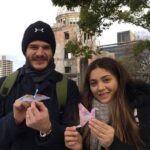
The Children’s Peace Monument is one of the park’s best-known places. It is connected with children who died in the bombing and with the thousands of paper cranes offered in memory of Sadako Sasaki.
The visit includes time for photographs, but this is not merely a picture stop. Your guide explains the monument’s story and why it has become such an important symbol of children’s suffering and the hope for peace.
This is also a place where the tour’s personal storytelling can matter. Several guides have family links to survivors, and those connections may help you understand the long effect of the bombing on Hiroshima families.
Burial mound and Korean victims cenotaph
The Atomic Bomb Memorial Burial Mound is less immediately familiar than the Cenotaph or Atomic Bomb Dome. That is exactly why a guide is useful. Without explanation, you could pass it without knowing what it represents.
The stop points to the large number of victims whose remains could not be identified or returned to families. It is a stark reminder that the bombing did not leave behind a neat record of every person who died.
The Korean Atomic Bomb Victims Cenotaph adds another layer. Koreans were among those affected by the bombing, and this memorial makes their presence part of the park’s public memory. It broadens the story beyond a single national viewpoint.
The guide’s handling matters here. This is a difficult subject, and the best approach is calm, factual, and respectful. The guide team’s strongest performances appear to follow that balance.
The Peace Bell and time for reflection
The Peace Bell is both a photo stop and a guided visit. Its shape and sound carry a message of peace, but the guide gives you the background needed to understand why the bell belongs in this particular park.
The route includes free time along the way, which is welcome. Hiroshima Peace Memorial Park is not a place to rush from one information point to another. You need a few quiet moments to look around, notice the memorial design, and absorb what you have heard.
That said, the itinerary is full for a two-hour tour. Some stops receive only five minutes, while others receive ten or fifteen. The guide must keep a steady pace, so ask questions as they arise rather than saving everything for the end.
The Atomic Bomb Dome: Hiroshima’s best-known ruin
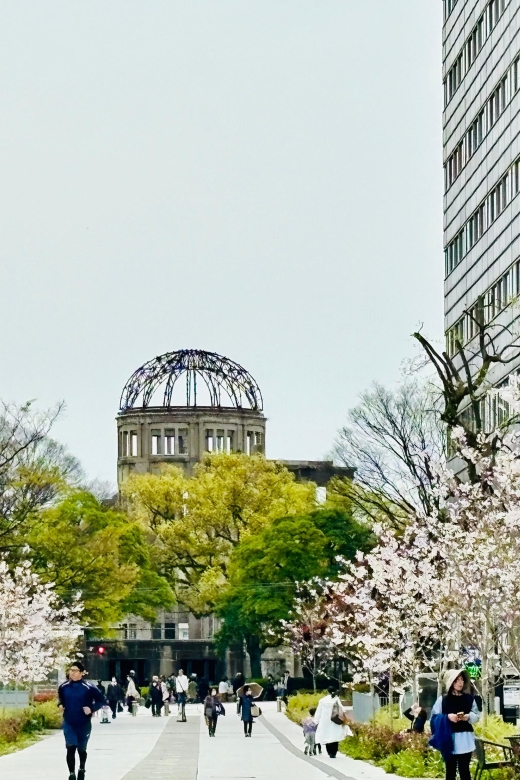
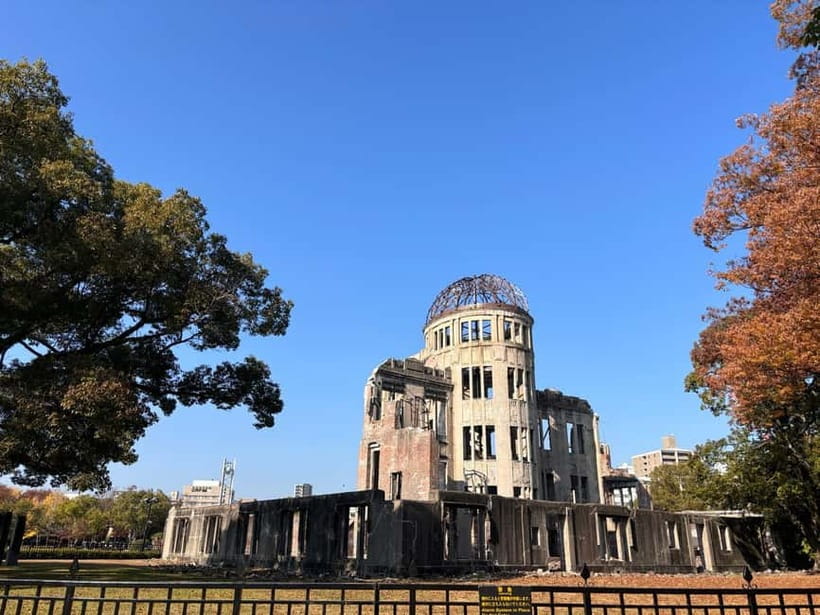
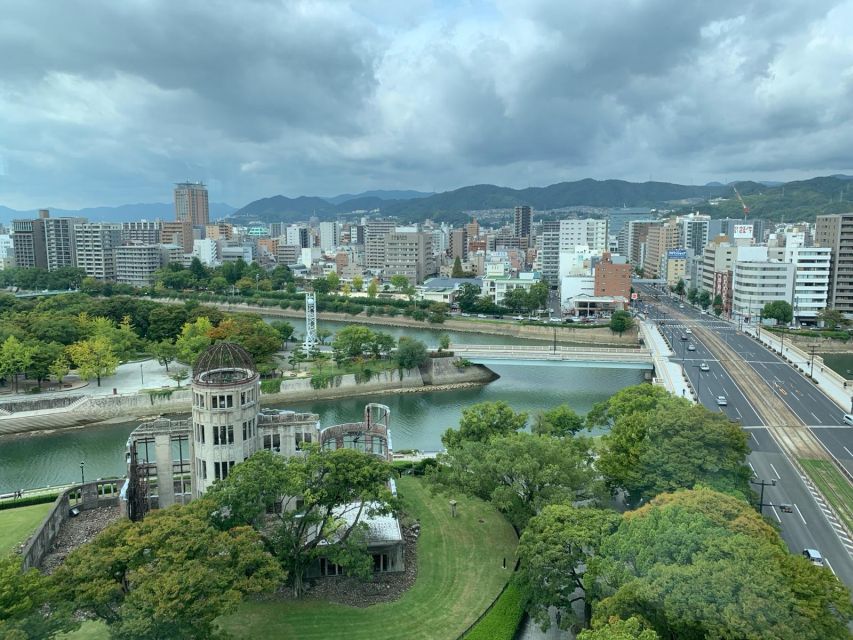
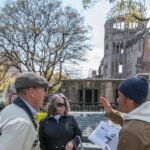
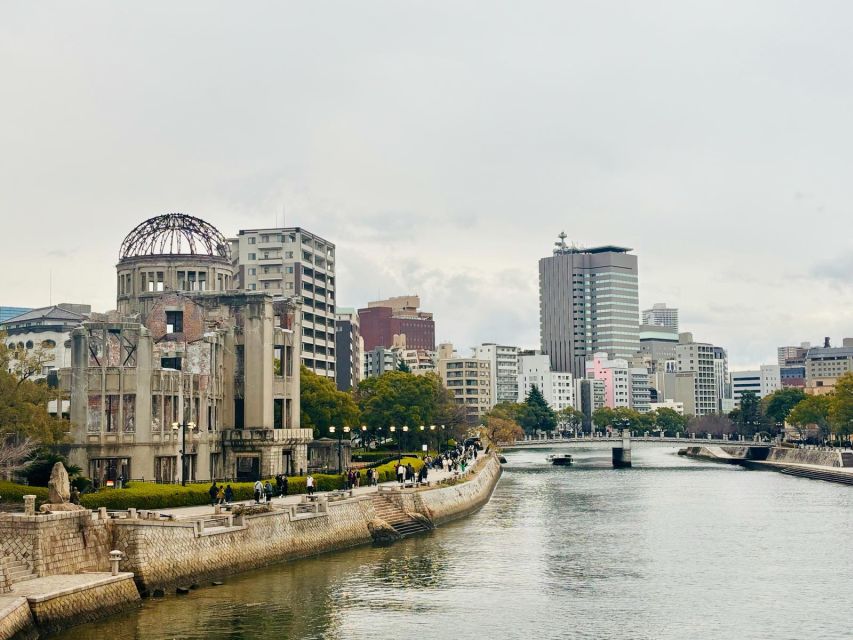
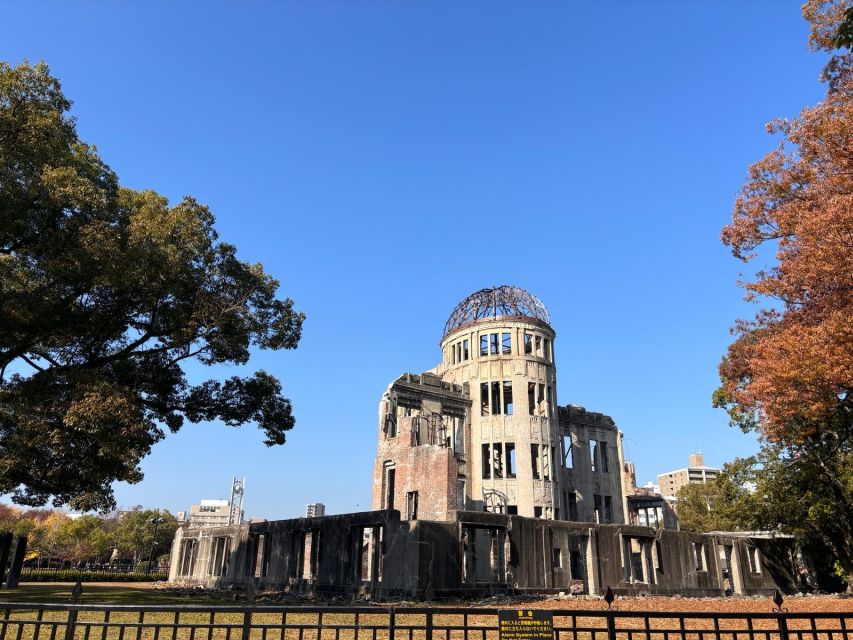
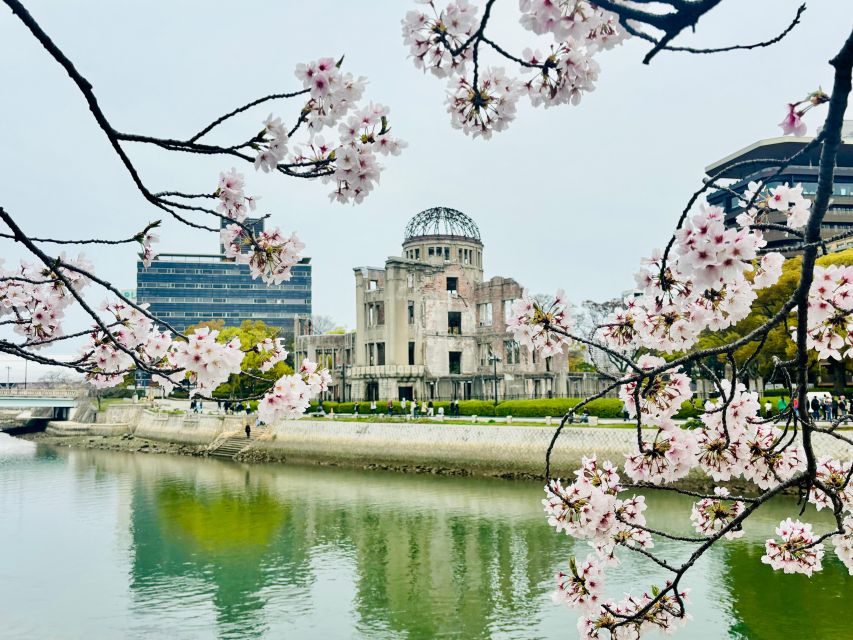
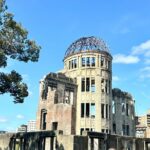
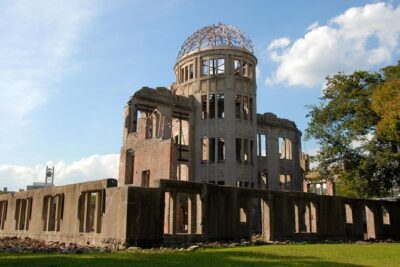
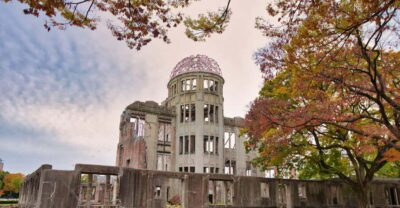
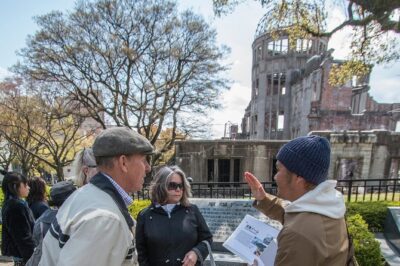
The Atomic Bomb Dome is the visual focus of the walk. It is the only structure left standing near the blast site, and its damaged frame remains one of the most recognizable reminders of August 6, 1945.
The guide explains what the building was before the bombing and how it came to be preserved as a memorial. Seeing it after visiting the park’s monuments gives the structure greater meaning. You are no longer looking at an old ruin in isolation. You have heard about the people, neighborhoods, and institutions erased around it.
The Dome is also a popular photo stop. Take the picture, but allow time to look beyond the camera screen. Its value is not just architectural. The exposed skeleton makes destruction visible in a way that words alone cannot.
The hypocenter and the final lesson
The tour ends at the Hiroshima Atomic Bomb Hypocenter Monument. This marks the point directly below the explosion, making it one of the most sobering stops on the route.
The exactness of the place changes the way you think about the event. The park’s broad paths and lawns can feel spacious. The hypocenter narrows the story to one location and one moment, helping you grasp that the destruction began at a precise point and spread through a living city.
Ending here rather than at a restaurant or shopping street keeps the tour focused. You leave with a clearer understanding of what happened on August 6, how survivors were affected, and why Hiroshima continues to speak about peace.
From this point, you can continue independently. The tour does not include a larger museum visit beyond the Peace Memorial Hall, so allow more time elsewhere if you want extended exhibits, documents, or survivor testimony.
What the guides add
The guide is the main reason to choose this experience instead of simply walking through the park with a map. Academic training helps, but storytelling and sensitivity matter just as much.
Cva is praised for a lively, interactive approach. He asks questions, encourages participation, and makes room for detailed answers. Moe and Aya bring personal family links to Hiroshima survivors. Tomas and Thomas are described as passionate and clear, while Sada combines historical material with information about Hiroshima’s culture and recovery.
Guide assignments can change, so you should not book solely to meet one named guide. Instead, expect an English-speaking guide with a strong interest in the city and its past. The best guides make the difficult subject approachable without making it casual.
Personal stories can be powerful, but they are not a substitute for historical evidence. This tour works best when those stories sit beside clear explanations of the bombing, the park, and Hiroshima’s rebuilding.
Is $35 fair for the experience?
At $35 per person, the tour offers solid value. You receive two hours of live English guidance, a carefully arranged route through the main park, and admission to Hiroshima National Peace Memorial Hall for Atomic Bomb Victims.
The cost is especially reasonable if this is your first time in Hiroshima. You avoid spending your first hour wondering what each monument represents, and you get a coherent account instead of disconnected facts.
The price does not cover every possible museum or attraction in the area. You should think of this as a guided introduction, not a complete Hiroshima history program. If you already know the park well and prefer to read at your own pace, the added value will come mainly from the guide’s personal and local perspective.
The reserve-now, pay-later option and free cancellation up to 24 hours before the start make the booking flexible. Those terms are useful when your Japan schedule depends on trains, weather, or changing plans.
Who should book this walk?
I would recommend it to first-time visitors, families with older children, and anyone who wants help approaching a serious subject with care. The guide’s explanations can also add something for people who already know the basic timeline, since the route includes smaller memorials and local stories.
It suits you if you prefer learning by walking rather than sitting in a museum for two hours. The park route is easy to follow, and the experience is wheelchair accessible, though you should still check current conditions if mobility needs are important to you.
It may be less suitable if you want a private guide, a long museum visit, or a highly detailed military history lecture. It is also not a light sightseeing activity. You should arrive ready for an emotional experience and give yourself time afterward before moving straight to a crowded meal or busy attraction.
Final verdict: a worthwhile first look at Hiroshima
Book this tour if you want the park’s memorials to speak to one another instead of seeing them as isolated monuments. The combination of the Cenotaph, Peace Flame, Children’s Monument, burial mound, Atomic Bomb Dome, and hypocenter gives you a clear route through Hiroshima’s past and present.
I especially value the personal stories and the attention given to lesser-known memorials. Just keep your expectations realistic: two hours can introduce the subject, but it cannot cover every survivor account or museum display.
For $35, this is a thoughtful and practical way to begin your Hiroshima visit. Afterward, you will be better prepared to spend more time with the city’s museums, memorials, and living culture.
FAQ
How long is the Hiroshima history walking tour?
The tour lasts two hours.
What language is the tour conducted in?
The tour is conducted in English with a live English-speaking guide.
Where does the tour meet?
Meet your guide in front of the Gates of Peace, next to the Italian restaurant Mario.
Where does the tour finish?
The tour finishes at the Hiroshima Atomic Bomb Hypocenter Monument.
Is the Atomic Bomb Dome included?
Yes. The route includes a guided visit and photo stop at the Atomic Bomb Dome.
Is entry to Hiroshima National Peace Memorial Hall included?
Yes. Entrance to Hiroshima National Peace Memorial Hall for Atomic Bomb Victims is included.
What should I bring?
Bring comfortable shoes and clothing suited to the weather.
Is the tour wheelchair accessible?
Yes, the activity is listed as wheelchair accessible.
Can I cancel the booking?
You can cancel up to 24 hours in advance for a full refund. You can also reserve now and pay later.
More Historical Tours in Hiroshima
More Walking Tours in Hiroshima
More Hiroshima City Tours in Hiroshima
More tours in Hiroshima we've reviewed



Hiroshima City Tours, compared.
 ★ 5.0Peaceful Hiroshima & Miyajima UNESCO 1 Day Bus TourFrom $129
 ★ 4.9Hiroshima: Hiroshima and Miyajima UNESCO Sites 1-Day TourFrom $1228 hours
 ★ 5.0Hiroshima / Miyajima Full-day Private Tour with Government Licensed GuideFrom $202
 ★ 4.7Osaka/Kyoto: Hiroshima Miyajima Bus Tour & Shinkansen TicketFrom $27712 hours
 ★ 4.8Hiroshima Historical Walking Tour – Why A-Bomb was DroppedFrom $352h 30m
 ★ 5.0Hiroshima Peace (Heiwa) Walking Tour at World Heritage SitesFrom $94
