
Reviewed · PEACE MEMORIAL TOURS
Hiroshima: Peace Walking Tour of World Heritage Sites
Hiroshima is not a place to rush through. This walking tour gives the city’s hardest story room to breathe, beginning with the Peace Memorial Museum and continuing through the park, the UNESCO-listed Atomic Bomb Dome, and Orizuru Tower. Local guides such as Yuki, Yuji, Yasue, and Fumiko add family memories, customs, and small details you could easily miss on your own.
I like the thoughtful change of pace: a difficult museum visit is followed by paper-crane folding and a breezy city view. I also like the included lunch, usually Hiroshima’s famous okonomiyaki, which turns a solemn morning into a chance to talk with your guide about Hiroshima today. The main drawback is emotional and practical: the museum can be crowded, the subject is painful, and the tour moves on a firm schedule.
In This Review
- Key points to know before booking
- Why this Hiroshima walking tour works
- Starting at Montbell and Shirakami-sha Shrine
- The Peace Memorial Museum requires time and care
- Walking through Peace Memorial Park
- The Aorigi Tree and Hiroshima’s recovery
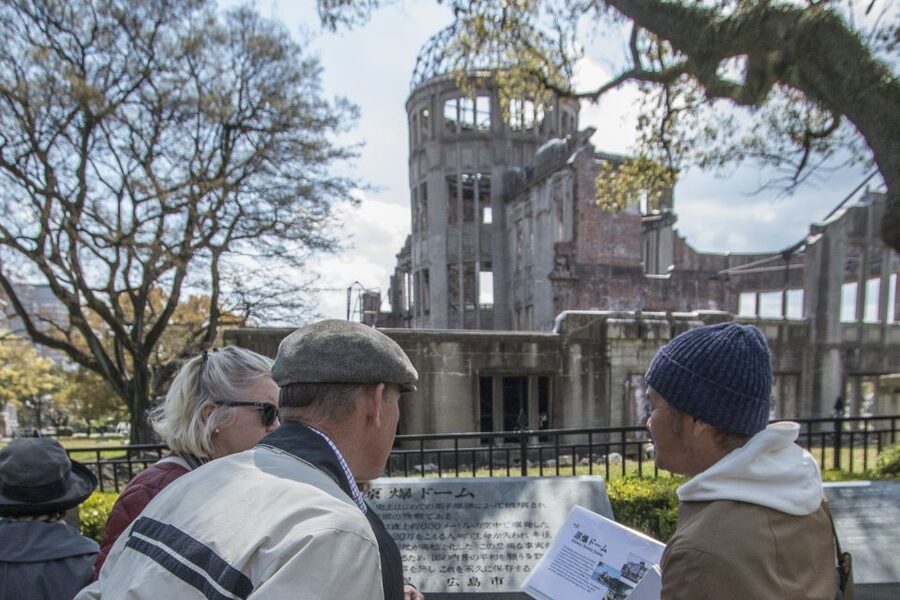
- The Atomic Bomb Dome puts the story in front of you
- Orizuru Tower brings a lighter finish
- Lunch and Hiroshima-style okonomiyaki
- The five-hour schedule and walking pace
- Is the $92 price good value?
- Who should book this experience?
- Should you book the Hiroshima Peace Walking Tour?
- FAQ
- How long does the Hiroshima Peace Walking Tour last?
- Where does the tour meet?
- How will I identify the guide?
- What language is the tour offered in?
- Are museum and Orizuru Tower admission included?
- Is lunch included?
- Can I request a vegetarian or allergy-friendly meal?
- What happens if I arrive late?
Key points to know before booking
- Local voices make the history personal: Guides including Yuki, Yuji, Yasue, Etsuko, and Fumiko explain Hiroshima through local knowledge and, in some cases, family connections to the bombing.
- The museum is the emotional center: You receive a guided visit to the Peace Memorial Museum rather than simply walking through its exhibits alone.
- The paper crane activity adds hope: At Orizuru Tower, you learn to fold an origami crane and make a wish for peace.
- You see more than the best-known monument: Shirakami-sha Shrine, Peace Memorial Park, the Aorigi Tree, the museum, the dome, and Orizuru Tower all fit into the day.
- Lunch is part of the price: A meal is included, with Hiroshima-style okonomiyaki a common highlight.
- Arrive early: Meet 10 minutes before departure. Arrivals more than 15 minutes late cannot join, and no refund or rescheduling is offered.
Why this Hiroshima walking tour works
The best thing about this experience is its balance. Hiroshima’s Peace Memorial Museum can leave you quiet and unsettled, as it should. But the tour does not treat the city as a museum frozen in 1945. It shows you a place that remembers, rebuilds, and works to promote peace.
Your guide leads the group in English, with private and small-group options available. That matters here. The subject brings up questions about the bombing, civilian life, recovery, and modern Hiroshima. In a small group, you have a better chance to ask those questions and get a thoughtful answer.
The guides are a major part of the experience. Yuki has been praised for sharing personal stories and for checking answers with museum experts when needed. Yuji is known for clear English and strong knowledge of the area. Yasue brings a heartfelt connection to Hiroshima and its peace message, while Fumiko has a warm style and has taken group photos for participants.
Those names do not guarantee who will lead your tour. They do show the range of guides used by MagicalTrip and the personal tone you can expect. This is not simply a walk from one famous building to another.
A few more Hiroshima tours and experiences worth a look
Starting at Montbell and Shirakami-sha Shrine
The meeting point is in front of the Montbell store near Kamiya-cho-nishi Station. It is about a one-minute walk from the station. Look for the guide holding an orange sign marked Magical Trip Tour.
Plan to arrive at least 10 minutes before the start. Hiroshima’s central streets are easy to navigate, but being in the right place is not enough if you arrive late. A delay of more than 15 minutes means you cannot join the tour, and the stated terms do not allow a refund or a new date.
The first stop is Shirakami-sha Shrine, where you spend about 25 minutes. This gives the day a cultural beginning before the focus turns fully to the atomic bombing. Your guide can show you the proper way to enter and behave at a Japanese shrine, including the basic protocol for receiving a blessing.
I like this opening because it reminds you that Hiroshima was a living Japanese city before August 1945, and remains one now. The shrine visit is short, so it does not take time away from the main sites. Still, if your main goal is only the museum, this extra stop may feel like a slower start.
The Peace Memorial Museum requires time and care
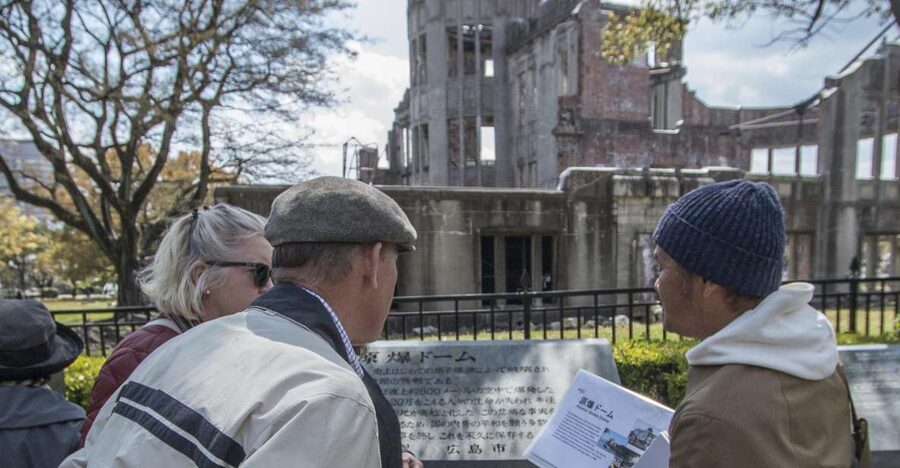
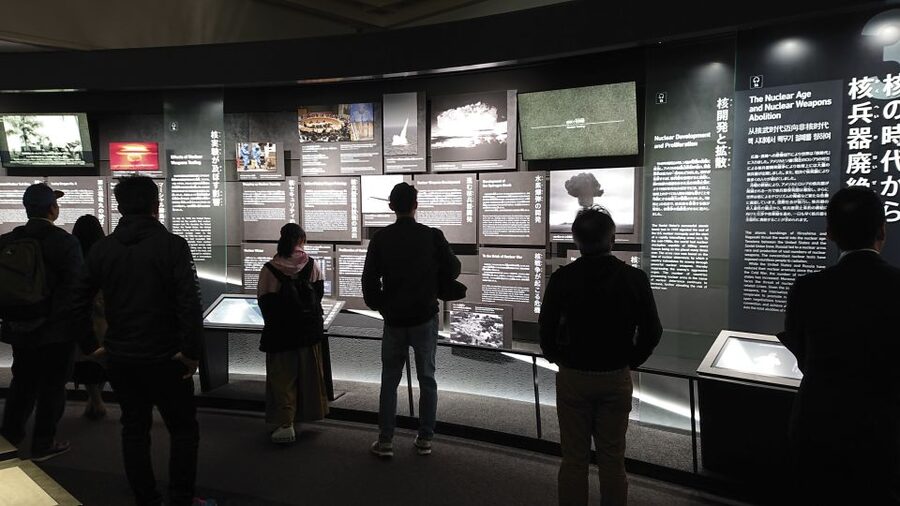
The Peace Memorial Museum is the heart of the tour. The guided visit lasts about one hour, and admission is included.
Expect a difficult visit. Exhibits describe the atomic bomb and its effects through objects, photographs, and stories connected to the people of Hiroshima. The material is direct and upsetting. Several guides have been especially attentive when people needed a pause, and that kind of care matters in a museum where emotions can arrive without warning.
A guide gives the exhibits context and helps connect the museum to the streets outside. You are not left to guess why a particular object matters or how it fits into the larger story. Eri, for example, has shared a family connection to someone affected by the bombing, while other guides bring their own local perspective to the subject.
The tradeoff is time and crowding. The museum can be extremely busy, and one hour may feel short if you want to read every panel. If you already know you will need more time, treat the guided visit as an introduction and ask whether you can return independently afterward. One participant was able to re-enter after the tour with help from the guide, but you should not assume that this will always be possible.
I suggest keeping your schedule light after this part of the tour. You will get more from the museum if you do not have to watch the clock for a train or another booking.
Walking through Peace Memorial Park
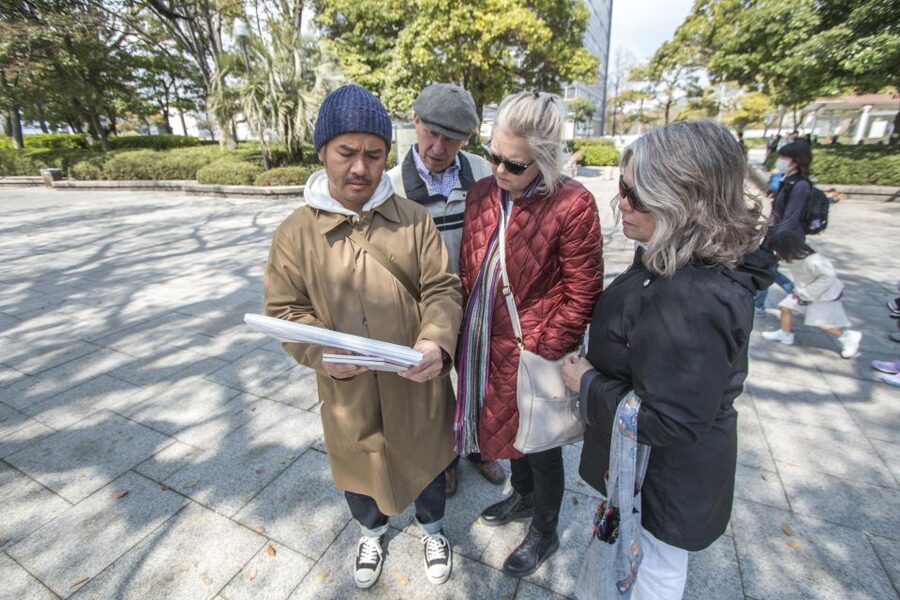
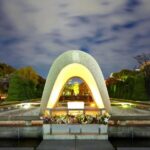
The tour continues through Hiroshima Peace Memorial Park, with about an hour of guided walking listed for the park and surrounding peace sites.
This is where the information from the museum begins to connect with the actual city. You walk through a public space shaped by remembrance, peace work, and Hiroshima’s recovery. Your guide explains the meaning of the important sites and points out details you might pass without noticing.
The park also gives you a chance to process what you have just seen indoors. The setting is open and calmer than the museum, though it can be busy during popular periods. Wear comfortable shoes, bring water, and be ready to walk outdoors for several hours.
The tour’s message is not limited to the destruction of the bomb. Guides also discuss how Hiroshima coped with the tragedy and how the city developed a continuing role in peace education. That wider view is one of the tour’s strongest features. You learn about the event, but you also see how people chose to respond to it.
The Aorigi Tree and Hiroshima’s recovery

The Aorigi Tree is a smaller stop, but it carries a powerful idea. The tree became a sign of life and hope after the atomic bombing. Your guide uses it to explain how signs of recovery appeared even when the city had suffered immense damage.
This is the kind of detail a guide-led walk can add. The museum gives you a carefully arranged account, while a local guide brings the story into the city itself. You can better understand the theme of revival when you see a living symbol connected to Hiroshima’s recovery.
The stop is not described with a separate duration, so the exact timing may depend on the group and the day. It forms part of the walk through the peace area rather than a major attraction requiring a long visit.
A few more Hiroshima tours and experiences worth a look

The Atomic Bomb Dome puts the story in front of you
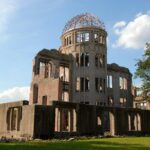
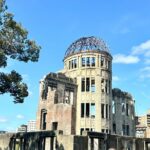
The Atomic Bomb Dome is the tour’s key outdoor landmark and a UNESCO World Heritage Site. You receive a guided visit lasting about an hour as part of the route.
The dome is powerful because it is an actual surviving structure, not just an exhibit or a photograph. Its damaged frame makes the past visible in the middle of a rebuilt city. Your guide explains its connection to the bombing and to Hiroshima’s peace efforts, helping you see why it remains preserved.
This is also a good point to ask questions. The guides are not only reciting dates. They explain the places, stories, and local meaning tied to the site. Naoya, Yuji, and other guides have been praised for drawing attention to significant details and linking the monument to the surrounding area.
Do not expect a quiet, private encounter with the dome. It is one of Hiroshima’s best-known sights, and people gather around it. The value comes from having context and time to look carefully, rather than from solitude.
Orizuru Tower brings a lighter finish
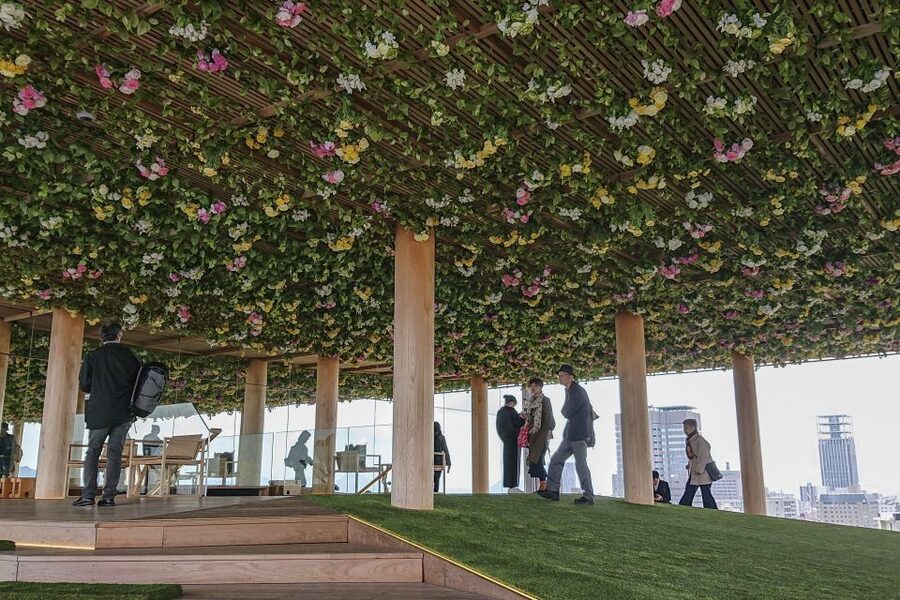
After the museum and peace sites, Orizuru Tower changes the mood without making the earlier stops feel forgotten. Admission is included, and the visit includes time at the observatory area and an origami activity.
From the upper level, you get a wide view over Hiroshima. The open-air feeling and breeze provide a welcome reset after the museum. The view also makes the city’s recovery easier to grasp: you are looking across a functioning modern city from a building tied closely to Hiroshima’s peace message.
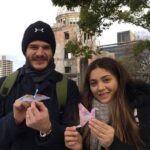
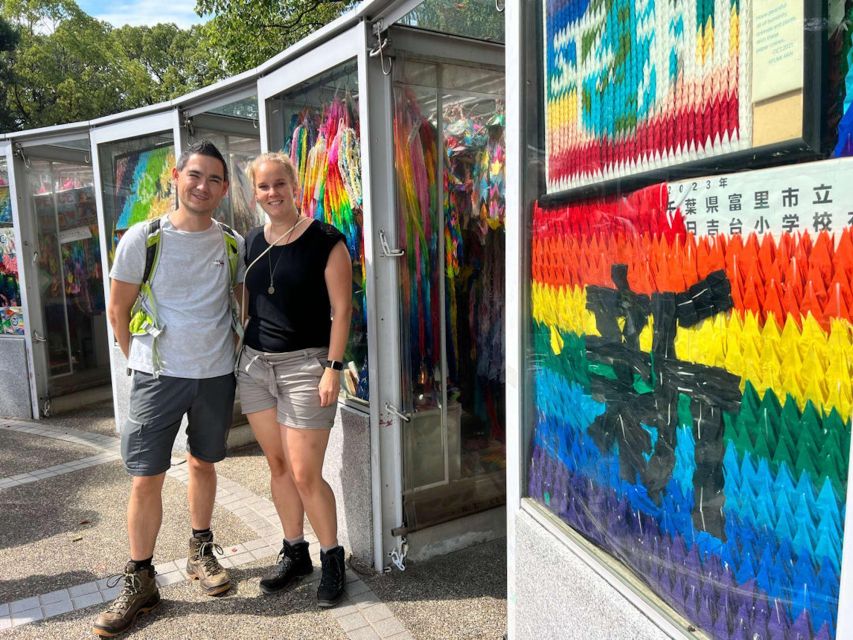
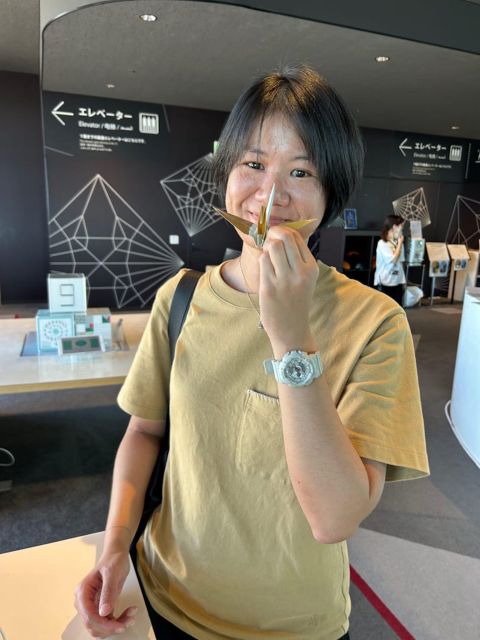
The orizuru, or folded paper crane, is a symbol of peace. Your guide teaches you how to make one and invites you to make a wish for peace. The activity is simple, but it gives you something active to do after spending time with painful material.
One particularly memorable feature is placing the finished crane into the tower’s collection. You might watch it spiral down to join the many others displayed in the building’s glass wall. Some guides also add personal touches, such as writing your name in Japanese or giving you a small handout at the end.
The tower ticket reportedly allows a return visit for sunset, which can make the admission more useful. Confirm the current return policy when booking or arriving, since operating details can change.
Lunch and Hiroshima-style okonomiyaki
Lunch follows the Orizuru Tower visit, and the meal is included. Hiroshima-style okonomiyaki is a common part of the experience, giving you a chance to try one of the city’s best-known local dishes.
The meal is more than a convenient break. Sitting down with the guide gives you time to talk about what you have seen and to ask questions that may not fit naturally into the walking portions. Several guides have also been praised for making lunch relaxed and social.
There are limits you need to take seriously. Vegetarian choices are limited because many Japanese restaurants are not fully equipped for vegetarian menus. The tour is not suitable for people with gluten intolerance, and allergy-free meals cannot be guaranteed. Send dietary requests or allergy information at least one day ahead. Requests made on the day cannot be accommodated.
Additional food and drink are not included, though they can be purchased. If you have a strong preference for the style or flavor of okonomiyaki, ask what will be served before you book. One person who had eaten the dish the previous day would have preferred a different option.
The tour finishes at Akushu Cafe inside Hiroshima Orizuru Tower. That makes the end point easy to identify, though you should allow time afterward if you need to return to a hotel or station.
The five-hour schedule and walking pace
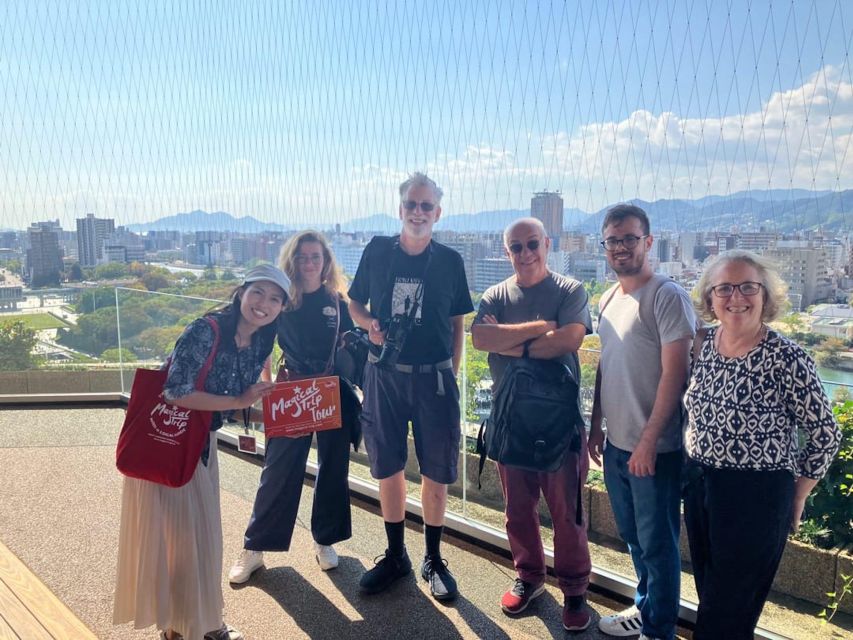
The advertised duration is 270 minutes, or four and a half hours. The included description also calls it a five-hour tour, and the listed stop lengths add up to slightly more than four and a half hours. In practical terms, set aside about half a day and avoid booking a tight connection immediately afterward.
The route is built around walking, outdoor stops, museum time, and the tower. You do not need to arrange separate admissions, since entry to the Peace Memorial Museum and Orizuru Tower is included. Lunch and tour photos are included too.
Comfortable shoes are sensible. You will be outdoors and on your feet, and the park and monument portions are not just quick photo stops. A small bottle of water and weather-appropriate clothing will help, especially on a warm or rainy day.
Group size affects the feel. Private and small-group formats are available, while a small group of six has been described as a comfortable size. A smaller group can make it easier to hear the guide, ask questions, and move through the museum at a reasonable pace.
Is the $92 price good value?
At $92 per person, this is not the cheapest way to see Hiroshima’s central peace sites. You can visit parts of the area independently for less, and the Peace Memorial Park itself is free to walk through.
The price becomes easier to justify when you add up what is included: museum admission, Orizuru Tower admission, lunch, a five-hour local guide, and tour photos. You also receive help with shrine etiquette, historical context, local stories, the paper-crane activity, and the practical flow between sites.
I see the strongest value in the guide rather than the tickets. The museum is emotionally demanding and can be crowded. A guide who can explain the exhibits, answer questions, and give you a moment when needed may make the visit far more useful than an unstructured solo walk.
This tour is especially good value if you have only one day in Hiroshima. It brings the main peace-related stops together and leaves you with a meal and a view, rather than ending at the most difficult part of the day.
Who should book this experience?
Book it if you want help understanding Hiroshima instead of simply collecting photographs. It suits first-time visitors, families with older children or teenagers, and anyone who wants a respectful introduction to the museum and peace sites.
It also works well if you are in Hiroshima for a limited time. The route covers several important places in one half-day and adds cultural details that are easy to miss when moving independently.
You may prefer to go alone if you need several hours in the museum, want to set your own pace, or have strict dietary needs. The museum can be crowded, and the fixed schedule will not suit everyone. People with gluten intolerance should not book this activity.
Should you book the Hiroshima Peace Walking Tour?
I would book this tour if you want a careful, human guide through a difficult part of Hiroshima. The strongest features are the local voices, the combination of museum and outdoor sites, the paper-crane activity, and the chance to discuss everything over lunch.
Go in prepared for an emotional morning, arrive early, and keep the rest of your day open. If you do that, the tour offers a useful mix of remembrance, Japanese culture, city views, and hope at a fair price.
FAQ
How long does the Hiroshima Peace Walking Tour last?
The stated duration is 270 minutes, or about four and a half hours. The activity is also described as a five-hour tour, so plan for roughly half a day.
Where does the tour meet?
Meet in front of the Montbell store near Kamiya-cho-nishi Station. The meeting point is about a one-minute walk from the station.
How will I identify the guide?
The guide will hold an orange sign marked Magical Trip Tour.
What language is the tour offered in?
The live tour guide speaks English.
Are museum and Orizuru Tower admission included?
Yes. Entry to the Hiroshima Peace Memorial Museum and Hiroshima Orizuru Tower is included in the tour price.
Is lunch included?
Yes. Lunch is included, and Hiroshima-style okonomiyaki is commonly served. Additional food and drinks can be purchased separately.
Can I request a vegetarian or allergy-friendly meal?
You must submit dietary requests or allergy information at least one day before the tour. Vegetarian options are limited, and an allergy-free meal cannot be guaranteed. The tour is not suitable for people with gluten intolerance.
What happens if I arrive late?
You must arrive at least 10 minutes before the scheduled start. If you arrive more than 15 minutes late, you cannot join the tour, and no refund or rescheduling is offered.
More Walking Tours in Hiroshima

More Hiroshima City Tours in Hiroshima
More Peace Memorial Tours in Hiroshima

More tours in Hiroshima we've reviewed



Peace Memorial Tours, compared.
 ★ 4.8Hiroshima Historical Walking Tour – Why A-Bomb was DroppedFrom $352h 30m
 ★ 5.0Hiroshima Peace (Heiwa) Walking Tour at World Heritage SitesFrom $94
 ★ 4.9Hiroshima: Miyajima Peace Memorial Icons of Peace and BeautyFrom $1638 hours
 ★ 5.0Hiroshima Walking Tour Why A Bomb was dropped to HiroshimaFrom $28
 ★ 5.0Hiroshima 2hr Peace Cycling Tour with Local GuideFrom $59
 ★ 4.8Hiroshima: Peace Cycling Tour with Local GuideFrom $522 - 3 hours
