
Reviewed · HIROSHIMA CITY TOURS
Hiroshima: Best of Hiroshima Guided Bike Tour
Hiroshima’s most important sights fit neatly into a flat, easy bike route, and that is what makes this tour so useful. You ride beside the rivers, pause at the Peace Memorial Park and Atomic Bomb Dome, then continue to Gokoku Jinja, Hiroshima Castle, and Shukkei-en Garden. I like the way the bike links places that can feel scattered on foot, and I like the small group size, capped at eight people.
The guides, including Awais, Aimee, Miyu, James, and Ehsan, receive repeated praise for clear storytelling and thoughtful answers. The route is gentle, and the Trek bikes, step-through bikes, e-bikes, helmets, and bottled water make it easy to settle in. The main consideration is that this is still a three-and-a-half-hour outdoor ride, so hot, wet, or chilly weather can affect the experience.
In This Review
- Key points at a glance
- Why cycling works so well in Hiroshima
- Starting at Cycle Hiroshima HQ
- A quiet riverside ride to the Peace Park
- The Atomic Bomb Dome and Peace Memorial Park
- Gokoku Jinja and a change of mood
- Hiroshima Castle and the city’s samurai past
- Shukkei-en Garden is a fitting final stop
- What the guides add
- Comfort, safety, and weather
- Is $70 a fair price?
- Who should book this ride?
- Should you book the Hiroshima bike tour?
- FAQ
- How long does the Hiroshima bike tour last?
- What sights does the bike tour visit?
- Is the cycling route difficult?
- What is included in the tour price?
- Are e-bikes and different bike sizes available?
- What happens if the weather is bad?
Key points at a glance
- Peace Memorial Park by bike: Reach the Atomic Bomb Dome and other key memorials without spending the whole morning walking between them.
- A route beyond the usual memorial circuit: Continue to Gokoku Jinja, Hiroshima Castle, and Shukkei-en Garden for a broader view of the city.
- Mostly traffic-free cycling: The route is flat and commonly uses riverside paths and quieter stretches, which helps newer riders feel at ease.
- Strong guide-led storytelling: Guides such as Awais, Aimee, Miyu, and James add historical detail, local knowledge, and personal family stories.
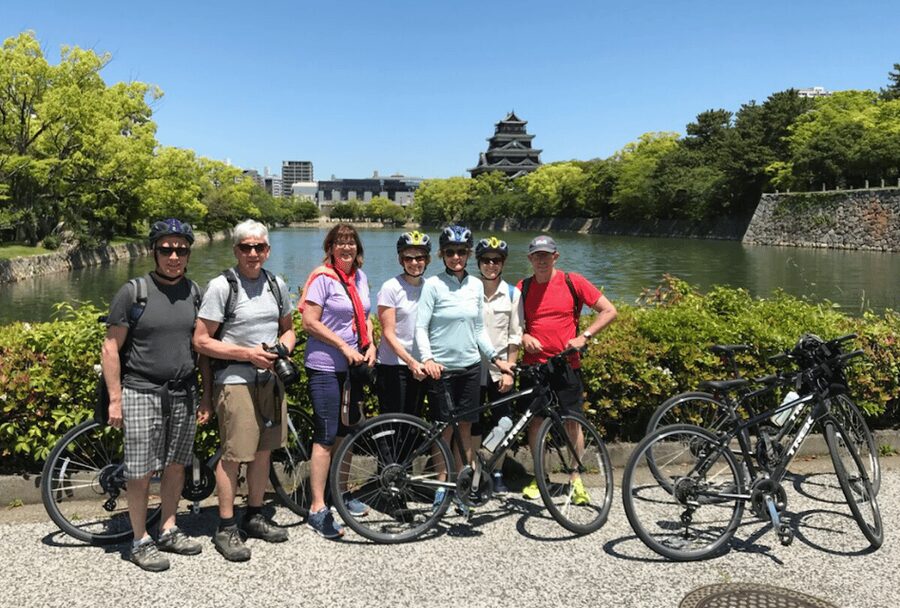
- Small groups and suitable equipment: With no more than eight riders, your guide can help with bike fitting, questions, photos, and pace.
- Good use of a half-day: At $70 per person, the tour combines transport, guiding, bike hire, helmet, water, and garden admission.
Why cycling works so well in Hiroshima
Hiroshima is a manageable city, but its main sights are not all gathered in one compact square. The Peace Memorial Park sits near the center, Hiroshima Castle is farther north, and Shukkei-en Garden lies beyond the castle area. You can walk between them, but the distances add up, especially after spending time at the memorials.
A bicycle gives you a useful middle ground. You cover more ground than on foot, yet you still move slowly enough to notice rivers, bridges, trees, and ordinary city life. I also like that the ride gives the solemn parts of the day some breathing room. After the emotional weight of the Peace Park, the change of setting toward the shrine, castle, and garden feels natural rather than rushed.
The route is described as completely flat and suitable for anyone who can ride a bike. Several riders who had not cycled for years found the pace manageable, and the guide stops often for explanations, photos, and short breaks. The ride covers about 10 kilometers, according to one participant, though the exact distance can vary with the route and stops.
You do not need to be a keen cyclist. This is sightseeing on two wheels, not a fitness outing. Still, you should feel comfortable riding for several hours and following a guide through the city.
A few more Hiroshima tours and experiences worth a look

Starting at Cycle Hiroshima HQ
You meet at Cycle Hiroshima HQ, marked by a large Cycle Hiroshima sign at the front. Allow a little extra time before the official departure so the staff can fit your bike properly. A good fit matters more than it sounds, since an incorrectly adjusted saddle can make even a gentle ride tiring.
The shop provides a Trek bike and helmet, with several sizes available. Step-through bikes help riders who prefer a lower frame, while e-bikes are available for an extra boost. Child-sized bikes are also offered, but the activity is not suitable for children under 12, and riders must be at least 140 centimeters tall.
The short orientation covers the basics before you set off. You receive bottled water, but bring comfortable clothes and shoes. In summer, the heat can be strong, so light clothing and a sensible plan for sun protection are wise. On cooler or wet days, a light outer layer will make the ride more pleasant.
The group limit of eight is one of the tour’s practical strengths. Your guide can keep an eye on the group, answer individual questions, and stop for photos without creating a large crowd around each monument.
A quiet riverside ride to the Peace Park
The first stretch follows the rivers toward Hiroshima’s Peace Memorial Park. This is a calmer way to approach the city’s central memorial area than arriving by a busy road or immediately stepping into a museum.
The riverside route also helps you see Hiroshima as a living city. The tour does not treat the city only as a place of wartime memory. You pass through modern Hiroshima on the way to its most serious sites, which gives useful context to the city’s recovery and present-day identity.
Your guide sets the pace and explains the route as you go. Several guides have been praised for keeping the ride relaxed, making frequent stops, and adding useful information between the main points. That matters because the ride itself is not the whole experience. The value comes from the connection between each stop.
The Atomic Bomb Dome and Peace Memorial Park
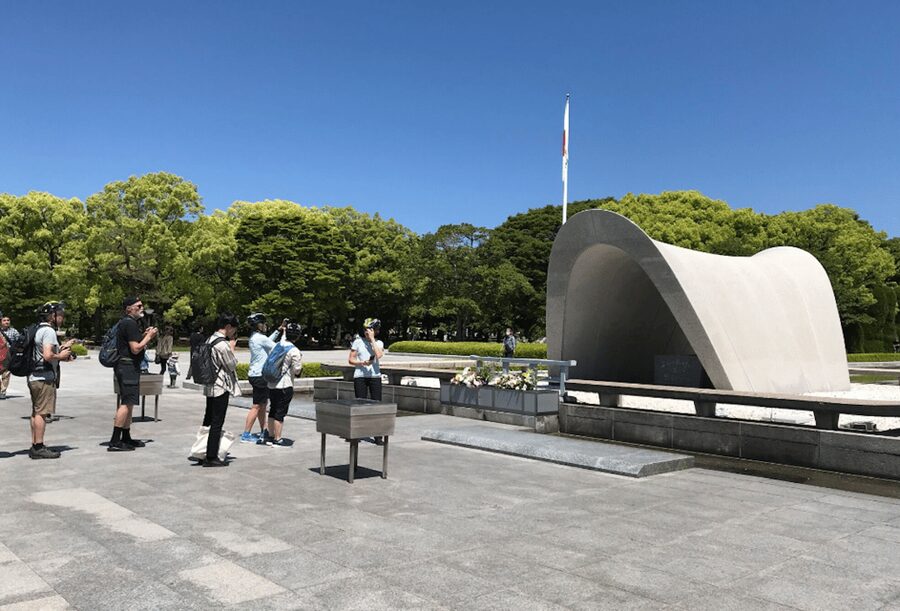
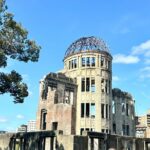
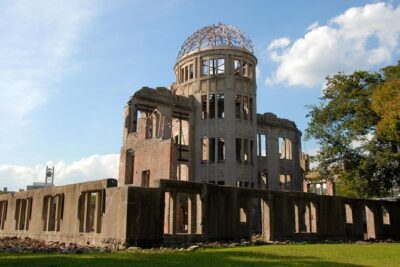
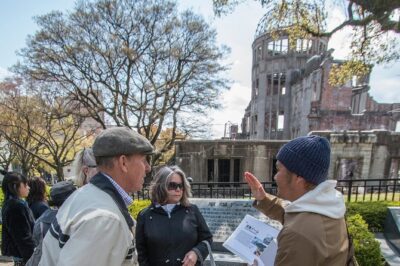
The Atomic Bomb Dome is the tour’s emotional center. The building survived the atomic bombing of August 6, 1945, and its damaged frame remains beside the river as a reminder of the destruction around it. It is also a UNESCO World Heritage Site.
You have time to look, take photos, and ask questions rather than simply passing by. A good guide helps you understand both the physical remains and the human cost behind them. Guides on this tour have discussed the bombing, the loss of life, survival stories, and Hiroshima’s recovery. Some have also shared personal or family connections that make the past feel less distant.
This part requires a respectful frame of mind. It is not a cheerful sightseeing stop, and the bike ride does not make it lighter. Instead, the relaxed movement between sites gives you time to absorb what you have heard. The guides praised most highly are not only full of facts. They are careful with the subject and allow quiet moments when needed.
The tour visits several important monuments in the Peace Park, though the supplied information does not name every stop. You should think of this experience as a guided introduction to the memorial district, not a replacement for every museum or monument in Hiroshima.
If you have extra time, you may want to visit the Hiroshima Peace Memorial Museum separately. The bike tour helps you understand the setting and key events, while a museum visit offers a longer, more detailed examination. Since the tour lasts 210 minutes, you will need to plan any museum visit before or after it.
Gokoku Jinja and a change of mood
After the Peace Park, the route heads north to Gokoku Jinja. This is described as Hiroshima’s most popular Shinto shrine, and it offers a sharp change of mood after the memorial district.
The shrine gives you a chance to see a more familiar part of Japanese city life: religious architecture, quiet grounds, and local customs. Your guide can explain the place and its role in Hiroshima, making the stop more useful than a quick photo break.
I like this part of the route because it broadens the picture of Hiroshima. The city is not defined only by 1945. It has religious traditions, historic institutions, gardens, and everyday neighborhoods, all tied together by the same streets and waterways.
Keep in mind that a guided bike tour gives you a set amount of time at each place. If you want a long, unhurried visit to the shrine, a self-guided stop may suit you better. Here, the benefit is seeing it as part of a larger story.
Other cycling tours in Hiroshima

Hiroshima Castle and the city’s samurai past
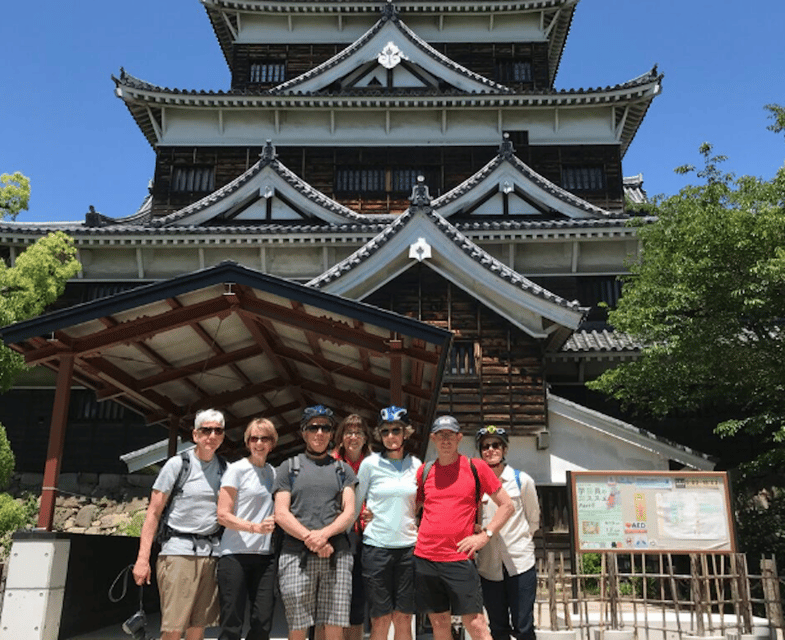
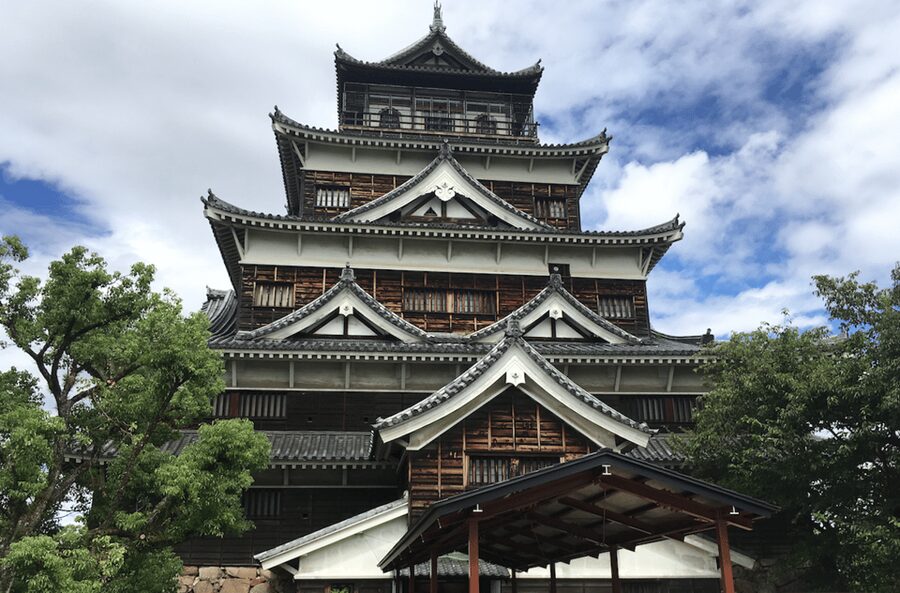
The next major stop is Hiroshima Castle. The castle grounds offer a glimpse into the city’s premodern past and the samurai era. This helps balance the tour’s focus on the 20th century by showing that Hiroshima had a much longer story before the bombing.
The bicycle is especially handy here. You can ride through or around the castle grounds and reach viewpoints and paths that are less convenient by bus. The supplied details do not promise a full interior castle visit, so you should expect a look at the grounds and the historic setting rather than a lengthy castle museum tour.
The castle area also provides a welcome visual shift. After the stark remains of the Atomic Bomb Dome, wooden-style architecture, open grounds, and greenery create a calmer setting. Your guide continues to connect the place to Hiroshima’s past, but the tone becomes less heavy.
This is one reason I would choose the bike tour early in a Hiroshima visit. You get the city’s key themes in one outing: wartime memory, peace, Shinto tradition, samurai-era history, and traditional garden design.
Shukkei-en Garden is a fitting final stop
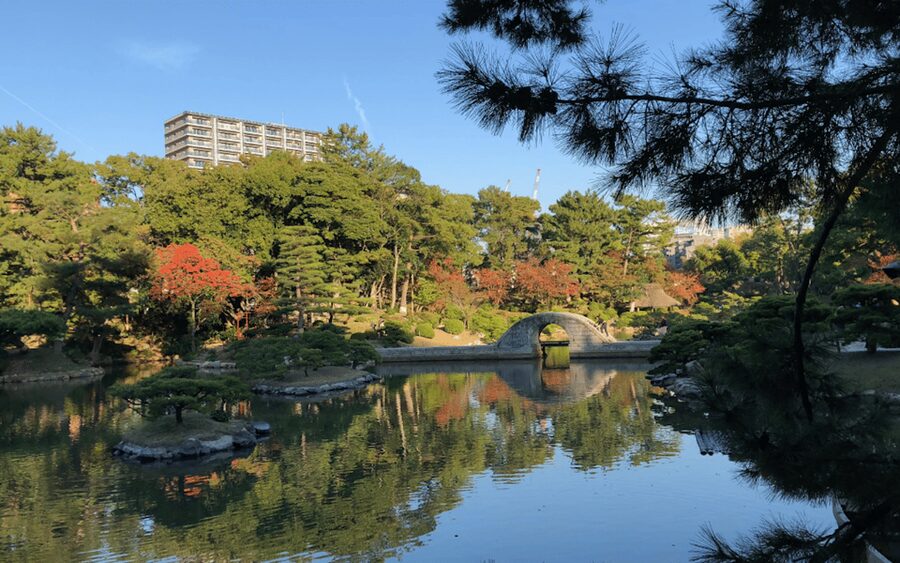
The tour finishes at Shukkei-en Garden, built during the Edo Period and regarded as one of the finest traditional gardens in western Japan. Entry is included, which is a useful detail since garden admission is not an extra decision at the end of the ride.
The garden is a smart final stop. Its ponds, paths, carefully arranged plantings, and quiet views offer a slower ending after the serious memorials and active cycling. One guide described the garden as a treat, and another felt that ending there was particularly effective. I agree with the logic: the garden does not erase the difficult parts of the day, but it gives you space to settle your thoughts.
You should not expect a long private garden tour. The available information does not specify how much time you spend inside, and the exact pace depends on the group. Still, including Shukkei-en makes this more than a Peace Park cycling circuit. You see an important cultural site that many short city visits might otherwise skip.
What the guides add
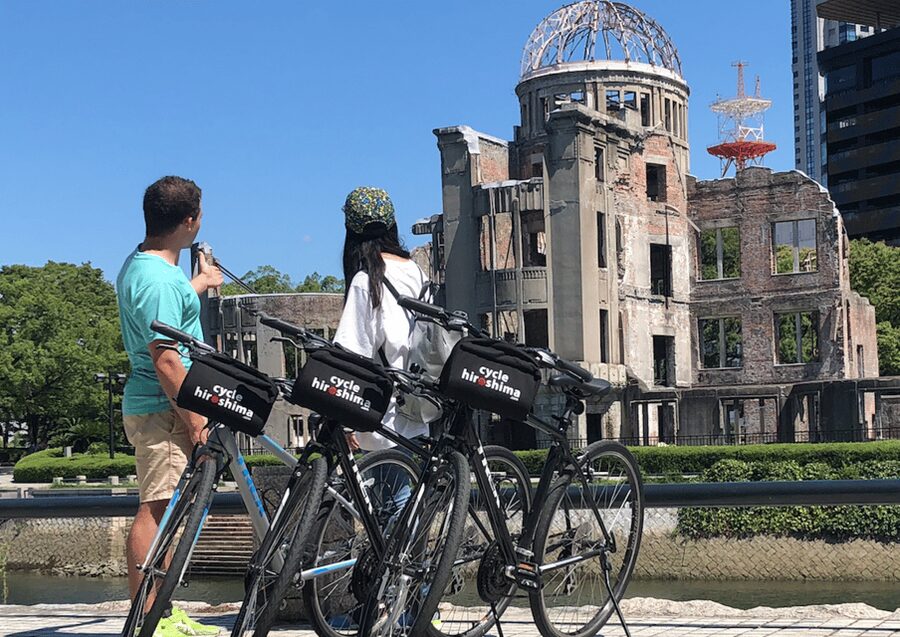
The guide is the main reason to book this rather than rent a bicycle on your own. Awais receives repeated praise for explaining the bombing, monuments, buildings, and recovery in clear English. Aimee is noted for a friendly, funny manner, frequent breaks in hot weather, local food suggestions, and careful historical explanations.
Miyu has been praised for combining facts with local and family stories. James is described as patient, detailed, and willing to answer questions. Ehsan is noted for engaging storytelling and for presenting more than one perspective. Other guides named in the feedback include Hasan, Ihsan, Sage, Ali, Alex, and Awais, so your exact guide depends on the date.
The pattern is clear: expect an English-speaking guide who does more than lead the way. You can ask questions, request photos, and learn about the city between the formal stops. Some guides have extended the outing when the whole group had time, but you should treat that as a kind gesture, not part of the promised schedule.
Because the group is small, the tone can feel conversational. That suits a subject that often raises difficult questions. You can ask about the bombing, rebuilding, Japanese customs, or present-day Hiroshima without having to shout over a large group.
Comfort, safety, and weather
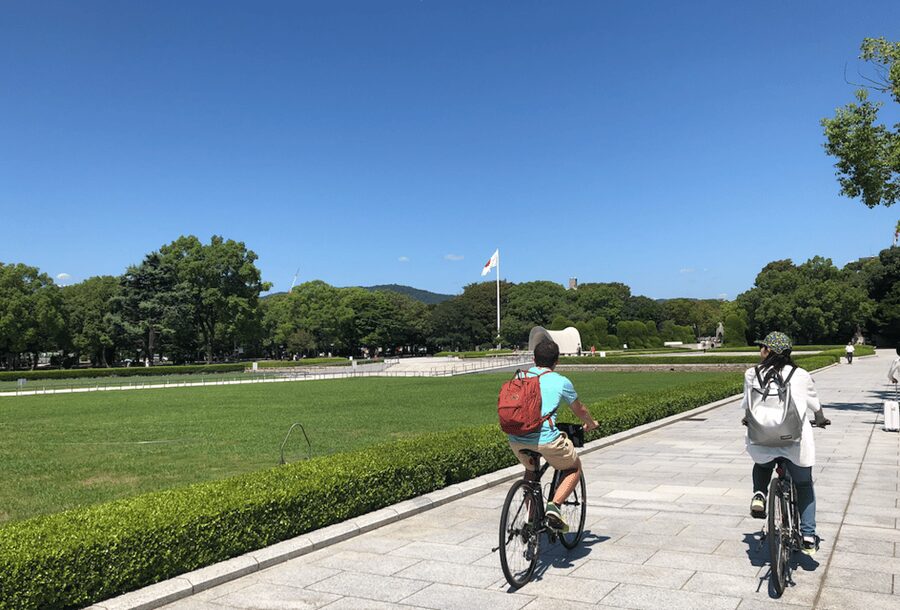
The route is mainly flat and rarely on major roads, according to the supplied riding details. That makes it a sensible choice for casual cyclists and people who would rather avoid a long walking tour. The bikes are described as comfortable and well maintained, and helmets are provided.
You still need to ride safely and follow the guide’s instructions. The activity is not suitable for pregnant women, people with back or heart problems, people with pre-existing medical conditions, or anyone under the stated height limit of 140 centimeters.
Weather is the biggest outside factor. The tour needs good conditions and may be canceled in poor weather, with the choice of another date or a full refund. Rain has not prevented every outing from going ahead, but a wet day can reduce comfort and visibility. On very hot days, guides have added regular breaks, which helps, but you should still dress for the conditions.
Alcoholic drinks are not included. Hotel pickup and drop-off are also not included, so you need to reach the Cycle Hiroshima shop on your own.
Is $70 a fair price?
At $70 per person, this is not the cheapest way to rent a bicycle in Hiroshima. You are paying for more than the bike, though. The fee includes a high-quality bike, helmet, bottled water, an English-speaking guide, a small group, and entry to Shukkei-en Garden.
I see the value in the time saved. In 210 minutes, you cover several major areas that would require a fair amount of walking and some planning on your own. You also receive explanations at the sites, which is where a self-guided rental falls short.
The price makes the most sense if Hiroshima is part of a tight Japan schedule, if you want historical context, or if walking long distances is not appealing. It is less compelling if you already know the city well, want to spend hours inside each site, or prefer setting your own pace.
Free cancellation up to 24 hours before departure and the option to reserve now and pay later reduce the risk when your plans are still changing. Check the available starting times before booking, since the schedule varies by date.
Who should book this ride?
I would choose this tour for a first visit to Hiroshima, especially if you have only a day or two in the city. It gives you a clear overview without making the Peace Park the only subject.
It also suits solo visitors and couples who want an easy way to meet a few other people. The small group keeps the outing personal, while the bike makes it easier to reach sites beyond the central memorial area.
Families should read the age and height rules closely. The official conditions exclude children under 12, despite one supplied account describing a larger family group with a 10-year-old. When rules and individual accounts differ, follow the stated booking conditions and confirm directly before paying.
I would skip it if you dislike cycling, need a fully indoor activity, or have a medical condition listed among the exclusions. I would also avoid booking it as your only Hiroshima experience if you want extensive museum time or a slow study of each monument.
Should you book the Hiroshima bike tour?
Book it if you want a thoughtful, efficient introduction to Hiroshima and feel comfortable on a bicycle. The flat route, quality equipment, frequent stops, and strong English-speaking guides make it a practical way to connect the Peace Memorial Park with the castle and garden areas.
The most useful tip is simple: arrive early for bike fitting, wear comfortable shoes and clothes, and check the forecast. Pick a time that leaves room for the Peace Memorial Museum or other sights afterward if you want more detail.
At $70, the tour earns its price through the guide and the ground it covers. It is not a replacement for exploring Hiroshima slowly, but it is an excellent first pass, with enough history, quiet scenery, and local perspective to make the city feel more complete.
FAQ
How long does the Hiroshima bike tour last?
The tour lasts 210 minutes, or about three and a half hours. Starting times vary, so check availability for your chosen date.
What sights does the bike tour visit?
The route includes Hiroshima’s Peace Memorial Park, the Atomic Bomb Dome, Gokoku Jinja, Hiroshima Castle, and Shukkei-en Garden.
Is the cycling route difficult?
The route is completely flat and designed for anyone who can ride a bike. The ride covers about 10 kilometers according to the supplied tour details, with regular stops along the way.
What is included in the tour price?
The $70 price includes an English-speaking guide, a high-quality bike, helmet rental, bottled water, and entry to Shukkei-en Garden.
Are e-bikes and different bike sizes available?
Yes. Trek bikes are available in several sizes, along with step-through bikes, e-bikes, and child-sized bikes. Riders must be at least 140 centimeters tall.
What happens if the weather is bad?
The tour requires good weather. If poor weather causes cancellation, you can choose another date or receive a full refund. You can also cancel up to 24 hours in advance for a full refund.
More Guided Tours in Hiroshima
More Cycling Tours in Hiroshima
More Hiroshima City Tours in Hiroshima
More tours in Hiroshima we've reviewed



Hiroshima City Tours, compared.
 ★ 5.0Peaceful Hiroshima & Miyajima UNESCO 1 Day Bus TourFrom $129
 ★ 4.9Hiroshima: Hiroshima and Miyajima UNESCO Sites 1-Day TourFrom $1228 hours
 ★ 5.0Hiroshima / Miyajima Full-day Private Tour with Government Licensed GuideFrom $202
 ★ 4.7Osaka/Kyoto: Hiroshima Miyajima Bus Tour & Shinkansen TicketFrom $27712 hours
 ★ 4.8Hiroshima Historical Walking Tour – Why A-Bomb was DroppedFrom $352h 30m
 ★ 5.0Hiroshima Peace (Heiwa) Walking Tour at World Heritage SitesFrom $94
