
Reviewed · MIYAJIMA TOURS
Miyajima Half-day Private Tour with Government Licensed Guide
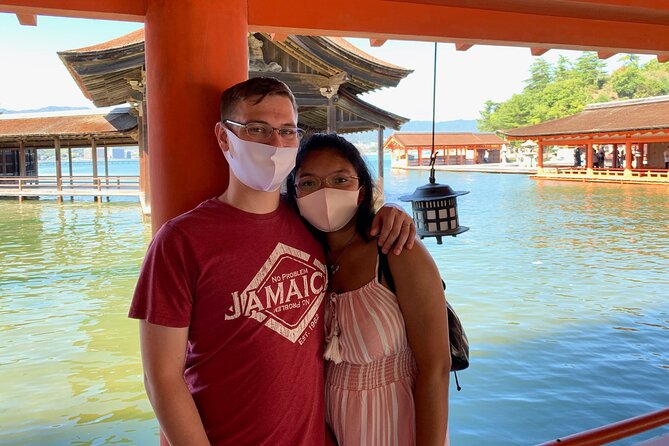
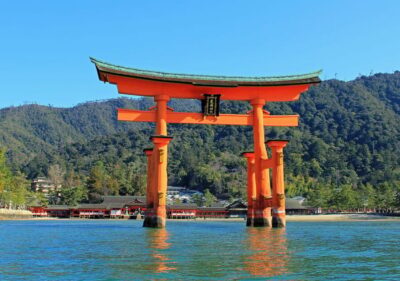
Miyajima’s great appeal comes into view before you even reach the shore: the red torii of Itsukushima Shrine appears to float on the sea as the ferry approaches. This four-hour private tour adds a personal guide to that famous scene, then steers you through temples, shopping lanes, viewpoints, and island customs.
I like the flexible plan, which lets you shape the outing around shrines, food, photographs, or a slower pace. I also like the guides’ practical help. Nori, Mari, Hiroshi, Shin, and others have met people at hotels or the ferry terminal, adjusted routes, found quieter corners, and helped with photos and shopping. The main catch is clear: transport, ferry fares, admission fees, lunch, and the 100-yen Miyajima visitor tax cost extra.
In This Review
- Key points at a glance
- Why a private guide helps on Miyajima
- Meeting at Miyajimaguchi or from your Hiroshima hotel
- Daishoin Temple and its many small surprises
- Itsukushima Shrine and the floating torii
- Omotesando Street, snacks, and practical shopping
- Tenshinkaku and the view over the old town
- Mount Misen, ropeway plans, and the limits of four hours
- What the guides add to the day
- Cost, walking, and what you really pay for
- Best for short Hiroshima stays and first visits
- Should you book this Miyajima tour?
- FAQ
- Where does the Miyajima tour take place?
- How long does the experience last?
- Where is the recommended meeting point?
- Can I meet the guide at my Hiroshima hotel?
- Is transportation included?
- Are entrance fees included?
- Is lunch included?
- What is the Miyajima visitor tax?
- Is this a private tour?
- Can the itinerary be customized?
Key points at a glance
- The ferry approach is part of the experience: Meet at Miyajimaguchi for a quicker start, or arrange an on-foot meeting in Hiroshima city.
- Your route can change: Itsukushima Shrine and Daishoin Temple are central stops, but you can discuss other interests with your guide.
- Expect a walking day: The island includes stairs and uphill sections, especially around temples and Mount Misen routes.
- Public transport keeps the price down: You use local trains, buses, and the ferry rather than a private vehicle.
- Guides add local judgment: They can point out photo positions, quieter temple areas, useful shops, and sensible ways back to Hiroshima.
- Four hours goes quickly: You can see the main sights, but a full Mount Misen outing or a relaxed meal may require more time.
Why a private guide helps on Miyajima
Miyajima is easy to reach from Hiroshima, but easy does not always mean easy to understand. You can walk from the ferry, follow the crowds, take pictures of the torii, and enter the shrine on your own. What you may miss is the meaning behind the buildings, the difference between Shinto and Buddhist sites, and the quieter places tucked just beyond the main shopping street.
A private guide gives you someone to handle the small decisions. You do not need to work out the best order for the shrine and temple, guess which way leads to the ropeway, or search for a particular shop. Guides have also adjusted the pace for older family members and for people who wanted time to stop for food or photographs.
This is not a private-car sightseeing tour. You walk to public transport, pay the fares yourself, ride the ferry, and continue on foot. That arrangement is less polished than a vehicle waiting outside every stop, but it is also closer to the way most people experience Miyajima.
The private format matters most if your group has specific wishes. You can ask for more cultural explanation, extra photo stops, shopping help, or a gentle pace. You cannot combine your booking with another group, so the guide’s attention stays with you.
A few more Hiroshima tours and experiences worth a look
Meeting at Miyajimaguchi or from your Hiroshima hotel
The recommended meeting point is the Miyajimaguchi Passenger Terminal ticket office, in the ferry boarding area for Miyajima. This saves valuable tour time because you begin near the crossing rather than spending part of the four hours getting from central Hiroshima to the port.
You can also meet your guide on foot within the designated area of Hiroshima city, including at your hotel. Guides such as Shin, Nob, Son, and Eijirou have escorted groups from hotels to the train, bus, and ferry. That option is useful if you want help with the entire journey, but remember that the clock is still running during the transfer.
Before the day, communicate your priorities clearly. Tell the guide if the shrine and Daishoin are essential, if shopping matters, or if you are considering Mount Misen. The more specific you are, the easier it is to make four hours work.
The ferry ride itself is short, with one guide describing the crossing as about 10 minutes. Stand where you can watch the island approach. Your guide can help you time your view of the torii and explain what you are seeing before you reach land.
Daishoin Temple and its many small surprises
Daishoin is often the most rewarding stop for people who want more than the standard Miyajima photograph. This historic temple complex spreads along Mount Misen and includes many smaller halls, religious objects, and statues. The setting feels quieter and more reflective than the main approach to Itsukushima Shrine.
Allow about an hour here. Admission is not included, so budget for the entrance fee if one applies at the time of your visit. The tour information also warns you about steps, and that warning matters. Once you leave the flat waterfront area, Miyajima can become a climb.
A guide gives the temple a human scale. Instead of seeing a procession of statues without context, you can ask what they represent and how the site fits into Japanese religious life. One route described by a guide included a dark room beneath a temple, where visitors move by touch along a wall while golden images appear in the darkness. That kind of detail is easy to overlook alone.
The temple also suits a slower pace. One guide took time to show the 500 disciples of Daishoin, a memorable detail for families and anyone who enjoys small visual discoveries. Wear shoes with good support, and tell your guide early if steep steps are a concern.
Itsukushima Shrine and the floating torii
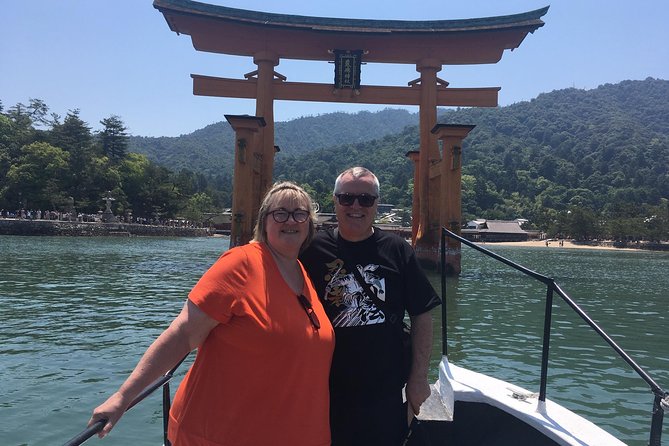
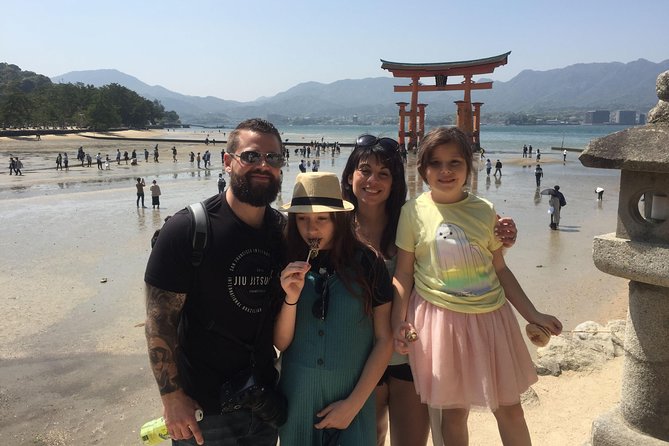
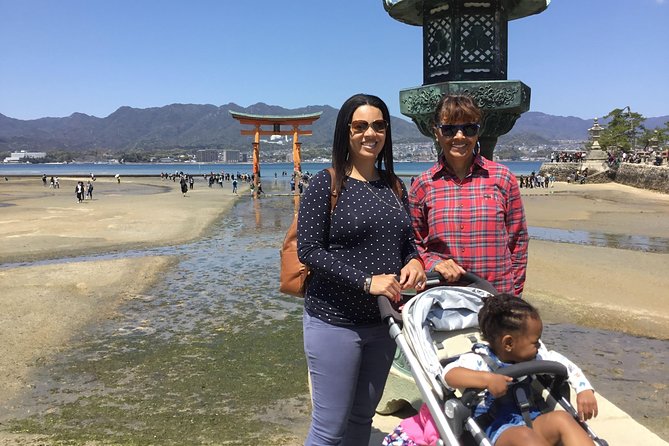
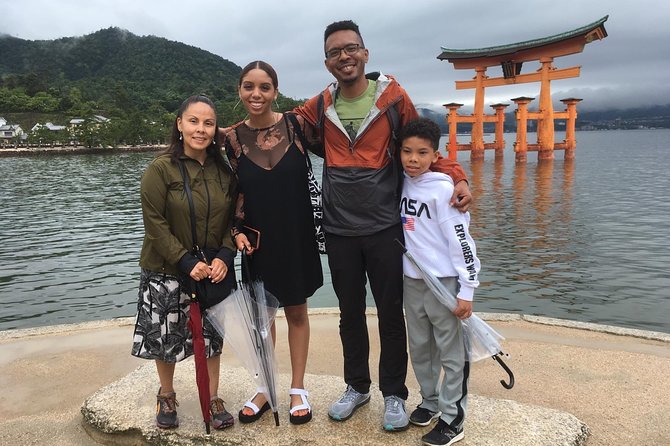
Itsukushima Shrine is Miyajima’s essential stop. Its red buildings and long corridors sit beside the water, creating the famous view of the torii at high tide. At low tide, the gate may be approached on foot, while at high tide it appears to float offshore.
The tide changes the scene, so do not expect the same view at every hour. A guide can help you understand the difference and choose sensible photo spots. One guide arranged views of the torii at both high and low tide, while another showed the best place to stand on the ferry for the approach.
Set aside about an hour for the shrine. Admission is not included. Inside, your guide can explain the purpose of the buildings, the customs connected with the site, and the Shinto ideas that shape the island’s identity. You may also see ceremonies or traditional details that mean more once someone explains them.
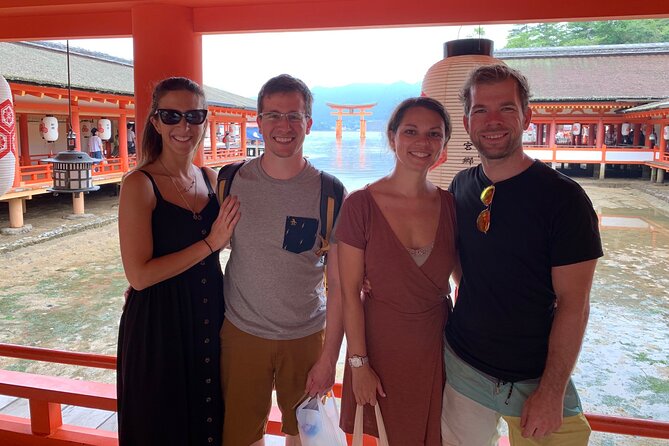
Crowds can collect around the best-known viewpoints. A private guide cannot remove the crowds, but can sometimes take you to a quieter angle or adjust the order of the stops. If photography is important, say so. Several guides, including Mari, Shin, Noriko, and Kahori, have been praised for taking useful photos rather than simply pointing out the view.
Omotesando Street, snacks, and practical shopping
Miyajima Omotesando Shopping Street links the ferry area with the shrine. It is lined with souvenir shops, food stalls, and small places selling local snacks. The planned visit lasts about 30 minutes, but your guide may use this section more flexibly.
This is a good place to try bite-sized food and buy gifts without losing your bearings. Guides have helped people find special chopsticks, choose souvenirs, and locate food that suited their interests. That help is valuable when shop signs or product descriptions are difficult to understand.
Do not treat the street as a minor filler stop. It shows the everyday commercial side of the island, while the shrine and temple show its religious side. The contrast gives you a better sense of how Miyajima functions as both a sacred place and a popular day trip.
Half an hour is enough for a quick look, but not for serious shopping and a relaxed meal. Lunch is not included, and the tour may end before you have time to eat. If food is a priority, mention it before the itinerary is set.
Other guided tours in Hiroshima

Tenshinkaku and the view over the old town
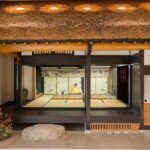
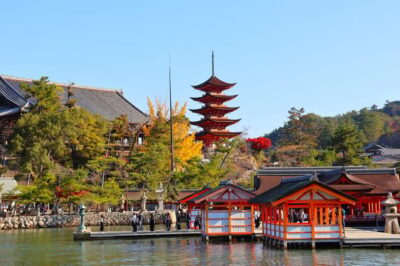
Tenshinkaku is described as an old Japanese house used as a hilltop cafe. From here, you can look toward Toyokuni Shrine, the five-story pagoda, and the Seto Inland Sea. The setting gives you a different angle from the waterfront and shrine precinct.
The planned stop is about an hour, and admission or personal spending is not included. Confirm with your guide what you intend to do there, particularly if you want time for a cafe visit or mainly want the view.
This stop may suit you if you enjoy architecture, photographs, and a quiet pause. It may suit you less if your main goal is to reach Mount Misen. Four hours is not long enough to linger everywhere, so Tenshinkaku becomes part of the route discussion rather than an automatic must for every group.
Mount Misen, ropeway plans, and the limits of four hours
Mount Misen is the island’s major high point, but it deserves careful planning. Some people used the tour to reach the mountain trail, while others received directions for the ropeway and continued independently after the guided portion. One family took the mountain route with Kahori, describing it as a demanding hike that rewarded the effort.
Do not assume a Mount Misen visit fits neatly into this half-day schedule. The basic route focuses on Daishoin, Omotesando, Itsukushima Shrine, and Tenshinkaku. Adding the ropeway, summit areas, or a long hike may mean cutting another stop or continuing after the guide leaves.
Ask about current ropeway timing and queues if the mountain is important to you. One guide helped a group understand how to reach the ropeway, while another dealt with a long wait for the cable car. The guide can give directions and help with planning, but transport and related costs remain yours.
What the guides add to the day
The guide quality is the strongest reason to choose this experience. The specific person assigned can vary, so you should not book on the assumption that one named guide is guaranteed. Still, the guide team includes people such as Nori, Mari, Hiroshi, Nob, Shin, Yuji, Noriko, Kahori, Masa, Michi, and Eiji.
The best pattern is consistent: contact before the tour, a suggested route, clear meeting instructions, and changes made around your interests. Nori and Mari are noted for planning ahead and adapting the route. Hiroshi listened carefully to what a group wanted to see and went beyond its original plan. Shin helped an older couple manage the journey and return to the train.
Guides also bring personal connections to Hiroshima. Nob shared family experiences connected with the city and the bombing, while Emmy discussed firsthand memories of life during that period. Those conversations can add emotional weight, but you should decide how much war history you want alongside Miyajima’s religious and scenic attractions.
A few guides offer personal touches. Yuji gave a private flute performance, and several guides took photographs throughout the day. These are individual guide qualities, not guaranteed inclusions, but they show why a private format can feel more personal than a fixed group walk.
English ability varies by guide, yet the experience is designed around a licensed local English-speaking guide. If detailed conversation is important to you, write your interests and questions in advance. That gives the guide a clear starting point.
Cost, walking, and what you really pay for
The listed price is $122.70 per person. For a private tour, that can be fair if you value personal planning and cultural explanation. It is less attractive if you only need transportation or want to walk around the island independently.
The price does not cover train or bus fares, the ferry, attraction admission, lunch, personal purchases, or the 100-yen-per-person Miyajima visitor tax, payable in cash. You also do not receive a private vehicle. Add these expenses before comparing this tour with a group excursion or a self-guided visit.
The real purchase is four hours of a licensed guide’s time. You are paying for route decisions, transport assistance, local context, flexibility, and help making the most of a short visit. A group of several people may find the per-person cost easier to justify than a solo traveler.
This is a walking tour, with pickup on foot. Most people can take part, and service animals are allowed, but hills and steps are part of the experience. An 88-year-old participant was supported successfully by a guide, yet you should still describe mobility needs before the day begins.
Best for short Hiroshima stays and first visits
I would choose this tour if you have limited time in Hiroshima, want the main sights explained, or feel uneasy handling the train, ferry, and island route alone. It is also a strong fit for families with mixed interests, since the plan can shift between temples, food, shops, and views.
It works well for photographers who want help with timing and viewpoints. It also suits people who want cultural context rather than a quick checklist of famous places. The private setup gives you room to ask questions and pause when a detail catches your attention.
I would think twice if you want a full day on Mount Misen, a long lunch, or extensive shopping. I would also compare costs carefully if you are comfortable using public transport and reading your own guidebook. Miyajima is accessible without a guide, and the extra price makes sense only if the personal help adds real value for you.
Free cancellation is available if you cancel at least 24 hours before the local start time. Changes or cancellations inside that window are not accepted for a refund.
Should you book this Miyajima tour?
Book it if you want a flexible, private introduction to Miyajima and would rather spend your four hours understanding the island than solving its logistics. Request a meeting at Miyajimaguchi if you want to protect sightseeing time, or ask for hotel pickup if transport help matters more.
Before booking, decide your top two priorities. Shrine and temple, shrine and shopping, or shrine and Mount Misen each create a different half-day. Tell the guide about stairs, food, photography, and your return schedule.
I would not book it as a bargain transport package. The ferry, local transit, entrance fees, food, and visitor tax are separate. But for a first visit with limited time, a good guide can turn a pretty island stop into a much more meaningful four hours.
FAQ
Where does the Miyajima tour take place?
The experience takes place on Miyajima Island near Hiroshima, Japan. The route includes Itsukushima Shrine, Daishoin Temple, Omotesando Shopping Street, and Tenshinkaku.
How long does the experience last?
The tour lasts approximately four hours.
Where is the recommended meeting point?
The recommended meeting point is the Miyajimaguchi Passenger Terminal ticket office, located in the ferry boarding area for Miyajima.
Can I meet the guide at my Hiroshima hotel?
Yes. You can arrange to meet the guide on foot at a hotel within the designated Hiroshima city area.
Is transportation included?
No. Public transportation is used, but train or bus fares and the ferry fare are not included. A private vehicle is not provided.
Are entrance fees included?
No. Attraction admission fees are not generally included. Guide entry fees are covered only for sights listed under the tour’s included expectations.
Is lunch included?
No. Lunch and other personal expenses are separate.
What is the Miyajima visitor tax?
The Miyajima visitor tax is 100 yen per person and must be paid in cash.
Is this a private tour?
Yes. Only your own group participates, and groups cannot be combined with another booking.
Can the itinerary be customized?
Yes. The tour is customizable, so you can discuss your interests with the guide. The four-hour schedule may limit how many distant or time-consuming stops fit into the route.
More Private Tours in Hiroshima
More Guided Tours in Hiroshima
More Miyajima Tours in Hiroshima
More tours in Hiroshima we've reviewed


Miyajima Tours, compared.
 ★ 5.0Peaceful Hiroshima & Miyajima UNESCO 1 Day Bus TourFrom $129
 ★ 4.9Hiroshima: Hiroshima and Miyajima UNESCO Sites 1-Day TourFrom $1228 hours
 ★ 5.0Hiroshima / Miyajima Full-day Private Tour with Government Licensed GuideFrom $202
 ★ 4.7Osaka/Kyoto: Hiroshima Miyajima Bus Tour & Shinkansen TicketFrom $27712 hours
 ★ 4.7From Hiroshima: Hiroshima & Miyajima 1 Day Tour with LunchFrom $1168 hours
 ★ 5.0Hiroshima and Miyajima Day Trip with Itsukushima Shrine & FerryFrom $45
