Reviewed · YAMAGUCHI TOURS
Hagi City:Ride an electric kickboard around the town of Hagi
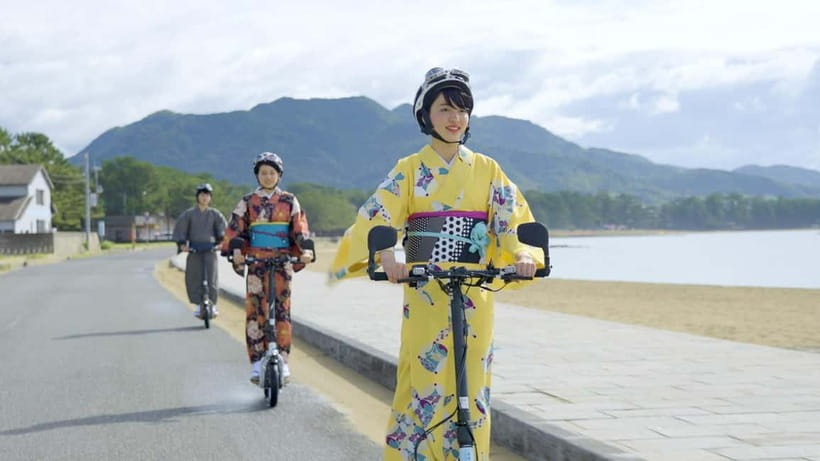
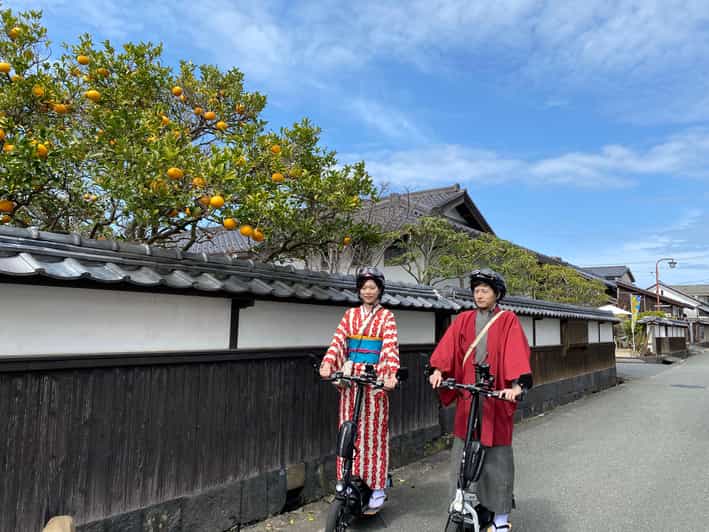
Hagi has the perfect setting for this odd but appealing pairing: a kimono-clad ride through an old castle town. You choose from more than 200 outfits, get dressed by a kimono professional, then practice the electric kickboard before heading out among castle ruins, preserved historic sites, and possibly the coast.
I like two things right away. First, the scooter saves your legs, since walking in a kimono can become tiring fast. Second, the small group limit of five should keep the dressing and riding practice manageable. The main catch is practical: you need a driver’s license, and instruction is in Japanese.
In This Review
- Key points to know before you book
- Why this Hagi activity feels different
- Choosing your outfit from more than 200 kimonos
- Getting dressed, then storing your day bag
- Five minutes of kickboard practice
- Riding through Hagi’s castle-town streets
- The option to reach Hagi’s coastline
- What the 10,000-yen price covers
- Who will enjoy this most
- What to bring and what to leave behind
- The main drawbacks to consider
- Should you book the Hagi kimono kickboard ride?
- FAQ
- How long does the Hagi kimono kickboard activity last?
- How much does the experience cost?
- What is included in the price?
- Is a driver’s license required?
- Is the activity available in English?
- How many people can join a group?
- Can I cancel for a full refund?
Key points to know before you book
- Choose from more than 200 kimonos: Men and women can select an outfit, with coordination handled by a kimono professional.
- Ride after only about five minutes of practice: The electric kickboard is intended to be easy to operate, but you still need to ride safely.
- See more of Hagi than you could on foot: The route can include the castle town, castle ruins, historic sites, and a beautiful coastal stretch.
- Your clothing and extra luggage are stored: You do not need to carry your travel clothes while riding.
- The group is limited to five people: This suits visitors who prefer a small, controlled outing over a large tour.
- A driver’s license is required: People who cannot ride a bicycle, drivers under 21, and people over 70 cannot join.
Why this Hagi activity feels different
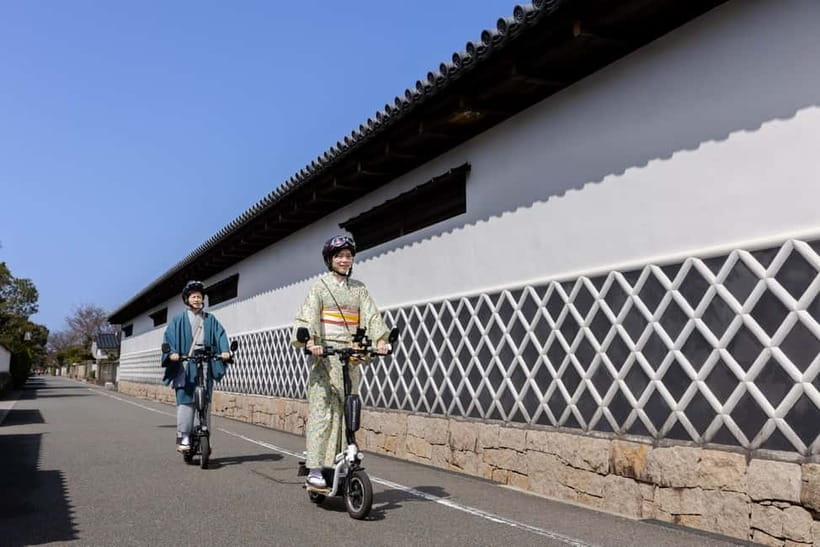
Many Japanese cultural experiences ask you to slow down and stand still. You put on traditional clothing, pose for photos, perhaps walk around a garden, and then change back. This Hagi activity takes a different route. It pairs the careful dressing of a kimono with the modern convenience of an electric kickboard.
That contrast is the whole appeal. Hagi’s old streets and castle-town setting give the kimono a natural backdrop, while the kickboard lets you cover more ground without spending three hours taking small, careful steps. I like the idea because the two halves solve each other’s problems: the kimono gives the ride a memorable character, and the scooter makes the kimono more practical for sightseeing.
You should know what this is not. It is not a guided history tour with an English-speaking escort. The listed instructor language is Japanese, and an escort is not included. The activity is centered on getting dressed, learning the vehicle, and riding around town rather than receiving a detailed lecture at each historic site.
A few more Hagi tours and experiences worth a look

Choosing your outfit from more than 200 kimonos
The experience begins with the part many people will remember most: selecting an outfit. HagiFukuya has more than 200 kimonos for men and women, and a kimono professional helps coordinate your complete look.
The included clothing is not just the outer kimono. Your package includes the nagajuban, or under-robe, obi, waist strings, datejime, maeita, mitsuhimo, Korin belt, collar core, and tabi socks. Sandals and a bag are included as well. This matters because you are not expected to assemble a traditional outfit from a single rented garment.
The coordination fee and dressing fee are included. You can also rent a haori for an additional charge if you want another layer or a more finished look. Hair styling and hair accessories are not included, so plan to arrive with your hair arranged as you like it.
The outfit selection is likely to take some judgment. You will be riding rather than simply posing, so comfort and secure dressing matter as much as color. Ask the staff to help you choose something that allows safe movement. The right outfit should look good in Hagi’s old streets without making the riding portion harder than it needs to be.
Getting dressed, then storing your day bag
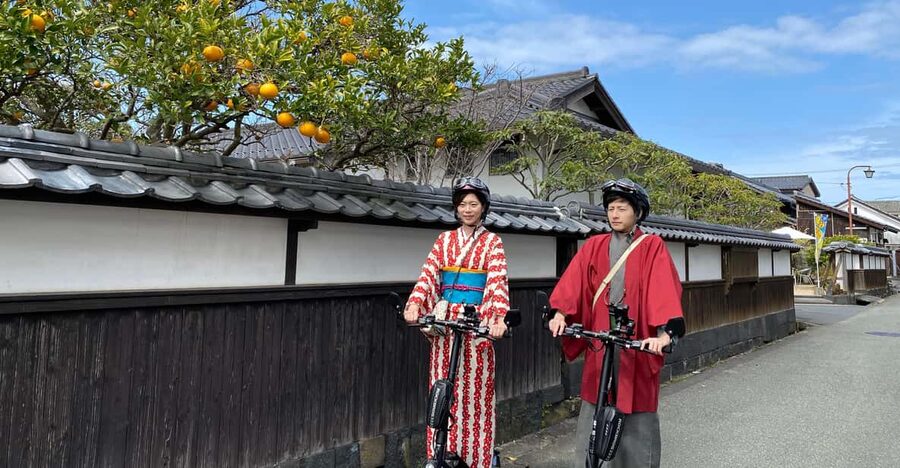
After you choose your kimono, the professional dresses you. The listed package includes all the basic pieces needed for the outfit, along with tabi socks, sandals, and a bag.
One useful detail is the storage service. Your regular clothes and unnecessary luggage can be stored while you ride. That saves you from trying to manage a backpack, shopping bags, or a coat with kimono sleeves and a helmet. It also means you can arrive in ordinary travel clothes and change at the shop.
The shop is described as close to Hagi’s hotels, with access by car. Transportation can also be provided if you request it. Since the exact transport arrangement is not specified, ask about it when booking rather than assuming a hotel pickup is automatic.
You should allow yourself to be patient during dressing. A traditional outfit has more parts than a quick costume change, and the quality of the fit affects your comfort on the kickboard. This is one place where the small group size helps. With no more than five participants, the process should feel more personal than a large rental counter.
Five minutes of kickboard practice
Once dressed, you practice the electric kickboard. The stated practice time is about five minutes, and the vehicle is presented as easy to operate.
That short lesson is useful, but do not treat it as a reason to rush. A kimono changes how you move, and the sandals are not the same as ordinary athletic shoes. Take the practice seriously. Make sure you understand the controls, braking, balance, and how to stop before leaving the shop.
A helmet is included, as is compulsory automobile liability insurance. Those are important practical protections, but they do not replace careful riding. You need to be comfortable controlling the kickboard, and the activity is not suitable for people who cannot ride a bicycle or who have vertigo.
The age and fitness rules are strict. Drivers under 21 and people over 70 are listed as unsuitable, as are pregnant women, people with visual impairments, and people without a driver’s license. Babies under one year old are also excluded. These limits may narrow the activity’s appeal, but they make sense for a moving vehicle and a traditional outfit that can restrict footwork.
Riding through Hagi’s castle-town streets
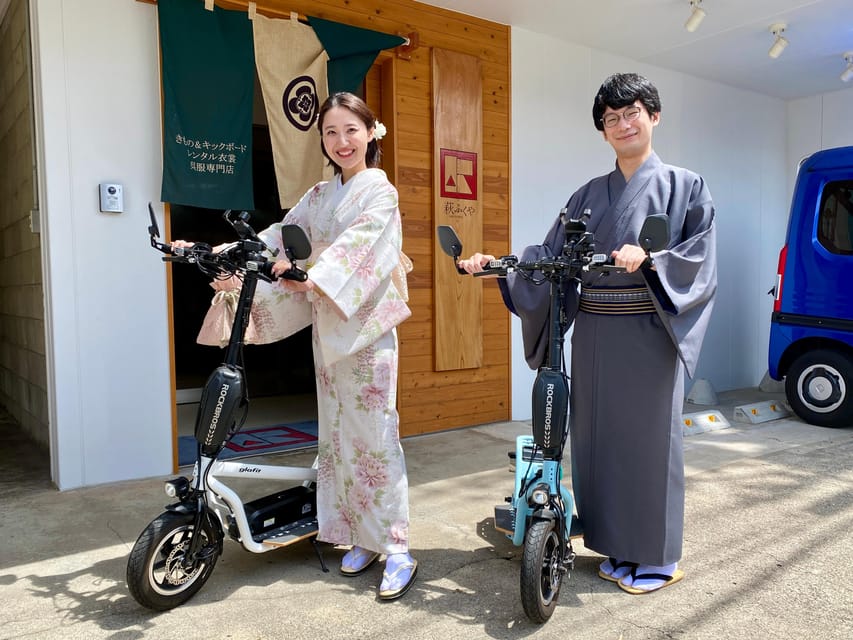
The riding portion lasts within the total three-hour activity, which also includes dressing and practice. You are not given a detailed fixed list of stops in the supplied information, so think of the outing as a flexible ride around Hagi rather than a stop-by-stop historical tour.
Hagi is known here for its castle-town streets, castle ruins, and historic sites that remain intact. Those are the places where the kimono makes the most visual sense. You can ride rather than walk the entire way, allowing you to see more of the town while keeping the old setting in view.
The scooter also changes your pace. On foot, a kimono may encourage you to stay close to the rental shop because every extra block takes effort. With electric assistance, you can go a little farther. That is the central practical benefit of this plan.
You should still expect to ride responsibly through town. The activity does not include an escort, and the instructor speaks Japanese. If you do not understand Japanese well, learn the essential safety instructions before departure and make sure you can communicate basic needs.
The included bag is handy for small belongings, but avoid bringing more than you need. Your main clothes and extra luggage can be stored, so use that option. A light load will make balancing easier and keep the kimono tidy.
The option to reach Hagi’s coastline
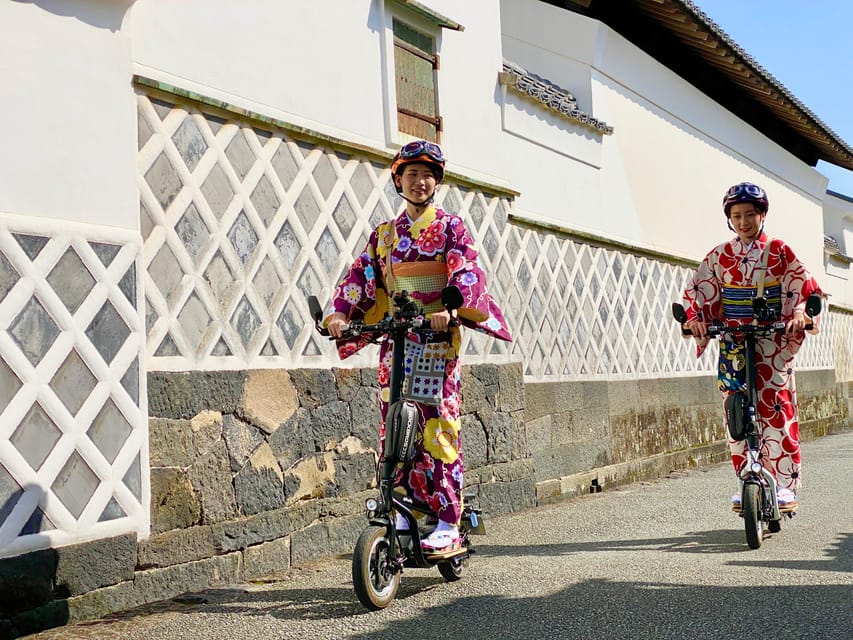
The ride can extend beyond the central historic area toward the coast. That possibility gives this activity more range than a simple kimono rental near a few old buildings.
The coastal portion is especially appealing if you want a change of scenery after the castle-town streets. The supplied description calls the coastline beautiful, but it does not promise a specific coastal route or guarantee that every booking will follow the same path. Confirm the planned route with HagiFukuya if reaching the sea is important to you.
This is also where the kickboard’s usefulness becomes clearest. You can cover a little more distance without turning your kimono outing into a long walking session. Still, the ride is not described as a full sightseeing circuit of every Hagi attraction. You should book it for the unusual combination of clothing, movement, and setting, not as a substitute for a full city tour.
What the 10,000-yen price covers
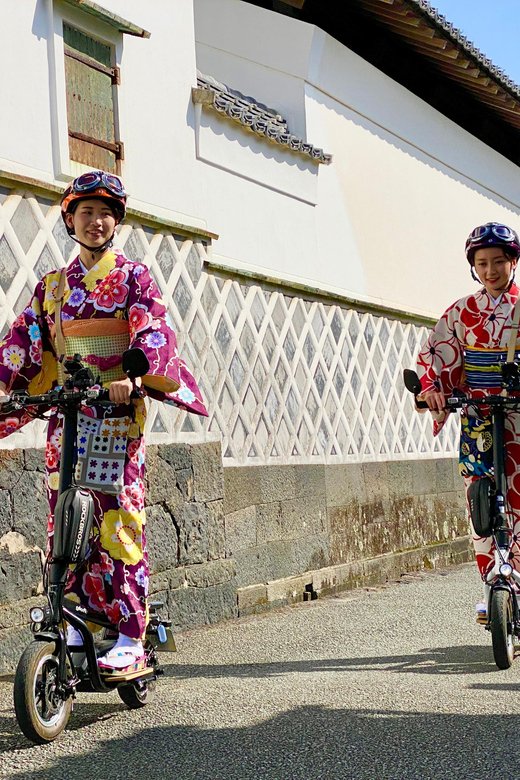
The detailed price is 10,000 yen, including tabi socks. The advertised price is also shown as about $32 per person, though the dollar amount can shift with exchange rates and booking conditions.
For that fee, you receive much more than a vehicle rental. The package includes the kimono, all the main dressing components, coordination, professional dressing, sandals, a bag, the electric kickboard, a helmet, and compulsory automobile liability insurance. That makes the value fairly strong if you already wanted both a kimono experience and a way to get around Hagi.
The price is less attractive if you only want a short kimono photo session or only need a scooter. This activity combines two services, so its value depends on using both. The three-hour duration gives enough time for dressing, practice, and a proper ride rather than a quick change-and-go rental.
Haori rental, hair styling, hair accessories, and an escort cost extra or are not included. Factor those into your budget if you want a more elaborate outfit or personal accompaniment. Transportation may also be available on request, but it is not listed among the included items.
You can reserve now and pay later, which helps if you are still arranging your Hagi schedule. Free cancellation is available up to 24 hours before the activity for a full refund. That gives you useful flexibility, but you should still check the exact start time before booking because the activity runs at set availability rather than on an open-ended basis.
Who will enjoy this most
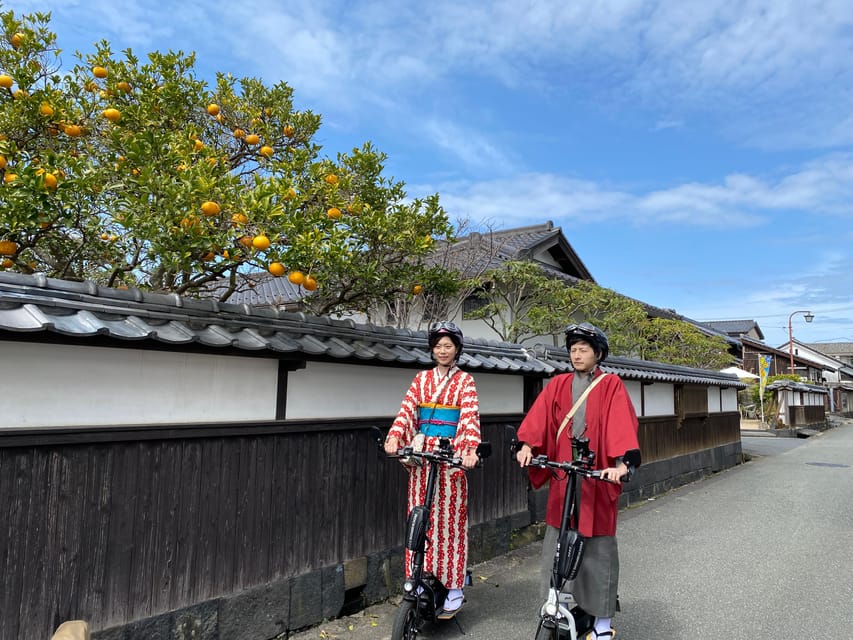
I would choose this for a visitor who wants a strong visual memory of Hagi and does not mind a slightly unusual plan. Couples, friends, and solo visitors can all fit the small-group format, provided everyone meets the riding and age requirements.
It is particularly suited to you if:
- You want to wear a kimono without spending the whole day walking.
- You enjoy trying a local activity that combines old and new Japan.
- You have a valid driver’s license and can ride a bicycle.
- You are comfortable receiving Japanese-language instructions.
- You want to see both historic town areas and possibly the coast.
- You are happy with a small group of up to five participants.
I would choose something else if you need English instruction, an escorted sightseeing route, hair styling, or a fully accessible vehicle experience. I would also skip it if the kimono itself is your only goal. A regular kimono rental may give you more time for careful photos and less concern about balance, helmets, and traffic.
What to bring and what to leave behind
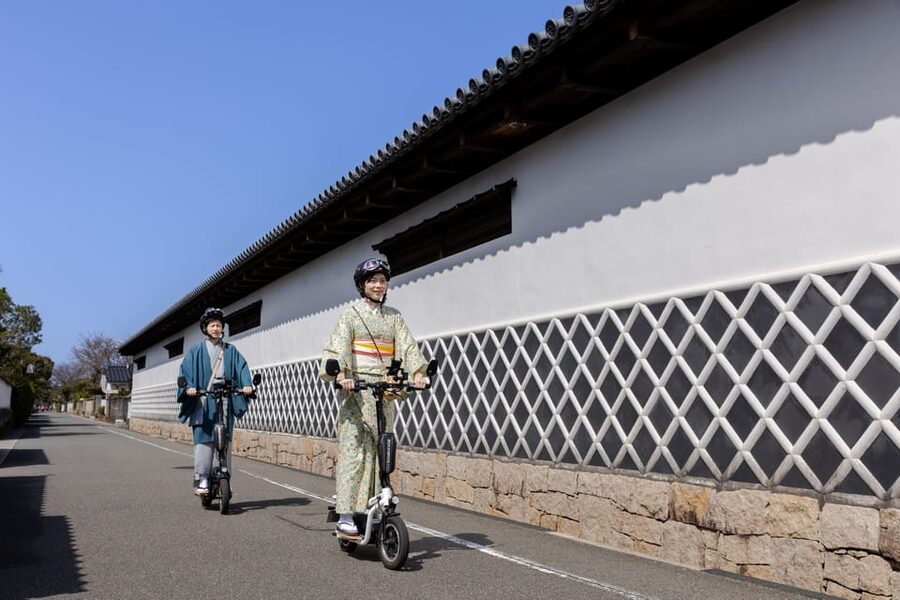
Bring your driver’s license. It is a firm requirement, not a suggestion.
Wear or bring sensible footwear for the activity, and avoid high heels. The package provides tabi socks and sandals, so you do not need to bring those unless you have a personal preference. Your regular clothes and extra luggage can be stored at the shop.
The restrictions are unusually extensive. Do not bring pets, weapons, sharp objects, baby strollers, handcarts, coolers, surfboards, or electric wheelchairs. Alcohol, drugs, alcoholic drinks in the vehicle, strong fragrances, headphones, speakers, audio recording equipment, and party-group behavior are also prohibited.
The list also rules out activities such as fishing, swimming, snorkeling, climbing, touching animals or marine life, feeding animals, and making fires. These items suggest that the ride is meant to remain a clean, controlled town outing, not a beach or adventure excursion. Unaccompanied minors are not permitted, and bachelor or bachelorette party groups are excluded.
The main drawbacks to consider
The biggest limitation is the Japanese-only instruction. If you do not understand Japanese, you must be able to follow basic riding and safety directions through demonstration and simple communication. The activity data does not promise translation or an English-speaking instructor.
The second issue is the driver’s-license rule. Even though the vehicle is easy to learn, you cannot join without a license. People under 21 and over 70 are not accepted, so this is not a good fit for every family or multigenerational group.
The kimono is another practical consideration. It looks right in Hagi, but it can feel restrictive, especially around the legs and waist. The kickboard reduces the strain of walking, yet riding still requires balance and attention. Wear the helmet, take the practice seriously, and do not let the photo opportunities distract you from the road.
Finally, this is not a standard escorted tour. No guide is included, and the stops are not laid out in detail. You get more freedom, but less historical explanation. I see that as a fair trade if you care most about the experience itself and are willing to explore at a relaxed pace.
Should you book the Hagi kimono kickboard ride?
Book it if you want to combine traditional dress, light adventure, and Hagi’s preserved streets in one outing. The more than 200 kimonos, professional dressing, included safety equipment, small group size, and option to ride toward the coast make this much more than a costume rental.
Skip it if you lack a driver’s license, cannot ride a bicycle, need English instruction, or want a formal sightseeing guide. Also skip it if you dislike unusual clothing or feel unsteady on small vehicles.
For the right person, the 10,000-yen price is sensible because it covers the outfit, dressing, scooter, helmet, insurance, and three hours of use. You get a practical answer to the hardest part of kimono sightseeing: how to see more than a few blocks without tiring yourself out.
FAQ
How long does the Hagi kimono kickboard activity last?
The activity lasts three hours, including kimono selection and dressing, riding practice, and the town ride.
How much does the experience cost?
The detailed price is 10,000 yen per person, including tabi socks. The experience is also listed at about $32 per person.
What is included in the price?
The package includes a kimono, nagajuban, obi, dressing accessories, tabi socks, sandals, a bag, kimono coordination, professional dressing, an electric kickboard, a helmet, and compulsory automobile liability insurance.
Is a driver’s license required?
Yes. You must bring a driver’s license to participate.
Is the activity available in English?
The instructor language is listed as Japanese. An English-speaking instructor is not specified.
How many people can join a group?
The activity is limited to five participants.
Can I cancel for a full refund?
Yes. You can cancel up to 24 hours in advance for a full refund. You can also reserve now and pay later.