
Reviewed · PEACE MEMORIAL TOURS
Walking Through History: Hiroshima’s Path to Peace
The most moving part of this Hiroshima tour is how it connects famous monuments with individual lives. A PhD scholar guide such as Ghani or Sheraz leads you from the Atomic Bomb Dome through the Peace Memorial Park, explaining what happened in 1945 and how the city chose peace and rebuilding afterward. I like the small groups of up to 10 and the time given to questions. I also like that the route includes less obvious memorials, not just the sites every visitor photographs. The main consideration is emotional: the museum and survivor accounts can be difficult, and two hours gives you a strong introduction rather than time for every exhibit.
I like the tour’s clear route, which takes you past the Cenotaph, the Peace Bell, Sadako Sasaki’s monument, the National Peace Memorial Hall, and the museum without asking you to work out the park’s layout alone. I also like the practical human touch: guides have answered questions well beyond the basic facts and have offered useful suggestions for Hiroshima food and other sights. Hot weather, rain, and long periods on your feet can make the walk harder, so bring water, sunscreen, and comfortable shoes.
In This Review
- Key points worth knowing before you book
- Why a guided walk helps in Hiroshima
- Meeting the tour at the Cenotaph
- The Atomic Bomb Dome and the first view of 1945
- The Clock Tower of Peace and the Bell of Peace
- The Korean Atomic Bomb Victims Cenotaph
- Sadako Sasaki and the Children’s Peace Monument
- Hiroshima National Peace Memorial Hall
- The Victims Memorial Cenotaph and Flame of Peace
- The Peace Memorial Museum and Prayer Fountain
- The Gates of Peace and Hiroshima’s recovery
- What $23 buys you
- Who will get the most from this walk
- Practical tips for a respectful visit
- Should you book Walking Through History: Hiroshima’s Path to Peace?
- FAQ
- How long does Walking Through History: Hiroshima’s Path to Peace last?
- How much does the experience cost?
- Where does the tour begin?
- Where does the tour finish?
- Which languages are available?
- How many people can join the group?
- Is the tour wheelchair accessible?
Key points worth knowing before you book
- A two-hour route through the main Peace Park: You visit the Atomic Bomb Dome, key memorials, the museum, and the Gates of Peace in a compact walk.
- A PhD scholar as your guide: Guides such as Ghani and Sheraz explain the political background, the bombing, survivor experiences, and Hiroshima’s recovery.
- Small groups make a real difference: With no more than 10 people, you can ask questions and hear the guide clearly.
- Sadako’s story gives the history a personal face: The Children’s Peace Monument and its paper-crane tradition show how one child’s story became a message of peace.
- Several memorials receive proper attention: The Korean Atomic Bomb Victims Cenotaph, Dr. Marcel Junod Memorial, and Norman Cousins Memorial Monument add viewpoints you could easily miss alone.
- Good value at $23: You are paying mainly for context and orientation, not transportation or a meal.
Why a guided walk helps in Hiroshima
Hiroshima’s Peace Memorial Park is easy to reach, but it is not always easy to understand. The open paths, riverside setting, memorials, and remaining structures can seem simple at first glance. The meaning sits in the details: why a monument was built, whose name it remembers, and how each site fits into the story of the bombing and the city’s response.
That is where this tour earns its price. A guide does not simply point at the Atomic Bomb Dome and move on. The better guides, including Ghani and Sheraz, explain the events leading up to the bombing, the human cost, the aftermath, and the rebuilding of Hiroshima. They also separate established fact from rumor, an important service at a place where many visitors arrive with partial or simplified knowledge.
The small-group format helps. A limit of 10 people means you can ask about military history, Japanese society, survivor testimony, or the symbolism of a monument without shouting across a crowd. Several guides have also adjusted to late arrivals or heavy rain while keeping the group moving, though you should still aim to reach the meeting point on time.
The walk is offered in English, Urdu, and Hindi. It is wheelchair accessible, but the experience still involves outdoor walking and standing. If you have heart problems, this activity is not considered suitable.
A few more Hiroshima tours and experiences worth a look
Meeting the tour at the Cenotaph
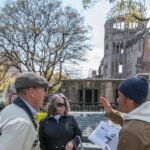
The meeting point is at the Atomic Bomb Dome, in front of the cenotaph erected by volunteers connected with the former Hiroshima Prefecture Chiho Lumber Company. This is a useful starting point because it places you directly inside the memorial area rather than wasting time on transfers.
Your guide then sets the tone for the visit. This is not a light sightseeing stroll, and the best approach is calm, factual, and respectful. The tour deals with death, injury, displacement, radiation, and the long effects of war. It also looks at recovery, renewal, and the city’s peace work, so the story does not end with destruction.
You should wear weather-appropriate clothing. Hiroshima can be hot, and the route includes outdoor sections with limited shade. A hat, sunscreen, and water are sensible additions. Smoking is not allowed during the activity.
The Atomic Bomb Dome and the first view of 1945
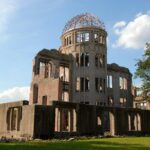
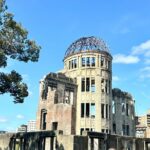
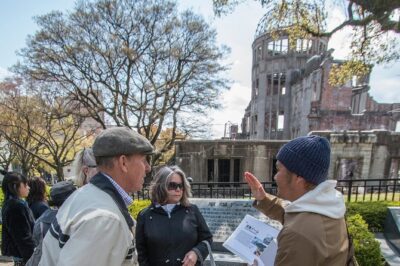
The Atomic Bomb Dome is the tour’s most recognizable landmark. Its damaged frame remains beside the Motoyasu River, close to the hypocenter of the atomic bombing. The building’s exposed structure gives you a physical reference point for an event that can otherwise feel remote and abstract.
The guide spends about 20 minutes here, enough time to explain the building’s role and why it was preserved. This is often the moment when Hiroshima’s history becomes more immediate. You are not looking at a replica or a museum model. You are looking at a surviving structure in the city where the bombing occurred.
The Dome is also a busy photo stop, so expect other people nearby. A guided explanation helps you avoid treating it as just an attractive ruin. Take your photographs quietly, then give your attention to the history.
The Clock Tower of Peace and the Bell of Peace
The Clock Tower of Peace receives around 10 minutes of guided attention. Like many of the park’s monuments, it can be easy to pass without knowing why it matters. Your guide explains its place within Hiroshima’s wider peace message and helps connect it with the other memorials around the park.
At the Bell of Peace, you have the chance to ring the bell as a symbol of hope and world peace. This is a simple action, but the setting gives it weight. The tour is not only about listening to dates and names. It also shows how Hiroshima expresses its wishes for a world without nuclear weapons.
The bell stop can be reflective rather than dramatic. You may find that the quiet action of ringing it works better than a long speech. Your guide will help explain the symbolism without turning the moment into a performance.
The Korean Atomic Bomb Victims Cenotaph
The Korean Atomic Bomb Victims Cenotaph adds an important perspective to the park. The bombing affected people from many backgrounds, including Koreans living in Hiroshima at the time. This stop broadens the story beyond the city’s Japanese population and points to the wider human reach of wartime policies and forced movement.
About 10 minutes are set aside here. That is enough for a focused explanation, though visitors who want extensive detail on wartime Korea or colonial history will need more time elsewhere. Still, including this cenotaph makes the route more balanced than a walk that covers only the most famous Japanese memorials.
I find this stop especially valuable for visitors who want the history presented from more than one national viewpoint. It also gives you a reminder that memorial spaces contain several overlapping stories.
A few more Hiroshima tours and experiences worth a look

Sadako Sasaki and the Children’s Peace Monument
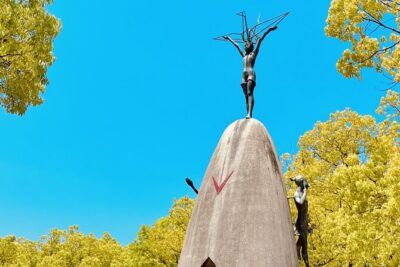
The Children’s Peace Monument is one of the park’s most personal stops. It is linked to Sadako Sasaki, the young girl whose story became associated with folding a thousand paper cranes. The cranes now carry a message of hope and peace, and the monument speaks to the children affected by the bombing and its aftermath.
The guide gives this stop about 10 minutes. That may be enough to understand Sadako’s story and the monument’s meaning, while leaving you time to look at the surrounding displays of cranes. Many visitors find this more accessible than military history because it brings the consequences of the bombing into the life of one child.
The story should not be treated as the whole history of Hiroshima. It is one personal thread among many. That is precisely why it works well on a walking tour: it gives you a human entry point before the more detailed memorial and museum material.
Hiroshima National Peace Memorial Hall
The National Peace Memorial Hall receives about 20 minutes, one of the longer stops on the route. It honors the victims and preserves memories connected to those who died as a result of the bombing. The atmosphere is quiet and formal, and your guide provides context before you move through the space.
This stop can help you understand the scale of loss without reducing people to a single number. Names, personal records, and testimony matter because they show that the bombing affected families, neighborhoods, workplaces, schools, and daily routines.
Twenty minutes is enough for an introduction, but you may want to return later if the hall speaks strongly to you. The tour has a fixed route, so it cannot pause at every display for long. Think of this portion as a guided orientation that prepares you for further independent time.
The Victims Memorial Cenotaph and Flame of Peace
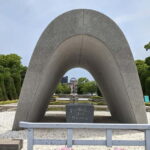
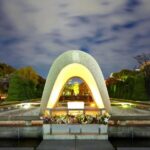
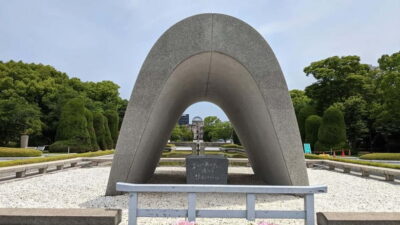
The Hiroshima Victims Memorial Cenotaph is one of the central places for paying tribute to those who died. The curved form of the cenotaph is highly recognizable, and the guide explains the memorial’s purpose and the names it represents.
Nearby, the Flame of Peace carries a message tied to the elimination of nuclear weapons. The flame has burned since 1964 and is intended to remain lit until nuclear weapons are gone from the world. This gives the park a forward-looking purpose. It is not only a place for mourning the past but also a place where Hiroshima states its hopes for the future.
The short guided stop is likely to feel solemn. Give yourself room to pause rather than rushing immediately to the next photograph. The park’s design rewards quiet attention.
The Peace Memorial Museum and Prayer Fountain
The Peace Memorial Museum is the tour’s main place for exhibits, artifacts, and survivor testimony. The guide allocates around 10 minutes to this stop, so you should understand what that means before booking. You will receive an introduction and direction, but you will not have time to study every room or read every account at length.
For many people, the museum is the emotional center of a Hiroshima visit. Objects connected to victims, photographs, clothing, personal belongings, and testimony show the bombing through ordinary lives. The material can be upsetting, particularly for children or anyone already affected by war-related subjects.
The museum section may work best as a first look, followed by a separate return visit if your schedule allows. Some visitors choose to see the museum before the walking tour to get basic context. Others prefer the guide first, so the monuments and stories have a framework when they enter the exhibits. Both approaches make sense.
The Prayer Fountain offers a quieter pause. It represents the suffering of people who were thirsty after the bombing and sought water. The stop is brief, but its meaning is direct and physical. Water, usually an everyday necessity, becomes part of the memorial’s language.
The Gates of Peace and Hiroshima’s recovery
The route ends at the Gates of Peace, a row of gates carrying the word peace in many languages. This closing stop shifts the focus from one city’s suffering to a message intended for people from around the world.
Your guide also discusses Hiroshima’s recovery and modernization after the war. That part matters. If you leave the park seeing Hiroshima only as a preserved disaster site, you have missed the modern city around it. The tour connects the memorial area with Hiroshima’s traditions, food, and contemporary life, and guides such as Sheraz have offered suggestions for local dishes and other things to do.
The Gates make a fitting endpoint because they look outward. You finish with the memory of 1945 still present, but also with a sense of the city’s decision to rebuild and speak for peace.
What $23 buys you
At $23 per person, this is a strong-value introduction to Hiroshima’s Peace Memorial Park. You are not paying for a full-day excursion, transportation, food, or a private guide. You are paying for two hours of structure, explanation, and access to a route that would take more effort to assemble on your own.
The value rises if you are visiting Hiroshima for the first time. A guide can point out the meaning of the Korean cenotaph, the Prayer Fountain, the Peace Bell, and other memorials that a self-guided walk might reduce to quick photo stops. You also avoid spending your first hour wondering which direction to take.
The price is less attractive if you want long, unhurried museum time. The museum portion is short, and the tour cannot provide a full historical course in two hours. You may want to add independent time at the museum and National Peace Memorial Hall after the walk.
The activity offers free cancellation up to 24 hours in advance and a reserve-now, pay-later option. The advertised price does not include hotel pickup, meals, drinks, or personal expenses.
Who will get the most from this walk
I would choose this tour for a first visit, especially if you want a clear overview before exploring the museum on your own. It suits people who ask questions, enjoy history, and prefer learning why a place matters instead of simply collecting photographs.
Families can benefit from the small group and the guide’s ability to explain difficult subjects at a suitable pace. The story of Sadako and the Children’s Peace Monument can help younger visitors connect with the park, although parents should decide if the museum’s material is right for their children.
It also suits visitors interested in peace studies, World War II, Japanese history, or the way cities recover after catastrophe. The guides bring different personal backgrounds and language skills to the discussion, and the tour has been led by people such as Ghani, Sheraz, Shiraz, Cva, and Wajid.
You may prefer to skip it if you strongly dislike group tours, want to spend the entire two hours inside the museum, or cannot manage outdoor walking. The route is wheelchair accessible, but accessible does not mean effortless in hot weather or rain.
Practical tips for a respectful visit
Arrive ready to walk and listen. Comfortable shoes matter more than stylish ones, and a bottle of water will help on warm days. Bring a hat, sunscreen, and a camera, but use the camera with care around memorials and other people.
Keep your schedule flexible after the tour if possible. The subject may leave you wanting quiet time, a longer museum visit, or a simple meal before moving on. This is not a stop to squeeze between several noisy attractions.
If you are deciding between visiting the museum before or after the walk, consider your learning style. Museum first gives you factual and visual context. Tour first lets the guide explain the park’s monuments before you face the exhibits. The tour does not become pointless if you have already visited the museum. The outdoor memorials, individual stories, and local context add a different layer.
Should you book Walking Through History: Hiroshima’s Path to Peace?
Book it if you want an efficient, respectful introduction to Hiroshima with a guide who can answer detailed questions. The strongest reasons are the small groups, the careful route, the inclusion of less obvious memorials, and the guides’ ability to connect wartime events with survivor stories and the city’s rebuilding.
I would treat the tour as a beginning, not a complete Hiroshima visit. Pair it with extra time at the Peace Memorial Museum, and do not plan a rushed attraction immediately afterward. At $23, it offers good value for first-time visitors who want the Peace Park to make sense. Skip it only if you already know the memorial area well or prefer to set your own pace entirely.
FAQ
How long does Walking Through History: Hiroshima’s Path to Peace last?
The walking tour lasts two hours.
How much does the experience cost?
The listed price is $23 per person.
Where does the tour begin?
The meeting point is at the Atomic Bomb Dome, in front of the cenotaph erected by volunteers connected with the former Hiroshima Prefecture Chiho Lumber Company.
Where does the tour finish?
The tour finishes at the Gates of Peace.
Which languages are available?
The live tour is available in English, Urdu, and Hindi.
How many people can join the group?
The tour is a small-group activity limited to 10 participants.
Is the tour wheelchair accessible?
Yes, the activity is listed as wheelchair accessible. People with heart problems are advised not to take part.
More Walking Tours in Hiroshima

More Hiroshima City Tours in Hiroshima
More Peace Memorial Tours in Hiroshima

More tours in Hiroshima we've reviewed



Peace Memorial Tours, compared.
 ★ 4.8Hiroshima Historical Walking Tour – Why A-Bomb was DroppedFrom $352h 30m
 ★ 5.0Hiroshima Peace (Heiwa) Walking Tour at World Heritage SitesFrom $94
 ★ 4.9Hiroshima: Miyajima Peace Memorial Icons of Peace and BeautyFrom $1638 hours
 ★ 5.0Hiroshima Walking Tour Why A Bomb was dropped to HiroshimaFrom $28
 ★ 5.0Hiroshima 2hr Peace Cycling Tour with Local GuideFrom $59
 ★ 4.8Hiroshima: Peace Cycling Tour with Local GuideFrom $522 - 3 hours
