
Reviewed · MIYAJIMA TOURS
Miyajima Half-day Trip Historical Walking Tour
Miyajima makes its biggest impression when you understand what you are seeing, not just when you photograph the famous red Otorii Gate. This small-group walk pairs the island’s sacred sites with local food, ferry views, and the kind of cultural explanation that is hard to pick up on your own.
I like the six-person group limit, which keeps the walk personal and makes it easier to ask questions. I also like that lunch is included, with local choices such as grilled or fried oysters and momiji dumplings. The main drawback is that the ferry costs an extra 500 yen round-trip, and the food arrangements cannot guarantee allergy-free or gluten-free meals.
In This Review
- Key points to know before booking
- Why Miyajima is better with context
- Starting at Miyajimaguchi and crossing the Seto Inland Sea
- Walking toward the Otorii Gate
- Itsukushima Shrine and the architecture of the tides
- Daisho-in Temple, the spiritual highlight
- Momijidani Park and Senjokaku
- Lunch, oysters, and momiji manju
- What the $109.43 price includes
- Weather, food needs, and the walking pace
- Guide quality and one booking precaution
- Should you book the Miyajima half-day walk?
- FAQ
- How long does the Miyajima walking tour last?
- Where does the tour start?
- Where does the tour end?
- Is the ferry ticket included?
- What sights are included?
- Is lunch included?
- Are vegetarian and vegan meals available?
- Can the tour accommodate allergies?
- How many people can join the tour?
Key points to know before booking
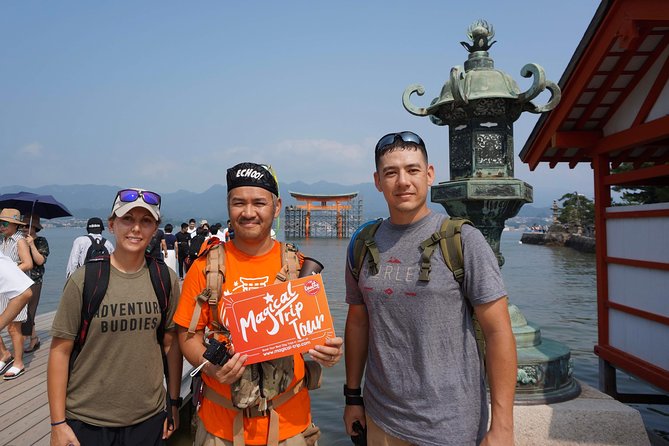
- A compact Miyajima introduction: In about five and a half hours, you see the Otorii Gate, Itsukushima Shrine, Daisho-in Temple, Momijidani Park, Senjokaku, and Omotesando Street.
- A genuinely small group: The maximum is six people, though some departures may become private when few places are booked.
- Food is part of the experience: The included Hiroshima-style lunch may feature oysters, eel, or other local dishes, followed by a chance to try momiji manju and street snacks.
- The ferry fare is extra: Budget 500 yen for a round-trip ferry ticket from Miyajimaguchi to Miyajima.
- A walking tour with hills and stairs: Daisho-in is worth the effort, but bring solid walking shoes and expect some steps.
- Guides add the meaning: Guides including Hika, Eri, Hiro, Yuji, Kaori, Shun, Kiki, and Meri have been praised for clear explanations, flexibility, and help with photos.
Why Miyajima is better with context
Miyajima is easy to visit without a guide. You can take the train to Miyajimaguchi, catch the ferry, follow the signs, and photograph the shrine. But the island’s power comes from the relationship between the sea, the shrine, Buddhist temples, and Japanese religious tradition. A guide helps turn a pleasant outing into a more meaningful one.
The tour focuses on Japanese spirituality in practical terms. You learn why Itsukushima Shrine was built over the water, how its architecture relates to the tides, and how Buddhism is expressed at Daisho-in Temple. That background matters because Miyajima is not simply a pretty island with a famous gate.
The small group is a major advantage. Six people is still enough for a social outing, but it is small enough for a guide to adjust the pace, answer questions, and help with photographs. Several guides are described as friendly and easy to talk with, and some departures have operated with only one family or one guest. If that happens, you receive something close to a private walk without booking one outright.
A few more Hiroshima tours and experiences worth a look

Starting at Miyajimaguchi and crossing the Seto Inland Sea
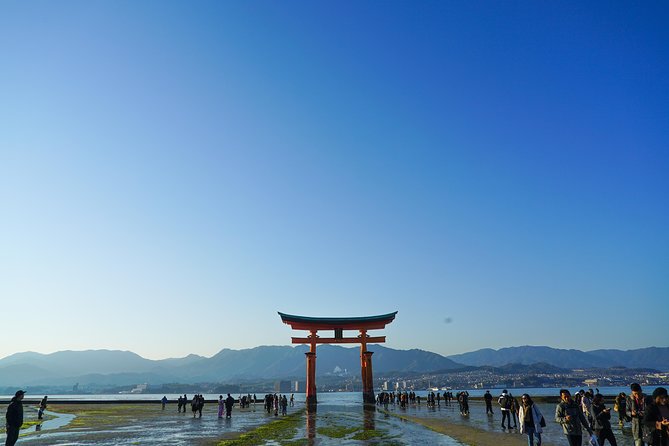
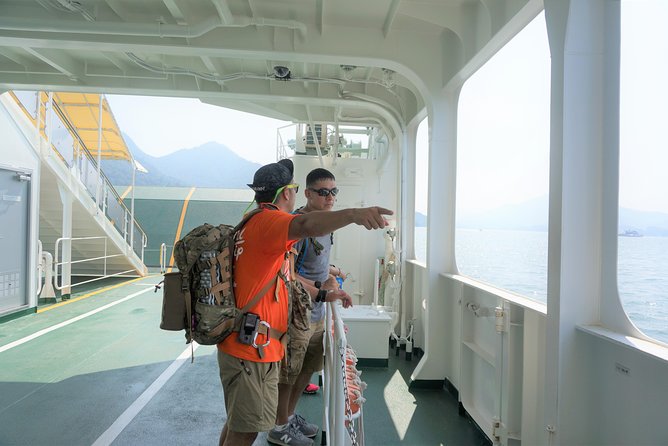
The meeting point is at 1-chōme-3-26 Miyajimaguchi, Hatsukaichi, Hiroshima 739-0411. From there, you board the ferry for Miyajima. The crossing gives you an excellent first view of the Seto Inland Sea and, as you approach, the Otorii Gate.
The ferry ride is not just transportation. It creates a useful transition from mainland Hiroshima to the island’s slower, more symbolic setting. Keep your camera ready, but do not spend the whole crossing looking down at it. The approach to the gate is one of the best photo moments of the day.
The ferry ticket is not part of the tour price. You pay 500 yen for the round trip, about $4 based on the supplied price information. That is a small extra cost, but the tour price of $109.43 per person should not be read as fully all-inclusive.
The tour ends back at the meeting point. That makes it easier to continue exploring Hiroshima afterward, but it also means you should not plan a tight connection immediately after the scheduled finish. The overall duration is about five hours and 30 minutes, and walking pace, crowds, weather, and meal timing can affect the exact finish.
Walking toward the Otorii Gate
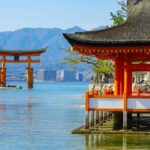
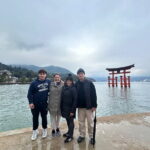
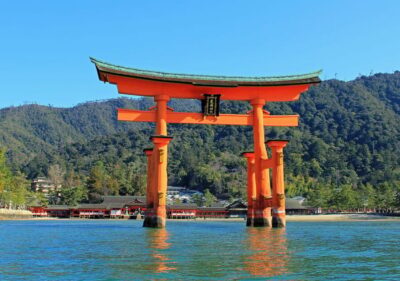
After arriving on Miyajima, the walk follows the coast toward the Otorii Gate and then continues to Itsukushima Shrine. The gate is the island’s best-known image, but its meaning is more interesting than its fame suggests. It marks a symbolic entrance to the sacred area and appears to float offshore when the tide is high.
Tide levels can change the view considerably. At low tide, you may be able to walk out toward the gate, while at higher water the gate is framed by the sea. One particularly memorable account describes reaching the gate during low tide and touching its weathered surface. That kind of moment depends on the conditions, so you should treat it as a possibility, not a promise.
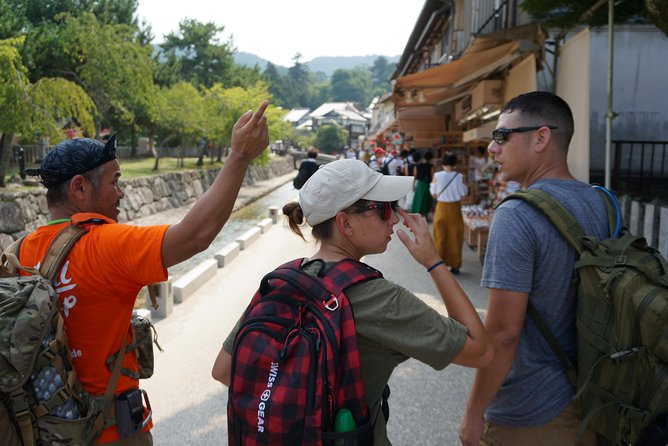
The coast walk is also a good point to ask your guide about the island’s religious customs and its long connection with pilgrimage. Guides such as Hika, Hiro, and Meri have been praised for combining facts with personal stories and for making time for questions.
If the weather is wet, the walk still works, but photographs will be less predictable. Rain can also make stone paths slick. An umbrella or rain jacket, comfortable shoes, and a willingness to slow down will help.
Itsukushima Shrine and the architecture of the tides
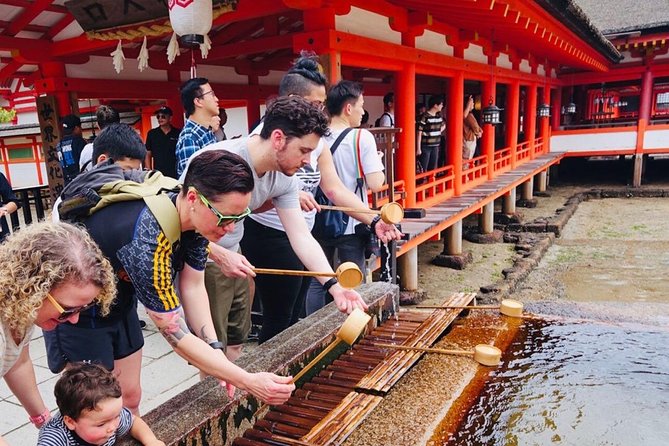
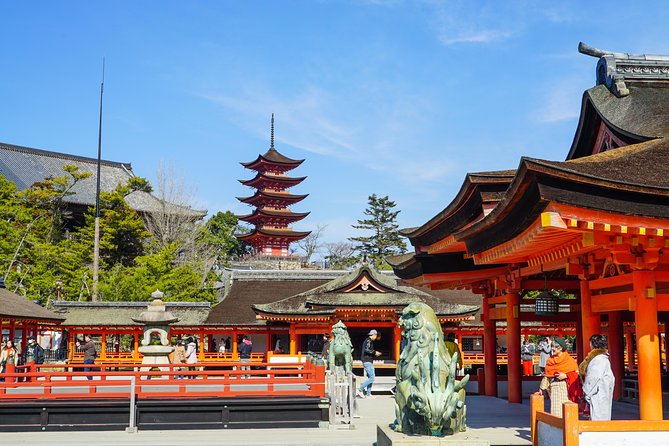
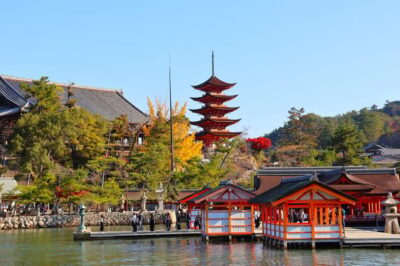
Itsukushima Shrine is the tour’s central cultural stop. Built during the Heian period, from 794 to 1192, the shrine is known for its distinctive structure over the water. Its design changes character with the tide, which is one reason the visit feels different from a standard temple stop.
Your guide explains the shrine’s history and spiritual role, then gives you time for photographs. The shrine itself is included in the tour, so you do not need to arrange a separate admission ticket for this stop.
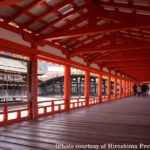
I would pay attention here instead of rushing straight to the most famous photo angle. Look at how the corridors, pillars, and open spaces frame the sea. The setting is the point. You are seeing a place designed around water, movement, and ritual rather than a building placed on solid ground.
Crowds can affect the experience. Miyajima is a major Hiroshima excursion, and the shrine area can be busy. A guide cannot remove the crowds, but can help you use your time well and point out what deserves attention beyond the main gate.
Daisho-in Temple, the spiritual highlight
Daisho-in Temple is often the most rewarding stop for people who want more than the usual Miyajima photographs. It is the main temple of the Omuro school of Shingon Buddhism, and the guide explains Buddhist ideas along with the many statues found around the temple.
The stop lasts about 30 minutes, but the cultural value is much greater than the time suggests. The temple gives you a different side of Miyajima from Itsukushima Shrine. The shrine presents Shinto architecture and the sea. Daisho-in brings you into a Buddhist setting filled with statues, religious symbols, and a quieter mood.
There are stairs and uphill sections around the temple. Several tour accounts specifically praise guides for allowing breaks on hills and stairs, which is important for families and anyone managing a long day of sightseeing. Still, this is a walking tour, not a flat promenade. Wear walking shoes and tell your guide if you need a slower pace.
For me, this is one of the strongest reasons to book the guided version. You can walk through Daisho-in alone, but the statues and symbols are easy to pass without understanding. A clear explanation gives the place shape.
Other walking tours we've reviewed in Hiroshima

Momijidani Park and Senjokaku
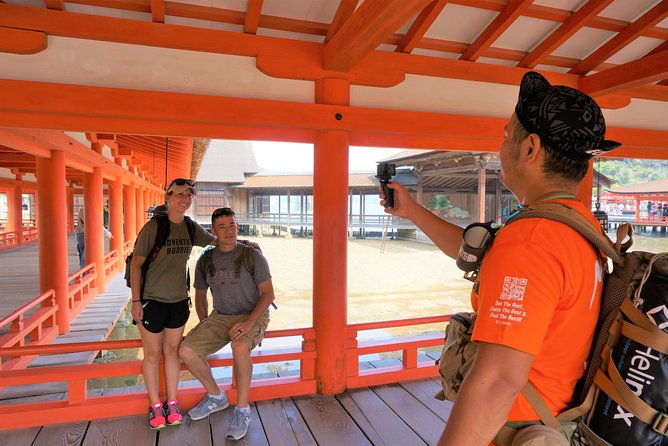
Momijidani Park is a 30-minute photo stop. It provides a change of pace after the shrine and temple visits, with room to enjoy the island’s natural setting. The park is especially appealing if you want photographs that are not all centered on gates and religious buildings.
The tour then visits Senjokaku, the common name for the main hall of Toyokuni Shrine, also called the Terminal Shrine of Itsukushima Shrine. The guide explains the building and its place within the island’s religious sites.
These two stops are shorter and less structured than the shrine visit. That is a plus if you want breathing room, though people looking for a long nature walk may find the park visit brief. The tour is designed as a broad introduction to Miyajima, so it touches several places rather than spending an hour at each one.
Lunch, oysters, and momiji manju
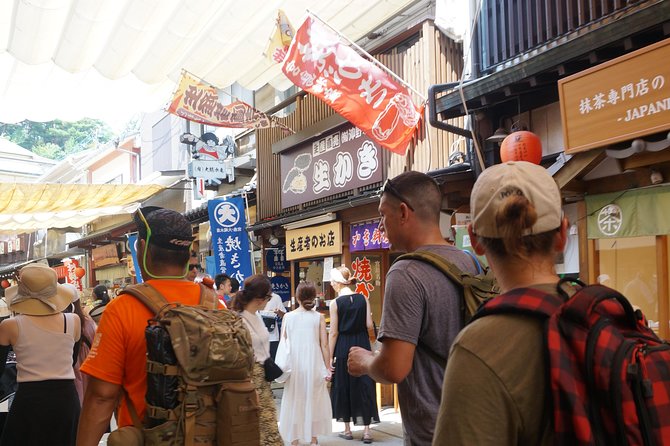
Food is one of the tour’s practical strengths. An included Hiroshima local lunch may feature fresh or grilled oysters, fried oysters, eel, or other island dishes. The exact meal can vary, but the focus is on foods associated with Miyajima and Hiroshima rather than a generic packed lunch.
The meal gives you a chance to try local specialties without having to choose a restaurant while navigating a new place. Guides have also taken care of snacks and soft-serve ice cream on some outings, and momiji manju, a maple-leaf-shaped cake filled with sweet bean paste or other fillings, is a natural treat to look for on the island.
Omotesando Shopping Street is the final major stop. It is lined with souvenir shops and food stalls, including places selling grilled oysters and other local dishes. You get time to browse, eat additional snacks, and choose souvenirs before returning to the meeting point.
Additional food and drinks are not included. That is useful to remember because the street makes it easy to spend more. I would save room for a snack, especially if you want to compare the included lunch with a grilled oyster or momiji manju from the shopping street.
What the $109.43 price includes
At $109.43 per person, this is not the cheapest way to see Miyajima. You can visit the island independently for far less, paying mainly for transportation and any admission fees. The question is what you want from the day.
The price includes:
- A certified MagicalTrip guide
- Entrance fees to the shrines, temples, and museum included in the walk
- Hiroshima local lunch
- Tour photos
The guide is the main value. If you want historical and religious context, help finding the key sites, and someone to guide you through local food, the extra cost can make sense. The maximum of six people also matters. A larger coach tour would usually cost less per person, but it would offer less flexibility and less chance to speak with the guide.
The included meal and admissions reduce the need for small decisions during the day. You still pay the 500-yen ferry fare and any extra food or drinks, but the main parts of the experience are covered.
I would book this tour for a first visit to Miyajima, especially if your time in Hiroshima is limited. If you already know the island well or prefer to explore at your own pace, independent travel may be better value.
Weather, food needs, and the walking pace
Summer on Miyajima can be hot and humid, with supplied information warning of temperatures as high as 40°C, or 110°F. Bring water, wear a hat, and plan for heat. Winter can also be cold, with possible lows of -5°C, or 20°F, so clothing needs to match the season.
Rain does not make the tour impossible. A rainy day can bring fewer people and a quieter mood, but you will want waterproof shoes or good traction. The Otorii Gate may also look different depending on the tide and cloud cover.
Food restrictions need careful planning. Vegetarian and vegan options are available but limited. Gluten-free lunch is not available, and the operator cannot guarantee allergy-free food because meals are prepared in kitchens it does not control.
Tell the operator about dietary requests or allergies at least one day before the tour. Same-day requests cannot be accommodated, and substitutions may not be possible at every stop. If your dietary needs are strict, this is a serious reason to consider visiting independently with your own food plan.
All ages are welcome, and most people can participate. The main physical issue is the amount of walking, plus stairs and hills near Daisho-in. Families have found the experience manageable when guides allow breaks, but young children and anyone with limited mobility should consider the route carefully.
Guide quality and one booking precaution
The guide can shape this experience more than any single sight. Hika is praised for patience, local explanations, and family-friendly pacing. Eri is noted for strong historical knowledge and for making time for breaks. Hiro, Yuji, Kaori, Shun, Kiki, Tommy, and Meri are also described as friendly, flexible, and helpful with photographs.
You should not expect the exact same personality or route adjustments on every departure. That is normal with a guide-led experience. What you can reasonably expect is a certified guide, a small group, and an effort to explain the shrines, temples, food, and island customs.
One practical caution: preserve your booking confirmation and check the meeting details before the tour. A reported reservation-system failure left one person waiting without a guide, so it is sensible to verify the booking if you have not received clear confirmation. This appears to be an operational risk rather than the usual experience, but it is worth guarding against.
Free cancellation is available up to 24 hours before the start time for a full refund. Changes or cancellations made within 24 hours are not accepted or refunded.
Should you book the Miyajima half-day walk?
Book it if you want a well-shaped first visit, especially if Japanese religious sites are unfamiliar to you. The route covers the icons, adds Daisho-in and Senjokaku, includes local food, and keeps the group small enough for real conversation.
I would also choose it for a family or couple that wants help with photographs, food choices, and pacing. The guides have shown flexibility in wet weather, on private departures, and when guests need extra breaks.
Skip it if you want a completely open schedule, need a guaranteed gluten-free or allergy-safe lunch, or are happy to research the island and temples yourself. You will pay more than you would for independent sightseeing, and the ferry is extra.
For most first-time visitors with five and a half hours to spare, the guided format earns its price through context and convenience. Miyajima is easy to reach. Understanding why it matters is the part this tour handles best.
FAQ
How long does the Miyajima walking tour last?
The experience lasts approximately five hours and 30 minutes.
Where does the tour start?
It starts at 1-chōme-3-26 Miyajimaguchi, Hatsukaichi, Hiroshima 739-0411, Japan.
Where does the tour end?
The activity ends back at the meeting point.
Is the ferry ticket included?
No. The round-trip ferry fee is an additional 500 yen, about $4 based on the supplied price information.
What sights are included?
The route includes Miyajima, the Otorii Gate, Itsukushima Shrine, Daisho-in Temple, Momijidani Park, Senjokaku, and Miyajima Omotesando Shopping Street.
Is lunch included?
Yes. A Hiroshima local lunch is included in the price. The food may include oysters and other local dishes.
Are vegetarian and vegan meals available?
Vegetarian and vegan options are available but limited. Gluten-free lunch is not available.
Can the tour accommodate allergies?
Allergy-free meals cannot be guaranteed. You should provide allergy or dietary information at least one day before the tour, since same-day requests cannot be accommodated.
How many people can join the tour?
The tour has a maximum of six participants.
More Historical Tours in Hiroshima
More Walking Tours in Hiroshima
More Miyajima Tours in Hiroshima
More tours in Hiroshima we've reviewed


Miyajima Tours, compared.
 ★ 5.0Peaceful Hiroshima & Miyajima UNESCO 1 Day Bus TourFrom $129
 ★ 4.9Hiroshima: Hiroshima and Miyajima UNESCO Sites 1-Day TourFrom $1228 hours
 ★ 5.0Hiroshima / Miyajima Full-day Private Tour with Government Licensed GuideFrom $202
 ★ 4.7Osaka/Kyoto: Hiroshima Miyajima Bus Tour & Shinkansen TicketFrom $27712 hours
 ★ 4.7From Hiroshima: Hiroshima & Miyajima 1 Day Tour with LunchFrom $1168 hours
 ★ 5.0Hiroshima and Miyajima Day Trip with Itsukushima Shrine & FerryFrom $45
