
Reviewed · PEACE MEMORIAL TOURS
Hiroshima/Guided Virtual Tour of Peace Park/PEACE PARK TOUR VR
Hiroshima’s Peace Park is filled with memorials, but it can be hard to picture the city that existed before August 6, 1945. This small-group VR tour helps you see that lost city, the bomb’s destruction, and Hiroshima’s recovery at the very places where those events unfolded.
I like the short walking route, which suits you if a long tour feels tiring, and I like the way survivor testimonies and old photographs give the computer-generated scenes a human anchor. The main drawback is value: at $33.03 for about 80 minutes, the VR clips may feel brief if you have already paid to visit the Peace Memorial Museum.
In This Review
- Key points at a glance
- Seeing Hiroshima before the bomb at the Rest House
- The Peace Clock Tower and the Atomic Bomb Dome
- Aioi Bridge and the city two months later
- Motoyasu Bridge and Hiroshima’s road back
- Returning to the Rest House and the River of Hope
- What the $33.03 price really buys
- Who will get the most from this short VR walk
- Practical details before you reserve
- Should you book the Peace Park VR tour?
- FAQ
- How long does the Hiroshima Peace Park VR tour last?
- What time does the tour start?
- Where does the tour meet?
- Where does the tour end?
- Is an English-speaking guide included?
- Are the VR goggles included?
- How many people can join the tour?
Key points at a glance
- Begin at the Rest House: Learn the goggles here, then visit the basement connected with Eizo Nomura, the only person known to survive inside the fuel building.
- See the Atomic Bomb Dome before and after: The Peace Clock Tower stop uses VR to show how the building changed on August 6, 1945.
- Keep walking to a minimum: The route covers the Rest House, Peace Clock Tower, Aioi Bridge, and Motoyasu Bridge.
- Use history at the exact site: At Aioi Bridge, the VR scenes connect the burning city with survivor accounts from two months after the bombing.
- Finish with a personal gesture: Back at the Rest House, you can leave a message on the River of Hope wall and express condolences.
- Expect a tiny group: The maximum is six people, with an English-speaking guide and VR goggles included.
Seeing Hiroshima before the bomb at the Rest House
Your 10:30 a.m. meeting point is the Hiroshima Peace Park Rest House at 1 Nakajimacho, in Naka Ward. This is also where the tour ends, so you do not need to arrange a second pickup or find your way across town afterward.
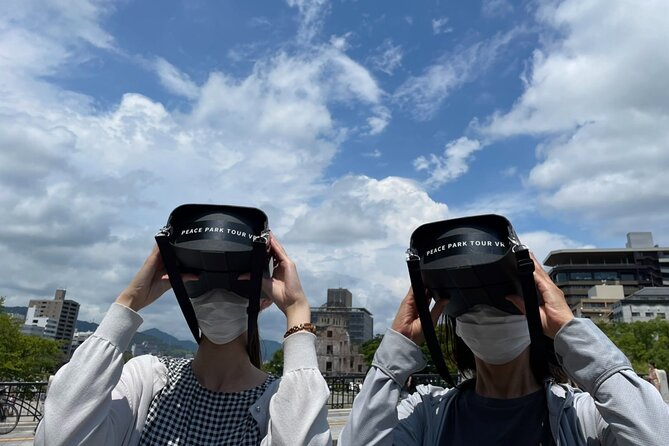
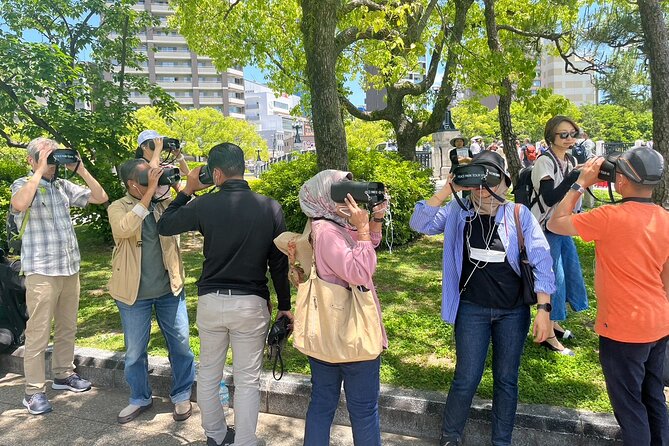
The guide first explains how to use the rented VR goggles. That matters more than it may sound. You will be moving between real memorial sites and digital scenes, so a clear introduction helps you pay attention to the story instead of fumbling with the equipment.
The first stop takes place in the building basement and focuses on Eizo Nomura. He is presented as the only survivor of the fuel building, a detail that gives this opening scene a close, personal scale. Rather than beginning with a broad lecture about wartime Japan, the tour starts with one person and one place.
I like that choice. The basement makes the story feel tied to the ground beneath you, not just to dates on a museum panel. The VR recreation lets you consider what the area looked like before the bombing and how ordinary life was interrupted.
This first section lasts about 20 minutes. It is the longest single stop, and it gives you time to become comfortable with the headset before the tour moves outdoors.
A few more Hiroshima tours and experiences worth a look
The Peace Clock Tower and the Atomic Bomb Dome
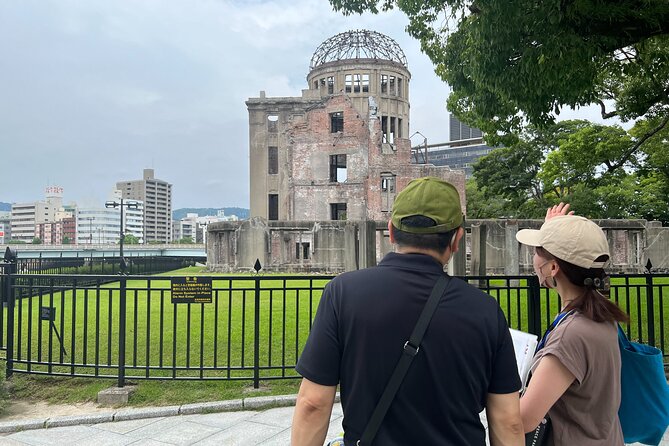
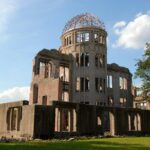
The next stop is the Peace Clock Tower, where the VR experience shows Hiroshima before and after the moment of the atomic bombing. The focus then turns to the Atomic Bomb Dome, including how the structure was damaged and why it looks the way it does today.
The Dome is one of Hiroshima’s most recognizable sights, but recognition is not the same as understanding. You see the ruined building in the present, often from a familiar park viewpoint. The digital recreation helps connect that remaining shell with the building and city around it before the blast.
This is one of the tour’s most useful features: the same view has two time periods. You are not simply told that the Dome survived. You are shown how the building changed, then asked to look again at the physical structure in front of you.
The stop lasts around 15 minutes. That short timing keeps the tour moving, but it also means you should not expect a long technical presentation about the Dome. The guide’s explanation and the VR scenes do the main work.
The Atomic Bomb Dome was registered as a UNESCO World Heritage site in 1996. The tour treats it not only as a preserved ruin but also as a visual record of the bombing. That distinction is important. You are looking at a building that still carries visible marks of the event, not a later monument built to represent it.
Aioi Bridge and the city two months later
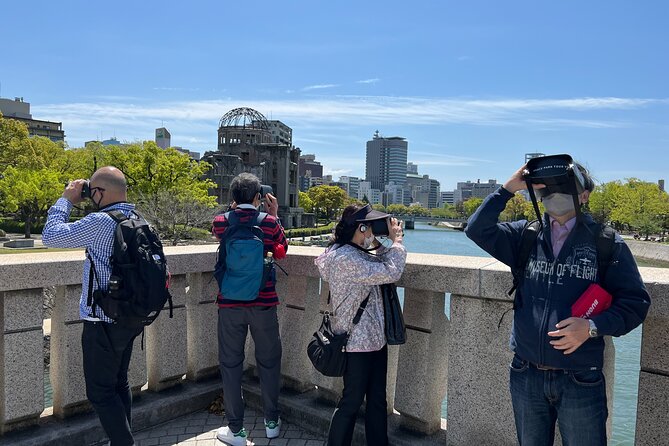
At Aioi Bridge, the tour shifts to the city after the bombing. The VR scenes show Hiroshima as a sea of fire and use survivor testimonies to describe what happened. The presentation then moves forward to the townscape two months later.
This stop lasts roughly 15 minutes, and the location gives the account a strong sense of place. Aioi Bridge is not an abstract setting in a film. It is part of the park you are walking through, which makes the change between the prewar city, the destroyed city, and the later city easier to follow.
I find the two-month point especially useful. Many accounts stop at the instant of the bombing or jump straight to the modern peace message. Showing the first weeks afterward gives you a better sense of the long emergency that followed.
The guide also discusses an episode that began after the bombing and connects it with the city’s later recovery. The supplied details do not name that episode, so you should expect the guide to provide the explanation on the day rather than arrive with a fixed script you can study in advance.
The strongest part of this section is likely the combination of location, testimony, and time change. The weakest part may be the VR itself if you expect the polish of a major commercial game. One visitor found the videos less refined than other VR productions and too few for the price. That is a fair warning. Treat the goggles as a historical aid, not as a full-length entertainment show.
Motoyasu Bridge and Hiroshima’s road back
The fourth stop is Motoyasu Bridge. Here the story moves from the first year after the bombing to the present day, with attention on how people began rebuilding amid the confusion and loss.
This section is vital because Hiroshima is not only a story of destruction. It is also a story of people making practical choices after catastrophe. The tour explains how residents rose again and took steps toward recovery, then ties that recovery to the city’s continuing appeal for peace.
At about 15 minutes, this is another compact stop. You will not receive a complete history of postwar Hiroshima, nor should you expect one. Instead, you get a focused bridge between the ruined city shown earlier and the Peace Park you see today.
The order of the stops works well. The route begins with life before the bombing, moves to the destruction itself, shows the early aftermath, and finishes with recovery. That simple sequence gives the 80-minute experience a clear shape.
It also makes this tour a useful addition to a museum visit. The Peace Memorial Museum provides a large amount of material, including objects, documents, and personal accounts. This walking experience takes selected ideas outside and places them beside bridges, buildings, and memorial grounds. If you have already visited the museum, the tour may add location and movement. If you have not, you may find the museum helpful afterward for fuller detail.
Returning to the Rest House and the River of Hope
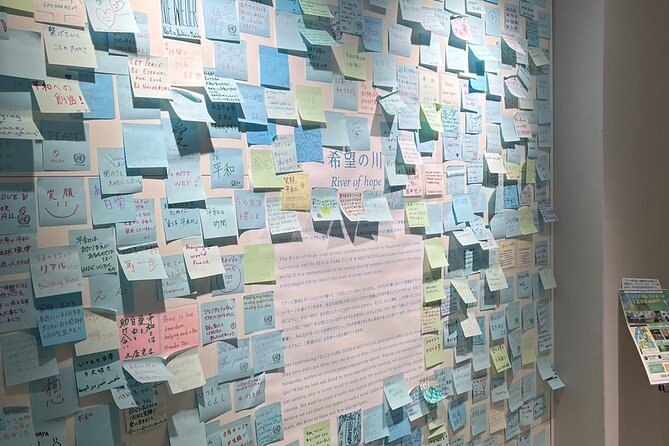
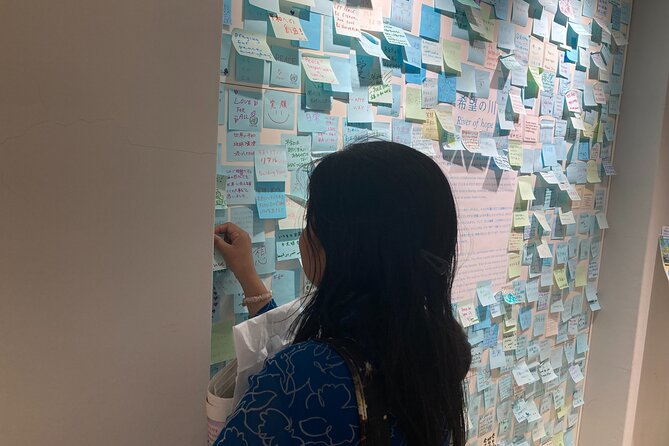
The tour ends where it began, at the Peace Park Rest House. The final 15 minutes are set aside for reflection. You can consider what the tour brought up, write a message on the River of Hope wall, and express your condolences.
That closing activity is simple, but it gives the experience a proper ending. Many historical tours finish with a guide’s last sentence and a quick goodbye. Here, you are given a small action that connects your own thoughts with messages written by people who wish for peace.
You should not expect a dramatic ceremony. The value is in the pause. After moving through scenes of ordinary life, destruction, and recovery, you have a quiet chance to decide what you want to carry with you.
The guide is central throughout. One highly praised guide named Kazuko was described as warm, clear, and willing to answer questions, with an ability to make the material feel immediate. The experience is therefore not just a headset rental. You are paying for the person who explains the places, controls the pace, and helps you connect the digital scenes to what is around you.
A few more Hiroshima tours and experiences worth a look
What the $33.03 price really buys
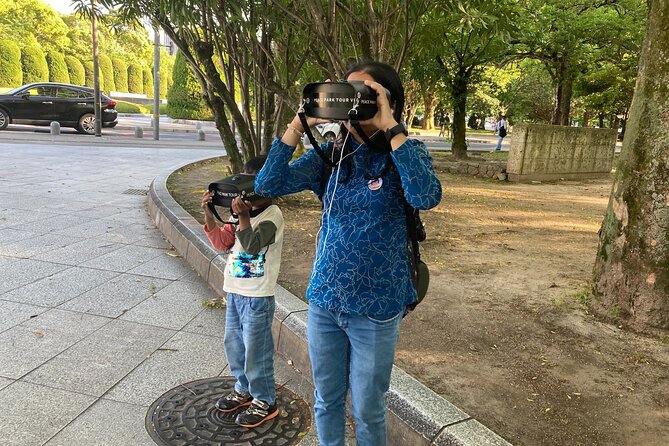
The listed price is $33.03 per person. Your fee includes the VR goggles and an English-speaking guide, but not transportation to the Rest House or food and drinks.
For 80 minutes, that is not a cheap sightseeing stop. The value depends on what you want from Hiroshima. If you are looking for a long guided walk, a large number of historic buildings, or an advanced VR production with many scenes, the price may disappoint you.
If you value a short route, a small group, and a guide who can answer questions in English, the calculation looks better. The group is capped at six people, which should make it easier to hear the guide and ask about details than on a large coach tour.
I would be cautious about booking it as your only Hiroshima history experience. The tour presents a selected story. It does not replace the Peace Memorial Museum, and one person who had visited the museum the day before felt the short VR program did not offer enough extra value for the cost.
I would consider it alongside the museum rather than instead of it. The museum can give you depth. This tour can help you place that information around the park and see the city through several time periods.
The tour is also commonly booked well ahead, with an average booking point of 37 days in advance. That does not mean you must reserve that early, but it is a useful sign if your Hiroshima dates are fixed. The maximum of six people makes last-minute space less certain.
Who will get the most from this short VR walk
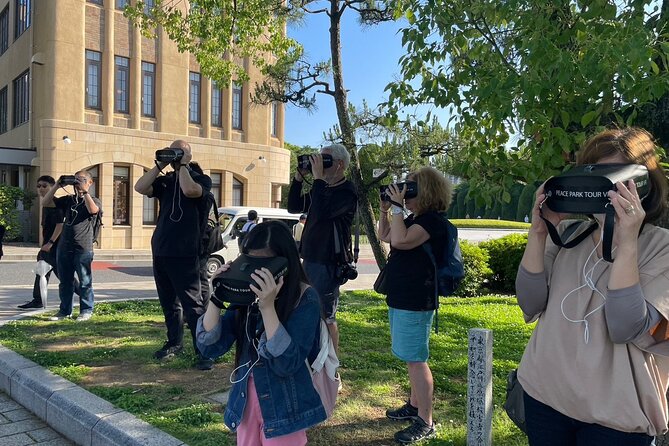
I would recommend the tour most strongly to you if one or more of these points fit your plans:
- You want an English-language introduction to Peace Park without a long walk.
- You find it difficult to picture the prewar city from present-day ruins alone.
- You like seeing historic places through maps, photographs, and visual reconstruction.
- You have limited time and want to finish at the same place where you start.
- You prefer a small group where questions are practical and personal.
- You are visiting with someone who may tire during a longer walking tour.
Families and mixed-age groups may also appreciate the 80-minute length, though the subject is serious and the bombing scenes may be emotionally difficult. The information says most people can participate, but it does not provide specific accessibility details about the route, basement, or VR equipment. If those points matter to you, ask before booking.
I would hesitate if you have already seen a similar VR production and mainly want technical quality. The digital clips are useful for perspective, but they may look modest beside commercial VR games or polished museum installations.
Practical details before you reserve
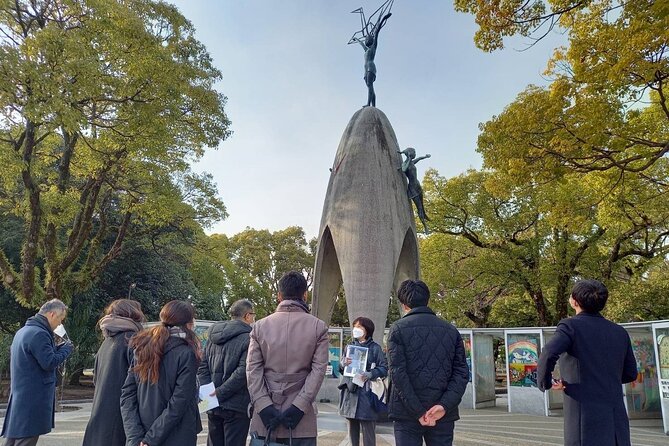
Plan to reach the Hiroshima Peace Park Rest House before the 10:30 a.m. start. The address is Japan, 730-0811 Hiroshima, Naka Ward, Nakajimacho, Hiroshima Peace Park Rest House.
Your guide will meet you at the reception. The route begins and ends there, and the tour does not include transportation to the meeting point. Bring your own drinks if you need them, since food and beverages are not included.
Confirmation is sent within 48 hours of booking, subject to availability. The tour has a maximum of six people, and the price includes the goggles, so you do not need to arrange separate VR equipment.
Free cancellation is available if you cancel at least 24 hours before the local start time. Cancellations or changes made inside that 24-hour window are not accepted for a refund.
Should you book the Peace Park VR tour?
Book it if you want a focused, guided look at Hiroshima through time, especially if the present-day park feels difficult to read. The short route, small group, survivor accounts, and before-and-after VR scenes give the memorial sites added context without taking up a full morning.
Think twice if you expect a long tour or cutting-edge digital effects. At $33.03, the experience makes the most sense as a companion to the Peace Memorial Museum, not a substitute for it.
My practical choice would be to visit the museum separately, then take this tour if you want the guide’s explanations and the chance to see the prewar city and its destruction at the actual park sites. For a serious subject, the program is brief, but its best moments give you a clearer reason to look closely at the bridges, the Rest House, and the Atomic Bomb Dome.
FAQ
How long does the Hiroshima Peace Park VR tour last?
The experience lasts approximately 1 hour and 20 minutes.
What time does the tour start?
The tour starts at 10:30 a.m.
Where does the tour meet?
You meet the guide at the reception of the Hiroshima Peace Park Rest House in Nakajimacho, Hiroshima.
Where does the tour end?
The activity ends back at the Hiroshima Peace Park Rest House, the same place where it begins.
Is an English-speaking guide included?
Yes. The price includes an English-speaking guide.
Are the VR goggles included?
Yes. Rental of the VR goggles is included in the tour price.
How many people can join the tour?
The tour has a maximum group size of six people.
More Guided Tours in Hiroshima

More Hiroshima City Tours in Hiroshima
More Peace Memorial Tours in Hiroshima

More tours in Hiroshima we've reviewed



Peace Memorial Tours, compared.
 ★ 4.8Hiroshima Historical Walking Tour – Why A-Bomb was DroppedFrom $352h 30m
 ★ 5.0Hiroshima Peace (Heiwa) Walking Tour at World Heritage SitesFrom $94
 ★ 4.9Hiroshima: Miyajima Peace Memorial Icons of Peace and BeautyFrom $1638 hours
 ★ 5.0Hiroshima Walking Tour Why A Bomb was dropped to HiroshimaFrom $28
 ★ 5.0Hiroshima 2hr Peace Cycling Tour with Local GuideFrom $59
 ★ 4.8Hiroshima: Peace Cycling Tour with Local GuideFrom $522 - 3 hours
