
Reviewed · HIROSHIMA CITY TOURS
History of Hiroshima: Small Group Night Walking Tour
Hiroshima Peace Memorial Park feels different after dark. With fewer people around, the Gates of Peace, memorials, and Atomic Bomb Dome take on a quiet weight. This two-hour walk connects the major sites while explaining what Hiroshima was like before the bombing, why it was targeted, and how the city rebuilt around a message of peace.
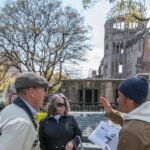
I like the small group of up to 10 and the clear route from the Gates of Peace to the Atomic Bomb Hypocenter Monument. I also like the guides’ personal approach. Ghani is praised for careful pacing and unusual details, while Sheraz is noted for encouraging reflection and fresh viewpoints.
The main drawback is timing. The tour does not include the Peace Memorial Museum, and the museum may be closed during the evening walk. If you want its exhibits, plan to visit before the tour. You’ll also need comfortable shoes and weather-ready clothing, including an umbrella if rain is possible.
In This Review
- Key points worth knowing
- Why a night walk changes Peace Memorial Park
- Starting at the Gates of Peace
- Prayer Fountain and the human scale of loss
- The Peace Memorial Museum from the outside
- The Cenotaph and the names of the dead
- The Flame of Peace and the promise behind it
- The National Peace Memorial and personal stories
- The Children’s Peace Monument
- The Korean Atomic Bomb Victims Cenotaph
- Aioi Bridge and the geography of the bombing
- The Atomic Bomb Dome beneath the night sky
- Ending at the Atomic Bomb Hypocenter Monument
- What the $28 price gives you
- Practical details for a smoother evening
- Who should book this walk
- Should you book the Hiroshima night tour?
- FAQ
- Where does the tour meet?
- Where does the tour finish?
- How long is the walking tour?
- What language is the tour conducted in?
- How large is the group?
- Is the Peace Memorial Museum included?
- Is the tour wheelchair accessible?
- What should I bring?
- Are food, drinks, and transportation included?
Key points worth knowing
- The Atomic Bomb Dome after dark: See Hiroshima’s best-known landmark lit against the night sky, with fewer people nearby.
- A connected two-hour route: The guide links the park’s memorials rather than treating each one as an isolated stop.
- Ghani and Sheraz as possible guides: Both lead in English, with Ghani noted for precise pacing and lesser-known details.
- A serious subject handled with care: The tour explores loss, responsibility, survival, and peace without turning the visit into a hurried checklist.
- Good value at $28: For a small group and two hours of guided context, the price is reasonable, especially if Hiroshima is a short stop on your Japan trip.
- Museum visit needed separately: The evening tour focuses on outdoor memorials, so visit the museum earlier if you want the full historical record.
Why a night walk changes Peace Memorial Park
By day, Hiroshima’s Peace Memorial Park is one of the city’s busiest sightseeing areas. At night, the pace slows. The park becomes less about taking in one monument after another and more about listening, looking, and making connections.
This setting suits the subject. The tour deals with the atomic bombing, civilian loss, wartime decisions, and the rebuilding of Hiroshima. Those topics deserve time. A small evening group makes it easier to pause, ask questions, and hear the guide without the distractions that can come with a larger outing.
The tour is led in English by a live guide, with a PhD scholar guiding the discussion. That academic background matters most when the guide explains cause and context, not just dates. You learn about Hiroshima before 1945, why the city was chosen as a target, and how its postwar identity grew around peace.
Do not expect a light sightseeing stroll. The subject is painful. Yet the tour is designed to show more than destruction. It also follows Hiroshima’s recovery and its continuing call for peace. That wider view gives the walk a useful balance.
A few more Hiroshima tours and experiences worth a look

Starting at the Gates of Peace
The meeting point is at the Gates of Peace, in front of an Italian restaurant. This is a practical starting place because it puts you right at the edge of the memorial area rather than requiring a long transfer once the tour begins.
The Gates of Peace introduce the tour’s central idea: Hiroshima looks back at the bombing while also asking what kind of future people should build. Your guide begins the walk here, setting the historical frame before moving into the park.
Allow time to find the meeting point. The supplied directions are simple, but night can make landmarks harder to identify. Bring your booking details and arrive ready to walk.
Prayer Fountain and the human scale of loss
The Prayer Fountain is a short stop, but it brings the focus down to the human level. Hiroshima’s memorials are often large and symbolic. A fountain connected with prayer reminds you that the bombing affected ordinary people with ordinary needs, including thirst and suffering.
Your guide provides about ten minutes here. That may sound brief, but the route includes many stops, so the pace depends on keeping each explanation focused. If this is the sort of place where you want a long quiet pause, you may need to return on your own later.
The Peace Memorial Museum from the outside
The Hiroshima Peace Memorial Museum appears on the route for a guided explanation, but the museum visit itself is not part of this night tour. This is an important distinction when planning your day.
The museum contains material that outdoor monuments cannot provide, including a fuller record of individual lives and the bombing’s effects. Since the evening route takes place after dark, you should visit the museum earlier if it is a priority. One useful plan is museum first, a break for dinner, then the night walk.
The guide’s explanation outside the museum helps place the park in context. Still, it cannot replace the museum’s indoor displays. At $28, the tour remains fairly priced, but you should treat it as a guided park experience, not a complete substitute for the museum.
The Cenotaph and the names of the dead
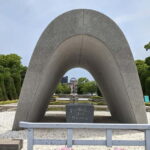
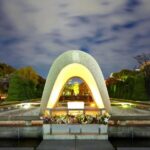
The Hiroshima Victims Memorial Cenotaph is one of the park’s most important points. The curved monument frames the Flame of Peace and the Atomic Bomb Dome, creating a powerful visual line through the park.
Here, the guide explains the memorial’s purpose and the names remembered by it. The stop helps you understand how Hiroshima honors those who died while keeping its message directed toward the future.
This is also one of the places where the small group works well. Ten people or fewer can gather close enough to hear, then step aside without blocking the area. You should expect a quiet and respectful atmosphere rather than a dramatic performance.
Other walking tours we've reviewed in Hiroshima


The Flame of Peace and the promise behind it
The Flame of Peace is another ten-minute stop, and its meaning reaches beyond the park itself. It represents the wish for a world free of nuclear weapons, tying the memory of Hiroshima to a present-day concern.
The guide connects the flame to the other monuments, which is one of the best reasons to take a guided walk. On your own, you can see the flame, cenotaph, and dome. With an explanation, you understand how they form one message.
The tour’s route is strongest when it makes these links. You are not simply collecting photographs. You are learning why the memorials were placed where they are and how each adds a different part to Hiroshima’s public memory.
The National Peace Memorial and personal stories
The Hiroshima National Peace Memorial offers another view of remembrance. The focus here is not only on a single landmark, but on how the city preserves names, records, and personal memories.
The guide may bring out details that are easy to miss during a quick visit. One of the tour’s praised qualities is its use of small pieces of information that you might not otherwise hear. Those details help turn a broad historical event into something more specific and human.
The route does not promise a long stop at every monument. If you prefer a slow, private visit, return to the park later. If you have only two hours, the steady pace gives you a practical way to cover the main memorial area without getting lost in the details.
The Children’s Peace Monument
The Children’s Peace Monument is among Hiroshima’s most recognizable memorials. It is linked with the many children who died in the bombing and with the later peace movement inspired by their stories.
This stop adds a younger and more personal dimension to the walk. The monument is also connected with the tradition of paper cranes, a symbol many people associate with Hiroshima. The guide’s role here is to explain the story behind the memorial and its place in the park’s wider message.
The subject can be especially difficult for families. The tour is open to a small group, but the material is serious and the evening atmosphere can make it feel even more direct. Parents should consider whether their children are ready for an adult explanation of wartime death and suffering.
The Korean Atomic Bomb Victims Cenotaph
The Korean Atomic Bomb Victims Cenotaph broadens the story beyond Hiroshima’s Japanese population. It recognizes Korean victims of the bombing and points to the complicated wartime realities of the period.
This is an important stop because it challenges a simple version of the city’s past. Hiroshima’s victims came from different backgrounds, and the memorial encourages you to remember that wider group.
The guide’s explanation is particularly useful here. Without context, you might walk past this monument without knowing why it matters. With context, it becomes part of the full account of who was in Hiroshima and who suffered there.
Aioi Bridge and the geography of the bombing
At Aioi Bridge, the tour shifts from memorial design to physical geography. The bridge is a key reference point in understanding Hiroshima’s layout and the area connected with the bombing.
This stop helps you picture the city as it was, rather than seeing the park only as a collection of monuments. The guide explains the setting and links it to the final approach toward the Atomic Bomb Dome.
Night can make it harder to take in distant details, but it also reduces visual clutter. Your attention stays on the guide’s explanation and the shapes of the bridge and surrounding park. Bring a phone light if you need help checking the path, though the tour information only specifically asks you to bring an umbrella.
The Atomic Bomb Dome beneath the night sky
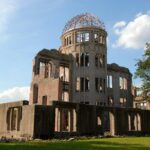
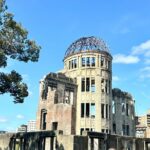
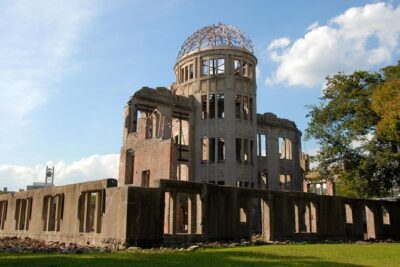
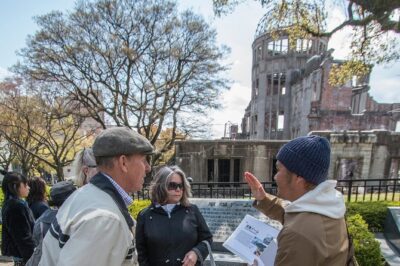
The Atomic Bomb Dome is the emotional center of the walk. Its damaged structure, lit against the darkness, is easy to recognize and difficult to forget.
Seeing it at night gives the building a stark quality. The dark sky removes much of the city’s visual noise, while the lighting outlines the remains of the structure. You have time to look, listen, and ask questions about what happened here and why the building was preserved.
The guide places the Dome within Hiroshima’s larger story. It is not only a ruin. It also became a sign of remembrance and a call for peace. That message can feel more direct when the park is quiet.
This is likely to be the best photo opportunity on the route, but photography should not become the whole point. Take your picture if you want one, then put the phone away for a moment. The site rewards attention more than frantic snapping.
Ending at the Atomic Bomb Hypocenter Monument
The walk finishes at the Hiroshima Atomic Bomb Hypocenter Monument. Ending here gives the route a clear geographical and historical point.
The monument marks the location directly connected with the explosion. After seeing the park’s broader memorials, arriving at the hypocenter brings the story back to one precise place. It is a sober ending, but an effective one.
The final stop also helps explain why the surrounding memorials matter. The park is not an abstract memorial garden. It occupies a real part of the city where people lived, worked, and died.
Since the tour ends here, check your plans for getting back to your accommodation before you start. The experience does not include transportation, food, or drinks.
What the $28 price gives you
At $28 per person, this is a modest-cost guided experience for Hiroshima. The value comes from the guide’s interpretation rather than from admission tickets, since the outdoor park stops do not require a museum-style entry fee as part of this activity.
I consider the price fair for three reasons. First, the route covers many key sites in two hours. Second, a group limited to 10 people allows for questions and a less crowded feel. Third, the guide provides the links between monuments that are easy to miss on a self-guided walk.
The value is strongest if you have limited time or want help approaching a difficult subject. It is less useful if you already know Hiroshima well and prefer to read the memorials at your own pace.
The tour has a 4.8 rating from 17 verified ratings. The strongest praise focuses on pacing, clear explanations, unexpected details, and guides who respond well to questions. Ghani is singled out for fitting the important points into two hours without rushing, while Sheraz is praised for making the visit thoughtful and offering different ways to view the subject.
Practical details for a smoother evening
The tour lasts two hours and runs at night, with starting times based on availability. You meet at the Gates of Peace in front of the Italian restaurant, then walk through the Peace Memorial Park to the Hypocenter Monument.
Wear comfortable shoes. The route includes repeated walking between memorials, and the park is not a sit-down sightseeing experience. Dress for the weather and bring an umbrella, as rain would affect both comfort and the mood of the evening.
The tour is wheelchair accessible, though you should still consider the length of the walk and nighttime conditions. The group is limited to 10 participants, which helps keep the guide’s explanations personal.
English is the stated language. Food and drinks are not included, and you need to make your own way to the meeting point.
Free cancellation is available up to 24 hours before the start for a full refund. You can also reserve now and pay later, which helps if your Japan itinerary is still changing.
Who should book this walk
I would choose this tour if you want a clear introduction to Hiroshima’s memorial area, especially if you have only one evening in the city. It also suits anyone who wants to ask questions rather than simply walk from one monument to the next.
The tour is a good fit for solo visitors and couples who prefer a personal group setting. It can also work for families with older children, provided they are ready for serious material.
I would not make it your only Hiroshima activity if you want the museum’s full exhibits. Visit the Peace Memorial Museum earlier, then use the evening walk to understand the outdoor memorials in place and sequence.
Should you book the Hiroshima night tour?
Book it if you want a thoughtful, well-paced introduction to Hiroshima’s Peace Memorial Park and like the idea of seeing the Atomic Bomb Dome after dark. The $28 cost is sensible for two hours with an English-speaking guide and a group of no more than 10.
Skip it if you want a completely self-guided visit, a long time at each monument, or a tour that includes museum admission. For most first-time visits, though, the combination of quiet evening timing, connected memorials, and guides such as Ghani or Sheraz makes this a useful way to understand Hiroshima beyond a quick photograph of the Dome.
FAQ
Where does the tour meet?
The meeting point is at the Gates of Peace, in front of an Italian restaurant.
Where does the tour finish?
The tour ends at the Hiroshima Atomic Bomb Hypocenter Monument.
How long is the walking tour?
The tour lasts two hours.
What language is the tour conducted in?
The tour is conducted in English with a live guide.
How large is the group?
The tour is limited to 10 participants.
Is the Peace Memorial Museum included?
No. The route includes a guided stop at the museum area, but museum admission and an indoor museum visit are not included.
Is the tour wheelchair accessible?
Yes, the activity is listed as wheelchair accessible.
What should I bring?
Bring an umbrella and wear comfortable shoes. Dress appropriately for the weather because the tour takes place outdoors at night.
Are food, drinks, and transportation included?
No. You need to arrange your own transportation to the meeting point, and food and drinks are not included.
More Historical Tours in Hiroshima
More Walking Tours in Hiroshima
More Hiroshima City Tours in Hiroshima
More tours in Hiroshima we've reviewed



Hiroshima City Tours, compared.
 ★ 5.0Peaceful Hiroshima & Miyajima UNESCO 1 Day Bus TourFrom $129
 ★ 4.9Hiroshima: Hiroshima and Miyajima UNESCO Sites 1-Day TourFrom $1228 hours
 ★ 5.0Hiroshima / Miyajima Full-day Private Tour with Government Licensed GuideFrom $202
 ★ 4.7Osaka/Kyoto: Hiroshima Miyajima Bus Tour & Shinkansen TicketFrom $27712 hours
 ★ 4.8Hiroshima Historical Walking Tour – Why A-Bomb was DroppedFrom $352h 30m
 ★ 5.0Hiroshima Peace (Heiwa) Walking Tour at World Heritage SitesFrom $94
