
Reviewed · MIYAJIMA TOURS
From Hiroshima: Miyajima Island Day Trip with Ropeway Ride
Miyajima packs Japan’s sacred architecture, sea views, forested slopes, and local food into one very full day. You’ll cross by train and ferry, see the floating O-torii gate, and climb Mount Misen by ropeway before returning to Hiroshima Station.
I like the easy public transport connection and the small group, capped at 15 people. I also like the guide-led context at Itsukushima Shrine and Daisho-in, since these places mean more when you understand the Shinto and Buddhist traditions behind them.
The main catch is the pace. Nine hours gives you a fine sweep of the island, but you’ll walk a lot, and the optional hike from the ropeway station to Mount Misen’s summit is steep. Tide times also change, so the walk to the O-torii gate cannot be promised at one exact hour.
In This Review
- Key points before you book
- Why Miyajima works so well as a day trip
- Meeting at Hiroshima Station without confusion
- Senjokaku Pavilion and the first view of the island
- Itsukushima Shrine and the floating O-torii gate
- Daisho-in, where the island turns from Shinto to Buddhist
- Two hours on Omotesando Shopping Street
- Mount Misen by ropeway and on foot
- What the guide adds to the day
- Is $180 a fair price?
- Who should book this Miyajima day?
- Should you book it?
- FAQ
- How long does the Miyajima tour last?
- Where does the tour meet?
- How do I find the meeting point from a JR train?
- Does the tour include transport to Miyajima?
- Is lunch included?
- Are the ropeway tickets included?
- Can I walk to the O-torii gate?
- Do I have to hike all the way to Mount Misen’s summit?
- Is the tour suitable for wheelchair users?
Key points before you book
- Train and ferry travel from Hiroshima Station: The day uses regular public transport, with your guide leading the way to Miyajima.
- Two views of the O-torii may be possible: The schedule can include the gate from the water and a walk out to it at low tide, depending on the day.
- Mount Misen has two effort levels: Stay at Shishiiwa Observatory or take the demanding walk to the summit observatory.
- Two hours of free time: Use Omotesando Shopping Street for lunch, souvenirs, and Miyajima specialties.
- Small English-speaking group: The group limit is 15, with guides including Miki, Isabella, Simarjeet, Samar, and Shimar.
- Good value for a packed day: The $180 price includes the guide, train, ferry, admission fees, and ropeway tickets, but not lunch.
Why Miyajima works so well as a day trip
Miyajima is officially Itsukushima Island, though most people know it by its popular name. From Hiroshima, it makes an easy change of scene: city streets give way to a ferry crossing, sea air, shrine roofs, wooded hills, and the Seto Inland Sea.
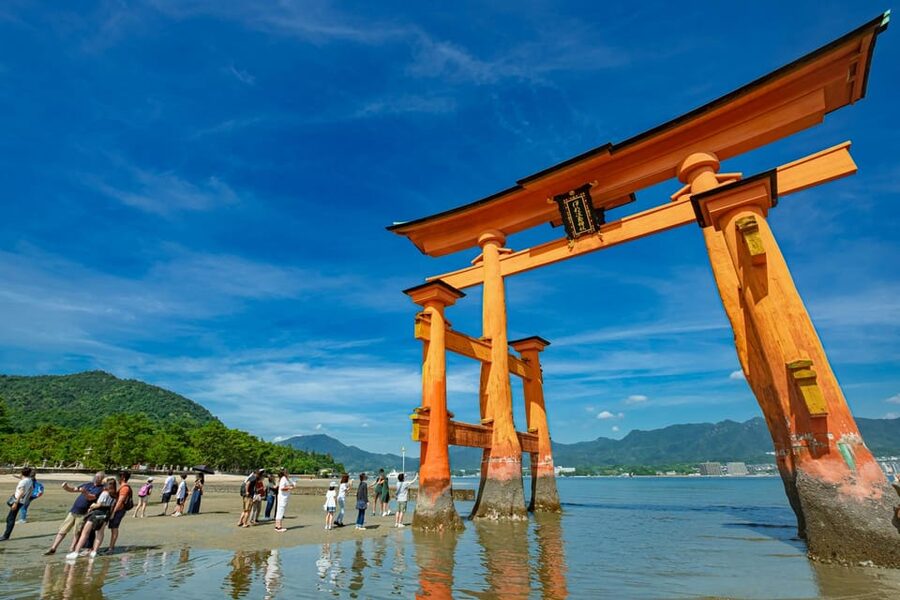
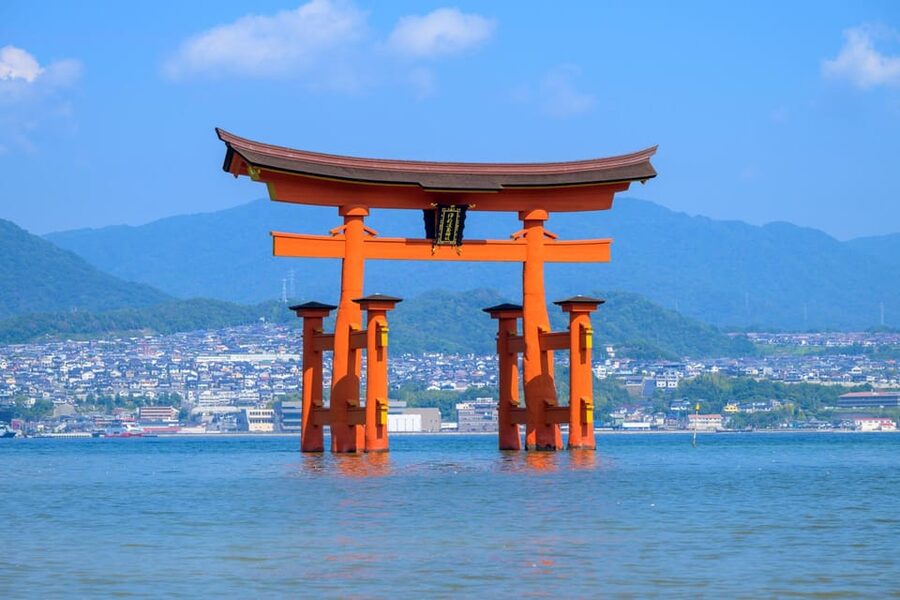
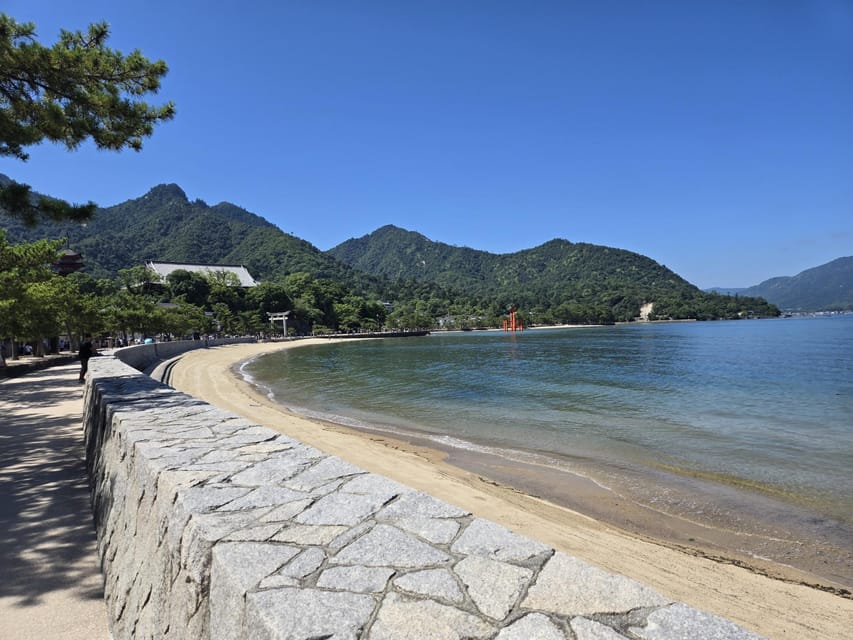
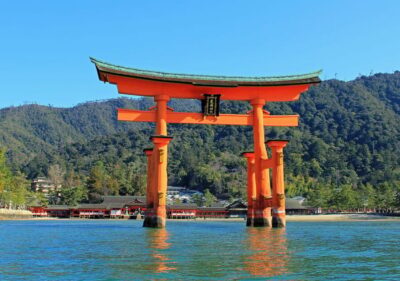
The famous sight is Itsukushima Shrine’s large vermilion O-torii. At high tide, it appears to float offshore. At low tide, you can often walk across the exposed seabed toward it. The changing water level is not a small detail here. It alters the whole feel of the shrine, which is why your guide may shift the order of the day to find the best moment.
I like that this trip does not treat Miyajima as a quick photo stop. You visit a major Shinto shrine, an unfinished pavilion, a Buddhist temple, a shopping street, and Mount Misen. That mix gives you several ways to understand the island rather than reducing it to one famous gate.
A few more Hiroshima tours and experiences worth a look
Meeting at Hiroshima Station without confusion
Your meeting point is under the Tourist Information sign outside the Shinkansen gates at Hiroshima Station. If you arrive by Shinkansen, the sign is directly to your left after leaving the gates. If you arrive on a JR line, follow the signs toward the Shinkansen gates. The meeting point is on the same floor as the JR gates.
Arriving by streetcar places you next to Hiroshima Station. Follow signs toward the Shinkansen gates. By taxi, ask for the Shinkansen Entrance, also called the North Entrance, then look for the same signs.
Give yourself extra time. Hiroshima Station is under heavy construction and can be confusing, especially if you are carrying luggage or arriving just before the start. Look for the guide holding a SNOW MONKEY RESORTS tour sign.
The guide leads you on the train ride and ferry crossing. That is useful if you are unfamiliar with Japanese station layouts, transfers, or ferry procedures. It also means you do not need to arrange separate tickets for the main transport used on the tour.
Senjokaku Pavilion and the first view of the island
The first major stop is Senjokaku Pavilion, a large wooden structure whose construction was never finished. Its incomplete state is part of its character. Rather than polished decoration and a tidy final form, you see a broad, open building that feels different from the more formal shrine spaces nearby.
This is a good early stop because it gives you room to settle into the island before the busiest sights. Your guide can explain the pavilion’s purpose and place it within Miyajima’s religious setting. Take a moment to notice how the unfinished structure changes your sense of what a sacred building is supposed to look like.
The stop also helps break up the day. The trip is long, and the value comes from moving at a sensible rhythm rather than rushing from one famous view to another.
Itsukushima Shrine and the floating O-torii gate
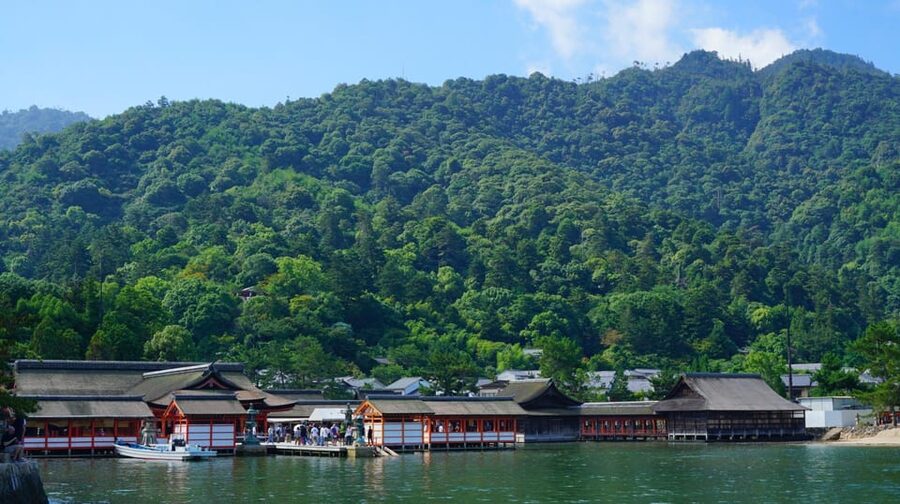
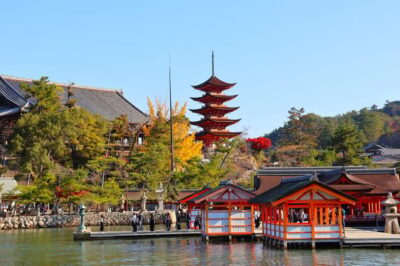
Itsukushima Shrine is the emotional center of the day. Built over the water, it uses raised walkways, worship halls, and open views toward the Seto Inland Sea. The architecture makes the tide part of the design, not just a background feature.
Your guide explains Shinto, Japan’s indigenous religion, while you move through the shrine. That explanation matters because the shrine’s layout can otherwise look like a series of red buildings and corridors. With context, you begin to notice how the approach, worship areas, water, and gate work together.
The O-torii is visible from the shrine at high tide, but the ideal view depends on the water level and weather. At low tide, the guide may arrange a walk out toward the gate. The supplied schedule specifically notes that tide times vary greatly from one day to the next, so the exact timing is flexible.
You may see the gate at different stages of the tide, and that can be one of the best parts of the day. One stop gives you the classic floating view. Another lets you examine the gate from the exposed shore. Do not expect both views to happen at precisely planned times, though. Nature gets the final say.
Daisho-in, where the island turns from Shinto to Buddhist
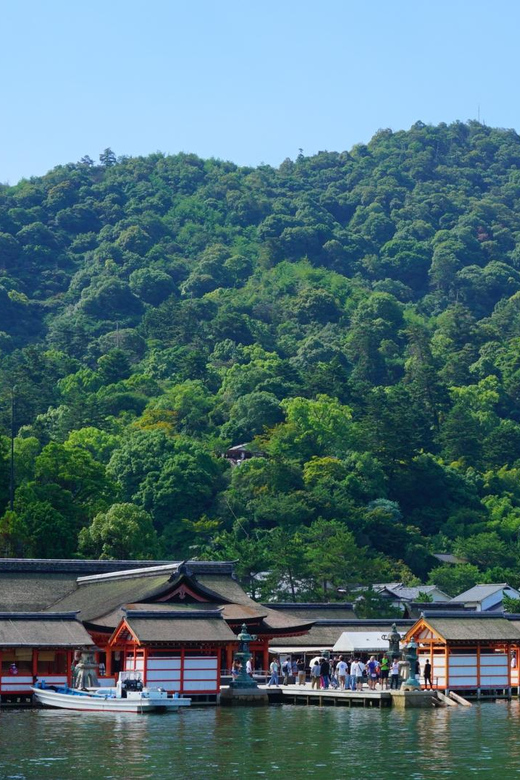
From Itsukushima Shrine, you walk to Daisho-in, a major Shingon Buddhist temple. The change is striking. Instead of the shrine’s open relationship with the sea, Daisho-in brings you into a temple setting filled with Buddhist figures.
The grounds contain many statues, and figures greet you throughout the visit. This gives the temple a more intimate, detailed feel. Your guide can help explain what you are seeing, which is especially useful if Buddhist imagery is unfamiliar to you.
I consider Daisho-in one of the strongest reasons to choose this guided day rather than simply taking the ferry and wandering alone. You can certainly see the temple without a guide, but the many figures and religious details are easier to appreciate when someone points out what matters.
The walk between the main sites also adds useful variety. You are not spending the whole morning inside buildings. You move through the island’s paths, with the guide adjusting the walking speed as needed. One guide, Simarjeet, was especially praised for keeping track of slower walkers while still sharing plenty of information. That suggests the day is active but not designed as a race.
A few more Hiroshima tours and experiences worth a look

Two hours on Omotesando Shopping Street
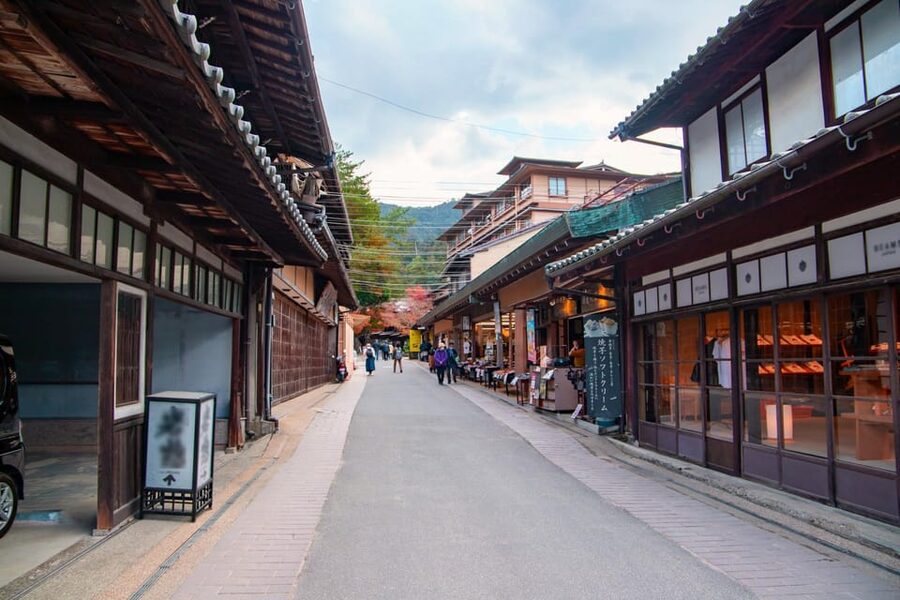
After the religious sites, you get around two hours of free time on Omotesando Shopping Street. This is the practical part of the itinerary: eat lunch, browse shops, buy gifts, and choose your own pace for a while.
Lunch is not included, so plan to pay separately. The free period gives you control, which I prefer to a fixed restaurant meal. You can choose a quick snack or a proper lunch, depending on your appetite and budget. The supplied information identifies local cuisine as part of the experience, but it does not promise a specific dish or restaurant, so keep your choices open.
The street is also the right place for souvenirs and last-minute purchases. Because the tour returns here later before heading to the pier, you may get another chance to shop. Still, do not let the two-hour break disappear into browsing if you want the full Mount Misen experience.
This pause is valuable after the morning’s walking. It gives your feet a rest before the mountain section, though you should not mistake it for a slow day overall. Nine hours, several walking routes, and a mountain ascent make comfortable shoes essential.
Mount Misen by ropeway and on foot
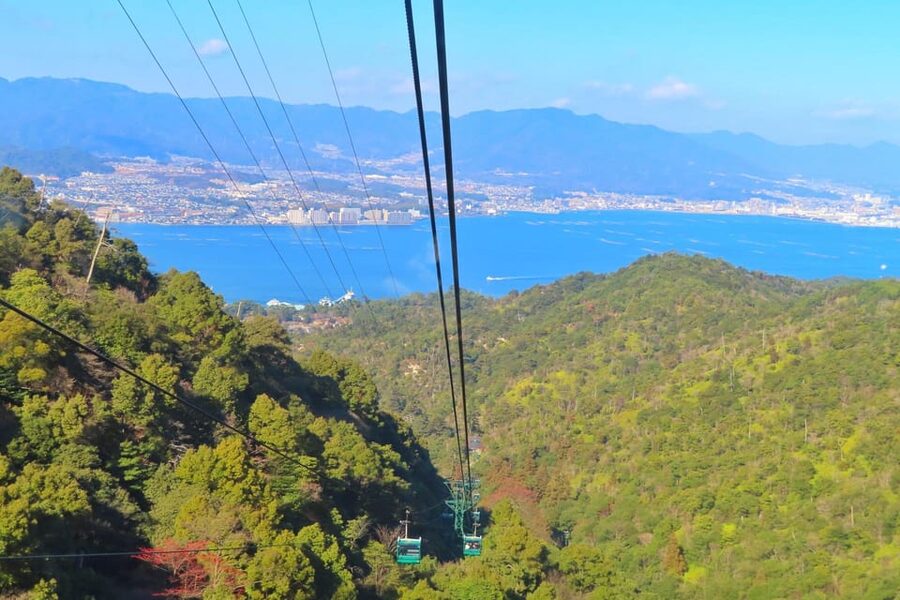
Mount Misen is Miyajima’s highest point and the day’s big finish. You ride the Miyajima Ropeway with your guide, gaining aerial views over the island and the Seto Inland Sea as the cabins rise.
The ropeway is more than simple transport. It saves you a long uphill climb and gives you a different view of Miyajima, with the water and wooded slopes opening out below. If you have concerns about ropeway travel, contact the operator in advance.
At the upper station, you have a choice. You can remain near Shishiiwa Observatory, next to the ropeway station, or walk to the Mount Misen Observatory at the summit. The summit route is described as steep and arduous. You should wear closed-toe shoes, such as sneakers, and comfortable clothes if you plan to make the climb.
The choice makes the tour workable for people with different energy levels. Staying at Shishiiwa still gives you a mountain viewpoint without committing to the hardest walk. Taking the summit route requires more effort, but the unobstructed view is the reward.
Be honest about your fitness and the day’s heat. The hike comes after a morning of sightseeing and a walk through the shopping district. In summer, temperatures can reach 32 C and above with heavy humidity. Light clothing, sun protection, water, and care with heat are sensible. Winter temperatures average 1 C to 10 C, so bring warm clothing and shoes suited to cold conditions.
The ropeway takes you back down. You then walk toward the pier, with time for photographs and any final purchases before the ferry.
What the guide adds to the day
This is a guide-centered tour, and the quality of that guidance matters. The strongest guide names associated with this experience include Miki, Isabella, Simarjeet, Samar, and Shimar. The exact guide depends on the date.
The most useful guide skills here are not just facts. A good guide must manage tide timing, public transport, shrine visits, the shopping break, ropeway timing, and the walking pace of a mixed group. Several guides were praised for adjusting the day around individual interests, keeping time well, and answering questions clearly.
One particularly strong day included the floating gate in daylight, several religious sites, a substantial lunch break, the Mount Misen hike, and a return to the O-torii at sunset before the evening ferry. That kind of flexibility is possible because the group is small, but it should not be treated as a guarantee. The official plan remains subject to availability and may change if venues or transport require adjustment.
The group limit is 15. That is small enough to move through stations and crowded paths more easily than a large coach group, while still keeping the price below that of a private tour. If your group becomes very small on a particular date, the guide may be able to shape the day more closely around your interests, but that cannot be promised.
Is $180 a fair price?
At $180 per person, this is not the cheapest way to visit Miyajima. You could arrange the train, ferry, shrine visit, temple visits, ropeway, and food on your own for less money.
The price pays for more than admission. It includes an English-speaking guide, all listed entry fees, ropeway tickets, and train and ferry transport to and from Miyajima. You also get help with the station meeting point, route planning, tide timing, and the order of the stops.
I see the value most clearly if you have one day for Miyajima and want to make it count. Independent planning is possible, but you would need to monitor transport, admission, the ropeway, tide conditions, and the mountain walk yourself. The guide also adds cultural explanation at places where a quick visit could otherwise feel thin.
The value is weaker if you prefer long, unplanned stops or already know the island well. Two hours of free time is generous enough for lunch and shopping, but the rest of the day follows a clear route. You are paying for structure and interpretation, not complete freedom.
Lunch and personal purchases are extra. Accommodation is not included, and you must make your own way to Hiroshima Station for the start.
Who should book this Miyajima day?
I would choose this tour if you are staying in Hiroshima, want to cover the island’s main sights in one day, and prefer an English-speaking guide to explain the religious sites. It suits first-time visitors who want both the famous gate and less obvious stops such as Senjokaku and Daisho-in.
It also fits active visitors who want a mountain view without hiking all the way from sea level. The ropeway handles the major climb, while the summit walk remains optional.
You should think twice if you use a wheelchair, since the tour is not suitable for wheelchair users. You should also reconsider if steep walking, ropeway travel, heat, or a nine-hour schedule would make the day uncomfortable.
Wear shoes that are easy to walk in. If Mount Misen’s summit is part of your plan, use closed-toe shoes and comfortable clothing. I would arrive early at Hiroshima Station, especially during construction, and keep lunch plans flexible so the tide and transport schedule can work in your favor.
Should you book it?
Book this tour if you want a well-managed, full day that combines Miyajima’s major religious sites, local shopping, the ferry ride, and Mount Misen. The small group, included transport, and careful attention to tide timing make the $180 price easier to justify.
Skip it if you want to explore at a very slow pace, avoid steep walking, or keep costs as low as possible. For everyone else, this is a strong choice when your Hiroshima schedule allows only one Miyajima day and you want the island to feel like more than a single photograph.
FAQ
How long does the Miyajima tour last?
The tour lasts about nine hours and ends back at Hiroshima Station after the return ferry and train journey.
Where does the tour meet?
You meet under the Tourist Information sign outside the Shinkansen gates at Hiroshima Station. The guide holds a SNOW MONKEY RESORTS tour sign.
How do I find the meeting point from a JR train?
Follow the signs toward the Shinkansen gates. The meeting point is on the same floor as the JR gates.
Does the tour include transport to Miyajima?
Yes. The tour includes the train and ferry between Hiroshima and Miyajima, with the guide accompanying you.
Is lunch included?
No. Lunch is not included, but you receive around two hours of free time on Omotesando Shopping Street to choose and purchase your own meal.
Are the ropeway tickets included?
Yes. Ropeway tickets are included in the tour price.
Can I walk to the O-torii gate?
The guide will do their best to schedule a walk to the gate during low tide. The timing depends on the tide, which varies from day to day.
Do I have to hike all the way to Mount Misen’s summit?
No. You can stay near Shishiiwa Observatory beside the ropeway station or choose the steep walk to the Mount Misen Observatory.
Is the tour suitable for wheelchair users?
No. The tour is not suitable for wheelchair users.
More 1-Day Tours in Hiroshima
More Hiroshima City Tours in Hiroshima
More Miyajima Tours in Hiroshima
More tours in Hiroshima we've reviewed


Miyajima Tours, compared.
 ★ 5.0Peaceful Hiroshima & Miyajima UNESCO 1 Day Bus TourFrom $129
 ★ 4.9Hiroshima: Hiroshima and Miyajima UNESCO Sites 1-Day TourFrom $1228 hours
 ★ 5.0Hiroshima / Miyajima Full-day Private Tour with Government Licensed GuideFrom $202
 ★ 4.7Osaka/Kyoto: Hiroshima Miyajima Bus Tour & Shinkansen TicketFrom $27712 hours
 ★ 4.7From Hiroshima: Hiroshima & Miyajima 1 Day Tour with LunchFrom $1168 hours
 ★ 5.0Hiroshima and Miyajima Day Trip with Itsukushima Shrine & FerryFrom $45
