
Reviewed · PEACE MEMORIAL TOURS
Hiroshima: Peace Park, Castle, and Mitaki Temple E-Bike Tour
Hiroshima’s best surprise may be Mitaki Temple, a wooded Buddhist site that many first-time visitors would miss. This 210-minute e-bike tour links it with the Atomic Bomb Dome, Peace Park, and Hiroshima Castle, giving you both the city’s painful past and a quieter look at its culture.
I like the small groups of six or fewer and the battery-assisted bikes, which make a roughly 10-kilometer route manageable at a casual pace. I also like the way the tour uses riverside paths to connect the major sights instead of keeping you on city streets the whole time.
The main consideration is that this is still a bike tour, with an uphill ride toward Mitaki Temple. Food and drinks are not included, and one stop for refreshments may not feel like enough on a hot day, so bring water and be ready to pedal.
In This Review
- Five things that make this Hiroshima bike tour different
- Why an e-bike is a smart way to see Hiroshima
- Starting across from the Atomic Bomb Dome
- Peace Park sets the tone for the ride
- Riverside cycling toward Hiroshima Castle
- Mitaki Temple is the quiet reward
- A guide who connects the places
- Snacks, drinks, and the practical riding details
- Who should book this route?
- Should you book the Hiroshima e-bike tour?
- FAQ
- How long is the Hiroshima e-bike tour?
- How far do you ride?
- Which sights are included?
- Where does the tour begin?
- How do I find the guide?
- Where does the tour finish?
- Is the tour conducted in English?
- Are food and drinks included?
- Who can take this tour?
Five things that make this Hiroshima bike tour different
- Mitaki Temple adds a quiet mountain-side stop that is easy to overlook on a standard city visit.
- The Atomic Bomb Dome and Peace Park come first, giving the rest of the ride important historical context.
- Battery assistance helps with the approximately 10-kilometer route, including the ride toward the temple.
- Joshua is often the guide, an English-speaking American who lives in Hiroshima and has earned strong praise for his explanations.
- The tour finishes near Yokogawa Station, not back at the starting bakery, so plan your onward route.
Why an e-bike is a smart way to see Hiroshima
Hiroshima’s main sights are spread across different parts of the city. You can walk around Peace Park, but reaching Hiroshima Castle and then Mitaki Temple takes more time and energy. An e-bike gives you a practical middle ground: faster than walking, more open and scenic than sitting in a vehicle.
The route covers about 10 kilometers at a relaxed pace. You are not signing up for a race or a strenuous cycling workout. The battery support matters most when the route heads toward Mitaki Temple, and it also helps in warm weather when ordinary cycling can become tiring.
I like the sightseeing rhythm here. You stop for a guided visit, ride for a while, stop again, and then leave the central city for trees, slopes, and Buddhist buildings. The bike is not just transportation between attractions. It helps you see how Hiroshima’s busy center gives way to quieter edges.
You should still be comfortable riding a bike before booking. The tour is not suitable for children under 10 or for anyone who cannot ride. Baby carriages are not allowed, and helmets are available if requested. The group is capped at six people, which makes it easier to hear the guide and keep the pace together.
A few more Hiroshima tours and experiences worth a look
Starting across from the Atomic Bomb Dome
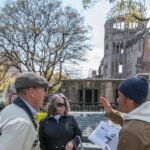
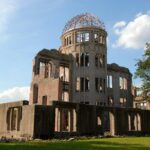
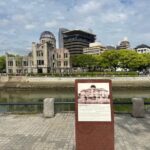
The meeting point is Lucky Bakery, directly across from Hiroshima Peace Memorial Park. The Atomic Bomb Dome is in full view, so this is an easy place to recognize, even if Hiroshima is new to you.
Your guide waits with a large orange backpack. That detail is useful because a bakery entrance can otherwise be easy to overlook in a busy area. The tour does not include hotel pickup, so you need to make your own way to the bakery.
This opening location puts you beside the city’s central memorial area from the first minute. You do not spend the beginning of the tour traveling across town to reach the subject. You are already facing one of Hiroshima’s most important buildings.
The exact starting time varies, so check availability when you book. The tour lasts 210 minutes, and the end point is Yokogawa Station. That means you should not assume you will return to the bakery for anything left behind.
Peace Park sets the tone for the ride
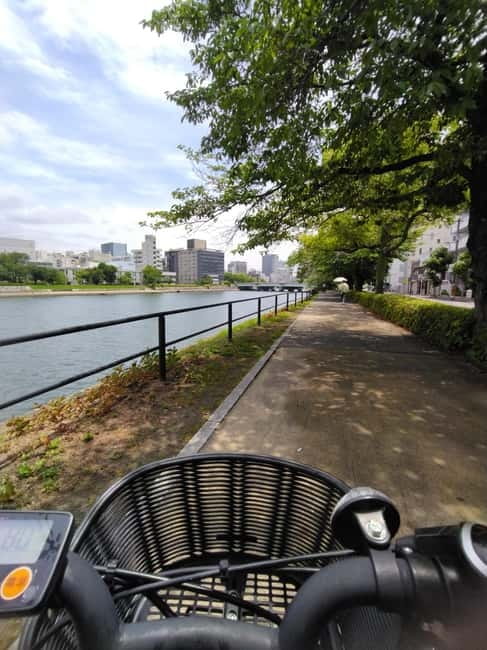
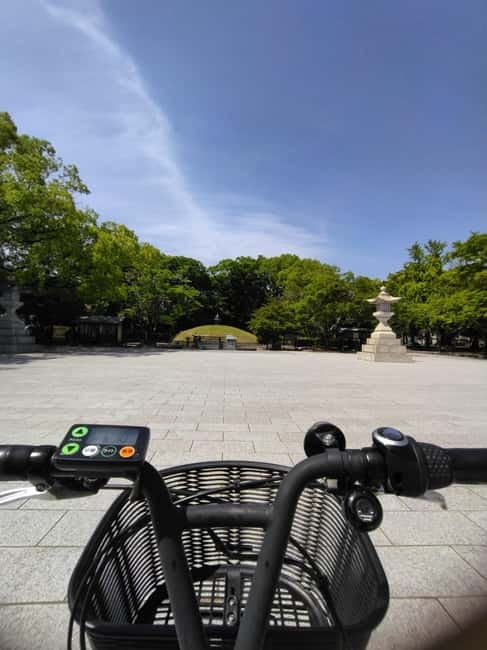
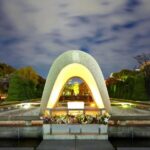
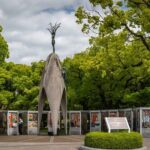
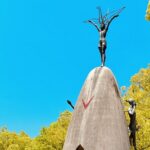
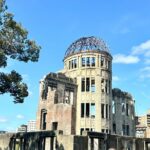
The first major section is a guided visit of Hiroshima Peace Memorial Park, lasting about an hour. This is where the tour deals directly with the city’s tragic past, rather than treating the memorials as quick photo stops.
The park contains monuments, memorials, and buildings with different purposes and stories. A guide can help you understand how the architecture and memorial spaces fit together, which is especially useful if you have limited time in Hiroshima or feel unsure how to approach the site.
I like having this visit at the beginning. The rest of the tour then takes place with a clearer sense of what Hiroshima endured and how the city remembers it. You are not simply checking off the Atomic Bomb Dome before moving to a castle and temple. The historical setting gives the entire route more meaning.
The subject matter is serious, and the first hour may feel emotionally heavy. That is appropriate here, but you should know the tour is not a light sightseeing loop. If you want a long, detailed visit to every museum and memorial in Peace Park, this tour will not replace a separate visit. Its purpose is to explain the major setting before moving on.
Riverside cycling toward Hiroshima Castle
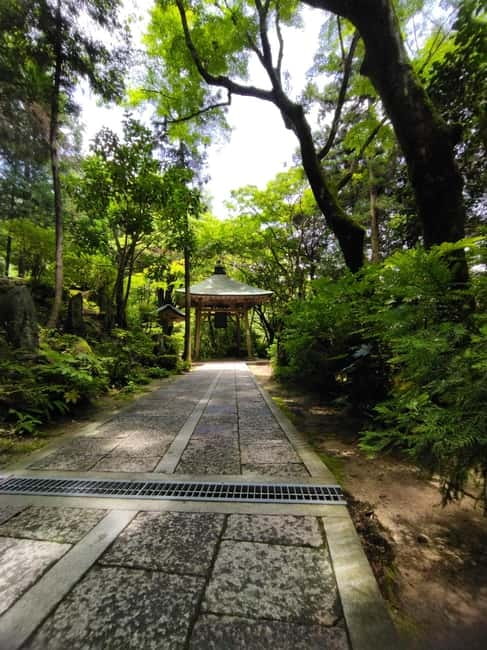
After Peace Park, you ride through the city toward Hiroshima Castle. The route uses scenic riverside paths, offering a change of pace after the memorial visit. You get a view of Hiroshima as a lived-in city, not only as a collection of famous historical sites.
The ride to the castle takes roughly an hour as part of the cycling portion. The pace is described as casual, and the e-bike motor helps keep the group moving without turning the journey into hard exercise.
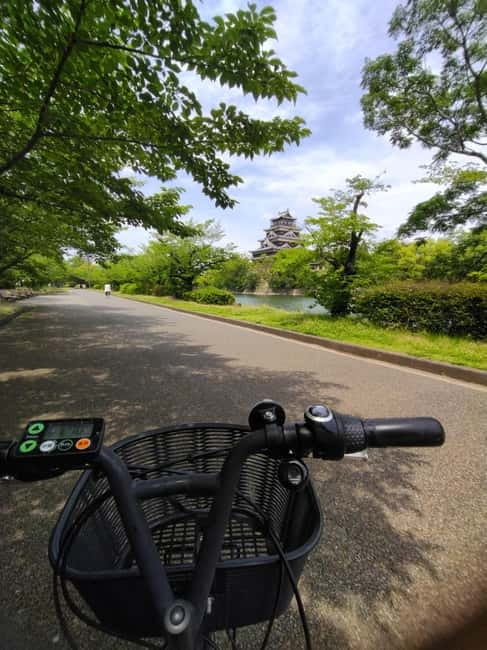
Hiroshima Castle gives the tour a different historical and cultural angle. Peace Park focuses on modern tragedy and remembrance. The castle points you toward the city’s earlier political and cultural life. Having both in one outing helps you see that Hiroshima is more than the events of 1945.
The castle stop is not presented as a lengthy interior museum visit. Instead, the guide explains the importance of the area as part of the route. If you want to spend a great deal of time inside the castle, look at the schedule carefully, since the tour has to keep moving toward Mitaki Temple.
That balance is one of the tour’s strengths. You get major context without spending the whole day in one district. Paul, who took the tour in October, found that the group spent the right amount of time at each place and that the riding itself was enjoyable. That is the appeal for a visitor who wants a broad view of Hiroshima in half a day.
Mitaki Temple is the quiet reward
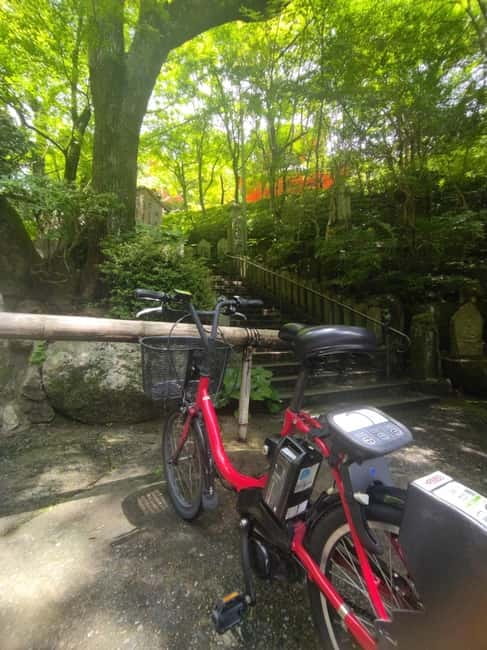
Mitaki Temple is the most distinctive stop on this route. From Hiroshima Castle, the bike ride heads toward the hills and the temple area. Battery assistance is especially welcome here, since the route is no longer a flat city ride.
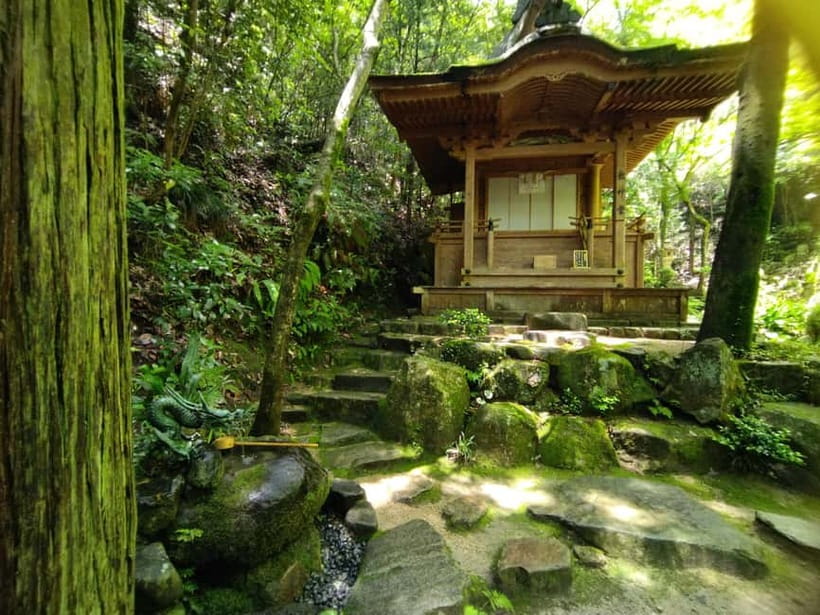
Mitaki is a Buddhist temple surrounded by nature, and it offers a sharp contrast with central Hiroshima. You trade traffic and urban buildings for trees, slopes, temple architecture, and a calmer setting. The combination of Buddhist culture and natural scenery gives the tour a sense of discovery without requiring a long trip outside the city.
This is the stop I would use to decide if the tour suits you. If you want only the famous central sights, a walking tour may be enough. If you like finding a less obvious place and seeing how the city meets its wooded outskirts, Mitaki makes the e-bike format worthwhile.
The temple visit is also the part most likely to feel peaceful after the solemn opening at Peace Park. You may find it quiet, with fewer people around than at the city’s major memorial sites. Do not read that as a promise of having the grounds to yourself, but the stop is designed to feel removed from the city’s faster pace.
The ride does require some physical effort. The bikes have motor assistance, but they do not remove the need to balance, pedal, and manage a hill. Wear comfortable clothing and shoes, and avoid booking if you are uncertain about your cycling ability.
A few more Hiroshima tours and experiences worth a look

A guide who connects the places
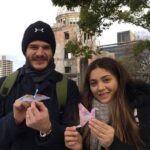
The guide is live and speaks English. Joshua, also called Josh in the tour feedback, has led several departures and is described as an American living in Hiroshima. His role is important because the route depends on the links between the sights, not just on reaching them.
At Peace Park, you need clear explanations and a respectful tone. At Hiroshima Castle, you need cultural context. At Mitaki Temple, you benefit from someone who can explain what you are seeing while also helping the group manage the ride. Joshua has been singled out for being engaging, well informed, and clear, which fits the needs of this particular route.
Guide assignments can vary, so I would not treat Joshua as guaranteed for every date. Still, the experience is built around a guide rather than an audio recording or a self-guided map. That gives you the chance to ask questions and adjust your understanding as the tour goes along.
The small group helps here. With six people or fewer, the guide can keep an eye on the riders and speak without shouting to a large crowd. It also makes the visit to a quiet temple feel less like a procession.
Snacks, drinks, and the practical riding details
Food and drinks are not included in the $70 price. There are opportunities to stop for snacks and drinks along the way, but you should bring water with you, especially in summer. One piece of direct feedback suggested that more drink stops would have helped, so do not count on frequent refreshment breaks.
The e-bike and guide are included. Helmets are available if requested, which is worth arranging in advance if you prefer to wear one. Hotel pickup and drop-off are not included, and the tour begins at Lucky Bakery and finishes at Yokogawa Station.
The total price is fair if you value the guide and the range of stops. In just three and a half hours, you cover a memorial park, a castle district, riverside routes, and a temple in a wooded setting. Doing all of that independently would cost less in transport if you already have a bicycle, but you would need to plan the route, understand the sites, and handle the uphill ride yourself.
The value is weaker if you are mainly looking for a long Peace Park visit or a full castle tour. In that case, the fixed schedule may feel rushed. The tour works best as a broad introduction, not as a deep visit to one attraction.
Some people have also been allowed to keep the bikes and continue exploring after the guided portion. That happened on several outings, but I would confirm the arrangement with Franky’s Tours rather than assume it is included every time.
Who should book this route?
I would recommend it to an active adult or older child who wants a wider view of Hiroshima without spending the entire day walking. It suits you especially well if you have already planned to visit Peace Park but want to add a less obvious cultural stop.
It is also a good choice for people who like history with physical movement. The first hour asks for quiet attention, while the rest of the experience gives you fresh air, city views, and a change of setting.
You may want another option if you dislike bikes, struggle with hills, or need a fully accessible route. The approximately 10-kilometer distance and ride toward Mitaki Temple are central to the experience, not minor details.
The tour has a strong overall rating of 4.8 from 11 reviews, with repeated praise for the guide, the choice of Mitaki Temple, and the relaxed ride. The main practical caution is simple: bring water, ask about a helmet, and leave enough time afterward to get your bearings at Yokogawa Station.
Should you book the Hiroshima e-bike tour?
Book it if you want Hiroshima in several distinct chapters: the Atomic Bomb Dome and Peace Park, the older world of Hiroshima Castle, and the quiet Buddhist setting of Mitaki Temple. The temple is the special reason to choose this route over a standard central walking tour.
At $70, the price makes sense for a small group, an English-speaking guide, an e-bike, and a route that covers more ground than most visitors would manage on foot. I would skip it only if you want a slow, museum-heavy day or are not comfortable riding uphill.
For most active visitors with limited time, this is a smart way to connect Hiroshima’s difficult past with its everyday city life and quieter natural edges.
FAQ
How long is the Hiroshima e-bike tour?
The tour lasts 210 minutes, or three and a half hours.
How far do you ride?
The tour covers approximately 10 kilometers at a casual riding pace.
Which sights are included?
You visit Hiroshima Peace Memorial Park, Hiroshima Castle, and Mitaki Temple.
Where does the tour begin?
The meeting point is Lucky Bakery, across the street from Hiroshima Peace Memorial Park and in full view of the Atomic Bomb Dome.
How do I find the guide?
The guide waits at Lucky Bakery with a large orange backpack.
Where does the tour finish?
The tour finishes at Yokogawa Station.
Is the tour conducted in English?
Yes. It includes a live English-speaking guide.
Are food and drinks included?
No. Food and drinks are not included, though there are opportunities to stop for snacks and drinks during the ride.
Who can take this tour?
You need to be able to ride a bicycle, and the tour is not suitable for children under 10. Baby carriages are not allowed.
More Castle Tours in Hiroshima

More Hiroshima City Tours in Hiroshima
More Peace Memorial Tours in Hiroshima

More tours in Hiroshima we've reviewed



Peace Memorial Tours, compared.
 ★ 4.8Hiroshima Historical Walking Tour – Why A-Bomb was DroppedFrom $352h 30m
 ★ 5.0Hiroshima Peace (Heiwa) Walking Tour at World Heritage SitesFrom $94
 ★ 4.9Hiroshima: Miyajima Peace Memorial Icons of Peace and BeautyFrom $1638 hours
 ★ 5.0Hiroshima Walking Tour Why A Bomb was dropped to HiroshimaFrom $28
 ★ 5.0Hiroshima 2hr Peace Cycling Tour with Local GuideFrom $59
 ★ 4.8Hiroshima: Peace Cycling Tour with Local GuideFrom $522 - 3 hours
