
Reviewed · OKAYAMA & KURASHIKI TOURS
Kurashiki Half-Day Private Tour with Government-Licensed Guide
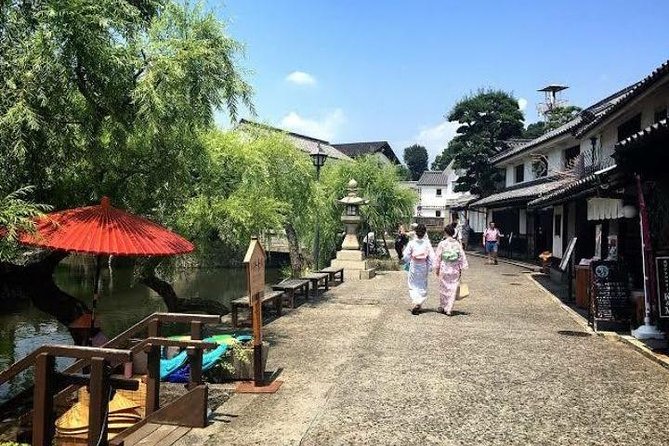
Kurashiki’s old canal quarter is the star here: willow-edged waterways, white storehouses, wooden homes, and narrow lanes give the town a look unlike most Japanese cities. With guide Sato, you can shape the four-hour walk around art, merchant life, local industry, or denim.
I like the private format, which lets you choose two or three sights instead of marching through a fixed schedule. I also like the human touch: Sato has brought local stories to life, translated tricky explanations, and even shared the tale behind Kurashiki’s masking tape.
The main catch is cost and scope. At $107.50 per person, admission fees, meals, transport, and a private vehicle are extra, and four hours is not enough to cover every listed stop. You need to choose carefully.
In This Review
- Key points at a glance
- Why Kurashiki works so well for a half-day walk
- Starting with the Bikan Historical Quarter canals
- Seeing merchant life at Ohashi House
- Making room for the Ohara Museum of Art
- Following Kurashiki’s textile story to Ivy Square
- Adding the Kurabo Memorial Hall
- Finding the modern side on Denim Street
- Considering the smaller museums
- What the private guide adds
- Price, timing, and what is not covered
- How I would choose the two or three sites
- Who should book this Kurashiki tour?
- FAQ
- How long is the Kurashiki private tour?
- How many attractions can I choose?
- Is the tour private?
- Is a guide included?
- Are entrance fees included?
- Is transportation included?
- Does the tour include lunch?
- Is the tour suitable for most people?
- What is the cancellation policy?
Key points at a glance
- The Bikan quarter is the natural centerpiece: Spend an hour beside preserved canals, old storehouses, and traditional wooden buildings.
- Guide Sato gets high marks for stories and translation: Her relaxed approach suits visitors who want context, not just directions.
- You choose two or three sights: Build the walk around art, merchant homes, textile history, or local folklore.
- Denim gives Kurashiki a modern angle: Denim Street links the town’s textile past with Japanese clothing brands and vintage-style goods.
- Museum admissions cost extra: The Ohara Museum, Ohashi House, Kurabo Memorial Hall, and other paid stops are not included.
- This is a walking pickup: You meet the guide on foot within the designated Kurashiki area, with no private vehicle supplied.
Why Kurashiki works so well for a half-day walk
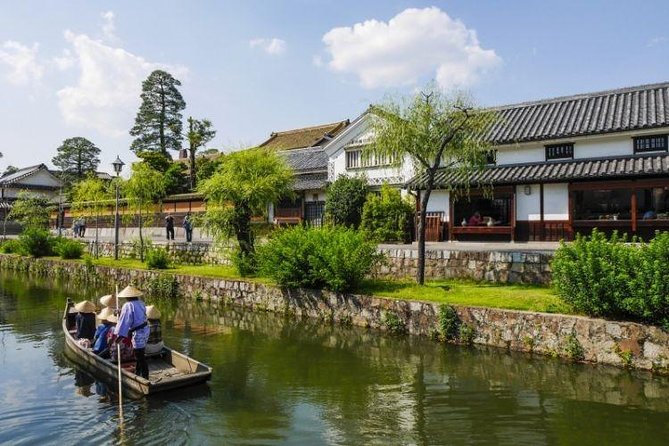
Kurashiki was shaped by trade. Its canal system once carried goods between storehouses and the nearby port, and part of that old network survives in the Bikan Historical Quarter. The result is a compact area where architecture, commerce, and daily life sit close together.
I like this kind of setting for a guided walk because the town does not need a long introduction before it begins to make sense. A guide can point out how the canals served the merchant economy, explain the purpose of the old warehouses, and connect the grand houses to Kurashiki’s textile industry.
The tour lasts about four hours, so you get enough time to look closely rather than simply snap a few photographs and move on. Still, the choice of two or three sites matters. If you select a museum with a full hour visit, your walking time and room for extra stops shrink quickly.
This is best treated as a focused introduction to Kurashiki, not an attempt to conquer every attraction in town.
A few more Kurashiki tours and experiences worth a look
Starting with the Bikan Historical Quarter canals
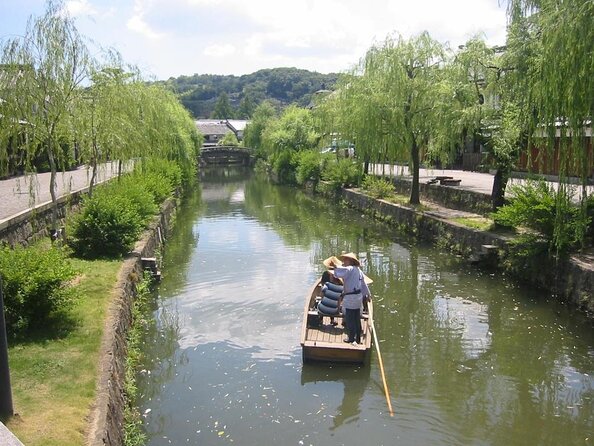
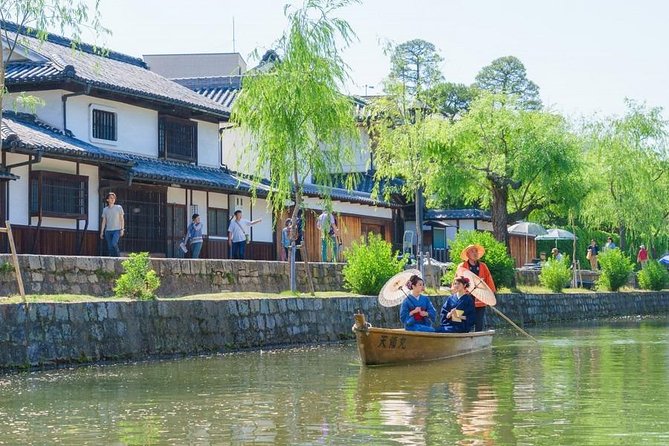
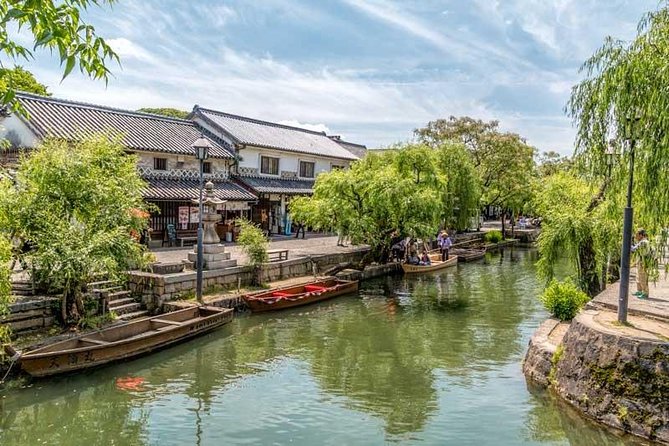
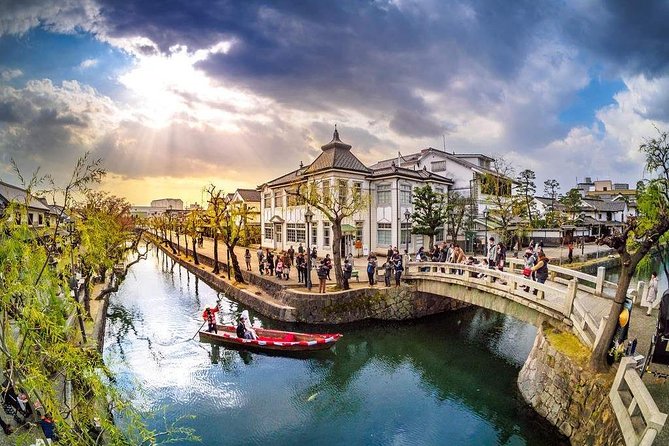
Give the Bikan Historical Quarter serious priority. The preserved canal section is the most atmospheric part of Kurashiki, with willow trees, old wooden buildings, and former storehouses gathered around the water.
The canals were practical, not decorative. Boats and barges once moved goods between the town’s storage buildings and the port. That detail changes the way you read the district. The white-walled buildings are not simply pretty scenery. They are reminders of the commercial system that made Kurashiki prosperous.
A guide adds value here by helping you notice details you could easily pass without understanding. The tour’s past guests have enjoyed Sato’s stories about important local figures and unusual pieces of town history, including a story connected with masking tape.
Allow about an hour for this stop. It is free, and it gives you the best return if you want photographs, local context, and a gentle introduction to the town. The only limitation is that the canal quarter can feel too brief if you choose several indoor attractions afterward.
Seeing merchant life at Ohashi House
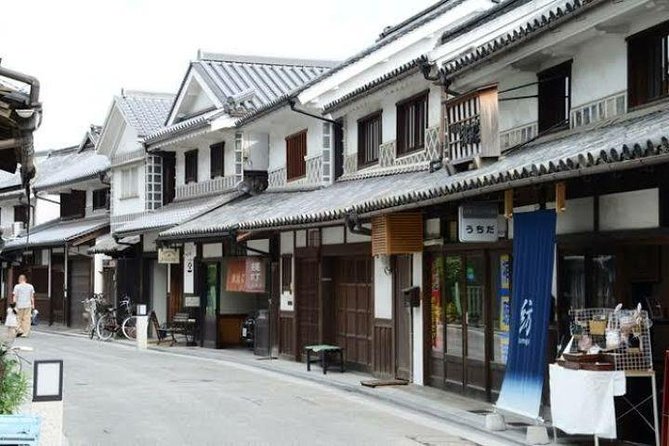
The Ohashi House offers a look at how one of Kurashiki’s leading merchant families lived. Built in 1796, it is a machiya, or Japanese townhouse, designed for both family life and business.
This stop helps balance the public face of the Bikan quarter. Along the canals, you see the storehouses and commercial buildings. Inside the Ohashi residence, you get a closer view of the people who controlled much of that trade.
I would choose this attraction if you enjoy architecture, domestic spaces, and social history. It is also a good match for anyone who wants something more grounded than a shopping street or a quick museum visit.
Admission is extra, so add the price to your planning. The supplied details do not state the current entrance fee. Since the tour includes only two or three selected sites, ask your guide to place the house high on the list if it interests you.
Making room for the Ohara Museum of Art
The Ohara Museum of Art was Japan’s first museum of Western art. Its main building sits beside the canal, with additional galleries nearby, including the Ohara Museum of Art Torajiro Kojima Memorial, the Craft Art Gallery, and the Asiatic Art Gallery.
This is a substantial cultural stop for a four-hour tour. The main museum alone is scheduled for about an hour, and the nearby buildings can easily make the art portion longer if you want to look carefully.
The annex includes works by Japanese artists, including oil paintings. The Craft Art and Asiatic Art galleries broaden the visit beyond Western painting. A separate display connected with Kojima Torajiro includes Western-style works by the artist, along with Egyptian and Islamic art from his collection.
I like this choice for visitors who want Kurashiki to be more than a scenic old town. The museum gives the walk cultural weight, and a guide can help with translation and background when labels or explanations are difficult.
The drawback is simple: museum time replaces town time. Admission is not included, and the tour may not allow enough time for every gallery. Choose the Ohara Museum if art is a main reason you came, not as an afterthought squeezed between shopping and canals.
Following Kurashiki’s textile story to Ivy Square
Kurashiki Ivy Square links the town’s older commercial identity with its industrial past. The complex uses brick buildings covered in ivy, with museums, restaurants, and a hotel. The site was once home to the first modern cotton mill in Japan, and the brick buildings began as part of that industrial operation.
This stop works well for visitors interested in how Kurashiki changed over time. The Bikan quarter shows merchant-era trade, while Ivy Square points to modern manufacturing and the growth of textiles.
Entry to the complex itself is free, though individual museums or other activities may charge. That makes it a useful choice if you want a historical stop without adding another admission fee.
I would pair Ivy Square with the Bikan canals or Denim Street. Together, they create a clear story: trade on the water, factory production, and the clothing culture that grew from Kurashiki’s textile expertise.
Other guided tours in Kurashiki

Adding the Kurabo Memorial Hall
The Kurabo Memorial Hall focuses on the Kurashiki spinning company, founded in 1888. Its five rooms cover different periods of the company’s development.
This is a more specialized stop than the canal quarter or Ohara Museum. It will suit you if industrial history, business, or textile production holds your interest. It may feel less essential if you have only one day in Kurashiki and mainly want traditional streets, art, and shopping.
Admission is extra, and the visit takes about an hour. That is a significant portion of a four-hour tour, so select it with a purpose. If you want to understand why denim and textiles matter so much here, this museum can provide useful background.
If your interests are broad, ask Sato to explain the company’s role during the walking portions rather than spending a full hour indoors. The private format gives you room to make that choice.
Finding the modern side on Denim Street
Kurashiki Denim Street is short but distinctive. Okayama has been known as Japan’s denim center since the 1970s, and this lane gathers Japanese clothing brands selling vintage-style denim and related goods.
The stop is listed as about one minute, which tells you what to expect: it is a quick walk through a shopping area, not a full museum visit. You can browse, look at the designs, and connect the products with the region’s textile identity.
I like this stop because it prevents the tour from becoming locked in the past. Kurashiki’s old houses and canals are appealing, but the town’s identity also includes working industry and clothing production.
There is no need to choose Denim Street if you do not care about shopping or textiles. If you do, pair it with Ivy Square or Kurabo Memorial Hall for a more complete picture. The tour does not include personal purchases, and the supplied details do not state specific shop prices.
The separate Kojima Jeans Street stop is also connected with denim culture in the wider area. The description supplied for that stop focuses on Kojima Torajiro and art from his collection, so confirm with your guide exactly which attraction you will visit if you select it. That clarification matters because the name suggests a denim shopping area while the detailed description points toward a museum.
Considering the smaller museums
Kurashiki gives you several lesser-known options, but each one uses valuable tour time.
The Kurashiki Museum of Natural History occupies attractive rice warehouses dating from the late 18th century. Its displays include household objects from across Japan, such as ceramics and glassware. This may appeal to you if you prefer everyday material culture to major paintings.
Momotarou-no-Karakuri-Hakubutsukan is part gallery and part fun-house. It focuses on Momotarō, the local peach-boy legend, with toys, memorabilia, and different depictions of the character. It sounds like the most playful choice, especially if you want a lighter stop or have children in your group.
Both attractions take about an hour and require separate admission. That makes them poor choices for a quick add-on, but good choices if one has a clear place in your interests.
You should tell the guide what kind of day you want before settling on the sites. A private tour is most useful when your choices are deliberate.
What the private guide adds
The guide is not just there to lead you from one building to the next. The strongest part of this experience is the ability to ask questions and adjust the walk as you go.
Sato is the named guide associated with the tour information. Her approach has included local stories, help with translation, and a friendly pace. She has also worked with visitors who had only one day in Kurashiki and helped them focus on the places they cared about most.
That flexibility is especially useful in museums. You may want help understanding a Japanese explanation, or you may discover that you care more about a gallery than expected. Sato can help you decide how to use the remaining time, though the four-hour limit still applies.
The tour is private, so only your group participates. You cannot combine separate tour groups. This is a good arrangement for couples, families, or friends with different interests, but it does not offer the social atmosphere or lower cost of a shared group walk.
The guide is licensed by the Japanese government and speaks English, with multilingual service indicated. Confirmation is provided when you book.
Price, timing, and what is not covered
The listed price is $107.50 per person. That is not a cheap walking tour, especially since admission fees and transport are separate. Its value comes from the private planning, licensed guide, translation help, and ability to choose your priorities.
For two people, the guide fee alone would be $215 before museum tickets, meals, or local transport. A larger group may benefit from the stated group discounts, though the exact discount is not provided. Check the final price for your party rather than assuming the per-person figure will remain unchanged.
You meet the guide on foot within a designated area of Kurashiki. Pickup is offered in that sense, but no private vehicle is provided. Transportation fees are not included, so allow for that if you are coming from outside the meeting area or using local transit.
Lunch and personal expenses are also separate. Service animals are allowed, and the tour is near public transportation. Most people can participate, but remember that this is a walking activity with several historic streets and museum visits.
The experience is often booked about 49 days ahead. That is a useful planning signal if your dates are fixed, particularly during a busy Japan itinerary.
Cancellation is free up to 24 hours before the start time. Changes or cancellations made inside that window are not accepted for a refund.
How I would choose the two or three sites
If this is your first visit, I would start with the Bikan Historical Quarter and Ohashi House. That combination gives you the town’s public canal district and a look inside a merchant residence.
If art is your priority, choose the Bikan quarter and Ohara Museum of Art. Be clear that the museum can take a full hour or more, especially if you want the nearby galleries.
For textile history, select the Bikan quarter, Ivy Square, and either Kurabo Memorial Hall or Denim Street. This creates a useful progression from merchant trade to cotton production to modern denim.
For a lighter, family-friendly outing, combine the canals with Momotarou-no-Karakuri-Hakubutsukan. Add Denim Street if shopping interests your group.
For architecture and local atmosphere, choose the Bikan quarter, Ohashi House, and Ivy Square. You will spend less time inside formal galleries and more time seeing how Kurashiki’s buildings relate to its past.
Who should book this Kurashiki tour?
Book it if you have only a half-day, want a private guide, and prefer to make choices rather than follow a fixed sightseeing list. It is particularly useful for first-time visitors who want explanations in English and help sorting Kurashiki’s many small museums and historic sites.
It also suits couples and families who want a relaxed pace. Sato’s stories and translation support can make the walk more personal, and the private setup means you can ask questions without holding up a larger group.
Think twice if you want a low-cost stroll or hope to see every attraction listed. At $107.50 per person before admissions, the price makes the most sense when you use the guide’s planning and local knowledge fully.
My practical pick is the Bikan Historical Quarter plus one major interest: Ohashi House for merchant life, Ohara Museum for art, or Ivy Square and Denim Street for textiles. That gives you a clear, satisfying picture of Kurashiki without turning four hours into a race.
FAQ
How long is the Kurashiki private tour?
The tour lasts approximately four hours.
How many attractions can I choose?
The tour includes a customizable visit to two or three sites from the listed choices.
Is the tour private?
Yes. Only your group participates, and separate tour groups cannot be combined.
Is a guide included?
Yes. The tour includes a licensed local English-speaking guide. The guide service is described as multilingual, and Sato is the named guide associated with the experience.
Are entrance fees included?
No. Entrance fees are not included. Guide entry fees are covered only for sights listed under the tour’s expected activities.
Is transportation included?
No. Transportation fees and a private vehicle are not included. You meet the guide on foot within the designated Kurashiki area.
Does the tour include lunch?
No. Lunch and other personal expenses are separate.
Is the tour suitable for most people?
Most people can participate. It is a walking tour, and service animals are allowed.
What is the cancellation policy?
You can cancel up to 24 hours before the experience start time for a full refund. Cancellations or changes made less than 24 hours before the start time are not accepted for a refund.
More Private Tours in Kurashiki
More Guided Tours in Kurashiki
More Okayama & Kurashiki Tours in Kurashiki
More tours in Kurashiki we've reviewed
Okayama & Kurashiki Tours, compared.
 ★ 3.9Okayama Castle Admission TicketFrom $21 day
 ★ 4.5Kurashiki Private Romantic Night in the Observatory ReclinersFrom $29
 ★ 5.0[From Okayama] Okayama & Kurashiki Full Day TourFrom $163
 ★ 5.0Half-Day Shared Tour at Kurashiki with Local GuideFrom $86
 ★ 5.0Okayama Half-Day Private Trip with Government-Licensed GuideFrom $107
 ★ 4.5Okayama Full-Day Private Trip with Government-Licensed GuideFrom $153
