
Reviewed · PEACE MEMORIAL TOURS
Hiroshima: Atomic Bomb Dome and Peace Memorial Museum 3 hours
Hiroshima’s Atomic Bomb Dome is not a grand monument. It is a damaged building, left partly standing after the blast of August 6, 1945. That plain fact makes it one of the most powerful sights in Japan. This three-hour private tour connects the Dome, the memorial park, and the Peace Memorial Museum in one carefully focused visit.
I like two things here: a local guide gives the sites context, and the tour allows two full hours inside the museum instead of rushing through it. Guides such as Naoka, Naomi, Takashi, and Yumi have shared family connections to Hiroshima, while Gordon and Ami have been praised for clear explanations and thoughtful answers. The main consideration is the price, $94.26 per person, which is a serious cost for three hours, especially since lunch, drinks, and transportation are not included.
In This Review
- Key points to know before booking
- Why this Hiroshima tour works
- Starting with the Atomic Bomb Dome
- Walking through Peace Memorial Park
- Spending two hours inside the Peace Memorial Museum
- The value of a guide with a family connection
- What $94.26 per person really buys
- Practical details that affect your visit
- Who should book this experience
- Should you book the Hiroshima Peace Memorial tour?
- FAQ
- How long does the Hiroshima memorial tour last?
- Where does the tour begin and end?
- Is admission to the museum included?
- Is this a private tour?
- Can I ask for a specific guide?
- What are the museum conduct rules?
Key points to know before booking
- The three-hour route covers Hiroshima’s essential memorial sites: the Atomic Bomb Dome, Peace Memorial Park, and Peace Memorial Museum.
- The tour is private: only your group participates, which gives you more room for questions and reflection.
- The museum receives the most time: plan on roughly two hours inside, with shorter stops at the Dome and park.
- Some guides bring a personal family connection: Naoka, Naomi, Takashi, Yumi, and Hiroyuki have been praised for making the subject feel personal and human.
- Museum manners matter: guides generally speak in a whisper and keep moving, so you must remain quiet and respectful.
- The meeting point is convenient: you start and finish at Hiroshima Peace Memorial Museum, near public transportation.
Why this Hiroshima tour works
The strength of this experience is its simple shape. You begin at the museum, walk through the memorial grounds, see the Dome across the river, and then spend most of the visit with the museum’s exhibits. You are not being driven from one distant sight to another or asked to fit the whole city into half a day.
Instead, the tour gives you time to understand one place. Hiroshima’s memorial district can feel quiet and open, but its meaning is not always easy to grasp from signs alone. A guide helps connect the buildings, statues, cenotaph, river, and museum displays into one story.
This is also a private activity. That matters more here than it would on an ordinary city walk. The subject is painful, and your group can ask questions at its own pace without trying to speak over a large crowd. You can also pause when you need to, although the museum portion follows its own rules and rhythm.
The experience has a 4.8 rating from 20 reviews, with 95 percent recommending it. That is a small sample, so I would not treat the number as a guarantee. Still, the pattern is clear: the strongest praise goes to guides who combine facts with patience, respect, and a personal connection to Hiroshima.
A few more Hiroshima tours and experiences worth a look
Starting with the Atomic Bomb Dome
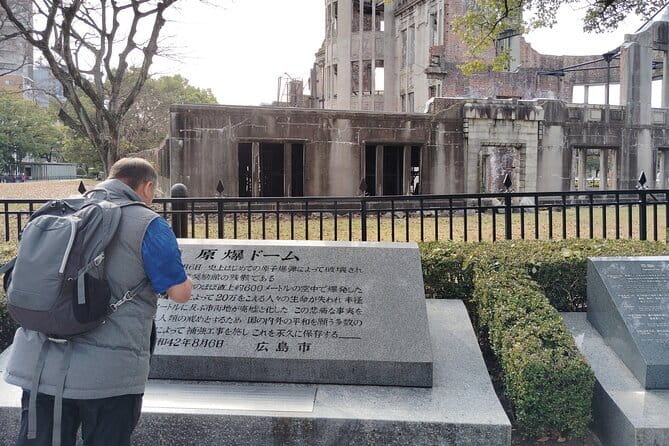
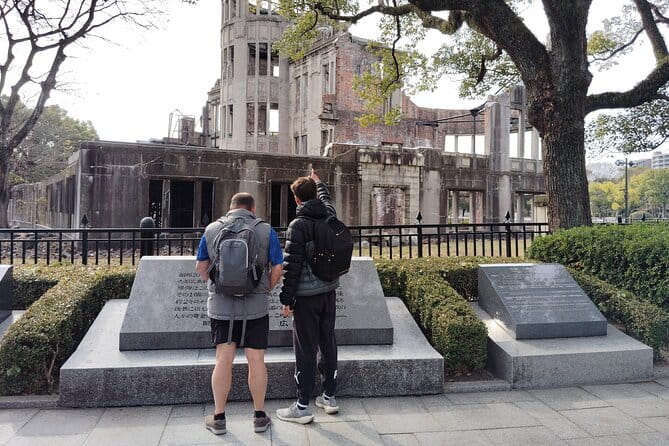
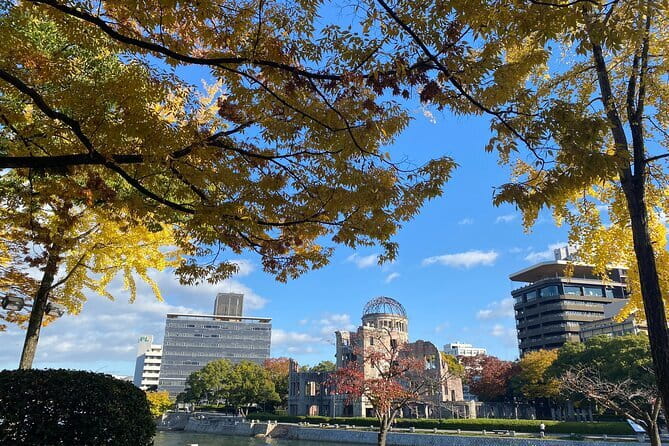
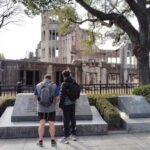
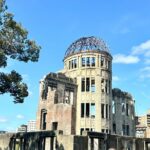
The Atomic Bomb Dome receives about 30 minutes, and admission is free. You will see the building from the outside, where its exposed steel frame and ruined walls remain a direct reminder of the force that struck Hiroshima.
Before the bombing, this was a graceful civic building. After the blast, much of it was destroyed, yet the central structure remained standing. During the city’s rebuilding, some people wanted the ruins removed. Instead, Hiroshima preserved them as a memorial.
A guide can help you notice the difference between simply seeing a ruined building and understanding why this particular ruin was kept. The Dome is not presented as a relic of war alone. It also reflects the city’s decision to keep visible evidence of what happened and to link that evidence with a call for peace.
Thirty minutes is enough for an explanation and photographs from the outside. It is not enough for a long architectural study, and this tour does not pretend otherwise. The Dome is the opening image, not the full experience.
You may find this first stop emotionally difficult. That is normal. The building is stark, and the setting around it can seem deceptively calm. I recommend listening closely to the guide here rather than trying to rush into picture-taking. The best part of this stop is the context.
Walking through Peace Memorial Park
The tour allows about 20 minutes in Hiroshima Peace Memorial Park. That may sound brief, but the park works as a link between the Dome and the museum rather than as a separate, extended walking tour.
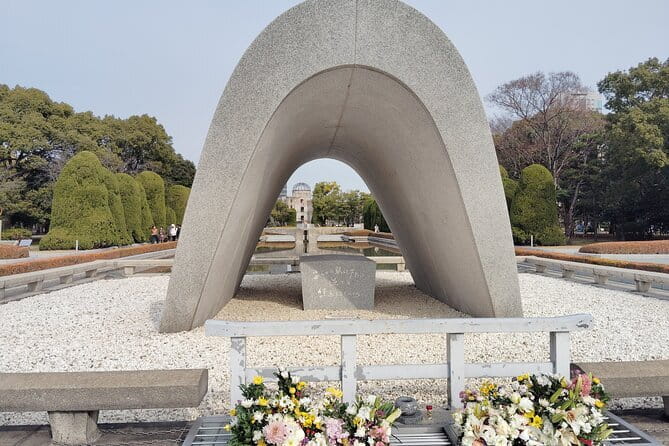
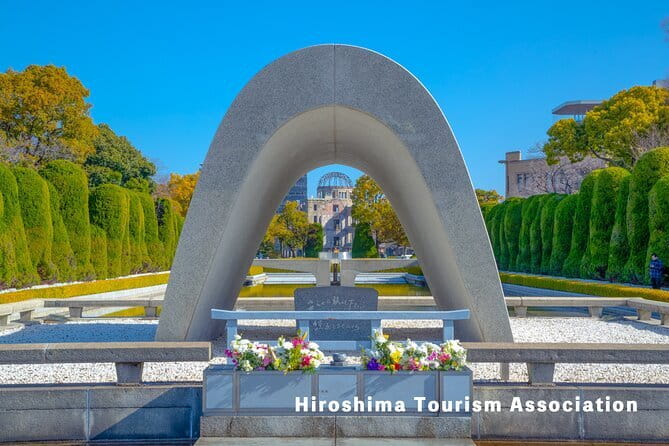
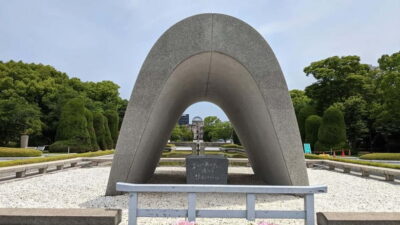
A cenotaph sits in the park, overlooking the Atomic Bomb Dome. Its purpose is to comfort the spirits of those affected by the bombing. The placement matters: from this area, you can understand the physical relationship between the memorial, the park, and the surviving building.
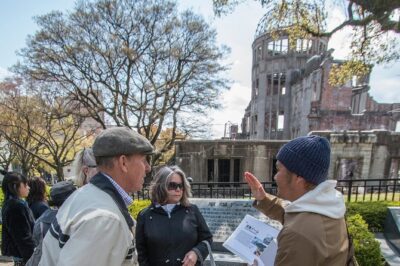
Guides have taken groups to several sites around the park and explained the monuments rather than simply pointing them out. Gordon has been especially praised for bringing together the area’s history, survivor stories, and Hiroshima’s present-day message of peace. Other guides, including Naomi and Takashi, have added family stories that made the memorials feel less abstract.
The park stop is also a chance to slow down before entering the museum. The museum contains difficult material, and the outdoor pause can help you prepare. Twenty minutes may feel short if you want to inspect every monument, so you should see this portion as an introduction.
Wear shoes suited to walking and allow a little flexibility in your pace. The provided schedule adds up to three hours, but your exact time at individual points can vary with questions and the guide’s approach.
Spending two hours inside the Peace Memorial Museum

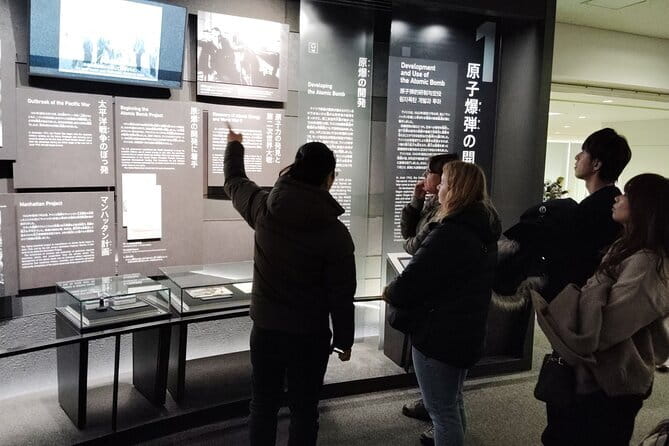
The museum is the heart of the experience. You have about two hours inside, and admission is included in the tour price. The exhibits cover Hiroshima before the bombing, the bombing itself, and the effects on the city and its people.
That first part matters. Without it, the bombing can seem like an isolated event rather than something that struck a living city. The museum’s records and objects bring attention to ordinary people, daily life, and the human cost of August 6, 1945.
The museum is not a light stop. It presents painful evidence and personal stories. You should expect moments that are upsetting, particularly if you take time with the individual accounts. The value of having a guide is not that the guide makes the material easy. It is that the guide can provide background, answer questions, and help you place what you are seeing in context.
Museum etiquette is clearly important. Guides generally speak in a whisper and continue walking without stopping for long explanations. You are expected to be quiet. This may disappoint you if you want a running commentary beside every display, but it also protects the museum’s solemn atmosphere.
A good strategy is to let the guide explain the wider story before or after the exhibits, then take the museum at your own pace. Guides such as Emiko, Gordon, and Ami have been praised for answering questions patiently and adding information that visitors might miss when walking through alone.
Two hours is a useful amount of time. You can see the major sections without turning the visit into a hurried checklist. Still, the museum is dense, and you may want extra time if you read every panel carefully. The scheduled tour ends back at the museum, so ask your guide about timing if you hope to remain longer independently.
The value of a guide with a family connection
The most distinctive feature of this tour is the chance to meet a guide who may have a personal family connection to the bombing. The available guides vary, so you should not assume that a particular person will lead your booking unless the provider confirms it.
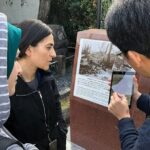
Naoka has been described as a second-generation survivor and brought a family perspective to the visit. Naomi shared her family’s story and used photographs to help explain what happened. Takashi also connected his family experience to the day’s events, while Yumi was praised for making the tour a lasting part of a Hiroshima visit.
Hiroyuki guided alongside his mother, creating another personal connection. Gordon has been praised for combining the role of storyteller and historian with a calm, compassionate manner. Ami has been noted for being kind, helpful, and able to suggest a lunch option after the tour.
These personal links can add meaning, but you should not expect every guide to tell the same story. A family connection also does not replace historical evidence. The best guides use personal memory as one part of the visit, alongside the museum’s records and the wider story of Hiroshima.
One weaker experience in the available feedback involved a reserved guide who provided less background than expected. The guide arrived on time but not early, which also caused some uncertainty at the meeting place. The provider responded that guides are normally asked to arrive at least 10 minutes early. If you are unsure where to meet, confirm the location in advance and look for the guide at the Peace Memorial Museum.
A few more Hiroshima tours and experiences worth a look

What $94.26 per person really buys
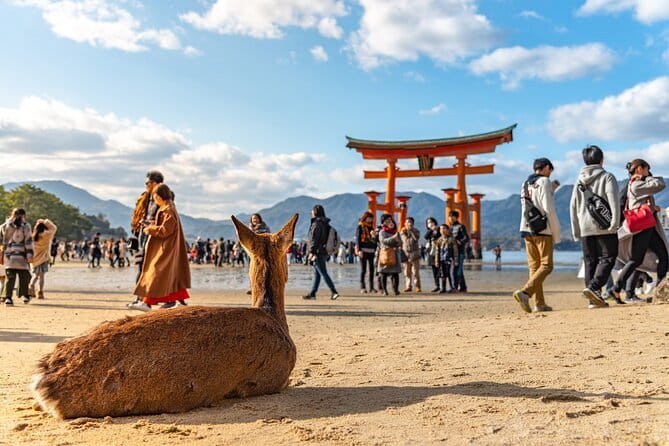
At $94.26 per person, this is not a budget museum visit. You can see the Atomic Bomb Dome and Peace Memorial Park without paying admission, and the museum itself is the only included entry ticket. Lunch, coffee, tea, and transportation are extra.
The price makes more sense if you value a private guide. You are paying for the guide fee, the organization of the route, explanations at the park and Dome, help with questions, and the chance to approach the museum with more background. A private group can also be more comfortable than a large shared tour for a serious subject.
The value drops if you only want to see the main sights quickly or prefer to read everything alone. In that case, you may feel that the free outdoor sites and museum admission do not justify the total cost.
Group discounts are listed, so the per-person cost may work better for a larger private party. Check the price for your group before booking. Since the experience lasts about three hours, it also fits neatly into a day that includes other Hiroshima plans.
Practical details that affect your visit
The tour begins and ends at Hiroshima Peace Memorial Museum, 1-2 Nakajimacho, Naka Ward, Hiroshima. The meeting point is near public transportation, and most people can participate.
Starting at the museum is convenient if you are already visiting the memorial district. It also means you do not need to arrange a separate transfer between the Dome, park, and museum. The route is focused on the memorial area, not on Hiroshima’s wider sights.
The mobile ticket is useful for a Japan itinerary built around trains and timed visits. Confirmation is provided at booking. Free cancellation is available up to 24 hours before the start time, based on local time. Changes or cancellations inside that window are not accepted for a refund.
Bring water if you need it, since drinks are not included. There is no lunch stop built into the three-hour schedule, although Ami has suggested lunch options to some groups after the tour.
Most important, bring the right frame of mind. This is not a cheerful sightseeing outing. It is a serious visit that asks you to look at evidence of suffering while also considering Hiroshima’s message of peace and survival.
Who should book this experience
I would recommend this tour to first-time visitors who want help understanding the memorial district rather than simply checking off three sights. It suits couples, families, and small private groups who expect to ask questions and want a guide’s attention.
It is also a good choice if you have limited time in Hiroshima. The route covers the three main places in one three-hour block, with the museum receiving most of the schedule. You will leave with a clearer sense of how the Dome, park, and museum relate to one another.
Families should decide in advance how their children will respond to the museum. The tour is quiet and serious, and the material may be upsetting. The supplied information says most people can participate, but it does not give a specific age recommendation.
You may prefer to visit independently if you need a very slow museum pace, want to spend a long time photographing the Dome, or do not want a guide during an emotional visit. The tour’s whispering policy and moving commentary also mean you should not expect long stops beside every exhibit.
Should you book the Hiroshima Peace Memorial tour?
Book it if you want a thoughtful introduction to Hiroshima and value the presence of a private local guide. The strongest guides, including Gordon, Naoka, Naomi, Takashi, Yumi, Ami, Emiko, and Hiroyuki, have helped make the history clearer through careful explanations, family stories, and respectful conversation.
Skip it if $94.26 feels too high for a three-hour visit or if you are happy to explore the park and museum on your own. The outdoor stops are short, and museum etiquette limits how much commentary can happen inside.
For many people, the guide is the deciding factor. If you can request a guide with a family connection or a particular guide by name, ask before booking. If not, the structure still gives you a sensible route through Hiroshima’s most important memorial sites, with enough museum time to make the visit more than a quick look.
FAQ
How long does the Hiroshima memorial tour last?
The experience lasts about three hours. The schedule includes 30 minutes at the Atomic Bomb Dome, 20 minutes in Peace Memorial Park, and about two hours at the Peace Memorial Museum.
Where does the tour begin and end?
Both the starting point and the endpoint are Hiroshima Peace Memorial Museum, 1-2 Nakajimacho, Naka Ward, Hiroshima, 730-0811, Japan.
Is admission to the museum included?
Yes. Admission to the Hiroshima Peace Memorial Museum and the guide fee are included. Lunch, coffee, and tea are not included.
Is this a private tour?
Yes. Only your group participates in the activity. Group discounts are listed as one of the available features.
Can I ask for a specific guide?
The tour has been led by guides including Gordon, Naoka, Naomi, Emiko, Ami, Takashi, Yumi, and Hiroyuki. The provided information does not guarantee a specific guide, so ask the provider before booking if a particular person is important to you.
What are the museum conduct rules?
Guides generally conduct the museum portion in a whisper and keep moving without stopping for long explanations. You are expected to remain quiet in the museum.
More Museum Experiences in Hiroshima
More Hiroshima City Tours in Hiroshima
More Peace Memorial Tours in Hiroshima


More tours in Hiroshima we've reviewed



Peace Memorial Tours, compared.
 ★ 4.8Hiroshima Historical Walking Tour – Why A-Bomb was DroppedFrom $352h 30m
 ★ 5.0Hiroshima Peace (Heiwa) Walking Tour at World Heritage SitesFrom $94
 ★ 4.9Hiroshima: Miyajima Peace Memorial Icons of Peace and BeautyFrom $1638 hours
 ★ 5.0Hiroshima Walking Tour Why A Bomb was dropped to HiroshimaFrom $28
 ★ 5.0Hiroshima 2hr Peace Cycling Tour with Local GuideFrom $59
 ★ 4.8Hiroshima: Peace Cycling Tour with Local GuideFrom $522 - 3 hours
