
Reviewed · MIYAJIMA TOURS
Hiroshima and Miyajima Private Guided Tour
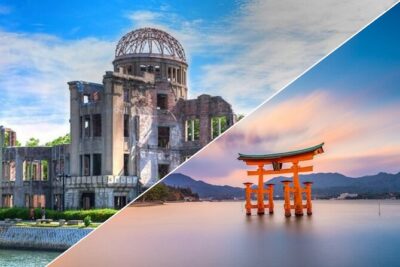
Hiroshima’s most powerful sights and Miyajima’s famous floating torii gate make an unlikely but memorable pair. This private tour takes you from the quiet, solemn grounds of Peace Memorial Park to the island’s deer, shrine, sea views, and busy shopping streets.
I like the way the tour joins the two places by public tram and ferry, so you see how Hiroshima works rather than spending the day behind a car window. I also like the personal guidance offered by guides such as Kazuko, John, and Gajender, who add local stories, restaurant tips, photos, and help with the city’s transport.
The main catch is time. A 4-hour outing cannot cover everything listed, while even an 8-hour day can feel packed. You will also walk a great deal, and the public transport route can take much longer if your pickup point is far from Hiroshima or Miyajima.
In This Review
- Key points to know before booking
- Why Hiroshima and Miyajima work well together
- Starting at Hiroshima Peace Memorial Park
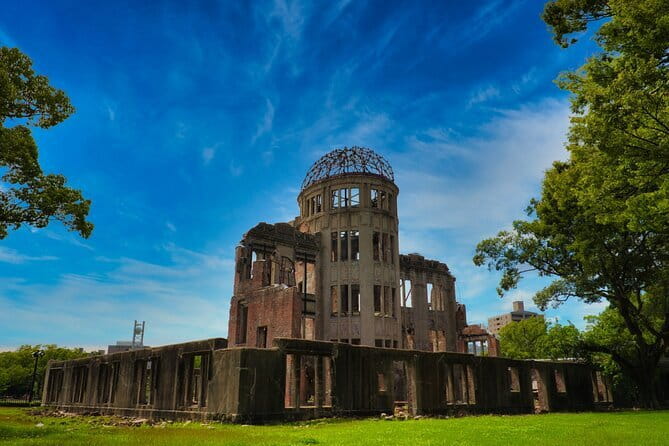
- The A-Bomb Dome and the city’s most recognizable ruin
- Allow real time for the Peace Memorial Museum
- Children’s Peace Monument, Cenotaph, Flame, and Bell
- Hiroshima Castle and Shukkeien Garden
- A short taste of Hiroshima’s food and shopping district
- Taking the tram and ferry to Miyajima
- Miyajima and Itsukushima Shrine
- What the guides add
- Time, walking, heat, and mobility
- What the $150 price really covers
- Who should book this Hiroshima tour
- Should you book it?
- FAQ
- How long does the Hiroshima and Miyajima private tour last?
- Is this a private tour?
- What transportation is included?
- Are the Peace Memorial Museum and Itsukushima Shrine tickets included?
- Are Hiroshima Castle and Shukkeien Garden included?
- Is lunch included?
- Can I cancel for a full refund?
Key points to know before booking
- Peace Park and Miyajima in one day: You visit the Atomic Bomb Dome, museum, memorials, Itsukushima Shrine, and the torii gate.
- Private guiding: Only your party takes part, with an English-speaking guide and a flexible plan.
- Public transport included: The tour covers the tram and ferry, but private cars and the direct Peace Park boat cost extra.
- Strong guide praise: Kazuko is often singled out for her personal connection to Hiroshima, while John and Gajender are praised for history and local insight.
- Extra admission costs: Hiroshima Castle costs 500 yen and Shukkeien Garden costs 300 yen. Both are separate from the listed price.
- A walking day: Heat, stairs, stations, crowds, and long connections can make this demanding for anyone with mobility limits.
Why Hiroshima and Miyajima work well together
Hiroshima is a place where sightseeing requires some emotional range. The Peace Memorial Park asks for quiet attention. Miyajima offers shrine architecture, sea views, free-roaming deer, food, and a more relaxed pace.
That contrast gives the day a natural shape. You first confront the events of August 6, 1945, then move out toward the Seto Inland Sea and Itsukushima Shrine. I find this pairing more satisfying than spending an entire day on only one side of Hiroshima, provided you have enough time and energy.
The tour is sold for about $150 per person, with the final duration listed at roughly 4 to 8 hours. That is a fair price if you value a private guide who handles tickets, explains the sites in English, and helps you use the tram and ferry. It is less attractive if you only want transportation or a quick photo stop.
The private format matters most here. You can ask to slow down at the museum, spend more time on Miyajima, stop for Hiroshima-style okonomiyaki, or skip a less important sight. The tradeoff is that the tour is not a fixed, guaranteed circuit of every stop.
A few more Hiroshima tours and experiences worth a look
Starting at Hiroshima Peace Memorial Park
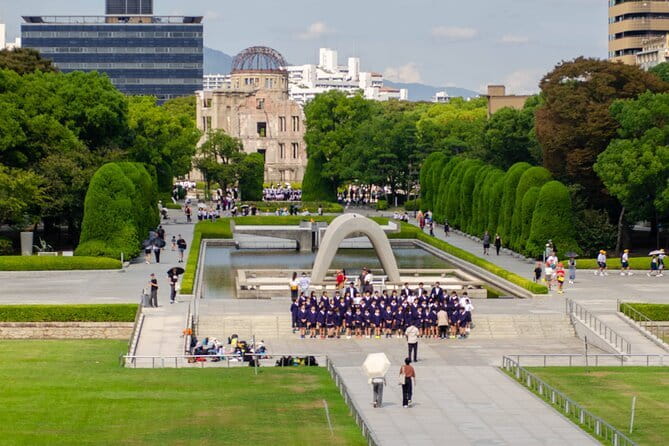
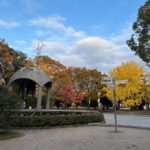
The Peace Memorial Park is not simply a collection of monuments. It is a carefully arranged place for reflection, with the river, open lawns, memorials, and surviving structures creating a strong sense of place.
Your guide begins near the A-Bomb Dome, then helps explain how the park’s separate memorials fit together. This is valuable because the site can otherwise feel like a series of solemn objects without a clear story.
Expect around an hour here before or around the museum visit. The pace can be adjusted, but the park involves outdoor walking, and summer heat can be intense. Bring water, wear practical shoes, and do not assume the day will feel gentle just because Hiroshima’s city center is easy to reach.
The A-Bomb Dome and the city’s most recognizable ruin
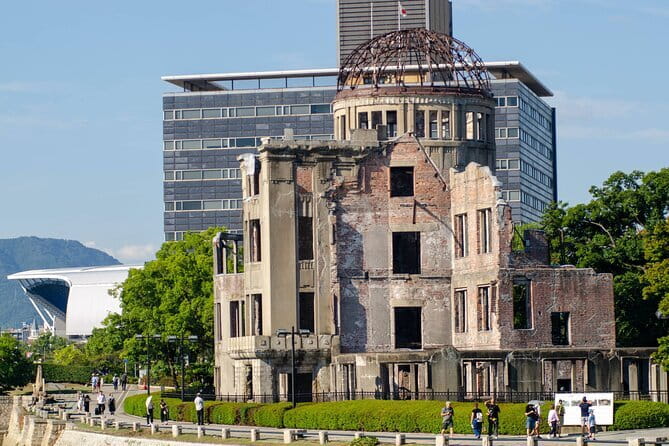
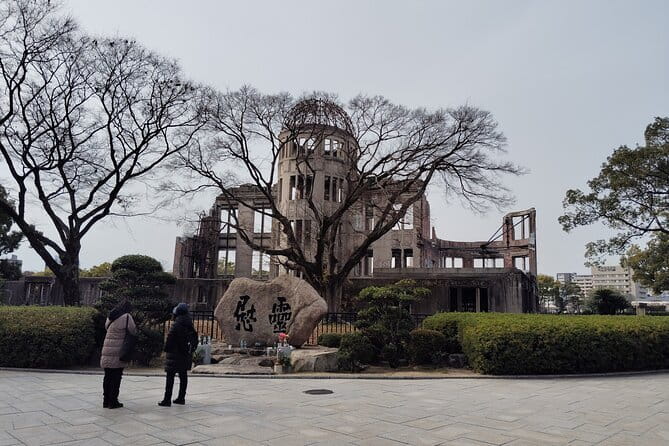
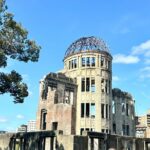
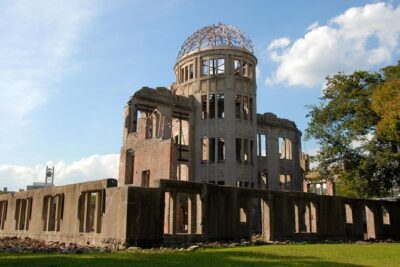
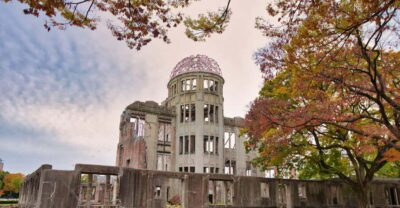
The A-Bomb Dome is a short stop, listed at about 15 minutes, but it carries enormous weight. The preserved structure is a stark reminder of the atomic bombing and one of Hiroshima’s most recognizable landmarks.
You will mainly view it from outside. The short visit works well because the building needs little explanation once you see its damaged frame beside the river. Your guide can supply the context, then lead you toward the rest of the memorial grounds.
Do not expect a long architectural tour here. This is a place for looking, listening, and understanding why the remains were preserved.
Allow real time for the Peace Memorial Museum
The Hiroshima Peace Memorial Museum is the emotional center of the day. One hour is scheduled, and that is enough for an introduction, but many people will want longer.
The museum examines the bombing, the human cost, and the years that followed. Displays can be difficult, so having a guide who explains the larger context may help you process what you are seeing. Guides Kazuko and Gajender receive especially strong praise for presenting this material with care, while John is valued for his long connection with Hiroshima and Japanese history.
A private tour gives you someone to talk with before and after the museum. Still, your guide does not replace the museum itself. If this subject is your main reason for visiting Hiroshima, tell the guide early that you want to protect enough time for the exhibits.
Children’s Peace Monument, Cenotaph, Flame, and Bell
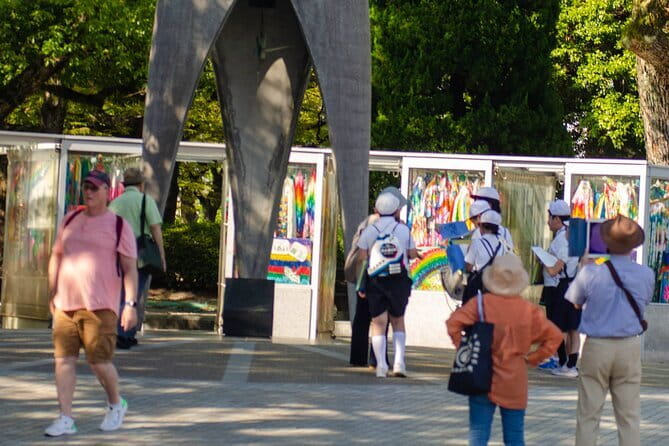
The tour includes several memorials within the park. The Children’s Peace Monument is linked to Sadako Sasaki, whose story has become associated with children affected by the bombing. Colorful paper cranes are a familiar part of the site, though the important point is the memorial’s message of remembrance and peace.
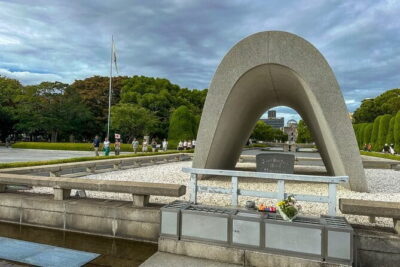
The Cenotaph for the A-Bomb Victims is another major stop, scheduled for about 45 minutes. It is a quiet place to pause and read the inscription honoring those who died.
The Peace Flame and Peace Bell add another layer to the visit. The flame represents a continuing wish for the end of nuclear weapons, while the bell allows visitors to take part in a simple act of peace. These stops are brief, but they help you understand that Hiroshima’s memorial grounds are not only about destruction. They also express a continuing hope for peace.
A few more Hiroshima tours and experiences worth a look

Hiroshima Castle and Shukkeien Garden
After the memorial district, the tour can turn toward two very different places in central Hiroshima.
Hiroshima Castle, also called Carp Castle, offers a look at the city before the modern era. The original castle was built in the late 16th century by Mori Terumoto and served as the seat of the Mori clan until the early 17th century. The present attraction is a reconstruction, and admission costs 500 yen.
The scheduled visit lasts about an hour. It is worth adding if you want more than wartime history, but it may be the first stop dropped when transport runs late or the museum takes longer than planned.
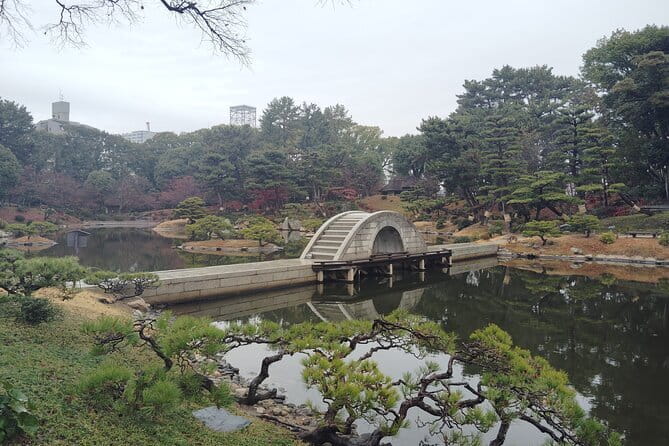
Shukkeien Garden dates from 1620 and was created for the Asano family. Its name refers to the idea of a reduced or miniature scenic world, a traditional Japanese garden concept. Admission is 300 yen.
I would choose Shukkeien if you want a quiet change of pace after the museum. The garden gives you ponds, paths, and carefully arranged scenery rather than another formal history lesson. Like the castle, it is not included in the ticket price, and fitting both into a day that also includes Miyajima may require a full 8-hour booking.
A short taste of Hiroshima’s food and shopping district
Hondori is a pedestrian shopping and dining street in central Hiroshima. It is useful as a break between major sights, especially if you want to see the city as a lived-in place rather than only as a memorial destination.
The schedule does not promise lunch, and lunch is not included. That is actually helpful for a private tour because you can ask your guide for a recommendation and choose the kind of meal that suits your group.
Several guides have directed people toward Hiroshima-style okonomiyaki, a local specialty and one of the most useful food suggestions mentioned during the tour. If you want to eat it, say so early. A sit-down meal takes time, and a long lunch can affect whether you reach the castle or garden.
Taking the tram and ferry to Miyajima
The tour includes public transportation by tram and ferry. This is a practical, lower-cost way to connect Hiroshima with Miyajima, but it is not quick in every situation.
One important warning: your pickup point matters. A meeting place far from Miyajima can require more than 1.5 hours by streetcar and other public transport before you even begin exploring the island. If you are arriving at a cruise port, confirm the meeting location carefully. Pickup is offered using public transportation, not as a guaranteed private vehicle transfer from every port.
A direct boat from Hiroshima Peace Park to Miyajima is available at an additional cost of 2,200 yen one way or 4,000 yen round trip. That boat is not part of the standard price. It can save time, but you should agree on the cost before choosing it, including any fare your guide requires.
The ferry ride itself is one of the pleasant parts of the day. You get a change from city streets to open water and arrive at Miyajima with the island’s scenery in view.
Miyajima and Itsukushima Shrine
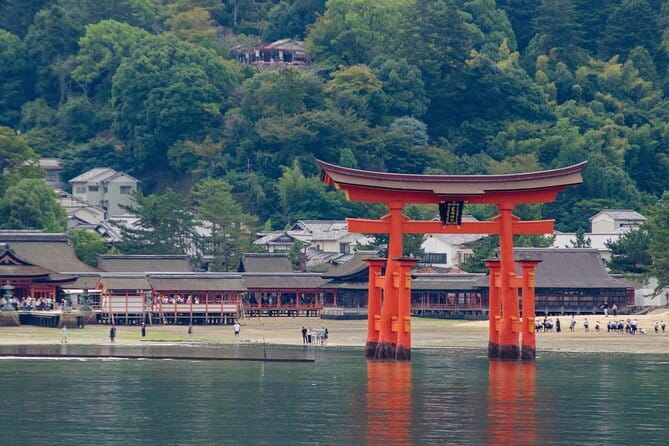
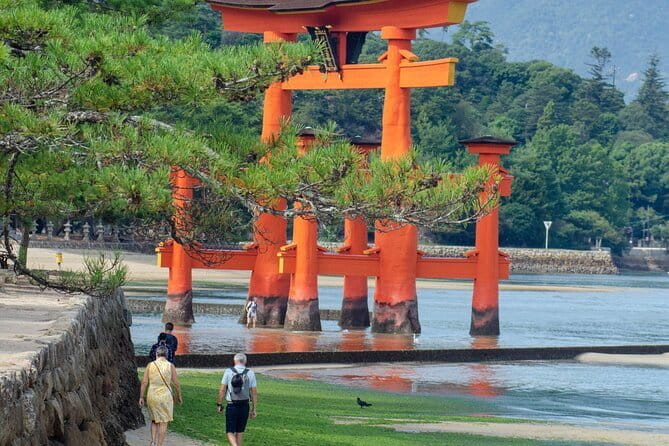
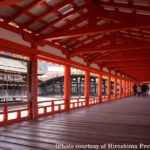
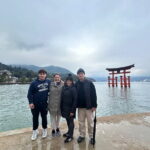
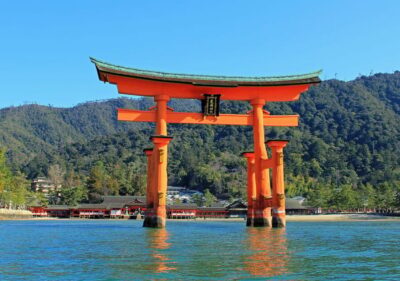
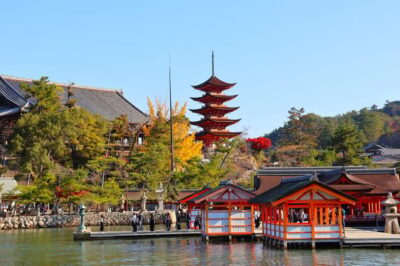
Miyajima is best known for Itsukushima Shrine, whose large torii gate appears to float at high tide. The shrine grounds are included in the tour price, and about an hour is scheduled for Miyajima, followed by another hour at the shrine itself.
That timing gives you a solid introduction, but not unlimited island time. You may have room for the shrine, the gate, some photos, and a short walk through the nearby streets. You should not assume that an hour includes a leisurely exploration of every part of Miyajima.
The island also offers deer and views over the Seto Inland Sea. Guides can explain the shrine’s religious and cultural setting, as well as the history of the torii gate. Kazuko is especially praised for steering people through crowded areas and finding quieter places nearby.
Crowds can be heavy around the shrine and gate. A private guide helps you make sensible choices, but cannot remove the island’s popularity. If you care most about seeing the torii at a particular tide level, tell the operator before booking so the schedule can be checked against the day’s timing.
What the guides add
Guide quality is the strongest reason to choose this experience instead of visiting the sights independently.
Kazuko is repeatedly praised for her warmth, patience, personal connection to Hiroshima, and ability to adapt the day. She has helped with busy routes, offered food suggestions, taken photos, and supported a family during a medical emergency by helping with translation and hospital arrangements.
John is described as especially strong on Japanese history and local places outside the usual route. He has also guided visitors to okonomiyaki and helped arrange a private car when heat made public transport and walking difficult. Gajender is praised for clear explanations of Japanese culture, English and Japanese fluency, flexibility, and attention to group comfort.
You may not receive a particular guide, so treat those names as useful requests rather than a guarantee. The common thread is a personal, story-based approach rather than a guide who simply points at monuments and repeats dates.
Time, walking, heat, and mobility
This is a walking tour that uses public transport. One person described covering many steps, and another found the heat uncomfortable. Those are not minor details in Hiroshima, especially when you combine stations, tram rides, ferry connections, outdoor memorials, shrine grounds, and city streets.
The tour can suit most people, but it is not ideal for anyone who needs a low-walking day. Tell the operator about mobility needs before the start. One guide has shown care with special needs, but the route itself remains active.
If you are visiting from a cruise ship, leave a generous buffer before your required return time. One experience ran short on time and led to an extra taxi fare back to port. A private car can be arranged in some situations, but private transportation is not included in the base price.
What the $150 price really covers
The fee includes the private English-speaking guide, pickup by public transportation, the tram, the ferry, the Peace Memorial Museum, and Itsukushima Shrine. Since only your group participates, the cost can be sensible for families or small groups that want one person managing the day.
You pay separately for Hiroshima Castle and Shukkeien Garden. Lunch is also extra, as is private transportation and the direct boat between Peace Park and Miyajima.
The value rises if you are unfamiliar with Japanese transport, want detailed historical explanation, or need a flexible route. It falls if you plan to spend only a short time at the memorial park and shrine, since the long connections can consume a large share of a 4-hour booking.
Who should book this Hiroshima tour
I would recommend it most strongly to first-time visitors who want both Hiroshima’s central memorial sites and Miyajima without planning every tram, ferry, ticket, and connection themselves.
It is also a good match for families, private groups, and people who value personal stories over a standard audio guide. Ask about Kazuko, John, or Gajender if you have a preference, though availability may decide the assignment.
I would think twice if you have limited mobility, dislike long public transport connections, or must return to a cruise ship at a strict time. In those cases, ask for a shorter route, confirm the pickup point, and discuss private transport before paying.
Free cancellation is available when you cancel at least 24 hours before the start time. Inside that window, the payment is not refunded, so check your port, train, and weather plans early.
Should you book it?
Book this tour if you want Hiroshima explained by a real person and you like the idea of pairing the Peace Park with Miyajima in one private day. The guides add real value, especially when you want help with sensitive history, local food, public transport, or unexpected problems.
Before booking, confirm three things: your exact meeting point, the number of hours you want, and whether you are prepared for substantial walking. For the best chance of seeing the museum, castle, garden, and Miyajima without racing, choose the longer version and budget separately for lunch, extra admissions, and any fast boat or car.
FAQ
How long does the Hiroshima and Miyajima private tour last?
The experience lasts approximately 4 to 8 hours. A shorter booking will require more selective sightseeing, while the longer option gives you a better chance of including the museum, Miyajima, and additional stops.
Is this a private tour?
Yes. Only your group participates in the activity, and the itinerary can be personalized with your guide.
What transportation is included?
Pickup using public transportation, Hiroshima tram service, and the ferry are included. Private transportation is not included.
Are the Peace Memorial Museum and Itsukushima Shrine tickets included?
Yes. Admission to the Peace Memorial Museum and Itsukushima Shrine is included in the tour price.
Are Hiroshima Castle and Shukkeien Garden included?
No. Hiroshima Castle costs 500 yen, and Shukkeien Garden costs 300 yen. These admission fees are paid separately.
Is lunch included?
No. Lunch is not included, although your guide may help you choose a place to eat, including Hiroshima-style okonomiyaki.
Can I cancel for a full refund?
You can receive a full refund if you cancel at least 24 hours before the experience start time. Cancellations or changes made within 24 hours are not refunded or accepted.
More Guided Tours in Hiroshima


More Hiroshima City Tours in Hiroshima
More Miyajima Tours in Hiroshima
More tours in Hiroshima we've reviewed


Miyajima Tours, compared.
 ★ 5.0Peaceful Hiroshima & Miyajima UNESCO 1 Day Bus TourFrom $129
 ★ 4.9Hiroshima: Hiroshima and Miyajima UNESCO Sites 1-Day TourFrom $1228 hours
 ★ 5.0Hiroshima / Miyajima Full-day Private Tour with Government Licensed GuideFrom $202
 ★ 4.7Osaka/Kyoto: Hiroshima Miyajima Bus Tour & Shinkansen TicketFrom $27712 hours
 ★ 4.7From Hiroshima: Hiroshima & Miyajima 1 Day Tour with LunchFrom $1168 hours
 ★ 5.0Hiroshima and Miyajima Day Trip with Itsukushima Shrine & FerryFrom $45
