
Reviewed · MIYAJIMA TOURS
Hiroshima and Miyajima Bus Tour with Indian Lunch
Hiroshima’s hardest lessons and its most beautiful setting come together on this full-day tour. In one day, you move from the Atomic Bomb Dome and Peace Memorial Museum to Miyajima’s red Itsukushima Shrine, reached by a special ferry route that brings you close to the Great Torii.
I like the small group of up to 20 people and the air-conditioned tour bus, which keep the day simple and comfortable. I also like the Indian curry lunch, with a vegetarian version available if you arrange it ahead of time. Guides including Masahiko Joguchi and Miyuki have been praised for their care, clear explanations, and thoughtful support.
The main drawback is the pace. You cover two major destinations in roughly 6 to 8 hours, and both the Peace Park and Miyajima involve walking. This suits you if you want an efficient first look at Hiroshima, but less so if you prefer long, unhurried visits.
In This Review
- Key points at a glance
- Why this Hiroshima day tour works
- The Atomic Bomb Dome and Gandhi statue
- One hour inside the Peace Memorial Museum
- Indian curry lunch and dietary planning
- The ferry to Miyajima
- Three hours at Itsukushima Shrine
- The bus, group size, and day-to-day comfort
- Price and what you receive for $117.27
- Who will get the most from this tour
- Booking details worth knowing
- Should you book the Hiroshima and Miyajima Bus Tour?
- FAQ
- Where does the tour start?
- What time does the tour begin?
- How long does the tour last?
- Does the tour return to Hiroshima Station?
- Is lunch included?
- Can I request a special meal on the day?
- Is admission included?
- Is the tour suitable for people with walking difficulties?
- What happens if the tour is cancelled?
Key points at a glance
- Miyajima by special ferry route: The boat route offers a close view of the Great Torii and adds more than a simple transfer.
- A serious Hiroshima morning: The Atomic Bomb Dome and Peace Memorial Museum give the day emotional weight and historical focus.
- Indian curry for lunch: Vegetarian curry can be arranged, but dietary needs must be provided when booking.
- Guides who offer personal support: Masahiko Joguchi and Miyuki are specifically praised for professional, attentive guiding.
- Small-group bus comfort: With a maximum of 20 people and air conditioning, the ride is easier than managing several local connections.
- One-day efficiency: You see Hiroshima’s central peace sites and Miyajima without planning separate transport.
Why this Hiroshima day tour works
This experience is built around contrast. Hiroshima asks you to think about war, loss, and peace. Miyajima then gives you a quieter setting of water, shrine buildings, and one of Japan’s most recognizable religious gates.
That combination is the tour’s strongest feature. You do not spend the whole day in a museum, and you do not leave Hiroshima having seen only the postcard version of the city. Instead, the schedule links the city’s most important memorial sites with a cultural and scenic visit across the water.
The tour begins at Hiroshima Station at 10:00 a.m. and returns there at the end. The total outing lasts about 6 to 8 hours, though the exact flow can vary. A mobile ticket makes arrival easier, especially if you are already using your phone for train and hotel information.
The air-conditioned bus matters in Hiroshima’s warmer months and on a full day that includes walking. It also removes the need to work out every connection between the station, Peace Memorial Park, the ferry route, and Miyajima.
A few more Hiroshima tours and experiences worth a look

The Atomic Bomb Dome and Gandhi statue
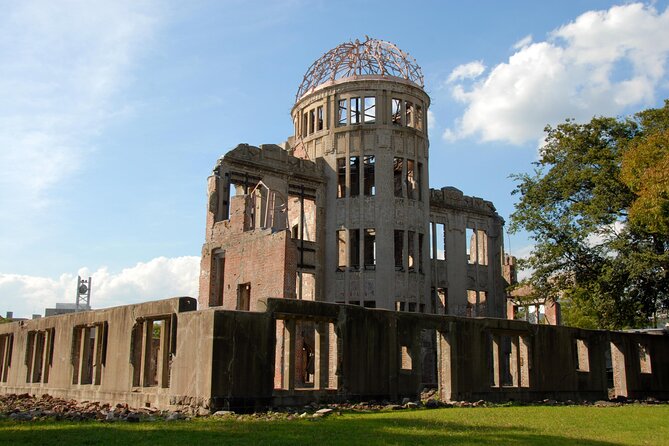
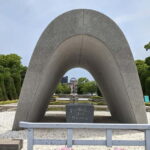
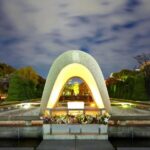
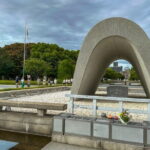
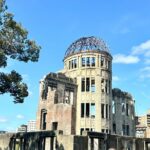
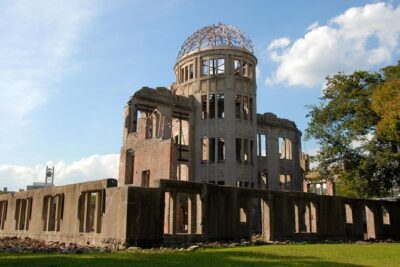
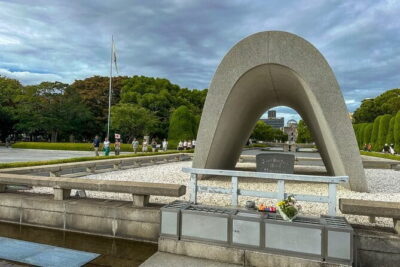
The Atomic Bomb Dome is the first major stop, with about an hour allotted and no admission fee. Its damaged structure remains at the center of Hiroshima’s peace message. The building is not simply an old ruin to photograph. It is a physical reminder of the destruction caused by the atomic bomb and of the city’s decision to preserve that reminder.
You should give yourself time to look closely rather than rushing through a few pictures. The tour’s information also connects the dome’s preservation to the efforts of atomic bomb survivors and others who supported its designation as a UNESCO World Heritage Site.
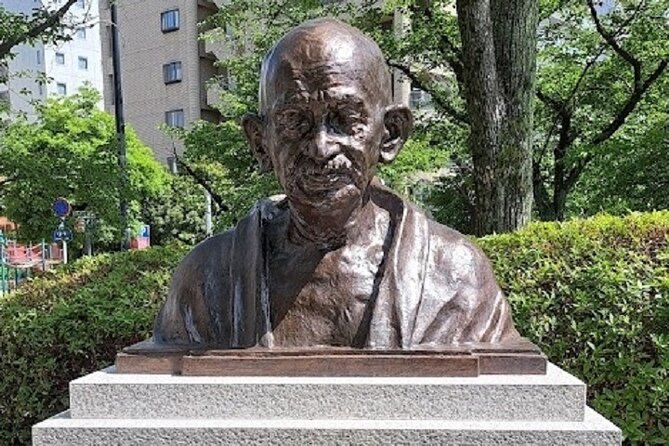
The visit includes a short stop, about 10 minutes, at a statue of Mahatma Gandhi near the Atomic Bomb Dome. This is a brief pause, but it adds another link to the day’s themes of nonviolence and peace.
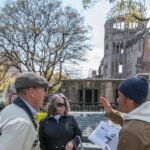
The important thing here is tone. This is not a light sightseeing stop. Your guide’s explanations can help place the building within Hiroshima’s story, while the surrounding city reminds you that this is a living place, not a memorial frozen in time.
One hour inside the Peace Memorial Museum
The Hiroshima Peace Memorial Museum receives about an hour of the schedule, and admission is included. This is the emotional center of the Hiroshima portion.
The museum presents the effects of the bombing through personal accounts, objects, photographs, and historical material. You should expect difficult subject matter. The visit is educational, but it can also be upsetting, particularly when the displays shift from broad military history to the experience of individual people.
An hour gives you a useful introduction, though it will not allow a slow reading of every display. I would treat this as a focused first visit. Listen to the guide’s framing, then use your time for the exhibits that speak most directly to you.
The museum and Atomic Bomb Dome work well together. The dome gives you a powerful outdoor reference point, while the museum explains the human cost behind it. Together, they make Hiroshima’s peace message easier to understand than either stop alone.
If the museum is closed, the schedule changes to another peace memorial facility. That keeps the day focused on Hiroshima’s central theme, but the replacement location is not specified, so you should not book solely for a particular museum display without checking the date.
Indian curry lunch and dietary planning
Lunch is Indian curry, and the meal can be changed to a vegetarian option. This is a useful feature if you want something familiar during a tightly scheduled day, or if you simply enjoy a break from Japanese food.
The tour provider asks you to report allergies and dietary restrictions when booking. Menu changes cannot be made on the day, so this is not a meal to treat casually. You also cannot bring your own food or drinks into the restaurant.
The lunch has received strong praise for both taste and organization. That matters because group lunches can become a weak point when schedules are tight. Here, the meal is part of the plan rather than an afterthought.
Still, you should check that the offered curry suits your needs before booking. The available information confirms a vegetarian change, but it does not promise specific allergy-free ingredients, vegan choices, or other special menus.
The ferry to Miyajima
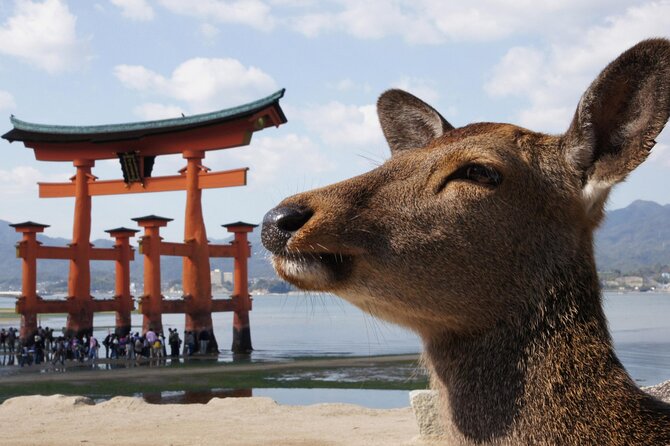
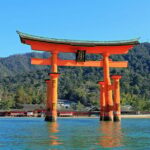
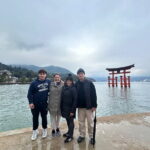
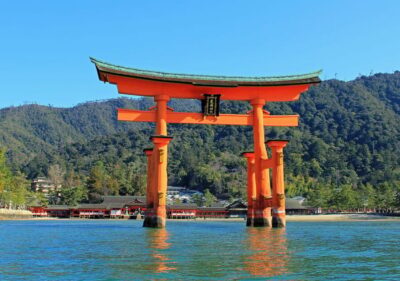
The route to Miyajima is one of the more distinctive parts of the day. Rather than treating the ferry as a basic transport link, the tour uses a special route from Hiroshima toward Miyajimaguchi, giving you a close view of the Great Torii from the water.
That viewpoint can make a real difference. The gate is one of Japan’s most familiar sights, yet seeing it from a ferry gives you changing angles and a sense of how the shrine relates to the Seto Inland Sea. Keep your camera ready, but do not spend the whole crossing looking down at your phone.
The ferry also creates a welcome change of pace after the museum. You move from a serious indoor visit to open water and the approach to Miyajima. It is a small transition, but it helps the day feel like two connected experiences rather than a string of bus stops.
Weather matters here. The activity requires good weather, and poor conditions can lead to a new date or a full refund. Since the ferry and outdoor shrine setting are central to the experience, this policy is practical rather than surprising.
A few more Hiroshima tours and experiences worth a look

Three hours at Itsukushima Shrine
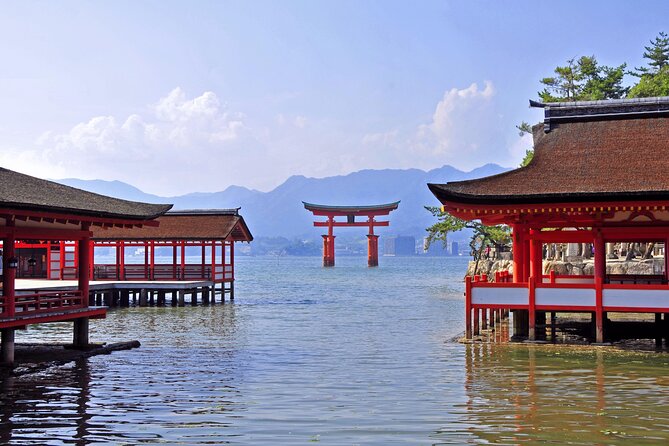
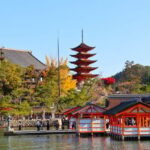
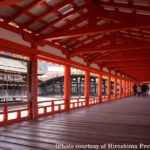
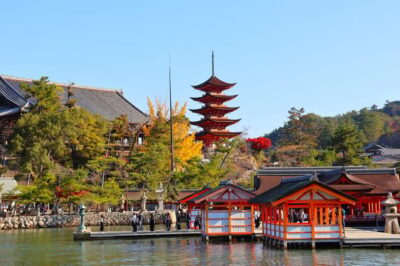
The Miyajima visit receives about three hours, the longest single stop of the day. Itsukushima Shrine sits beside a small inlet, with the Great Torii set out in the Seto Inland Sea. Paths around the inlet let you see the shrine buildings from several angles.
The famous red structures can appear to float when the tide covers the ground around them. The exact appearance depends on water conditions, so the scene may not match every postcard. That is part of the charm: you are seeing a working sacred site shaped by the sea, not a fixed stage set.
Three hours gives you time to visit the shrine, take photographs, and walk around the nearby area. It should also give you room to pause after the more demanding Peace Memorial sites.
The drawback is walking. The tour is not recommended for anyone who has difficulty walking long distances. One person with limited mobility received especially attentive help from the guides, but you should still discuss your needs before booking rather than assume the route will be easy.
Miyajima can also feel busy at popular times, although the supplied details do not provide a precise crowd forecast. The tour helps by handling the transport and shrine admission, but it cannot make the island private.
The bus, group size, and day-to-day comfort
The bus is air-conditioned and the group is limited to 20 people. That is small enough for a guide to keep the day organized without creating the feel of a large coach excursion.
The bus also saves planning energy. Hiroshima’s memorial area and Miyajima are straightforward to visit independently, but combining them means coordinating timing, public transport, ferry arrangements, and admissions. Here, those pieces are handled together.
The trade-off is less freedom. You follow the group timetable, and three hours at Miyajima may feel too short if you want a longer island walk. In return, you avoid the risk of losing time between locations.
The tour ends back at Hiroshima Station, which is useful if you have an evening train or want to stay near the station afterward. You should still leave a little flexibility, since the stated duration is approximate.
Price and what you receive for $117.27

At $117.27 per person, this is not the cheapest way to see Hiroshima and Miyajima. The value comes from the bundle: air-conditioned bus transport, a guide, admission to the Peace Memorial Museum and Itsukushima Shrine, Indian curry lunch, and the special ferry route.
If you were already planning to pay for lunch, shrine admission, museum admission, and several separate transport connections, the price becomes easier to justify. You are also paying for a guide during places where context matters, especially the Atomic Bomb Dome and Peace Memorial Museum.
Independent planning can cost less and gives you more control. It also asks you to manage the day yourself and accept the risk of delays or missed connections. I would see this tour as a convenience purchase, not a bargain-basement outing.
The fact that it is often booked about 74 days ahead suggests that you should reserve early for a preferred date. Confirmation arrives within 48 hours, subject to availability.
Who will get the most from this tour
I would recommend it to you if this is your first Hiroshima visit and you want the key sights arranged in one day. It is especially useful if you value clear guiding, prefer not to navigate several transport changes, and want both the memorial sites and Miyajima.
It also suits you if Indian food is a welcome change or if you need a vegetarian lunch option. The meal is arranged in advance, which makes the day easier for anyone who wants fewer decisions.
This may not suit you if you want to spend half a day in the museum, explore Miyajima at your own pace, or avoid a fixed schedule. It is also a poor fit if long periods of walking are difficult for you.
The guides are a meaningful part of the experience. Masahiko Joguchi is described as professional and informative, while Miyuki is noted for attentive, personal care. Other feedback also points to enthusiastic and efficient guiding. Guide assignments can change, so treat these names as examples rather than a promise.
Booking details worth knowing
You can cancel for a full refund up to 24 hours before the start time. Changes or cancellations inside that 24-hour window are not accepted for a refund.
The tour needs at least 10 participants. If that minimum is not reached 14 days before the date, the operator may cancel and offer another date or a full refund. The maximum group size is 20.
Most people can take part, but the walking requirement deserves attention. Tell the provider about mobility needs, allergies, or dietary restrictions when you book. Do not wait until lunch to request a different menu.
Should you book the Hiroshima and Miyajima Bus Tour?
Book this tour if you want a well-organized first day in Hiroshima that combines the city’s peace memorials with Miyajima’s shrine and waterfront views. The guide support, included admissions, lunch, and ferry route make the $117.27 price reasonable for a tightly planned day.
Skip it if you want deep, unhurried museum time or a flexible island visit. For most first-time visitors with moderate walking ability, though, this is a thoughtful way to connect Hiroshima’s most important places without spending the day studying timetables.
FAQ
Where does the tour start?
It starts at Hiroshima Station, at 1-2番37号 Matsubarachō, Minami Ward, Hiroshima, 732-0822, Japan.
What time does the tour begin?
The scheduled start time is 10:00 a.m.
How long does the tour last?
The tour lasts approximately 6 to 8 hours.
Does the tour return to Hiroshima Station?
Yes. The activity ends back at the original meeting point.
Is lunch included?
Yes. Lunch is Indian curry, and a vegetarian version can be arranged.
Can I request a special meal on the day?
No. Allergies and dietary restrictions must be provided when you book, because menu changes cannot be made on the day.
Is admission included?
Admission to the Hiroshima Peace Memorial Museum and Itsukushima Shrine is included. The Atomic Bomb Dome and Gandhi statue stop do not require an admission fee.
Is the tour suitable for people with walking difficulties?
The tour is not recommended for people who have difficulty walking long distances. Most people can participate, but mobility needs should be discussed before booking.
What happens if the tour is cancelled?
If bad weather causes cancellation, you can choose another date or receive a full refund. If the minimum of 10 participants is not reached, you will also be offered another date or experience, or a full refund.
More Lunch Experiences in Hiroshima

More Hiroshima City Tours in Hiroshima
More Miyajima Tours in Hiroshima
More tours in Hiroshima we've reviewed


Miyajima Tours, compared.
 ★ 5.0Peaceful Hiroshima & Miyajima UNESCO 1 Day Bus TourFrom $129
 ★ 4.9Hiroshima: Hiroshima and Miyajima UNESCO Sites 1-Day TourFrom $1228 hours
 ★ 5.0Hiroshima / Miyajima Full-day Private Tour with Government Licensed GuideFrom $202
 ★ 4.7Osaka/Kyoto: Hiroshima Miyajima Bus Tour & Shinkansen TicketFrom $27712 hours
 ★ 4.7From Hiroshima: Hiroshima & Miyajima 1 Day Tour with LunchFrom $1168 hours
 ★ 5.0Hiroshima and Miyajima Day Trip with Itsukushima Shrine & FerryFrom $45
