
Reviewed · FUKUYAMA
Explore the Nature that Inspired Ghibli Movies by Kayak (Half Day)
Tomonoura is best understood from the water. From your kayak, you’ll look back at the old port, paddle past small islands, and approach a sea-facing temple that helped inspire the world of Studio Ghibli’s Ponyo. I like the small-group format, capped at 15 in the main description, and the patient instruction from Yasuhiro Murakami, known as Yasu. I also like that the trip can include a break with drinks, snacks, or tea.
The main consideration is that this is an active sea outing, not a sightseeing cruise. Tides, wind, weather, and your own pace can change the route, and the guide’s English is not fluent. The tour usually runs about three hours and 10 minutes, but the ending time can shift with conditions.
In This Review
- Key points to know before you paddle
- Why Tomonoura makes a fine kayaking base
- Meeting at Kayaker’s CAFE in Tomo
- Launching from Tomonoura’s historic stone steps
- Choosing between Abuto Kannon and Sensuijima
- Abuto Kannon
- Sensuijima Island
- A three-hour rhythm that suits beginners
- What the water views add to the experience
- Clothing, equipment, and staying dry
- Weather, tides, and the limits of a sea tour
- Is $53.10 a fair price?
- Who should book this Tomonoura kayak trip?
- Should you book it?
- FAQ
- How long does the kayaking experience last?
- Where does the tour start and finish?
- What start times are available?
- Will the tour visit Abuto Kannon?
- Is this tour suitable for beginners?
- What should I bring?
- Can the tour be canceled because of weather?
Key points to know before you paddle
- Tomonoura from sea level: Launch from historic Edo-period stone steps and see the port from a fresh angle.
- Abuto Kannon or Sensuijima: Your destination depends on tides, sea conditions, and the group’s fitness.
- Yasu’s beginner-friendly instruction: Previous guests describe him as patient with first-time kayakers and generous with local stories.
- A real half-day activity: Expect about three hours and 10 minutes of paddling, landing, sightseeing, and returning to the café.
- Photos and small comforts: Yasu often takes photos, and breaks may include tea, drinks, snacks, or a simple café-style treat.
- Bring clothes that can get wet: Kayak shoes are available to rent, but you should protect your phone and pack a full change of clothes.
Why Tomonoura makes a fine kayaking base
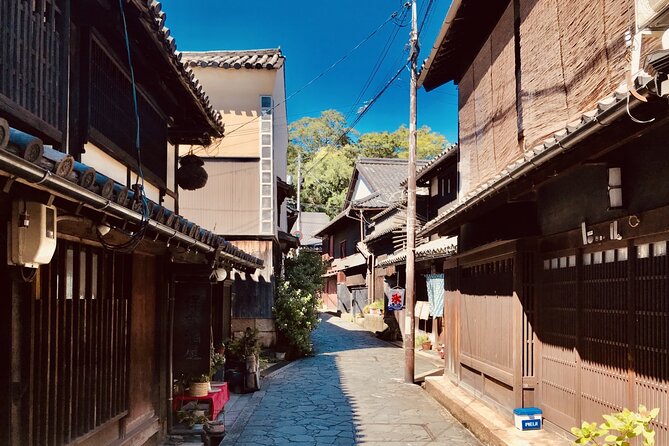
Tomonoura is an old port town on the Seto Inland Sea, in Fukuyama, Hiroshima Prefecture. Its appeal is not a single blockbuster sight. It is the way the harbor, stone waterfront, islands, temples, and open sea fit together.
That setting has a clear Studio Ghibli connection. Tomonoura helped inspire the seaside town in Ponyo, and its shore also appeared in the film Wolverine. You should not book this as a movie set tour, because the focus is kayaking and nature rather than film trivia. Still, the animated connection gives the trip an extra sense of place.
From the road, you see the port in passing. From a kayak, you move slowly enough to notice the shape of the harbor and the changing view of the buildings behind you. The water also gives you access to places that are difficult to appreciate from town streets, especially the temple at Abuto Kannon.
I like that the experience feels tied to Tomonoura itself rather than being a generic paddle on an anonymous body of water. The town is the starting point, the sea is the route, and the local guide adds context as you go.
A few more Fukuyama tours and experiences worth a look
Meeting at Kayaker’s CAFE in Tomo
The meeting point is Kayaker’s CAFE at Tomo-849, Tomochō, Fukuyama, Hiroshima 720-0201. The tour begins and ends at this same location, which keeps the logistics simple. You do not have to arrange a second pickup point after returning from the water.
You choose a morning or afternoon departure:
- 9:00 in the morning
- 13:30 in the afternoon
The sample schedule places you at Tomonoura around 10:00 or 14:30, then at the selected destination around 11:00 or 15:30. The kayak returns to Tomo around noon or 16:30, followed by about 10 minutes to finish at the café. Think of these times as a guide, not a promise. Sea conditions, tides, group speed, and weather can alter the timing.
The activity is commonly booked about 22 days in advance, so I would not leave it until the last minute if your Fukuyama plans are fixed. Confirmation arrives within 48 hours, subject to availability.
The group size needs a small note. The main description says a maximum of 15, while the additional information gives a maximum of 20. Ask the operator about the group size for your date if a smaller outing matters to you. Either way, this is not presented as a large coach-style excursion, and the guide can work with a shared group.
Launching from Tomonoura’s historic stone steps
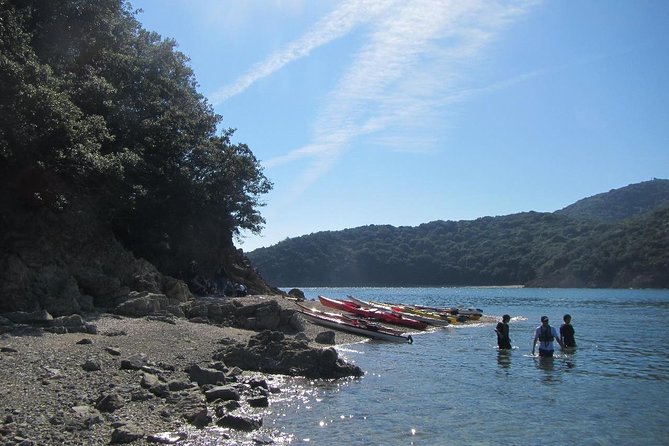
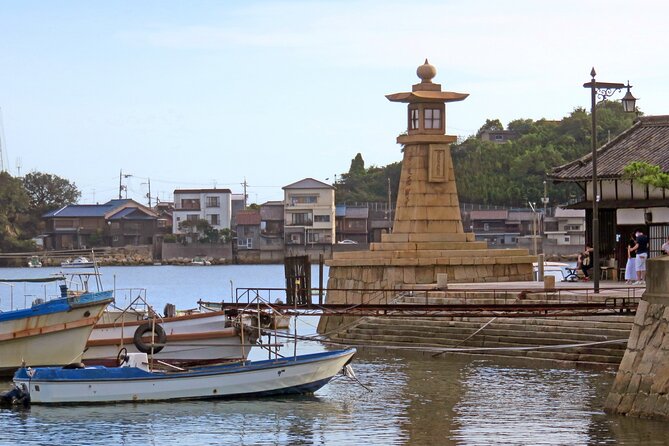
The kayak enters the sea from a ganki, historic Edo-period stairs leading down to the waterfront. This is a memorable beginning because the launch point connects the modern activity to the old working port.
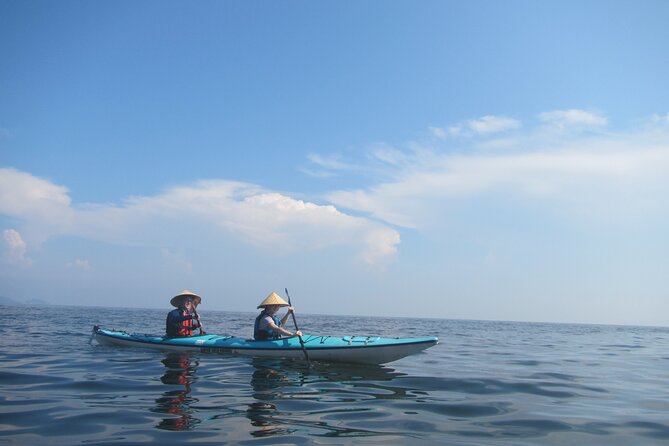
The first stretch is not about rushing toward a landmark. You get time to become comfortable with the kayak, paddle technique, and rhythm of the group. If you are new to sea kayaking, this matters. A first outing can feel awkward for the opening minutes, especially when you are trying to steer and keep pace at the same time.
Yasu has received especially strong praise for helping beginners. One first-time kayaker found him patient with a slow pace, while another appreciated his clear instruction and explanations of the town and sea. That makes this a better fit for a cautious beginner than a trip built around speed or athletic performance.
The guide’s English is described as not fluent, so you should expect simple explanations, demonstrations, and practical communication rather than a polished historical lecture. That is worth knowing before you book. If you need detailed commentary in English, the language limitation may frustrate you. If you are comfortable with basic instruction and visual demonstrations, it should be manageable.
As you paddle away, turn around often. The view back toward Tomonoura is one of the main rewards of the route. The harbor town takes on a different character when seen from the water, with the shoreline arranged as a broad backdrop instead of a series of street-level views.
Choosing between Abuto Kannon and Sensuijima
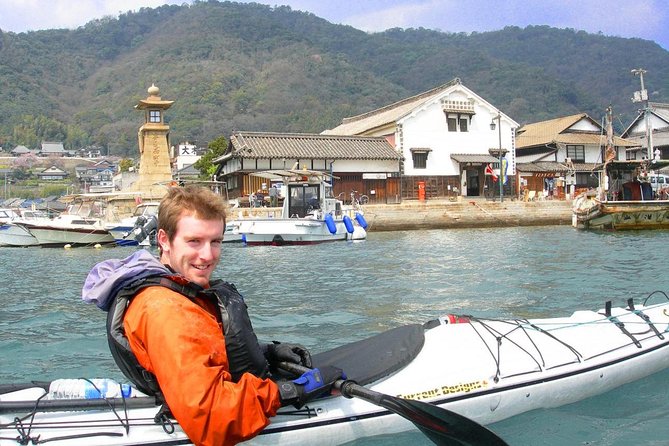
The route is not fixed. Depending on tides, wind, sea conditions, and the physical condition of the group, the guide may take you to Abuto Kannon or Sensuijima Island. This flexibility is a strength for safety, but it means you should not treat one destination as guaranteed.
Abuto Kannon
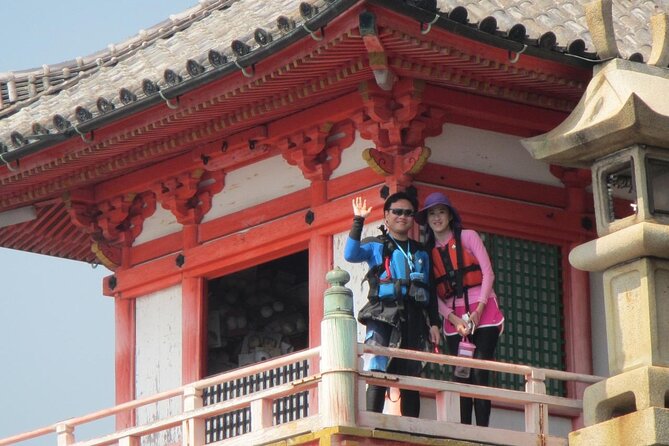
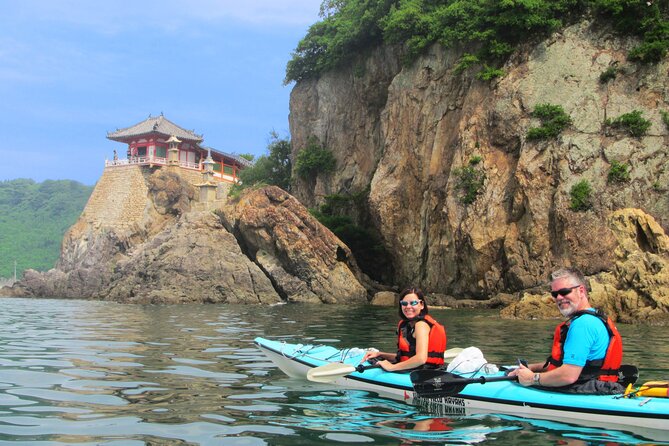
Abuto Kannon is the more dramatic temple option. The structure extends toward the sea, making it especially striking when viewed from below in a kayak. The approach gives you a close look at the temple’s position above the water, an angle that is hard to get from land.
When conditions allow, you land and take in a wide view of the Seto Inland Sea. The stop turns the paddle into a mix of outdoor activity and cultural sightseeing. You are not simply passing a temple in the distance. You have a chance to pause, get out, and look across the water before returning to the kayak.
The temple visit depends strongly on the tide. That is important for anyone who has their heart set on Abuto Kannon. The operator may also change the course if weather or group condition makes the planned route unsuitable.
Sensuijima Island
Sensuijima offers a different kind of stop. Instead of making the temple the central sight, the route takes you toward an island in the Seto Inland Sea. The appeal is the open water, island views, and a greater sense of being away from the port.
The available information does not promise a single fixed landing point or a detailed island program, so you should think of Sensuijima as the alternate route rather than a separate full-day island tour. The guide chooses the safest and most suitable option for the day.
This is one reason I like the flexible planning. You get a worthwhile outing even when the tide does not cooperate with Abuto Kannon. The tradeoff is less certainty. You are booking a coastal experience, not a guaranteed temple transfer.
A three-hour rhythm that suits beginners
The half-day length is well judged for many first-time paddlers. The published duration is about three hours and 10 minutes, with roughly one hour for the opening Tomo section, one hour around Tomonoura, one hour at Abuto Kannon or Sensuijima, and a short return to Kayaker’s CAFE.
You will spend real time on the water, but the trip is broken up by the destination stop and possible refreshment break. That matters because steady paddling can tire your shoulders, especially if you are not used to it.
Several details from past outings point to a thoughtful pace. Yasu has taken photos during the paddle, offered tea, and arranged snacks from a small Happy Box during a break. On another trip, he prepared a café-style drink with a portable burner. These touches are not guaranteed as a formal part of every departure, but they show the kind of personal hosting associated with the experience.
The guide has also recommended traditional restaurants after the paddle, and one outing included a meal afterward. Lunch is not listed as part of the tour, so budget and plan for it separately. Still, the café meeting point and local guidance can help you make a fuller day of Tomonoura.
What the water views add to the experience
The Seto Inland Sea is the star here. You get broad views from the kayak, with the shoreline, islands, and temple setting changing as you paddle. The pace lets you watch sea birds and, depending on conditions, notice sea life along the coast.
Do not expect a wilderness expedition. You are close to a historic port town, and the route is shaped by tides and local conditions. That is part of its charm. The experience combines human history and open water rather than separating the two.
The view of Abuto Kannon from below is particularly distinctive. From land, you approach a temple. From sea level, you see how boldly it projects toward the water. That perspective is a good example of why kayaking adds something that a normal walking tour cannot.
The route also works well for visitors who want a break from Japan’s larger cities. One of the strongest themes in the feedback is the pleasure of getting away from urban sightseeing for a few hours. You still receive cultural context, but your attention shifts to paddling, weather, birds, islands, and the shape of the coast.
Clothing, equipment, and staying dry
You should plan as if you will get wet. Bring drinks, spare clothes, a towel, sunscreen, and waterproof protection for your smartphone. The operator provides kayak shoes for rental, but you need to give your shoe size when booking.
For June through October, wear clothing that can get wet. Swimwear under your clothes is recommended, along with a hat and sunglasses.
For November and around April through May, quick-drying shirts, a nylon outer layer, comfortable pants, a hat, and sunglasses are suggested. Paddle jackets are available for rent.
From December through March, use layers while paddling: a quick-drying shirt, fleece or another middle layer, a nylon outer jacket, warm flexible pants, a knit cap, and nylon gloves. Once you land, add a down jacket or another warm garment that holds heat.
Your phone needs your own waterproof case or other protection. Do not assume a rental dry bag or phone cover is included. If you want photos, a waterproof pouch is more useful than risking an unprotected phone over the side.
The operator supplies kayak shoes for rent, but the information does not list every item of equipment included. If you have concerns about clothing, flotation gear, or storage, ask before departure.
Weather, tides, and the limits of a sea tour
The tour can proceed in light rain, but poor weather may lead to cancellation. If the operator cancels in advance because of weather, you are offered a different date or a full refund. The guide is expected to contact you by 6:00 PM the previous day when a cancellation decision has been made.
Conditions can also change after the decision to operate. Sudden weather shifts may lead to a same-day cancellation for safety. The route can change because of tides, sea conditions, the group’s fitness, or individual health.
This flexibility is sensible, but it affects your planning. Do not schedule a tight connection or an important appointment immediately after the paddle. The end time may vary.
The standard cancellation policy is strict: the experience is non-refundable and cannot be amended for personal reasons. If you cancel or request a change, you normally lose the amount paid. The weather exception applies when the organizer cancels, not when you simply decide the forecast looks unpleasant.
Is $53.10 a fair price?
At $53.10 per person, this is a reasonable price for a guided half-day sea activity in a place with a strong local setting. You are paying for instruction, equipment access, a small-group outing, route planning, and a guide who can explain Tomonoura as you move through it.
The value is strongest if you are a beginner. Private equipment rental without instruction may cost less in some places, but it would not give you the same support with tides, route choice, and getting to sights such as Abuto Kannon.
The price also compares well with the time involved. You receive about three hours and 10 minutes of activity, not a brief introductory paddle. The guide’s photos and possible tea or snacks add comfort, though you should not book solely for those extras because they are not presented as guaranteed inclusions.
For a short stay in Fukuyama, this can be a memorable use of half a day. For a visitor who dislikes getting wet, physical exertion, or changes to a fixed plan, the value is weaker.
Who should book this Tomonoura kayak trip?
I would recommend it most strongly to:
- First-time sea kayakers who want patient instruction
- Active families, since children over age three may participate
- Fans of Ponyo who want to see the setting that helped inspire it
- Visitors looking for a quieter alternative to major city sightseeing
- Couples and small groups who value local conversation and outdoor time
- People with enough schedule flexibility to accept a changed route or end time
The minimum age is over three years old, but the activity still requires moderate physical fitness. A young child may be allowed to participate, but the data does not specify seating arrangements or whether children paddle independently. Ask the operator about that before booking with small children.
This is less suitable if you need fluent English guiding, a guaranteed visit to Abuto Kannon, or a firm finish time. It is also a poor match if you want a dry, passive sightseeing experience.
Should you book it?
Book this tour if you want to experience Tomonoura from the water and are happy to let nature shape the day. The combination of an old port, Seto Inland Sea views, a possible sea temple, and calm beginner instruction gives the outing more character than a standard equipment rental.
I especially like it for first-time kayakers because Yasu’s patient teaching and willingness to adapt the pace take some pressure off. The chance to see the temple from below, stop for a drink, and receive photos makes the half day feel personal.
Before paying, confirm the expected group size, tell the operator your shoe size, and check the weather policy. Pack a change of clothes and protect your phone. If you can accept the possibility of Sensuijima instead of Abuto Kannon, and if a little sea spray sounds like part of the fun, this is a strong choice for a quieter Fukuyama day.
FAQ
How long does the kayaking experience last?
The tour lasts approximately three hours and 10 minutes. The end time can vary because of weather, sea conditions, tides, group pace, and participant fitness.
Where does the tour start and finish?
It starts and ends at Kayaker’s CAFE, Tomo-849, Tomochō, Fukuyama, Hiroshima 720-0201, Japan.
What start times are available?
You can choose a 9:00 morning departure or a 13:30 afternoon departure.
Will the tour visit Abuto Kannon?
The route may visit Abuto Kannon, but the destination can change to Sensuijima Island because of tides, sea conditions, weather, or the condition of the group.
Is this tour suitable for beginners?
Yes. A moderate level of physical fitness is required, and the guide provides instruction. Yasuhiro Murakami, also called Yasu, has helped first-time kayakers and adjusted the pace for slower paddlers.
What should I bring?
Bring drinks, spare clothes, a towel, sunscreen, and waterproof protection for your smartphone. Clothing recommendations vary by season, and you should provide your shoe size when reserving kayak shoes for rental.
Can the tour be canceled because of weather?
Yes. The tour may be canceled for poor weather or unsafe conditions. If the organizer cancels, you can receive a different date or a full refund. The tour may still operate in light rain.
More Kayak & Canoe Tours in Fukuyama
More tours in Fukuyama we've reviewed
Fukuyama, compared.
 ★ 5.0Sea Kayak Tour to the History of Tomonoura in the Seto Inland SeaFrom $88
 ★ 5.0Night Kayak Tour Relax Under the Natural Glow of Sea FirefliesFrom $69
 ★ 5.0Tomonoura 6hr Private Tour with Government-Licensed GuideFrom $155
 ★ 5.0Fukuyama/Tomonoura Half-Day Private Tour with Government-Licensed GuideFrom $98
