
Reviewed · HIROSHIMA CITY TOURS
Half Day Private Guided Walking Tour in Hiroshima City
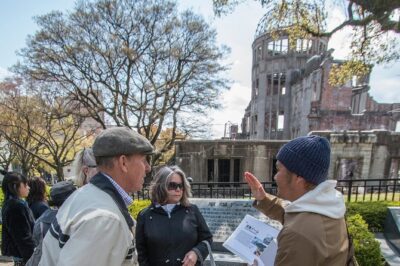
Hiroshima is most meaningful when you hear its story from someone with a family connection to the bombing. On this private four-hour walk, guide Pancho, Tetsuo Hamano, shares the experience of being a second-generation survivor’s family member while leading you through shrines, memorials, and the Peace Park.
I like the personal family perspective and the thoughtful route, which includes more than the famous Atomic Bomb Dome. I also like the freedom of a private tour: you can ask questions, discuss difficult subjects, and request Hiroshima-style okonomiyaki, ramen, or sushi at lunch. The main drawback is cost. At $200 per person, before food, transport, and the Peace Memorial Museum, this is a serious splurge.
In This Review
- Key points to know before booking
- Why Pancho changes the way you see Hiroshima
- Meeting at Hiroshima Station or your hotel
- Shirakami Shrine and the surviving trees
- The hypocenter and Saiko-ji Temple
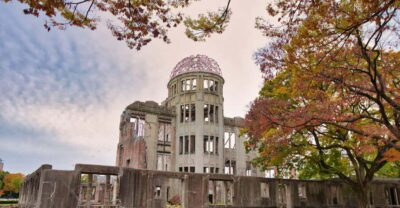
- The Atomic Bomb Dome and Peace Flame
- Lunch near Peace Memorial Park
- Hiroshima Peace Park’s Rest House
- Children’s Peace Monument and the Cenotaph
- What $200 per person gets you
- Who should book this Hiroshima walk?
- Should you book Pancho’s private Hiroshima tour?
- FAQ
- How long does the Hiroshima walking tour last?
- Where can I meet the guide?
- Who is the guide?
- Is this a private tour?
- Is lunch included?
- Can the tour accommodate dietary restrictions?
- Is transportation included?
- Is the Hiroshima Peace Memorial Museum included?
- Can I cancel for a full refund?
Key points to know before booking
- Pancho’s family story: The guide is the son of an A-bomb survivor, adding a personal layer to Hiroshima’s public history.
- A private four-hour route: Only your group takes part, with three possible meeting arrangements at Hiroshima Station or your hotel.
- Beyond the usual postcard stops: Shirakami Shrine, surviving trees, Saiko-ji Temple, and the Rest House add useful context.
- Lunch is flexible: Choose Hiroshima okonomiyaki, ramen, or sushi, with vegetarian, vegan, and gluten-free options available.
- Public transport is part of the plan: Allow about $4 per person for transport. Private transport costs extra.
- A serious but human experience: The tour covers loss and destruction, but also Hiroshima’s recovery, resilience, and peace message.
Why Pancho changes the way you see Hiroshima
The Atomic Bomb Dome and Peace Memorial Park are powerful places, but a guide can help you understand what you are looking at. Pancho’s connection is especially important here. His family story gives the tour a human voice without turning the experience into a simple sightseeing circuit.
That personal element also helps balance the difficult material. Hiroshima is not only a city defined by one morning in 1945. The route looks at the bombing, the physical evidence left behind, the memorials created afterward, and the city’s effort to recover.
You should expect a serious tour, but not one that remains locked in grief. Pancho also teaches origami, answers questions, and brings attention to the people and efforts that helped Hiroshima rebuild. That mix of sorrow and hope is one of the strongest reasons to consider this experience.
The tour is private, so you do not have to hold back questions because a large group is waiting. If you are traveling with children or teenagers, you can also ask the guide to explain difficult subjects at an appropriate level. One family specifically appreciated the origami crane activity and the chance to ask questions along the way.
A few more Hiroshima tours and experiences worth a look

Meeting at Hiroshima Station or your hotel
You have three meeting choices. If you arrive by bullet train from Osaka, Kyoto, or Tokyo, you can meet the guide on the Shinkansen platform at Hiroshima Station. You can also arrange a hotel pickup or meet at Hiroshima Station outside the platform arrangement.
This flexibility matters if Hiroshima is a day trip or a stop between cities. You do not need to spend time finding a separate meeting point across town. The guide also uses text messages to help coordinate arrival, and one group exchanged photos to make meeting easier.
The tour uses public transport or taxis from your hotel or the station. Private transportation is not included, but it can be arranged for an additional charge. Budget about $4 per person for public transport, with taxi costs varying by route.
The meeting portion is listed as about 20 minutes. That is not sightseeing time, but it gives you a chance to settle in, confirm the plan, and begin the tour without confusion. Since Hiroshima’s memorial sites are spread across the city, wear comfortable shoes and expect some walking combined with local transport.
Shirakami Shrine and the surviving trees
The first major stop is Shirakami Shrine. At first glance, it may look like a typical Shinto shrine, but the guide explains its particular connection to Hiroshima and why the city became an atomic bomb target.
This is a useful opening because it moves beyond the familiar memorial images. You begin with the city’s older religious and civic setting, then learn how Hiroshima’s location and wartime role shaped what happened there.
The shrine area also includes trees that survived the blast. These trees offer a physical reminder of destruction and regrowth. A photograph can show the scale of the bomb, but a living tree makes the passage of time easier to grasp.
Plan on about an hour here. The stop is not about rushing from one photo point to the next. You have time to hear the background, look closely, and ask why certain places mattered before and after the bombing. Admission fees are not included, though no specific admission charge is listed for the shrine.
The hypocenter and Saiko-ji Temple
The hypocenter monument marks the point at ground level directly below where the atomic bomb exploded. The stop lasts about 10 minutes, and the guide uses photographs and the monument to explain the location.
This is a quiet, precise place. It can feel more confronting than a broad park because the marker identifies a specific point rather than a general district. I would treat this as a pause for reflection, not a rushed photo opportunity.
At nearby Saiko-ji Temple, you see further evidence of the heat and blast. The visit lasts about 10 minutes, but its value comes from the physical clues. The temple helps you understand that the bombing affected religious buildings, homes, trees, and ordinary streets, not just official landmarks.
These two stops are brief, yet they help connect the event to actual ground-level places. You are not only hearing dates and figures. You are seeing locations that help explain the force of the explosion.
The Atomic Bomb Dome and Peace Flame
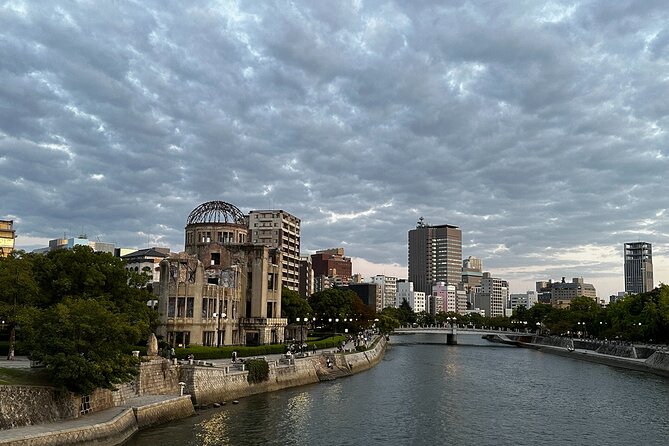
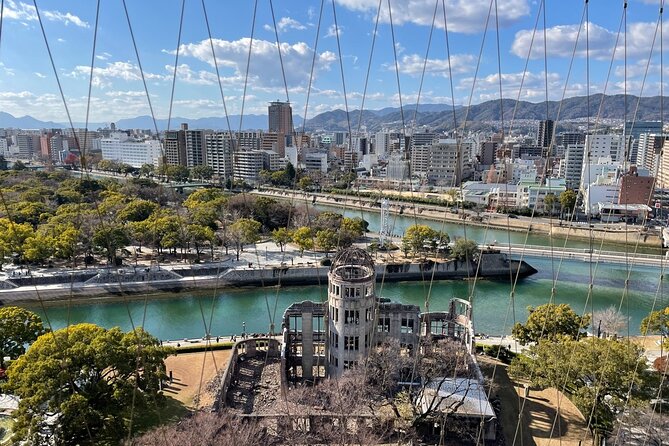
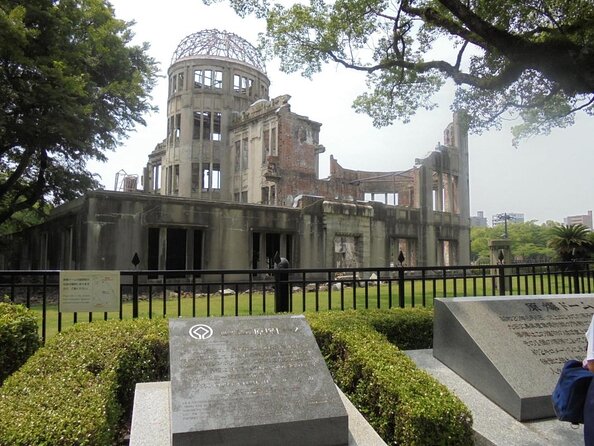
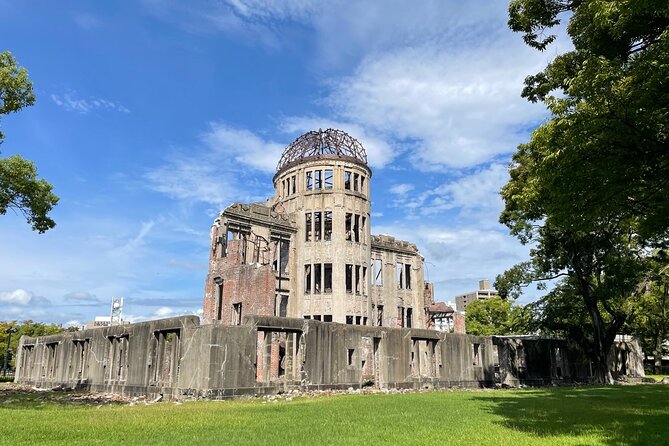
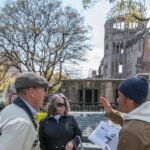
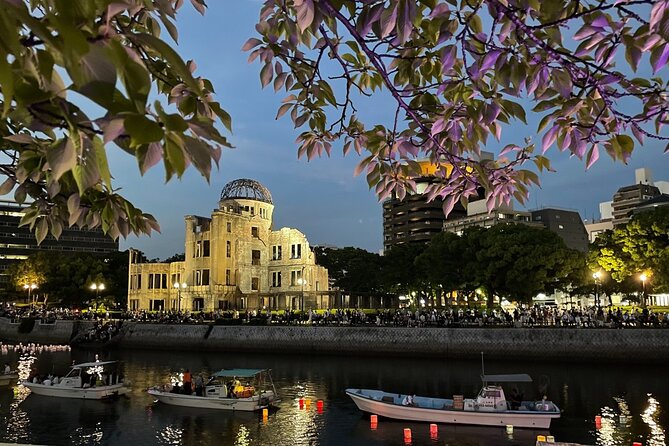
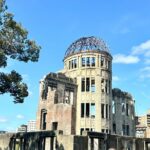
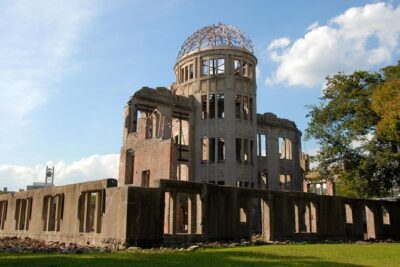
The Atomic Bomb Dome is Hiroshima’s best-known structure, and the guide gives it more meaning than a quick stop for photographs. The building was used for the first time in history as part of the city’s atomic bombing story, and its damaged frame remains a reminder of what happened.
You have about 20 minutes here. That is enough for the guide to explain the building and for you to take in the view, though it is not a long architectural tour. If you want extensive time for photographs, tell Pancho early so you can manage the rest of the schedule.
The Peace Flame takes only about five minutes. Its continued burning raises a direct question: why keep the flame lit? The guide explains its meaning and links it to Hiroshima’s peace message.
The short timing at the flame is sensible. The stop is symbolic rather than a large museum visit. Still, you may want to slow down if the meaning of the memorial matters to you. A private guide gives you more room to do that than a fixed group schedule usually allows.
Other walking tours we've reviewed in Hiroshima
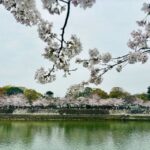
Lunch near Peace Memorial Park
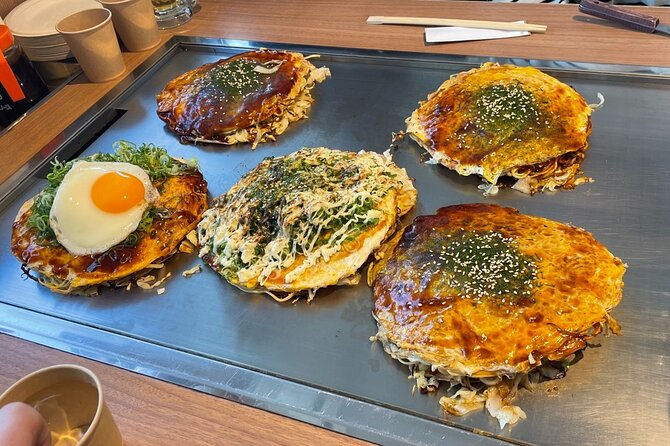
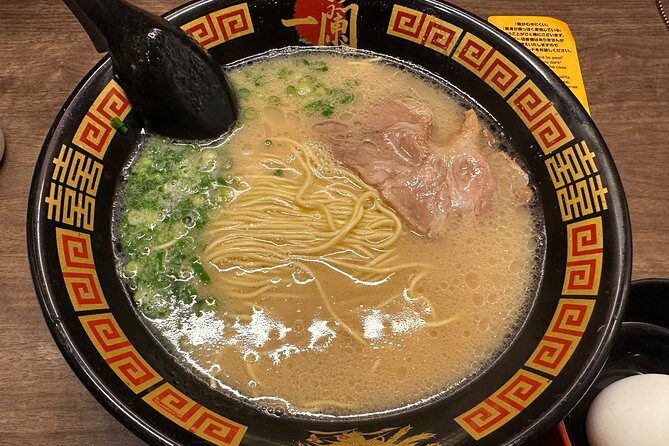
Lunch is planned for about 50 minutes near Peace Memorial Park. Food is not included, but the guide introduces local restaurants and helps you choose among Hiroshima-style okonomiyaki, ramen, and sushi.
For many people, this is where the tour becomes more connected to present-day Hiroshima. Hiroshima-style okonomiyaki is a local specialty, and sharing a meal after visiting serious memorial sites gives the day a more natural rhythm. You are still discussing the city, but you are also experiencing how people eat and live there now.
Dietary needs can be discussed in advance. Vegetarian, vegan, and gluten-free choices are available among the suggested options. I would communicate restrictions before the tour rather than waiting until lunchtime.
The meal is also a practical chance to ask questions that may occur to you after the first half of the route. Pancho’s past groups have discussed family stories, different national histories, and the city’s recovery over lunch. That conversation is part of the value of a private tour, though you should remember that you pay separately for all food and drinks.
Hiroshima Peace Park’s Rest House
The Rest House provides a short break of about 15 minutes. You can rest there, visit a small museum, or try an origami activity.
The building itself survived the atomic bombing, making it more than a convenient place to sit. Its current use as a tourist information point and small museum gives you another example of how Hiroshima’s past remains part of the city’s everyday spaces.
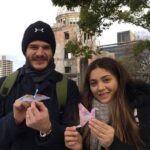
The origami option is particularly suitable for families. Folding paper cranes connects with the story told at the Children’s Peace Monument, and it gives children something calm and hands-on after emotionally difficult stops.
Do not expect a full-scale museum here. The Rest House is best viewed as a brief pause with a small amount of additional context. If you want a larger museum visit, the Hiroshima Peace Memorial Museum is a separate option and costs ¥200 per person.
Children’s Peace Monument and the Cenotaph
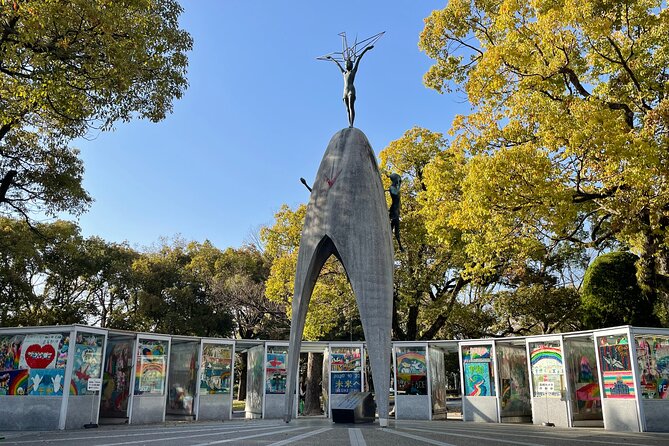
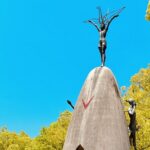
The Children’s Peace Monument recalls the story of a young girl who folded paper cranes while hoping to recover from leukemia, based on a Japanese belief. The guide explains the story and its connection to the monument.
This stop can be especially affecting for families, but adults may find it just as moving. The monument shifts attention from military history to the lives of children and civilians. It also explains why paper cranes have become such a familiar symbol in Hiroshima.
The visit lasts about 10 minutes. That is enough for an explanation and a quiet look, but you should not expect a long ceremony or formal presentation.
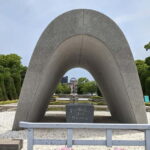
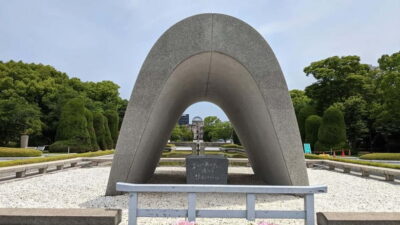
The final stop is the Hiroshima Peace City Monument Cenotaph for the Atomic Bomb Victims. Pancho explains the cenotaph’s history, its shape, and the idea behind its design. The 10-minute stop gives you a clear introduction to one of the Peace Park’s central memorials.
Ending here makes sense. After seeing the hypocenter, surviving structures, and personal story behind the Children’s Monument, you finish with the city’s formal memorial to the victims. The route leaves you with both specific human stories and a broader peace message.
What $200 per person gets you
The price is $200 per person, and the guide fee is the main included service. Lunch, drinks, public transportation, the optional museum entrance, and any private transport are extra.
That is expensive compared with walking through Hiroshima on your own. The Atomic Bomb Dome, Peace Flame, Children’s Peace Monument, and cenotaph are free, and you could visit many of them independently. The Peace Memorial Museum costs only ¥200, which is also modest.
The better question is what you need from the visit. If you are comfortable reading signs, navigating public transport, and processing the memorial sites alone, the tour may not offer enough value for your budget. If you want a private English-speaking guide who can explain the city’s difficult past, connect locations, answer questions, and share a family story, the cost becomes easier to justify.
The private format also matters for a family or small group. You are not paying for a general lecture delivered to strangers. You can shape the pace, ask for food help, discuss your own family background, and spend more time on the sites that matter most to you.
Who should book this Hiroshima walk?
I would recommend it most strongly to first-time Hiroshima visitors who want context rather than a checklist of monuments. It also suits families, couples, and small groups who prefer conversation and a flexible pace.
The tour is a good fit if you are arriving by Shinkansen and want to begin at Hiroshima Station. It can also work well if you are staying at a hotel and want the guide to meet you there.
History-minded visitors who have already seen Hiroshima once may also appreciate the route. It includes less familiar stops such as Shirakami Shrine, Saiko-ji Temple, surviving trees, and the Rest House. One person who had visited Hiroshima three times found that the additional sites and small museum-style stops gave the city a fresh meaning.
I would hesitate to recommend it if you want a light, fast city tour. The subject is emotionally heavy, and the guide gives it proper attention. You should also skip it if $200 per person feels out of reach once lunch and transport are added.
The tour is near public transportation, and most people can participate. Service animals are allowed. Since the tour involves walking and moving between sites, practical shoes and a willingness to spend four hours on your feet will make the day easier.
Should you book Pancho’s private Hiroshima tour?
Book this tour if you want Hiroshima explained through both public memorials and one family’s connection to the bombing. Pancho’s most praised qualities are his thoughtful manner, personal insight, careful preparation, and ability to link hard history with hopeful stories about recovery.
The private format is the real advantage. You can ask direct questions, request dietary help, choose your lunch, and adjust the conversation to suit your group. The origami activity adds a gentle human touch, especially for families.
Skip it if you mainly want free access to the Peace Park and a quick look at the Atomic Bomb Dome. At $200 per person, this is not a budget sightseeing walk. It is a guided interpretation of Hiroshima, with the added weight of a family story and a route that reaches beyond the city’s most photographed monument.
Free cancellation is available up to 24 hours before the start time. Confirmation is sent within 48 hours, subject to availability. Book early if your schedule is fixed, since the tour is often reserved well ahead of time.
FAQ
How long does the Hiroshima walking tour last?
The tour lasts approximately four hours. The listed stops include the station meeting, shrine, hypocenter, temple, Atomic Bomb Dome, Peace Flame, lunch, Rest House, Children’s Peace Monument, and cenotaph.
Where can I meet the guide?
You can meet the guide on the bullet train platform at Hiroshima Station, arrange a hotel reception meeting, or use another Hiroshima Station meeting arrangement provided by the operator.
Who is the guide?
The English-speaking certified guide is Pancho, also known as Tetsuo Hamano. He is the son of an A-bomb survivor, and his family connection forms an important part of the tour.
Is this a private tour?
Yes. Only your group participates in the activity.
Is lunch included?
No. Lunch and drinks are separate. The guide can introduce local restaurants serving Hiroshima-style okonomiyaki, ramen, and sushi.
Can the tour accommodate dietary restrictions?
The tour information lists options for vegetarian, vegan, and gluten-free guests. You should share your requirements in advance.
Is transportation included?
Private transportation is not included. The tour uses public transportation or taxis from your hotel or Hiroshima Station. Public transportation is estimated at about $4 per person, and private transportation costs extra.
Is the Hiroshima Peace Memorial Museum included?
No. The museum entrance fee is listed separately at ¥200 per person.
Can I cancel for a full refund?
Yes, if you cancel at least 24 hours before the local start time. Cancellations or changes made less than 24 hours in advance are not eligible for a refund.
More Guided Tours in Hiroshima

More Walking Tours in Hiroshima
More Hiroshima City Tours in Hiroshima
More tours in Hiroshima we've reviewed


Hiroshima City Tours, compared.
 ★ 5.0Peaceful Hiroshima & Miyajima UNESCO 1 Day Bus TourFrom $129
 ★ 4.9Hiroshima: Hiroshima and Miyajima UNESCO Sites 1-Day TourFrom $1228 hours
 ★ 5.0Hiroshima / Miyajima Full-day Private Tour with Government Licensed GuideFrom $202
 ★ 4.7Osaka/Kyoto: Hiroshima Miyajima Bus Tour & Shinkansen TicketFrom $27712 hours
 ★ 4.8Hiroshima Historical Walking Tour – Why A-Bomb was DroppedFrom $352h 30m
 ★ 5.0Hiroshima Peace (Heiwa) Walking Tour at World Heritage SitesFrom $94
