
Reviewed · HIROSHIMA CITY TOURS
Hiroshima: Private Walking Tour with a Local
Hiroshima is a city where the major sights carry enormous weight, yet the most useful part of this tour may be the person walking beside you. Your Lokafyer shapes the route around your interests, so you can focus on the Peace Memorial Park, food, everyday neighborhoods, Japanese culture, or a mix of all four.
I like the private format, which lets you ask direct questions and set the pace. I also like the chance to get practical local advice, from where to eat okonomiyaki to which garden or café might be easy to miss. The main consideration is that this is a flexible local walk, not a formal sightseeing tour with a guaranteed script or fixed list of stops.
In This Review
- Key points to know before booking
- A personal way to meet Hiroshima
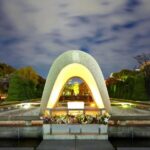
- Starting at the Peace Memorial Park
- Beyond the obvious sights
- Food advice and the value of a local host
- How the three to six hours may unfold
- What the local connection adds
- Who will get the most from this walk
- Booking details that affect the decision
- Should you book the Hiroshima private walk?
- FAQ
- How long does the Hiroshima private walking tour last?
- Where does the tour meet?
- Is transportation included?
- Are entrance fees and meals included?
- Is the route fixed?
- Is the tour suitable for children and wheelchair users?
Key points to know before booking
- Meet in central Hiroshima: Your Lokafyer can meet you at a hotel, Airbnb, café, landmark, Ristorante Mario, or the Hiroshima Peace Memorial Museum, provided the location is in or near the city center.
- Choose the focus: The route can include Peace Memorial Park, local culture, neighborhood walks, food advice, gardens, shopping, or personal stories about Hiroshima.
- Expect conversation, not a lecture: Your host is a passionate local rather than a traditional guide following a set script.
- Plan on walking for three to six hours: Comfortable shoes matter, and no car or local transport is included.
- Pay for extras separately: Meals, drinks, attraction tickets, and optional activities are not part of the $82 price.
- Good for a first day: A flexible orientation can help you decide where to return during the rest of your stay.
A personal way to meet Hiroshima
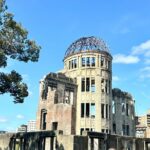
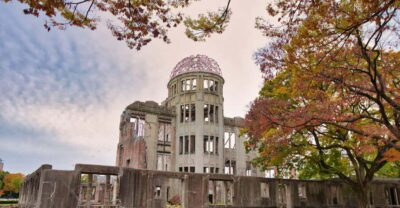
The usual way to visit Hiroshima is simple enough: go to the Peace Memorial Park, see the Atomic Bomb Dome, visit the museum, and perhaps eat okonomiyaki. Those places matter, but they do not tell you everything about the city.
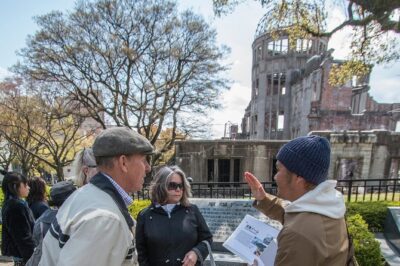
This private walk adds a human layer. Your Lokafyer can explain what you are seeing, answer the questions that come up along the way, and adjust the afternoon if a particular neighborhood, meal, or cultural topic catches your attention. You are not placed in a group and asked to keep up with a guide holding a flag.
That freedom is especially useful in Hiroshima, where visitors often need time to process what they see. One person may want a careful historical explanation. Another may prefer to keep the Peace Memorial Park brief and spend more time on food, gardens, or daily life. A private host can respond to that difference.
The experience is offered in English, and the group is entirely private. The stated duration is three to six hours, so you have room for a short orientation or a longer afternoon with several themes. You should request the time you want when arranging the tour.
A few more Hiroshima tours and experiences worth a look

Starting at the Peace Memorial Park
Two suggested meeting choices are Ristorante Mario and the Hiroshima Peace Memorial Museum. The latter places you close to one of the city’s central areas of remembrance and makes sense if you want to begin with Hiroshima’s wartime past.
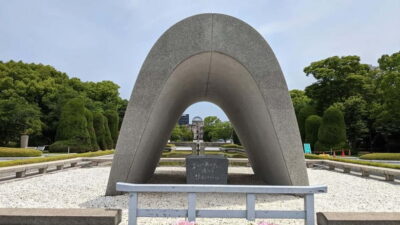
Several past tours have used the Peace Memorial Park as the main setting. A host named John was praised for explaining Hiroshima’s history while moving at a relaxed pace from site to site. Another guide, Aidan, led a walk through the park’s many points of interest before finishing at the museum.
That order can work well if you want an outdoor introduction before entering the museum. The park gives you space to look, ask questions, and understand how the memorials relate to one another. It also avoids rushing straight into the museum’s intense exhibits.
The tour does not include entrance fees. If you visit the museum or another paid attraction, you must pay your own admission and also cover the Lokafyer’s entrance cost. That detail matters when comparing the $82 price with a standard group tour.
You should also be clear about your preferred level of historical detail before the walk begins. One person who toured with Shinichi appreciated his explanation of Hiroshima’s rebuilding and his personal story about a relative connected to that difficult period. Another visitor wanted to spend more time on local history. The flexible format gives you a chance to make that request early.
Beyond the obvious sights
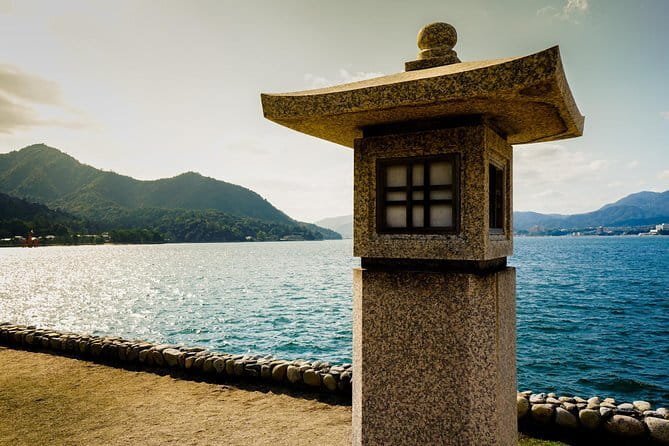
The best reason to choose this experience is the possibility of changing direction. Instead of spending the full walk at the major memorial sites, you can ask for neighborhood life, street art, local shopping, cafés, gardens, or Japanese customs.
That does not mean every route will include all of these things. The host chooses the walk with you, and the exact stops depend on your interests and the available time. Still, the format gives you a better chance of seeing a side of Hiroshima that a standard checklist does not cover.
One past walk included a beautiful garden that the visitor would not have found alone. That is the sort of detail that can make a private orientation worthwhile. You may also get advice on where to return for a meal, how to spend an open evening, or what area deserves another walk.
The local connection can be more valuable than a long list of facts. Nora, one of the hosts named in past bookings, was praised for her stories about Hiroshima and Japan, as well as for tailoring the route to the group’s wishes. Yumi was remembered for making the visit feel relaxed and comfortable. Those qualities matter when you want conversation rather than a formal presentation.
Still, keep your expectations realistic. This is not a guaranteed specialist tour of street art, food, architecture, or wartime history. If you want a tightly planned expert itinerary with specific monuments and dates, you should state that clearly before the tour. Otherwise, arrive with a few ideas and let the route take shape.
Food advice and the value of a local host
Food can be one of the easiest ways to make the walk feel connected to Hiroshima. One past tour with Ram included a tasty okonomiyaki lunch. Another guide, Sriram, showed the group a one-pot restaurant and joined them for dinner.
Meals are not included, and you pay for your own food and drinks. That is a cost to remember, but it also means you are not tied to a prepaid restaurant chosen for a large group. You can ask for suggestions that match your budget and appetite.
The host may also help you understand what to order or point out a style of restaurant you would otherwise pass. The available information does not promise a food tour, so you should request food as a main interest if it is important to you. A three-hour walk may then work better than trying to fit every major sight into the same outing.
At $82 per person, the value depends heavily on group size. For one or two people, the price buys several hours of personal attention, local recommendations, and the ability to change the route. For a larger private group, the per-person price may feel easier to justify, provided everyone wants the same loose, conversational style.
It is less attractive if you only want transport between sights. No car is included, and local transportation around the city is not part of the experience. You are paying for a walking companion and a customized route, not a driver or a package of admissions and meals.
How the three to six hours may unfold
There is no fixed route, but the structure is easy to picture.
You meet your Lokafyer at the agreed central location. This could be your accommodation, an iconic landmark, a quiet café, Ristorante Mario, or the Hiroshima Peace Memorial Museum. Starting at your hotel or Airbnb can save time and help your host understand what you have already seen.
The opening part is a chance to set the plan. Tell the host if you want history, food, local life, shopping, gardens, or a gentle overview. If you have no plan, that is acceptable too, but even one or two preferences will make the walk more useful.
The middle section is the main walking route. You may move through the Peace Memorial Park, stop for photographs, hear stories about the city, or head toward places that fit your interests. Scenic views come as part of the walk, but this is not advertised as a transport-based sightseeing circuit.
The final part can serve as a practical handoff to the rest of your visit. You might finish at the museum, a restaurant, or another central spot. Ask for suggestions before the tour ends, while the route and your questions are still fresh.
Allow for breaks. Three hours on foot can feel very different from six, especially if you are visiting in warm weather or carrying luggage. Comfortable shoes are specifically recommended. Since there is no fixed route, you can ask for a slower pace, but it is best to make that clear at the start.
Other walking tours we've reviewed in Hiroshima

What the local connection adds
The strongest element here is the chance to hear Hiroshima explained by someone who lives there. That does not make every host a trained historian, and the company makes clear that a Lokafyer is not a traditional tour guide. The difference is important.
You may get personal stories, practical tips, and a sense of how the city works day to day. Shinichi, for example, brought a family connection to the story of rebuilding after 1945. Nora shared broader observations about Japanese culture as well as Hiroshima. John was valued for his calm movement between sites and his historical explanations.
These examples show the range you might receive. One host may be best at history. Another may be more useful for food, culture, or casual conversation. The tour description does not guarantee a particular host, so ask if you have a strong preference for subject or style.
The private setup also helps families and small groups. Children below age three are free, and children aged three to twelve receive a 50 percent discount. A private route is often easier for a family because you can adjust the pace and avoid worrying about holding up strangers.
The tour is wheelchair accessible, but the details of the exact route are not fixed. If you use a wheelchair, discuss the route and meeting point in advance so the host can plan around your needs.
Who will get the most from this walk
I would consider booking this early in your Hiroshima stay if you want a friendly introduction and plenty of room for questions. The tour can help you decide how much time to give the Peace Memorial Park, which food experiences to try, and where to spend an extra evening.
It also suits repeat visitors. On a second visit, you may not need another standard explanation of the main memorials. You can ask for neighborhoods, gardens, cafés, local customs, or a different view of the city.
First-time visitors who want firm structure should be more specific when booking. Say that you want the major sites, a history-focused route, or a walk ending at the museum. Without those requests, the loose format may feel less organized than expected.
You should skip it if you dislike walking, need a guaranteed attraction schedule, or want entrance fees and meals bundled into one price. You should also think twice if your main goal is a fast tour of distant parts of Hiroshima, since transport is not included.
Booking details that affect the decision
The price is $82 per person, with a three to six hour duration. Free cancellation is available up to 24 hours before the start time, which gives you some protection if your plans change.
The tour is offered in English and can begin at a requested time, subject to availability. Pickup is included only in the sense that the host can meet you at a preferred central location. It does not mean hotel transport or a car service.
Entrance fees, personal spending, optional activities, meals, drinks, and local transport are extra. If you plan to enter an attraction, remember that you also cover the Lokafyer’s admission.
The most useful preparation is a short list of questions. Ask about Hiroshima’s rebuilding, Japanese food, local customs, gardens, shopping, or the best way to use your remaining time. You can also arrive with no plan, but the private format gives you more value when you take an active role.
Should you book the Hiroshima private walk?
Book this tour if you want a flexible first look at Hiroshima and prefer a real conversation to a rehearsed speech. The best parts are the private pace, the chance to shape the route, and the local details that may lead you to a garden, restaurant, or neighborhood you would otherwise miss.
I would be especially inclined to book it for a short stay, a family group, or a repeat visit. The experience can also work well on your first day, when local advice helps shape the rest of your schedule.
Do not book it expecting a fixed professional lecture or included sightseeing costs. Tell your host exactly what you want, wear good walking shoes, and budget separately for food and admissions. With those expectations, $82 can be a fair price for several hours of personal guidance in a city that deserves more than a quick checklist.
FAQ
How long does the Hiroshima private walking tour last?
The tour lasts between three and six hours. You should check availability for starting times and request a preferred time when booking.
Where does the tour meet?
The Lokafyer can meet you at a preferred location in or near central Hiroshima, including your hotel or Airbnb, an iconic landmark, or a quiet café. Two listed meeting choices are Ristorante Mario and the Hiroshima Peace Memorial Museum.
Is transportation included?
No. This is a walking tour, and car transportation is not included. Local transportation around the city is also separate.
Are entrance fees and meals included?
No. Entrance fees, meals, drinks, personal expenses, and optional activities are not included. If you visit a paid attraction, you must also cover the Lokafyer’s entrance fee.
Is the route fixed?
No. The tour is private and personalized, with no fixed route. You can request interests such as history, local food, culture, shopping, gardens, or neighborhood walks.
Is the tour suitable for children and wheelchair users?
The activity is wheelchair accessible. Children under three years old are free, while children aged three to twelve receive a 50 percent discount.
More Private Tours in Hiroshima
More Walking Tours in Hiroshima
More Hiroshima City Tours in Hiroshima
More tours in Hiroshima we've reviewed



Hiroshima City Tours, compared.
 ★ 5.0Peaceful Hiroshima & Miyajima UNESCO 1 Day Bus TourFrom $129
 ★ 4.9Hiroshima: Hiroshima and Miyajima UNESCO Sites 1-Day TourFrom $1228 hours
 ★ 5.0Hiroshima / Miyajima Full-day Private Tour with Government Licensed GuideFrom $202
 ★ 4.7Osaka/Kyoto: Hiroshima Miyajima Bus Tour & Shinkansen TicketFrom $27712 hours
 ★ 4.8Hiroshima Historical Walking Tour – Why A-Bomb was DroppedFrom $352h 30m
 ★ 5.0Hiroshima Peace (Heiwa) Walking Tour at World Heritage SitesFrom $94
