
Reviewed · HIROSHIMA CITY TOURS
History of Hiroshima Group Walking Tour
Hiroshima’s Peace Memorial Park can feel quiet and orderly, but nearly every monument carries a story that is easy to miss on your own. This two-hour walking tour connects the park’s main sites with clear context about the atomic bombing, the people who died, and Hiroshima’s later message of peace.
I like the route’s focus on human stories, including mothers, children, Korean victims, and survivors. I also like the guides’ mix of serious history and gentle humor, which helps you stay engaged without making light of the subject. The main drawback is the brisk schedule: nine stops in two hours leaves little time for long visits or private reflection.
In This Review
- Key points to know before you book
- Why a guided walk helps at Hiroshima Peace Memorial Park
- Starting at the Ten Gates of Peace
- The Mother and Baby in the Storm
- The Cenotaph and Hiroshima’s victim names
- Hiroshima National Peace Memorial Hall
- The Rest House, a rare survivor near ground zero
- Sadako, paper cranes, and the Children’s Peace Monument
- Remembering Korean victims and survivors
- The Peace Bell and the meaning of sound
- The Atomic Bomb Dome and the final walk to ground zero
- What $32.84 buys you
- Who will get the most from this Hiroshima walk
- Should you book this tour?
- FAQ
- How long does the History of Hiroshima Group Walking Tour last?
- How much does the tour cost?
- Where does the tour start?
- Where does the tour finish?
- What sites are included?
- Is admission to the stops included?
- Is food included?
- How many people can join the tour?
- Can children join for free?
- What happens if I need to cancel?
Key points to know before you book
- A Peace Studies guide leads the walk: Guides including Cva, Malek, Moe, Shiva, and Ali have been praised for clear explanations and thoughtful answers.
- Nine important stops fit into two hours: You see the major monuments in Peace Memorial Park and finish near the atomic bomb hypocenter.
- The route adds stories beyond the most famous sites: Mothers, children, Korean victims, and the lone surviving Rest House all receive attention.
- It works well for a short Hiroshima visit: The walk gives you a useful framework before you explore more on your own.
- The group can reach 30 people: That keeps the price modest, but a larger group may make it harder to hear or ask questions.
- The price is $32.84 per person: With admission listed as free at each stop, you are paying for the guide’s time, explanation, and structure.
Why a guided walk helps at Hiroshima Peace Memorial Park
Hiroshima is not a place to rush through with a camera and a few labels from a map. The park’s monuments are spread across an open area, and their meaning is often tied to names, family stories, politics, or details that are easy to overlook.
A guide gives you a sequence. You begin with why Hiroshima was targeted and how the bombing changed world history. You then move through memorials that show the human cost before reaching the Atomic Bomb Dome and the ground-zero marker.
That order matters. Instead of seeing the Dome as an isolated ruin, you can understand it as one part of a larger story about loss, survival, remembrance, and Hiroshima’s appeal for peace.
The tour is led by a guide with a degree in Peace Studies. Several named guides have led this experience, including Cva, Malek, Moe, Shiva, and Ali. Their styles may differ, but the strongest pattern is clear: you can expect detailed answers, good English, and an effort to keep the walk approachable.
The tone is serious, as it should be, but not grim from beginning to end. Guides use occasional humor to give the group a breath between difficult subjects. That balance is useful during a tour about mass death and wartime destruction.
A few more Hiroshima tours and experiences worth a look

Starting at the Ten Gates of Peace
The walk begins at the Gates of Peace near Ristorante Mario at 4-11 Nakajimacho. The meeting point is close to public transportation, which makes it practical if you are coming from another part of Hiroshima.
The ten gates offer a symbolic opening. At this first stop, your guide explains why an atomic bomb was dropped on Hiroshima and how the event shaped international history. Nine of the gates represent the word peace in different languages, while the tenth points toward the future. The tour information specifically identifies nine gates as representing peace, so your guide’s explanation is an important part of understanding the site.
This opening gives you basic context before the memorials begin. It also sets the tone: Hiroshima is presented not only as a place of destruction, but as a city that chose to speak about peace.
You spend about 20 minutes here. That is a useful amount of time for an introduction, though you should expect the guide to cover a lot of ground. If you want a detailed discussion of wartime strategy, international diplomacy, or the broader Pacific War, this walk may only provide the starting point.
The Mother and Baby in the Storm
The next stop is the Arashi no Naka no Boshi Statue, translated as Mother and Baby in the Storm. You have roughly five minutes here.
The monument honors mothers who sacrificed their lives while trying to save their children. It is a small stop in terms of time, but its subject changes the scale of the tour. The bombing was not only a matter of buildings and casualty numbers. It affected parents, children, families, and ordinary routines in an instant.
I appreciate that this monument appears early in the route. It brings the discussion down from national policy to individual people. The short visit also shows one limitation of the tour: the guide can introduce the story, but you will need to return later if you want to sit with it for longer.
The Cenotaph and Hiroshima’s victim names
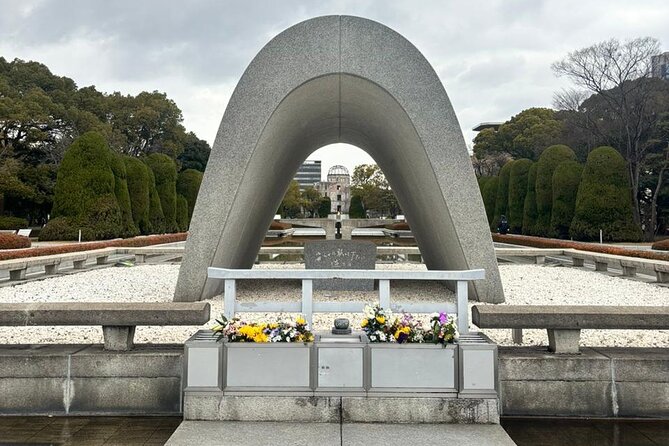
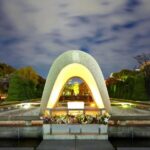
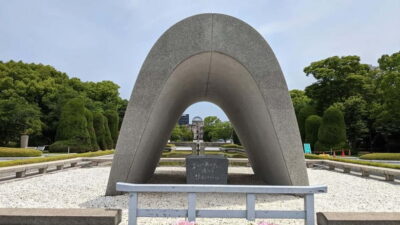
The Hiroshima Peace City Monument, also called the Cenotaph for the Atomic Bomb Victims, receives about 20 minutes. This is one of the central stops in the park.
The cenotaph holds the names of people who died in the bombing. Your guide explains the monument and the meaning of remembering those victims as a group. This is one of the points where a guide’s explanation adds real value, because the structure itself may not tell you why it matters or how it fits into Hiroshima’s memorial practice.
You will likely notice the contrast between the calm setting and the scale of the loss represented by the names. The park is carefully maintained, yet the subject is not softened. A good guide helps you hold both facts at once: this is a peaceful public space, and it exists because of an extraordinary human disaster.
The planned 20 minutes should allow questions, but a full group may affect how much time you get to speak. If you have a particular question, ask it clearly and early rather than waiting until the final minutes.
Hiroshima National Peace Memorial Hall
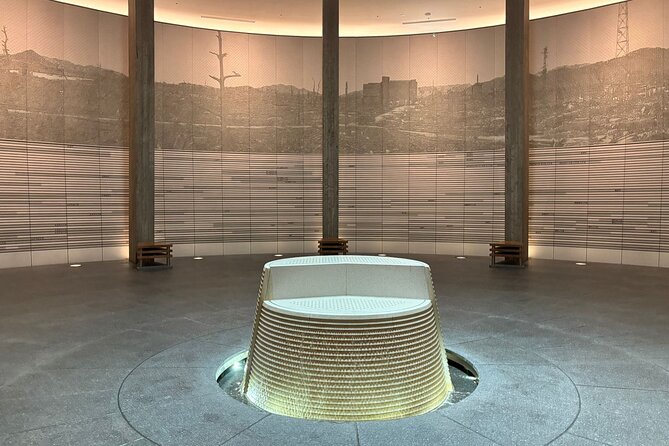
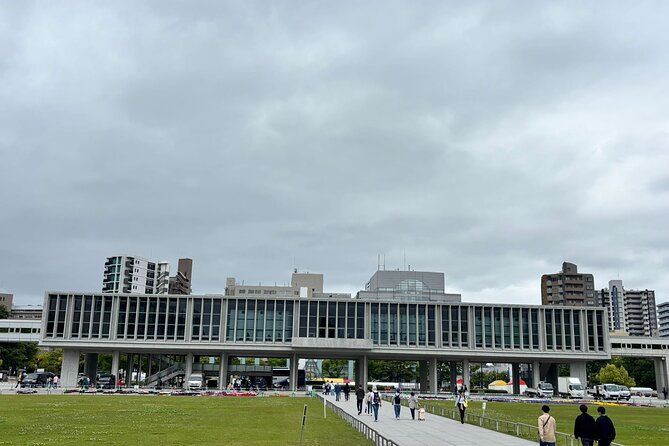
The tour then visits the Hiroshima National Peace Memorial Hall for the Atomic Bomb Victims, with about 20 minutes set aside.
The hall presents the destruction of the city. This stop adds another layer to the outdoor monuments by showing the scale of what happened and giving the history a more visual setting. The exact amount of time you spend inside or around the hall can depend on the group and the guide’s pacing, but it is intended as one of the more substantial stops.
This part of the route is especially useful if you are seeing the Peace Park for the first time. Without an explanation, it can be hard to understand how the separate monuments relate to one another. The guide connects the destruction shown here with the names at the cenotaph and the personal stories represented by later memorials.
Keep your expectations realistic. Two hours is enough for an introduction and a guided route, not a full museum visit. If you want to read every display at length, plan another visit after the walk.
Other walking tours we've reviewed in Hiroshima

The Rest House, a rare survivor near ground zero
The Rest House of Hiroshima Peace Park gets about 15 minutes. Its importance comes from survival: the building remained standing about 170 meters from ground zero.
That distance is difficult to picture until you are on site. A surviving structure so close to the blast gives the bombing a physical scale that written explanations cannot provide. Your guide can point out why this building matters and place it within the wider park.
This stop is one of the tour’s more unusual details. Many Hiroshima visitors know the Atomic Bomb Dome, but fewer arrive with the Rest House in mind. Including it makes the walk feel less like a route through only the most famous monuments.
The stop is still brief. You may want more time to inspect the building or learn about its later use. Treat the guided visit as an orientation, then return on your own if this particular site catches your attention.
Sadako, paper cranes, and the Children’s Peace Monument
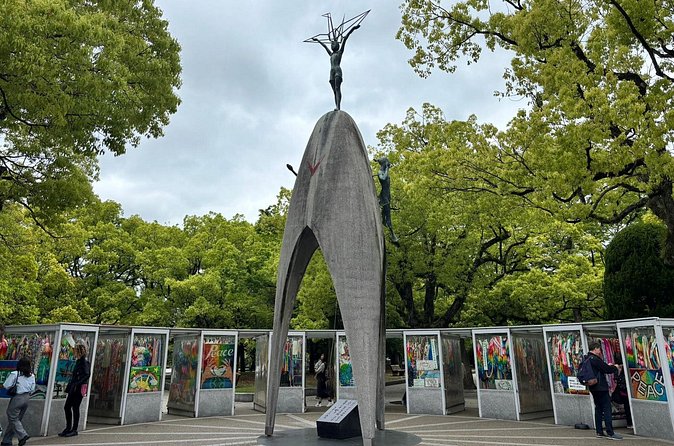
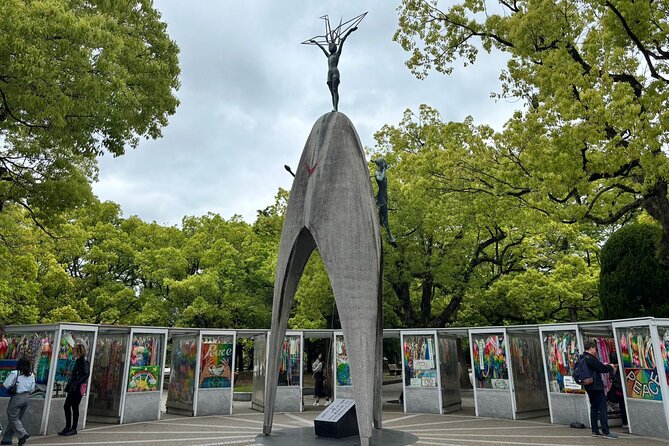
The Children’s Peace Monument receives about 10 minutes. It is dedicated to Sadako and other children who died after the bombing.
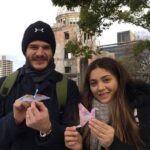
The monument is closely linked with the story of the paper crane, now a symbol of peace. That story gives the tour a direct way to discuss the long effects of radiation and illness on children, not only the instant of the blast itself.
This stop often works as an emotional turning point. The focus moves from the destruction of a city to the hopes and suffering of young people. Your guide explains the story behind the cranes and helps connect it to the broader peace message found throughout the park.
Ten minutes is enough for an introduction, but not for a slow, private visit. If you have brought paper cranes or want to spend time at the monument, leave space in your Hiroshima schedule to return after the tour.
Remembering Korean victims and survivors
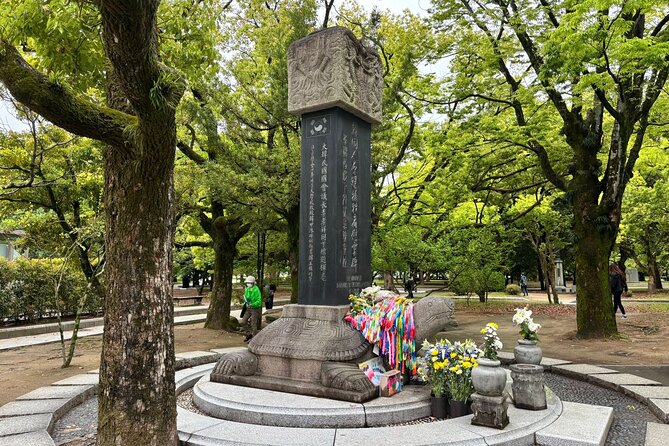
The Monument to Korean Victims and Survivors takes about five minutes. It honors Koreans who were killed or survived the bombing.
This is a valuable inclusion because it widens the story beyond a simple Japanese account. People from Korea were in Hiroshima at the time, and their experiences form part of the city’s wartime history. A short explanation here can correct the impression that the bombing affected only Japanese citizens.
Five minutes is not much time for a complex subject. Still, the stop signals that remembrance in Hiroshima includes different communities and different wartime experiences. If this aspect of the history matters to you, ask your guide a question while the group is there.
The Peace Bell and the meaning of sound
The Peace Bell is another short stop, with about five minutes on the schedule.
The bell is a simple object, but it gives the park a participatory element. You are not only looking at a monument. You are considering a message that has been expressed through sound, ritual, and repeated public remembrance.
The guide explains its role in the park’s peace message. Since the stop is brief, do not expect a long ceremony or extended time around the bell. Its value lies in how it rounds out the park’s collection of memorials, which speak through names, buildings, statues, and sound.
The Atomic Bomb Dome and the final walk to ground zero
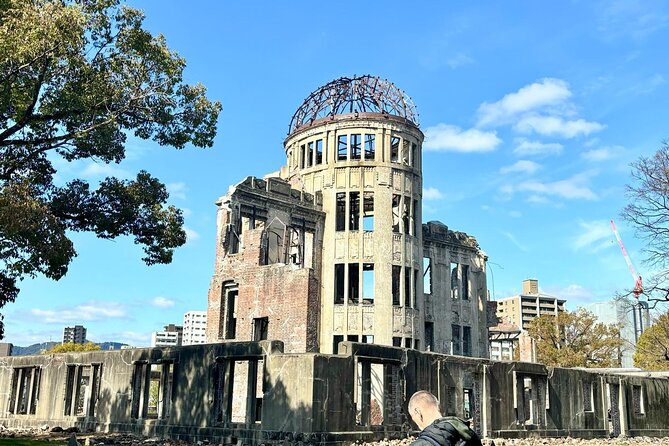
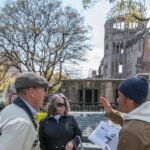
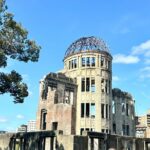
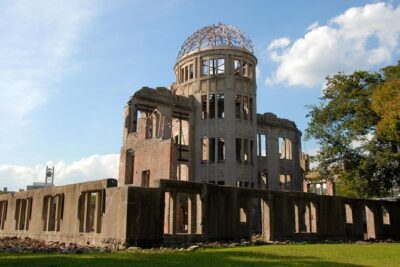
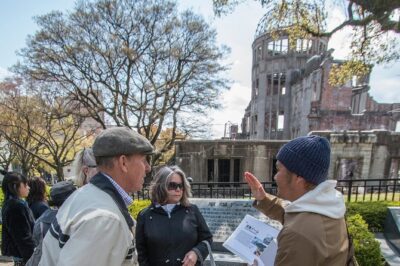
The Atomic Bomb Dome receives about 15 minutes. This is the park’s best-known structure and one of the clearest physical reminders of the bombing.
The building survived while much of the surrounding area was destroyed. Its exposed frame and damaged walls make the event feel immediate, even decades later. The guide explains what happened to the building and why it remains such a powerful symbol.
Seeing the Dome after the other memorials is a smart choice. By this point, you have heard about victims, children, mothers, survivors, and the wider meaning of the park. The building becomes more than a photograph. It is the final major piece in a route that has moved from explanation to personal loss and then to public remembrance.
The tour ends at the Hiroshima Atomic Bomb Hypocenter Monument at 1-5-25 Otemachi. This marks the ground zero location. Ending here gives the walk a direct, sobering finish. You are close to the point over which the bomb exploded, rather than simply stopping at the park’s most famous structure.
The listed meeting point and ending point are different, so you should check the route on a map before setting off for your next activity. The end is near the central Hiroshima area, but your guide can clarify the best next step for you.
What $32.84 buys you
At $32.84 per person, the tour is reasonably priced for a two-hour guided walk. Admission to the listed stops is free, so the fee is paying for the guide’s preparation, explanations, route planning, and ability to answer questions.
That value depends on how you like to visit memorial sites. If you are happy to read signs and move at your own pace, you can see much of the park without paying for a guide. If you want the monuments placed in historical order and explained through personal stories, the fee is easier to justify.
The maximum group size is 30 people. That is not a private walk, and the experience may feel less personal when the group is full. On the other hand, a group tour keeps the price far below a private guide and gives you a structured way to see the park in a short visit.
Two children aged 0 to 10 can join free of charge. Lunch and all other food are not included, so plan to eat before or after the walk. The tour itself lasts about two hours and includes continuous walking between stops.
Who will get the most from this Hiroshima walk
I would choose this tour if you have limited time in Hiroshima, want help handling a difficult subject, or prefer stories and explanation over simply moving from monument to monument.
It also suits first-time visitors who want a clear orientation before spending more time at the park’s museums and memorials. The guides have been praised for good English, warmth, humor, and their ability to answer questions. Names associated with the experience include Cva, Malek, Moe, Shiva, and Ali.
Families can join, with two children aged 0 to 10 admitted free. The subject is serious, so parents should decide how much detail their children can handle. Most people can participate, and the tour is near public transportation, but it remains a walking experience with several stops.
You may want a different option if you prefer solitude, need a slow pace, or want to spend a long time inside each memorial site. A group of up to 30 can also make it harder to hear at busy moments, though the short format keeps the route moving.
The tour requires good weather and a minimum number of participants. You can cancel for a full refund up to 24 hours before the start time. Inside 24 hours, changes and refunds are not accepted. If poor weather or low numbers cancel the activity, you are offered another date, another experience, or a full refund.
Should you book this tour?
Book it if you want a focused introduction to Hiroshima’s Peace Memorial Park and value a guide who can explain the people behind the monuments. The route covers the major sites, adds less obvious memorials such as the Rest House and Korean Victims Monument, and finishes at ground zero.
I would not book it as your only Hiroshima history experience if you want hours of museum reading or a private, unhurried visit. Instead, use it as a strong first look, then return to the sites that affected you most.
For $32.84, the best value comes from the human context: mothers, children, survivors, names, and the city’s call for peace. If that is the kind of understanding you want from Hiroshima, this short walk is a sensible choice.
FAQ
How long does the History of Hiroshima Group Walking Tour last?
The tour lasts approximately two hours.
How much does the tour cost?
The price is $32.84 per person.
Where does the tour start?
It starts at Ristorante Mario, 4-11 Nakajimacho, Naka Ward, Hiroshima, 730-0811, Japan.
Where does the tour finish?
It finishes at the Hiroshima Atomic Bomb Hypocenter Monument, 1-5-25 Otemachi, Naka Ward, Hiroshima, 730-0051, Japan.
What sites are included?
The route includes the Gates of Peace, Mother and Baby in the Storm Statue, the Cenotaph for the Atomic Bomb Victims, Hiroshima National Peace Memorial Hall, the Rest House, Children’s Peace Monument, Monument to Korean Victims and Survivors, Peace Bell, and Atomic Bomb Dome.
Is admission to the stops included?
Admission tickets are listed as free at each stop. The guided tour is included.
Is food included?
No. Lunch and all other food are not included.
How many people can join the tour?
The maximum group size is 30 travelers.
Can children join for free?
Two children aged 0 to 10 can join free of charge.
What happens if I need to cancel?
You can receive a full refund if you cancel at least 24 hours before the experience start time. Cancellations or changes made within 24 hours are not refunded or accepted. If poor weather or an insufficient number of participants cancels the tour, you are offered another date, another experience, or a full refund.
More Historical Tours in Hiroshima
More Walking Tours in Hiroshima
More Hiroshima City Tours in Hiroshima
More tours in Hiroshima we've reviewed



Hiroshima City Tours, compared.
 ★ 5.0Peaceful Hiroshima & Miyajima UNESCO 1 Day Bus TourFrom $129
 ★ 4.9Hiroshima: Hiroshima and Miyajima UNESCO Sites 1-Day TourFrom $1228 hours
 ★ 5.0Hiroshima / Miyajima Full-day Private Tour with Government Licensed GuideFrom $202
 ★ 4.7Osaka/Kyoto: Hiroshima Miyajima Bus Tour & Shinkansen TicketFrom $27712 hours
 ★ 4.8Hiroshima Historical Walking Tour – Why A-Bomb was DroppedFrom $352h 30m
 ★ 5.0Hiroshima Peace (Heiwa) Walking Tour at World Heritage SitesFrom $94
