
Reviewed · PEACE MEMORIAL TOURS
Hiroshima Peace & History: 3-Hr Private Walk with Local Guide
Hiroshima’s most meaningful sights are not all inside Peace Memorial Park. This three-hour private walk with Alex begins at Shirakami Shrine and the Former Bank of Japan, then uses a short streetcar ride to connect the city’s prewar life with the memorial sites. That wider view helps you understand Hiroshima as a living city, not only as a place marked by tragedy.
I like the small private format, which lets you ask questions and adjust the pace. I also like the thoughtful route from the Hypocenter to the Dome, Peace Bell, Children’s Peace Monument, Flame of Peace, and Cenotaph. The main consideration is time: three hours gives you a strong introduction, but not a guided visit inside the Peace Memorial Museum.
- A local beginning: Shirakami Shrine and the Former Bank of Japan add context before the memorial park.
- A short historic streetcar ride: The included fare gives you a simple, local way to move through Hiroshima.
- The exact Hypocenter: A quiet stop at the point directly beneath the atomic blast.
- A private group of up to six: You can ask questions and request itinerary changes.
- A useful museum finish: The walk ends at the Peace Memorial Museum entrance for an independent visit.
- A guide with a personal touch: Alex is praised for clear explanations, flexible pacing, and making time for conversation.
In This Review
- Why this Hiroshima walk begins outside Peace Memorial Park
- The streetcar ride adds a local rhythm
- The Hypocenter puts the bombing in precise terms
- The Atomic Bomb Dome and the city’s visible memory
- Peace Bell and the quieter corners of the park
- The Cenotaph, Flame of Peace, and symbolic line
- Ending at the Peace Memorial Museum entrance
- Alex’s guiding style and the value of a private group
- Is $162.59 good value for up to six people?
- Timing, meeting point, and what to prepare
- Who will get the most from this experience?
- Should you book the Hiroshima Peace and History walk?
- FAQ
- How long does the Hiroshima Peace and History walk last?
- How many people can join the private tour?
- Is the streetcar fare included?
- Where does the walk begin?
- Where does the tour end?
- Is the Peace Memorial Museum visit included?
- What is included in the price?
Why this Hiroshima walk begins outside Peace Memorial Park
Many first visits to Hiroshima start with the Atomic Bomb Dome and proceed from one memorial to the next. That route is essential, but it can make the city feel as though it began and ended on August 6, 1945.
This experience takes a broader path. At Shirakami Shrine, you get a short introduction to Hiroshima’s religious traditions and ordinary city life before the war. The stop lasts about 10 minutes, so it is not a full shrine visit, but it gives the morning a calm beginning.
The Former Bank of Japan adds another useful piece. The building survived the bombing and helps explain Hiroshima’s commercial center before 1945. If it is open, you step inside briefly. If it is not, the exterior still gives you a tangible sense of the city that existed before the blast.
I find this opening especially helpful for first-time visitors. It creates a human scale before the more solemn memorials. You are not simply moving toward famous monuments. You are first seeing a shrine, a bank, streets, and a city that had businesses, routines, and places of worship.
The streetcar ride adds a local rhythm
A short ride on Hiroshima’s historic streetcar is included in the tour. It is a small part of the experience, but a useful one. Instead of spending all three hours on foot, you get a break between the opening city sights and the Peace Memorial Park area.
The ride also gives you a glimpse of how people move around Hiroshima today. The experience is not built around a private vehicle or a rushed transfer. You use ordinary public transportation, with the fare included.
The exact length of the ride is not specified, so you should think of it as a brief link in the route rather than a sightseeing journey in its own right. Still, it helps the walk feel more connected to the city. Wear comfortable shoes, since the streetcar does not remove the need for considerable walking.
A few more Hiroshima tours and experiences worth a look
The Hypocenter puts the bombing in precise terms
The Hypocenter Monument marks the exact point beneath the explosion. It is a simple site, and that simplicity is part of its force. Instead of a large structure or a long display, you encounter a quiet marker that fixes the event to one precise location.
Alex uses this stop to explain what happened as the bomb fell and to help you understand the impact on Hiroshima. The scheduled visit is about 15 minutes, enough for orientation and questions without turning the moment into a rushed photo stop.
For many people, this is one of the most important points in the walk. The Atomic Bomb Dome is the image most associated with Hiroshima, but the Hypocenter clarifies the physical reality. You are looking at the location directly beneath the detonation, not simply at a surviving building some distance away.
The subject is serious, and this tour does not treat it as a string of dramatic attractions. The value comes from clear explanation and quiet attention. If you prefer to spend a long time at each memorial, three hours may feel tight. If you want a guided framework before exploring alone, the timing works well.
The Atomic Bomb Dome and the city’s visible memory
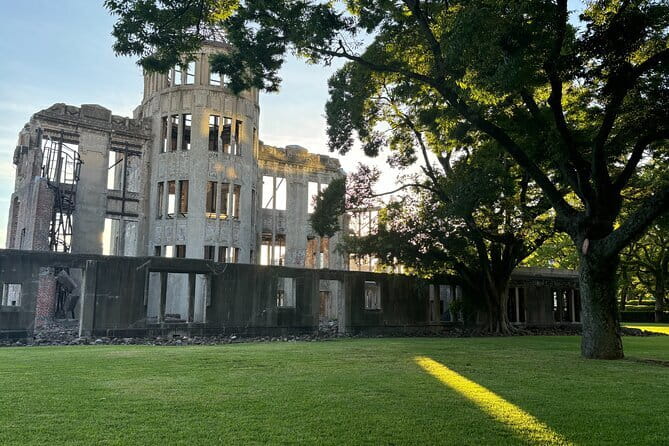
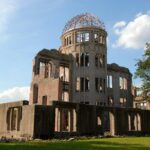
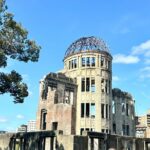
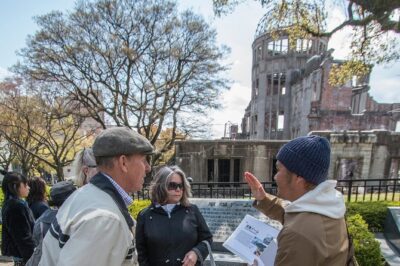
The Atomic Bomb Dome is scheduled for about 20 minutes. This is the longest single stop before the group enters the main park, and rightly so. The preserved structure is both a physical remnant and a symbol used in Hiroshima’s peace message.
Alex explains the building’s history and its role today. The focus is not only on taking in the familiar silhouette. You also learn why this particular structure was preserved and how it became linked with Hiroshima’s message of peace.
The Dome can feel crowded at popular times, but the private format still helps. You can ask for clarification without waiting for a large group to catch up. Alex can also adjust the conversation to your interests, within the limits of the schedule.
This is a good point to remember that the tour is designed for context, not a full architectural study. The stop is long enough to understand its importance, but you will not spend an hour examining every detail.
Peace Bell and the quieter corners of the park
The Peace Bell marks the transition into Peace Memorial Park. You may ring it if you wish, though there is no pressure to do so. The scheduled stop is only about five minutes, yet it offers a simple action in a place filled with heavy meaning.
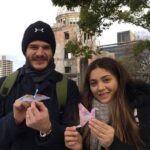
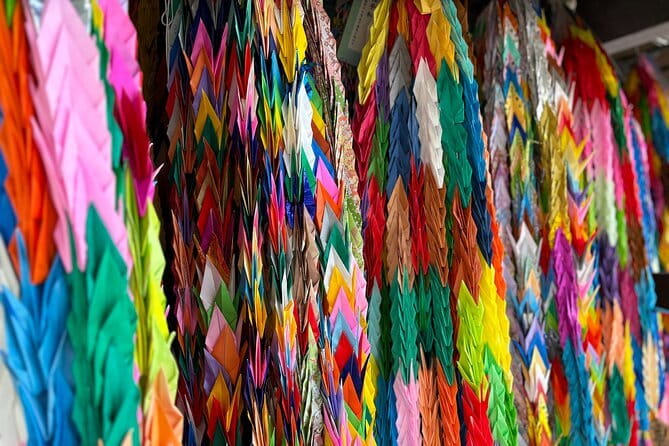
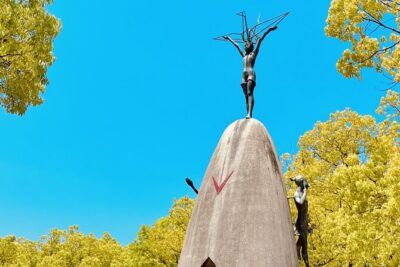
The walk then continues to the Children’s Peace Monument, with about 15 minutes devoted to the site. Here, Alex explains the story of Sadako Sasaki and the paper cranes associated with the monument. The story brings the bombing’s effect on children into focus without reducing the site to a single sentimental message.
The paper cranes are an important part of the monument’s meaning. Alex explains why they appear throughout the park and how the monument is connected to children who died as a result of the bombing. This is one of the places where a guide’s explanation matters, since the symbolism may not be obvious if you are walking alone.
I like that the route includes less visited corners as well as the major names. The tour is not only a checklist of the Dome, Cenotaph, and museum. It gives you reasons to pause at places you could otherwise pass without understanding.
The Cenotaph, Flame of Peace, and symbolic line
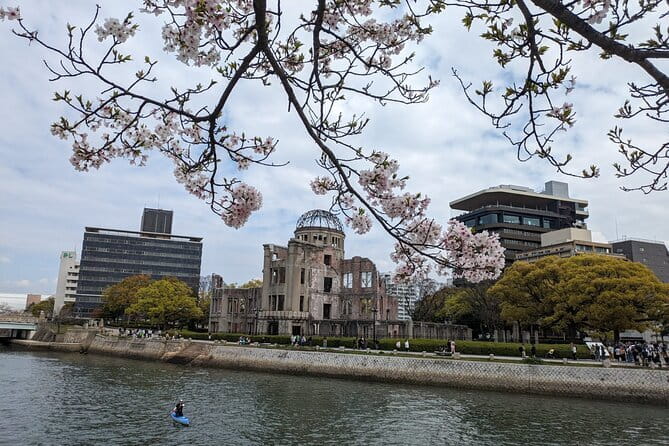
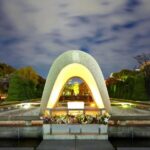
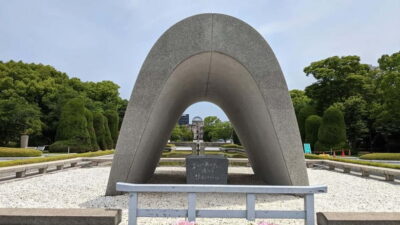
The Cenotaph for the Atomic Bomb Victims receives about 10 minutes. Alex explains its meaning, along with the Flame of Peace, and shows how the sites relate visually to the Atomic Bomb Dome.
That line is one of the most useful ideas in the walk. The Dome, Flame, and Cenotaph are not isolated monuments. Seen together, they create a carefully planned visual and symbolic relationship across the park.
You will likely want to take photos here, but the place calls for restraint. The guide helps you understand what you are looking at before you move on. That balance is important in Hiroshima, where the best experience is not necessarily the one with the most pictures.
The park can be emotionally demanding. The private format gives you room to ask a quiet question or pause briefly, rather than keeping pace with a large tour. At the same time, the route has a set structure, so you should not expect an open-ended meditation at every stop.
A few more Hiroshima tours and experiences worth a look

Ending at the Peace Memorial Museum entrance
The tour concludes at the entrance to the Hiroshima Peace Memorial Museum. The scheduled stop is about 10 minutes, and the guided walk does not include a full museum visit.
This arrangement makes practical sense. Museum visits vary widely. Some people move through the exhibits in an hour, while others need much longer. By ending at the entrance, the tour lets you decide how to continue.
You should plan the museum separately if it is important to you. The guide provides the route and context, but the supplied tour details do not include museum admission or a guided museum tour. Treat the walk as your introduction, then allow extra time for the exhibits on your own.
The ending also makes the tour easy to pair with the rest of your day. You finish at 1-2 Nakajimacho, in the Peace Memorial Park area, instead of returning to the starting point. That is convenient if you want to continue sightseeing nearby.
Alex’s guiding style and the value of a private group
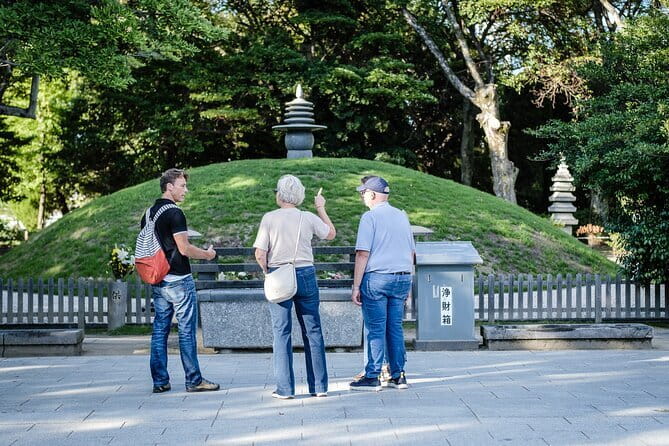
Alex is the named English-speaking guide. His approach comes across as clear, flexible, and personal. He explains Hiroshima’s history in a way that makes it easier to follow, and he also brings in details about daily life in Japan.
The private format is important here. Only your group participates, with up to six people covered by the price. You can ask questions as they occur, request some itinerary changes, and spend more or less time on certain subjects when the schedule allows.
Past comments also point to a pleasant human side. Alex has made time for coffee and conversation, and he has adjusted the morning to suit the group. One visit lasted four hours rather than the advertised approximate three, but you should not assume that extra time is guaranteed. The stated duration is about three hours.
The tone seems well suited to people who want more than dates and monument names. Alex has been praised for explaining what happened as the bomb fell, while also discussing what it is like to live in Japan. That combination gives the walk both historical focus and local perspective.
Is $162.59 good value for up to six people?
The price is $162.59 per group of up to six people. For a full group, that works out to roughly $27 per person. For two people, it is about $81 each, so the value improves sharply as your party gets larger.
You are paying for a private guide, an English-language explanation, a customized route, and the included streetcar fare. The main benefit is not admission savings, since the listed stops are free. You are paying for the structure, interpretation, and ability to shape the visit around your questions.
For a couple who only wants a short orientation, the cost may feel high compared with walking through the park independently. For a family or group of friends, the price is easier to justify. Six people can share one private booking while avoiding the pace and size of a public group.
The tour also saves planning time. You do not have to work out how the shrine, bank, Hypocenter, Dome, and park monuments fit together. You arrive with a route and finish at the museum, ready to continue independently.
Timing, meeting point, and what to prepare
The starting point is Lucky Bakery at 5-5 Motomachi, Naka Ward. Transportation to the meeting point is not included, so you need to make your own way there.
The tour lasts about three hours, and the published stop times add up to roughly 100 minutes. The remaining time covers walking, the streetcar, transitions, and questions. That is a sensible structure, but it leaves limited room for long breaks.
The tour is available Monday through Sunday, with the stated operating period running from July 1, 2024, through February 24, 2027, and hours listed as 8:00 a.m. to 8:00 p.m. Confirmation is provided at booking.
A few practical points matter:
- Wear shoes suited to city walking.
- Bring water, since food and drinks are not included.
- Keep your group together during street crossings and the streetcar transfer.
- Tell Alex your interests early, since the route is customizable but still time-limited.
- Plan separately for the Peace Memorial Museum after the walk.
- Service animals are allowed, and the tour is near public transportation.
Most people can participate, but the experience remains a walking tour. If someone in your party has difficulty walking or standing for several hours, ask about the route before booking.
Free cancellation is available if you cancel at least 24 hours before the start time. Changes or cancellations made less than 24 hours ahead are not accepted for a refund.
Who will get the most from this experience?
I would choose this walk for a first visit to Hiroshima, especially if you have one full day or less for the city. It gives you the basic memorial route, but it also adds the shrine, bank, and streetcar so you can see more than the usual park circuit.
It is a strong fit for families and small groups. The subject can be difficult to explain to children, and a private guide gives you a chance to ask age-appropriate questions. The Children’s Peace Monument also offers a clear way to discuss the human cost of the bombing.
History-minded visitors will appreciate the Hypocenter and the prewar city context. You will not get every detail of Hiroshima’s past in three hours, but the route gives you a firm base for further reading or a museum visit.
This is less suited to someone who wants a long, slow museum tour, a full-day city walk, or a visit focused mainly on food and shopping. It is also not the right pick if you plan to spend the entire morning inside the Peace Memorial Museum.
Should you book the Hiroshima Peace and History walk?
Book it if you want a focused first look at Hiroshima with a local guide and the comfort of a private group. The combination of Shirakami Shrine, the surviving bank, the included streetcar ride, the exact Hypocenter, and the major Peace Park sites gives the morning more shape than a simple monument walk.
The best value comes with three to six people, when the group price is shared. Add museum time afterward, and you have a full, meaningful half-day without paying for a longer guided tour.
Skip it if you prefer to explore quietly on your own or already have a detailed plan for Hiroshima. But if you want the city’s memorials explained with care, and you like the idea of finishing at the museum rather than being rushed through it, Alex’s three-hour walk is a practical choice.
FAQ
How long does the Hiroshima Peace and History walk last?
The experience lasts approximately three hours.
How many people can join the private tour?
The private booking covers up to six people, and only your group participates.
Is the streetcar fare included?
Yes. A short ride on Hiroshima’s historic streetcar is included, along with the fare.
Where does the walk begin?
The meeting point is Lucky Bakery, 5-5 Motomachi, Naka Ward, Hiroshima, 730-0011, Japan.
Where does the tour end?
The walk ends at the entrance to the Hiroshima Peace Memorial Museum at 1-2 Nakajimacho, Naka Ward, Hiroshima, 730-0811, Japan.
Is the Peace Memorial Museum visit included?
The guided walk ends at the museum entrance, where you may continue independently. A full museum visit is not part of the guided walk.
What is included in the price?
The price includes the private walking tour, an English-speaking local guide, the short streetcar ride and fare, and itinerary customization. Food, drinks, and transportation to the meeting point are not included.
More Walking Tours in Hiroshima

More Hiroshima City Tours in Hiroshima
More Peace Memorial Tours in Hiroshima

More tours in Hiroshima we've reviewed



Peace Memorial Tours, compared.
 ★ 4.8Hiroshima Historical Walking Tour – Why A-Bomb was DroppedFrom $352h 30m
 ★ 5.0Hiroshima Peace (Heiwa) Walking Tour at World Heritage SitesFrom $94
 ★ 4.9Hiroshima: Miyajima Peace Memorial Icons of Peace and BeautyFrom $1638 hours
 ★ 5.0Hiroshima Walking Tour Why A Bomb was dropped to HiroshimaFrom $28
 ★ 5.0Hiroshima 2hr Peace Cycling Tour with Local GuideFrom $59
 ★ 4.8Hiroshima: Peace Cycling Tour with Local GuideFrom $522 - 3 hours
