
Reviewed · PEACE MEMORIAL TOURS
Hiroshima Path to Peace Private Walking Tour
The most powerful part of this Hiroshima walk is its focus on human stories. You move from the Atomic Bomb Dome and Aioi Bridge to survivor accounts, paper cranes, memorials, and the Peace Memorial Museum, rather than simply checking off famous sights. I especially like the Rest House story about Eizo Nomura, who survived in its basement, and the chance to ring the Peace Bell yourself.
I also like that this is a private tour, so Sheraz can shape the pace and explain details for your group. The museum admission is included, and the guide adds useful food advice for Hiroshima-style okonomiyaki and local oysters. The main consideration is the three-hour schedule: with many stops and one hour in the museum, some locations receive only a short explanation.
In This Review
- Key points at a glance
- Following Hiroshima’s path from destruction to peace
- Starting beside the Atomic Bomb Dome
- Seeing the bomb’s intended target at Aioi Bridge
- Peace Clock Tower and Peace Bell
- Remembering Korean victims and survivors
- Paper cranes at the Children’s Peace Monument
- The Rest House and Eizo Nomura’s basement survival
- A quiet pause at the National Peace Memorial Hall
- The Flame of Peace, Cenotaph, and Prayer Fountain
- One hour inside the Peace Memorial Museum
- Walking through the Gates of Peace
- What the private format adds
- Timing, price, and practical planning
- Who should book this Hiroshima walk
- Should you book the Path to Peace tour?
- FAQ
- How long does the Hiroshima Path to Peace tour last?
- What is included in the tour price?
- Is this a private tour?
- Who is the guide?
- Where does the tour start and end?
- Can I cancel the booking?
Key points at a glance
- A survivor story at the Rest House: Hear how Eizo Nomura survived the blast in the building’s basement.
- A clear route through Peace Memorial Park: The walk links the Dome, bridge, memorials, museum, Prayer Fountain, and Gates of Peace.
- A private setting with Sheraz: Your own group takes part, allowing questions and a more personal pace.
- The Peace Memorial Museum is included: You have about one hour for Hiroshima’s most important museum.
- Hands-on moments matter: You can ring the Peace Bell and see thousands of paper cranes at the Children’s Peace Monument.
- Food advice rounds out the history: You’ll receive recommendations for okonomiyaki and Hiroshima oysters.
Following Hiroshima’s path from destruction to peace
Hiroshima Peace Memorial Park can feel confusing at first. Important sites sit along the river and through open parkland, and the meaning of one monument often becomes clearer when you see how it relates to the next. This walking tour gives you a three-hour route through the main memorial area, with a private guide explaining the connections.
The subject is difficult. You should expect a serious experience, not a light city stroll. Still, the tour also makes room for Hiroshima’s recovery, its peace message, and ordinary cultural details such as paper cranes and local food.
At $55.77 per person, the value depends on your group size and interests. The fee includes the guide, the museum entrance, and all the listed outdoor sights, which are free to enter. For a private activity that covers the park’s major sites and offers a meal recommendation at the end, the price is reasonable, especially if you want context rather than a self-guided walk.
The tour is booked an average of 44 days ahead, so I would not leave it until the last minute if your Hiroshima dates are fixed. Confirmation arrives at booking, and free cancellation is available up to 24 hours before the start time.
A few more Hiroshima tours and experiences worth a look
Starting beside the Atomic Bomb Dome
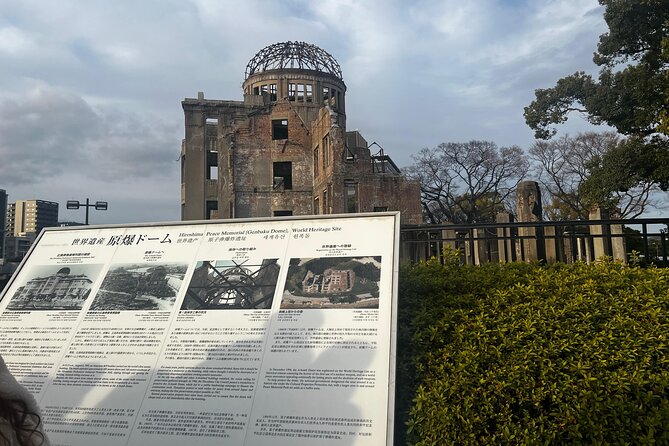
The walk begins at the Cenotaph erected by volunteers of former executives and employees of Hiroshima Prefecture Chiho Lumber Co., Ltd., at 1-chōme-10-1 Ōtemachi. That is a precise meeting point, so check the map carefully before setting out.
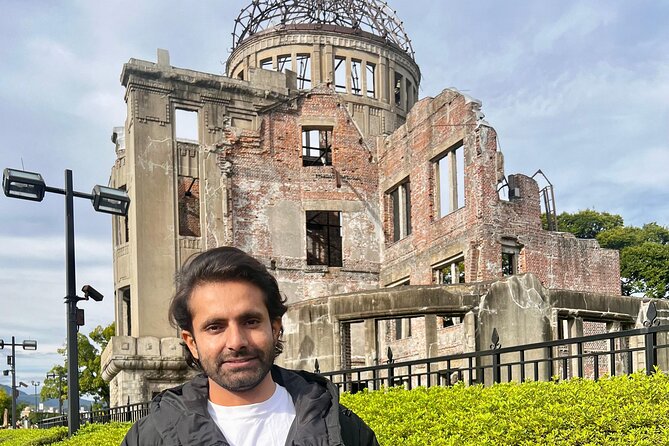
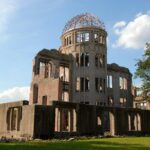
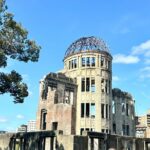
The first major stop is the Atomic Bomb Dome, about 20 minutes into the tour. This is Hiroshima’s most recognizable sight and a UNESCO World Heritage Site. The preserved ruin is only steps from the bomb’s ground zero and is described as the only structure to survive the 1945 blast.
The Dome does not need much decoration from a guide. Its exposed frame and damaged walls do most of the work. What the guide adds is scale and context: you begin to understand that this was not an abstract event in a distant place, but a blast that tore through a working city.
Twenty minutes is a sensible amount of time here. You can look closely, take in the river setting, and ask questions without lingering so long that the opening of the walk becomes repetitive.
Seeing the bomb’s intended target at Aioi Bridge
The next stop is Aioi Bridge, around ten minutes away in the tour sequence. Its unusual T shape made it easy to identify from above, and it was the intended target of the atomic bomb.
The bridge was rebuilt after the war. That detail changes the way you see it. It is not only a location connected to the bombing, but also part of Hiroshima’s return to daily life.
I like the way this stop connects the Dome to the wider city. The Dome can feel like an isolated monument, but Aioi Bridge reminds you that streets, crossings, workplaces, and homes once formed a busy urban center here. The guide can explain that relationship better than a plaque alone.
The stop is brief, at about ten minutes. If you want a long pause for photographs, you may need to do that on your own later.
Peace Clock Tower and Peace Bell
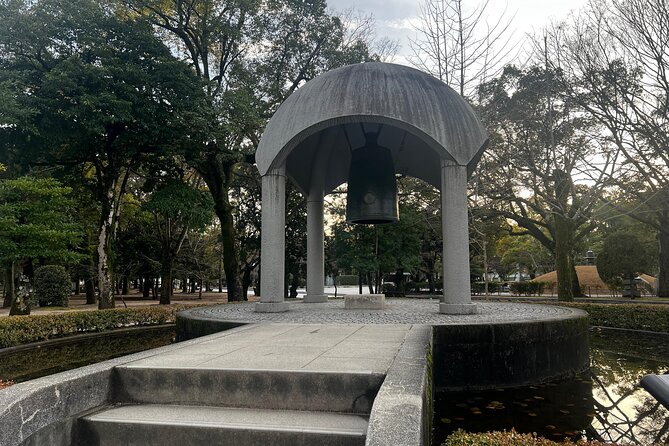
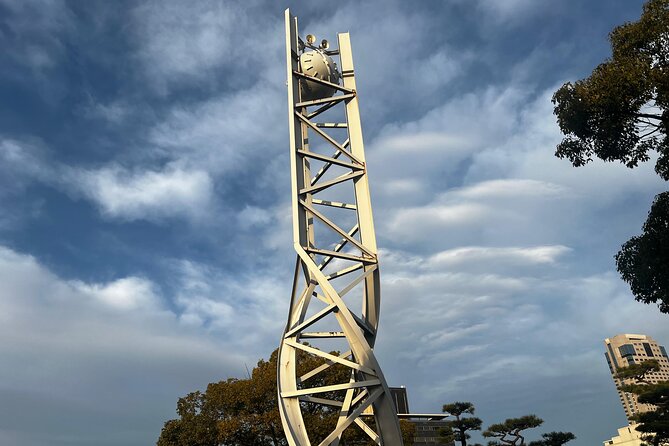
The Peace Clock Tower receives about ten minutes. Its clock chimes at exactly 8:15 AM each day, the time the bomb struck Hiroshima. That daily sound keeps the moment tied to a precise time rather than allowing it to fade into a general story about wartime history.
The Peace Bell offers a more direct act of participation. You are invited to strike it, sending out a deep sound intended to represent a world without war. It is a small action, but it gives the tour a pause from listening. You are asked to take part in the message, not only observe it.
These stops are free and do not require much time. Their value comes from the explanation around them. Without context, a clock and bell could pass quickly. With the guide’s account, they become part of the park’s repeated call for peace.
Remembering Korean victims and survivors
The Monument to Korean Victims and Survivors honors more than 20,000 Koreans who lost their lives in the bombing. Its turtle-shaped design and eternal flame carry a solemn message of grief and remembrance.
This is an important part of the park’s story because it widens the focus beyond the Japanese victims most often associated with Hiroshima. A guided visit helps you notice whose lives are being remembered and why this memorial belongs within the main peace route.
The scheduled time is about ten minutes. That is enough for a focused explanation, though the subject deserves a quiet and respectful approach. This is one place where questions can help you understand the wider human cost without turning the memorial into a long lecture.
A few more Hiroshima tours and experiences worth a look

Paper cranes at the Children’s Peace Monument
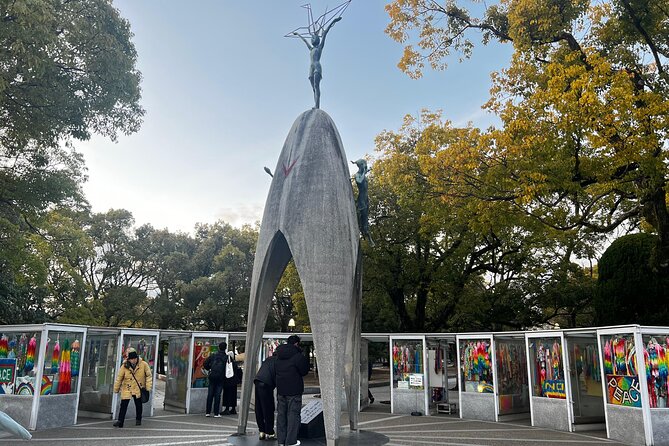
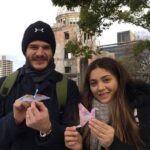
The Children’s Peace Monument is linked to Sadako Sasaki, a young girl who developed leukemia after the bombing and folded a thousand paper cranes while ill. The monument is surrounded by colorful cranes from around the world.
This stop adds a child’s story to the larger history. The cranes are not just decorations. They show how people continue to respond to Hiroshima through hope, remembrance, and a wish for peace.
I find this one of the easier places for families and younger visitors to connect with the subject, although the story itself is sad. The ten-minute visit keeps it focused, and the guide can explain the tradition of paper cranes as part of Hiroshima’s culture.
The Rest House and Eizo Nomura’s basement survival
The Hiroshima Rest House is one of the most striking stops because it tells a personal survival story in a less familiar building. Eizo Nomura was in the basement when the bomb exploded and survived there, making him the only known survivor in the building.
This is the kind of detail that can disappear in a broad museum visit. A preserved landmark may tell you what happened to a structure, but the Rest House gives you one person’s experience within it. I would pay close attention here, since this is likely to be one of the tour’s most memorable stories.
The stop takes about ten minutes. It is also a useful reminder that survival could depend on very specific circumstances, such as being below ground at the moment of the blast. The guide’s role is especially valuable at a site like this, where the building itself does not explain the whole story.
A quiet pause at the National Peace Memorial Hall
The Hiroshima National Peace Memorial Hall for the Atomic Bomb Victims is an underground space devoted to the memory of those who died. Its circular Hall of Remembrance creates a quieter atmosphere than the open park.
The tour allows about 20 minutes here. That is enough to enter, understand the purpose of the hall, and take a moment in the contemplative space. You should not expect a long independent visit at this point. The museum later receives the largest block of time.
The Hall helps change the pace of the walk. After several outdoor monuments and explanations, the underground design encourages silence and reflection. It is a valuable counterpoint to the more visible symbols in the park.
The Flame of Peace, Cenotaph, and Prayer Fountain
The Flame of Peace has burned continuously since 1964. Its stated purpose is to remain lit until the world is free from nuclear weapons. That condition gives the flame an active meaning: it is not only remembering the past, but expressing a demand for change in the future.
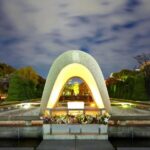
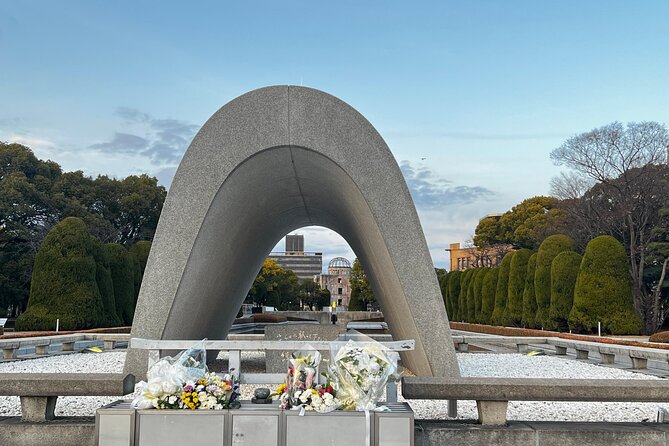
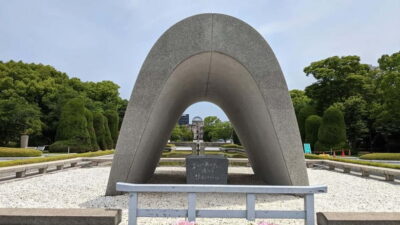
The Memorial Cenotaph for the Atomic Bomb Victims is one of the park’s defining monuments. It holds the names of all known victims. Its stone arch is aligned so that the Peace Flame and Atomic Bomb Dome appear in one line of sight.
That alignment is worth noticing. The view links the victims, the ongoing peace message, and the surviving ruin in a single frame. A guide can point out the line and explain why the placement matters.
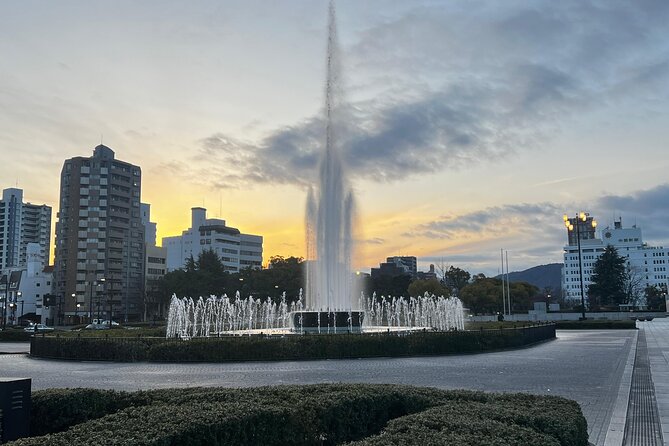
The Prayer Fountain provides another quiet pause. It honors victims who longed for water in their final moments. Its circular form and gentle streams carry a simple message about thirst, suffering, and remembrance.
These stops are given roughly ten minutes where a time is listed, though the walk between them and the museum shapes the actual rhythm. You may want to return to the Cenotaph or fountain later if you prefer a longer private moment.
One hour inside the Peace Memorial Museum
The Peace Memorial Museum receives the longest single block, one hour, and admission is included. Through personal belongings, survivor testimonies, and displays about August 6, 1945, it presents the bombing through human experiences.
This is the emotional center of the tour. The museum is not simply a place to learn dates and military facts. Its exhibits show what the bombing did to individual people, families, and the city. You should be ready for difficult material.
One hour gives you a meaningful introduction, but it is not enough for a slow examination of every display. If museums are central to your visit, plan to return independently for more time, if your schedule permits. The guided route still gives you an advantage because the earlier memorials prepare you to understand what you see inside.
The guide may help connect objects in the museum with places you have already seen outdoors. That relationship is one of the strongest reasons to choose the full walk rather than visiting the museum alone.
Walking through the Gates of Peace
The tour ends at the Gates of Peace, at 4-15 Nakajimachō. Ten tall glass arches carry the word Peace in 49 languages. They line up toward the Cenotaph and Atomic Bomb Dome, continuing the park’s use of sightlines and shared symbols.
Ending here gives the walk a forward-looking final note. You have spent the morning or afternoon looking at ruins, victims, and memories. The gates turn the message outward, using many languages rather than one national voice.
The endpoint is close to the main Peace Memorial Park sights, and the area is near public transportation. You can continue exploring from there, return to a hotel, or use the food advice provided by the guide.
What the private format adds
Only your group takes part, which is a real advantage in a place where questions often matter. You can ask Sheraz to clarify a date, explain a memorial, or pause when a story needs more time.
A private format also helps with the tone of the walk. Some people want a more conversational explanation, while others prefer quiet observation. The available information identifies Sheraz as the guide, and a Dutch participant specifically praised his knowledge of Hiroshima, the atomic bomb, and facts connected to the Netherlands. That suggests he can adapt explanations to a group’s background, though your own experience will depend on the guide assigned.
The tradeoff is that three hours goes quickly. The route lists many stops, most with ten minutes, plus about an hour at the museum. You get broad coverage, but not a slow, detailed visit at every monument.
Timing, price, and practical planning
The tour lasts about three hours and is designed for walking through the Peace Memorial Park area. Most travelers can participate, and the meeting area is near public transportation.
Wear comfortable shoes and allow enough time to find the exact starting point. The listing includes a mobile ticket, so keeping the booking available on your phone is useful.
The $55.77 price includes the entrance fee to the Peace Memorial Museum and cultural and food recommendations. Coffee and tea are not included. Since the outdoor monuments are free, the real value lies in the private guide, the route planning, the explanations, and the museum admission.
For a solo visitor, the price is a bigger commitment. For two or more people sharing a private booking, it becomes easier to justify, especially if you want a structured introduction to Hiroshima rather than piecing together the park on your own.
The food advice is a welcome extra. Hiroshima is known for okonomiyaki and local oysters, and the guide recommends places to try both. You will not eat as part of the tour, but you leave with a practical idea for your next meal.
Who should book this Hiroshima walk
I would choose this tour if you have limited time in Hiroshima and want the main peace sites explained in one compact route. It suits history lovers, peace-focused visitors, first-time guests, and anyone who prefers asking questions instead of reading every sign alone.
Families may appreciate the Children’s Peace Monument and paper crane story, though parents should prepare younger children for serious museum content. The private format makes it easier to adjust the conversation to your group.
You may want a different plan if you prefer to spend several hours at the museum, move at a very slow pace, or explore the park without a guide. The route covers a lot, and the ten-minute stops are designed for orientation rather than extended contemplation.
Should you book the Path to Peace tour?
Book it if you want a focused, personal introduction to Hiroshima’s memorial district. The combination of Sheraz’s detailed explanations, the Rest House survivor story, the Peace Memorial Museum, and the food recommendations gives the three-hour walk more substance than a simple monument circuit.
Skip it if you already know Hiroshima well and want an unhurried museum visit. For everyone else, especially visitors with only one day in the city, the private format and careful route make $55.77 a fair price for a serious and meaningful experience.
FAQ
How long does the Hiroshima Path to Peace tour last?
The tour lasts approximately three hours.
What is included in the tour price?
The price includes the entrance fee and cultural and food recommendations. The Peace Memorial Museum admission is included. Coffee and tea are not included.
Is this a private tour?
Yes. Only your group participates in the private activity.
Who is the guide?
The guide identified for this experience is Sheraz.
Where does the tour start and end?
The tour starts at the Cenotaph erected by volunteers of former executives and employees of Hiroshima Prefecture Chiho Lumber Co., Ltd., at 1-chōme-10-1 Ōtemachi, Naka Ward, Hiroshima. It ends at the Gates of Peace at 4-15 Nakajimachō, Naka Ward, Hiroshima.
Can I cancel the booking?
You can cancel for a full refund up to 24 hours before the experience start time. Cancellations or changes made less than 24 hours before the start time are not accepted for a refund.
More Walking Tours in Hiroshima

More Hiroshima City Tours in Hiroshima
More Peace Memorial Tours in Hiroshima

More tours in Hiroshima we've reviewed



Peace Memorial Tours, compared.
 ★ 4.8Hiroshima Historical Walking Tour – Why A-Bomb was DroppedFrom $352h 30m
 ★ 5.0Hiroshima Peace (Heiwa) Walking Tour at World Heritage SitesFrom $94
 ★ 4.9Hiroshima: Miyajima Peace Memorial Icons of Peace and BeautyFrom $1638 hours
 ★ 5.0Hiroshima Walking Tour Why A Bomb was dropped to HiroshimaFrom $28
 ★ 5.0Hiroshima 2hr Peace Cycling Tour with Local GuideFrom $59
 ★ 4.8Hiroshima: Peace Cycling Tour with Local GuideFrom $522 - 3 hours
