
Reviewed · HIROSHIMA CITY TOURS
Half-Day Hiroshima Highlights Tour
Hiroshima’s story comes into focus on foot, from a carefully shaped garden and castle-town beginnings to the Atomic Bomb Dome area and the quiet rooms of the Peace Memorial Museum. Guides such as Isabella and Subaru have led this route, adding practical help, picture stops, and food tips along the way.
I like the clear four-hour route and the fact that entry fees and public transport are already covered. I also like the balance between beauty, local history, and remembrance, especially the included origami paper for making paper cranes. The main drawback is the pace: three major stops in four hours leave little room to wander or pause for lunch.
In This Review
- Key points
- A four-hour introduction to Hiroshima’s past and present
- Meeting at Hiroshima Station
- Shukkeien Garden: Hiroshima before the hard history
- Castle history and the shape of old Hiroshima
- Peace Memorial Park and the city’s lasting message
- The Peace Memorial Museum takes the final 90 minutes
- How the guide affects the experience
- Walking, public transport, and the pace of the day
- What the $107.50 price includes
- Who should book this Hiroshima tour
- Booking, availability, and cancellation
- Should you book the Half-Day Hiroshima Highlights Tour?
- FAQ
- How long does the Half-Day Hiroshima Highlights Tour last?
- Where does the tour start?
- Where does the tour end?
- Is transportation included?
- Is the Peace Memorial Museum included?
- Is Shukkeien Garden included?
- Does the tour include Hiroshima Castle?
- Is lunch included?
- What language is the tour conducted in?
- How many people can join the tour?
- Is cancellation free?
Key points
- Starts at Hiroshima Station: The meeting point is the Hiroshimaekiminamiguchichikahiroba Information Center, making the tour easy to reach by public transport.
- Shukkeien Garden first: You begin with a peaceful garden and a look at Hiroshima before the city’s most difficult history.
- Castle-town history included: The route explains Hiroshima’s origins during the Sengoku Period and its development as Japan unified.
- Peace sites receive serious attention: You visit key locations connected with Hiroshima’s wartime destruction and later identity as a city of peace.
- Museum entry is built in: The final 90 minutes focus on personal belongings and other exhibits at the Peace Memorial Museum.
- Small group format: The tour has a maximum of 15 people, with an English-speaking guide and transport between activities.
A four-hour introduction to Hiroshima’s past and present
This tour works because it does not treat Hiroshima as only a place of wartime memory. You start with gardens and castle-town history, then move toward the Atomic Bomb legacy. That order gives you a better sense of what was here before 1945 and how the city rebuilt its identity afterward.
The experience costs $107.50 per person. That is not a bargain-basement walking tour, but the price includes an English-speaking guide, admission to all listed locations, public transport between activities, and paper for folding cranes. If you want someone to connect the sites rather than simply point them out, the package offers fair value.
You should expect a focused outing, not a slow day of independent sightseeing. The listed times add up to four hours: one hour at Shukkeien Garden, 90 minutes around the historical and peace-related sites, and 90 minutes at the museum. A maximum group of 15 keeps the outing reasonably personal, though it is still large enough that you may not always be beside the guide.
A few more Hiroshima tours and experiences worth a look

Meeting at Hiroshima Station
The tour begins at the Hiroshimaekiminamiguchichikahiroba Information Center at 9-1 Matsubaracho in Minami Ward. This is a practical starting point because the activity begins near Hiroshima Station and uses public transport during the day.
You will need to make your own way to the meeting point. Transport to the start is not included, and the tour ends back there. Plan to arrive with enough time to find the information center without rushing. A mobile ticket is provided, and confirmation arrives when you book.
Because the route starts and finishes at the same place, it fits neatly into a day built around Hiroshima Station. You can continue sightseeing afterward, return to your hotel, or stop for a meal nearby. The tour itself does not include lunch, so you should eat before setting out or plan a meal after the final return.
Shukkeien Garden: Hiroshima before the hard history
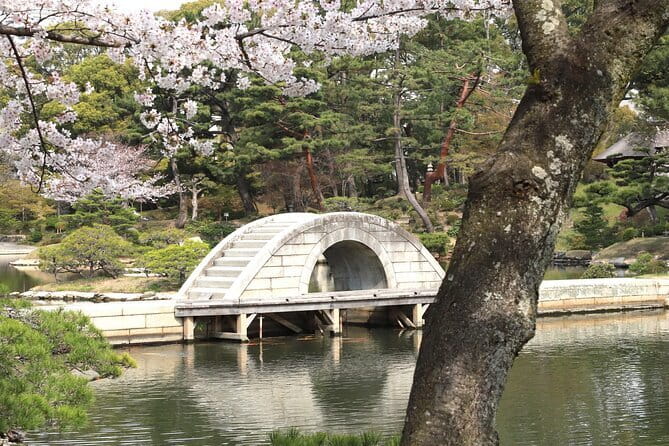
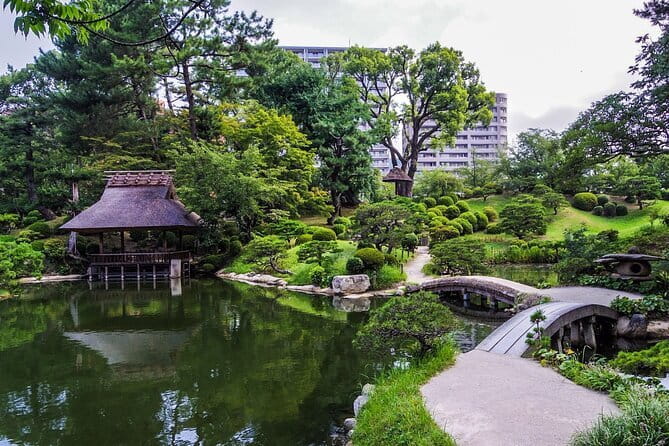
Shukkeien Garden is the right opening stop. Its paths, water features, and carefully arranged scenery offer a quiet introduction to the city. You are not thrown straight into the most painful part of Hiroshima’s past. Instead, you first see a place shaped by taste, planning, and the culture of Japan’s ruling classes.
The guide leads you from the station and provides early context about Hiroshima as you go. Inside the garden, you have about an hour. That is enough time for a guided look and some photographs, but not enough for a leisurely exploration of every corner.
I like this first hour because it gives the day a human scale. Hiroshima was not created by the atomic bombing. It was a castle town with its own political and cultural life long before that event. Starting here helps you remember that the city’s story is larger than one terrible morning.
You should also recognize the trade-off. Shukkeien is a place where you may want to linger, but the schedule keeps you moving. If gardens are your main interest, you may prefer to return on your own later rather than rely on this one-hour visit.
Castle history and the shape of old Hiroshima
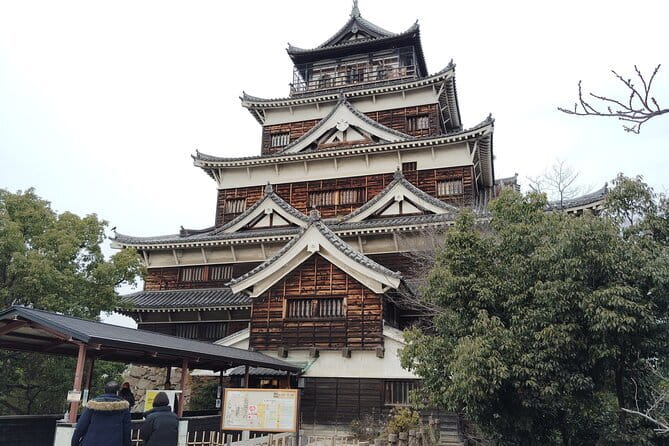
The historical section explains Hiroshima’s origins as a castle town during the Sengoku Period. It also covers the city’s role as Japan unified and developed. This is useful background because it shows how the city grew from a regional center into an important urban place.
The route information includes the Castle Tower, the Ninomaru enclosure, and Hiroshima Gokoku Shrine among the main locations discussed. These sites connect the city to its military, political, and civic past. You get more than a general statement that Hiroshima has an old history. You are shown specific places where that history took shape.
The schedule allows about 90 minutes for this part of the day and the associated peace locations. That means the guide must keep the explanation moving. You can expect an organized introduction rather than a long specialist lecture.
This is also an area where the published stop descriptions combine castle-related places with Hiroshima Peace Memorial Park. The exact order may vary according to the guide and conditions, so you should think of this portion as a connected history walk through central Hiroshima rather than three totally separate visits.
Peace Memorial Park and the city’s lasting message
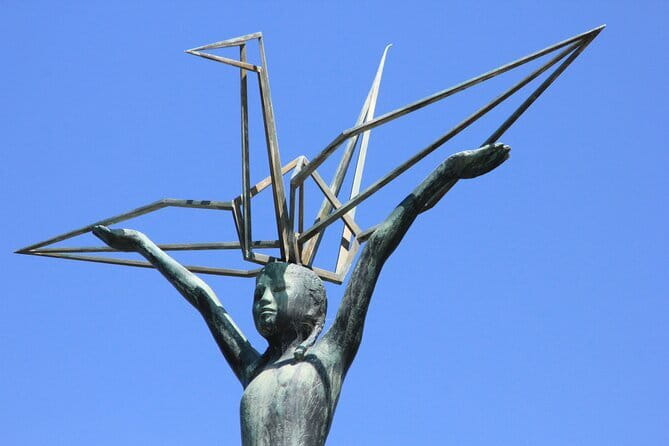
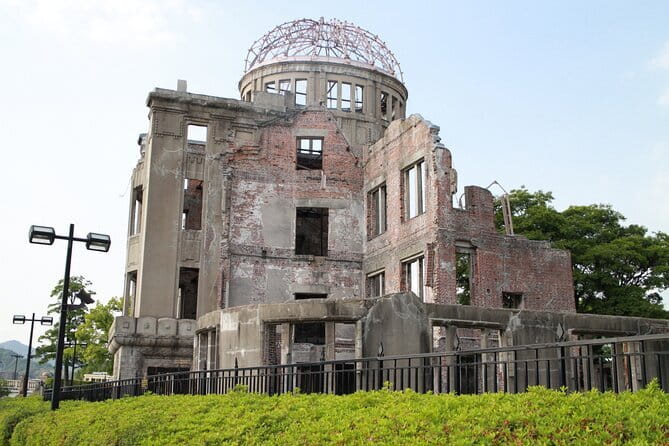
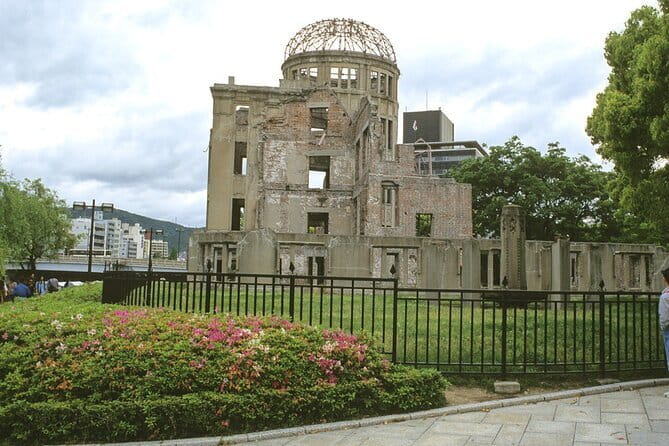
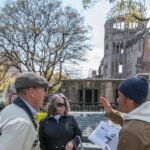
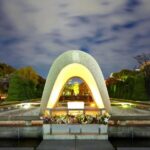
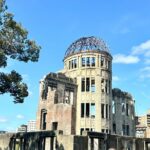
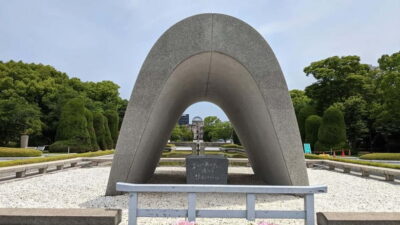
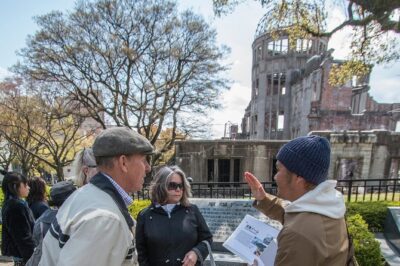
The Peace Memorial Park changes the tone of the tour. Here, the guide explains the purpose and significance of the main sites connected with the atomic bombing and Hiroshima’s later role as a symbol of peace.
The value of having a guide is clear in this setting. A map can show you where buildings and memorials are located, but it cannot always explain why they matter or how they relate to one another. The guide provides that connection while allowing time for photographs and quiet observation.
You should approach this part with patience. The subject is serious, and the experience may feel emotionally heavy even before you enter the museum. The tour is designed to explain and remember, not to turn the site into a quick photo stop.
The included origami paper is a small but thoughtful detail. Paper cranes are closely tied to Hiroshima’s peace message, and folding one gives you a simple way to take part rather than only watch and listen. The information does not specify exactly when the activity happens, so your guide will determine the best point during the route.
A few more Hiroshima tours and experiences worth a look

The Peace Memorial Museum takes the final 90 minutes
The Peace Memorial Museum is the final stop and receives about an hour and a half. This is where the human cost of the bombing becomes most direct. Exhibits include personal belongings left behind by victims, along with material that explains the bombing and its aftermath.
I consider the museum time the central reason to choose this tour over a general city walk. The garden and castle history give you context, but the museum gives that history its human weight. You should not expect light entertainment here. The visit calls for quiet attention and respect.
Ninety minutes is a useful amount of time, though your interests will determine how far you get. If you read every panel slowly, you may need more time than the schedule allows. If you prefer a guided overview with time to absorb the most important exhibits, the allocation should work better.
The guide’s role may be more important before and after the museum than inside every exhibit. You can use the visit to look closely at the displays, then ask questions about what you have seen. The experience is strongest when you give yourself enough mental space for the material, rather than trying to race through it.
How the guide affects the experience
This is a guide-led tour, and the individual guide will shape the day. Isabella and Subaru are names associated with this experience. Isabella is described as cheerful, willing to allow time for photographs, and helpful with okonomiyaki suggestions. Those details matter because a good city guide does more than recite dates.
You may appreciate the balance between serious history and ordinary life. Hiroshima is also a place to eat, walk, and enjoy, and advice about okonomiyaki can help you continue the day in a more local direction. Food recommendations are not part of the formal inclusions, but they can be a useful extra.
The maximum group size is 15. That is small enough for questions and conversation, but it is not a private tour. If you want a completely flexible pace, a private guide would suit you better. If you like having company and a set route, this size should feel manageable.
English is the guiding language listed. The tour is intended for most people who can participate in a regular walking and public-transport outing. The supplied information does not give a detailed accessibility statement, so you should ask the operator directly about any mobility needs before booking.
Walking, public transport, and the pace of the day
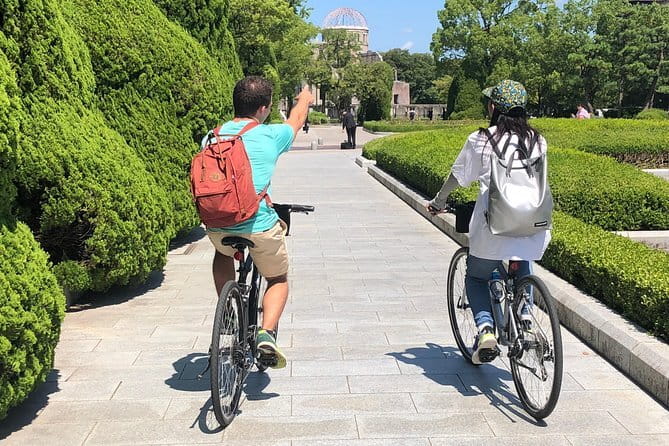
Transport between activities uses public transport, and it is included in the price. This is practical for seeing several parts of central Hiroshima without arranging buses or routes yourself. It also makes the experience feel more like a real city outing than a sealed coach excursion.
You should wear comfortable shoes and expect a fair amount of movement. The tour lasts four hours and includes a garden, outdoor historical sites, a park, and a museum. The information does not specify the exact walking distance or transport lines, so do not assume that every section is step-free or that you will spend most of the day seated.
The pace favors first-time orientation. You will cover several important places, hear how they connect, and return to the station with a usable sense of the city. The cost of that efficiency is limited free time. You will not have much room for a long café stop, an unplanned detour, or an extended museum visit.
What the $107.50 price includes
The strongest value comes from the bundle. You receive:
- An English-speaking guide
- Admission to Shukkeien Garden
- Admission to the listed historical and peace sites
- Admission to the Peace Memorial Museum
- Public transport between activities
- Origami paper for paper cranes
Lunch, accommodation, and transport to the meeting point are not included. You should also remember that the tour ends at the original meeting point, so any onward transport is your responsibility.
At $107.50, the experience makes most sense if you would otherwise pay separately for entry fees, navigate public transport, and research the history yourself. It is less attractive if you already know Hiroshima well and prefer to visit the museum at your own pace.
The small group and guide add value, especially for a first visit. You are paying for structure and explanation as much as for admission. The package also removes some of the day’s planning work, which can be welcome when you have limited time in the city.
Who should book this Hiroshima tour
I would recommend this outing to a first-time visitor with only half a day available. It gives you gardens, castle-town history, Peace Memorial Park, and the museum without requiring you to build the route yourself.
It also suits you if you want historical context before entering the museum. That sequence can make the experience more meaningful because you first learn about Hiroshima as a city, not only as the site of the atomic bombing.
Families and mixed-interest groups may like the variety. Shukkeien offers visual appeal, the castle section adds older Japanese history, and the peace sites provide the serious core of the visit. Most people can participate, according to the activity information, but you should still check with the operator if walking or public transport could be difficult for you.
I would hesitate if your main goal is a long, reflective museum visit. The 90-minute museum slot is useful, but a dedicated museum visit would give you more control. I would also hesitate if you dislike fixed schedules or group touring.
Booking, availability, and cancellation
The tour is often booked about 50 days ahead, which suggests that planning early is sensible, especially for a particular travel date. The group limit is 15, and all listed activities remain subject to availability. If a venue cannot confirm the planned visit, the operator may contact you about an adjustment or alternative.
Free cancellation is available when you cancel at least 24 hours before the local start time. A cancellation made less than 24 hours before the start is not refundable, and changes inside that window are not accepted. Keep the local cut-off time in mind if you are booking from another time zone.
Should you book the Half-Day Hiroshima Highlights Tour?
Book it if you want a well-shaped first look at Hiroshima, with an English-speaking guide to connect the city’s castle origins, garden culture, wartime destruction, and peace message. The included admissions and public transport make the $107.50 price easier to justify, and the small group limit should keep the experience from feeling unwieldy.
Skip it if you want to set your own pace, spend several hours in the museum, or explore Hiroshima without a fixed route. For most first-time visitors with four hours to spare, though, this is a thoughtful and efficient choice. You leave with more than a list of memorials. You gain a clearer sense of the city that existed before the bombing and the city Hiroshima chose to become afterward.
FAQ
How long does the Half-Day Hiroshima Highlights Tour last?
The tour lasts approximately four hours.
Where does the tour start?
It starts at the Hiroshimaekiminamiguchichikahiroba Information Center, 9-1 Matsubaracho, Minami Ward, Hiroshima, 732-0822, Japan.
Where does the tour end?
The activity ends back at the meeting point.
Is transportation included?
Public transport between the activities is included. Transportation to the meeting point is not included.
Is the Peace Memorial Museum included?
Yes. Entry fees at all tour locations, including the Peace Memorial Museum, are included.
Is Shukkeien Garden included?
Yes. The tour includes about one hour at Shukkeien Garden, with admission included.
Does the tour include Hiroshima Castle?
The route covers castle-related locations including the Castle Tower, Ninomaru enclosure, and Hiroshima Gokoku Shrine.
Is lunch included?
No. Lunch is not included.
What language is the tour conducted in?
The tour includes an English-speaking guide.
How many people can join the tour?
The maximum group size is 15 people.
Is cancellation free?
Yes, you can cancel for a full refund if you cancel at least 24 hours before the experience start time. Cancellations or changes made less than 24 hours before the start are not accepted for a refund.
More Half-Day in Hiroshima
More Hiroshima City Tours in Hiroshima
More tours in Hiroshima we've reviewed



Hiroshima City Tours, compared.
 ★ 5.0Peaceful Hiroshima & Miyajima UNESCO 1 Day Bus TourFrom $129
 ★ 4.9Hiroshima: Hiroshima and Miyajima UNESCO Sites 1-Day TourFrom $1228 hours
 ★ 5.0Hiroshima / Miyajima Full-day Private Tour with Government Licensed GuideFrom $202
 ★ 4.7Osaka/Kyoto: Hiroshima Miyajima Bus Tour & Shinkansen TicketFrom $27712 hours
 ★ 4.8Hiroshima Historical Walking Tour – Why A-Bomb was DroppedFrom $352h 30m
 ★ 5.0Hiroshima Peace (Heiwa) Walking Tour at World Heritage SitesFrom $94
