
Reviewed · HIROSHIMA CITY TOURS
Hiroshima Local Life Walking Tour (Private)
Hiroshima’s story does not end at the Peace Memorial Park. This private walk takes you through samurai-era roads, neighborhood shrines, local shops, and postwar buildings, then finishes at Okonomimura, the city’s famous okonomiyaki center. It gives you a useful second look at a city often reduced to one tragic chapter.
I like the close-up contact with everyday Hiroshima, especially the tea shop and hanko maker visits. I also like the Memorial Cathedral for World Peace, a quieter and less expected place to reflect on the atomic bombing. The main drawback is time: two hours goes quickly, and lunch at Okonomimura is not included.
In This Review
- Key points at a glance
- Starting under the Hondori shopping arcade
- Ebisu Shrine and the city’s working traditions
- The Memorial Cathedral for World Peace
- Fukuya department store and the traces of the bombing
- Tea shops, hanko, and small pieces of Japanese culture
- Okonomimura: learning Hiroshima’s signature dish
- What the private format changes
- Who should book this Hiroshima walk?
- Price, timing, and cancellation details
- Should you book it?
- FAQ
- Where does the Hiroshima Local Life Walking Tour begin?
- Where does the tour end?
- How long does the tour last?
- Is this a private tour?
- Is lunch included?
- Are transportation costs included?
- What happens if the weather is poor?
Key points at a glance
- A private walk through central Hiroshima: Only your group joins the tour, so you can ask questions and set the pace within the planned route.
- Local stops beyond the standard circuit: Ebisu Shrine, a traditional tea shop, and a hanko maker offer a look at working city life.
- A meaningful postwar story: The Memorial Cathedral for World Peace and Fukuya department store connect Hiroshima’s present to its difficult past.
- Okonomiyaki without a rushed meal: You learn how Hiroshima-style okonomiyaki developed and tour Okonomimura, though food costs extra.
- A guide-led introduction to the city: Sachi has guided this experience, and one past walk also included a colleague who was a former chemistry teacher.
- Good value for a short stay: At $65.15 per person, the price makes the most sense for couples, families, or solo visitors who want local context in a compact format.
Starting under the Hondori shopping arcade
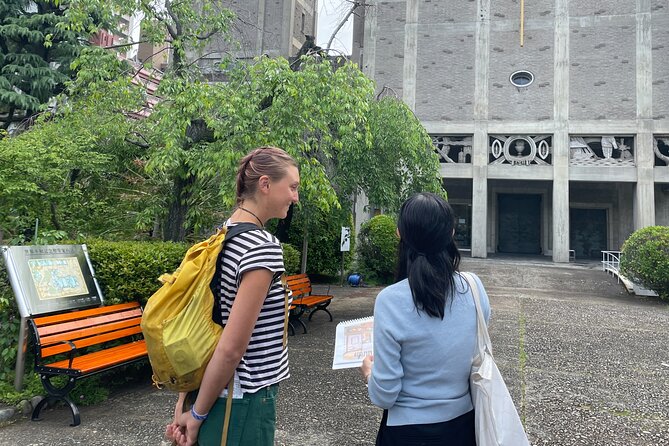
The meeting point is the Starbucks Coffee at 9-1 Hondori, near Hiroshima’s central Hondori Shopping Arcade. The tour begins at 10:00 a.m. and returns to the same area after roughly two hours.
Hondori is a practical starting place because it puts you in the middle of Hiroshima’s main shopping district. The opening part of the walk covers Hiroshima Prefecture and the history of Hondori, along with the Kinzagai shop street. You get a quick orientation before moving away from the main commercial strip.
That contrast is part of the appeal. You begin in a familiar city center, with shops and pavement underfoot, then turn toward smaller streets where the pace feels more local. The guide can explain what you are seeing instead of leaving you to guess why a particular street, building, or shrine matters.
Do not expect a long history lecture here. The first stop lasts about 20 minutes, so the introduction is brief by design. It works best as a setup for the rest of the walk, not as a full lesson on Hiroshima’s past.
A few more Hiroshima tours and experiences worth a look

Ebisu Shrine and the city’s working traditions
Ebisu Shrine has been cared for by the local community for about 400 years. The shrine honors Ebisu, a deity associated with business prosperity, making it a fitting stop in a commercial part of Hiroshima.
I like this stop because it connects religion with ordinary urban life. You are not visiting a large, isolated temple complex. Instead, you see a place that has served the people and businesses around it for generations.
The tour allows about 20 minutes here. That is enough time to look around, hear how the shrine fits into local life, and ask your guide about Japanese religious customs. Sachi’s role matters at a stop like this. A small shrine can be easy to pass without noticing, but a local explanation gives it purpose.
You should keep your expectations sensible. This is not a major sightseeing monument with a long list of rooms and displays. Its value lies in the connection to the neighborhood, and in seeing how a local place of worship continues to sit within a busy modern city.
The Memorial Cathedral for World Peace
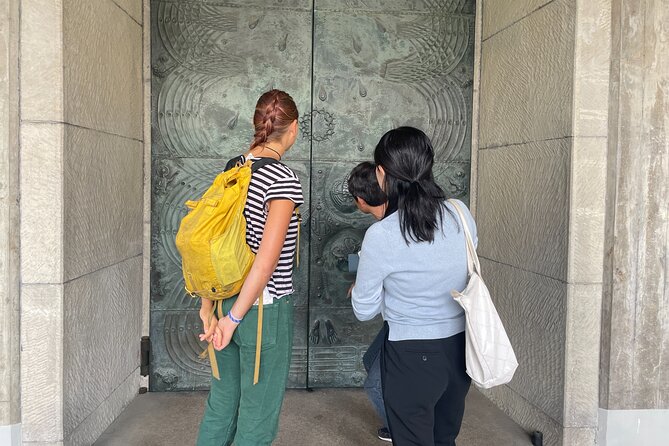
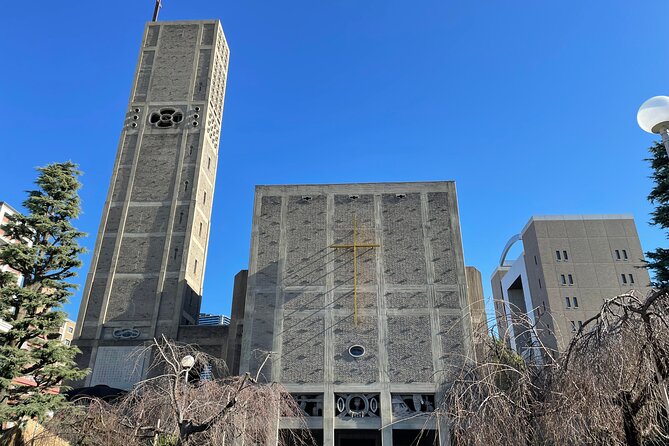
The Catholic Noboricho Church, also called the Memorial Cathedral for World Peace, is the emotional center of the walk. The church was built to remember those killed by the atomic bombing and to pray for world peace.
It was the first postwar building designated an Important Cultural Property. That detail gives the building significance beyond its religious function. It represents Hiroshima’s effort to rebuild and to create a place where remembrance and peace could continue after the war.
The visit lasts about 30 minutes, making it the longest stop on the route. That extra time is welcome. You can take in the setting, hear the story behind the cathedral, and consider a side of Hiroshima’s memorial culture that many short visits miss.
I especially like the balance here. The city’s atomic bomb story is essential, but the usual focus tends to be the Peace Memorial Museum and the A-Bomb Dome. This church offers another angle: faith, mourning, reconstruction, and a public wish for peace.
A portion of the tour proceeds goes toward preserving the cathedral. That gives the admission-free visit a practical connection to the building’s future. You are not simply passing through a historic place; your booking helps support its care.
The stop may be less suitable for anyone hoping for a fast-paced sightseeing route. It asks you to slow down. For most people, that is a strength, but if your main goal is food and shopping, the cathedral takes a meaningful share of the two-hour schedule.
Fukuya department store and the traces of the bombing
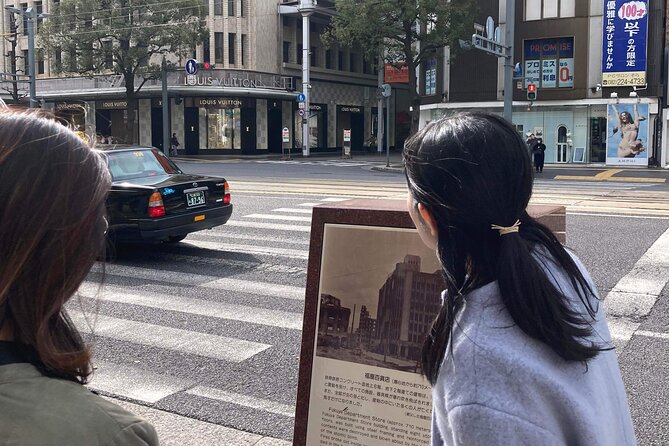
Fukuya’s Hatchobori main store provides another link between present-day Hiroshima and the atomic bombing. The building has been preserved and remains in use, allowing you to see how a modern commercial site can also carry physical reminders of the past.
This is a useful stop because it moves the history away from memorial grounds and into daily life. You are looking at a building that people still use, rather than only visiting a site set apart for remembrance.
The scheduled time is about 20 minutes. Your guide can explain what makes the building important and point out details you might miss on your own. The experience is less about sightseeing inside a department store and more about understanding how Hiroshima rebuilt itself around surviving structures.
The description does not promise a museum display or a long interior visit, so keep that in mind. This is a contextual stop, not a major attraction with a large collection. Its power comes from the connection between an ordinary building and an extraordinary event.
Tea shops, hanko, and small pieces of Japanese culture
The tour’s most personal moments may come from visits to traditional businesses, including a tea shop and a hanko maker. A hanko is a personal seal used in Japan, and learning about its production gives you a practical look at a custom that is easy to overlook as a visitor.
These stops help the tour feel different from a standard city walk. You are not only looking at old buildings. You are learning how objects, shops, and customs fit into Japanese life.
The tea shop adds another everyday point of contact. You can hear about tea culture and see how a traditional specialty is presented in a working business. The information available does not specify a tasting, so do not book this expecting food or drink to be included. The value is in the explanation and access to a local setting.
I would pay close attention during these visits and ask questions. They are likely to be most rewarding for visitors who enjoy craft, food traditions, and small cultural details. If you want only major monuments, these stops may seem modest. If you like understanding how people live, they are exactly the sort of additions that make a short tour worthwhile.
One past walk was led by Sachi with a colleague who had worked as a chemistry teacher. That colleague offered clear explanations during the route. The guide arrangement can vary, but the experience has included more than one local voice.
Other walking tours we've reviewed in Hiroshima

Okonomimura: learning Hiroshima’s signature dish
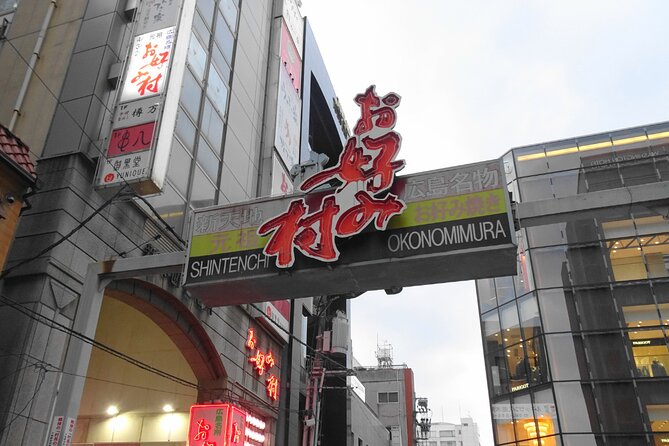
The final major stop is Okonomimura, a building filled with restaurants serving Hiroshima-style okonomiyaki. The guide introduces the dish, explains its history, and takes you through the building so you can see how this local specialty is prepared and served.
Okonomiyaki is often described as a Japanese savory pancake, but Hiroshima’s version has its own identity. The tour’s purpose is not simply to point you toward lunch. It gives you the background you need to understand why the dish matters in Hiroshima.
The stop lasts about 30 minutes. That is enough for a tour of the building and an introduction, but not necessarily enough for a leisurely meal. Lunch is not included, and the tour returns to the starting area, so you will need to decide if you want to eat afterward or continue on your own.
That separate meal cost is worth planning for. The $65.15 price covers the guide fee, not food or private transportation. If you join with a partner or family, the private format spreads the cost across your group and makes the price easier to justify. For a solo visitor, it is still reasonable if you value personal guidance, but you should compare it with a larger group walk if keeping costs low is your main goal.
What the private format changes
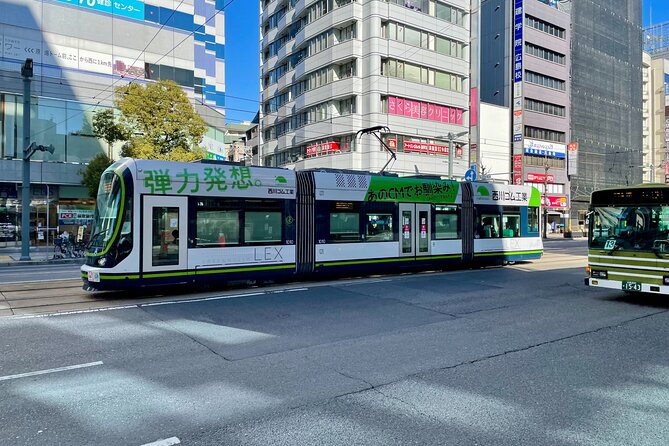
Only your group participates, which gives the walk a more relaxed feel than a large scheduled tour. You can ask about the atomic bombing, local religion, food, or Japanese customs without waiting for a whole busload of people to move on.
The private setup also suits families and couples who want to stay together. Most people can participate, service animals are allowed, and the route is near public transportation. No private transport is provided, so you should expect to walk between the central stops.
The route covers several locations in a short time. You will get the most from it if you are comfortable walking and interested in listening while moving through city streets. The schedule is not built around long shopping breaks or a full sit-down meal.
At 10:00 a.m., the timing works well as a first activity in Hiroshima. It gives you context before you spend more time at the city’s major memorial sites, or it can fill a short morning if you have only a few days in town.
Who should book this Hiroshima walk?
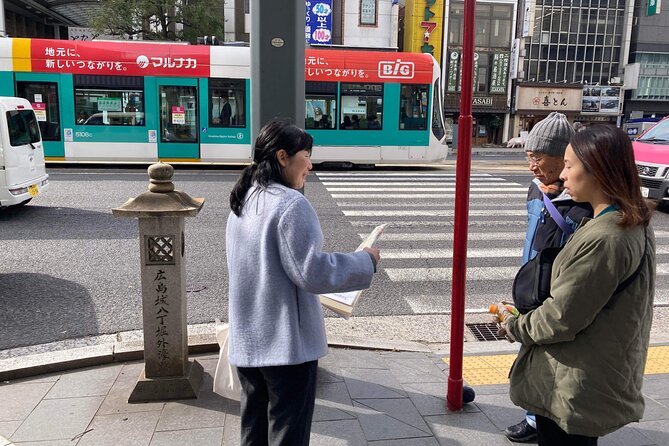
I would recommend it most strongly to first-time visitors who want more than the main memorial attractions. It is also a good choice for people with limited time, since the route brings together local culture, religious history, postwar rebuilding, and food in about two hours.
Families may appreciate the variety. A shrine, church, department store, local shops, and okonomiyaki provide several different subjects, so the walk does not depend on one long museum visit. Couples and solo visitors benefit from the private format and the chance to ask detailed questions.
The tour is less ideal if you want a formal Peace Memorial Museum visit, a full meal, or extensive time at each site. None of those is the focus. This is a compact city walk that adds human scale to Hiroshima.
Its 100 percent recommendation rate from 11 ratings and a five-star overall score point to strong satisfaction, but the sample is small. I would treat that as encouraging rather than final proof. The clear pattern is that the tour works best for people who value lesser-known streets, local businesses, and explanations from a guide such as Sachi.
Price, timing, and cancellation details
The listed price is $65.15 per person. Since the tour is private, that fee can offer good value when shared by a couple or family. You are paying for a guide’s time and local interpretation, not entry tickets, because the listed stops have no admission charge.
Lunch is extra, and transportation is not included. Plan for those costs separately, especially if you want to eat at Okonomimura after the tour’s 30-minute introduction.
The tour is commonly booked about 25 days ahead, so reserve early if your Hiroshima dates are fixed. You receive confirmation when booking, and the ticket is mobile, which keeps arrival simple.
Free cancellation is available until 24 hours before the 10:00 a.m. start time for a full refund. Changes or cancellations inside that window are not accepted and are not refunded. The experience requires good weather, so if poor conditions force cancellation, you are offered another date or a full refund.
Should you book it?
Book this walk if you want Hiroshima to feel like a living city, not only a memorial destination. The strongest parts are the quiet central streets, Ebisu Shrine, the Memorial Cathedral, the preserved Fukuya building, and the visits connected with tea and hanko culture.
The tour is short, private, and focused. That makes it a smart addition to a first Hiroshima visit, especially when you have limited time and want a local guide to connect the pieces. Just remember that lunch is separate, the route involves walking, and two hours will not allow long visits at every stop.
If you want the Peace Memorial Museum, the A-Bomb Dome, and a full okonomiyaki meal all in one experience, choose a longer or more specialized tour. If you want a thoughtful introduction to Hiroshima’s ordinary streets and its rebuilding after catastrophe, this is a well-priced way to begin.
FAQ
Where does the Hiroshima Local Life Walking Tour begin?
It begins at Starbucks Coffee at 9-1 Hondori, Naka Ward, Hiroshima. The start time is 10:00 a.m.
Where does the tour end?
The walk ends back at the meeting point in the Hondori area.
How long does the tour last?
The tour lasts approximately two hours.
Is this a private tour?
Yes. Only your group participates in the activity.
Is lunch included?
No. Lunch is not included. The visit to Okonomimura introduces Hiroshima-style okonomiyaki and tours the building, but you pay separately for any meal.
Are transportation costs included?
No. Private transportation is not included. The tour takes place on foot and is near public transportation.
What happens if the weather is poor?
The experience requires good weather. If it is canceled because of poor conditions, you can choose another date or receive a full refund. You can also cancel up to 24 hours before the start time for a full refund.
More Private Tours in Hiroshima

More Walking Tours in Hiroshima
More Hiroshima City Tours in Hiroshima
More tours in Hiroshima we've reviewed


Hiroshima City Tours, compared.
 ★ 5.0Peaceful Hiroshima & Miyajima UNESCO 1 Day Bus TourFrom $129
 ★ 4.9Hiroshima: Hiroshima and Miyajima UNESCO Sites 1-Day TourFrom $1228 hours
 ★ 5.0Hiroshima / Miyajima Full-day Private Tour with Government Licensed GuideFrom $202
 ★ 4.7Osaka/Kyoto: Hiroshima Miyajima Bus Tour & Shinkansen TicketFrom $27712 hours
 ★ 4.8Hiroshima Historical Walking Tour – Why A-Bomb was DroppedFrom $352h 30m
 ★ 5.0Hiroshima Peace (Heiwa) Walking Tour at World Heritage SitesFrom $94
