
Reviewed · PEACE MEMORIAL TOURS
Hiroshima: A tour guide to Peace Park and Miyajia Island
The best reason to book this Hiroshima day tour is that it links two very different places in one manageable outing: Peace Memorial Park, where the city faces its painful past, and Miyajima, home to Itsukushima Shrine, the famous floating torii, a pagoda, aquarium, and mountain views. The guide, Khan, has lived in Hiroshima for more than 25 years and knows the city streets well.
I like the small group limit of six, which should make questions and conversation easier than on a large coach tour. I also like the practical setup: transport and entry tickets are included, and the guide can speak English, Japanese, Hindi, Russian, and Spanish. The main caution is reliability. One booking ended badly when the guide did not arrive, so confirm your meeting details and contact information before the day.
In This Review
- Key points at a glance
- Two sides of Hiroshima in one day
- Starting at the Atomic Bomb Dome
- Two hours in Peace Memorial Park
- Crossing to Miyajima for three hours
- Itsukushima Shrine and the Otorii
- Goju-no-to, the aquarium, and the mountain cable car
- Why the small group matters
- Khan’s local knowledge and language options
- What the $129 price includes
- Reliability and planning before you go
- Who should book this Hiroshima day tour?
- Should you book it?
- FAQ
- How long does the Hiroshima and Miyajima tour last?
- Where does the tour start and finish?
- What languages are available?
- Are transport and entry tickets included?
- How many people are in the group?
- Can I cancel the booking?
Key points at a glance
- Two major Hiroshima sights in one day: Visit Peace Memorial Park and Miyajima without arranging separate tours.
- Khan’s local experience: The guide has lived in Hiroshima for more than 25 years and knows city shortcuts.
- Miyajima offers more than the shrine: You can see the five-story Goju-no-to Pagoda, visit the aquarium, and take the cable car toward the mountain.
- Small-group format: The group is limited to six people, making the day more personal.
- Transport and entry tickets included: The $129 price covers core tour costs, though food and souvenirs are extra.
- Flexible booking terms: You can cancel up to 24 hours ahead for a full refund and reserve without paying immediately.
Two sides of Hiroshima in one day
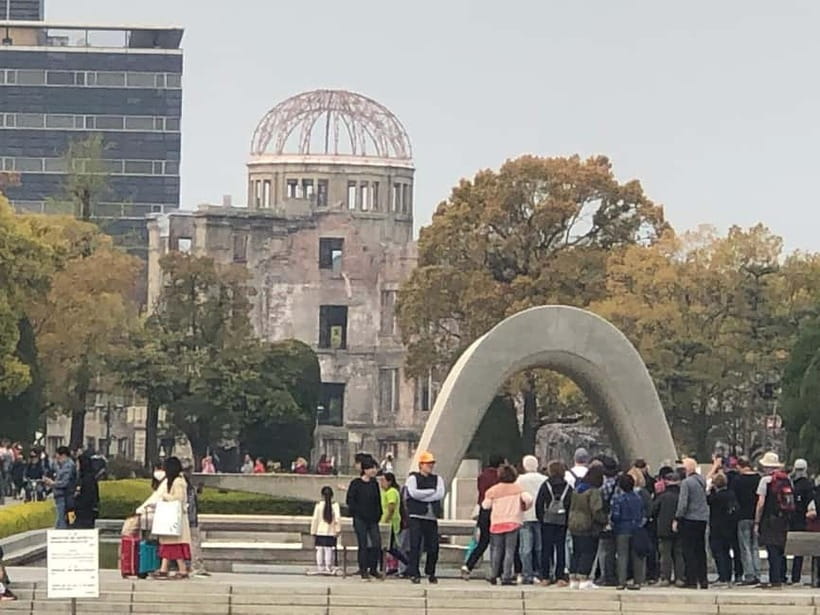
This tour works because it puts Hiroshima’s modern memory and older cultural traditions side by side. In the morning, you face the Atomic Bomb Dome and Peace Memorial Park. Later, you cross to Miyajima, where a centuries-old shrine, a tall pagoda, and mountain scenery create a very different mood.
That contrast is useful. Peace Park asks for quiet attention and reflection. Miyajima gives you room to look upward, walk around, and enjoy the island’s religious buildings and views. You get a fuller sense of Hiroshima than you would from visiting only the memorials or only the island.
The day begins at the Atomic Bomb Dome and returns there. Pickup can also be arranged from a station, hotel, or another agreed meeting point. Since the exact starting time depends on availability, check the schedule before booking transport or other evening plans.
A few more Hiroshima tours and experiences worth a look
Starting at the Atomic Bomb Dome
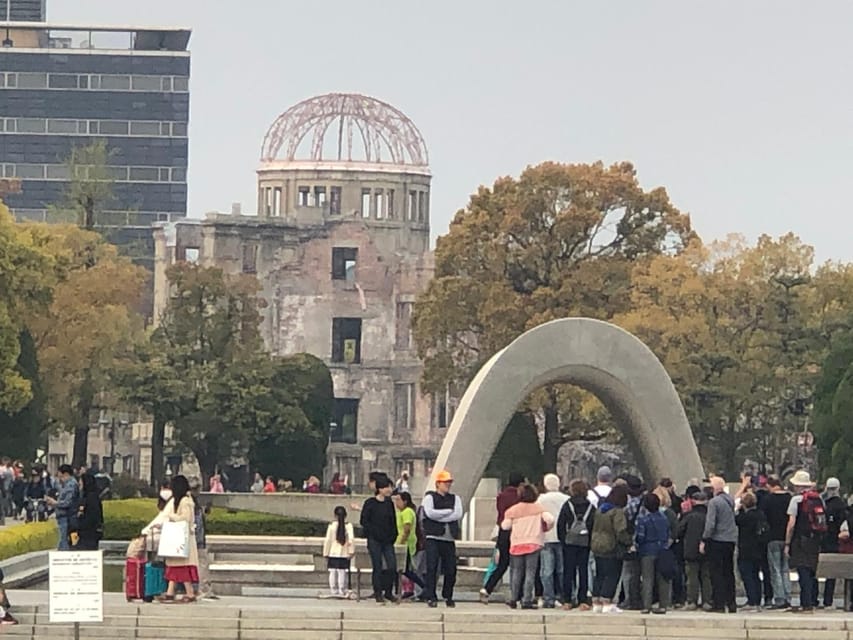
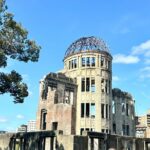
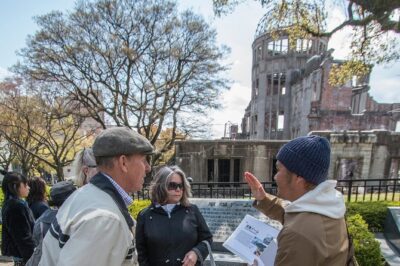
The Atomic Bomb Dome is the natural place to begin. It gives you a clear visual anchor for Hiroshima’s wartime story and puts you close to the main Peace Memorial Park area.
Starting here also keeps the first part of the day simple. You do not need to find a remote meeting point or make your way to a separate tour office. If you are staying near a station or hotel elsewhere in the city, ask in advance about the most convenient pickup arrangement.
Khan’s long familiarity with Hiroshima is especially useful at this stage. The tour description says he knows the city streets and shortcuts well, including alternatives during traffic jams. That matters because a full-day outing involving both central Hiroshima and Miyajima can lose time if transport is poorly handled.
Still, local route knowledge is not a guarantee against delays. Keep your schedule open around the tour, especially if you have a train, flight, or dinner reservation that cannot be changed.
Two hours in Peace Memorial Park
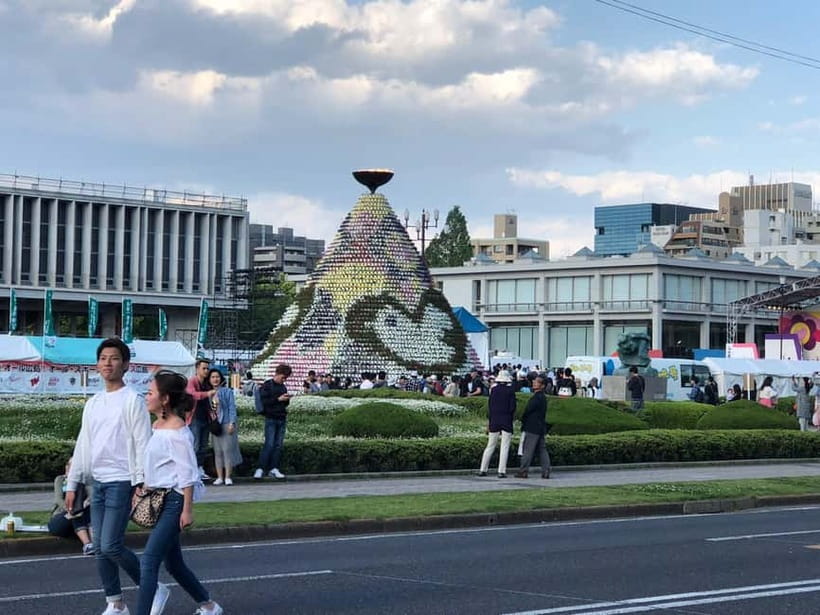
The guided visit to Hiroshima Peace Memorial Park lasts about two hours. That is enough time for a meaningful introduction without making the entire day about one site.
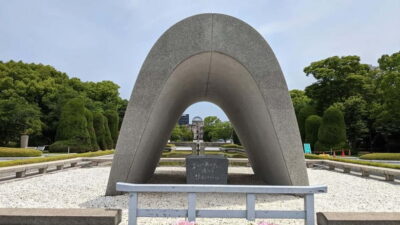
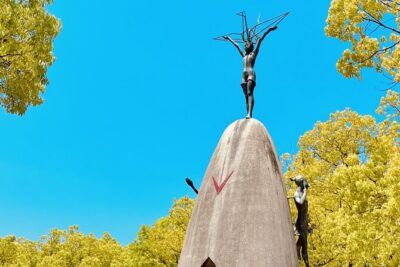
The park is not just a green space with a few monuments. It is the place where Hiroshima presents its account of the atomic bombing, the people affected, and the city’s call for peace. Your guide can help connect the visible memorials with the broader story of Hiroshima, its culture, and its recovery.
You should expect this section to be serious. It is not a sightseeing stop to rush through with a camera. A guide can help you understand why the Atomic Bomb Dome remains preserved and how the park fits into the city today.
Two hours is a useful middle ground, but it may feel short if you want to examine every memorial or spend a long time at museums and exhibits. The supplied details specifically promise a guided park visit, not a separate museum program. If the museum is important to you, ask before booking whether it is part of the route and how entry time would affect Miyajima.
I like having this visit first. It gives the day an emotional and historical center before you move on to the more scenic island portion.
Crossing to Miyajima for three hours
The Miyajima portion lasts about three hours. This is the part of the tour where the included transport can save you planning time, particularly if you are unfamiliar with the route from central Hiroshima.
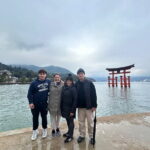
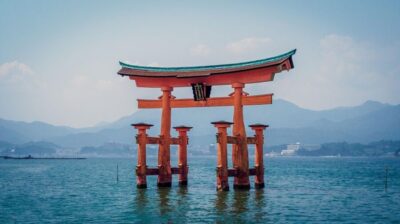
Miyajima is best known for Itsukushima Shrine and its large torii gate, often called the Otorii. The shrine began in 593 and reached its present form in 1168. The torii was built from camphor wood, adding a fine detail to look for when your guide explains the structure.
The shrine is the main reason most people come, but three hours gives you a chance to see more than one building. You can also look for Goju-no-to, a five-story pagoda built in 1407. It rises about 27 meters and combines Japanese and Chinese architectural features.
That detail makes the pagoda worth a proper stop rather than a quick photograph from a distance. Its age and design show that Miyajima is not only a scenic island. It is also a place where religious architecture and older building traditions remain central to the visit.
The available time will require choices. You might spend longer at Itsukushima Shrine, visit the aquarium, look at Goju-no-to, or take the cable car toward the mountain. You should ask Khan how the three hours are normally divided, since the supplied details do not promise that every attraction is included in the walking portion.
Itsukushima Shrine and the Otorii
Itsukushima Shrine is the cultural heart of the Miyajima visit. Its long history gives the island a sense of continuity, and the location makes the shrine especially memorable.
The large torii is the feature most people recognize, but do not treat it as the entire shrine experience. Look at the relationship between the gate, the water, and the shrine buildings. The setting is part of the appeal.
The tour information does not specify the tide or guarantee a particular view of the gate. That is worth remembering when you arrive with a fixed mental picture from photographs. The appearance of the torii can change with conditions, so ask about the best viewing point on the day.
A guide is valuable here because dates and architectural details can pass quickly when you are exploring alone. Khan can also explain how the shrine fits into the wider culture of Miyajima and Hiroshima.
A few more Hiroshima tours and experiences worth a look
Goju-no-to, the aquarium, and the mountain cable car
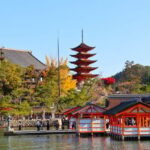
Miyajima gives you several choices beyond Itsukushima Shrine. Goju-no-to is a 27-meter pagoda built in 1407, with Japanese and Chinese design influences. It is one of the island’s strongest stops for architecture.
The island also has an aquarium that attracts both Japanese visitors and people from abroad. The supplied information does not list the aquarium’s exhibits or confirm that admission is part of the included tickets, so ask before treating it as a guaranteed stop.
The cable car offers a different view of Miyajima. It carries you higher into the mountain, where you can see the island and nearby places such as Hatsukaichi, Otake, and Hiroshima. The views are likely to be one of the most rewarding parts of the day, but the tour details do not state that cable car admission is included or that the schedule always allows time for it.
This is where a short private or small-group tour can be helpful. With only up to six people, you can discuss priorities more easily than on a large group outing. If the shrine is your main goal, say so. If the mountain view matters more, mention that before the day begins.
Why the small group matters
A maximum of six participants is one of the tour’s strongest practical features. You are less likely to spend the day waiting for a large crowd to regroup, and it should be easier to ask questions about Hiroshima’s memorials, streets, and cultural sites.
The small group also suits families, couples, and solo visitors who want guidance without the scale of a bus excursion. It may feel more relaxed, particularly because Khan is described as friendly and easygoing.
There is one tradeoff. A small group does not automatically mean a private tour. You may still share the guide with other participants, and the final pace can depend on the group’s interests and mobility.
The activity is wheelchair accessible, which makes it a practical option for people who need that feature. You should still confirm the exact transport and route arrangements when booking, since the supplied information does not explain how every part of the Miyajima route is handled.
Khan’s local knowledge and language options
Khan has been in Hiroshima for more than 25 years. That is useful in a city where a guide’s value is not limited to dates and monuments. Someone familiar with local streets can help you move between major stops and adjust the route if traffic causes trouble.
The tour also lists English, Japanese, Hindi, Russian, and Spanish as available languages. The strongest choice for you depends on the guide assigned and the language requested at booking, so confirm this before paying.
The friendly, relaxed style described for Khan may suit you if formal lectures make sightseeing tiring. Hiroshima’s Peace Park calls for respect, but the whole day does not need to feel stiff. A guide who can explain difficult subjects plainly, then shift naturally to Miyajima’s architecture and views, can make the contrast easier to handle.
The name Khan is associated with the guide for this experience. Because guide availability can change, confirm that Khan will lead your date if that matters to you.
What the $129 price includes
At $129 per person, the price needs to be judged against what you would otherwise arrange yourself. The package includes transport and entry tickets, which removes two costs that can be awkward to estimate in advance.
You are also paying for a full day of guidance, local route planning, and a small group capped at six. That can be fair value if you want both Peace Park and Miyajima but do not want to work out the transport, timing, and order of stops yourself.
Food and souvenirs are not included. Plan for those separately, and do not assume every optional Miyajima attraction is covered by the included tickets. The aquarium and cable car are specifically mentioned as attractions, but the details do not clearly state that both admissions are part of the package.
For an independent visitor who already understands Hiroshima’s transport and wants a slow day, $129 may feel high. For a first visit, a limited schedule, or someone who wants several languages and door-to-door meeting flexibility, the price can make more sense.
Reliability and planning before you go
Most of the available feedback is positive, with three five-star ratings and one one-star rating, producing an overall score of 4.1 from four ratings. The positive comments highlight attentive personal care, an effective guide, and a pleasant individualized experience. One French-speaking participant especially appreciated being taken to Miyajima in the guide’s own vehicle.
That last detail suggests the transport arrangement may be flexible, but it should not be treated as a fixed promise for every booking. The official information says transport is included, while the exact vehicle and route are not specified.
The one serious warning is a missed guide appointment that caused a customer to lose a final day in Hiroshima. That is not a small complaint. Before the tour, make sure you have the confirmed meeting location, start time, guide contact details, and pickup arrangement. If you are being collected from a hotel or station, confirm the exact entrance or meeting spot.
Free cancellation up to 24 hours before the start gives you some protection, and the reserve-now, pay-later option keeps your plans flexible. Those terms help, but they do not replace confirming the appointment close to the tour date.
Who should book this Hiroshima day tour?
I would consider this tour if you want the essential Hiroshima pairing: the Atomic Bomb Dome and Peace Memorial Park, followed by Miyajima’s shrine and scenery. It is particularly useful for first-time visitors who want context rather than a simple transfer between sights.
It also suits people who value conversation, language choice, and a relaxed pace. A group of six is small enough for personal questions, while the included transport removes much of the day’s practical work.
You may want another option if you prefer to spend an entire day at Peace Memorial Park, visit museums in depth, or take your time on Miyajima’s mountain trails. Three hours on the island is enough for a well-chosen selection, but not for every attraction at leisure.
Should you book it?
Book this experience if you want a guided introduction to Hiroshima’s memorial sites and Miyajima in one day, especially if included transport and a small group are worth $129 to you. Khan’s long connection with the city, language choices, and knowledge of alternate routes add real practical value.
Before committing, confirm who your guide will be, whether Khan is assigned, what the transport involves, and which Miyajima admissions are covered. If those details are clear, this is a useful, well-focused day for seeing Hiroshima’s most important sights without having to assemble the route yourself.
FAQ
How long does the Hiroshima and Miyajima tour last?
The experience lasts one day. The guided Peace Memorial Park visit is scheduled for about two hours, and the Miyajima visit is scheduled for about three hours.
Where does the tour start and finish?
The listed start and return point is the Atomic Bomb Dome. Pickup can also be arranged from a station, hotel, or another specific meeting point.
What languages are available?
The activity lists English, Japanese, Hindi, Russian, and Spanish. Confirm your preferred language when booking.
Are transport and entry tickets included?
Yes. Transport and entry tickets are included. Food and souvenirs are not included.
How many people are in the group?
The tour is limited to six participants, making it a small-group experience.
Can I cancel the booking?
You can cancel up to 24 hours in advance for a full refund. The reserve-now, pay-later option lets you book without paying immediately.
More Guided Tours in Hiroshima


More Hiroshima City Tours in Hiroshima
More Peace Memorial Tours in Hiroshima

More tours in Hiroshima we've reviewed



Peace Memorial Tours, compared.
 ★ 4.8Hiroshima Historical Walking Tour – Why A-Bomb was DroppedFrom $352h 30m
 ★ 5.0Hiroshima Peace (Heiwa) Walking Tour at World Heritage SitesFrom $94
 ★ 4.9Hiroshima: Miyajima Peace Memorial Icons of Peace and BeautyFrom $1638 hours
 ★ 5.0Hiroshima Walking Tour Why A Bomb was dropped to HiroshimaFrom $28
 ★ 5.0Hiroshima 2hr Peace Cycling Tour with Local GuideFrom $59
 ★ 4.8Hiroshima: Peace Cycling Tour with Local GuideFrom $522 - 3 hours
