
Reviewed · OKAYAMA & KURASHIKI TOURS
3 Hours Temari Workshop in Kurashiki
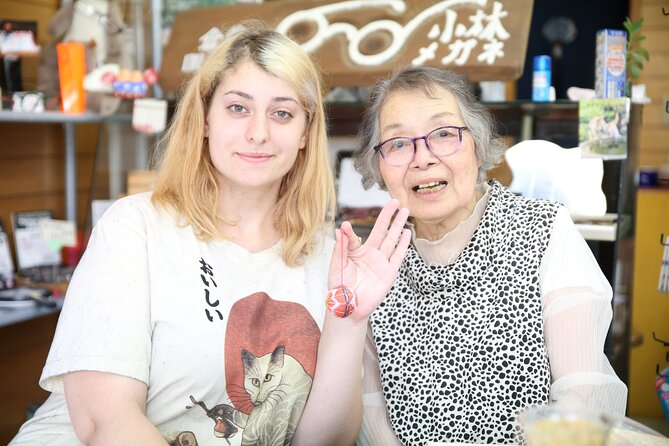
The best part of this three-hour Kurashiki workshop is that you leave with a real handmade object, not just a quick demonstration. Grandma Yasue, who normally runs Kobayashi Eyeglasses, teaches you to embroider a temari ball using a prepared rice-husk core. English-speaking interpreter Keiko helps explain the steps and the craft’s place in local culture.
I like the small maximum of six people, which gives the teaching a personal feel, and I like that the finished temari is useful beyond the workshop. You can display it, turn it into a key chain, or keep it as a compact reminder of Kurashiki. The main consideration is time: three hours of careful embroidery may feel long if you prefer fast sightseeing or do not enjoy detailed handwork.
In This Review
Key points at a glance
- Make your own Kurashiki temari: Embroider a prepared core and choose a pattern for a one-of-a-kind folk craft.
- Learn from Grandma Yasue: The instructor normally runs Kobayashi Eyeglasses and brings hands-on skill and patience to the lesson.
- English support from Keiko: An English-speaking interpreter helps you follow the instruction and understand the craft’s cultural meaning.
- Small group setting: The workshop accepts no more than six people, so you are not lost in a large class.
- Three hours at one location: The activity starts and ends at Kobayashi Eyeglasses in central Kurashiki.
- A flexible souvenir: Use the finished temari as a room decoration, key chain, or personal keepsake.
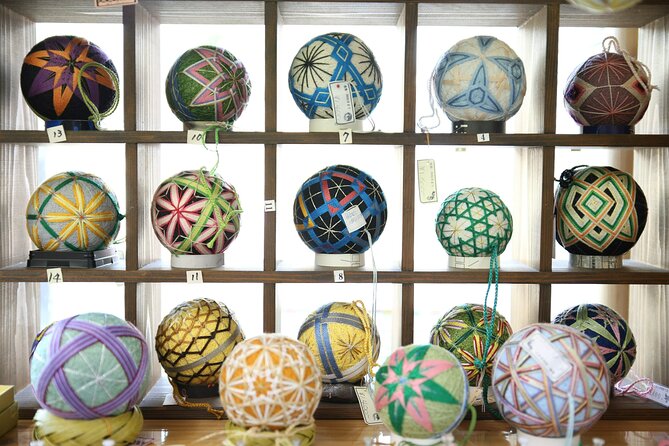
Kurashiki is well known for its traditional atmosphere, and temari fits the town nicely. These decorative thread balls began as a folk craft, made by wrapping thread around a core filled with rice husks and adding embroidery. Here, you do not simply admire one in a shop. You work on your own.
The process begins with a temari core prepared in advance. That is an important detail. You are not spending the whole session building the inner ball, which leaves time for the part most people want to try: shaping the design with thread and embroidery.
The result will not be factory-perfect, and that is the point. Your temari records the work of your own hands. Small variations in the pattern give it character, and the finished object carries a stronger connection to Kurashiki than a standard souvenir picked up on a shopping street.
The meeting point is Kobayashi Eyeglasses at 2-chōme-17-23 Achi, Kurashiki, Okayama 710-0055. The address may catch you off guard because the workshop takes place at an eyeglasses shop rather than a traditional craft center. That unusual setting is part of the charm, but you should allow time to find the exact location.
Grandma Yasue normally runs the shop. For this activity, she takes on the role of craft instructor and teaches visitors how to make temari. Her work with the craft is paired with help from Keiko, the English-speaking interpreter.
The personal connection matters. This is not a large commercial class with a rotating staff and a tight script. You meet a local instructor in her own workplace, then spend several hours learning a craft she cares about. That gives the activity a direct link to daily life in Kurashiki.
The workshop ends back at the same meeting point. You do not need to arrange a second pickup location or figure out how to get back after the class.
Once the class begins, you work with a temari core that has already been made. The core is filled with rice husks, then wrapped with thread and prepared for embroidery. This lets you focus on decoration and pattern rather than the less visible construction work.
That setup makes the activity approachable. You do not need to arrive with craft experience, and most people can participate. At the same time, the prepared core does not make the class superficial. The embroidery still requires attention, steady hands, and time.
I would expect the first part of the lesson to focus on understanding the ball, thread, pattern, and basic method. Yasue’s job is not simply to hand you materials and send you off. She guides the work, while Keiko helps make the instructions clear in English.
If you are used to quick souvenir workshops, adjust your expectations. Temari is a detailed craft. The three-hour schedule gives you room to work carefully, correct mistakes, and finish a ball instead of rushing through a small sample.
The heart of the workshop is embroidering the temari. You make a pattern of your choice, creating a ball that is different from every other one made in the class. The information provided does not specify a fixed menu of designs, so the exact pattern choices may depend on the materials and instruction available that day.
This is where the class earns its time. Thread work rewards patience more than speed. You need to watch the placement of each line and keep the design even as it moves around the round surface. If you enjoy knitting, sewing, embroidery, or other careful crafts, you will probably appreciate the quiet concentration.
You do not need to be an expert. One of the most useful points about this class is the emphasis on patient teaching. Yasue has been praised for her skill and patience, and that is especially valuable when a beginner is trying to understand a traditional technique through a second language.
Keiko’s presence also helps. An English-speaking interpreter can explain not only what to do next but also why the craft matters. That cultural background gives the handwork more meaning. You are not merely repeating a decorative pattern. You are learning how a long-loved Kurashiki folk craft is made.
Three hours is long enough to produce a finished object, but it also shapes the mood of the experience. This is not an activity to squeeze between two hurried sightseeing stops. It asks you to slow down and give the work your full attention.
I see that as a strength for many visitors. After busy days of trains, temples, museums, and shopping, a seated craft session can provide a welcome change. You have time to focus on one task and enjoy the company of the instructor and interpreter.
The length may be less appealing if your schedule is tight or if you do not like repetitive handwork. The workshop does not promise a quick introduction followed by free time in Kurashiki. The craft itself is the main event.
Plan your day around the session rather than treating it as a minor add-on. Since the activity starts and ends at Kobayashi Eyeglasses, you can pair it with other time in Kurashiki before or after, but the three-hour block should remain protected.
The maximum group size is six people. That is one of the strongest practical features of the experience. With such a small class, you have a better chance of receiving individual help when your thread, spacing, or pattern needs attention.
A small group also makes it easier to ask questions about the craft and local customs. You are not trying to catch an instructor’s explanation from the back of a crowded room. If you are nervous about learning through interpretation, the limited size should make the process feel more manageable.
This format works particularly well for couples, friends, and families. A mother and daughter, for example, can work side by side and compare their designs while learning something new together. The activity also suits solo visitors who want a local connection without committing to a large social tour.
Group discounts are available, which may improve the value for a party booking together. The class accepts mobile tickets, and confirmation is sent within 48 hours of booking, subject to availability. Because the activity is limited to six people and is often booked well ahead, planning early is sensible if your Kurashiki dates are fixed.
The price is $85.85 per person. That is more than you would pay for an ordinary souvenir, so the value depends on what you want from the afternoon.
If you only want a decorative temari, buying one may cost less and take almost no time. This workshop is priced for instruction, personal attention, interpretation, and the chance to make the object yourself. You are paying for three hours with Yasue and Keiko, not only for the finished ball.
The small group improves the value. A six-person maximum means the class is built around guidance rather than mass production. You also take home something with a personal story: you chose or worked through the pattern, handled the thread, and completed the embroidery in Kurashiki.
The price makes the most sense for people who value craft, culture, and a memorable activity over a packed sightseeing schedule. It may feel high if you are mainly looking for inexpensive shopping. For an arts-focused visitor, though, the handmade result and local instruction give the cost a clear purpose.
Group discounts can help if you are booking with companions. Check the final rate for your party when reserving, since the listed price is per person.
Your finished temari is small, but it is not limited to one use. You can decorate a room with it, turn it into a key chain, or keep it as a personal memento. That flexibility is useful when you are trying to pack light.
A handmade object can also bring back a particular day more vividly than a standard purchase. The ball can remind you of the pattern you worked on, Yasue’s instruction, Keiko’s explanations, and the calm concentration of the class.
There is also room for imperfection. If your lines are not perfectly even, that does not erase the value of the piece. The important thing is that it is yours. A craft souvenir made by hand has a different feel from one selected from a shelf.
Pack it with care when you continue your trip. The information provided does not specify special packaging or shipping, so you should be prepared to carry the completed temari yourself.
I would recommend the experience first to people who enjoy making things with their hands. You do not need advanced sewing or embroidery skills, but you should be comfortable sitting with a detailed task for several hours.
It is also a good fit for:
- Couples looking for a shared activity
- Parents and adult children traveling together
- Craft fans who want to learn a Japanese folk tradition
- Solo visitors who prefer a personal local experience
- Culture-focused visitors who want more than sightseeing photos
- People searching for a meaningful Kurashiki souvenir
The class may not suit someone with only a short stop in town, someone who dislikes fine handwork, or someone who wants a highly active excursion. It also may not be ideal if you need a guaranteed very short lesson, since the advertised duration is approximately three hours.
Most people can participate, and service animals are allowed. The meeting point is near public transportation, which makes access simpler, though you should still confirm your route to the specific address before setting out.
The activity is frequently booked well in advance, with an average booking time of 76 days before the date. You do not necessarily need to book that early, but the six-person limit makes advance planning wise during busy periods.
Confirmation arrives within 48 hours, subject to availability. Mobile tickets are accepted, which removes the need to print a voucher.
You can cancel for a full refund if you do so at least 24 hours before the local start time. Cancellations made within 24 hours are not refunded, and changes during that period are not accepted. Keep the cutoff in mind when arranging trains, other tours, or a day trip around the class.
Book this if you want to slow down, meet a local instructor, and make a souvenir with your own hands. The strongest reasons are the small group, Yasue’s patient instruction, Keiko’s English interpretation, and the fact that the finished temari has a practical life after the workshop.
Skip it if you want a quick activity or would rather spend every hour sightseeing. At $85.85, this is not the cheapest way to buy a souvenir, but it is a fairer value when you consider the three-hour lesson and personal instruction.
For craft lovers, families, couples, and culture-minded visitors, I think this is one of the more memorable ways to spend part of a Kurashiki stay. You leave with more than a ball of embroidered thread. You leave with a small piece of work that you made in the town where the craft has long been loved.
FAQ
A few more Kurashiki tours and experiences worth a look



Where does the temari workshop begin?
The workshop begins at Kobayashi Eyeglasses, 2-chōme-17-23 Achi, Kurashiki, Okayama 710-0055, Japan.
Where does the activity end?
The activity ends back at the meeting point, Kobayashi Eyeglasses.
How long does the workshop last?
The workshop lasts approximately three hours.
Who teaches the temari class?
Grandma Yasue teaches the craft. She normally runs Kobayashi Eyeglasses and instructs participants in making temari.




Is the workshop available in English?
Yes. The activity includes an English-speaking guide, and interpreter Keiko assists with the instruction.
How many people can join the workshop?
The maximum group size is six people.
What is the cancellation policy?
You can receive a full refund if you cancel at least 24 hours before the local start time. Cancellations or changes made within 24 hours are not accepted for a refund.
More Okayama & Kurashiki Tours in Kurashiki
More tours in Kurashiki we've reviewed


Okayama & Kurashiki Tours, compared.
 ★ 3.9Okayama Castle Admission TicketFrom $21 day
 ★ 4.5Kurashiki Private Romantic Night in the Observatory ReclinersFrom $29
 ★ 5.0[From Okayama] Okayama & Kurashiki Full Day TourFrom $163
 ★ 5.0Kurashiki Half-Day Private Tour with Government-Licensed GuideFrom $107
 ★ 5.0Half-Day Shared Tour at Kurashiki with Local GuideFrom $86
 ★ 5.0Okayama Half-Day Private Trip with Government-Licensed GuideFrom $107
