
Reviewed · PEACE MEMORIAL TOURS
The Journey of Hiroshima from Tragedy to Peace
Hiroshima’s story comes into sharp focus on foot. This tour links the Atomic Bomb Dome with memorials that tell smaller, human stories: a doctor who brought aid, children who folded paper cranes, and a survivor who endured the blast just 170 meters from the hypocenter.
I like the route’s thoughtful order, moving from compassion and remembrance toward the Dome and the exact point beneath the explosion. I also like the guides’ teaching style. Ali, Wajid, and Zunera are praised for clear explanations, good pacing, and answering questions rather than simply reciting dates.
The main consideration is emotional weight. This is not a light sightseeing stroll, and the route is not suitable for people with mobility impairments. The Atomic Bomb Museum is not included, so you will need a separate visit if you want the fullest historical record.
In This Review
- Key points to know before you book
- Why Hiroshima Peace Memorial Park needs a guided walk
- Starting at the Gates of Peace
- Mother and Baby in Storm: beginning with compassion
- Dr. Marcel Junod and Norman Cousins
- The Peace Cenotaph and its eternal flame
- Hiroshima National Peace Memorial Hall for Atomic Bomb Victims
- The Peace Park Rest House and a close-range survivor
- Sadako Sasaki and the Children’s Monument
- The Korean Monument and a wider account of loss
- Ringing the Peace Bell
- The Atomic Bomb Dome: Hiroshima’s most recognizable reminder
- Ending at the hypocenter
- What $30 gets you
- Who will get the most from this walk
- Should you book The Journey of Hiroshima from Tragedy to Peace?
- FAQ
- How much does the tour cost?
- What language is the tour conducted in?
- Where does the tour begin?
- Where does the tour end?
- Is the Atomic Bomb Dome included?
- Is entrance to the Atomic Bomb Museum included?
- Is food included?
- Can I pay later?
- Can I cancel for a full refund?
Key points to know before you book
- The 170-meter survival story: Hear about a resident who lived through the blast from an astonishingly close distance at the Peace Park Rest House.
- A people-focused route: Memorials honor doctors, children, Korean victims, and ordinary residents, not only military and political events.
- A UNESCO-listed landmark: Reach the Atomic Bomb Dome and learn why its damaged frame remains in place.
- A guide with Peace Studies training: The tour is led in English by an experienced professional with an academic background in peace studies.
- A $30 walking experience: The fee covers the guided park tour and key memorials, but not food or entry to the Atomic Bomb Museum.
- A useful late-afternoon option: One booking party found the 4:30 p.m. start comfortable in hot weather, with a steady pace and time for photos.
Why Hiroshima Peace Memorial Park needs a guided walk
You can visit Hiroshima Peace Memorial Park on your own. The paths are easy to find, the monuments are clearly marked, and the Atomic Bomb Dome is impossible to miss.
But the park can also feel like a collection of isolated memorials. A guide gives those places a shared thread. You learn what Hiroshima was like before the bombing, what happened during the attack, and how the city rebuilt while choosing peace as part of its public identity.
That context matters. The park is not only a place to remember August 6, 1945. It also shows how Hiroshima has tried to preserve individual stories, recognize victims from different communities, and argue for a world without nuclear weapons.
This walk is especially useful if you have limited time in the city. Instead of trying to understand every monument from a plaque, you can ask questions as the route develops. The best guides on this tour, including Ali, Wajid, and Zunera, are praised for making the subject clear without rushing through it.
The experience receives a 4.8 out of 5 rating from 44 ratings, and the most consistent strengths are the guides’ preparation, friendly manner, and pace. That combination is important here. Hiroshima deserves careful explanation, but you also need enough quiet time to look, think, and take photographs.
A few more Hiroshima tours and experiences worth a look
Starting at the Gates of Peace
The meeting point is at the Gates of Peace, in front of the Italian restaurant Mario. This gives you a clear place to meet your guide before entering the park.
The opening location sets the tone. You are not beginning at a shopping street or a general city landmark, but at an entrance connected directly with the park’s message of peace. From there, the group begins a walking route through memorials and public spaces.
The experience is conducted in English. Guides have been praised for making the meeting simple and for communicating well before and during the tour. That is a small but useful advantage in Hiroshima, where a clear starting point can save time and prevent an anxious first few minutes.
The tour ends back at the same meeting point. Since the route is on foot, wear comfortable shoes and expect a steady series of stops rather than one long, uninterrupted walk. The pace is described as comfortable, with opportunities for discussion and photographs.
Mother and Baby in Storm: beginning with compassion
The first major stop is the Mother and Baby in Storm statue. Its focus is personal and emotional, showing the protective bond between a mother and child after the bombing.
Beginning here is a strong choice. Hiroshima’s story can easily become a lesson about weapons, governments, and military decisions. This statue turns your attention toward people and family life, making the human cost easier to grasp before the route moves into larger memorial spaces.
Your guide can help place the statue within the wider aftermath of the bombing. The point is not just what happened at the moment of the explosion, but what families faced afterward as they tried to care for one another.
This is also one of the quieter stops on the route. You may want to pause rather than rush immediately to the next location. A guided walk still leaves room for silence, and that restraint suits the subject.
Dr. Marcel Junod and Norman Cousins
The next stops bring in two figures who shaped the wider response to Hiroshima.
The Dr. Marcel Junod Memorial honors the Swiss physician who became a humanitarian hero after the bombing. His story adds an international layer to the park. Hiroshima was a local catastrophe, but its medical and moral impact crossed national borders quickly.
At the Norman Cousins Peace Memorial, the focus shifts to the American author and peace activist who supported nuclear disarmament. This stop helps explain how Hiroshima became part of a wider argument about nuclear weapons and the responsibility of nations.
I like these two memorials because they keep the story from becoming too narrow. You are not only looking backward at one terrible event. You are also considering the people who tried to help, speak out, and push the world toward a different future.
The quality of the explanation matters here. Names and dates alone are easy to forget. A guide who connects these individuals to Hiroshima’s wider peace message gives the stops a clearer purpose.
The Peace Cenotaph and its eternal flame
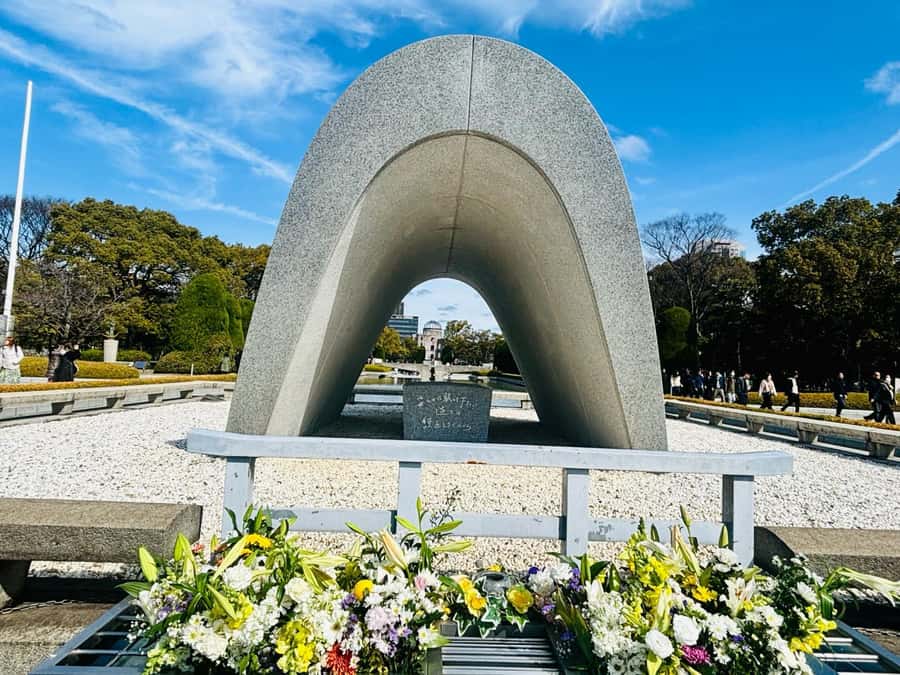
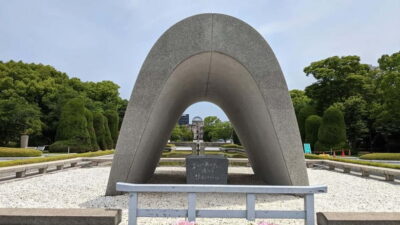
The Peace Cenotaph is one of the park’s central memorials. Its curved stone form shelters a record of the names of atomic bomb victims, while the eternal flame carries a promise: it will remain lit until the last nuclear weapon has been eliminated from Earth.
This is a place where the tour’s main ideas come together. The cenotaph remembers those who died, but it also points toward a future goal. The memorial does not treat remembrance as an ending. It links memory with disarmament and peace.
Your guide will explain the symbolism and help you understand why this monument occupies such an important place in the park. You can also take time to look across the surrounding memorial area and consider how many lives are represented by the names.
The cenotaph can be busy, and a group walk cannot control the atmosphere around it. Still, a guide gives you a useful frame before you arrive. You are less likely to treat it as a quick photograph and more likely to notice what it is asking you to remember.
A few more Hiroshima tours and experiences worth a look

Hiroshima National Peace Memorial Hall for Atomic Bomb Victims
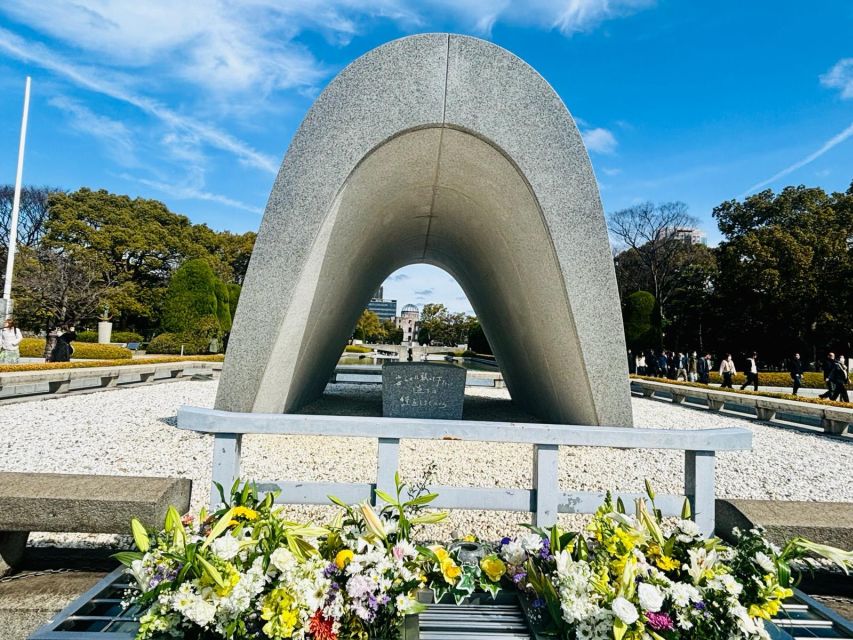
The Hiroshima National Peace Memorial Hall for the Atomic Bomb Victims offers a more detailed record of those who died. Its archive preserves stories and information about victims, including aspects of their lives before the bombing.
That last point is important. A person remembered only as a name can feel distant. Learning something about who people were before August 6 helps restore their individuality. They were workers, parents, students, neighbors, and members of families, not simply part of a number.
The tour includes a visit to the hall, but you should check how much time the group has inside. This walking experience covers many locations, so the stop is part of a wider route rather than a full research visit.
If personal accounts are what you value most, plan to return later for a longer visit. The guide can give you useful orientation, then you can explore the archive at your own speed.
The Peace Park Rest House and a close-range survivor
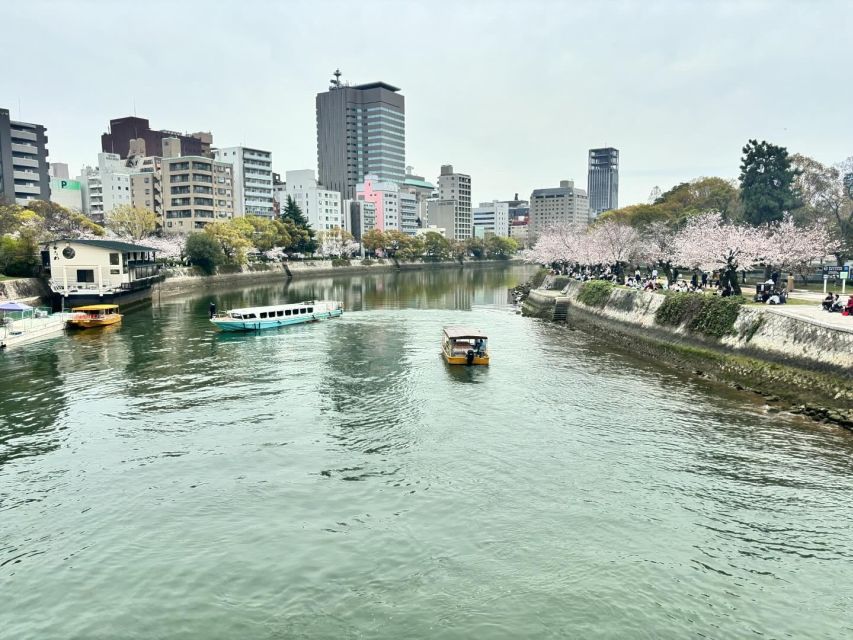
At the Hiroshima Peace Park Rest House, you hear about a resident who survived the explosion only 170 meters from the hypocenter. That distance is difficult to picture until you are walking through the park and thinking about how close the blast reached.
This story gives the tour a direct human scale. The atomic bombing is often discussed through maps and statistics, but one survivor’s experience can make the physical reality easier to understand. It also shifts the focus toward endurance and rebuilding.
The Rest House is a practical stop as well as a memorial point. Your guide can explain what happened there and why the building’s survival is significant. Listen closely, because this is the sort of detail you might miss if you simply walked past on your own.
The emotional effect may be strong. If you prefer a quick overview with little personal detail, this tour may feel more intense than expected. If you want to understand what the bombing meant for ordinary residents, this is one of the route’s most useful stops.
Sadako Sasaki and the Children’s Monument
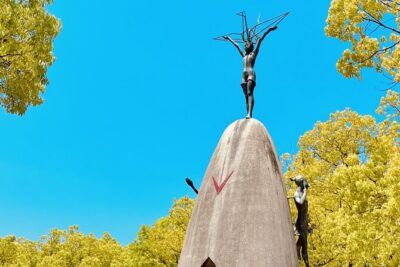
The Children’s Monument is dedicated to Sadako Sasaki and the other children affected by the atomic bomb. Colorful paper cranes surround the memorial, carrying a message of peace and hope for a world without nuclear weapons.
Sadako’s story has become one of Hiroshima’s best-known symbols, and the monument gives the park a direct connection to children. It also shows how remembrance can be expressed through an object people can make and share. The cranes are simple, but their meaning is lasting.
I find this stop valuable for families and younger visitors because it offers a way into a difficult subject without reducing the tragedy. The guide can explain the story, then you can look at the cranes and consider how a child’s life became linked to a global peace message.
The monument may also be one of the more visually striking places on the route. That makes it a natural photo stop, but be respectful. The memorial is a place of mourning first, not a backdrop.
The Korean Monument and a wider account of loss
The Korean Monument honors Korean victims of the atomic bombing. Including it makes the route more honest and more complete.
Hiroshima’s wartime story involved people from more than one nationality, and the monument recognizes Korean suffering within the wider history of the bombing. Your guide can explain why remembrance and reconciliation matter here.
This is the sort of stop that rewards a guided visit. Without context, you might pass it without understanding its importance. With context, you see that the park is also asking who gets remembered, whose stories are included, and how peace requires recognition across national boundaries.
The monument broadens the tour beyond a single national story. That does not lessen Hiroshima’s experience. It gives you a clearer view of the many communities affected by the war and the bombing.
Ringing the Peace Bell
The Peace Bell offers a chance for personal participation. Visitors can ring it in remembrance, with each toll serving as a call for peace.
After several serious memorial stops, this small action gives the tour a shared moment. You are not only listening to a guide. You are taking part in a simple ritual that expresses the park’s central hope.
The bell is not a performance or a spectacle. Its value comes from its simplicity. A single sound can feel more direct than another long explanation, especially after you have heard about victims, survivors, and the aftermath.
Your guide will help place the bell within the park’s wider message. Take a moment before or after ringing it rather than treating it as just another item to tick off.
The Atomic Bomb Dome: Hiroshima’s most recognizable reminder
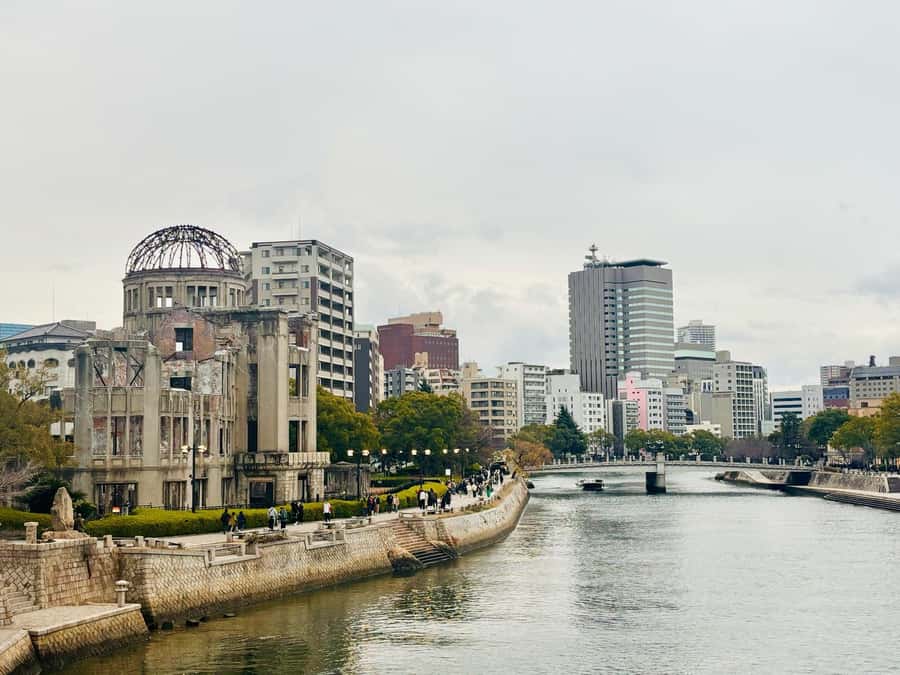
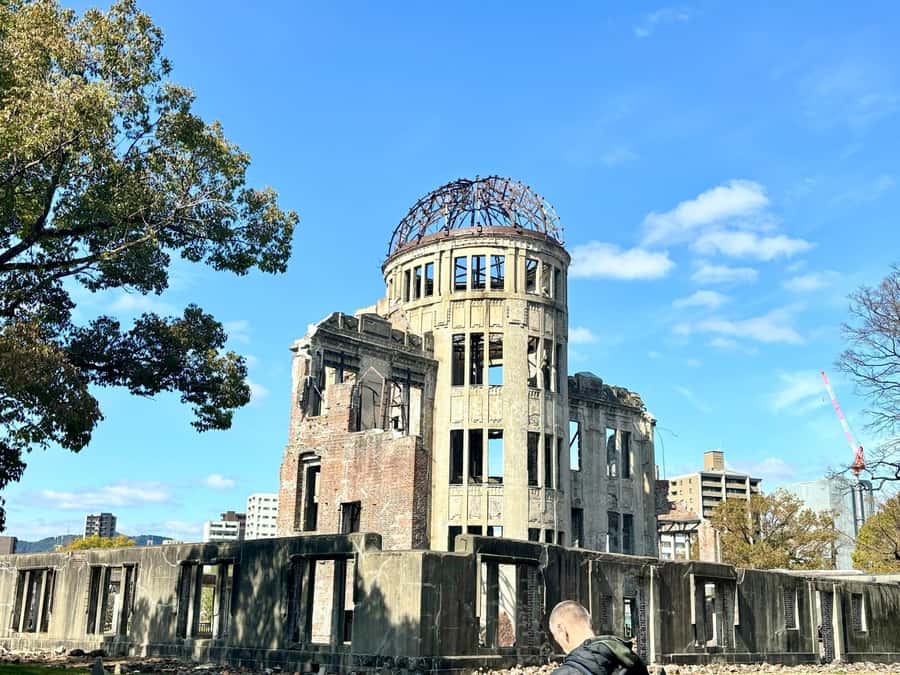
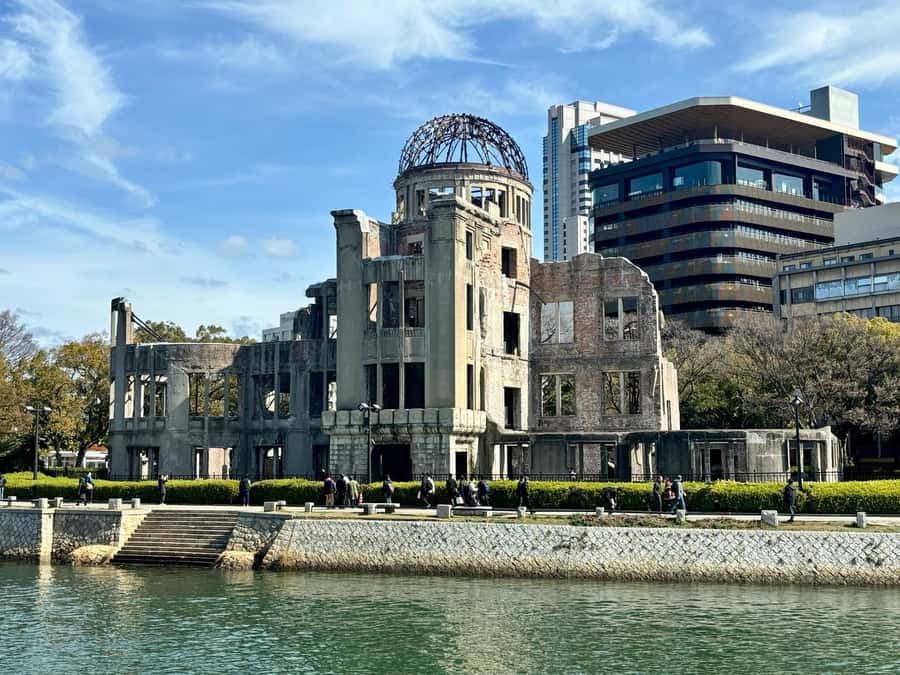
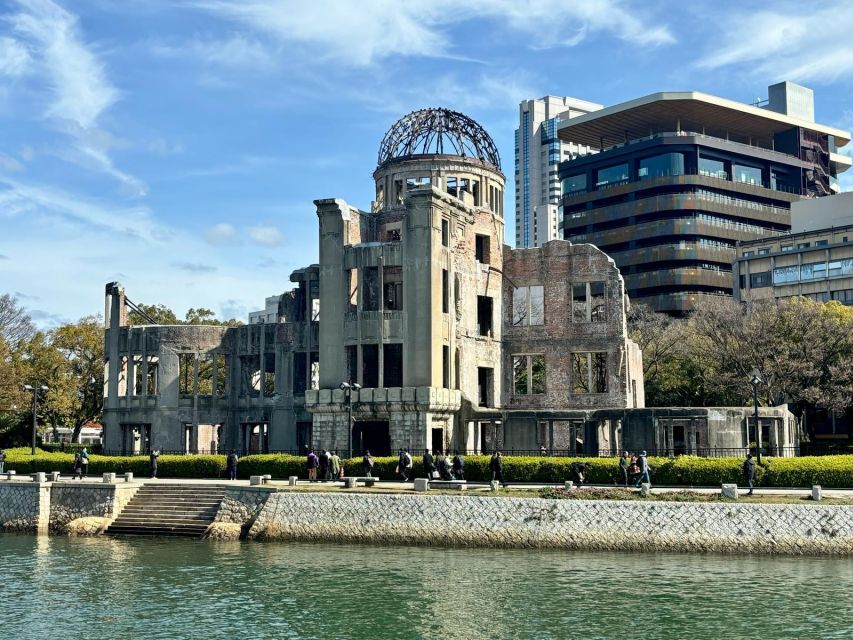
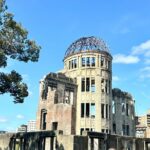
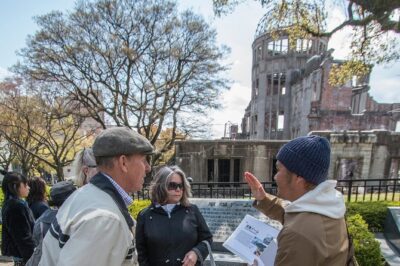
The Atomic Bomb Dome is the tour’s most famous landmark and a UNESCO World Heritage Site. Its damaged structure survived the blast despite being close to the hypocenter, and its exposed frame remains a powerful reminder of the destruction caused by war.
Seeing photographs is not the same as standing near the Dome. The preserved remains make the event feel physically present, even though the bombing happened generations ago. The building is not restored to look whole, and that damaged form is central to its meaning.
Your guide will explain the Dome’s history and why it was preserved. The discussion connects the building with Hiroshima’s peace advocacy and its effort to keep the memory of nuclear destruction visible.
The area around the Dome can be busy, and the structure is best viewed from several angles. Do not expect an attraction you enter like a normal historic building. The impact comes from seeing the outside remains and understanding what happened there.
The Dome is also a reminder that preservation is a choice. Hiroshima could have removed every trace of destruction as the city rebuilt. Keeping this structure in place gives future generations a direct point of reference.
Ending at the hypocenter
The walk finishes at the hypocenter, the exact point directly beneath the explosion. This is the most starkly precise location on the route.
Earlier stops explain people, monuments, and the city’s peace message. Here, the geography becomes brutally simple. You are at the point where the bomb’s detonation was centered, and the guide invites you to reflect on the people who endured the attack.
The final stop is not designed for a cheerful finish. It is a quiet ending, connecting the route’s stories to one exact place. That makes the walk feel complete, even though Hiroshima’s history cannot be neatly finished in one afternoon.
I appreciate the decision to end here rather than at a shopping area or transport hub. You finish with the central fact in mind, along with Hiroshima’s ongoing hope for peace.
What $30 gets you
At $30 per person, this is a reasonable price for a guided walk through Hiroshima’s main peace memorial sites. You are paying for an English-speaking guide, historical explanation, route planning, and the chance to ask questions at each stop.
The value is strongest if you are visiting Hiroshima for the first time or have only a short stay. A good guide helps you connect the memorials instead of spending your limited time reading scattered signs and trying to work out what matters most.
The fee includes Hiroshima Peace Memorial Park, the Atomic Bomb Dome, the Hiroshima National Peace Memorial Hall for Atomic Bomb Victims, the Children’s Monument, and the Flame of Peace. Food is not included, and entrance to the Atomic Bomb Museum is also separate.
That museum exclusion is the main budget point to remember. If you want both the walking tour and the museum, plan for an additional admission cost and enough time for a separate visit. The tour works well as an introduction, while the museum can provide a longer indoor look at documents, objects, and personal accounts.
You can reserve now and pay later, which helps if your Japan plans are still shifting. Cancellation is allowed up to 24 hours ahead for a full refund.
Who will get the most from this walk
I would recommend this tour to first-time visitors who want historical context without joining a large sightseeing circuit. It also suits anyone who prefers personal stories and discussion over a quick list of famous landmarks.
Families with older children or young adults may find the Children’s Monument and survivor accounts especially meaningful. The route also works for visitors interested in peace studies, international humanitarian work, and the difficult question of how cities remember mass destruction.
The tour is conducted at a manageable pace, with time for photographs and questions. Guides such as Ali, Wajid, and Zunera have been singled out for clear explanations, friendly interaction, and strong communication. Those traits matter more here than flashy presentation.
I would think twice if you have mobility limitations, since the activity is a walking tour and is specifically not suitable for people with mobility impairments. I would also avoid booking it if you want a casual city walk with little emotional discussion.
For hot weather, a late-afternoon departure can be sensible. One 4:30 p.m. group found the timing helped them avoid the worst heat. Since the route is outdoors, check the conditions on your chosen day and dress for a walk.
Should you book The Journey of Hiroshima from Tragedy to Peace?
Book it if you want Hiroshima explained through people and places, not only through a museum display. The route covers the park’s essential memorials, includes the Atomic Bomb Dome and hypocenter, and gives you a guide who can explain why each stop matters.
The $30 fee offers good value for a focused introduction, especially with guides such as Ali, Wajid, or Zunera leading a well-paced discussion. Just remember that the Atomic Bomb Museum is not included, the subject is emotionally demanding, and the walk is not designed for people with mobility impairments.
For many visitors, the best plan is to take this tour first, then visit the museum separately if time allows. The walk gives you the setting and the human context. The museum can then add documents and detail to what you have already seen.
FAQ
How much does the tour cost?
The tour costs $30 per person.
What language is the tour conducted in?
The tour is conducted in English.
Where does the tour begin?
Meet your guide at the Gates of Peace, in front of the Italian restaurant Mario.
Where does the tour end?
The activity ends back at the original meeting point.
Is the Atomic Bomb Dome included?
Yes. The walking tour includes a visit to the Atomic Bomb Dome, a UNESCO World Heritage Site.
Is entrance to the Atomic Bomb Museum included?
No. Entrance to the museum is not included in the tour price.
Is food included?
No. Food is not included.
Can I pay later?
Yes. You can reserve your place and pay later, with nothing due at the time of booking.
Can I cancel for a full refund?
Yes. You can cancel up to 24 hours in advance for a full refund.
More Hiroshima City Tours in Hiroshima
More Peace Memorial Tours in Hiroshima

More tours in Hiroshima we've reviewed



Peace Memorial Tours, compared.
 ★ 4.8Hiroshima Historical Walking Tour – Why A-Bomb was DroppedFrom $352h 30m
 ★ 5.0Hiroshima Peace (Heiwa) Walking Tour at World Heritage SitesFrom $94
 ★ 4.9Hiroshima: Miyajima Peace Memorial Icons of Peace and BeautyFrom $1638 hours
 ★ 5.0Hiroshima Walking Tour Why A Bomb was dropped to HiroshimaFrom $28
 ★ 5.0Hiroshima 2hr Peace Cycling Tour with Local GuideFrom $59
 ★ 4.8Hiroshima: Peace Cycling Tour with Local GuideFrom $522 - 3 hours
